
In short
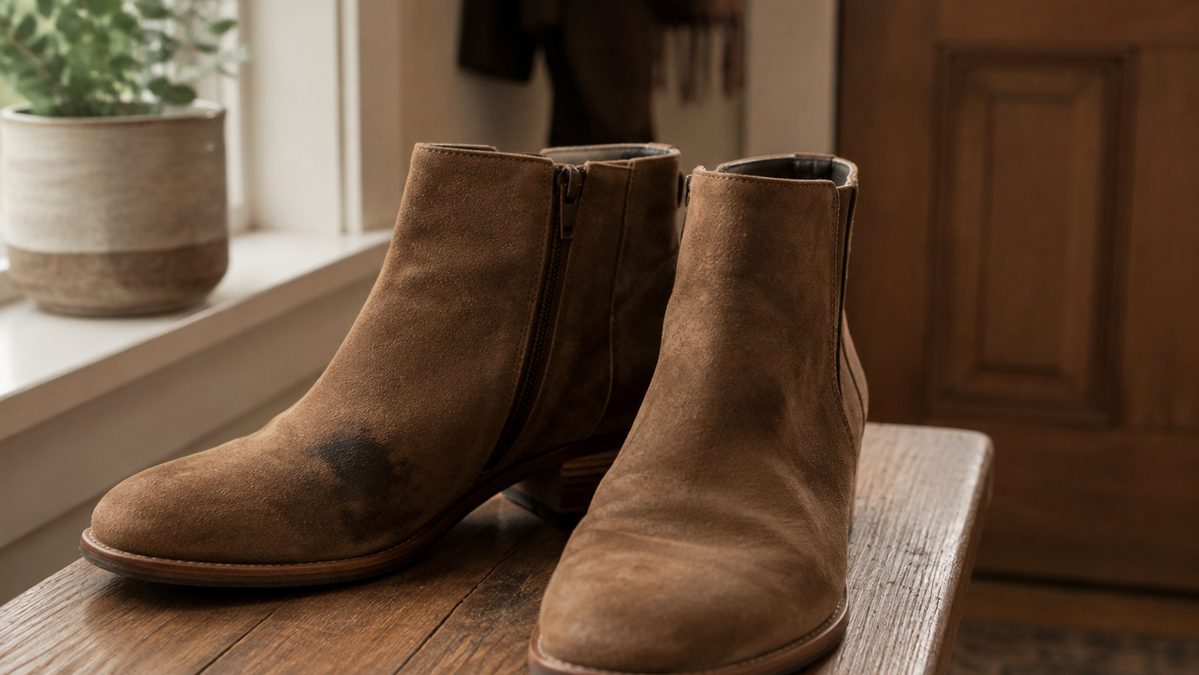
A fresh stain on a suede boot or bag, and panic immediately sets in: this material is unforgiving, and a bad reaction can transform a simple mark into a permanent stain.
There's no need to rush to the cobbler at the slightest mishap. There's a tried-and-true grandmother's trick for cleaning suede, suitable for every type of soiling, provided you know which one to use and in what order.
This guide details the protocol to follow depending on whether the stain comes from grease, mud, water or salt, the actions that damage suede for good, and when it is better to entrust the item to a professional rather than insisting.
Why does suede get damaged so easily?
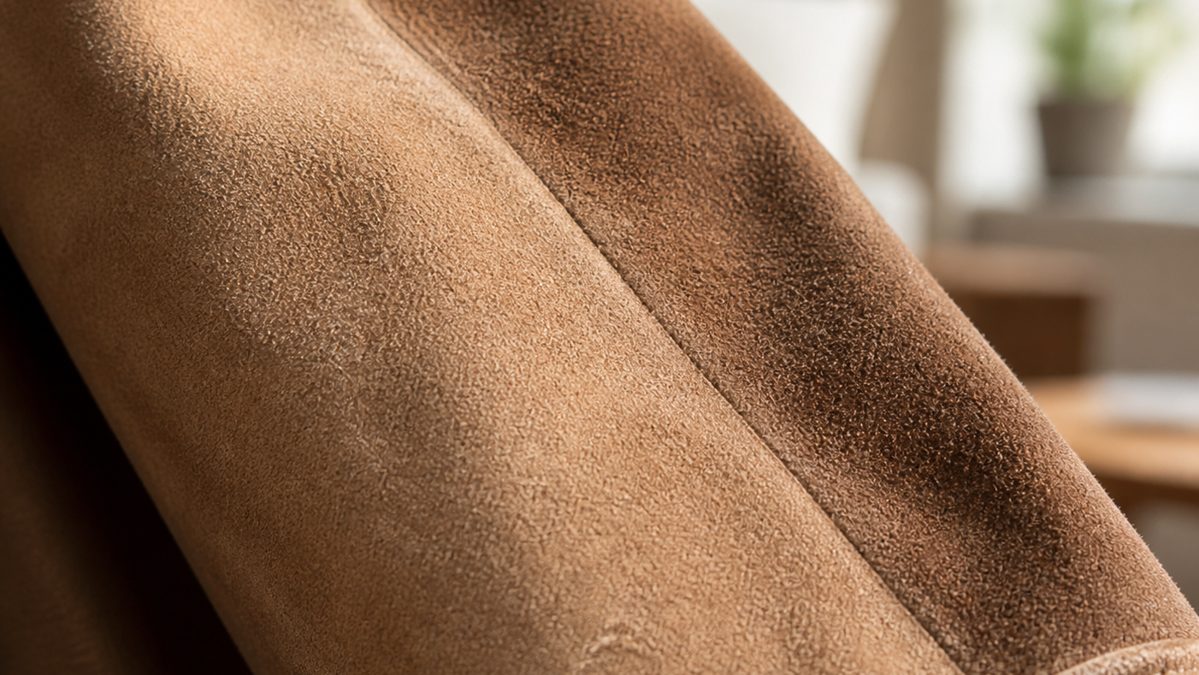
Suede is the inner side of the hide, sanded to achieve its characteristic velvety appearance. This fibrous and porous structure absorbs water and grease almost instantly, unlike smooth leather whose surface remains impermeable.
It is this porosity that makes the material so pleasant to the touch, but also so vulnerable: a drop of water that would dry without any problem on full-grain leather leaves a distinct halo on suede, because the fibers swell on contact with the liquid and then shrink unevenly as they dry.
The fur of deer also has a direction: brushed in one direction, it appears light; brushed in the other, darker. This detail explains why some stains seem to reappear after the first cleaning, when it is simply the fur lying differently.
Methods that work on smooth leather (cream, polish, wet wipe) should be avoided on suede: they flatten the hair and leave greasy or shiny marks that are impossible to remove.
Basic equipment and protocol before any task
Before tackling a specific task, four steps are systematically repeated, regardless of the type of dirt.
- Dust off dry with a suede brush (horsehair or rubber) by brushing in the direction of the hair, to remove dust and superficial dried mud.
- Identify the nature of the stain : greasy (oil, sebum, shoe polish), dry (mud, dirt, dust) or liquid (water, drink, urine, road salt).
- Test on a discreet area (tongue, reverse, bottom of the bag) before any full treatment, especially for light or dyed suede: some methods slightly darken the material.
- Treat locally, without ever soaking the entire piece, then let it air dry before brushing again.
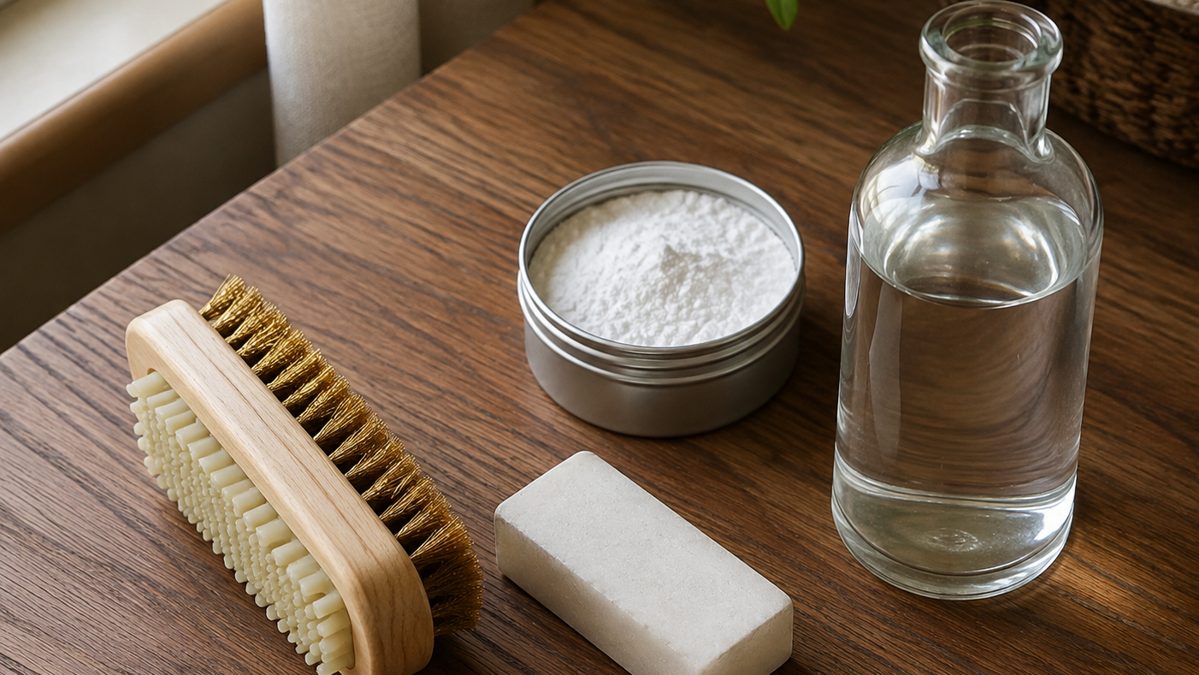
Keep a double-sided suede brush (horsehair on one side, brass or rubber on the other), a white suede eraser, baking soda or Fuller's earth, and white vinegar on hand. This basic kit covers almost all common stains.
Which method is best for the type of stain?
Not all stains react the same way on suede. Using the method for a grease stain on a water stain, or vice versa, often makes the problem worse instead of solving it.
| Type of stain | Recommended method | Avoid |
|---|---|---|
| Fresh fat | Absorbent powder (talc, bicarbonate, Sommières clay), leave on for a long time then brush | Rub immediately, apply hot water |
| Mud or dried earth | Allow to dry completely, scrape, then brush in a crisscross pattern | Scrub off the still-damp mud |
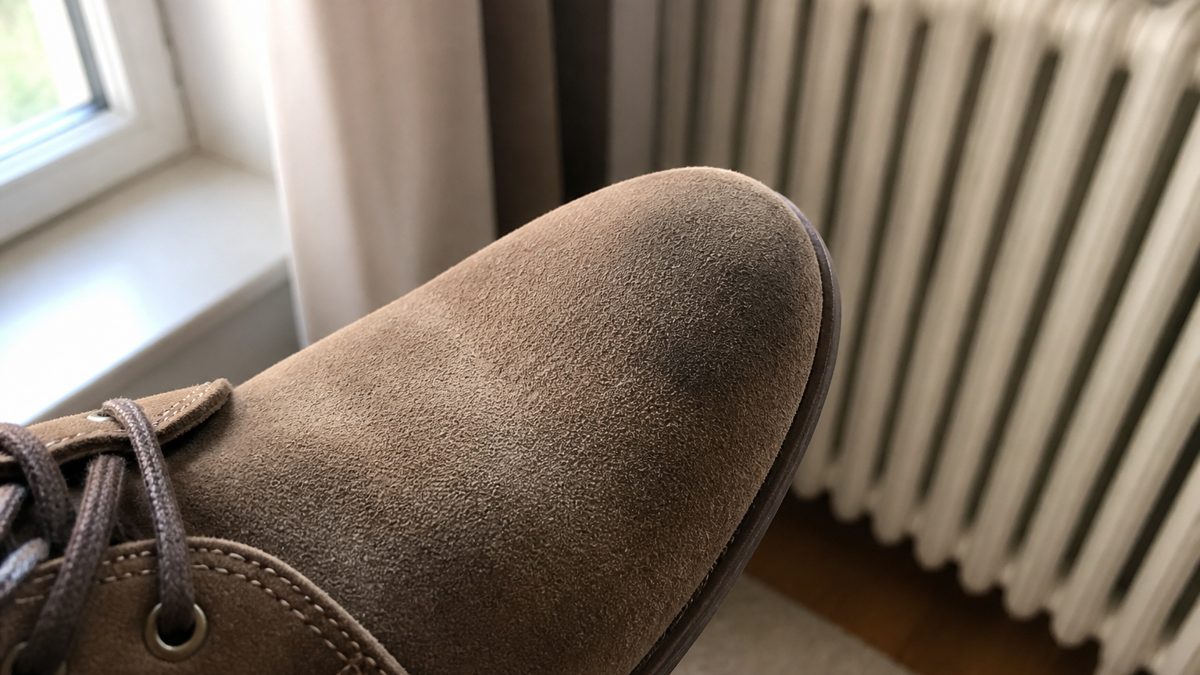
| Water (halo) | Evenly dampen the entire area with a barely damp cloth to ensure even coverage, then dry flat | Dry on a radiator or with a hairdryer |
| Road salt | Dilute white vinegar in equal parts with water and dab gently without rubbing | Pure, undiluted vinegar, vigorous dry brushing |
Grease stain
Grease stains (cooking oil, sebum, shoe polish) should never be rubbed: rubbing pushes the grease deeper into the fibers.
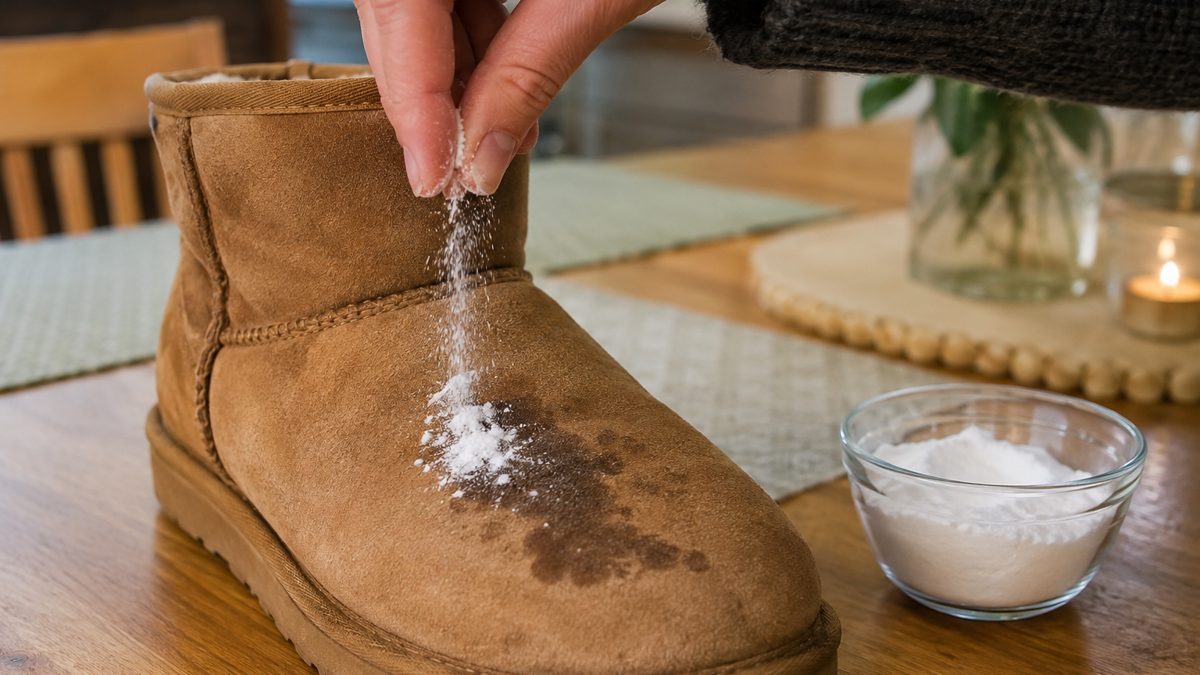
Sprinkle generously with talcum powder, baking soda, or Fuller's earth, gently patting to work the powder in without pressing it in. Leave for several hours, ideally overnight, to allow the powder to absorb the oil.
The next day, remove the excess with a suede brush using light circular motions, then brush again in the direction of the nap to restore volume.
On a fresh grease stain, apply the absorbent powder immediately: the faster the intervention, the less time the grease has to migrate deep into the fiber.
Mud or dirt stain
Contrary to what one might instinctively think, never wipe fresh mud off suede: the moisture will spread it and cause it to penetrate the fibers. Let it air dry completely, without forcing the drying process.
Once dry, gently scrape off the excess with the back of a blade or a plastic card, then brush in crosswise motions (in the direction of the hair, then against the direction) with a firm horsehair brush.
Water stain and halos
A water halo on suede comes from uneven drying: the wet area dried faster or slower than the rest, which created a sharp demarcation.
The most effective solution, paradoxically, is to evenly re-wet the entire affected area with a barely damp cloth, so that it dries evenly. Leave it to dry flat, away from any direct heat source, then brush it once completely dry.
Road salt stain
The whitish salt stains, common on shoes in winter, can be treated with white vinegar diluted in equal parts with water. Dab the area with a damp cloth, without rubbing, then let it air dry before brushing again.
Which action should I choose depending on the task at hand?
Select the task type to display the recommended method:
Restore volume and color to suede
After cleaning or simply with use, suede flattens and loses its original velvety appearance. Two simple steps are usually enough to revive it, without the need for any chemicals.
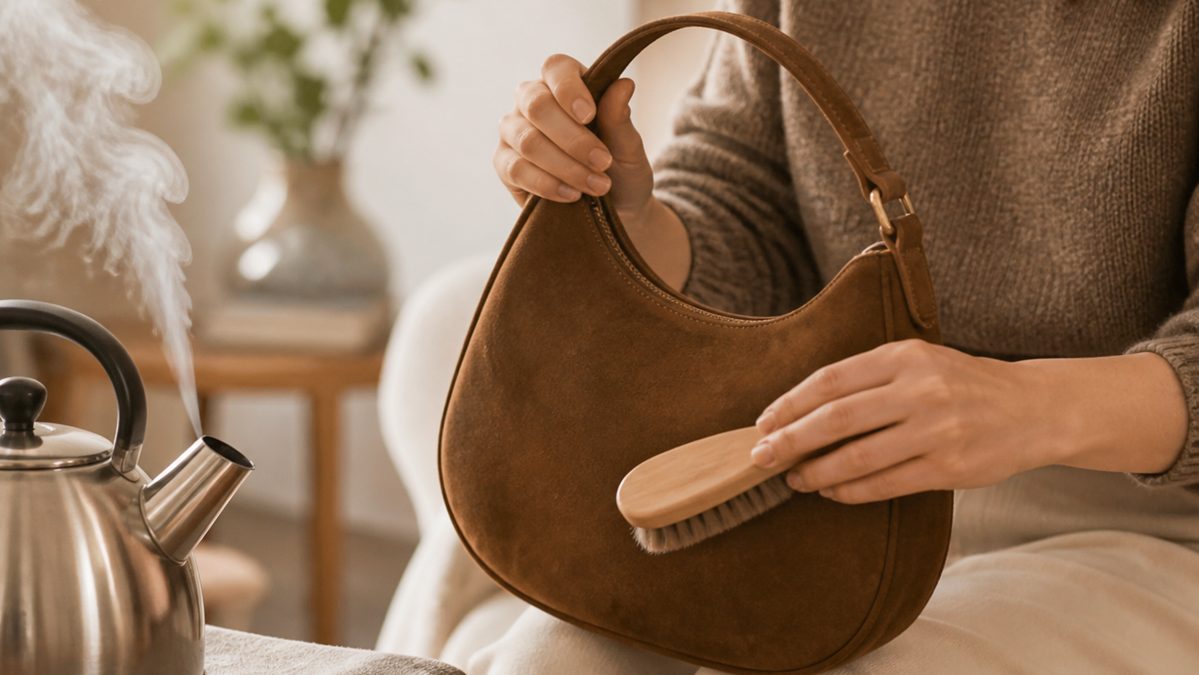
Expose the item for a few minutes to steam from a kettle or iron, holding it about 20 centimeters away, without ever directly touching the material with the heat source. The steam will relax the flattened fibers.
Then brush immediately, always in the same direction, with a horsehair brush. The hair stands up and the color appears more uniform, simply because the light is reflected evenly again.
Steam straightens the fiber in seconds, whereas dry brushing alone only moves the dust on the surface.
Suede, nubuck, nubuck: why the method is changing
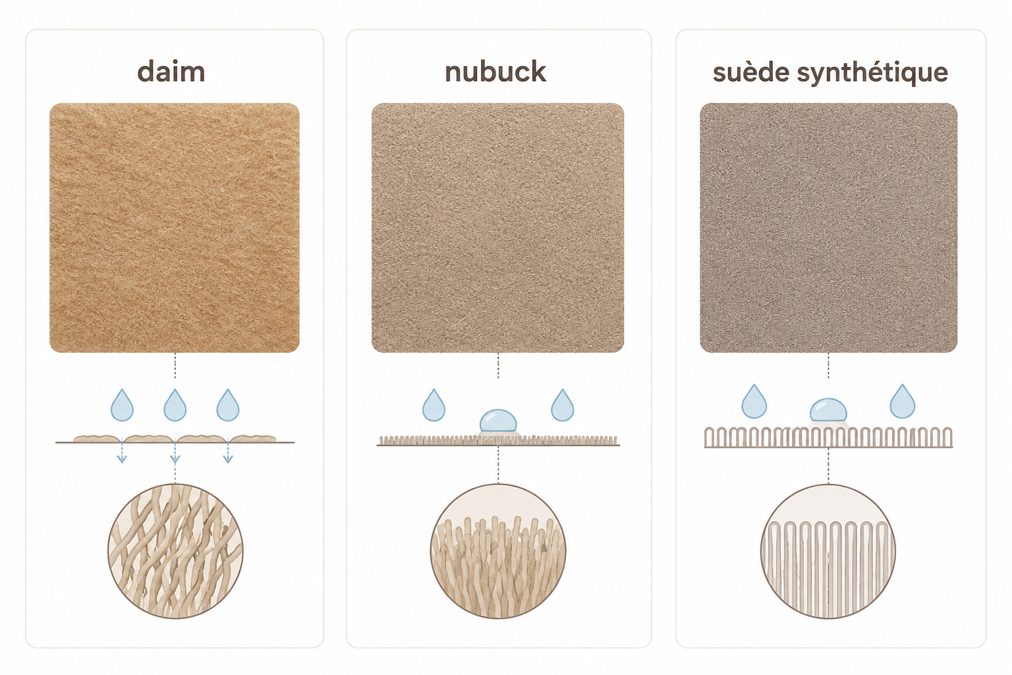
These three terms refer to related but not identical subjects, and confusing one with another can distort the choice of method.
Suede is the flesh side (inner side) of the hide of a short-haired animal, most often calfskin or sheep. Nubuck, on the other hand, is the outer side of bovine hide that has been sanded to imitate this velvety appearance: its fiber is denser and more water-resistant than true suede. The word "suede" is simply the Anglo-Saxon term for deerskin, adopted into fashion vocabulary without any distinction in material.
In practice, nubuck tolerates light contact with water better than suede, whose finer fibers swell more quickly. Synthetic microfiber imitations (sometimes sold as "vegan suede" or "faux suede"), on the other hand, can withstand light soapy water, which would damage genuine suede.
To check that a piece is made of real suede rather than synthetic, look at the composition label: "velvet leather" or "suede leather" indicates animal material, while "polyester", "polyurethane" or "microfiber" indicates an imitation, which can be cleaned with soapy water without risk.
Mistakes that ruin suede for good
Certain reflexes, which are natural on other materials, cause irreversible damage to suede.
- Brush dry in the direction of the hair growth
- Test on a discreet area before treatment
- Leave to air dry, lying flat
- Treat the stain as soon as possible
- Soak the part or rub it with soapy water
- Dry on a radiator, in direct sunlight, or with a hairdryer
- Mix white vinegar and baking soda on the same stain
- Use a cream or polish specifically designed for smooth leather
The mixture of white vinegar and baking soda, often presented as a "reinforced stain remover", is actually counterproductive on suede: the two products react chemically with each other and largely neutralize each other, while wetting the fiber more than either product used separately.
Regular maintenance: the best prevention
A suede garment that is regularly cared for gets dirty and stained much less than one that is left neglected between cleanings.
- Brush dry every two weeks or so, even without visible stains, to remove dust before it becomes ingrained.
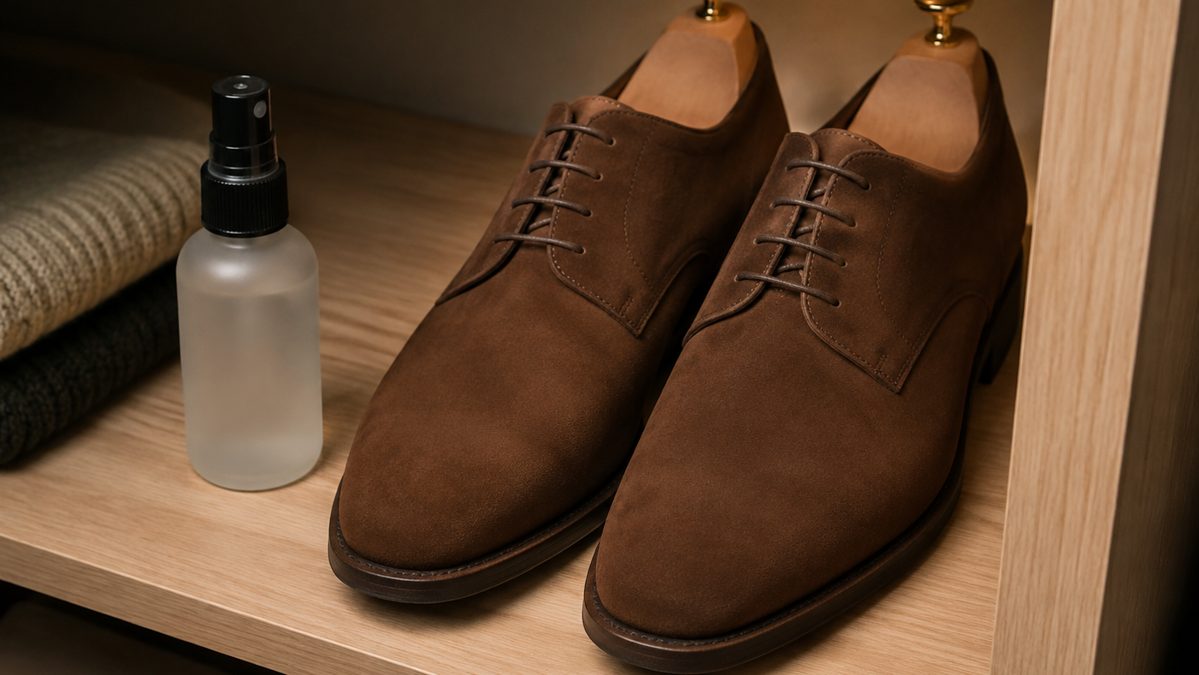
- Apply a special suede/nubuck waterproofing spray (never a product for smooth leather) from about twenty centimeters away, renewing every two to three months depending on use.
- Store shoes and bags away from direct light and moisture, with shoe trees to maintain their shape.
Waterproof a new pair before the first outing, not after the first stain: the treatment protects a clean fiber much better than a fiber that is already soiled.
When to stop home trials and see a professional
Not all stains can be fixed at home, and persisting beyond a certain point risks making the damage worse rather than fixing it.
Extensive discoloration, an old, set stain, or a valuable item (designer bag, formal shoes) warrants taking your shoes to a cobbler or a specialized dry cleaner rather than attempting to clean them yourself. Professional cleaning of a pair of leather or suede shoes generally costs between €15 and €30, a price worth comparing to the cost of a professional cleaner, as improper home treatment can render the material irreparable.
A customer review published on the website of the Parisian shoemaker Monsieur Chaussure illustrates this type of service well: a customer recounts having brought in suede moccasins stained with beer, deemed "irreparable" by his entourage, which he received back as good as new after professional cleaning.
If a water stain has already dried, leaving a well-defined halo for several days, the damp cloth method described above becomes less effective: the later the intervention, the more the demarcation has become fixed in the fiber.

In summary
Suede is by no means an impossible material to care for, provided you adapt the method to the stain rather than applying the same recipe to everything. Absorbent powder for grease, drying followed by brushing for mud, a little even dampness for water, and diluted vinegar for salt: each case has its specific solution.
The greatest risk is less the stain itself than the reaction in the emergency: hot water, vigorous rubbing or forced drying often transform a minor incident into permanent damage.
Regular brushing and reapplying waterproofing every two to three months will prevent most serious stains, long before you need to get out the suede eraser or baking soda.
What product can be used as a temporary solution if you have neither a suede eraser nor a special brush?
A regular white eraser (a clean pencil eraser) can be used as a substitute for a suede eraser in a pinch, and an old, firm-bristled toothbrush can be used instead of a bristle brush on a small area. To absorb a grease stain, flour or cornstarch work just as well as talcum powder or baking soda.
Can white vinegar damage suede?
Used undiluted and in large quantities, yes: it can dry out and slightly discolor some dyed suedes. Diluted in equal parts with water and dabbed on sparingly, it remains a safe method, provided you always test it first on an inconspicuous area.
How long should suede be left to dry after cleaning?
Allow at least a full night in the open air, away from any direct heat source. Suede that appears dry on the surface after a few hours may still be damp underneath, and brushing too soon will not properly coat the coat.
Can light-colored suede be cleaned in the same way as dark-colored suede?
The methods remain the same, but extra care must be taken with light-colored suede: watermarks and traces of absorbent powder are much more visible. Therefore, a preliminary test on an inconspicuous area is doubly important on light-colored suede, whereas a small mistake remains almost invisible on dark-colored suede.
How can you tell if a garment is real suede or synthetic suede?
The composition label settles the matter: a mention of "velvet leather" or "suede leather" indicates real suede, while "polyester", "polyurethane" or "microfiber" designates an imitation, which tolerates slightly more humid care without risk.
