
Having a lush garden in spring is within everyone's reach. Nature awakens, the rains are still regular and the temperatures are mild.
But when July and August arrive with their heat waves and heatwaves, it's often a cold shower for gardeners: leaves turn yellow, flowers wilt prematurely, and watering becomes a truly exhausting daily chore.
Faced with increasingly hot summers, fighting against nature quickly becomes discouraging. What if the simplest solution was, quite simply, to choose plants that literally love to roast in the sun?
Lagerstroemia: the secret to a vibrant summer
If only one shrub were to remain to face global warming in our gardens with panache, it would undoubtedly be this one.
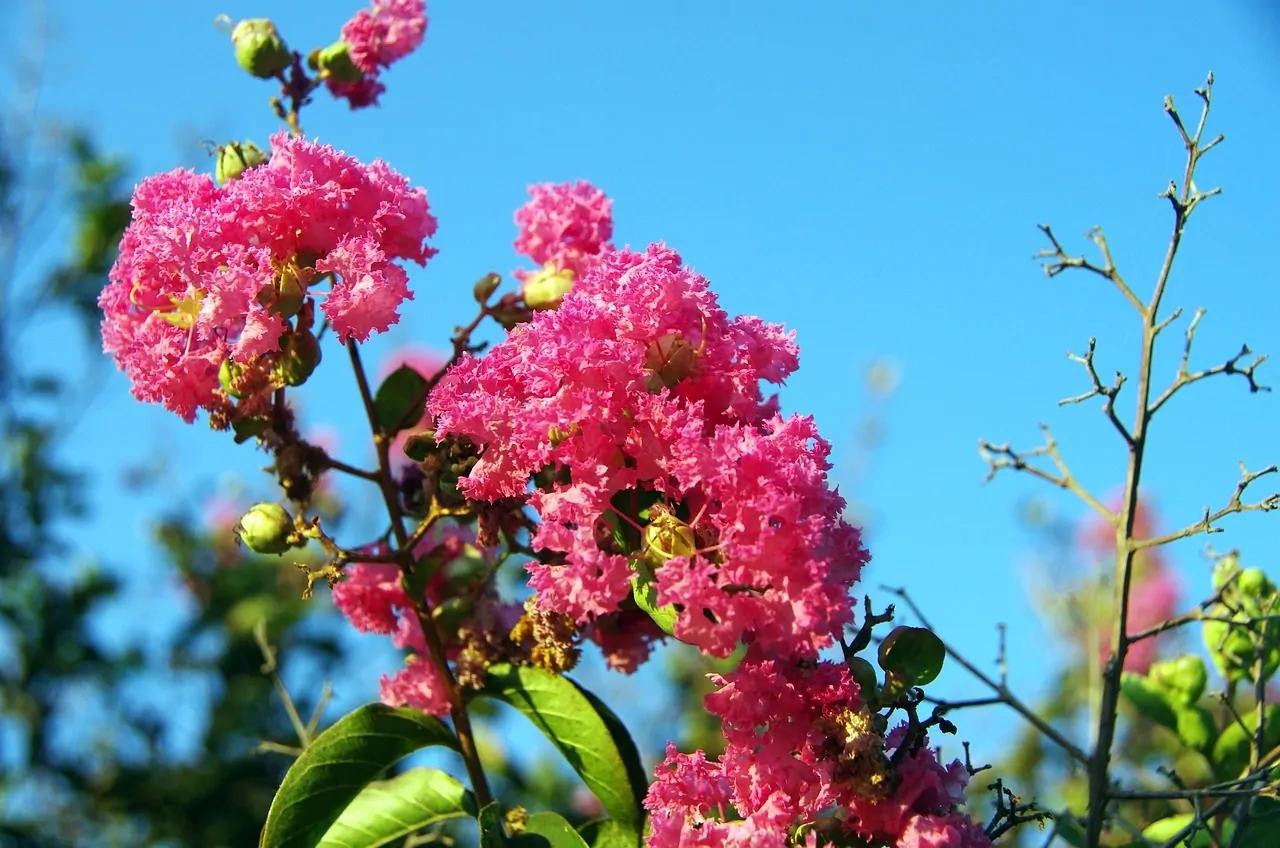
Better known by the charming name of "Indian Lilac" or "Summer Lilac" (although it is not botanically in the lilac family), the Lagerstroemia possesses a highly sought-after superpower: the stronger the sun and the hotter it is, the more spectacular and abundant its flowering.
Originally from Asia (and very present in the southern regions of the United States or in the Mediterranean basin), it has developed an exceptional resistance to heat and drought.
Where other plants capitulate, the Crape Myrtle unfurls, from July to September or even October, sumptuous clusters of flowers with frilly edges, reminiscent of crepe paper.
This will completely transform the look of the garden in the heart of summer, without having to lift a finger or constantly get out the garden hose.
A four-season spectacle: decorative bark and autumn colors
It is often planted for its unbeatable summer bloom, but the Crape Myrtle has the elegance of offering a real spectacle all year round.
In autumn, its foliage blazes with vibrant hues, ranging from coppery yellow to purple-red, thus prolonging the visual pleasure long after the last flowers have fallen.
In winter, when it has lost all its leaves, it reveals another of its major assets: its bark. Smooth and soft to the touch, it naturally exfoliates in patches (like the plane tree) to reveal magnificent marbling in cinnamon, ochre, grey and pale pink.
It is a shrub which therefore has its place right in the middle of the garden or courtyard, where it can be admired all year round.
How to install it properly in the garden?
The advantage of this plant, beyond its beauty, is its great adaptability. It thrives in almost all types of soil, with only one non-negotiable requirement: the ground must be well drained.
The crape myrtle hates having its "feet in water" in winter.
If your soil is very clayey and heavy, do not hesitate to add coarse sand or gravel to the bottom of the planting hole to facilitate water drainage.
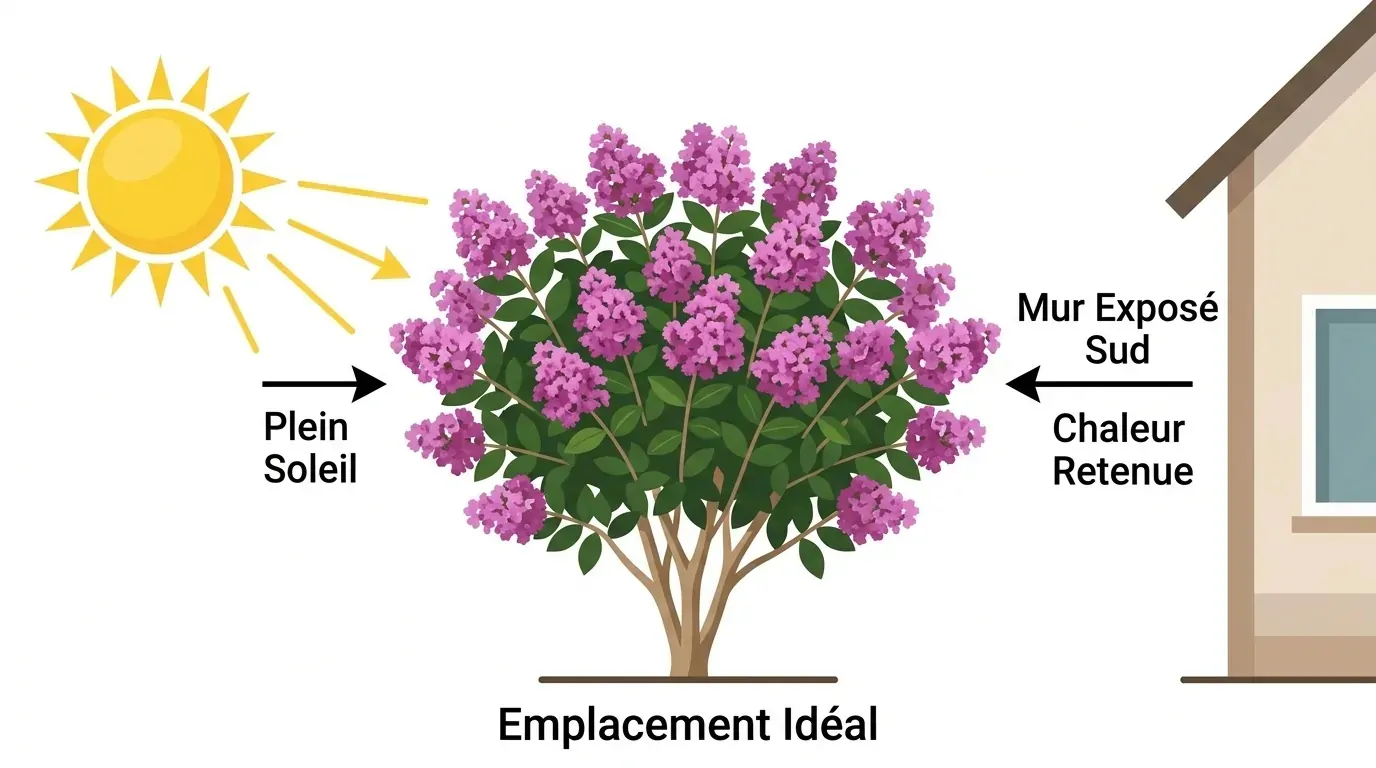
The absolute golden rule for its well-being is to give it the sunniest and warmest spot in your garden. Ideally, against a south-facing wall that will absorb heat during the day and release it at night.
Depending on the space you have available, there are many varieties of crape myrtle for all projects: from dwarf specimens not exceeding one meter, perfect for small spaces, to majestic trees several meters high to stand in the center of the lawn or create beautiful shade.
Powder pink, vibrant fuchsia, deep carmine red, mysterious purple or pure white: the color palette is vast enough to suit all decorating desires.
Container gardening: the solution for sunny terraces
Don't have a garden? Good news, the Crape Myrtle is one of the few spectacular flowering shrubs that thrive in containers, provided you choose a dwarf or moderately growing variety.
Prepare a large pot with drainage holes in the bottom, a good layer of clay pebbles for drainage, and place it on your south-facing balcony.
It will become the centerpiece of your summer outdoor design.
Minimal maintenance for a guaranteed effect
In the spirit of simple and uncomplicated gardening, the Crape Myrtle is truly a model student.
During the first two years after planting, regular (but not excessive) watering in summer will help it to establish its root system deep down.
But once it is mature and well established, it will manage on its own during periods of drought.
Its only real need to remain floriferous? A good annual pruning, to be carried out at the end of winter (around March, before the appearance of new leaves).
Since the crape myrtle flowers exclusively on the current year's wood, you should not hesitate to cut back the previous year's branches quite short (leaving 3 to 4 buds at the base).
This severe pruning will stimulate the vigor of the plant and cause the growth of long, strong stems that will bear the future clusters of flowers.
A simple, quick-to-execute trick that guarantees a real fireworks display of greenery all summer long!
