
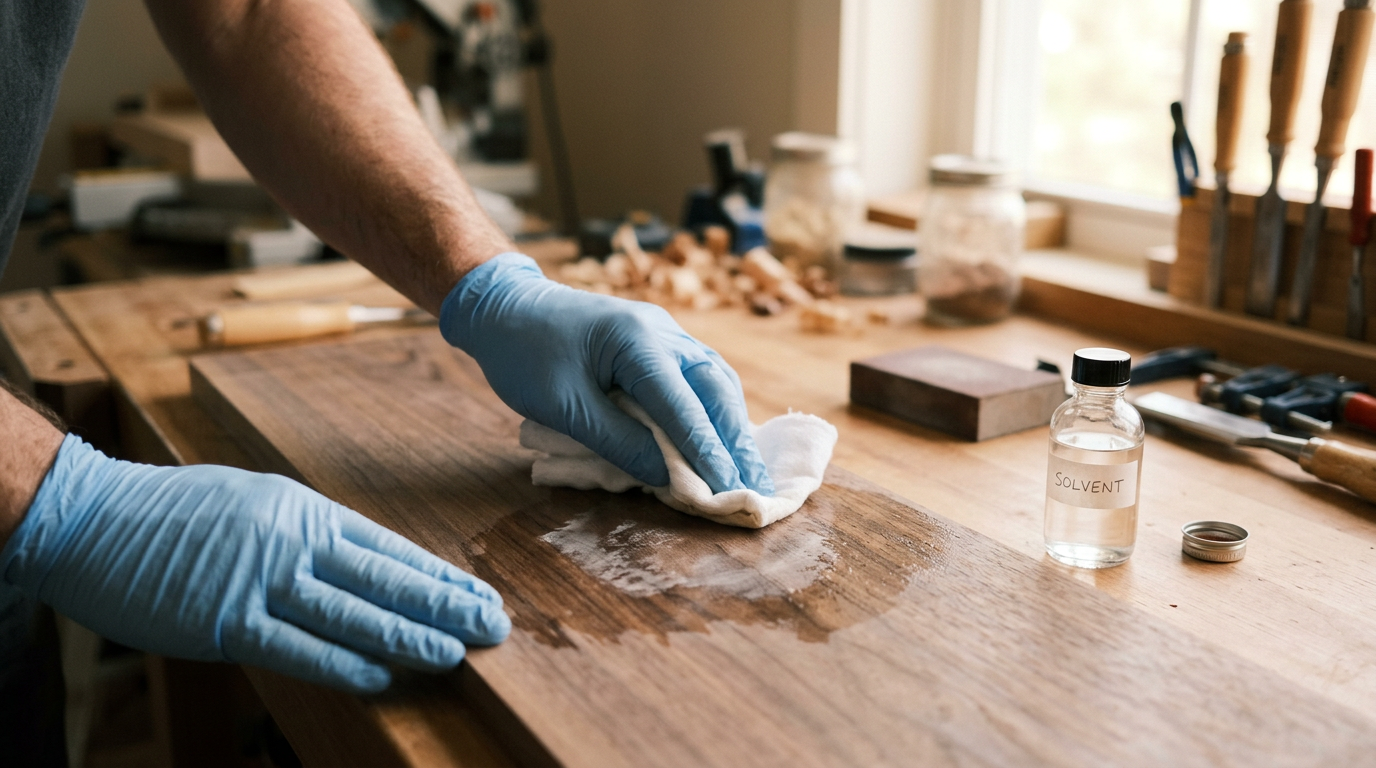
Have you just spilled epoxy resin on your work surface, hands, or clothing? Don't panic—but you need to act fast. Cleaning up epoxy resin isn't difficult if you choose the right method.
The problem is that many people are using the wrong product at the wrong time!
This guide explains exactly what to do depending on the condition of the resin and the affected area — so as not to turn a minor accident into permanent damage.
Fresh or cured epoxy resin: why does it make all the difference?
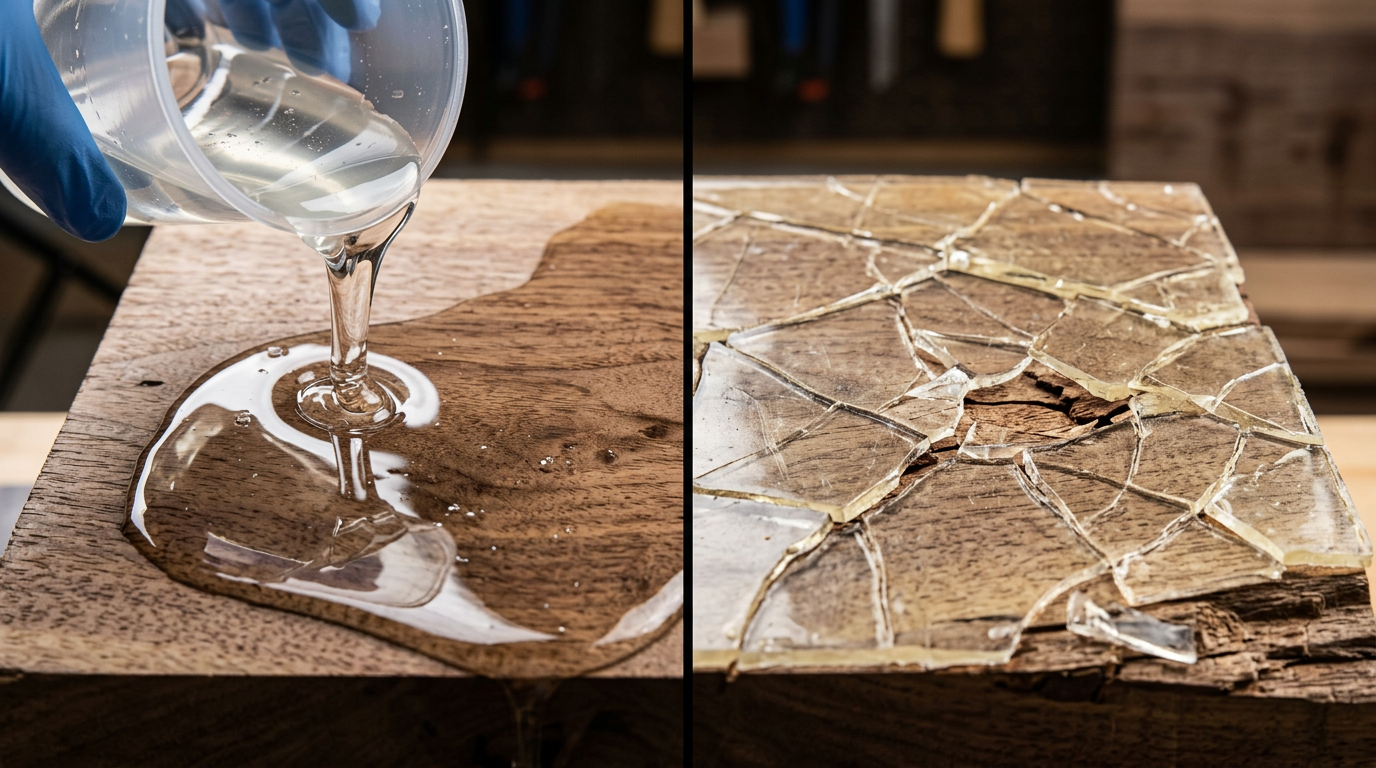
This is the first question to ask yourself, even before looking for a cleaning product. The answer radically changes the approach to take.
Fresh resin— unpolymerized —remains soluble and reactive. Its chemical reaction is still ongoing. It can be removed with common cleaning products, without excessive force.
A hardened resin, however, is a different story. Once polymerized, it forms a hard, almost insoluble plastic. The same solvents that worked before are now largely ineffective. A new strategy is needed.
The golden rule: the longer you wait, the harder the cleanup becomes. Every minute counts once the resin is applied.
Cleaning fresh epoxy resin
To clean an uncured epoxy resin, you have a limited window of time. Generally, the resin remains workable for a few tens of minutes to a few hours, depending on the formula used.
As long as it remains sticky and viscous, it responds well to mild solvents. Isopropyl alcohol of 70% or higher, acetone, or even warm soapy water may suffice at this stage.
The method: Gently dab the area with a cloth dampened with the chosen solvent. Do not rub—you risk spreading the stain. First, remove the excess with a spatula or absorbent paper, then clean what remains.
Always work from the outside in to avoid spreading the dirt. Repeat if necessary with a clean cloth.
Removing an already polymerized epoxy resin
Removing hardened epoxy resin requires more patience and often more force. Once dry, it no longer dissolves: it peels off, scrapes, or softens with heat.
Conventional solvents like acetone have a limited effect on polymerized resin. They may slightly soften the surface, but do not dissolve it completely.
On a hard surface, mechanical scraping with a plastic scraper or a utility knife blade (with care) is often the most effective method. On delicate surfaces such as varnished wood or glass, this technique requires a great deal of care.
To dissolve a cured epoxy resin, specific professional products or gentle heat remain the most reliable solutions. We will discuss this further in this article.
The best solvents for cleaning epoxy resin
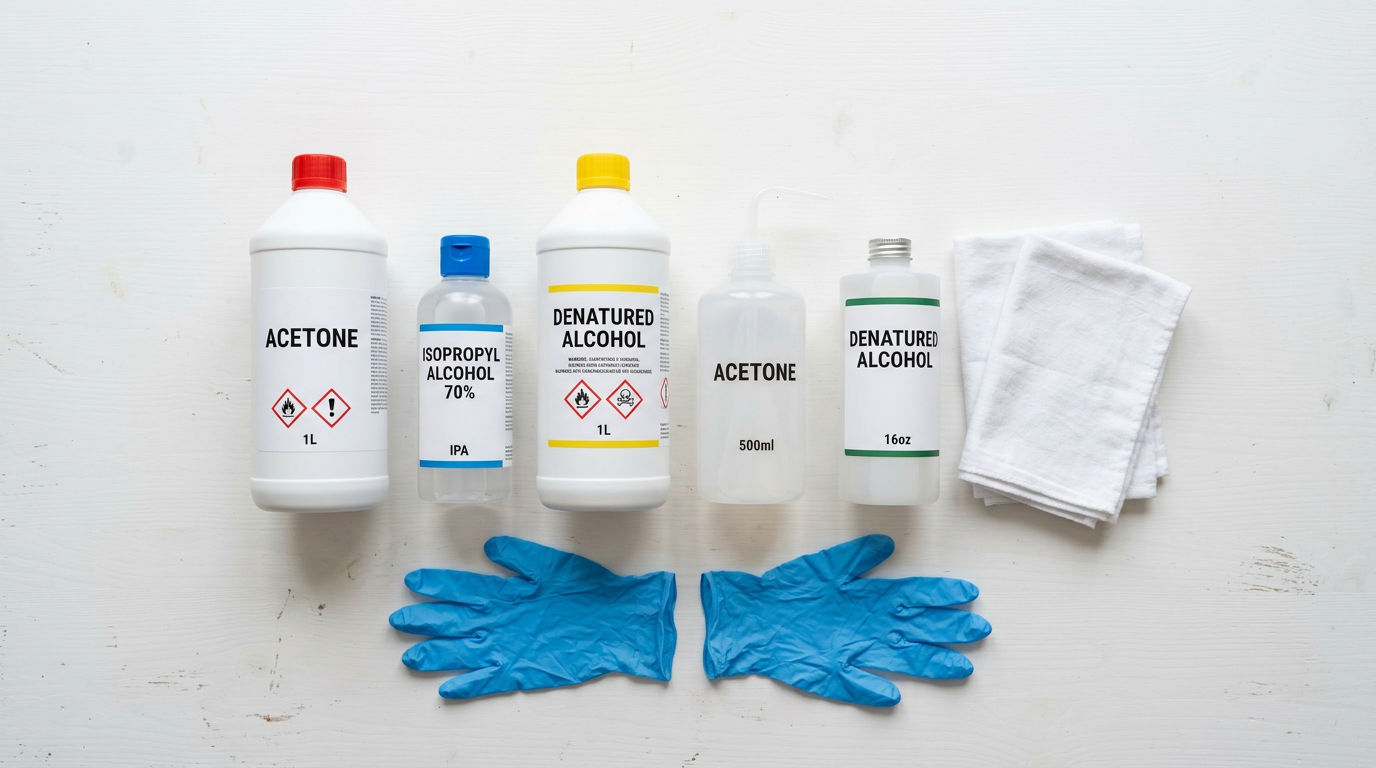
Not all solvents are created equal. Some work only on fresh resin, while others have a partial effect on hardened resin. And each solvent has its own contraindications depending on the surface being treated.
Here is a comparison table to help you find your way around quickly:
| Solvent | Fresh resin | Hardened resin | Surfaces not recommended |
|---|---|---|---|
| Acetone | ✅ Very effective | ⚠️ Partial | Plastics, varnishes, paint |
| Isopropyl alcohol | ✅ Effective | ❌ Not very effective | Few contraindications |
| White spirit | ✅ Correct | ❌ Not very effective | Untreated wood, fabric |
| White vinegar | ⚠️ Limited | ❌ Ineffective | Limestone |
| Hot soapy water | ✅ Effective (fresh resin) | ❌ Ineffective | None |
| Professional epoxy product | ✅ Very effective | ✅ Effective | Check the product details |
Epoxy resin cleaning guide
Describe your situation and get the appropriate cleaning method.
Acetone and isopropyl alcohol: when to use them?
Acetone is the solvent for epoxy resin available in supermarkets. It acts quickly on fresh resin: allow 5 to 10 minutes of contact to soften the material before wiping.
Isopropyl alcohol of 90% or higher is a gentler alternative. Generally, 10 to 15 minutes of contact time is required to achieve a satisfactory result on fresh resin.
Acetone can damage certain plastics, painted surfaces, and varnishes. Always test on a hidden area before applying. And never use it undiluted on skin without rinsing immediately—it will dry out and irritate.
These two solvents should only be used on unpolymerized resin . Their effectiveness drops significantly on hardened resin. They may slightly soften the exposed surface, but they do not penetrate the resin mass.
White spirit and white vinegar as alternatives
White spirit works well on fresh resin. It's less aggressive than acetone, making it more suitable for slightly sensitive surfaces. Let it sit for about ten minutes before wiping it off.
White vinegar is often touted as a miracle solution. The reality is more nuanced: it can help slightly soften very fresh resin, but its effectiveness remains limited compared to organic solvents.
However, it has one advantage: it is non-toxic, odorless, and unlikely to damage most common surfaces. It is useful for removing stubborn deposits associated with stains on tiles or glass, as a complement to an initial cleaning.
If you have children or pets in the room, use white vinegar or soapy water for initial cleaning. Save strong solvents for larger spills.
Hot soapy water for the still-fresh resin
This is the simplest and safest way to clean fresh epoxy resin from non-porous surfaces. Hot water with dish soap will often be enough to loosen the resin if it hasn't yet started to set.
Scrub with a slightly abrasive sponge, then rinse thoroughly. This method is ideal for glass, tiles, or laminate worktops. It's also the first thing to do on skin—long before reaching for solvents.
How to remove epoxy resin depending on the surface
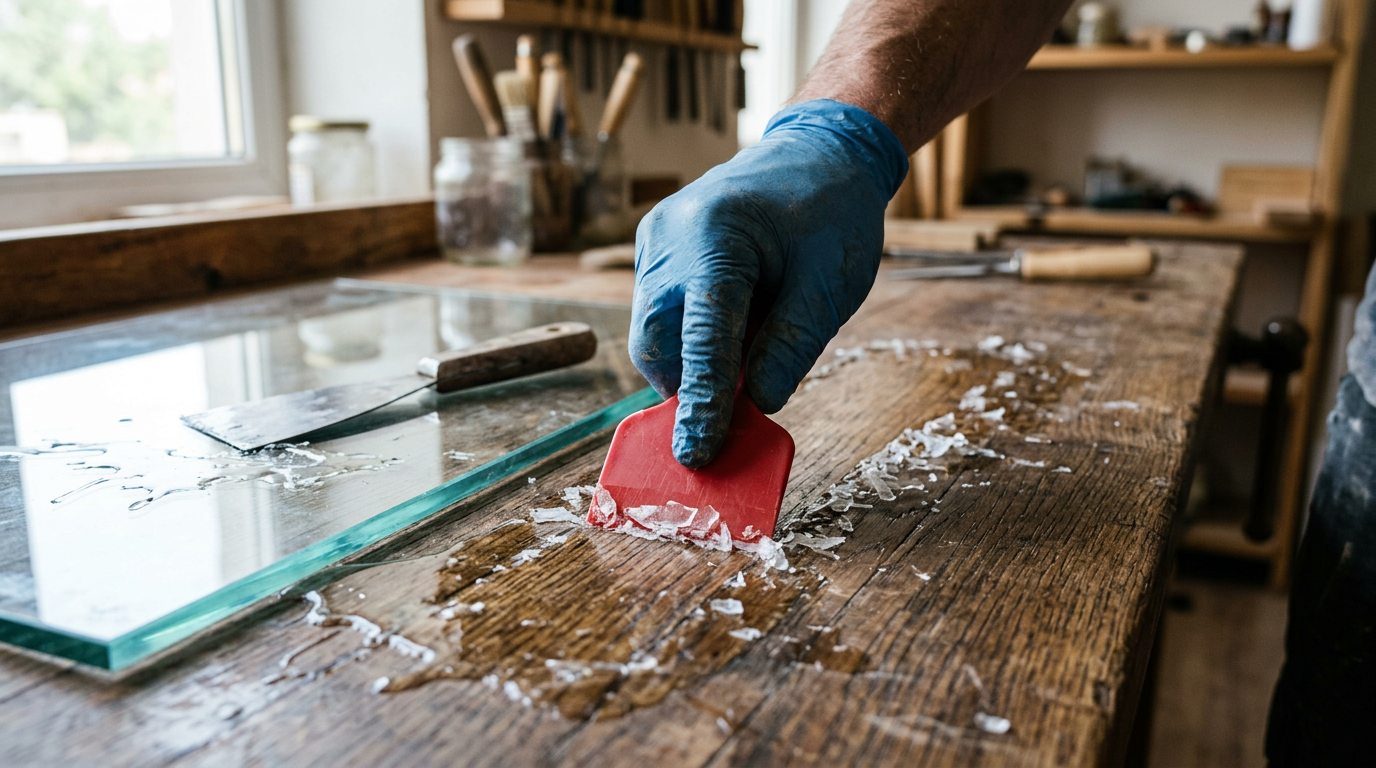
Each surface has its own limitations. What works on glass might damage a wood floor, and a good solvent for tiles could permanently stain fabric. Here are the best practices for each surface.
Removing epoxy resin from skin and hands
This is the most common emergency situation. To remove epoxy resin from your hands, act immediately if the resin is fresh.
Steps to follow:
- First, wipe off the excess with absorbent paper without rubbing.
- Wash with hot soapy water for 2 to 3 minutes.
- If any traces remain, apply a little isopropyl alcohol to a cotton ball and gently dab.
- Rinse thoroughly and apply a moisturizing cream.
To remove epoxy resin from hardened skin, do not scrape with a sharp tool. Use a gentle scrub or allow the resin to peel off naturally with skin shedding—this takes a few days.
Avoid repeated application of pure acetone to the skin. It removes the skin's natural protective barrier and can cause irritation or chapping. If fresh resin comes into contact with the eyes, rinse immediately with water for 15 minutes and seek medical advice.
Cleaning epoxy resin off fabric or clothing
Removing epoxy resin from fabric is one of the trickiest situations. If the resin is fresh, gently scrape off the excess with a spatula, then apply isopropyl alcohol to the stain, dabbing from the outside in.
Never rub – you'll force the resin into the fibers. Then machine wash the garment at 40°C with degreasing dishwashing liquid added to the detergent drawer.
If the resin has hardened, the chances of salvaging the fabric are slim. You can try gently scraping off the crust once it's dry, but the fibers often remain marked.
Removing epoxy resin from wood and parquet flooring
To remove epoxy resin from wood, the method depends on the surface treatment. On varnished or oiled wood, acetone should be avoided — it attacks the varnish.
Use isopropyl alcohol or white spirit, applied in small quantities to a soft cloth. Rub in the direction of the fibers.
If you need to restore cast iron utensils or other metal surfaces in your workshop, the same precautions apply to avoid damaging the protective coatings.
On a wood floor, absolutely avoid scraping with a blade, as this will cause irreparable scratches. Gentle heat remains the safest option.
Cleaning epoxy resin off glass and tiles
Good news: glass and tiles are among the easiest surfaces to clean.
To clean epoxy resin off glass, wait until the hardened resin shrinks slightly, then gently slide a razor blade between the resin and the glass.
The same approach applies to tiles. A flat-bladed scraper works well provided you maintain a grazing angle (almost parallel to the surface) to avoid scratching the enamel.
After scraping, wipe with a cloth dampened with acetone to remove any invisible residue. This is no problem on glazed tiles. On matte or porous tiles, test first on an inconspicuous area.
Clean tools and brushes after use
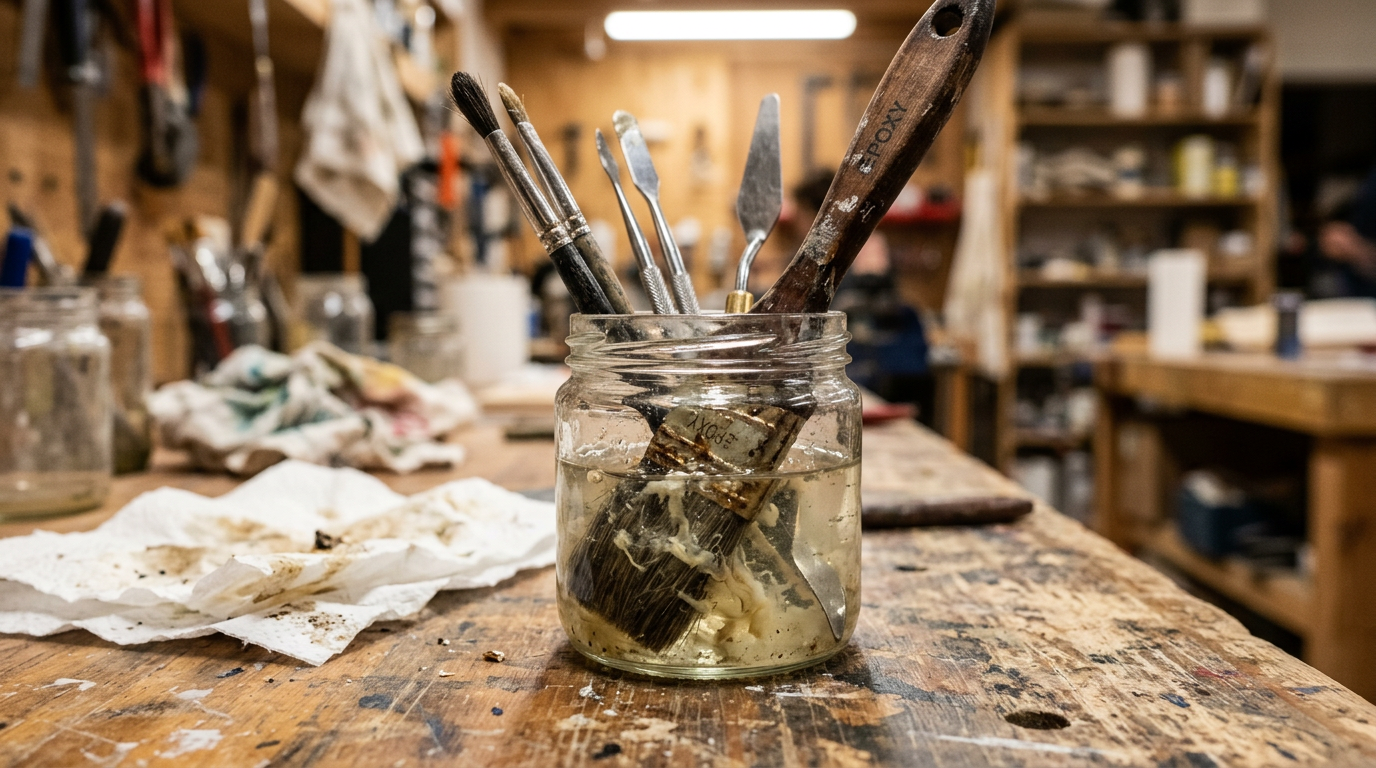
A ruined brush or a dirty tool often means it's just thrown away. Yet, with the right techniques, cleaning takes less than 5 minutes. It all depends on timing, once again.
Clean the tools before the resin dries
This is by far the simplest situation. To clean tools of fresh epoxy resin, start by removing as much resin as possible with a dry cloth or paper towel. Do this immediately after use.
Next, soak the tools in a container of acetone or isopropyl alcohol for 5 to 10 minutes. Scrub with an old toothbrush to reach the nooks and crannies.
For brushes, massage the bristles in the solvent, opening them up well so the liquid penetrates to the ferrule. Then rinse with warm soapy water to neutralize.
Always keep a small container of acetone handy when working with resin. Immediate cleaning will prevent you from losing your tools. Use silicone spatulas rather than wooden ones—they are much easier to clean.
Just as we think about cleaning various stainless steel utensils right after cooking to avoid encrustation, the principle is the same with resin: act within minutes, not the next day.
What should I do if the resin has already hardened on the tools?
It's more complicated, but not necessarily a lost cause. For metal tools (spatulas, trestles, pliers), a heat gun can soften the resin enough to scrape it off afterwards.
For hardened brushes, it is often too late if the bristles have been stuck together for more than 24 hours.
You can try a prolonged soak in acetone (several hours), but the result is not guaranteed. The hairs often remain deformed.
- Metal spatulas: scraping + gentle heat
- Synthetic brushes: acetone bath for 2 to 4 hours, results are unpredictable
- Foam rollers: generally to be thrown away
- Plastic containers: the hardened resin often detaches when the container is flexed
For large projects, use disposable brushes or inexpensive rollers. The cost of replacement is often less than the time spent trying to salvage them.
Last resort solutions for hardened resin
You were unable to intervene in time and the resin has hardened? There are still options, even if they require more work and precautions.
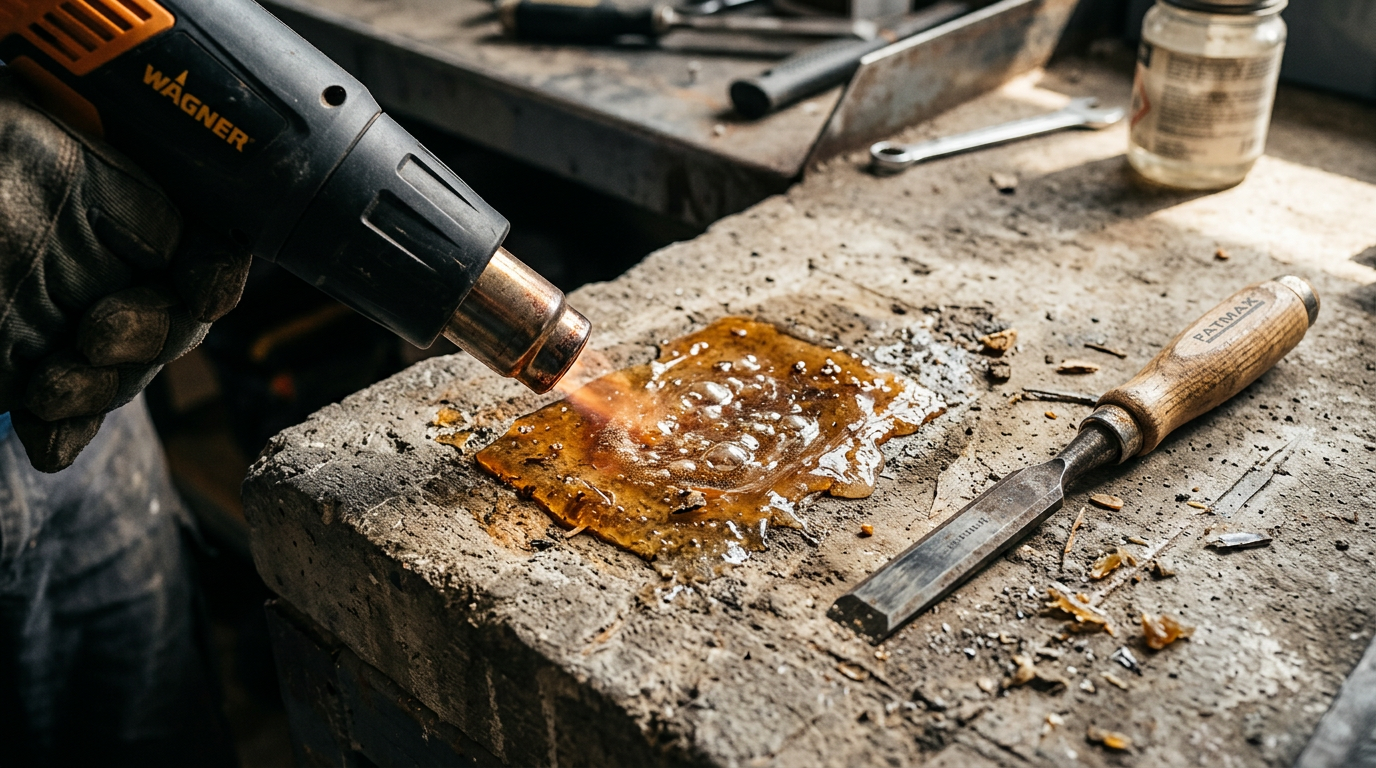
Use gentle heat to loosen the resin
Heat is one of the few things that can soften a cured epoxy resin. At temperatures of 60-80°C, the resin begins to soften and loses its adhesion.
A heat gun (hot air gun) is the best tool for the job. Hold it 10-15 cm from the surface, moving it constantly to avoid burning the material.
- Pass the heat gun over the area in regular passes for 30 to 60 seconds.
- Test the resin with a plastic spatula: it should start to give way.
- Scrape gently while it's still warm.
- Clean off the residue with isopropyl alcohol.
Do not exceed 80°C on surfaces such as wood, PVC, or plastics—you risk warping or burning them. Thermal shock must be absolutely avoided on glass.
Professional products for dissolving resin
Specialized epoxy strippers are available in DIY stores or online. These products contain combined solvents capable of penetrating the polymerized resin and softening it thoroughly.
The most well-known are based on dichloromethane or benzyl alcohol. Always read the technical data sheet before use — these products are effective but often harsh on the skin, respiratory system, and certain surfaces.
General instructions for use:
- Apply the product in a thick layer to the resin to be treated.
- Cover with plastic wrap to prevent rapid evaporation.
- Leave to act for 30 minutes to several hours depending on the resin.
- Scrape with a plastic spatula.
- Rinse thoroughly according to the manufacturer's instructions.
These products work equally well for renovating a resin shower tray as for removing accidental drips on resistant surfaces.
Safety precautions that must be strictly observed
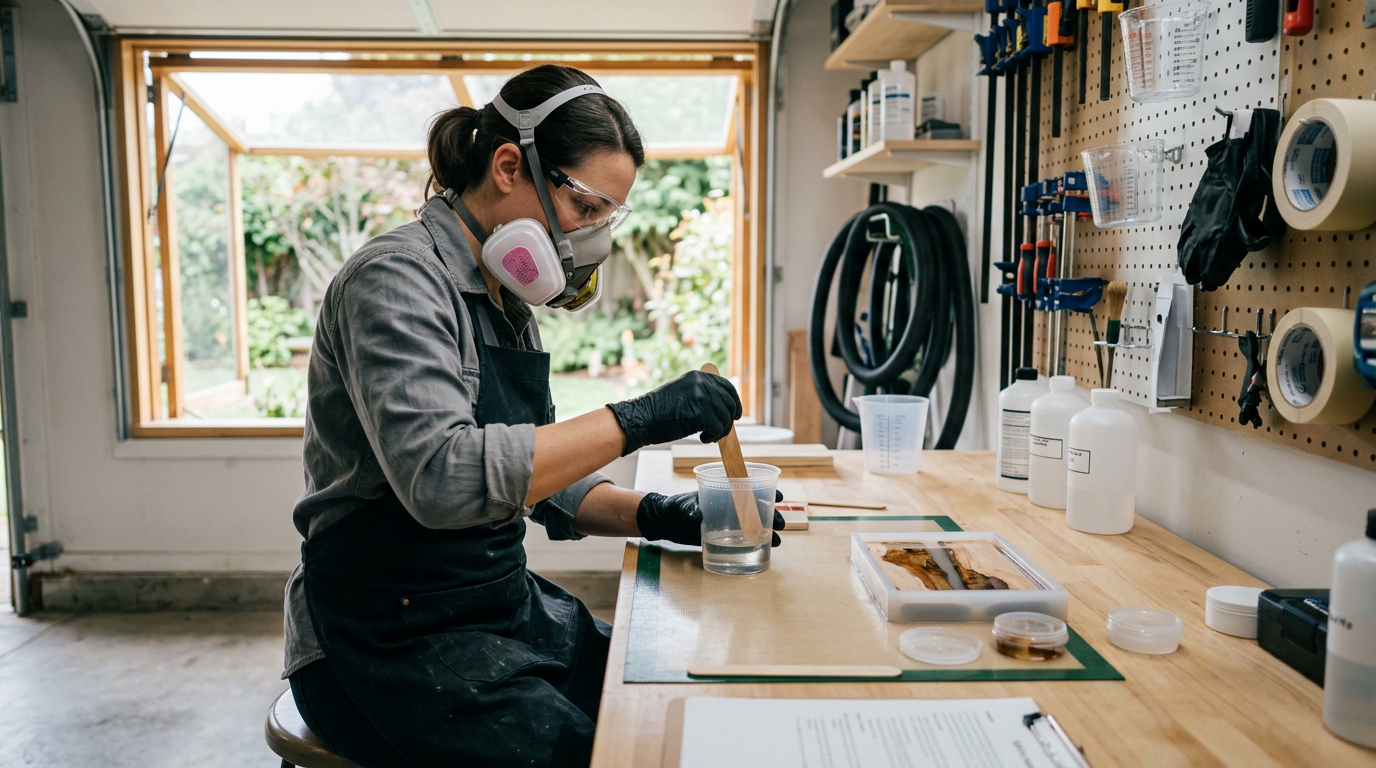
Before discussing methods, we must talk about protection. Epoxy resins and their associated solvents are not harmless. Improper handling can lead to skin irritation, allergic reactions, or respiratory problems.
Protect your skin and respiratory system
Nitrile gloves are the minimum. Do not use latex gloves—the resin can penetrate them. Wear thick gloves, and change them regularly if you are working for a long time.
- Solvent-resistant nitrile gloves
- Protective glasses
- Mask with filter cartridge (organic vapors)
- Apron or protective clothing
- Ventilation or open windows
- Working without ventilation in a confined space
- Using acetone near a flame (highly flammable)
- Rubbing your eyes with dirty hands
- Mixing several solvents without knowing the reactions
- Dispose of solvent-soaked rags in a closed bin
Always ventilate the room. Acetone and white spirit fumes accumulate quickly and can cause headaches, dizziness, or nausea.
In case of eye contact with solvent or fresh resin, rinse immediately with running water for at least 15 minutes.
Mistakes to avoid depending on the medium being processed
Every surface has its pitfalls. Here are the most common mistakes:
- Varnished or painted wood: acetone will irreparably damage the varnish. Use isopropyl alcohol instead.
- Plastic: Acetone dissolves many plastics (PS, ABS, PMMA). Always test on an inconspicuous area first.
- Parquet flooring: scraping with a blade will scratch the wood. Use gentle heat or a mild solvent instead.
- Fabric: never rub, always dab from the outside in.
- Glass: no sudden thermal shock (boiling water on cold glass = cracking).
- Limestone: white vinegar attacks limestone surfaces. Avoid using it on marble, travertine, or natural stone.
Testing on a hidden area before any application can save you hours of repairs in 30 seconds.
Practical questions
Can epoxy resin be removed with acetone?
Yes, but only on fresh resin. Acetone is effective at dissolving uncured resin on resistant surfaces. On hardened resin, its effect is very limited. Caution: acetone attacks plastics, varnishes, and paints—always test on a hidden area before use.
How do you remove epoxy resin stuck to your hands?
If the resin is fresh, wash it off immediately with warm, soapy water, then dab with isopropyl alcohol if any traces remain. If it has already hardened, do not scrape it off with any tool—you risk injury. Allow the resin to peel off naturally with skin renewal over a few days, or use a gentle scrub.
What solvent should I use to clean the brushes after using epoxy resin?
Immediately after use, acetone or isopropyl alcohol are most effective. Soak the brushes for 5 to 10 minutes, massage the bristles to thoroughly remove the resin, then rinse with soapy water. If the resin has already hardened in the bristles, a prolonged soak in acetone may help, but results are unpredictable.
Can hardened epoxy resin be removed from a parquet floor without damaging it?
It's delicate. Avoid scraping with a blade, as this will scratch the wood. The best approach is gentle heat from a heat gun (low power, constant movement) to soften the resin, then a soft plastic scraper. Finish with a cloth dampened with isopropyl alcohol. Avoid using acetone on the parquet floor's varnish.
How long should isopropyl alcohol be left to act on epoxy resin?
For fresh resin, a contact time of 10 to 15 minutes is generally sufficient. Soak a cloth, place it on the affected area, and cover it with plastic wrap if possible to slow evaporation. For tools, a 10-minute soak in at least 90% alcohol is recommended, followed by scrubbing with a brush.
