
In short
A stubborn coffee stain, a carpet that retains a dog smell after every rainy day, or simply fibers dulled by months of foot traffic: cleaning a carpet rarely presents the same problem twice. The best method depends as much on the nature of the stain as on the type of carpet fibers.
This is precisely where most generic tips fail: a product that works very well on a synthetic carpet can irreparably damage a wool fiber, while a poorly used carpet cleaner leaves halos that reappear a few weeks later.
This article details, stain by stain and fiber by fiber, the methods that actually work, when to favour dry rather than wet, and at what stage it is better to rent a professional machine rather than persist with bicarbonate.
Vacuum and identify the fiber type before cleaning a carpet
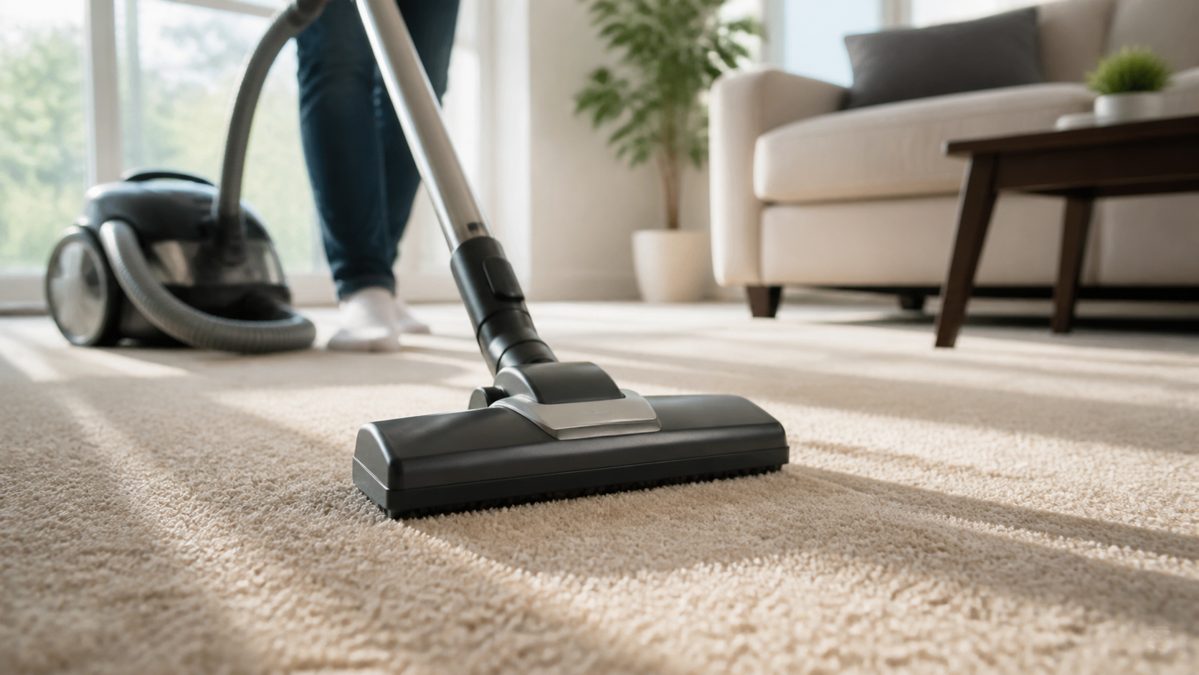
Before using any product, vacuuming remains the best way to prevent stains and wear. A weekly vacuuming is sufficient for a lightly trafficked carpet, but two vacuumings per week are recommended for a hallway or a high-traffic living room.
Vacuuming doesn't just remove visible dust; it also eliminates dust mites and deeply embedded residue. A vacuum cleaner equipped with a certified HEPA filter captures at least 99.95% of the fine particles in the expelled air, a detail that is particularly important in a child's bedroom or for someone with allergies.
Go over the vacuum cleaner again, crossing the direction of travel (first in the direction of the fibers, then perpendicularly): this straightens flattened hairs and significantly improves the visual appearance, without any product.
The next step is to identify the fiber type. Synthetic carpets (polyamide, polypropylene) withstand humidity and common commercial cleaning products well. Wool or natural fiber carpets, being more fragile, react poorly to excess water: they felt, yellow, or retain a musty odor if they dry too slowly.
A tenant who takes over a studio with a wool carpet that has been in place for fifteen years therefore has no interest in immediately taking out the carpet cleaner: a test on a hidden corner (under a piece of furniture, for example) allows one to check that the fiber does not discolor before treating the entire surface.
Removing a stain from a carpet according to its nature
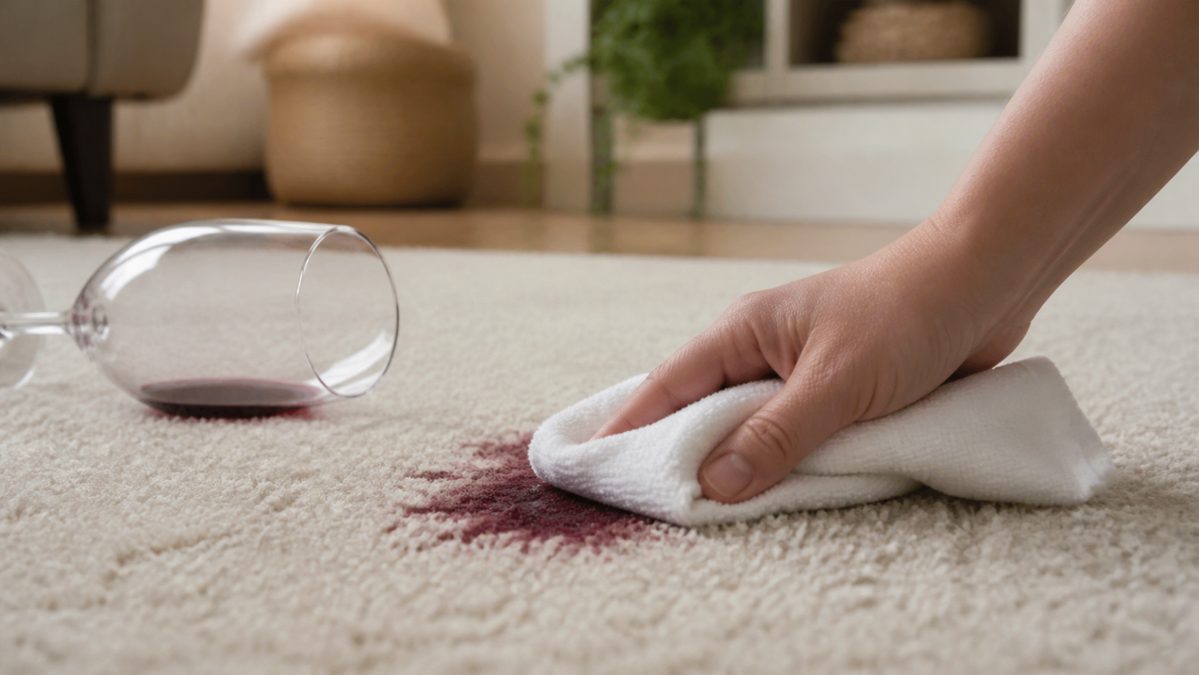
The game-changing rule, as highlighted in Saint Maclou's cleaning magazine : always work from the outside in to the inside of the stain to avoid spreading it, and dab instead of rubbing. Rubbing crushes the fibers and often creates a larger halo than the original stain.
The following table summarizes the methods that work best depending on the type of stain, before moving on to a more general carpet cleaning.
| Type of stain | Recommended method | Exposure time |
|---|---|---|
| Coffee, tea, wine | Blot off the excess, then dab with diluted white vinegar | 30 minutes |
| Fat | Baking soda sprinkled dry | All night |
| Dried mud | Allow to dry completely, then brush and vacuum | None (dry) |
| Urine (animal) | Blot dry, then use pure white vinegar to neutralize the odor | 15 minutes |
| Candle wax | Ice pack to harden, then scrape gently | A few minutes |
| Chewing gum | Ice cube to harden, then remove in small pieces | 10 minutes |
Bleach and ammonia are sometimes mentioned for synthetic fibers, but they easily discolor dyed carpets and release irritating fumes in enclosed spaces. It's best to reserve these products for situations where nothing else has worked, and never use them on natural fibers.
Deep cleaning a carpet: baking soda, vinegar, and a carpet cleaner
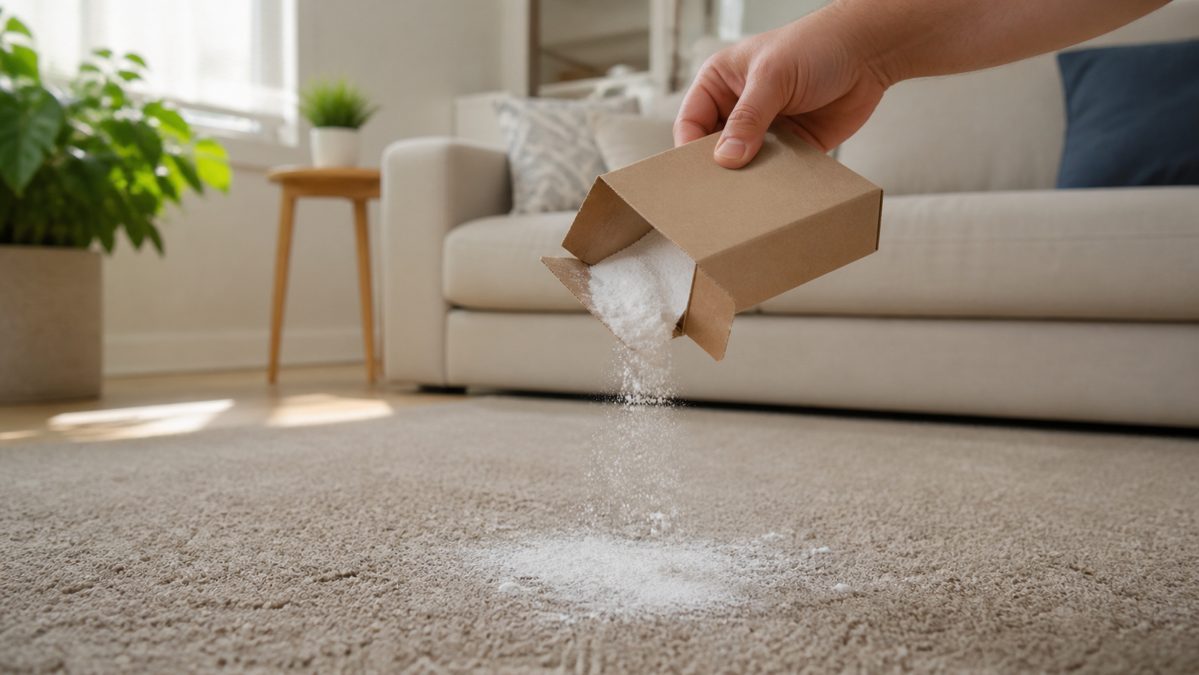
For widespread soiling rather than a single stain, the combination of baking soda and white vinegar remains a natural method commonly recommended by cleaning professionals. Sprinkle baking soda over the entire surface, lightly spray vinegar on top, let it sit until the effervescent mixture loosens the dirt, then gently brush before vacuuming once dry.
According to Dyson's maintenance documentation, this method is suitable for most synthetic fibers but should be tested beforehand on natural fibers, which are more sensitive to product residues that remain trapped in the weave.
For deeper soiling, a dry cleaning powder such as Koolnet or similar can be used, following the manufacturer's dosage instructions, and leaving it on for 20 to 30 minutes before vacuuming. This is a dry alternative, without the risk of residual moisture.
Carpet cleaners or carpet extractors go deeper, but require careful attention to drying. According to Kärcher's maintenance guide, it's better to clean small, successive sections and ventilate the room well, rather than soaking the entire surface at once: carpets left damp for more than 24 hours easily develop musty odors, especially in winter when heating isn't enough to speed up drying.
- No risk of mold or shrinkage
- Suitable for delicate natural fibers
- A vacuum cleaner is sufficient; no special equipment is needed
- Long drying time, sometimes more than 24 hours
- Risk of stains if not rinsed properly
- Not recommended for use on old wool without prior testing
Which method should you choose depending on your situation?
Fiber type:
Main problem:
Deodorizing a carpet and knowing when to call a professional

A lingering odor after cleaning almost never comes from the fibers themselves, but from the underlay or underlay beneath, especially after water damage or repeated pet use. Baking soda works on the surface, but has no effect on moisture that has already penetrated deep into the fabric.
A family with a cat that has scratched and sometimes relieved itself in a corner of the child's room typically finds itself in this situation: the smell returns after a few days despite surface cleaning, a sign that the liquid has penetrated to the underlayer.
Sprinkle the entire room generously with bicarbonate in the evening, leave it until the next morning, then vacuum slowly, going over the affected areas twice: bicarbonate needs time to absorb odors deeply, not just on the surface.
Beyond this simple case, certain signs indicate that home cleaning will no longer suffice: an odor that returns after several attempts, a stain that spreads instead of shrinking, or a surface area too large for reasonable manual cleaning. In these situations, renting a professional carpet extractor from a DIY store or hiring a cleaning company becomes more cost-effective in terms of time than persisting alone.
Deep extraction cleaning remains the gold standard for fully restoring a soiled carpet, provided that sufficient drying time is allowed before walking on it again.
In summary
The best approach to cleaning a carpet isn't to search for THE miracle product, but to adapt the method to two simple criteria: the nature of the stain and the type of fiber. Synthetic fibers tolerate water and commercial products, while natural fibers require more care and are best cleaned dry.
Regular vacuuming, treating each stain with the correct method, and reserving the carpet cleaner for deep cleanings spaced out throughout the year will prevent most unpleasant surprises. When an odor or stain persists, it's best to use professional equipment rather than repeatedly attempting to remove it, which only damages the fibers further each time.
Practical questions
How do you clean a very dirty carpet?
Start by vacuuming thoroughly, then apply baking soda to the entire surface overnight before vacuuming again. If the grime remains visible, a quick pass with a carpet cleaner or carpet extractor, working in small sections, will finish the job without soaking the entire room.
What is the best product for cleaning a carpet?
There is no single universal product: bicarbonate is suitable for grease stains and odors, diluted white vinegar for drink stains, and a dry cleaning powder for more general soiling without risk of moisture.
How do I dry clean a carpet?
Dry cleaning involves sprinkling a cleaning powder or baking soda over the entire surface, leaving it to sit for the specified time (often 20 to 30 minutes for a commercial powder), and then vacuuming without ever wetting the fibers. This is the safest method for antique or wool carpets.
How to clean a carpet with baking soda and vinegar?
Sprinkle baking soda on the area to be treated, lightly spray white vinegar over it, let the effervescent reaction loosen the dirt for a few minutes, brush gently and then vacuum once the carpet is dry.
How to remove carpet odor?
Generously sprinkle baking soda over the entire affected area, leave it overnight, then vacuum. If the odor persists after several attempts, it likely originates from the underlayment: professional extraction cleaning will then be necessary.
