
In short
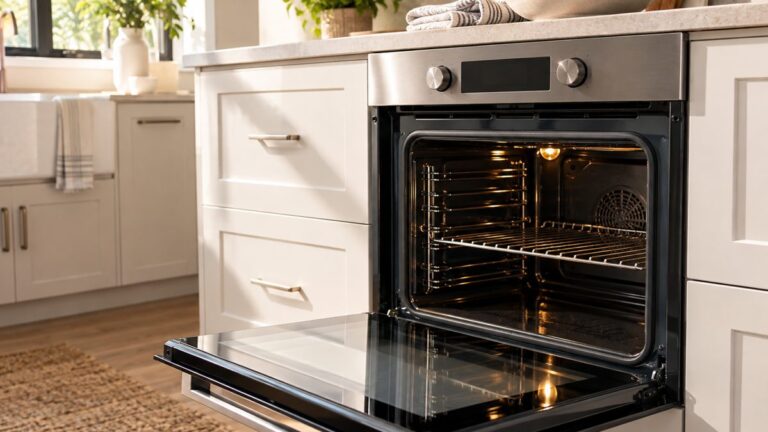
An oven window that yellows and then blackens is almost always the same story: a dish that boils over, grease that cooks at 200°C and turns into varnish, then a quick cleaning with a damp cloth that only removes the top layer.
The problem is that most of the methods found online only address the outer pane of glass and completely ignore the inner pane, the one sandwiched between the two panes of glass in the door. Yet it's this inner pane that, over time, gives the oven that "dirty inside" impression that no amount of wiping can fix.
This article details the dosages that actually work, the method for reaching this inner pane without breaking the door, and a gentle trick for the oldest carbonized stains, those that we think are lost forever.
Why does the oven door glass get dirty so quickly?
Each time you cook above 180°C, grease splatters turn into a brown film that adheres to the glass. The higher the temperature, the harder this deposit becomes and the more difficult it is to remove with a regular sponge.
In an electric oven, the top heating element heats up just above the glass: spills and splatters bake almost instantly. In a gas oven, the flame circulates more air inside the cavity, which disperses them over a wider area but generally makes them less likely to stick in a thick layer.
Mixing baking soda and white vinegar in the same container beforehand is almost pointless: the fizzing reaction neutralizes both products before they even touch the glass. It's better to apply the baking soda paste first, then spray the vinegar over it as you scrub.
Cleaning the oven door with baking soda paste, step by step
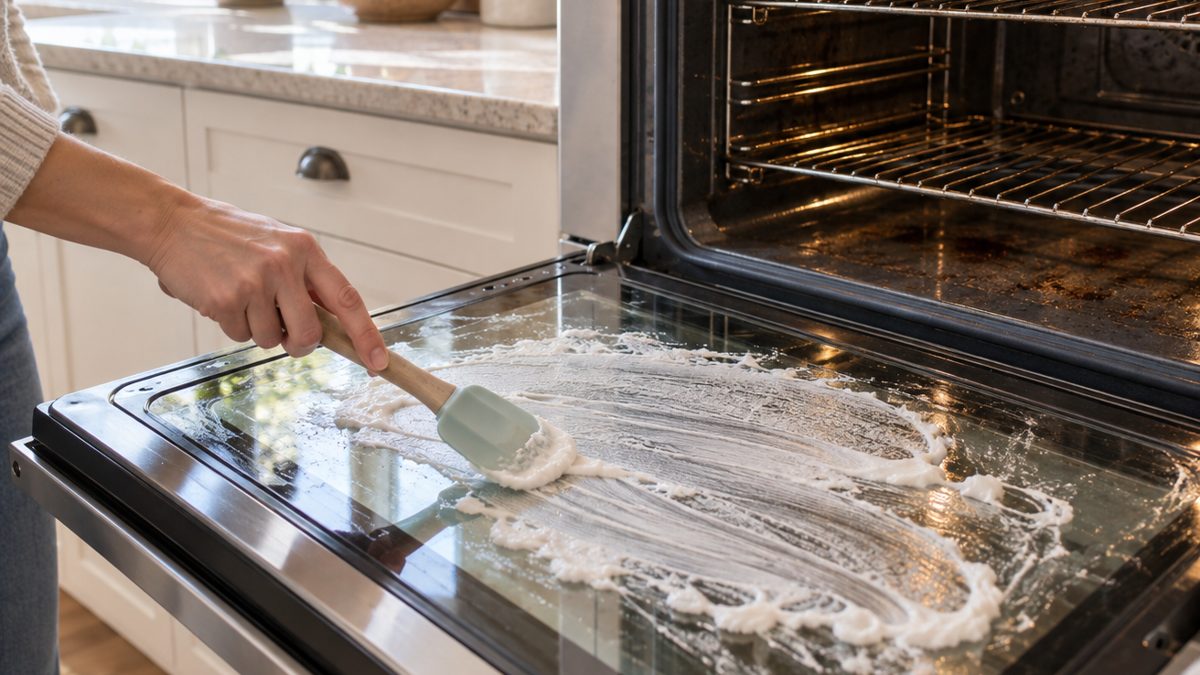
This method remains the most reliable for a window that is typically dirty, without carbonized stains.
Mix 2 tablespoons of baking soda with a little warm water to form a thick paste. Spread it over the entire surface of the window with your fingers or a flexible spatula, paying particular attention to the darkest areas. Let it sit for 20 minutes (up to 2 hours for stubborn stains, or overnight under plastic wrap for old grime). Then spray white vinegar directly onto the paste: the fizzing will loosen the softened grease. Scrub with a non-abrasive sponge, then rinse with clean water and dry with a microfiber cloth to avoid streaks.
A family that uses its built-in electric oven almost every night for gratins and stews will see the glass get dirty again within a few weeks. In this case, it's best to reduce the interval between thorough cleanings (see below) to avoid having to repeat this step, the most time-consuming of all.
Clean the inner glass, between the two panes of glass in the oven
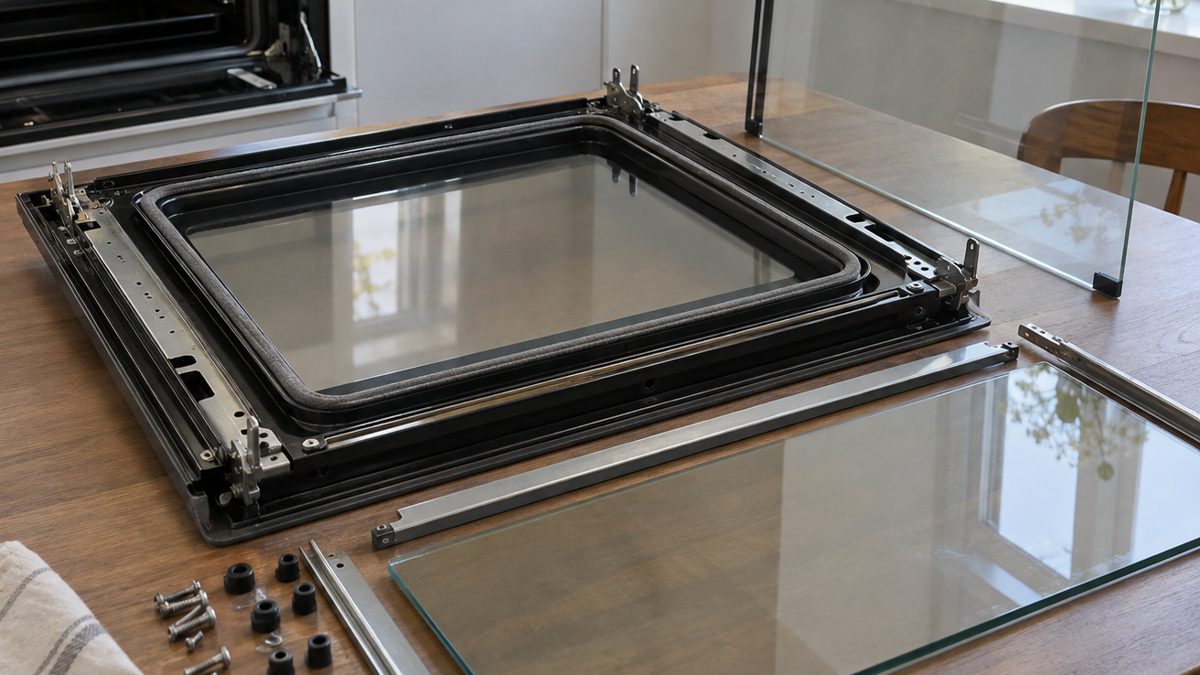
This is where the real difference lies compared to simply wiping the surface with a sponge. On the vast majority of built-in ovens, the door is made up of at least two stacked panes of glasswith a gap between them. Grease that seeps in, often through a poorly sealed door or a door left ajar during cooking, remains invisible from the outside but gives a yellowed or hazy appearance when viewed through the glass.
To reach it, you have to remove the inner pane of glass, not just wipe the outer pane:
- Open the oven door horizontally and locate the clips or retaining screws on its upper edge (the location varies depending on the brand; the oven's user manual indicates them precisely).
- Carefully unclip or unscrew these fasteners: the inner glass will be released and can usually be removed by sliding it upwards, or it will open towards you once the clips are detached.
- Clean this window with warm soapy water, without abrasive products: the inner glass is often thinner and more fragile than the outer glass.
- Reinstall the glass in the same direction as when disassembling (some models have a treated side which must remain facing the inside of the oven) and screw or clip it back on firmly before closing the door.
According to Whirlpool, the cleaning product should never be applied directly to the glass, but to the cloth or sponge, and abrasive detergents or rough absorbent papers should be avoided as they may permanently damage the glass.
Once the door is lighter after a pane of glass has been removed, it may slam shut on its hinges more abruptly than usual. Hold it firmly throughout the entire process and never let go until the glass is clipped back into place.
Electric oven or gas oven: what changes in cleaning
On an electric oven, the glass door is generally easier to access: most recent built-in models have a standardized clip system, described in the instruction manual. The main point of caution is the upper heating element, which should not be touched when cleaning the top of the glass.
On a gas oven, the door sometimes incorporates an additional safety system (a door closure sensor linked to the ignition) located near the hinges. Before dismantling anything, it's best to unplug the appliance, wait until it's completely cool, and thoroughly dry the area after cleaning it with water, as a precaution with the pilot light or burner located nearby.
In both cases, a pyrolytic or catalytic oven does not change the method for the glass itself: only the coating of the interior walls of the oven is self-cleaning, never the glass of the door, which is maintained in exactly the same way.
Stubborn burnt-on stains: the gentle method that works
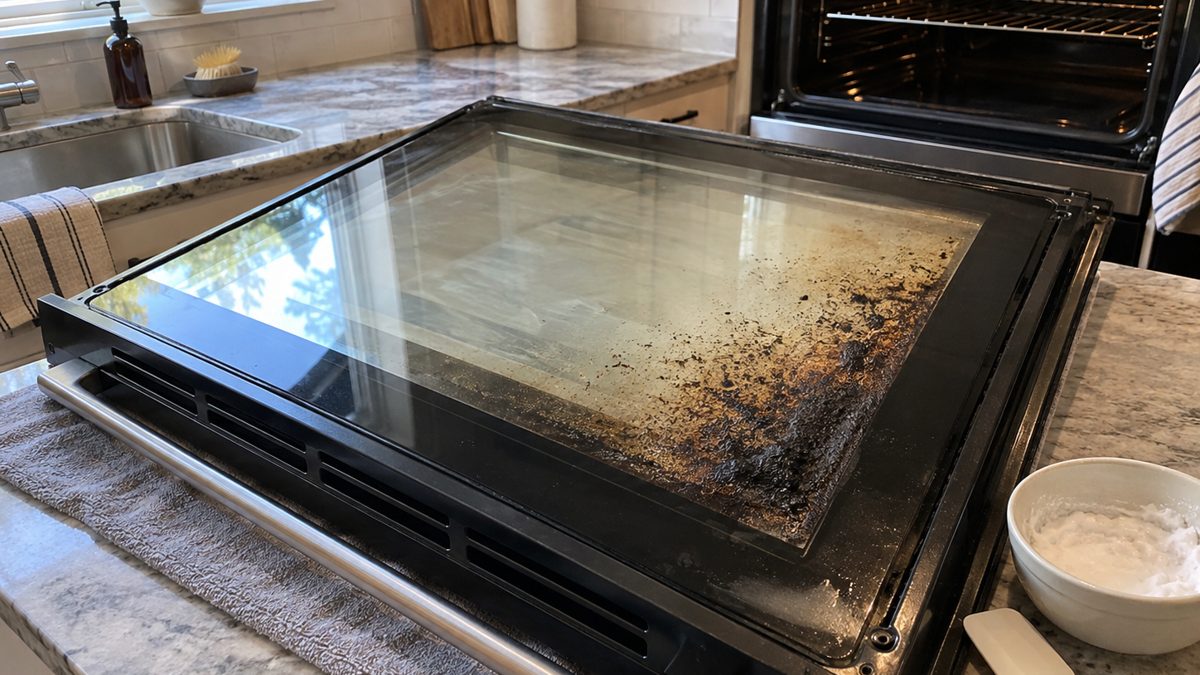
A dish that has boiled over and been repeatedly cooked without cleaning leaves hard, black marks that are almost stuck to the glass. The classic baking soda/vinegar method is usually not enough for this type of old stain.
Rather than going straight to an aggressive product like ammonia, a more concentrated paste gives good results on the majority of charred stains: mix 3 tablespoons of bicarbonate with 1 tablespoon of 10 volume hydrogen peroxide (available in pharmacies) until you obtain a thick and lumpy paste.
Spread it generously on the stain, cover with cling film to prevent it from drying out, and leave it overnight. The next day, gently scrape with a flexible plastic spatula before rinsing.
A couple who regularly entertains and sometimes lets a cheese gratin boil over during cooking will typically find this type of localized black stain, concentrated in a specific corner of the glass rather than spread across the entire surface. In this case, there's no need to treat the whole glass: targeted treatment of the charred area is sufficient.
If a trace still resists after this treatment, repeat the operation a second night rather than scraping harder or using a knife: tempered glass and a very old stain almost always give way after two passes, without leaving a scratch.
Mistakes that damage the oven glass
Steel wool and green-backed sponges scratch glass irreversibly, even with gentle rubbing: the resulting mark becomes a grease trap that accelerates re-soiling. A metal glass scraper, designed for ceramic hobs, leaves the same type of mark on the angled glass of an oven door.
Another common pitfall: using a commercial degreaser spray in a closed room without opening a window. According to the National Consumer Institute, good ventilation during and after using chemical cleaning products limits the inhalation of irritating fumes—a simple but often forgotten precaution for a cleaning task that only takes a few minutes.
Regular maintenance so you never have to start all over again
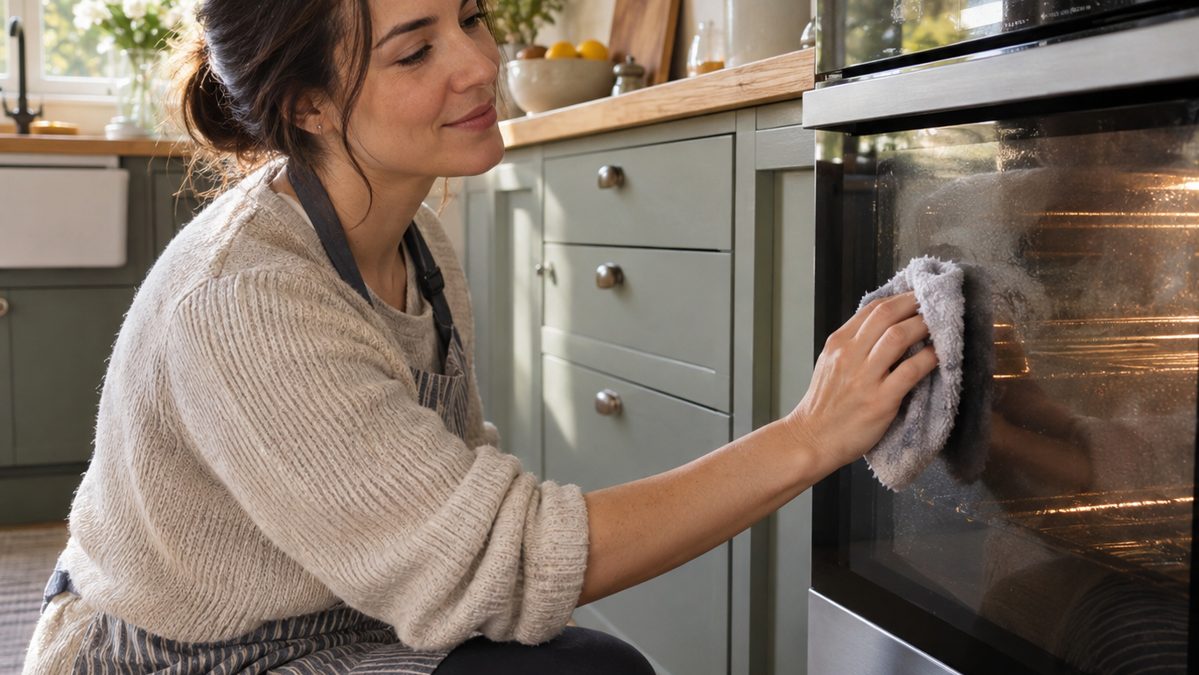
A simple wipe with a damp sponge on the outside of the oven door, once it has cooled down after each slightly greasy use, prevents the grease from baking on a second time during the next cooking session. This thirty-second action is far superior to a full cleaning with baking soda every two weeks.
For the inner glass, a complete dismantling once or twice a year is sufficient in most homes, except for very intensive use of the oven where a cleaning every three to four months prevents a thick build-up of grime from becoming permanent.
- After every boil-over: targeted cleaning the same day, before the stain cooks a second time
- Every two to three weeks: a complete application of baking soda paste to the outside of the window
- Once or twice a year: dismantling and cleaning of the inner glass
Comparison of methods according to task type
| Method | Exposure time | Effective on | Limit |
|---|---|---|---|
| Baking soda + vinegar | 20 minutes to 2 hours | Freshly cooked fat | Ineffective on old charred material |
| Bicarbonate + hydrogen peroxide | All night | Ingrained charred stains | Requires gentle scratching upon waking |
| clay stone | Immediate, by rubbing | Light marks, routine maintenance | Insufficient on a thick layer |
| Warm soapy water | Immediate | Interior glass removed, regular maintenance | Do not remove grease that is already cooked |
Which method should I use for my oven door?
In summary
The baking soda and vinegar method solves the vast majority of grimy oven windows, provided you respect the application times and don't mix the two products beforehand. The real game-changer, however, is removing the inner glass panel, often overlooked even though it only takes a few minutes once you know where to find the clips.
For older charred stains , a paste of bicarbonate and hydrogen peroxide offers a gentle alternative to ammonia, although it may be necessary to repeat the process a second night on a particularly stubborn stain
Practical questions
How to clean the inside of the oven glass without completely disassembling it?
Without disassembling, it's possible to introduce a little warm soapy water into the gap between the two panes of glass by tilting the open door horizontally, then wipe it with a thin cloth attached to a handle. However, the result is less effective than complete disassembly, especially on grease that has been present for several months.
What is the best natural product for a heavily soiled oven window?
A thick paste of baking soda, left to sit for several hours before being removed with white vinegar, remains the most reliable natural method for tackling heavy soiling. Clay stone works well for routine cleaning but struggles with thick layers of grease.
How to remove very old black stains from the oven glass?
A paste of bicarbonate and 10 volume hydrogen peroxide, left overnight under cling film and then gently scraped off with a plastic spatula, removes most old carbonized stains in one or two applications, without resorting to an aggressive product.
Can white vinegar be used on all oven windows?
Yes, white vinegar is suitable for both the exterior and interior glass when removed, as long as it is not left in prolonged contact with the metal parts of the door, which it can tarnish over time.
How to clean a pyrolytic oven without damaging the coating?
The self-cleaning coating on a pyrolytic oven only applies to the interior walls of the cavity, never to the door glass. The door glass is cleaned exactly like on a conventional oven, with baking soda and vinegar, without risk of damaging the pyrolytic cleaning function.
