
In short
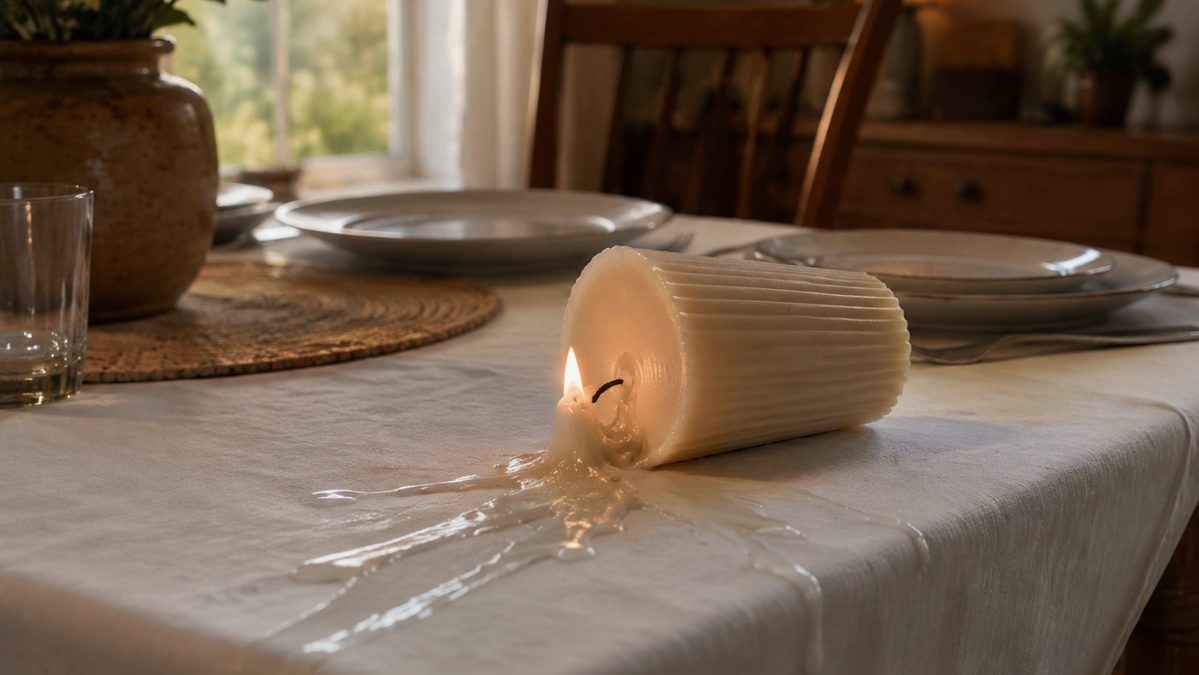
A candle dripping onto the tablecloth during dinner, a candlestick knocked over on the floor, or leftover cleaning wax not properly wiped off a piece of furniture: the incident is common.
The natural reaction is to rub it off immediately with a cloth. This is precisely the action to avoid, as it spreads the wax instead of removing it.
This article details the correct method depending on the surface (fabric, wood, tile, glass) and the type of wax, because a scented candle is not treated quite like furniture wax.
Candle wax or maintenance wax: why does this distinction change the method?
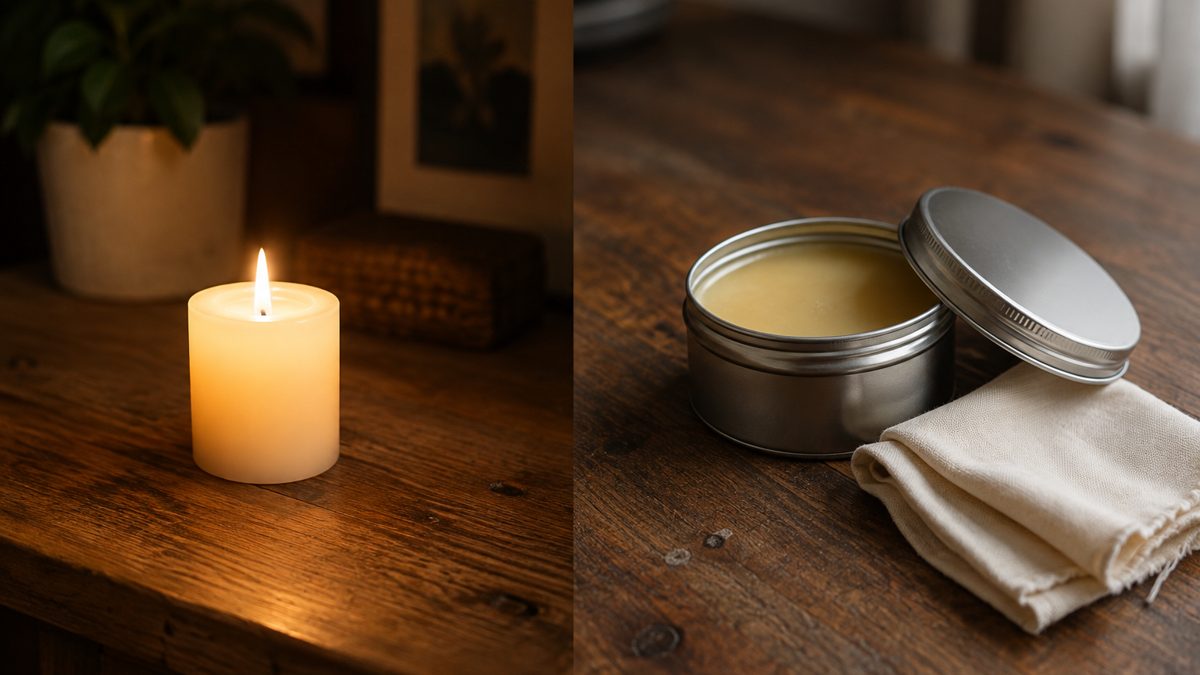
Candle wax is almost always paraffin-based or vegetable wax-based, with a fairly low melting point.
Paraffin generally melts between 52 and 60°C, compared to 62 to 65°C for beeswax used in some furniture care waxes.
This difference explains why fresh candle wax cracks easily when cold, while poorly wiped maintenance wax often remains stickier and takes longer to peel off.
| Support | Recommended method | Precaution |
|---|---|---|
| Cotton and linen clothing | Absorbent paper, iron setting ●●● | Test a hidden corner first |
| Silk and synthetic clothing | Warm hairdryer, gentle scraping | Never use a hot iron directly |
| Tablecloth | Absorbent paper, iron, then wash | Avoid the steam function |
| Varnished wooden furniture | Cold scratching, plastic card | Never any metallic objects |
| Waxed wooden furniture | Light heat, microfiber cloth | Do not re-iron before thorough cleaning |
| Tiles, stone | Cold scraping, soapy water | Hair dryer if needed |
| Glass | Warm water, non-abrasive sponge | No major risk |
Furniture wax often contains beeswax or silicone, formulated to adhere permanently to wood. This makes it more difficult to remove when cold than regular candle wax.
The rule to follow before any action: let the wax harden, never rub while hot
Rubbing wax that is still soft with a cloth makes it stick more into the fibers instead of making it disappear.
The stain then grows larger, and the fabric or wood absorbs more grease than at the time of the accident.
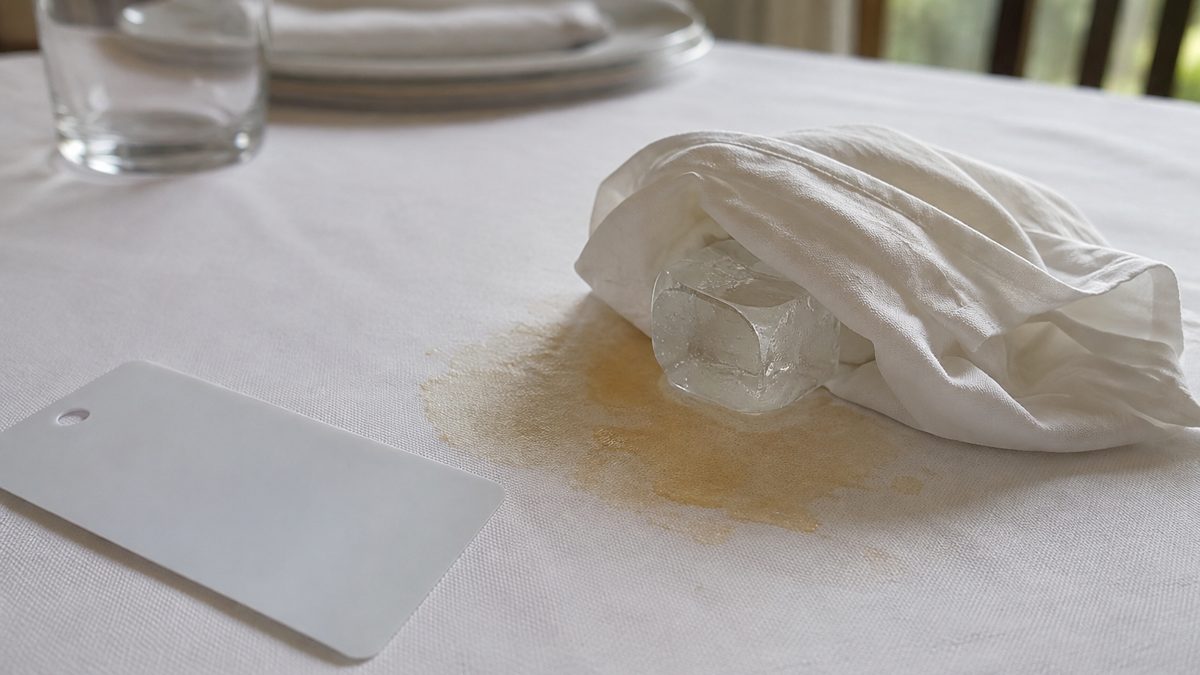
On a cotton tablecloth just stained by a candle spilled during a meal, pressing an ice cube wrapped in a cloth for a few minutes is enough to harden the wax before peeling it off with a fingernail or the back of a spoon.
When possible (small fabric, removable cushion), putting the stained item in the freezer for 20 to 30 minutes makes the wax brittle and easy to crumble, without having to scrape hard.
Once hardened, the wax can be scraped off with a rigid plastic card or the back of a spoon.
A knife or a blade should be avoided: they catch the fibers and easily scratch a varnish.
Removing wax from fabric: clothing, tablecloth, rug or sofa
On a cotton or linen garment
- Gently scrape off the excess hardened wax.
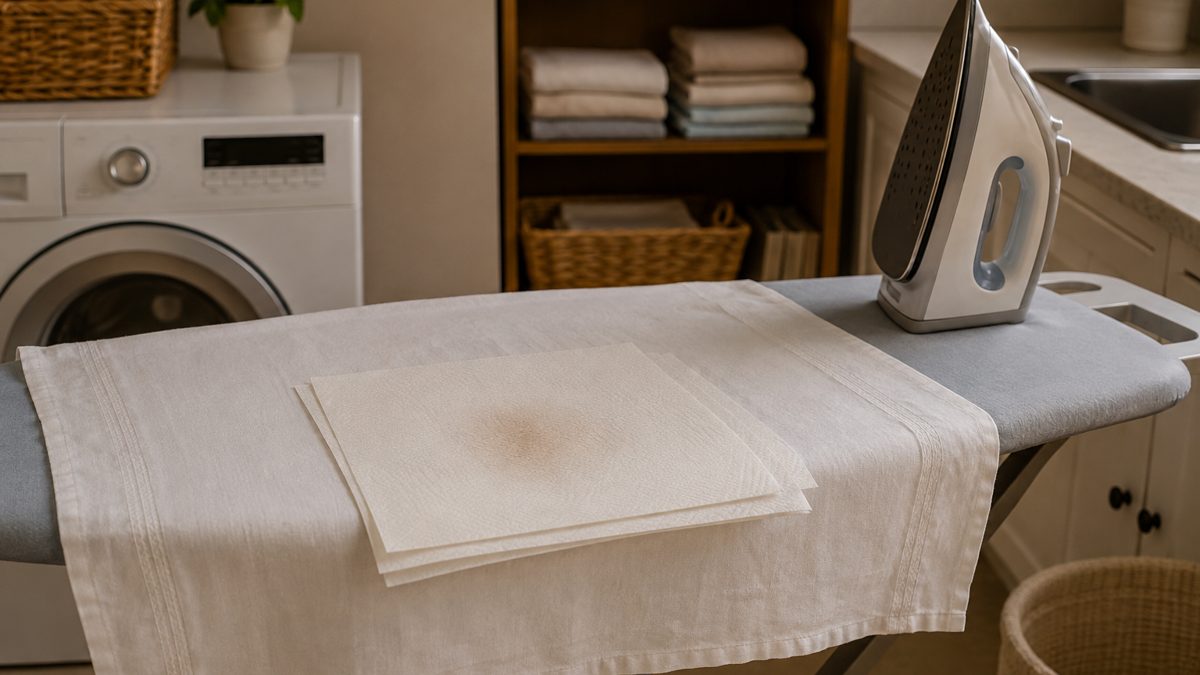
- Place two layers of absorbent paper on either side of the fabric.
- Pass the iron, set to ●●● (up to 200°C on cotton and linen), without steam, using short pressures of a few seconds.
- Move the paper as soon as it becomes greasy, until the stain disappears.
- Then machine wash according to the care label.
On a delicate fabric: silk or synthetic
On these heat-sensitive materials, the iron should remain at the lowest setting, i.e. between 80 and 110°C depending on the material, or even be replaced by a warm hair dryer held a few centimeters away.
On a polyester blouse, it is better to soften the wax from a distance with warm air and then peel it off with the back of a spoon, rather than directly applying the iron, which can make the material shine or stick irreversibly.
On a tablecloth
The method remains the same as for a cotton garment, with extra care taken with thick linen tablecloths which absorb more grease.
Once the paper has been removed, a few drops of dishwashing liquid on the remaining greasy stain, before washing, significantly improves the result.
On a rug, carpet, or fabric sofa
Wax should never be removed with an iron from these surfaces: the heat may damage the back of the rug or the sofa padding.
Harden with an ice cube protected in a plastic bag, scrape gently, then vacuum up the crumbled residue.
Colored or heavily scented candle wax can leave a halo or slight tint, even after the solid piece is removed, especially on light-colored fabric. Testing on a hidden corner before any heat treatment will ensure there is no discoloration.
- Removes wax quickly from resistant fabric (cotton, linen)
- Clear result in a single session on a fresh spot
- Risk of melting or shining synthetic materials
- Adjustable heat, suitable for delicate fabrics and wood
- Slower, often requires several passes
- Less effective on wax that is already heavily ingrained
Removing wax from wood, tiles or glass
Varnished wooden furniture or table
On a varnished surface, scrape cold with a rigid plastic card, never a metallic object which would scratch the finish.
Finish with a slightly damp microfiber cloth, following the direction of the wood grain.
Furniture made of waxed or unfinished wood
On waxed wood, gentle heat from a hairdryer, held at a distance, helps to soften the wax without damaging the existing finish.
Unlike varnished wood, waxed wood is more susceptible to stagnant moisture than to gentle, well-controlled heat.
Always wipe in the direction of the wood grain to avoid creating marks or damaging the grain.
Tiles, stone and flooring
Peel off when cold with a plastic card, then clean off the residual greasy film with hot soapy water.
For stubborn stains, a final pass with a hairdryer followed by immediate wiping will remove the ingrained residue.
Glass
The glass withstands hot water well, which is usually enough to melt and slide off the wax without scraping.
A non-abrasive sponge finishes the job on the edges of a candle holder or candlestick.
Which method is right for your situation?
Which surface is stained?
The greasy residue left after waxing: how to treat it?
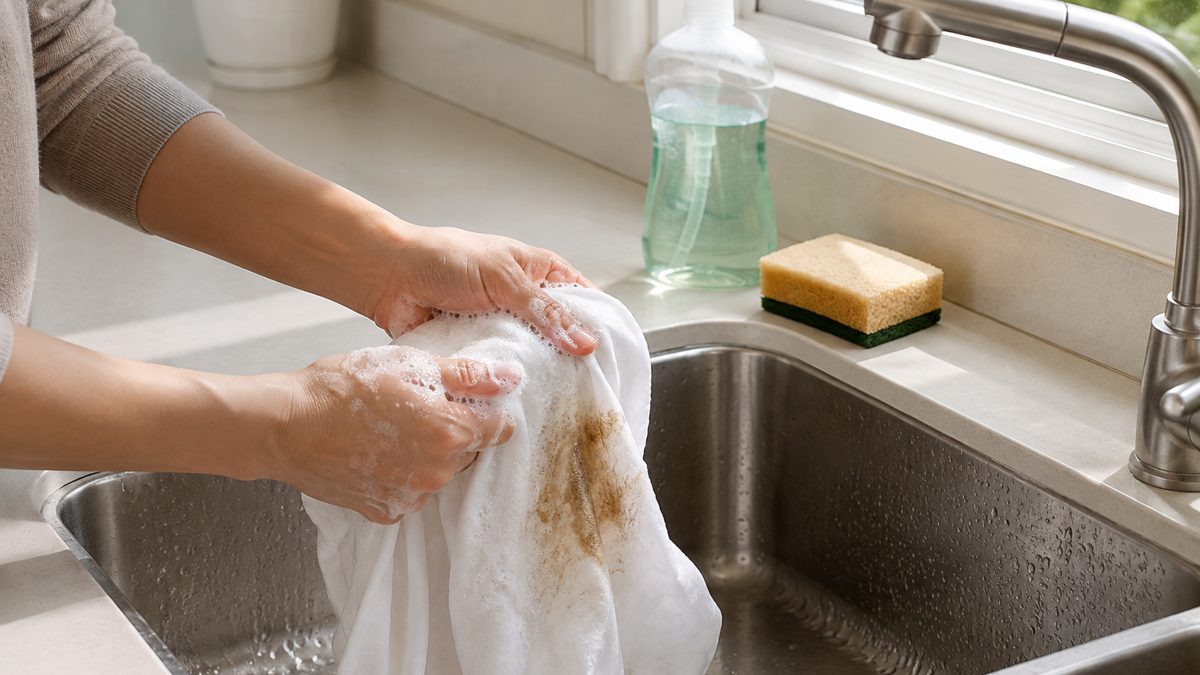
Once the solid wax is removed, a greasy or slightly transparent trace often remains on the fabric.
This is a different problem, which is treated with a degreaser rather than with heat.
Baking soda combined with white vinegar is often touted as a universal solution for wax stains. In reality, the effervescent reaction they produce works mainly on the surface and is no substitute for a proper degreaser on old or ingrained stains.
On washable fabric, a few drops of dishwashing liquid rubbed gently on the stain, before machine washing at the temperature indicated on the label, are usually enough to remove the remaining grease.
According to Cocolait's guide to grandmother's tips, the rule that comes up in almost all effective methods can be summed up in three words: solidify, detach, absorb.
In summary
Removing the wax is not complicated once the order of steps is followed: harden, scrape, then absorb with gentle heat.
The real difficulty does not come from the support, but from the reflex to correct: that of immediately rubbing a spot of still-warm wax.
By adjusting the iron setting or choosing the hair dryer according to the material, most candle wax or maintenance wax stains come off without leaving a trace.
Practical questions
How do you remove wax that has already dried on fabric?
Scrape off the bulk of the wax while it's still cold using a plastic card, then apply the absorbent paper and iron method (adjusted according to the material) as you would for fresh wax. Older wax simply requires several passes with paper.
Are white vinegar and baking soda really enough to remove wax?
The mixture primarily works on residual grease stains, not on the solid wax itself. It complements the use of a flat iron or hairdryer, but does not replace it.
Does a hair dryer work as well as an iron?
It is slower but safer on delicate fabrics or waxed wood, surfaces that cannot withstand direct contact with iron.
Is freezing suitable for all types of clothing?
No, it's best to reserve this method for small fabrics or removable items like a cushion or cover. A garment with glued-on embellishments or delicate finishes may react poorly to intense cold.
How to remove a wax stain from leather without damaging it?
Allow to harden, then very gently scrape with a plastic card, never with a sharp object. Finish with a leather cleaning milk rather than water, which can leave a ring.
