
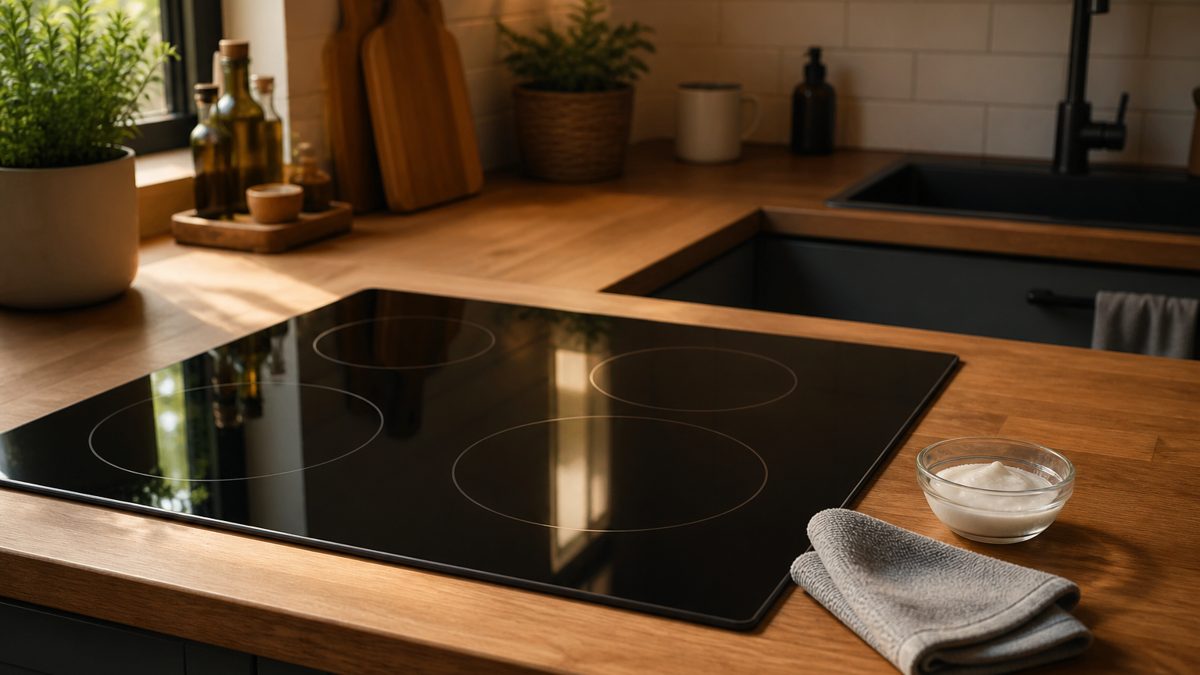
In short
A perfectly clean induction hob isn't a miracle. It relies mainly on a few actions repeated at the right time, before the milk caramelizes or grease sticks to the glass.
The problem is that not all stains are treated the same way. A fresh spill can be removed in thirty seconds with a damp sponge. A burnt stain that has had time to cool requires a much more targeted method, otherwise you risk scratching the surface by trying to go too fast.
This article details the procedure to follow depending on the type of soiling: recent grease, white marks, ingrained burnt or existing scratch, with the dosages and application times that really make a difference.
The action to take immediately after each cooking session
The best way to clean an induction hob is to do it before a stain even forms. As soon as cooking is finished and the glass has cooled down a little, a quick wipe with a damp, non-abrasive sponge is enough to remove any fresh spills.
Then dry with a microfiber cloth. This last step, often neglected, prevents limescale stains that dull the glass over time.
Wait until the plate is lukewarm rather than burning hot before cleaning it: repeated thermal shock with a cold sponge can weaken the glass, even if the effect is not immediately visible.
Remove grease stains and recent splashes
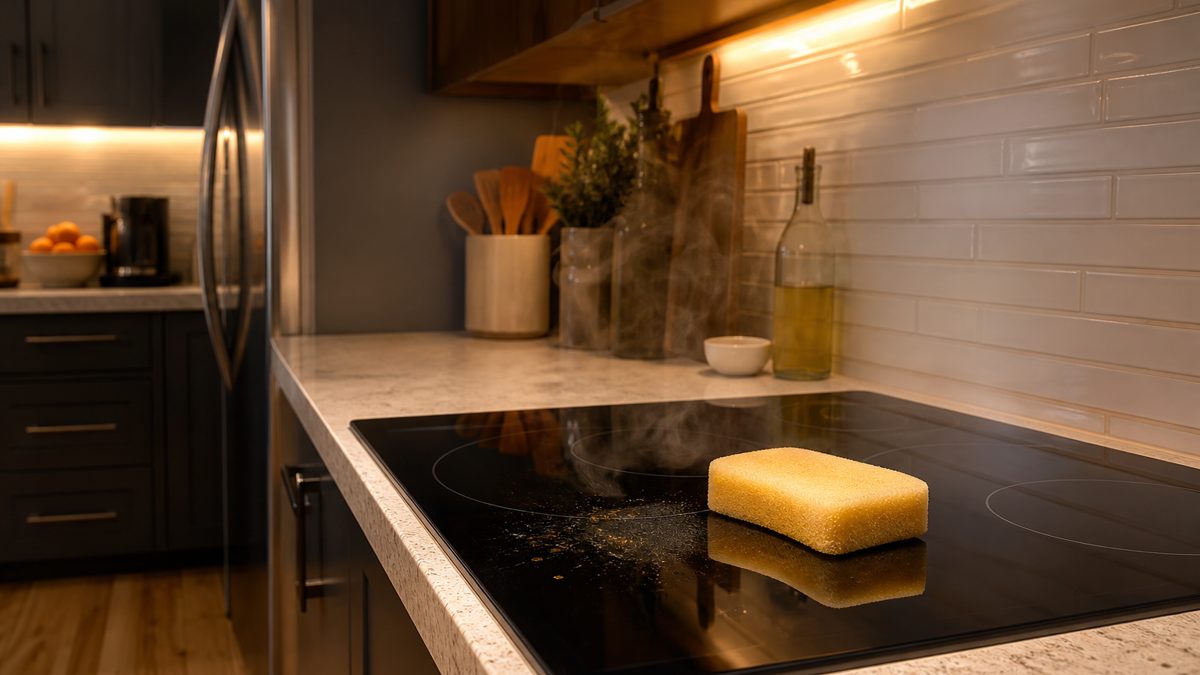
A grease or sauce spill that hasn't had time to dry can be treated with hot water and a dab of dish soap applied with a soft sponge. Rub in circular motions, without lingering on any one spot.
If a light greasy film remains, a little white vinegar diluted in hot water effectively degreases without leaving any odor once the hob has been rinsed and dried.
On the "Less Spending", a user recommends "a good Marseille soap spray with a soft cloth, then to make it shine, since it's a window, I use window cleaner." This method aligns with the initial idea: gently degrease before polishing, never rubbing dry.
Remove white traces of dried milk or water
The white marks almost always come from limescale in the water or milk that has boiled over and dried on the hob. They become ingrained more quickly than a simple grease splatter.
Soak a soft cloth in white vinegar and leave it on the affected area for a few minutes before rubbing. The acidity dissolves the limescale deposit without the need for vigorous scrubbing.
Whirlpool, in its maintenance advice, recommends wiping the induction hob with a damp sponge while it's still warm, which helps loosen dirt more easily. It's also a good idea to consult your appliance's instruction manual before applying any acidic product, as some models may be more sensitive to acid than others.
Cleaning a very dirty induction hob or one covered in burnt-on food
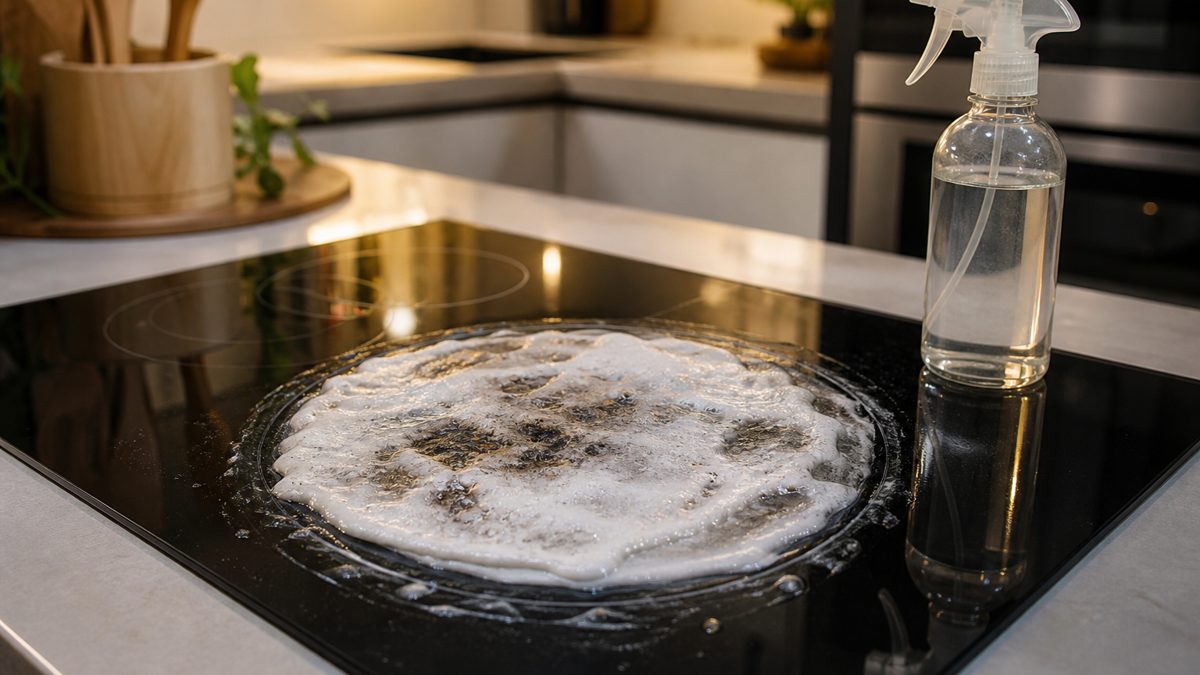
For burn marks , the most effective method combines baking soda and white vinegar. Mix about three tablespoons of baking soda with a few drops of water to form a thick paste, then spread it over the burned area.
Leave to act for 15 to 30 minutes depending on the thickness of the deposit. Then spray white vinegar directly onto the paste: the effervescent reaction that occurs will loosen the ingrained residue without the need for vigorous scraping.
Finish with a damp sponge using circular motions, rinse with clean water, then dry with a microfiber cloth to avoid any new halos.
First, remove any excess burnt-on food with a wooden spatula or a special ceramic hob scraper, held flat against the glass, before applying the baking soda paste. The less solid residue remains, the shorter the application time will be.
Which method is right for your situation?
Repairing a scratch on glass
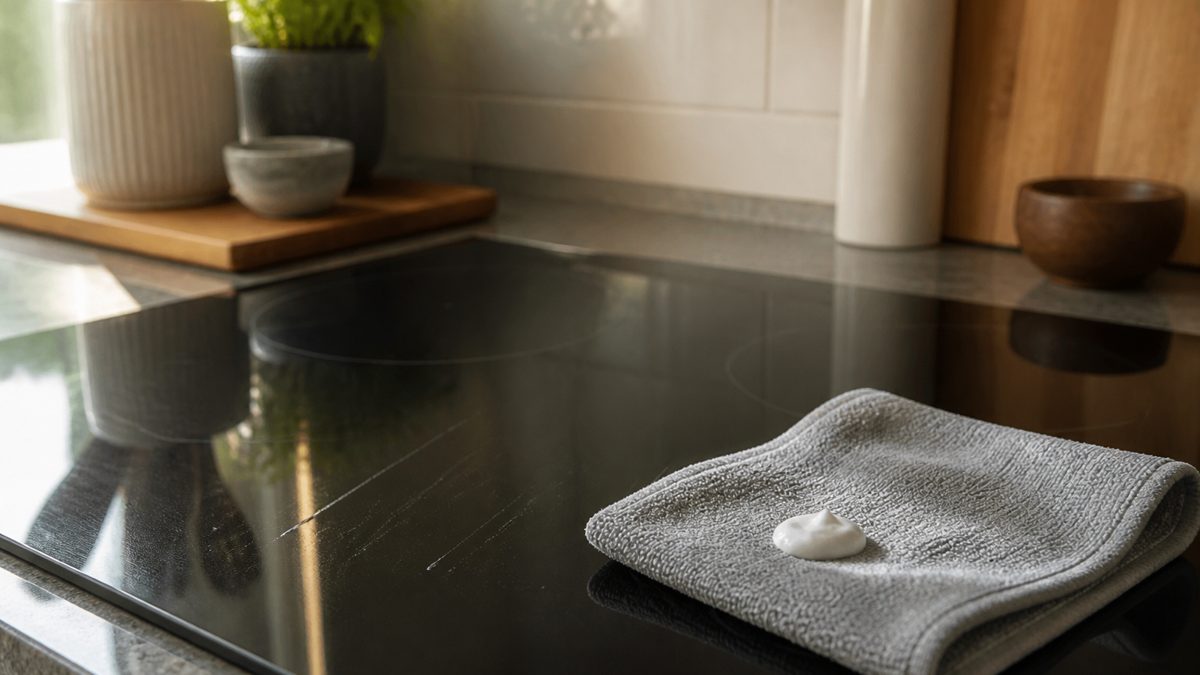
A superficial scratch often leaves room for improvement. A dab of regular white toothpaste (not a gel or whitening formula) applied to a microfiber cloth and then rubbed in small circles over the affected area visibly reduces even the finest micro-scratches: the silica in the toothpaste acts as a mild polish. A glass polish or a gentle car polish also works, always testing on an inconspicuous area first before treating the entire surface.
The most frequent cause of a scratch remains the underside of a saucepan or frying pan not cleaned properly: a grain of dried salt or an encrusted residue is enough to mark the glass on the first pass.
A deep scratch that catches a nail cannot be repaired with any home remedy. Toothpaste and polish mask superficial micro-scratches, but they won't fill a deeply damaged glass: always check that the bottom of your utensils is clean and smooth before placing them on the stovetop; this is the only real prevention.
Which products and accessories should be used, and which should be avoided?
A non-abrasive sponge and a microfiber cloth cover most routine cleaning. For stubborn residues that resist baking soda, Darty recommends a special ceramic glass scraper with a thin blade, held flat against the glass, to remove the deposit without directly touching it with a sharp metal object.
The scraper should always slide flat on the glass, never at an angle: it is the angle of attack, much more than the material of the deposit, that determines whether the plate comes out intact or scratched.
- Inexpensive and already present in most kitchens
- Chemically safe for everyday food use
- Effective on most common tasks
- They scratch the glass irreversibly from the first use
- They can damage the non-stick coating of the cooking zones
- No real advantage over gentler methods on this type of surface
Induction or ceramic hob: what difference does it really make for cleaning?
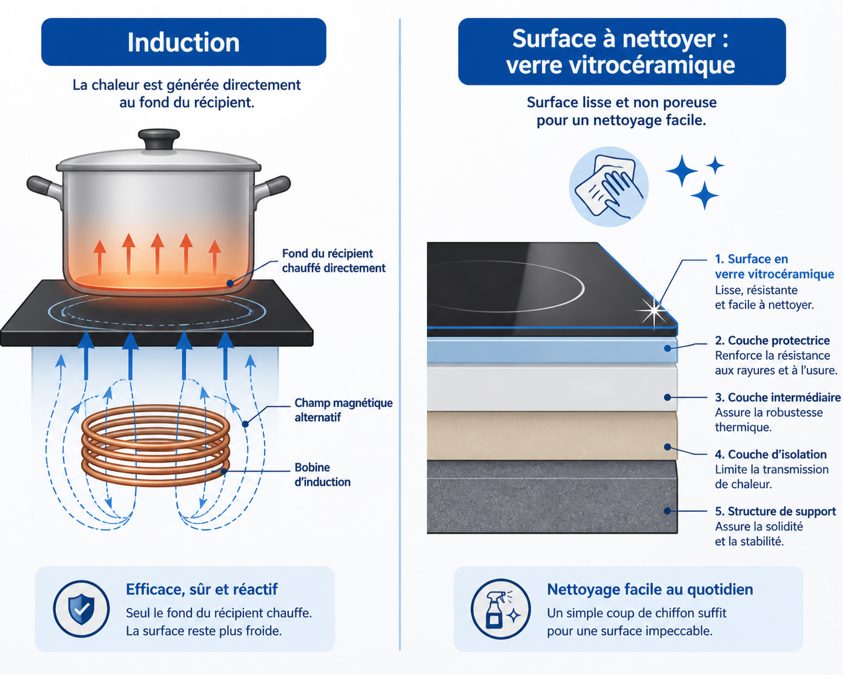
"Induction" doesn't describe the material of the cooktop, but rather its method of producing heat: a magnetic field that directly heats the base of the pan, not the glass itself. The surface you clean daily remains, in the vast majority of cases, a glass-ceramic surface identical to that of conventional cooktops.
This confusion explains why the maintenance advice for an induction cooktop and a ceramic cooktop is almost entirely the same: same products, same precautions against scratches, same susceptibility to limescale. The real difference lies elsewhere: on induction, the base of the pan heats up first, and the glass generally remains cooler to the touch, whereas on a conventional ceramic cooktop, the surface itself heats up and retains heat longer after being switched off. The cleaning procedure, however, remains the same.
| Type of stain | Recommended product | Exposure time |
|---|---|---|
| Fresh fat | Hot water + dish soap | None, rinse immediately |
| White limestone traces | Pure white vinegar on a soft cloth | A few minutes |
| Burnt and ingrained | Paste of baking soda + white vinegar | 15 to 30 minutes |
| Superficial scratch | Gentle toothpaste or polish | None, gentle mechanical action |
In summary
A well-maintained induction hob is mainly about regularity : a wipe with a sponge and drying with a microfiber cloth after each use prevents most stubborn stains that then require baking soda and soaking time.
When faced with an established stain, the rule remains the same regardless of its nature: start with the gentlest gesture, only increase the intensity if necessary, and banish any abrasive product or accessory that promises a faster result at the cost of a permanent scratch.
Can you clean an induction hob with pure white vinegar?
Yes, diluted or undiluted depending on the stain, white vinegar remains one of the least aggressive products for this type of glass. Always rinse and dry after use to avoid any residue.
Does bicarbonate scratch an induction hob?
No, provided it's used as a wet paste and rubbed with a soft sponge, never dry with an abrasive pad. It's the application method, not the baking soda itself, that determines the risk of scratching.
Can you clean an induction hob while it's still hot?
It's better to wait until it's lukewarm rather than scalding hot. Contact with cold water on a still-hot glass can create repeated thermal shock, which weakens the plate over time.
Which sponge should I use to avoid scratching an induction hob?
A soft, non-abrasive sponge or microfiber cloth is sufficient for routine cleaning. Reserve the special ceramic hob scraper for stubborn residues that resist baking soda.
How to make an induction hob look like new again?
By combining a regular routine after each cooking with an occasional treatment of bicarbonate and white vinegar for old residues, then systematic drying with a microfiber cloth which avoids halos dulling the glass.
