

In short
- ✓ The choice of a heating system depends on the surface area, insulation, climate and overall budget over the lifetime.
- ✓ Heat pumps often remain the most cost-effective heating solution in the long term, supported by financial aid.
- ✓ Condensing gas and wood still have advantages, but must comply with current environmental standards.
- ✓ Good insulation conditions the performance of any system and directly improves the EPC.
- ✓ Comparing installation, maintenance, consumption and lifespan avoids unpleasant surprises.
Which heating system should you choose for your home without making a mistake? The question comes up with every construction, renovation or replacement of an old boiler.
Between electricity, gas, heat pumps, wood and solar power, each solution has its strengths and limitations.
This short practical article offers a comparison of heating systems in 2026, based on the actual cost, energy performance and constraints of each dwelling.
The goal: to help you make an informed decision, with your budget in hand.
Identify your heating needs

Before comparing technologies, it is best to precisely define your needs.
Appropriate heating depends on three variables: the area to be heated, the quality of the insulation, and the habits of the household.
The same system may work well in a new house, but disappoint in an old, poorly insulated building, as indicated by the plumber/heating engineer vdkchauffconfort in his guides.
Which heating system should I choose based on my surface area and insulation?
The actual living area allows for a good estimation of the power required.
In general, for heating suitable for a 100 m² house, a heat pump or a central heating system is usually sufficient.
But, for heating suitable for a house of 150 m² and more, the diffusion of heat becomes a delicate point.
Insulation changes everything, and a well-insulated house will require less power and tolerate gentle solutions such as low-temperature underfloor heating, e.g.
In the case of an energy-inefficient building, it will inevitably increase the bill. And this is true regardless of the system installed!
The impact of climate and housing type
A house in the South does not have the same needs as a dwelling in the mountains.
Indeed, the climate influences the choice: the air-to-air heat pump loses efficiency in very cold weather, while wood remains relevant in harsh regions.
The type of building also matters, and the choice of heating for an old house must take into account thick walls, thermal inertia and sometimes the absence of a gas network.
Define your initial budget and long-term costs
The cost of installing heating in a house only tells part of the story.
The real indicator is the overall cost: installation + maintenance + consumption, divided by the actual lifespan of the system.
Indeed, a system that is cheap to buy can be expensive to run. Conversely, a large investment sometimes pays for itself in just a few years.
Always ask for several quotes and demand an estimate of annual consumption, not just the installation price.
🔥 Which heating system is right for you?
Electric heating: ease and modernity
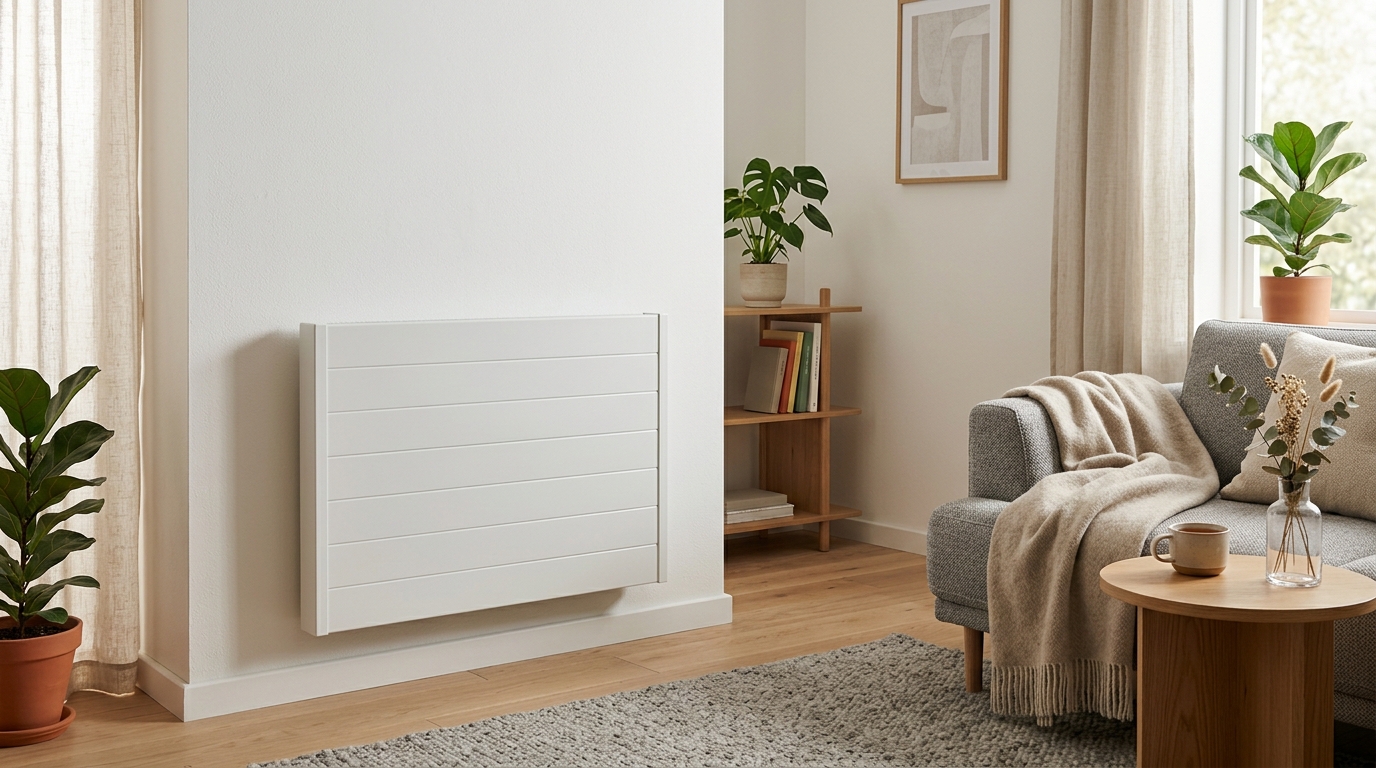
The electric heating system remains the simplest to install, as it does not require fuel to be stored, no ductwork, and quick commissioning.
Modern inertia radiators and infrared heating have greatly improved comfort compared to older "toaster" type convectors.
What are the installation costs and electricity consumption?
When it comes to buying, electric is unbeatable: a few hundred euros per radiator, however electricity is among the most expensive energies per kilowatt-hour.
In a large, poorly insulated area, the annual bill can quickly become heavy, and that is why this solution is best suited to small, well-insulated homes or as a supplementary heating source.
Electric or gas heating: which to choose?
The comparison between electric and gas heating depends on the connection and the use, and gas becomes relevant as soon as large volumes are heated and a network is available.
Ultimately, electric vehicles win out in terms of simplicity and lack of heavy maintenance.
| Criteria | Electric | Gas |
|---|---|---|
| Installation cost | Weak | Moderate to high |
| Consumption cost | Pupil | Moderate |
| Interview | Almost nothing | Annual mandatory |
| Lifetime | 15-20 years old | 15-20 years old |
Advantages and limitations of a new house
For heating in new homes meeting current standards, the RE2020 regulation strongly limits the use of electric heating alone, unless it is coupled with excellent insulation.
Purely electric vehicles are now rarely the best option in new builds.
- Quick and easy installation
- Low initial cost
- No fuel storage
- Energy is expensive to use
- Not well suited to large areas
- Framed by the RE2020
Gas heating: efficiency and high performance
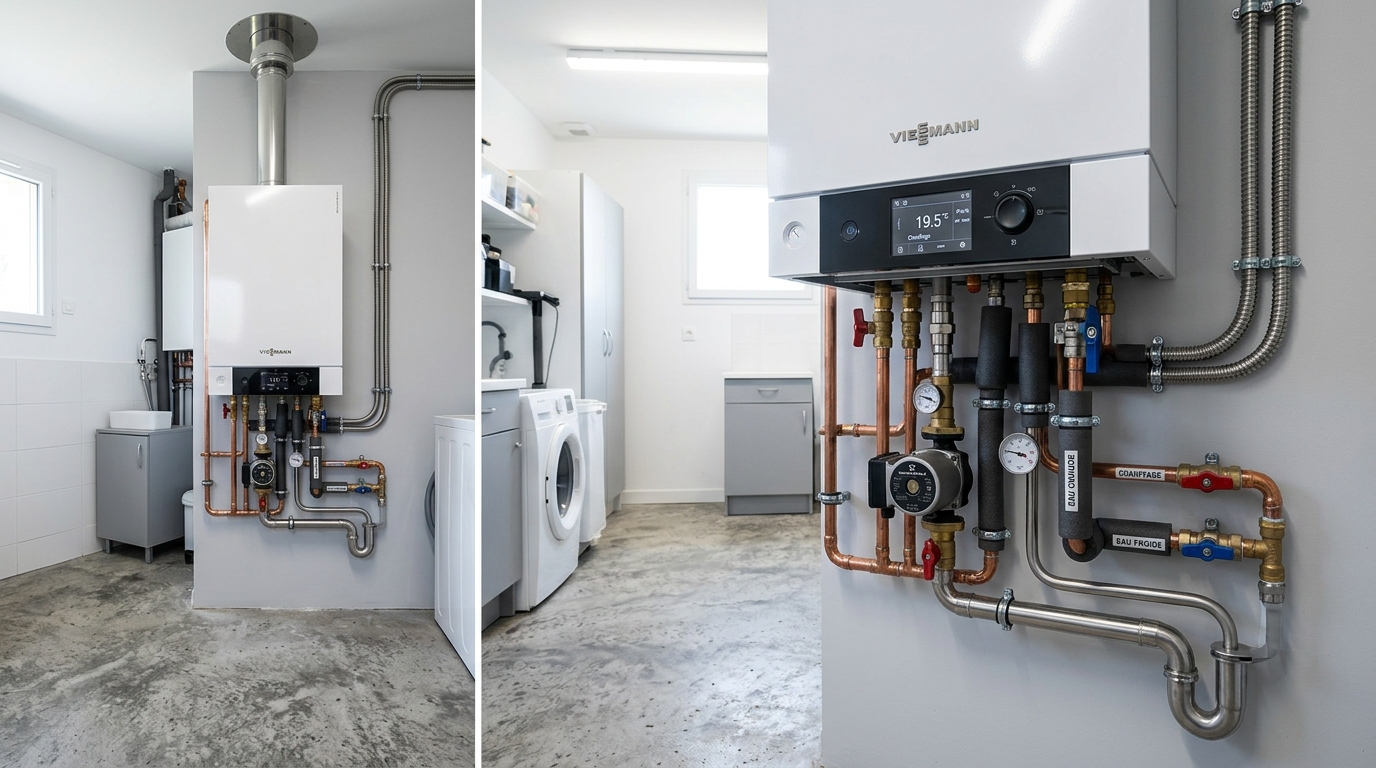
Gas remains very widespread in France, particularly through central heating systems with boilers and radiators. It therefore provides a high level of comfort and rapid temperature increases.
The efficiency of condensing gas boilers
Condensing boilers recover heat from the flue gases, which pushes their efficiency beyond 100% on LHV.
In practical terms, they consume less energy than older models while providing equivalent comfort. This is now the standard imposed for all gas installations.
Gas system maintenance costs and lifespan
Annual maintenance of a gas boiler is mandatory and represents a recurring cost. Expect one visit per year.
Its lifespan is around 15 to 20 years with regular maintenance, and user feedback shows that neglecting descaling significantly reduces its performance. Therefore, it's essential to take care of it to maintain its efficiency.
Gas in light of current environmental standards
Gas emits CO₂, which puts it under regulatory surveillance, and in new construction, the RE2020 has virtually excluded gas boilers.
They remain permitted for renovation, but installation subsidies have disappeared.
According to experts in the field, gas remains a transitional solution rather than a choice for the future.
Installing a new gas boiler today can limit the resale value of the property and its energy performance certificate (EPC).
Installing heat pumps: an economical and environmentally friendly choice
The heat pump for home heating captures calories from the air, water or ground and transfers them inside.
With a coefficient of performance often greater than 3, it produces several kilowatt-hours of heat for every one consumed.
Heat pump: advantages and disadvantages
Let's examine in concrete terms the advantages and disadvantages of the heat pump, because it is often the solution that comes out on top in comparisons.
- Very low consumption
- Can also cool you down in the summer
- Largely renewable energy
- Substantial financial aid
- High initial investment
- Variable efficiency in very cold weather (air-to-air)
- Noise from the outdoor unit
What is the most cost-effective home heating system in the long run?
For many households, the heat pump is the most cost-effective home heating solution once the initial investment has been recouped.
The additional installation cost is offset by reduced bills, generally within 5 to 10 years depending on the insulation; moreover, it is also the best economical heating system in the long term in a properly renovated home.
Financial aid for installing a heat pump
The State supports this choice through MaPrimeRénov', energy saving certificates and reduced VAT.
Details of the schemes can be found on the public service France Rénov', which lists the aid according to income and work.
A heat pump delivers on average 3 to 4 kWh of heat for every 1 kWh of electricity consumed.
Wood heating: traditional charm and economic efficiency
Wood is appealing because of its low energy cost and warm ambiance, and it is also a renewable fuel, provided that it is burned cleanly.
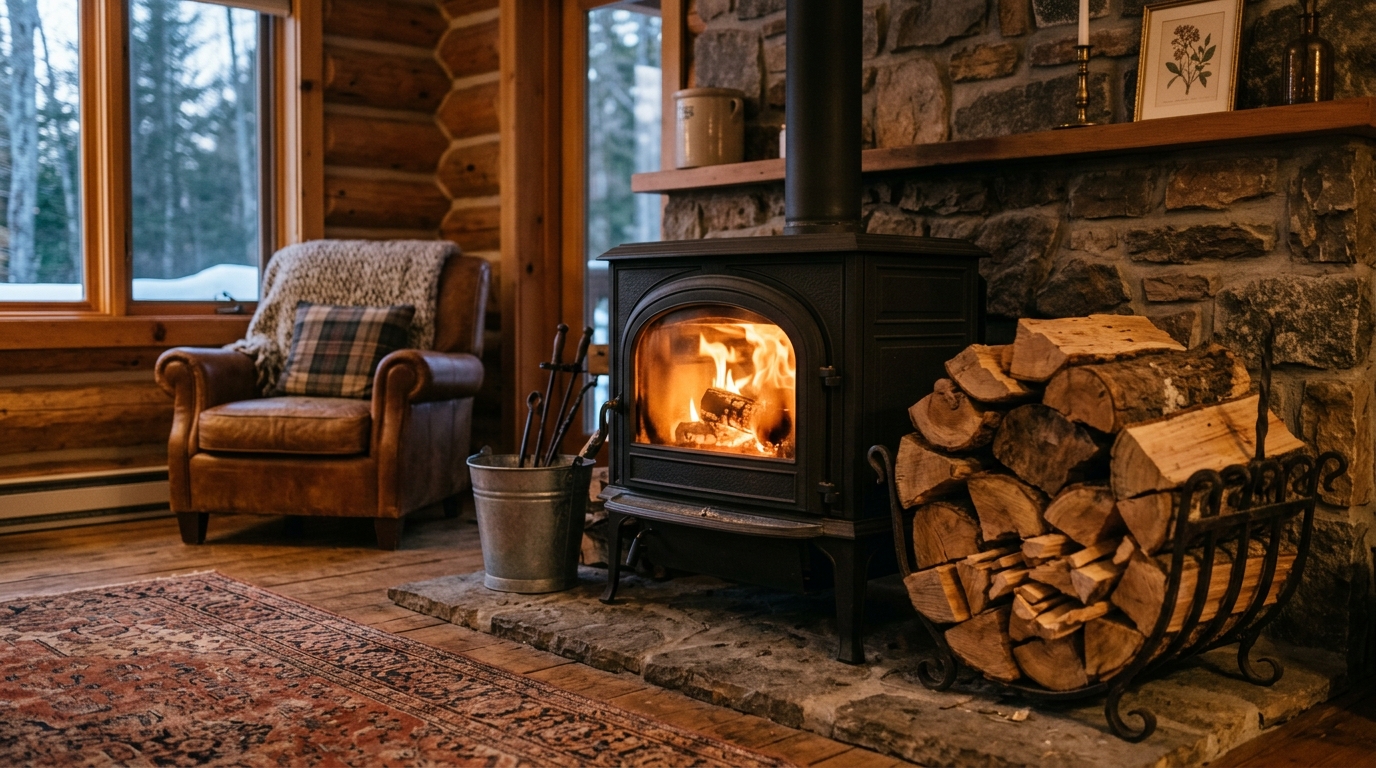
Wood stove, pellet stove or insert: which one to choose?
Three main options are available:
- The wood-burning stove : economical to use, requires manual reloading.
- The pellet stove : programmable and autonomous thanks to the pellet reservoir.
- The insert : transforms an existing fireplace into a high-performance heat source.
Professionals generally recommend wood pellet stoves for use as an automated primary heating system.
Eco-friendly heating for a detached house
Wood is a truly ecological heating option for a detached house, provided that a Flamme Verte certified appliance is used.
The carbon balance of wood is low because the CO₂ released corresponds to that absorbed during the growth of the tree.
The cost of installing and maintaining wood heating
Installing a stove remains affordable, but chimney sweeping is mandatory twice a year, and storing logs or pellets requires quite a bit of space.
Comparative tests indicate that pellets, although more expensive to buy, compensate with better efficiency and regular combustion.
Solar heating: a sustainable solution
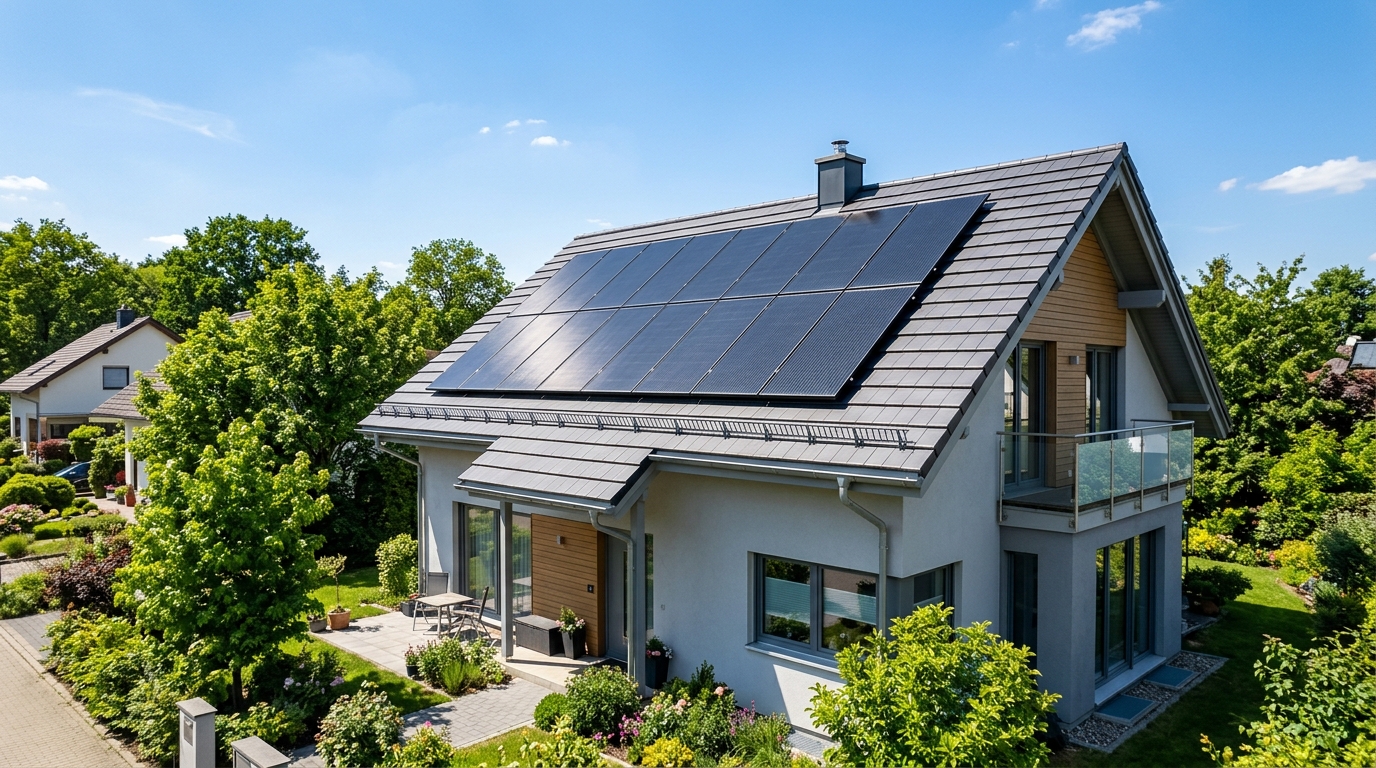
Solar thermal energy captures the sun's energy via rooftop collectors. It is a sustainable solution, often used in conjunction with another system.
Solar thermal energy for hot water and heating
The combined solar system provides both domestic hot water and part of the heating.
It covers a fraction of the needs, the rest being taken care of by a backup, because it is difficult today to heat an entire house with solar power alone.
Yield and limitations depending on sunlight
Yield depends directly on the region and the orientation of the roof.
In the South, solar energy covers a large part of hot water needs; however, in less sunny areas, supplementary heating becomes predominant in winter, precisely when heating needs peak.
The initial investment and long-term savings
The initial investment is significant, but solar energy is free once the panels are installed.
Savings are built up over time, with a return on investment spread over several years; moreover, aid exists to reduce the initial bill.
Combining solar thermal energy with a heat pump allows for even greater reduction in annual consumption.
The role of thermal insulation
No heating system can compensate for poor insulation, and this is the primary lever for saving money, even before choosing the type of energy!
Proper insulation: an additional necessity
Heating a house riddled with thermal bridges is like filling a bathtub without a plug!
Roofs, walls, and windows are the main sources of heat loss. Therefore, proper insulation reduces the heating power required and thus the cost of the installed system.
According to feedback from the field, insulating the attic is often the first project that will ensure you the best cost-benefit ratio.
The impact on the Energy Performance Diagnosis (DPE)
The DPE classifies housing from A to G, and therefore, the heating system and the energy used weigh heavily in this rating.
Replacing an old oil boiler with a heat pump can increase the property's value by several letters and therefore significantly improve its value.
Heating solutions compatible with energy renovation
For a heating solution adapted to energy renovation, the logical sequence is to insulate first, then to size the heating system.
Heat pumps and wood are among the most consistent choices for a renovation, especially when combined with insulation work.
Let's look at this short summary table together
| System | Installation cost | Cost of use | Environmental impact |
|---|---|---|---|
| Electric | Weak | Pupil | Variable |
| Condensing gas boiler | Moderate | Moderate | Average (CO₂) |
| Heat pump | Pupil | Weak | Weak |
| Wood / pellets | Moderate | Weak | Weak |
| Solar thermal | Pupil | Very low | Very low |
- Sustainably reduced bills
- Best EPC rating
- Consistent thermal comfort
- Larger initial investment
- Work sometimes spread out over time
- Requires a thorough prior diagnosis
Practical questions
Which heating system is the most economical in the long term?
In a well-insulated home, a heat pump generally proves to be the most economical heating system. Its higher initial cost is offset by very low energy consumption. Wood also remains a competitive fuel option.
Is it still possible to install a gas boiler in 2026?
In renovation projects, installation remains permitted, but without financial assistance and with a negative impact on the energy performance certificate (EPC). In new construction, the RE2020 regulation practically prohibits it. It's best to explore alternatives before replacing an existing boiler.
How to choose between electric and gas heating for a house?
Electricity is suitable for small, well-insulated homes thanks to its simplicity. Gas becomes a viable option for larger spaces connected to the network. Calculating the total cost over its lifespan helps you decide based on your specific situation.
What heating power should be planned for a 100m² house?
The required heating capacity depends primarily on insulation and climate, not just surface area. A thermal assessment conducted by a professional helps avoid oversizing, which unnecessarily increases the installation cost.
What is the difference between an air-to-air and an air-to-water heat pump?
An air-to-air heat pump blows warm air directly into rooms and can provide cooling in the summer. An air-to-water heat pump supplies a central heating system and also produces domestic hot water, making it more versatile for renovation projects.
