
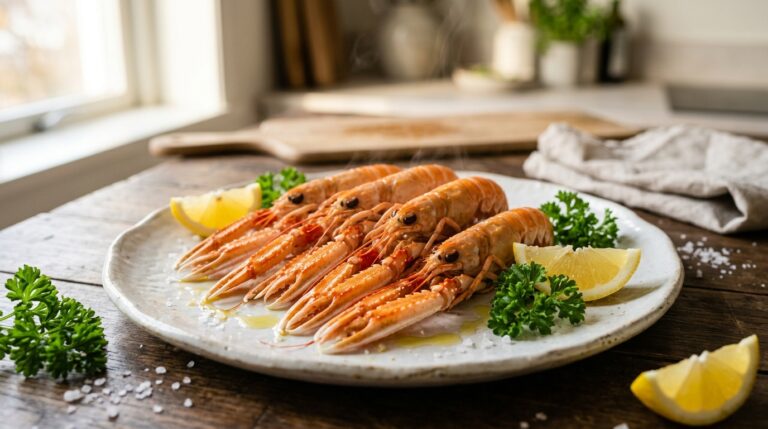
Do you have a package of frozen raw langoustines at the bottom of the freezer and you're not quite sure how to cook them without ruining the texture? This is a very common situation.
Cooking frozen raw langoustines requires a few simple precautions, but they make all the difference. Cook them too long and the flesh becomes rubbery. Cook them too short and the result is disappointing.
This guide gives you the precise times, the right methods and the mistakes to avoid to obtain tender and tasty langoustines, even straight from the freezer!
In short
Should you defrost the langoustines before cooking?
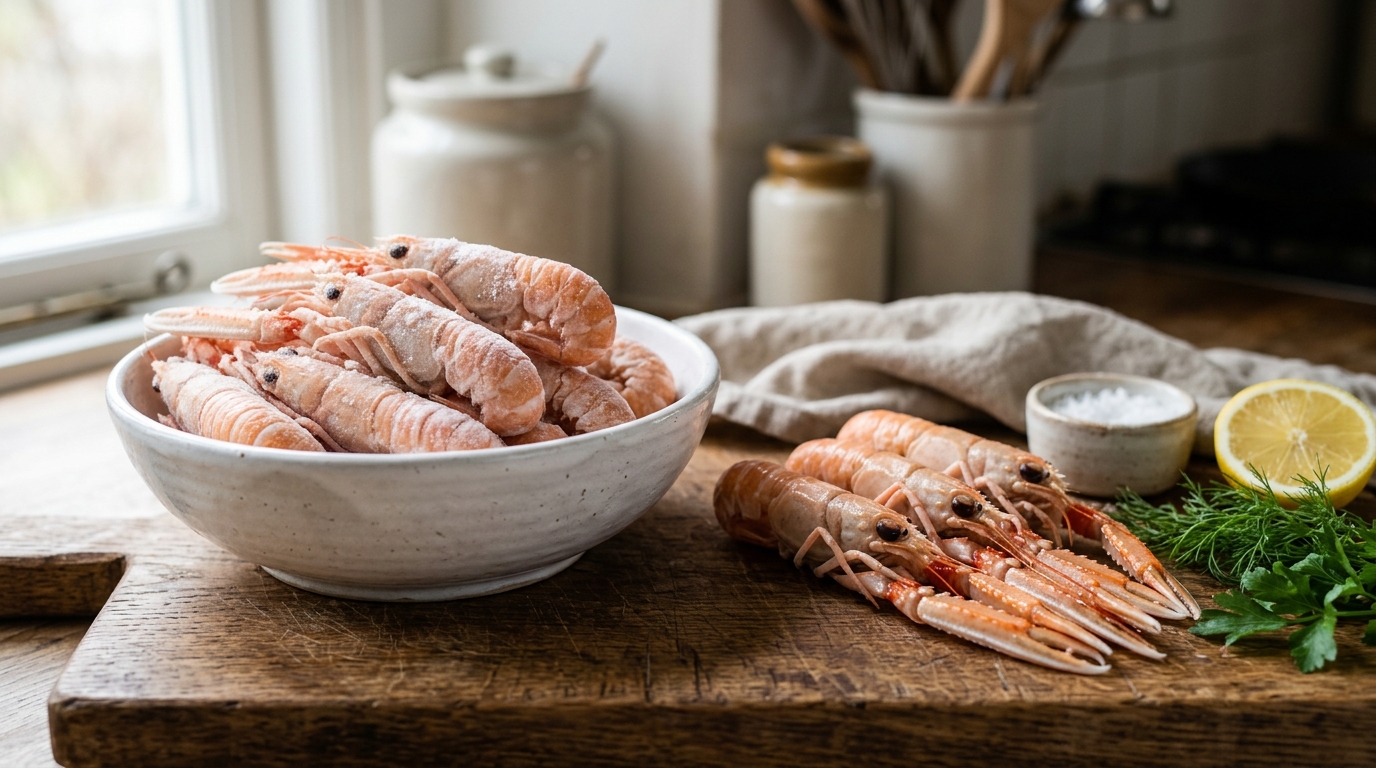
The question comes up often. And the answer isn't straightforward: because it depends on the cooking method you're going to use.
To prepare frozen raw langoustines , you have two options.
You can either plunge them directly into boiling water or steam them without defrosting them, or let them defrost slowly in the refrigerator before frying them.
Each approach has its advantages!
The advantages of cooking directly from frozen
Cooking langoustines without defrosting offers a real practical advantage. You save time and avoid the risk of bacterial contamination associated with improper defrosting at room temperature.
When langoustines go directly from the freezer to boiling water, the thermal shock is significant. The cooking starts evenly, and the flesh remains protected by its shell for the first few seconds.
The result: a texture that is often softer than you would imagine.
This is the method preferred by professionals for boiling and steaming. It also prevents the meat from losing its moisture before it even comes into contact with the heat.
To save time in the kitchen, keep your raw, frozen langoustines directly in their packaging until you're ready to cook them in water or steam them. No need to plan ahead.
When should I defrost the langoustines before cooking?
Defrosting becomes useful, even recommended, when you choose to cook langoustines in a pan, because a still-icy langoustine placed in a hot pan will release a lot of water.
This water will lower the temperature, and you'll end up steaming the shellfish instead of searing them. The caramelization will disappear…
In this case, let them defrost in the refrigerator for 6 to 8 hours, or under a stream of cold water for 30 minutes if you are in a hurry.
Then dry them thoroughly with absorbent paper before putting them in contact with the hot fat.
- Saves time: cooks directly without waiting
- Less bacteriological risk
- Soft texture preserved for boiling
- The shell protects the flesh during the temperature rise
- Pan-frying is difficult without defrosting
- Cooking time slightly longer, to be adjusted
- The accuracy is less pronounced if the langoustines are of very uneven size
The precise cooking times according to each method
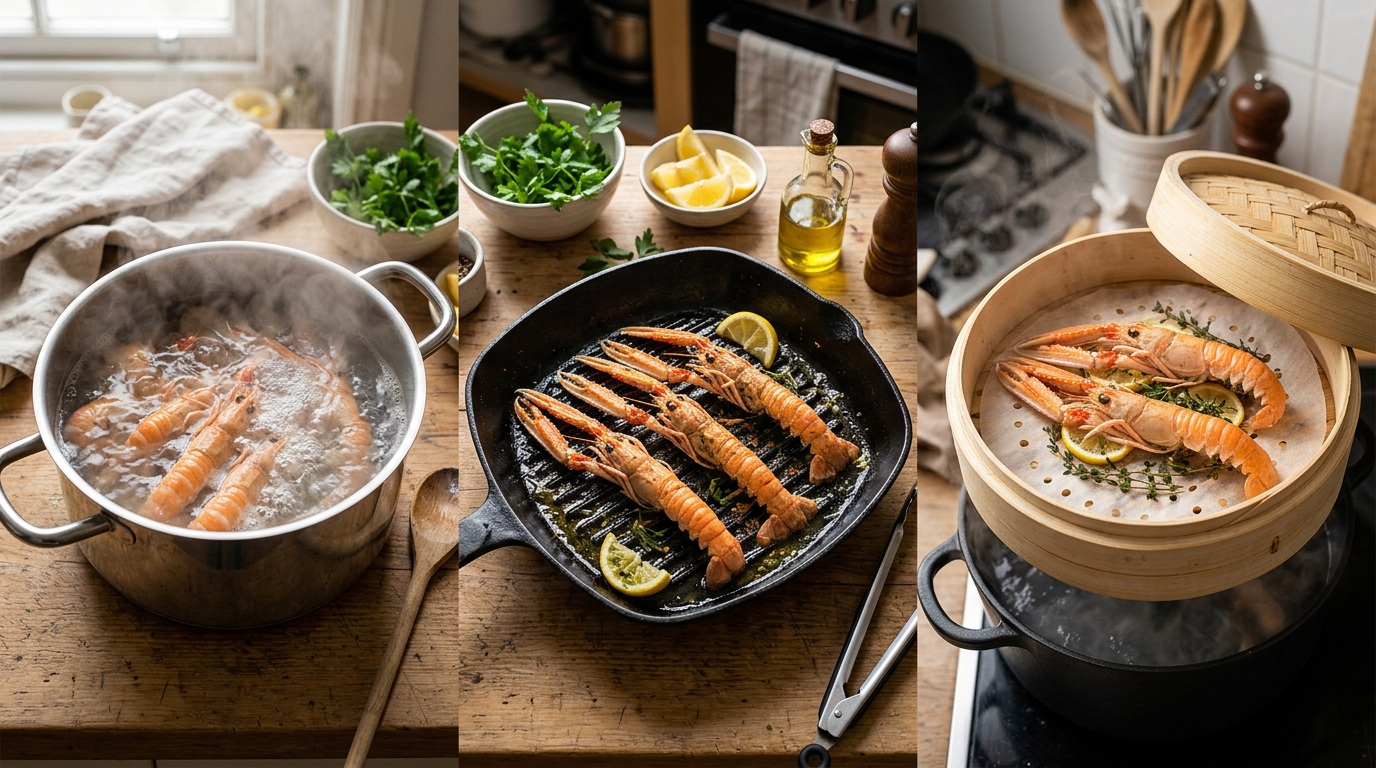
That's the heart of the matter!
Cooking times for frozen langoustines vary depending on the method, but also on the size of the crustaceans.
A thin 50g langoustine is not treated like a large 120g piece.
Here is a summary table to give you the right reference points before you begin.
| Method | Small size (50–70 g) | Medium size (80–100 g) | Large size (100–130 g) |
|---|---|---|---|
| Boiling water | 2–3 min | 3–4 min | 4–5 min |
| Steam | 4–5 min | 5–6 min | 6–7 min |
| Pan (thawed) | 2 min / face | 2–3 min / face | 3 min / face |
Cooking langoustines in boiling water
Cooking langoustines in boiling water is the simplest and most widespread method.
Bring a large quantity of salted water to a boil — allow about 10 g of salt per liter, as for a court-bouillon.
You can add a bouquet garni, a few peppercorns and a bay leaf to flavor the meat.
Plunge the frozen langoustines directly into boiling water. Allow 3 to 4 minutes for medium-sized ones. Drain immediately and serve.
If you know the cooking time for fish in court-bouillon, the principle is the same: the flavored broth discreetly enriches the flesh without masking it.
Steaming the langoustines
Steaming langoustines better preserves their natural aromas and prevents the flesh from becoming waterlogged.
This is a gentler method. The frozen langoustines are placed in the steamer basket above simmering water.
Allow 5 to 6 minutes for average-sized rooms, once the steam has built up. Cover well to retain heat.
You can flavor the cooking water with lemon or herbs: the steam will delicately transfer the aromas to the meat.
Cooking langoustines in a pan
This method yields the most visually appealing result—a beautiful golden color on the shell. However, it requires that the langoustines be thoroughly thawed and dried.
A good pan cooking time always relies on the same rule: hot fat and dry surface.
Heat a drizzle of olive oil or a butter-oil mixture over high heat. Sear the langoustines for 2 to 3 minutes per side without moving them.
Do not overload the pan: leave space between each piece so that they grill rather than steam.
🦞 Frozen prawn cooking calculator
Get the precise cooking time according to your method and quantity.
How can you tell if the langoustines are cooked properly?
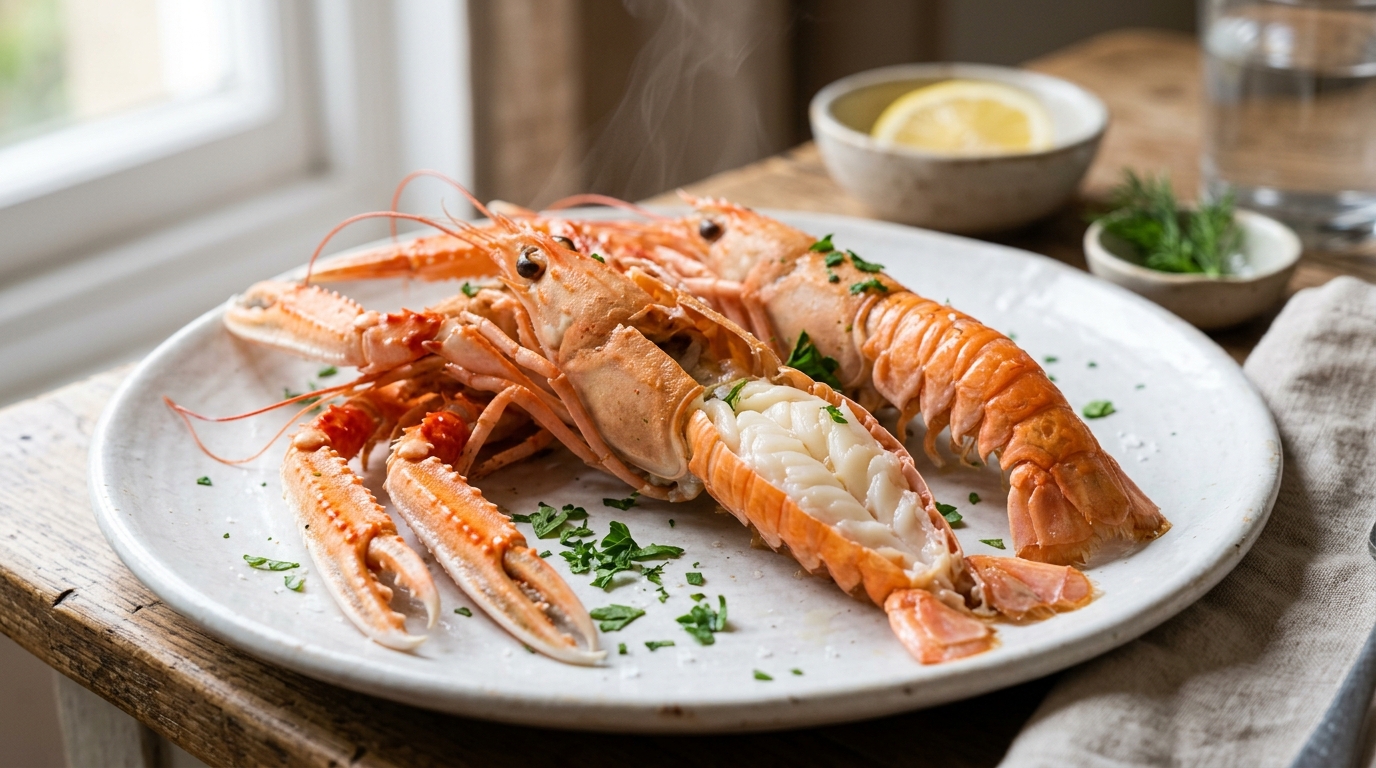
Even with the correct cooking times, you need to know how to read the signals that langoustines send during cooking. This avoids unpleasant surprises at the table!
Visual signs of successful cooking
How can you tell if the langoustines are cooked?
The first indicator is color. A frozen raw langoustine has a pinkish-grey hue. When cooked, the shell turns a uniform bright orange-red . This is the most reliable sign!
The tail will curl slightly inwards due to the heat. If it remains completely straight, it's not cooked through. If it curls into a tight ring, you've overcooked it.
A well-cooked langoustine displays a uniformly red-orange shell, a slightly curved tail and pearly white flesh — never translucent, never opaque beige-grey.
The flesh visible at the seam of the shell should change from translucent to pearly white. If it remains slightly translucent in the center, cook for another 30 seconds. If it is opaque and firm throughout, remove them immediately!
The ideal texture to avoid rubbery flesh
To avoid rubbery langoustines, it's primarily a question of timing.
The flesh of langoustines is delicate and changes very quickly from tender to elastic, then to dry. The interval between the two is often less than a minute.
The perfect texture is firm yet supple to the bite. It detaches easily from the shell without forcing it. If you have to pull hard, it's already overcooked.
According to ANSES, freezing slightly alters the structure of crustacean muscle fibers, making heat management even more delicate than with a fresh product.
Professionals recommend stopping the cooking process at the first signs of resistance to pressure: gently press the shell with your finger — if it gives way firmly, it's ready!
Some common mistakes to avoid when cooking
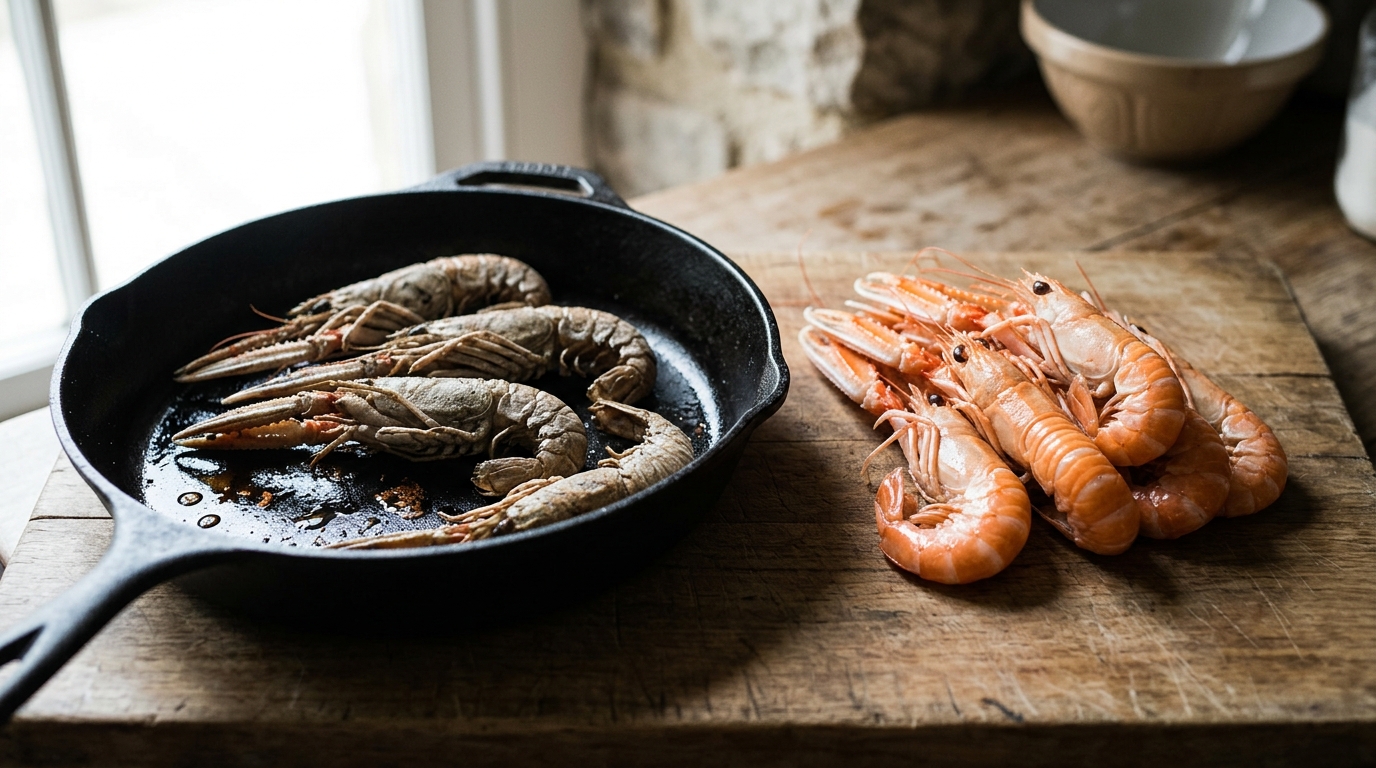
Even with the best intentions, a few common reflexes can sabotage the result.
Here are the ones that come up most often.
Errors related to deep freezing and thermal shock
The first mistake is to leave the langoustines to defrost at room temperature, placed on the work surface.
This method exposes the flesh to a gradual increase in temperature which promotes bacterial degradation and softens the texture even before cooking.
If you have to freeze them yourself after purchase, the way you freeze products makes all the difference: a product that is not frozen properly (too slowly, without a protective film) suffers from ice crystals that break down muscle fibers.
The result when cooked: the flesh crumbles and loses its water immediately.
Never refreeze thawed langoustines. A second freezing irreparably damages the flesh. If you have an opened package, cook everything that remains.
Another common mistake: plunging the langoustines into water that is not yet boiling.
Slow heating cooks the meat unevenly and causes it to lose a lot of juices. The water must be at a rolling boil before adding anything.
And if you want to organize your freezer so you can easily find your products by date, it's a good habit that also avoids cooking langoustines that have been stored for too long.
How to avoid dry or overcooked langoustines?
Overcooking is the main enemy. It often happens because the langoustines are left in hot water after the heat has been turned off, thinking that it will "cook slowly".
No! The residual heat continues to cook the meat! So, drain immediately as soon as the time is up.
The same logic applies to the pan. Remove the langoustines from the heat and place them on a rack or a warm plate, not in the still-hot pan.
Prepare your serving dish before you start cooking. Langoustines don't wait: as soon as they are cooked, they must be served or chilled quickly.
Feedback from amateur cooks confirms it: most disappointments come from one or two minutes too long.
Set a timer as soon as the langoustines touch the heat. Don't rely on your memory when you have several pots cooking.
Season and serve with the langoustines after cooking
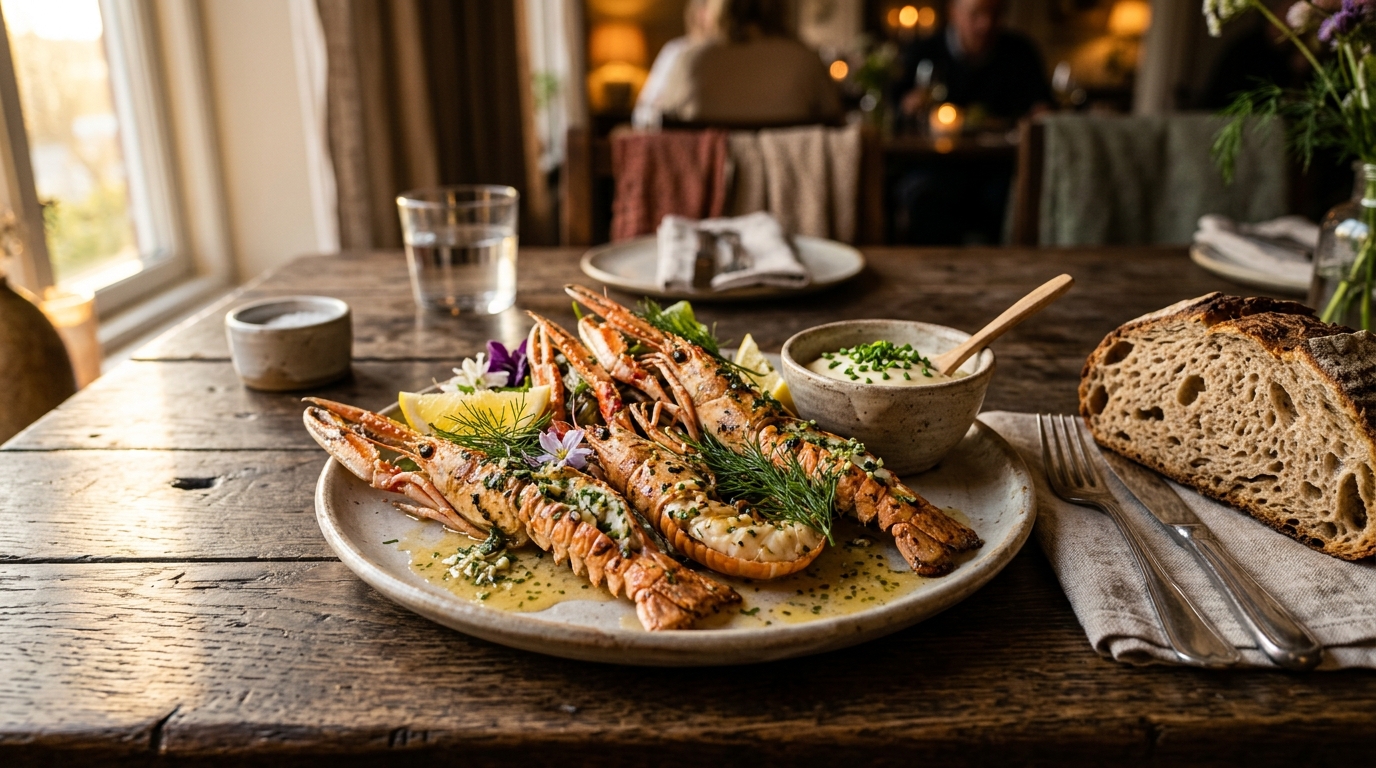
A well-cooked langoustine doesn't need much. Its flesh has a naturally mild, slightly briny and sweet taste, and its seasoning should complement it, not mask it.
Simple seasonings to enhance langoustines
Seasoning langoustines after cooking often begins with a squeeze of fresh lemon juice. The acidity enhances the marine flavors without overpowering them. It's the simplest and one of the most effective techniques!
But other techniques can also enhance them, such as:
- Melted butter with a crushed garlic clove and a few chopped flat-leaf parsley leaves
- A drizzle of extra virgin olive oil and a pinch of fleur de sel
- A blend of lemon, Espelette pepper, and chives for a spicy touch
- A slightly lemony homemade mayo sauce for classic lovers
For pan cooking, professionals advise deglazing the still hot pan with a splash of dry white wine or cognac just after removing the langoustines.
This deglazing liquid becomes a quick sauce to pour directly over the shellfish.
The best after-cooking side dish ideas
Langoustines pair well with simple side dishes that don't steal the show.
Here are several associations that work quite well:
- Steamed basmati rice : neutral, it absorbs juices and sauces
- Fresh pasta with a drizzle of olive oil and Parmesan cheese
- A lightly dressed green salad for a fresh and balanced meal
- Toasted country bread for dipping in garlic butter or cooking juices
- Steamed vegetables : green beans, asparagus or zucchini that don't compete for space in the mouth
Avoid overly rich or spicy side dishes that would overwhelm the delicate flavor of the langoustines.
Oven drying techniques can also be used to prepare toasted nuts or dried fruit to sprinkle over langoustines to add crunch without weighing down the dish.
🦞 Will you be able to cook frozen langoustines to perfection?
5 questions to check if you have all the right reflexes before you start cooking.
1. What is the recommended defrosting method to preserve the texture of frozen raw langoustines?
2. What is the recommended cooking time for frozen raw langoustines poached in a simmering court-bouillon?
3. What visual sign indicates that the langoustines are perfectly cooked and ready to be eaten?
4. What is the most common mistake that makes langoustines rubbery and tasteless when cooked?
5. What classic side dish or seasoning best highlights the delicate flavor of langoustines after cooking?
Let's summarize in question and answer format
How to cook frozen langoustines without defrosting them?
You can plunge them directly into well-salted boiling water or place them in a steamer basket. The thermal shock cooks the flesh evenly. Allow 3 to 4 minutes in boiling water and 5 to 6 minutes by steaming for medium-sized fish. This method is not suitable for pan-frying.
What is the cooking time for frozen langoustines in boiling water?
For medium-sized langoustines (80 to 100 g), cook for 3 to 4 minutes in boiling salted water. Smaller ones cook in 2 to 3 minutes, large ones in 4 to 5 minutes. Drain immediately after cooking without letting them sit in the water.
Why are my langoustines rubbery after cooking?
Rubbery flesh is almost always a sign of overcooking. Residual heat continues to cook the langoustines even after you turn off the heat if you leave them in the pot or pan. Drain them or remove them immediately once the cooking time is up.
Can you cook frozen raw langoustines directly in a pan?
This is not recommended. A langoustine that is still frozen releases water into the pan, which prevents browning and results in a steaming effect. For pan-frying, defrost them first in the refrigerator for 6 to 8 hours, then dry them thoroughly before searing them over high heat.
How can you tell if frozen langoustines are cooked properly?
Three telltale signs: the shell has turned a uniform reddish-orange, the tail is slightly curled inwards, and the flesh visible at the shell-flesh junction is pearly white (more translucent). If the tail curls completely into a spiral, it is overcooked.
