
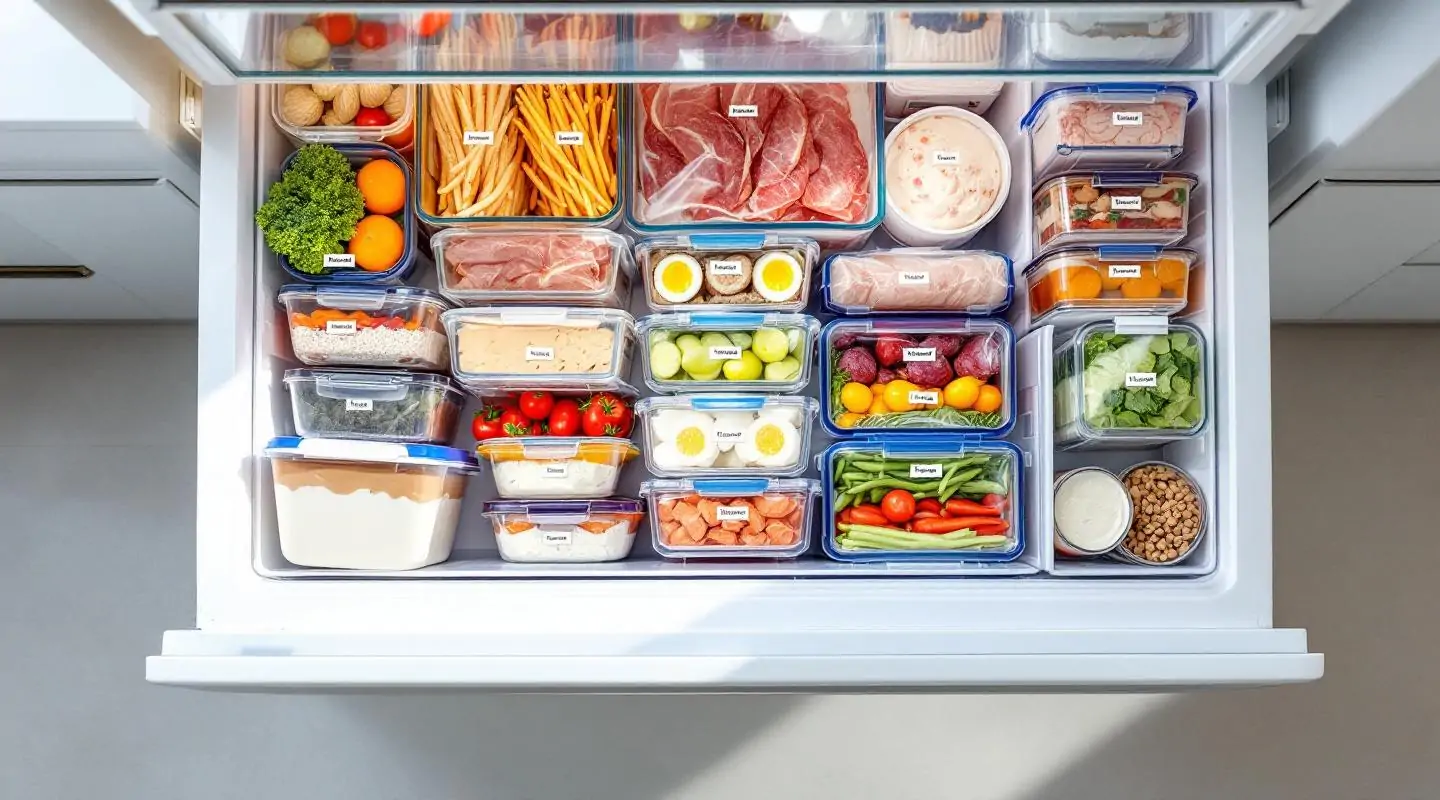
In short
The right containers for organizing your freezer
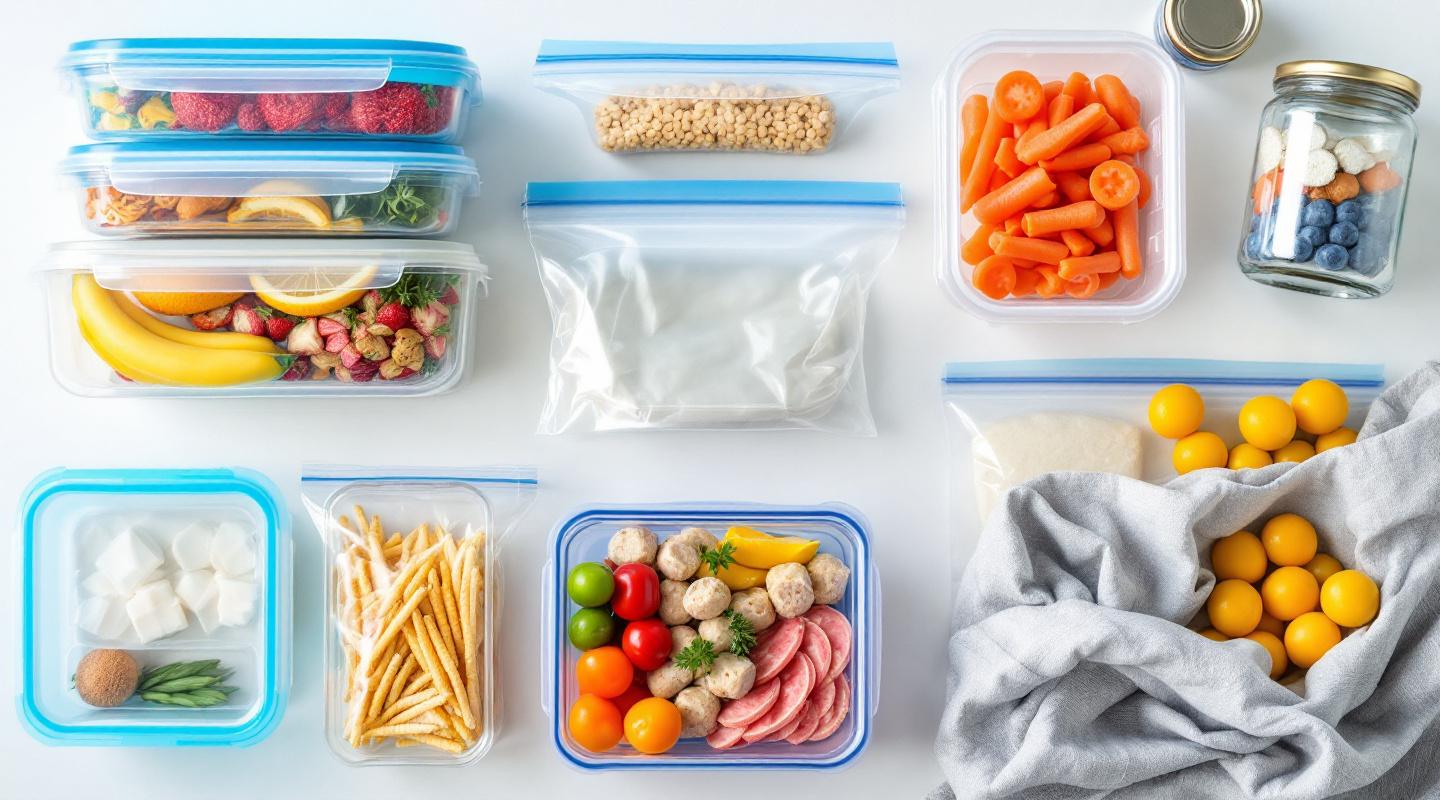
Before even talking about storage, we need to talk about containers. What you use to package your food makes all the difference.
Proper packaging preserves texture and taste, and prevents the dreaded frosting that ruins everything. Here's what you need to know about packaging food for freezing.
Reusable airtight containers
Airtight containers are the clear winners in terms of practicality. They stack easily, are shock-resistant, and are effortless to clean.
To organize your freezer efficiently, choose square or rectangular models rather than round ones: they take up less space and fit together like bricks.
Borosilicate glass withstands temperature variations well, but it is bulky and heavy. BPA-free food-grade plastic remains the lightest and most economical solution.
Always check that the lid snaps shut properly: if air gets in, the quality of your food deteriorates faster.
Reusable containers are particularly suitable for prepared meals to be frozen, soups, sauces or blended fruit.
Also remember to leave a small space at the top of each box: liquids expand when freezing and an overfilled container can burst.
Invest in a set of boxes of the same brand. They fit together better and storage becomes much simpler.
Freezer bags and suitable packaging
Zip-lock freezer bags have a huge advantage: you can expel the air from them before sealing them, which reduces the risk of freezer burn.
To go even further, a vacuum welding machine makes it possible to eliminate almost all the air.
The result: food stays beautiful and tasty for much longer.
For freezing vegetables, fruit or meat, thick bags designed for freezing (not classic sandwich bags) make all the difference.
They withstand low temperatures better without tearing or letting odors through.
Food-grade cling film remains useful for wrapping a piece of meat or fish before placing it in a bag. This double layer of protection significantly reduces oxidation.
Butcher paper or aluminum foil can also be used in a pinch, but they are less effective in the long term for preserving food in the freezer.
Never reuse a freezer bag that has contained raw meat or fish. The risk of cross-contamination is real.
How to organize food by category
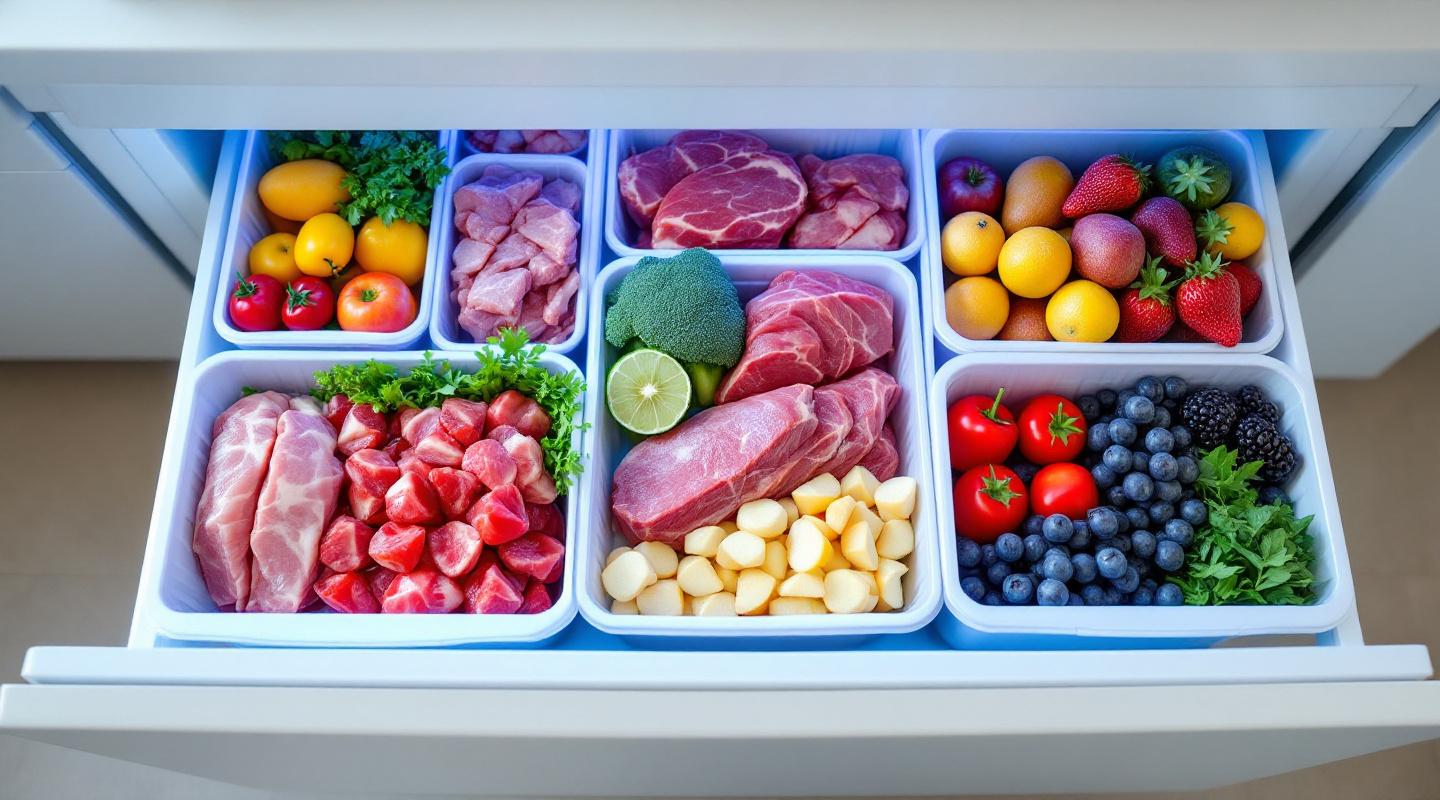
A freezer well-organized by category saves time every day. No more searching for five minutes to find a salmon fillet under a mountain of vegetables.
Organizing food by category in your freezer requires a bit of method at first, but it quickly becomes second nature.
Organize the meats, fish and seafood
Always group animal proteins in the same area, ideally in the bottom drawer or in a dedicated container.
Freezing meat, fish and seafood together but separately from other foods limits the risk of leakage in case of accidental partial thawing.
Use one bag or box per type of product and don't forget to note the date.
Store frozen fruits and vegetables easily
Vegetables and fruits bought frozen or that you have frozen yourself benefit from being placed in flat bags.
By laying them flat while they freeze, you get thin "plates" that you can then store upright like files in a binder.
It's a simple trick that frees up a lot of space in a freezer.
Store prepared dishes and meals in advance
Preparing meals in advance and freezing them is a great way to save time during the week.
Store these dishes in a clearly marked area, separate from the raw ingredients. This avoids confusion when you need to quickly get something out.
Stackable boxes with different colour labels for each type of dish (red for meats, green for legumes) make life even easier.
Do a monthly "batch cooking" session: cook a large quantity on a weekend and freeze the portions. You'll always have a ready-made meal without any effort.
Strategic placement in the freezer
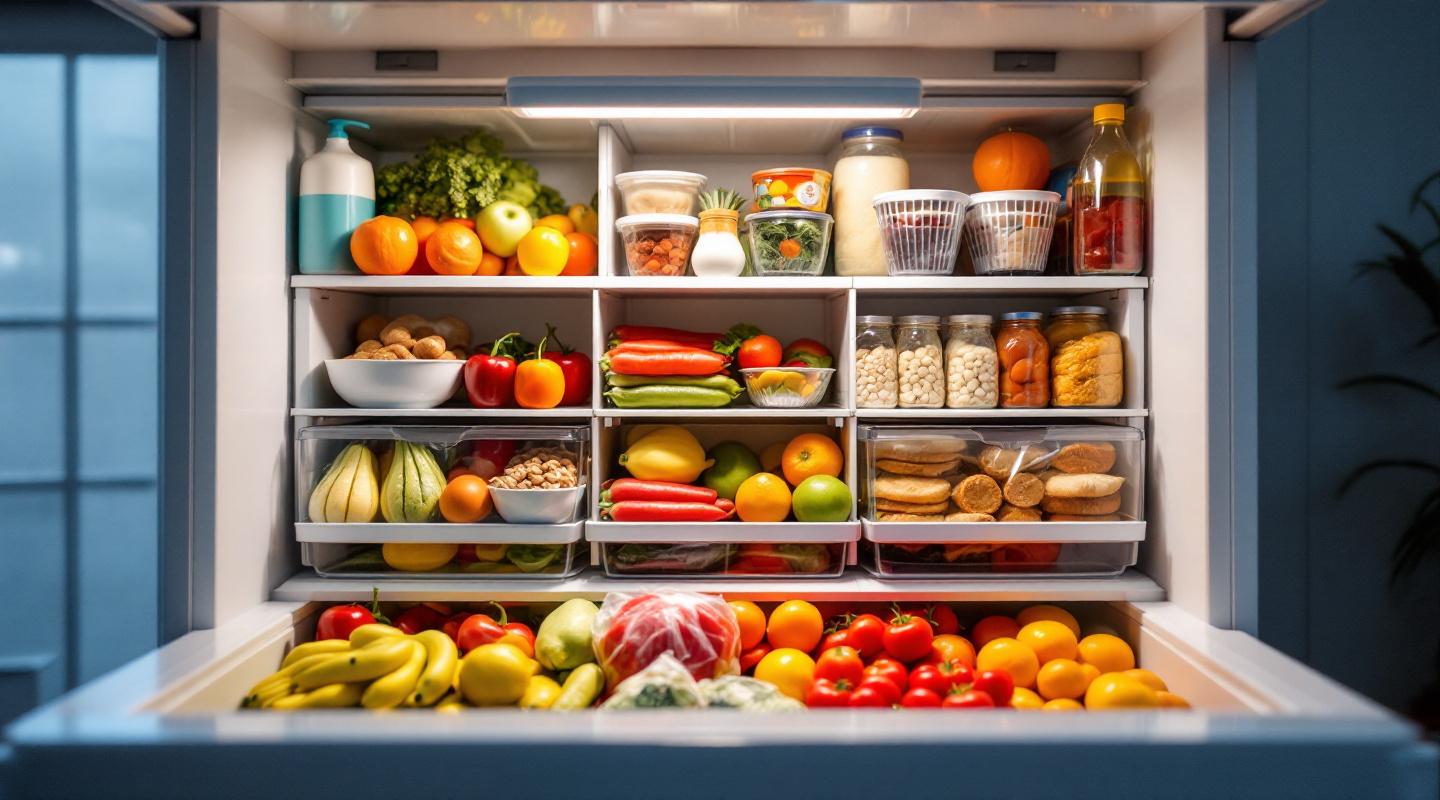
In a freezer, not all storage spaces are created equal. The position of each food item affects its preservation and how easy it is to find. A little logic in placement makes everything run more smoothly.
Where to place food according to its use
The basic rule: what you use often should be easily accessible. Place everyday foods (vegetables, sliced bread, minced meat) at eye level or in the top drawers.
Products used less regularly — game, whole fish, large pieces of meat — can go at the bottom or in the lowest drawer.
Remember to rotate your stock. Foods bought or frozen first should be at the front.
This is the first-in, first-out principle, widely used in professional kitchens. Applying this logic at home really reduces waste.
A well-organized freezer is also one where the door isn't opened for extended periods. Less time with the door open means less energy consumption.
How to properly store a small freezer
Organizing a small freezer requires a bit more ingenuity. Start by emptying yours completely and sorting through everything.
Next, opt for verticality: flat bags stored upright take up half the space when laid flat.
Rigid cardboard dividers or small storage bins bought in supermarkets can be used to create "compartments" in a single bin.
Avoid overloading. An overfilled freezer does not circulate cold air as well, which degrades performance and increases the electricity bill.
Always leave some free space. If you're really short on space, prioritize: only freeze what has real short-term utility.
- Save time every day when looking for your food
- Less waste thanks to better stock visibility
- Optimal preservation with the right packaging
- Meal planning made easier
- Initial setup that takes time
- Purchasing suitable containers represents an initial cost
- Requires regular discipline to maintain organization
- Defrosting requires taking everything out and starting over
The labeling and ideal freezer temperature
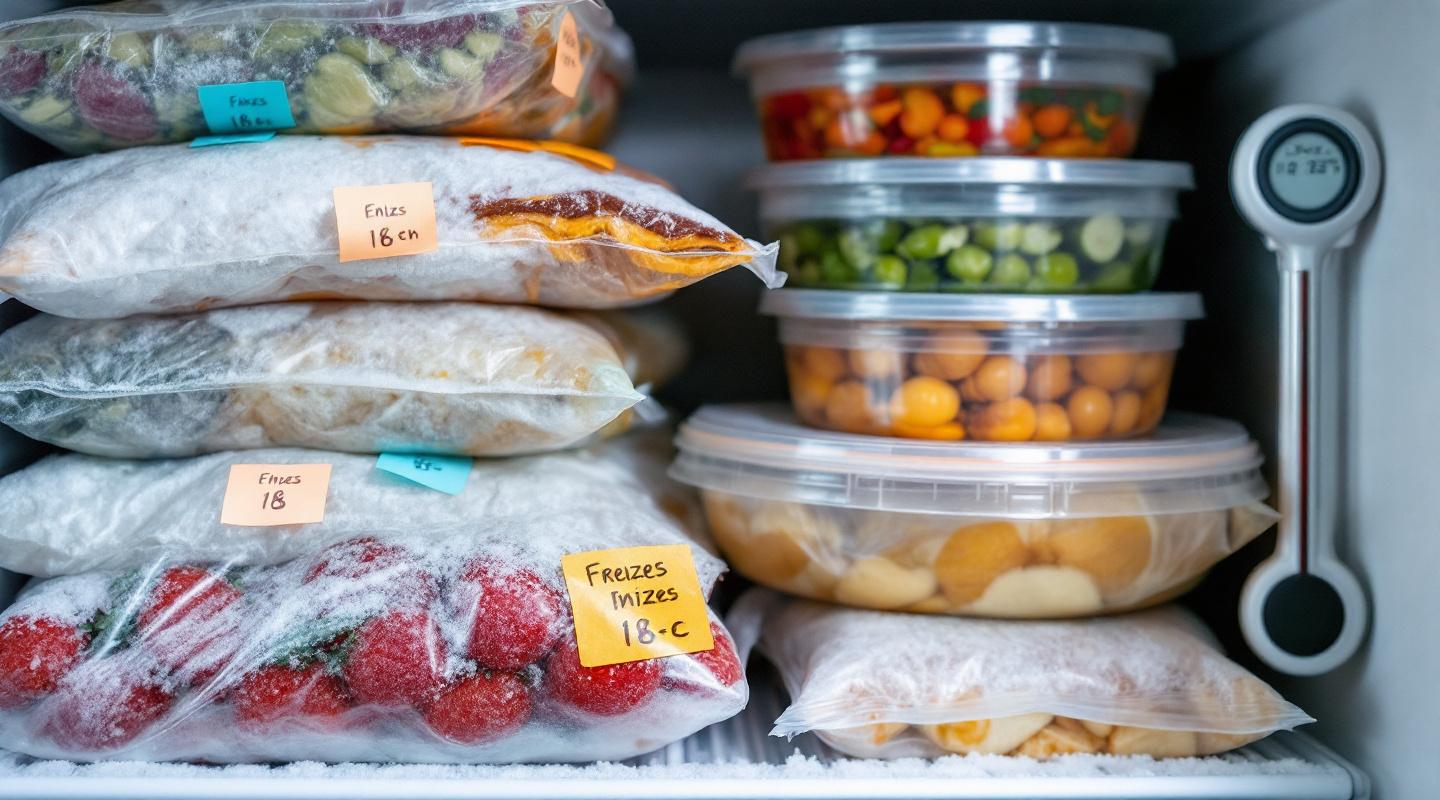
Two details that many people overlook, yet make all the difference: knowing what you put in it and when, and maintaining the correct temperature. These two points guarantee proper preservation and flawless food safety.
Labeling tips for tracking your inventory
Labeling your freezer is probably the most underrated anti-waste tip. A simple permanent marker and sticky labels are all you need.
Always note the contents, quantity, and freezing date. Three pieces of information, no more, but they make all the difference!
Some ideas to explore further:
- Use different colour labels for each category (yellow for vegetables, blue for fish, red for meat).
- Write with cold-resistant ink — some pens erase at low temperatures.
- Keep a chart or magnetic list on the freezer door with everything inside. You can check it without opening the door.
- Mobile applications for managing food stocks exist and are very practical for large families.
These freezer labeling tips allow you to know at a glance what should be consumed first.
What is the ideal temperature for freezing properly?
The ideal freezer temperature is -18°C. Below this temperature, most microorganisms are unable to grow.
The cold chain is maintained, the food does not lose its nutritional qualities and the shelf life remains in accordance with recommendations.
Check the temperature regularly with a refrigerator thermometer, even if your appliance displays a setting. Internal thermostats are not always accurate.
Some older freezers only go down to -15°C, which reduces the actual shelf life of food.
At -18°C, bacterial growth is stopped. But this does not mean that food lasts indefinitely: fats continue to oxidize slowly, even when frozen.
Avoid putting hot food directly into the freezer. Let it cool to room temperature (for no more than two hours) or in the refrigerator, like chanterelle mushrooms for example, before freezing. Hot food raises the temperature inside the freezer and can affect the contents.
The shelf life of frozen foods
Even at -18°C, not everything keeps forever. Each food group has its own limits. Knowing the shelf life of frozen foods helps you plan your meals and consume them before their quality deteriorates.
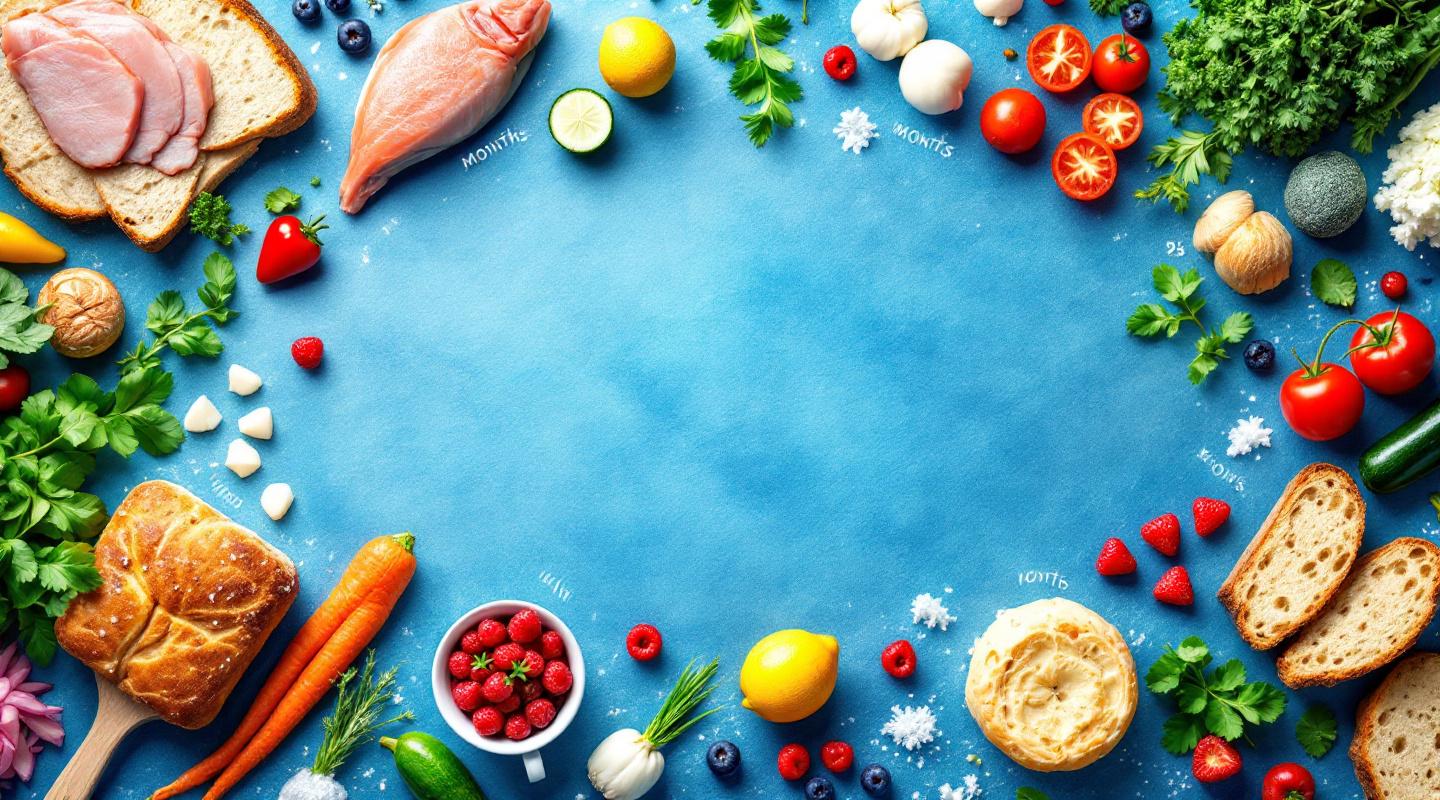
Shelf life of meats and fish
Meat and fish are perishable products. Here are the generally recommended storage times:
| Food | Recommended shelf life |
|---|---|
| Beef, lamb (cuts) | 6 to 12 months |
| Whole chicken or pieces | 6 to 9 months |
| Minced meat | 2 to 3 months |
| Lean fish (cod, sole) | 6 to 8 months |
| Oily fish (salmon, mackerel) | 2 to 3 months |
| Shrimp and seafood | 3 to 6 months |
Minced meat and oily fish have a shorter shelf life because their fats oxidize more quickly. Vacuum sealing significantly extends their shelf life.
Shelf life of vegetables and fruits
Vegetables blanched before freezing keep better and longer than those frozen raw. Blanching (plunging them into boiling water for a few minutes and then cooling them quickly) deactivates the enzymes responsible for spoilage.
| Food | Recommended shelf life |
|---|---|
| Blanched vegetables (beans, broccoli) | 8 to 12 months |
| Spinach, aromatic herbs | 6 to 8 months |
| Red berries (strawberries, raspberries) | 8 to 12 months |
| Stone fruits (peaches, apricots) | 4 to 6 months |
| Mashed bananas, compotes | 3 to 4 months |
Freezing fruits and vegetables when they are ripe gives much better results. Avoid freezing produce that is already slightly damaged: it will come out in an even less appealing condition.
Shelf life of prepared meals
Frozen homemade meals are convenient, but they also have their limitations in terms of shelf life. The presence of fats, sauces, or cream generally shortens their shelf life.
| Type of dish | Recommended shelf life |
|---|---|
| Soups and cream soups | 2 to 3 months |
| Stews, tagines, braised dishes | 2 to 3 months |
| Cooked pasta or rice | 1 to 2 months |
| Homemade pizzas and quiches | 1 to 2 months |
| Cakes and pastries | 2 to 3 months |
Always write the freezing date on your homemade dishes. Two months go by quickly, and without a label, it's impossible to know if it's still good.
Freezer maintenance to avoid waste
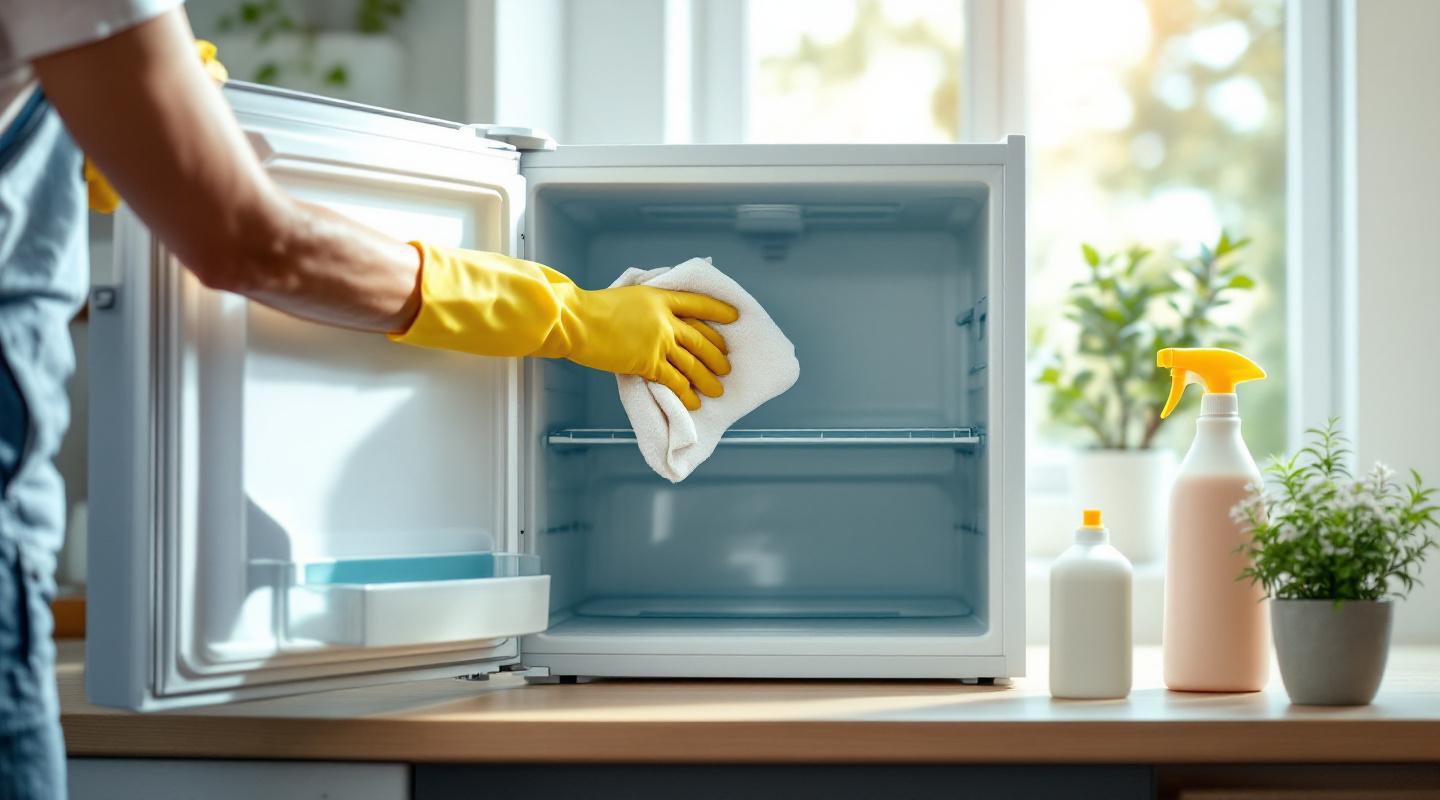
A dirty or frosted freezer uses more electricity and doesn't keep food fresh as well. Regular maintenance is essential if you want your appliance to function properly in the long term.
How to defrost and clean your freezer
Frost is the number one enemy of your device's efficiency. When the frost layer exceeds 5 mm, it's time to take action.
Most modern freezers are "no frost", but older models require manual defrosting two to three times a year.
For hassle-free defrosting:
- Empty the freezer completely and place the food in insulated bags or at a neighbor's house.
- Unplug the appliance and place towels on the floor to absorb the water.
- Let the frost melt naturally. Speed it up by placing a bowl of hot water inside.
- Never scrape frost off with a sharp object: you risk damaging the walls.
- Once defrosted, clean the inside with warm water and baking soda. Dry thoroughly before plugging it back in.
Take advantage of each defrosting to sort through your belongings, throw away what is expired and reorganize your storage.
What to do in case of a power outage?
A power outage doesn't automatically mean the loss of all your food. Here's how to minimize the damage.
Never open the freezer is the number one rule. A fully loaded freezer will maintain a negative temperature for about 24 to 48 hours if the door remains closed. A half-empty freezer will last less time!
If the power outage lasts less than 24 hours and the food is still hard or very cold to the touch, you can refreeze it without any apparent problem, although a slight loss of quality is possible.
Beyond that, a few rules apply:
- Meat and fish that are still cold (below 4°C) can be cooked and eaten again within 24 hours.
- Thawed prepared meals should be consumed quickly and not refrozen.
- Discard without hesitation anything that has a suspicious odor or abnormal texture.
If you have any doubt about the condition of food after a power outage, don't take any risks. Wasting food is always better than food poisoning.
Frequently asked questions about freezing food
Can you refreeze food that has already been thawed?
The short answer: it depends. Food thawed in the refrigerator and kept cold can be refrozen, but with a loss of quality (texture, taste). On the other hand, food thawed at room temperature should never be refrozen as is, because bacteria multiply during the thawing process. The only exception: if you cook the food first, you can then safely refreeze the cooked dish.
How to defrost safely?
The safest method remains defrosting in the refrigerator : slow, controlled, and with no risk of bacterial growth. Allow 12 to 24 hours depending on the size of the food. To speed things up, defrosting under cold running water in a sealed bag works well. Microwaving on the defrost setting is also possible, but you must cook the food immediately afterward. Avoid defrosting at room temperature, especially for meat, fish, and prepared dishes.
Which foods cannot be frozen?
Some foods are particularly susceptible to freezing. Whole eggs in their shells can crack. Soft cheeses (like Brie and Camembert) become grainy and lose their creaminess. Vegetables with a high water content, such as lettuce, cucumber, and radishes, come out limp and waterlogged. Fresh cream and cream-based sauces separate upon thawing. Mayonnaise and salad dressings also don't withstand low temperatures.
How to properly freeze food to preserve its taste?
To freeze food properly without losing quality, start by choosing fresh, high-quality products. Prepare them correctly (blanch vegetables, portion meats). Use appropriate packaging, removing as much air as possible. Freeze quickly by setting your appliance to the "fast freeze" mode if available. Finally, don't overload the freezer when freezing a large quantity: warm food needs to cool quickly and evenly.
How often should you take inventory of your freezer?
Once a month is a good frequency. Use this time to check the dates on your labels, remove anything nearing its expiration date, and tidy up if necessary. Keeping a list of the contents displayed on the freezer door (on a sheet of paper or a magnetic board) will save you from having to do this inventory too often. It also reduces the amount of time the door is left open.
