
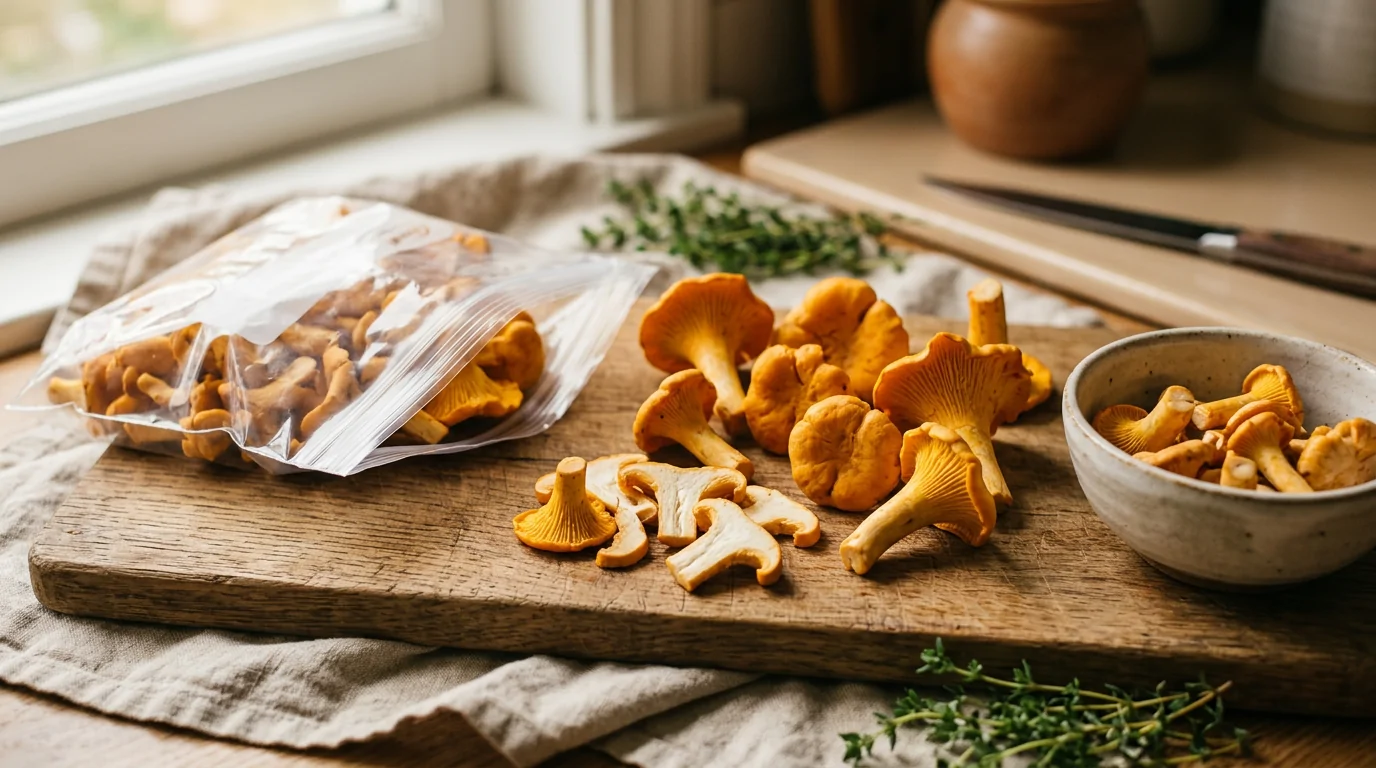
Can you freeze chanterelle mushrooms?
The answer is yes!
Freezing fresh chanterelles is perfectly possible, and it's even a great way to enjoy an abundant harvest all year round.
Whether you've gathered kilos of mushrooms in the forest or found a promotion at your greengrocer's, the freezer could become your best ally.
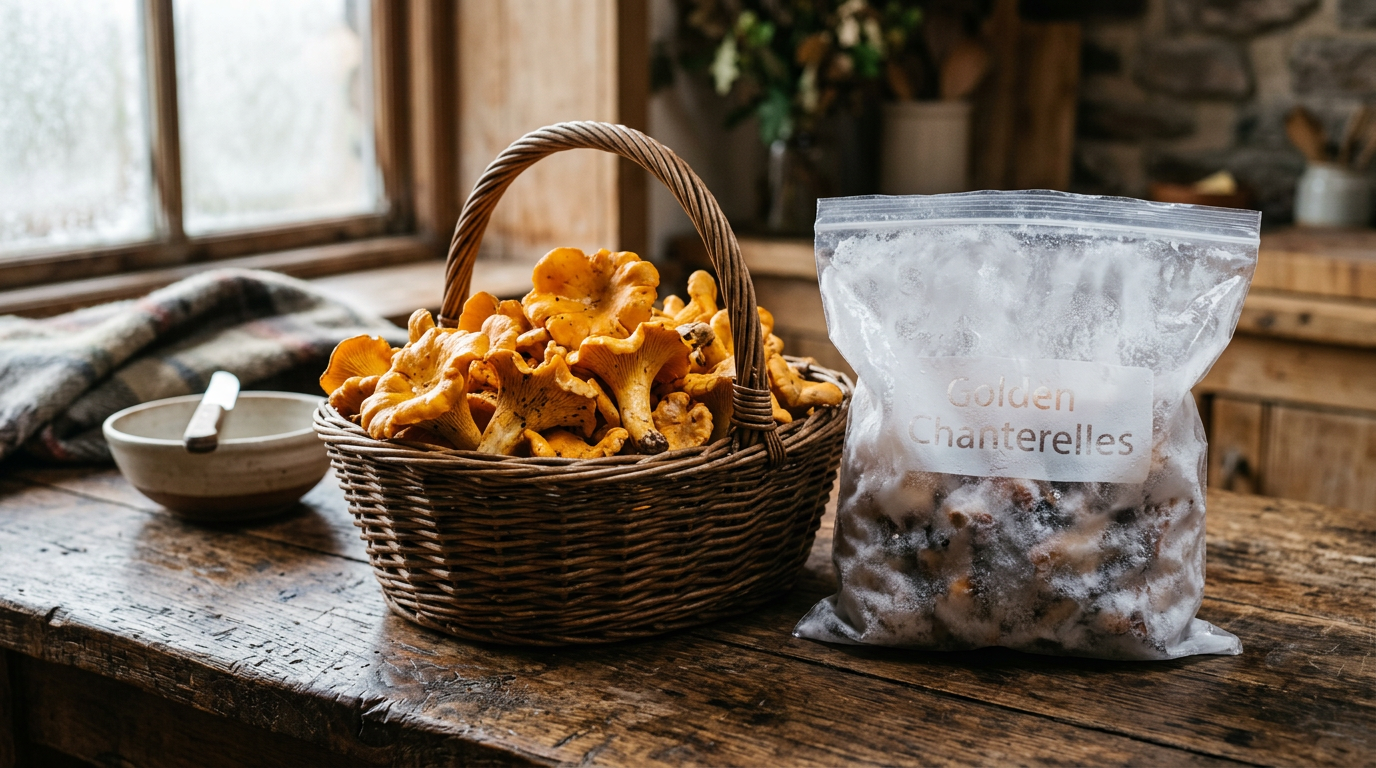
Contrary to some misconceptions, chanterelles freeze well provided they are prepared correctly.
You can't just throw the bag in the freezer and forget about it. There are a few steps to follow to avoid ending up with tasteless mush six months later.
There are three main methods: freezing raw chanterelles, blanching them beforehand, or cooking them first in a pan. Each has its advantages and limitations.
The choice depends mainly on what you intend to do with your mushrooms once thawed and the time you have available at the time of harvesting.
The advantages of freezing chanterelle mushrooms
The first advantage is simplicity. No need for complicated equipment or special skills. A freezer, airtight bags, and you're good to go!
Freezing also allows you to preserve fresh chanterelles for several months without significant nutritional loss. Their woody and slightly peppery flavor remains well preserved if the freezing process is done correctly.
Finally, you can prepare large quantities all at once and then use them as needed, directly in the pan or in your sauces.
Limitations to be aware of before starting
Let's be honest: freezing chanterelles has its drawbacks. The main one is the texture. Mushrooms contain a lot of water.
When it freezes, this water forms crystals that damage plant cells. As a result, upon thawing, chanterelles often become soft and release a lot of liquid.
Thawed chanterelles should not be eaten raw and will never regain the firm texture of fresh mushrooms. Plan to use them only in cooked dishes.
Another limitation: the duration!
Frozen chanterelles have a shelf life of no more than 12 months, and for truly satisfactory quality, it's best to consume them within 6 to 8 months. Beyond that, their aroma will gradually fade.
Finally, not all chanterelles are suitable for freezing. Damaged, overripe, or improperly cleaned mushrooms will not improve in the freezer. Freezing preserves, it doesn't repair!
Prepare your chanterelles before freezing
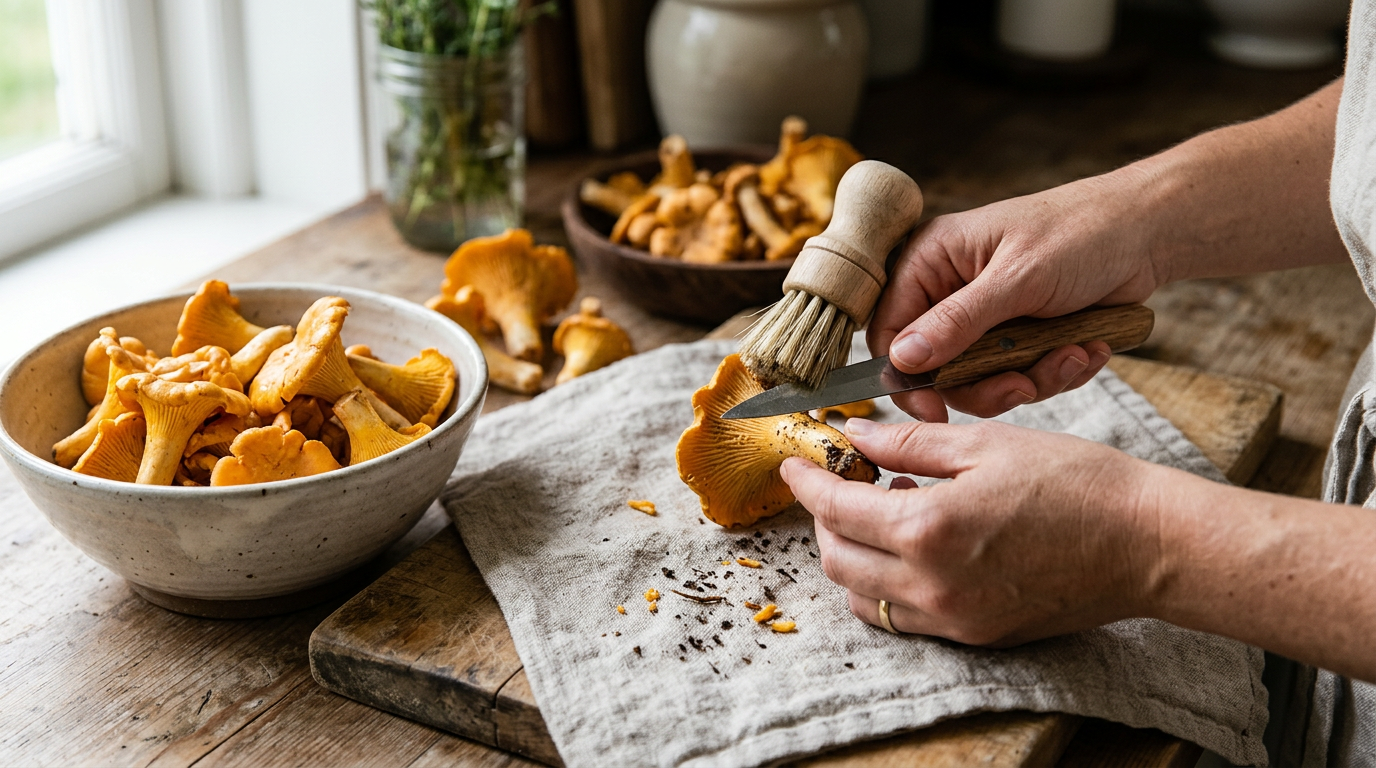
This is where everything happens. Proper preparation directly determines the final quality of your frozen chanterelles.
Take the time to do this step properly, even if you are in a hurry after a long walk in the forest.
Chanterelles, whether picked or purchased, often come with soil, dead leaves, and sometimes small insects nestled in the gills. Everything must be cleaned before freezing, but take your time!
Sort and clean the chanterelles without wetting them
The basic rule: freeze chanterelles without washing them thoroughly. Water quickly penetrates the mushrooms and worsens the texture problem upon thawing.
Dry cleaning is preferable.
Use a small knife to scrape off the earthy parts, and a soft brush or kitchen brush to remove the dust.
A slightly damp (not wet) cloth may be sufficient for stubborn stains.
Remove any overly fibrous stems or damaged parts. Keep only chanterelles in good condition.
Should chanterelle mushrooms be cut before freezing them?
It's not mandatory, but it's often a good idea!
Large chanterelle mushrooms benefit from being halved or cut into pieces before freezing. This makes them easier to cook later and allows for faster, more even freezing.
Small chanterelles can remain whole. It's even preferable if you want to present them whole on a dish.
In all cases, decide according to the intended use: in a sauce or as a risotto topping, pieces work very well.
Prepare your chanterelles in portions suitable for your usual recipes. Freezing in small quantities (150 to 200 g per bag) avoids defrosting more than necessary.
The equipment needed to properly freeze chanterelles
No need to invest in professional equipment. Here's what you need:
- A paring knife and a mushroom brush (or a paintbrush)
- A large baking sheet or tray for pre-freezing
- Use parchment paper to prevent the chanterelles from sticking together
- Airtight freezer bags or freezer-safe containers
- A marker to note the date and contents
- Optionally, a bag squeezer (or a straw)
Removing the air from the bags before sealing them slows down oxidation and freezer burn.
It's a detail that really makes a difference in the long run.
Three methods for freezing chanterelles
Herein lies the crux of the matter. There is not one single correct way to freeze chanterelles, but three distinct approaches, each suited to a different situation.
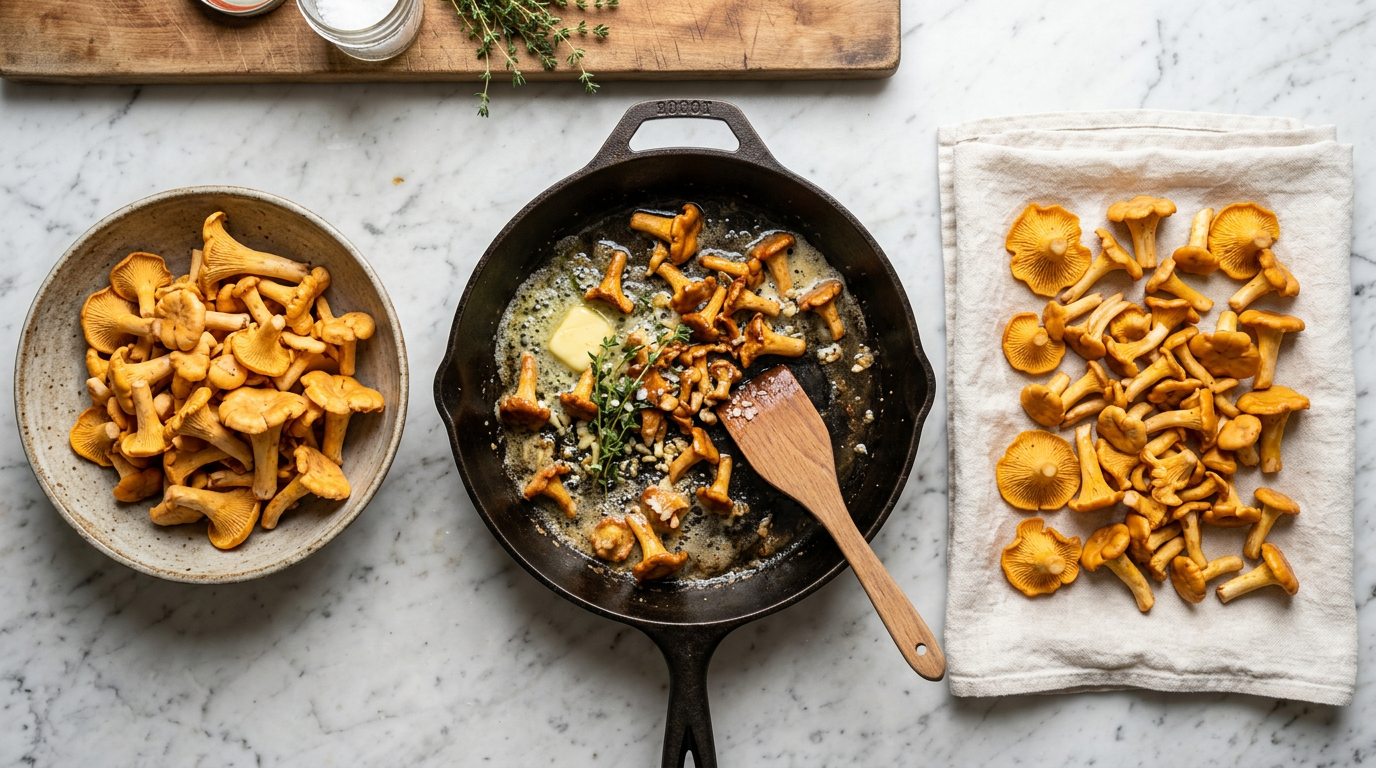
Take the time to choose the one that suits your organization and your cooking habits.
| Method | Preparation time | Texture after thawing | Shelf life |
|---|---|---|---|
| Floods | Fast | Soft | 3 to 6 months |
| Laundered | AVERAGE | Average | 6 to 9 months |
| Cooked in a pan | Longer | Farm, ideal | 10 to 12 months |
Freezing raw chanterelle mushrooms: the advantages and risks
How to freeze raw chanterelle mushrooms ?
This is the quickest method. After cleaning, the chanterelles are placed directly in the freezer. No cooking, no blanching.
The time saved is real, especially when you come home exhausted from a fruit picking trip.
But this speed comes at a price. Frozen raw chanterelles release much more water when thawed. Their texture becomes noticeably softer.
The taste is still there, but the mouthfeel will be different from fresh mushrooms.
This method is well suited for sauced dishes, soups or stews where texture is less important.
- Very quick preparation
- No pre-cooking required
- Well-preserved woody flavor
- Soft texture after thawing
- Significant water loss
- Shorter shelf life
Blanch the chanterelles before freezing
Blanching chanterelles before freezing is an interesting compromise!
Blanching involves plunging the mushrooms into boiling water for a few minutes, then rapidly cooling them in ice water.
This thermal shock inactivates the enzymes that degrade texture and color.
The result is better than with raw chanterelles: less water loss, better stability after defrosting. They also keep longer.
This is a good option if you want a decent result without spending too much time in the kitchen at harvest time.
Bleaching significantly reduces volume loss and better preserves the characteristic golden color of chanterelles.
Freezing pan-fried chanterelle mushrooms
Freezing cooked chanterelles requires a little more work, but it's the method that gives the best results in cooking.
Sautéing the chanterelles in a pan before freezing them removes much of their natural water content. The texture after thawing is much better.
Another advantage: you can take them straight from the freezer and add them to your recipe without any extra preparation steps. They heat up in just a few minutes!
This method is particularly suitable if you are regularly in a hurry during the week.
The detailed steps of each method
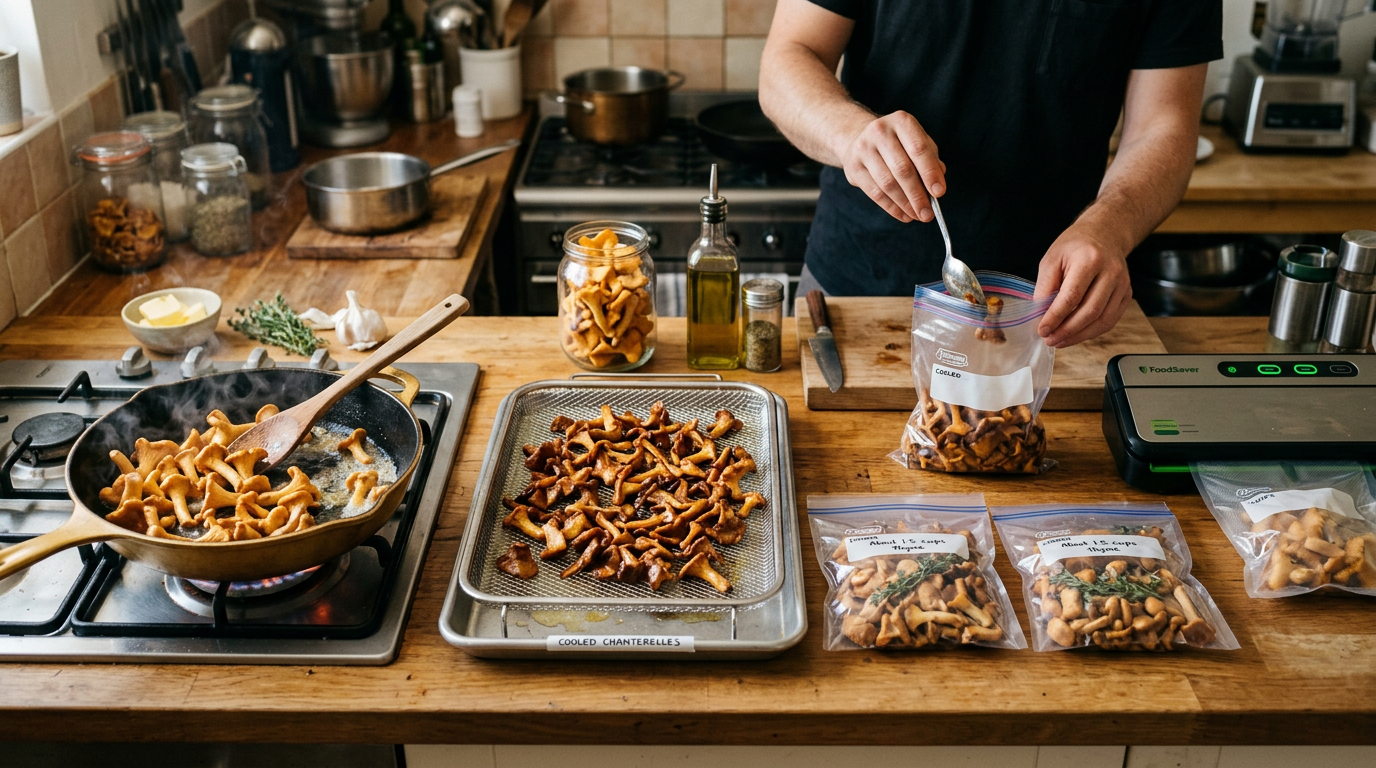
Time to put it into practice!
Here is the precise procedure for each of the three methods. Follow the steps in order; they are all important.
How to freeze raw chanterelles step by step?
- Clean the chanterelles dry with a brush or knife. Remove any damaged parts.
- Cut the larger ones into pieces if necessary.
- Spread the chanterelles in a single layer on a tray lined with parchment paper.
- Place the tray in the freezer for 1 to 2 hours (pre-freezing). This step prevents the mushrooms from sticking together.
- Transfer the frozen chanterelles into airtight bags. Remove as much air as possible before sealing.
- Write the date and contents on each bag.
- Return to the freezer at a minimum of -18°C.
Don't skip the pre-freezing step on a tray. Without it, you'll end up with a compact block of chanterelles that's impossible to separate.
How to blanch and freeze fresh chanterelle mushrooms?
- Clean the chanterelles dry as in the previous method.
- Boil a large pot of lightly salted water.
- Prepare a large bowl of very cold water with ice cubes.
- Plunge the chanterelles into boiling water for exactly 2 minutes. No longer, otherwise they will become too soft.
- Drain them immediately and plunge them into ice water for 2 minutes to stop the cooking.
- Drain thoroughly and spread them out on a clean cloth to dry as much as possible.
- Pre-freeze on tray for 1 to 2 hours, then transfer into airtight bags with the air expelled.
- Label and store at -18°C.
How to cook and freeze chanterelle mushrooms?
- Clean the chanterelles with a dry cloth.
- Heat a drizzle of oil or a knob of butter in a pan over high heat.
- Add the chanterelles in a single layer. Do not add salt immediately : salt causes the water to evaporate more quickly, which impairs the colouring.
- Cook for 5 to 7 minutes until all the water has evaporated and the chanterelles begin to brown slightly.
- Add salt at the end of cooking, stir, then remove from the heat.
- Allow to cool completely to room temperature before freezing. Never put hot chanterelles in the freezer.
- Divide into portions in airtight bags or containers. Remove air, label, and freeze.
Add a little garlic or parsley during cooking before freezing. Your chanterelles will already be flavorful and ready to use straight from the freezer.
🍄 Chanterelle freezing calculator
Estimate the number of bags needed, the optimal storage time and the recommended method based on your quantity of chanterelles.
The shelf life of frozen chanterelles
Putting chanterelles in the freezer is good. Knowing how long they'll stay usable there is even better!
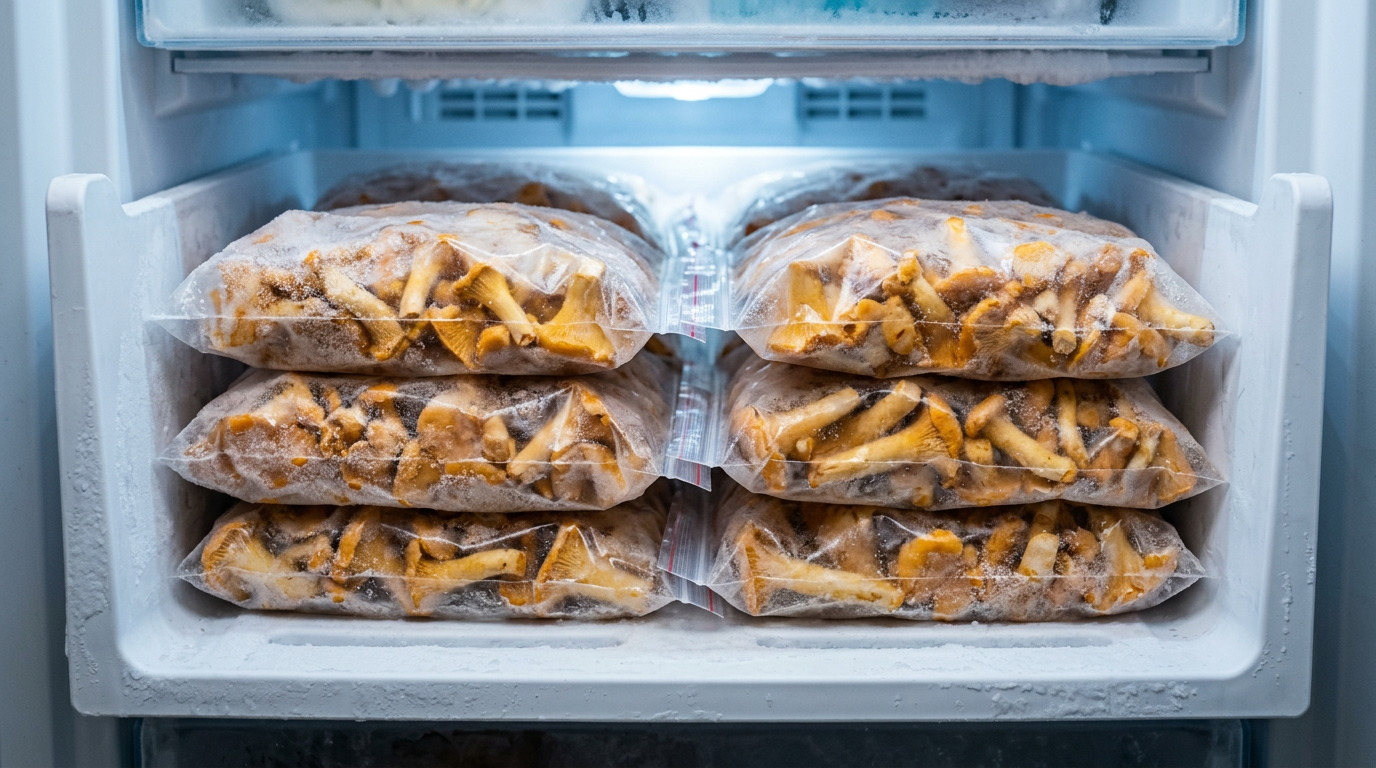
The duration varies depending on the method chosen and the storage conditions.
How long can you keep chanterelles in the freezer?
Freezing at -18°C or lower guarantees safe storage. Above this temperature, quality deteriorates more rapidly.
Here are the recommended durations according to the method:
| Freezing method | Recommended duration | Maximum duration |
|---|---|---|
| Floods | 3 to 4 months | 6 months |
| Laundered | 6 to 7 months | 9 months |
| Cooked in a pan | 8 to 10 months | 12 months |
These durations are assumed for storage at -18°C continuously, which is the average optimum freezing temperature.
Each time the freezer is opened, each temperature variation slightly reduces the quality.
In this context, a well-regulated freezer that is rarely opened will make a real difference.
Signs that indicate chanterelle mushrooms are damaged
Even frozen, chanterelles can spoil. Here are the warning signs to look for before using them:
- Freezer burn : whitish or grey areas on the surface, often due to poor packaging or prolonged contact with air.
- A rancid or unpleasant odor upon opening the bag. Healthy chanterelles should smell good even when frozen.
- An abnormally dark or blackish color, a sign of advanced oxidation.
- Pieces that have clumped together in a compact block indicate partial thawing followed by refreezing: in this case, do not consume them.
- A viscous or sticky texture once thawed, which indicates bacterial degradation.
Chanterelles that have been thawed once should never be refrozen. Cook them immediately after thawing.
Defrosting and cooking frozen chanterelle mushrooms
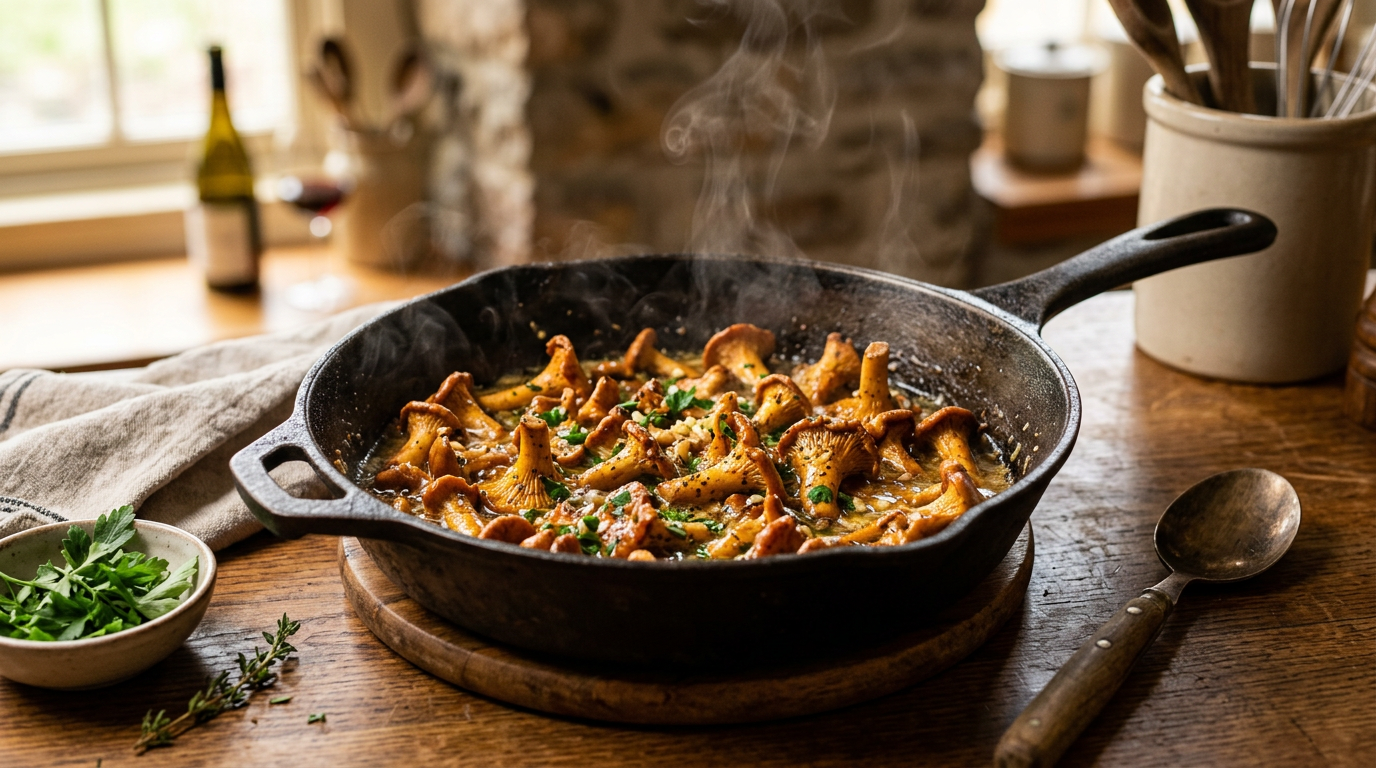
Defrosting is a step that is often overlooked. Yet, it directly influences the final result on the plate.
Good news: with chanterelles, the technique is simple!
How to defrost chanterelle mushrooms without damaging them?
The gentlest method is to transfer the chanterelles from the freezer to the refrigerator the night before.
defrosting in the cold limits cell damage and reduces the amount of water released.
If you are short on time, it is also possible to use them directly from frozen in the pan or in a hot dish.
This is even recommended for cooked chanterelles. This avoids the defrosting step and better preserves the texture.
Cooking frozen chanterelles in a pan
To cook frozen chanterelles in a pan, heat the pan over high heat with a little oil or butter. Add the chanterelles directly while still frozen. Do not cover the pan.
They will release water at first: this is normal. Wait until all this water has evaporated before reducing the heat. Stir regularly. Allow 8 to 10 minutes depending on the quantity. Season only at the end of cooking.
Tips for preserving the flavor of frozen chanterelles
A few simple habits will help you get the most out of your frozen chanterelles:
- Don't drown them in cream or sauces too quickly: let them dry in the pan to concentrate their aromas.
- A squeeze of lemon juice at the end of cooking revives their aroma and color.
- Garlic and fresh parsley added at the very end of cooking compensate for the aromas slightly diminished by freezing.
- Use them in dishes where they cook: risotto, omelet, pasta, meat sauce. These are the best recipes for frozen chanterelles because the extended cooking time masks any slight loss of texture.
Save the juice released by the chanterelles after defrosting or cooking. It is very aromatic and can be added to a sauce or broth for a more intense flavor.
Practical questions
Can you freeze chanterelle mushrooms without cooking them?
Yes, it is possible to freeze raw chanterelles after cleaning them with a dry cloth and pre-freezing them on a tray. The method is quick but results in a softer texture after thawing. It works well for soups, sauces, and stews.
Should chanterelle mushrooms be washed before freezing them?
No, it's best to avoid rinsing them under water. Chanterelles easily absorb moisture, which worsens their texture when thawed. Instead, use a brush or knife to clean them dry.
How long can frozen chanterelles be kept?
It depends on the method used. Frozen raw chanterelles can be kept for up to 6 months, blanched chanterelles for up to 9 months, and pan-fried chanterelles for up to 12 months at -18°C.
Can you refreeze chanterelle mushrooms that have already thawed?
No. Once thawed, chanterelles should never be refrozen. This encourages bacterial growth and significantly degrades their quality. Cook them completely after thawing.
How to use frozen chanterelles in cooking?
Frozen chanterelles can be used directly in a pan without thawing in most cases. They are a great addition to risottos, omelets, pasta sauces, or meat dishes. Add garlic and fresh parsley at the end of cooking to enhance their flavor.