
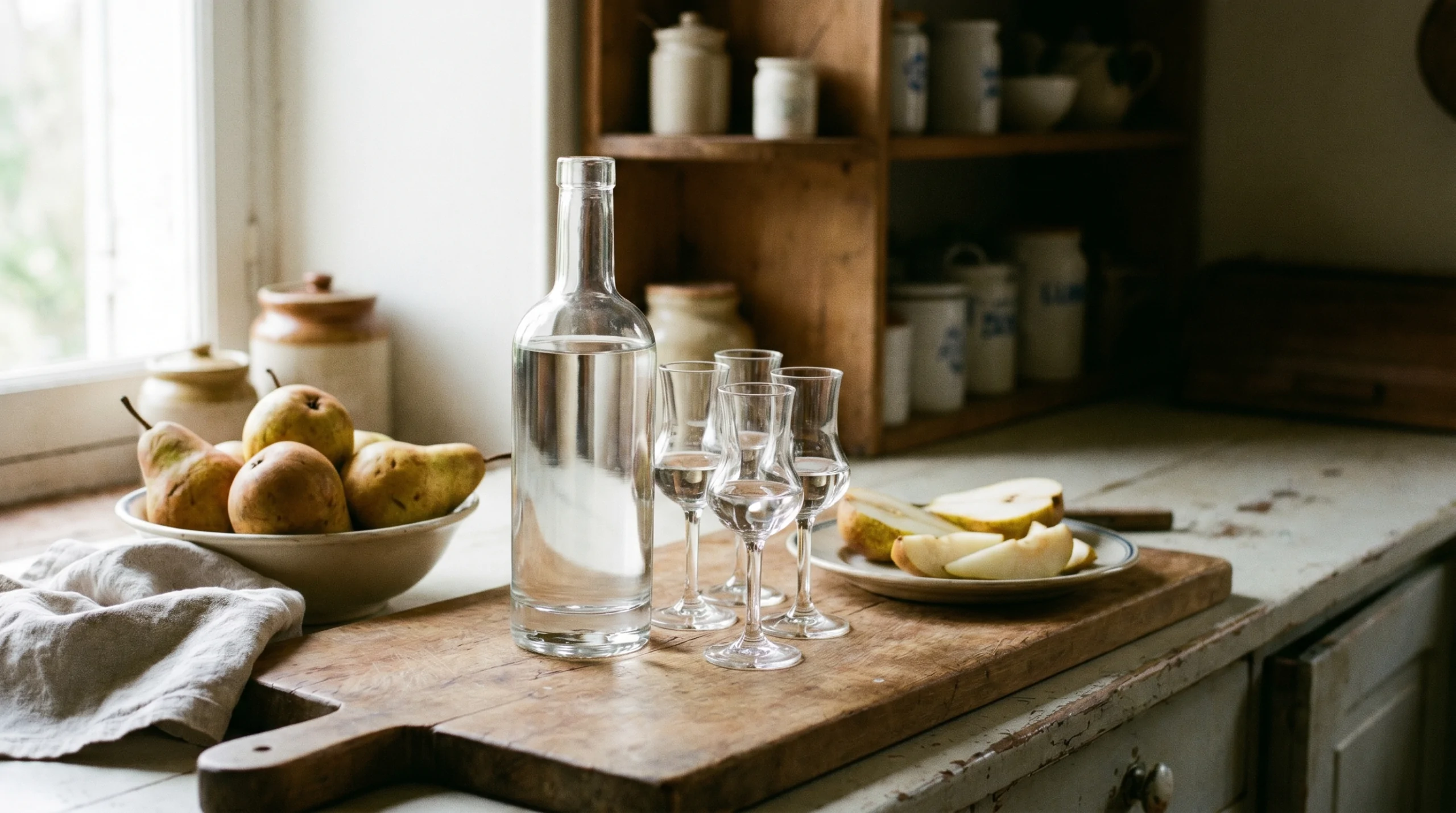
Let me be frank: the recipe for real pear brandy is a classic… but it's not a quick and easy recipe. It requires patience and expertise: fermenting very ripe pears, then gently distilling them to capture that clean and refined fruit aroma.
That's exactly what I love about it: when it's done right, it smells like fresh pear, not sugar, not aggressive alcohol.
The basic principle is to start with flavorful pears (Williams if you can find them, otherwise fragrant and ripe pears). These are then pureed, a controlled fermentation is initiated, and the juice is distilled, separating the fractions.
The little "trick" that makes all the difference is cleanliness (spotless equipment) and slowness: too hot a fermentation or too rapid a distillation, and you will lose the fruit.
Seasonally, I also use a little lemon (for balance and to prevent oxidation) and a very subtle touch of vanilla during the resting period: it doesn't change the recipe, it just softens the edges. And if you prefer drier brandies, you can let the pear flavor shine through without adding any sweetener.
One last important point: in many countries, distilling alcohol is regulated, or even prohibited without a permit. I'm giving you the traditional method for cultivating and understanding the product; it's up to you to check local regulations and, if necessary, entrust the distillation to a licensed distiller.
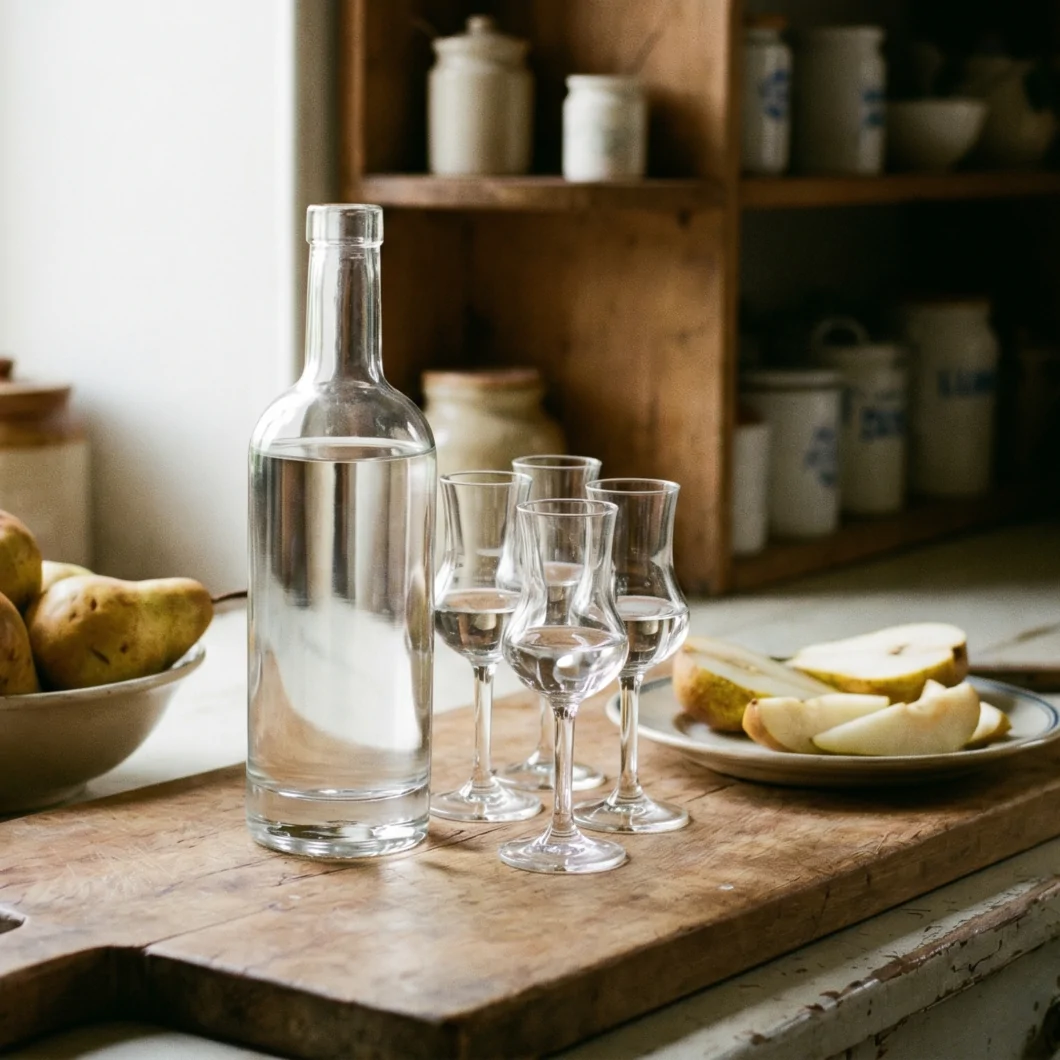

Pear brandy
4
people34
minutes18
minutes90
kcal52
minutesA pear brandy made using traditional methods: ripe pears, a clean fermentation, then slow distillation to preserve the fruit. The result: a crisp, fragrant spirit with a very pear-like finish.
Keep your device's screen on
Ingredients
3 kg of very ripe pears (ideally Williams)
1 lemon (finely grated zest + juice)
1 vanilla pod
6 g of wine yeast (Saccharomyces cerevisiae, optional but recommended)
2 g of yeast nutrient (optional)
Spring water (if needed, to adjust the texture of the puree)
Ice or very cold water (for the water bath during fermentation if necessary)
Preparation steps
- Clean and disinfect all equipment that comes into contact with the puree (food bucket, spoon, bung/airlock). This is essential to avoid "strange" tastes.
- Sort the pears: keep the very ripe and fragrant ones, discard any that are moldy. Cut off any damaged areas. Avoid washing them thoroughly if they are clean: you don't want to saturate them with water, but you can dry them.
- Remove the seeds and stems. Roughly purée the flesh (using a food processor or immersion blender). If it's too thick to stir easily, add a tiny bit of spring water (just enough to make a stirable purée).
- Add the finely grated lemon zest and juice. Split the vanilla pod, scrape out the seeds and add both the seeds and the pod. Mix well.
- Optional but recommended: rehydrate the yeast according to the instructions (often 10 minutes in lukewarm water), then add it to the puree. Add the nutrient supplement as well, if you have any. Mix well.
- Transfer to a fermentation bucket, filling it no more than three-quarters full (it will foam). Cover with a lid and a bung filled with water. Let it ferment at 18–22°C, stirring once a day with a disinfected spoon to break up the pulp layer.
- When the activity slows down considerably (fewer bubbles) and the puree smells like clean, fermented pears, leave for another 24 hours. Depending on the temperature and the ripeness of the fruit, this often takes 5 to 10 days (this time is not included in the total time).
- Strain coarsely (using a sieve and cheesecloth) to collect the liquid and a thin layer of pulp. Avoid large pieces that may stick when heated.
- Distillation (only if legal in your country; otherwise, have it distilled by a professional): Heat very gently. Make a first pass (a light, rough distillate) without aiming for finesse. Then make a second pass, separating the distillate: discard the heads (which smell of solvent/glue), keep the heart (which has a clean pear aroma), and stop when the tails begin to form (which are heavy, damp, and less fruity).
- Let the brandy rest for 2 to 4 weeks in a glass, away from light, with the vanilla pod removed after 48 hours (just a rounded shape, not a vanilla taste).
- Adjust the alcohol content if necessary with a little spring water (very gradually, stirring, then let it rest for 48 hours). Serve at 10–12°C in small glasses.
📊 Nutritional Information
1 serving (approx. 40ml)
| Nutrient | Value |
|---|---|
| Calories | 90 kcal |
| Proteins | 0g |
| Carbohydrates | 0g |
| including sugars | 0g |
| Lipids | 0g |
| including saturated fatty acids | 0g |
| Fibers | 0g |
| Sodium | 0mg |
| Vitamins | |
| Vitamin C | 0% AJR |
| Vitamin B6 | 0% AJR |
| Vitamin B3 | 0% AJR |
| Minerals | |
| Potassium | 0% AJR |
| Magnesium | 0% AJR |
| Zinc | 0% AJR |
* RDA = Recommended Daily Allowance
📝 Notes
The nutritional values are given for a final brandy with an alcohol content of approximately 40% vol, without added sugar: most of the sugars in the pear are transformed/removed during the process.
Fermentation and especially distillation are legally regulated depending on the country: check the regulations before putting any practice into action.
Excessive alcohol consumption is dangerous for your health.
💡 Chef's Tips
A clean pear flavor is achieved through fresh fermentation (18–22°C) and slow distillation. If it gets too hot during fermentation, place the bucket in a tub of cold water with ice packs. And keep everything impeccably clean: a vinegar or solvent smell at the start won't magically disappear.
🔄 Variations
- Longer rest: let it age for 3 to 6 months in a glass demijohn for a more mellow nose.
- For a drier eau-de-vie: avoid adding any water after distillation and serve slightly cooler.
