
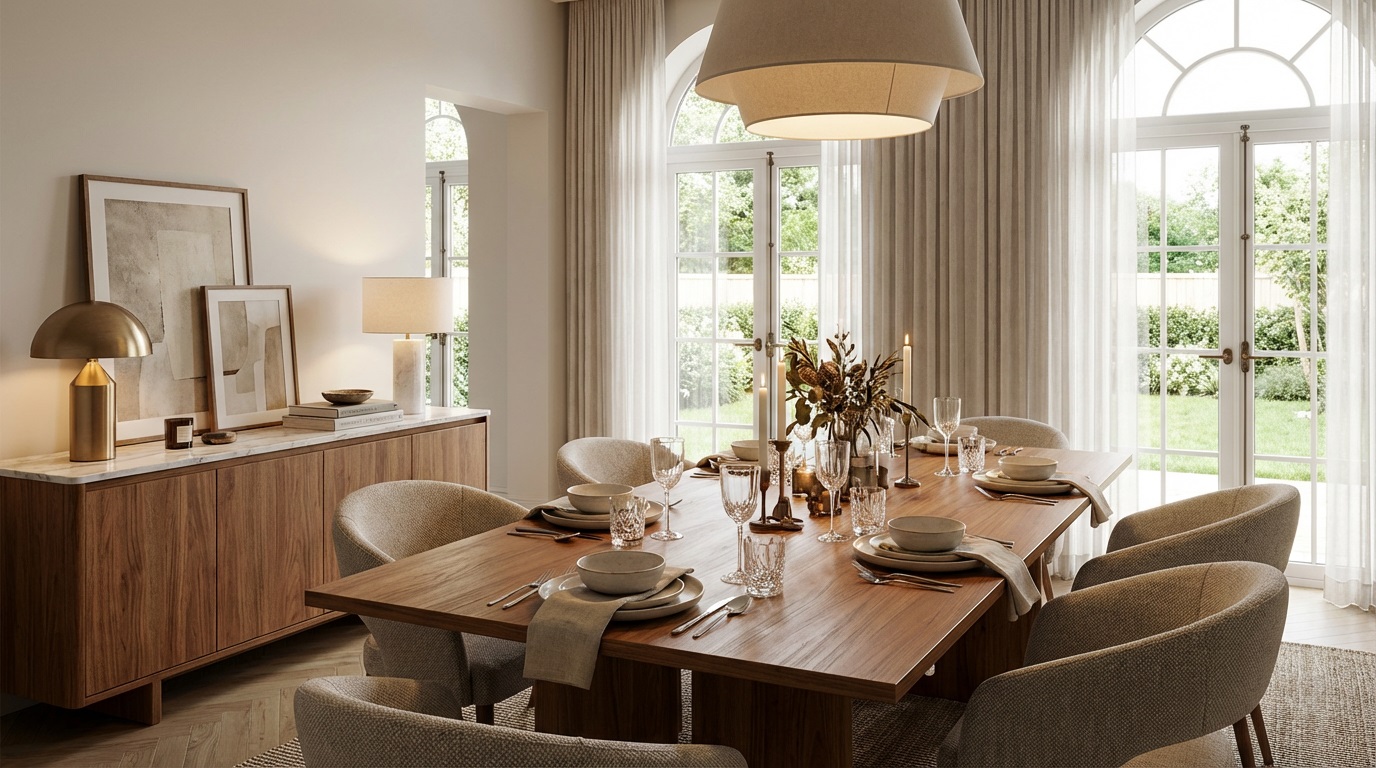
Choosing the ideal furniture for your dining room today involves a process that blends practicality and sensory appeal. Indeed, the layout of this central space, where meals, conversations, and conviviality come together, plays a key role in defining the identity of a contemporary interior.
While design trends explore new materials and promote eco-responsibility, selecting the right furniture goes far beyond mere aesthetics. It's about seamlessly blending functionality, space optimization, and personalization.
By 2025, wood, glass and metal will be the stars, allowing for a variety of creations that enhance both small urban spaces and large family reception rooms.
From imposing tables to clever sideboards, from enveloping chairs to modular furniture, the choice requires thought and sensitivity to combine harmony, ease of use and durability, while incorporating the mark of one's own style.
The importance of furniture in the successful design of a dining room
The dining room is often the setting for memorable moments: family meals, celebrations, or impromptu dinners. Furniture plays a fundamental role, shaping both the atmosphere of the space and the interactions between guests.
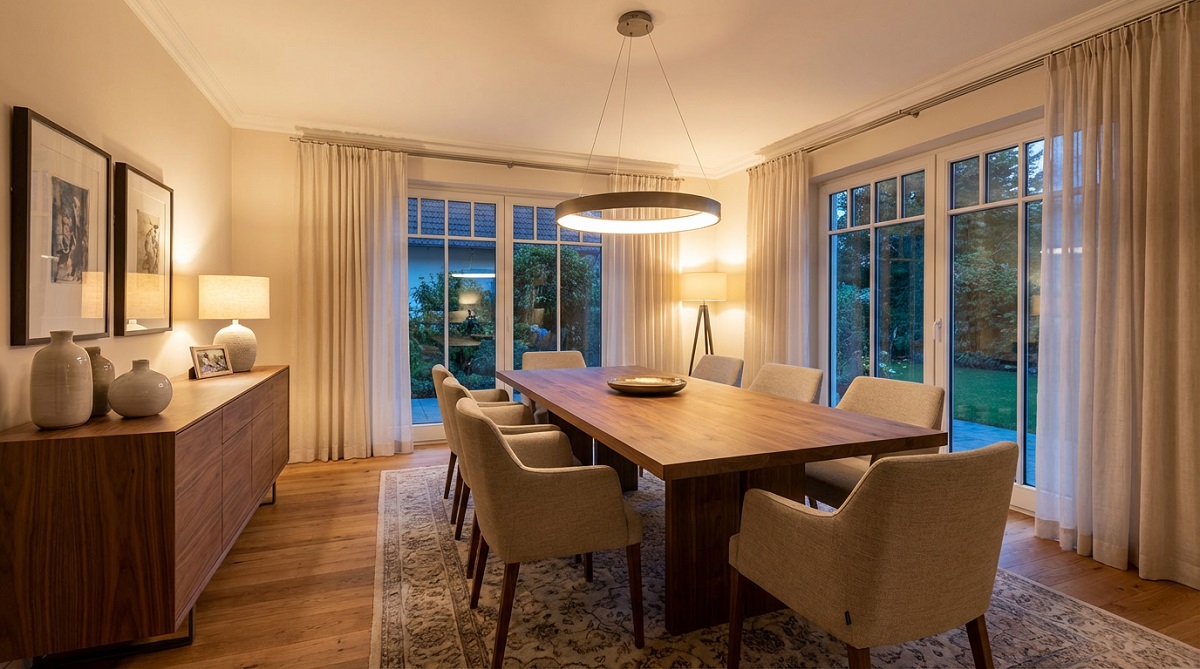
Beyond the visual effect, the choice of each piece directly influences daily comfort and the pleasure of entertaining. Thus, a well-chosen table, adapted to the layout of the space, becomes the beating heart of the room, around which all conviviality revolves.
The successful combination of design, functionality and space optimization is necessary to create a welcoming dining room.
Materials such as wood and metal, chosen for their strength and timeless appeal, make it easy to harmonize existing furniture with new pieces.
This dialogue between practicality and aesthetics cannot be based solely on decorative criteria. It also involves considering everyday constraints and traffic flow, such as:
To facilitate smooth movement around the table and chairs.
Opt for versatile furniture, such as a sideboard with built-in storage.
Integrate the furniture into a comprehensive reflection on lighting and decoration.
The success of the layout therefore depends on a true coherence between the furniture, the size of the space and the intended use.
For the Varnier family, for example, the choice of a solid wood sideboard modernized with metal legs allowed them to combine robustness, storage and a touch of modernity, while also facilitating movement for their two young children.
Here are the different elements to improve as a priority, along with their role
Furniture items | Main role | Impact on the atmosphere |
|---|---|---|
Dining table | Meal area, central point | Structures conviviality, attracts the eye |
Chairs | Seating comfort, design | refines or energizes the whole |
Buffet | Storage, additional surface | Organizes the space, adds character |
Creating harmony between function and aesthetics
To achieve a balance, it is useful to think about the layout from the beginning of the project, by evaluating all the needs: storage, number of guests, frequency of convivial meals.
The timelessness of wooden furniture suits both classic and more contemporary interiors, while glass and metal add a contemporary look without sacrificing functionality.
The influence of furniture on the perception of space
Oversized furniture in a small room will tend to overwhelm it, while overly discreet furniture risks making the dining room feel impersonal.
The trick? Opt for balanced proportions and carefully chosen colors to enhance the room without overwhelming it. A low sideboard in light wood opens up the visual space and easily accommodates accessories or refined tableware.
Smooth traffic flow: a modern imperative
Being both functional and welcoming, a well-arranged dining room gives its occupants the opportunity to move freely around the furniture, regardless of the shape of the table or the number of chairs deployed.
This attention to circulation is part of a current trend, where comfort rhymes with accessibility and sharing, ensuring each guest a prime place around the table.
Essential furniture for a harmonious and practical dining room
The dining table, a centerpiece, must be chosen carefully, as it determines the overall atmosphere and style of the dining room.
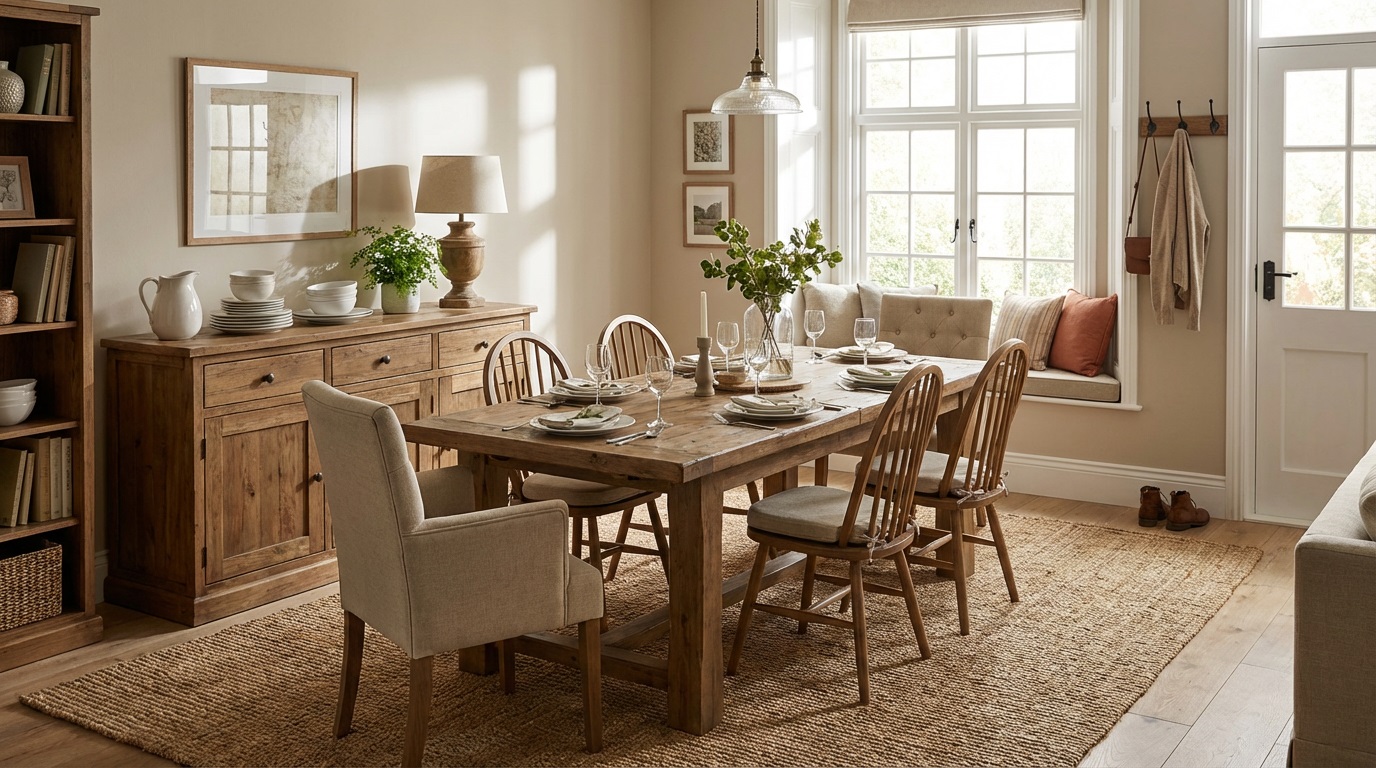
In 2026, round shapes will promote conviviality more, while rectangular or extendable models will offer greater modularity.
The choice of wood, glass or metal will depend on taste, the brightness of the room and the number of regular guests.
Chairs are not to be overlooked: their comfort determines the quality of time spent at the table. Some favor a uniform look by opting for matching sets, while others prefer a mix of styles, combining wood, metal, and various shades for a more eclectic effect.
Ergonomic design, a soft seat, and the presence of armrests are all criteria to consider.
Let's summarize the elements to consider:
Dining table: extendable, round, square or rectangular
Chairs: wooden or metal legs, padded or unpadded seat
Buffet or buffet for the organization
Additional furniture: wall shelves, rolling carts
How to choose the right dining table?
The choice of table will largely depend on the configuration of the space and lifestyle.
A young urban family will favor an extendable light wood table to adapt to evolving needs, while a couple who like to entertain might opt for an oval glass table or even a beautiful multipurpose kitchen table , synonymous with refinement and visual space saving.
The central role of chairs: comfort and design above all
The comfort of chairs depends on ergonomics, the quality of the materials used, and harmony with the table.
Whether you choose wood for warmth, metal for a modern touch, or velvet for softness, it's all a matter of personal preference. An eclectic mix of furniture can certainly energize the space and give the dining room a unique personality.
Storage: sideboards and display cases, pillars of organization
A low wooden sideboard or a glass-fronted display cabinet contributes as much to storage as to the balance of the room.
Beyond their practical side, these pieces of furniture also provide surfaces for displaying dishes or decorative objects, reinforcing the overall harmony.
Incorporating a buffet also helps to declutter the table, thus facilitating conviviality during large meals!
Optimize space with occasional furniture
In some interiors, the presence of a metal console or a mobile serving cart can make all the difference: saving space, flexibility of use and the possibility of adding a touch of personal style.
Wooden wall shelves are also an asset for displaying plants or cookbooks without obstructing traffic.
Here is a short summary
Furniture type | Main advantage | Integration tip |
|---|---|---|
Extendable wooden table | Adaptability to guests | Combined with stackable chairs |
Low buffet | Storage space saving | Positioned against a wall to free up space |
Metal serving cart | Mobility | Ideal for impromptu services |
Adapting your dining room furniture to the available space and layout
Adapting furniture to the reality of available space is an essential step, whether you live in a bright loft or a smaller city apartment.
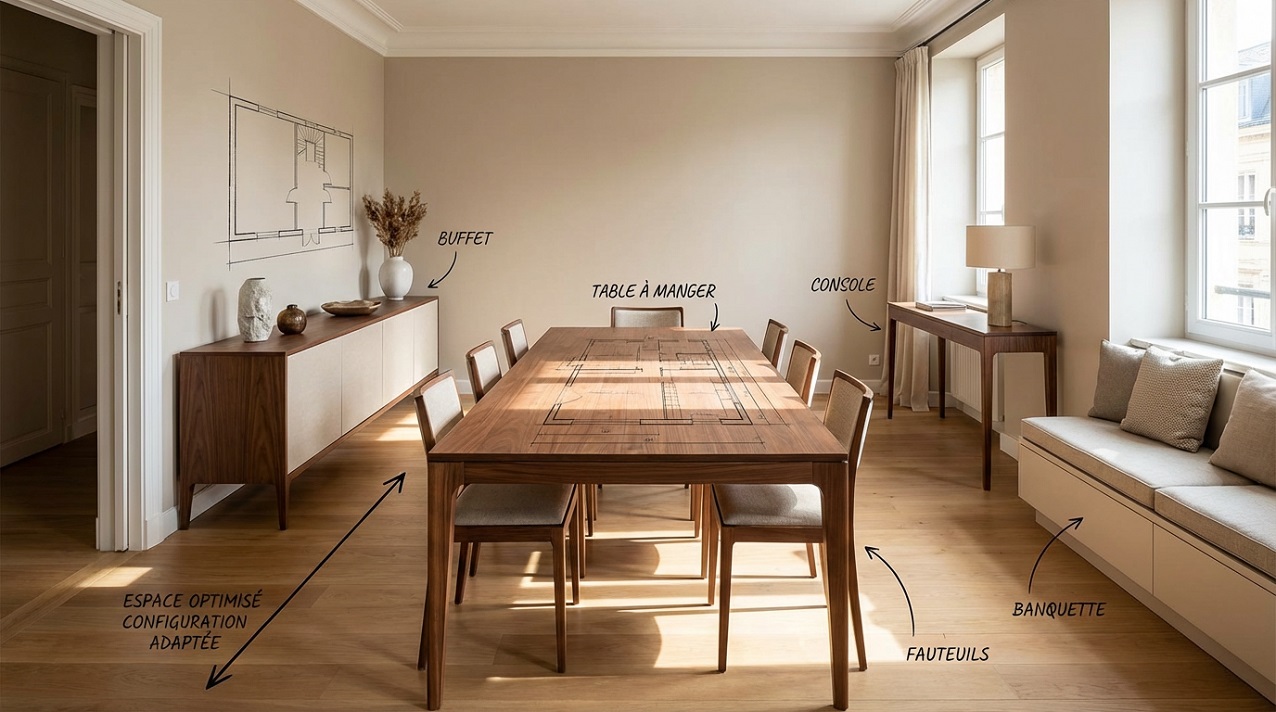
Knowing how to accurately measure the room, integrating passage points, planning the opening of doors: every detail counts for optimal circulation.
In an urban context, solutions must be ingenious: a folding glass table, a compact sideboard or wooden benches allow you to furnish the space without weighing it down.
Large spaces, on the other hand, easily accommodate larger pieces of furniture, such as a solid wood table and a generous sideboard.
Here are some tips for adapting over time:
Opt for multifunctional furniture to gain flexibility.
Make use of vertical space with wall shelves made of wood or metal.
Opt for furniture with clean lines to avoid visual clutter.
Clever solutions for small spaces
Small spaces require creativity and playing with modularity.
Wooden benches, tucked under the table, quickly free up space. Stackable or folding metal chairs are suitable for adding or removing seats as needed, and an extendable console table is ideal for studios where the dining area can be transformed at will.
The valuation of large volumes
When space is not an issue, it is possible to structure different zones in the dining room: dining area, relaxation area, small office or monumental sideboard.
Choosing XXL furniture, such as a designer sideboard or a large wooden table, allows you to add character while harmoniously occupying the space.
The emergence of modular and multifunctional furniture
Modular furniture offers the possibility of rethinking space according to one's desires. An evolving sideboard, glass nesting tables, or elements that can be combined depending on the occasion are increasingly popular with today's families.
This flexibility allows for perfect adaptation to both peak periods and everyday uses.
Respect for traffic flow and visual comfort
The secret to a successful space is simple: leave at least 60 to 70 cm between furniture to move around freely.
Light materials such as blond wood or transparent glass visually free up the room and a shallow sideboard avoids cluttering while remaining functional, while alternating closed and open furniture balances the result.
Below is a comparison of the elements to favor depending on the type of space
Type of space | Recommended furniture | Preferred materials |
|---|---|---|
Urban Studio | Folding table, stackable chairs, compact sideboard | Light wood, brushed metal, glass |
Great Hall | Large table, extra-large sideboard, chairs with armrests | Solid wood, metal, smoked glass |
Choosing dining room furniture materials in line with trends
The choice of materials defines not only the ambiance and durability of the dining room, but also the consistency of its style with the rest of the house.
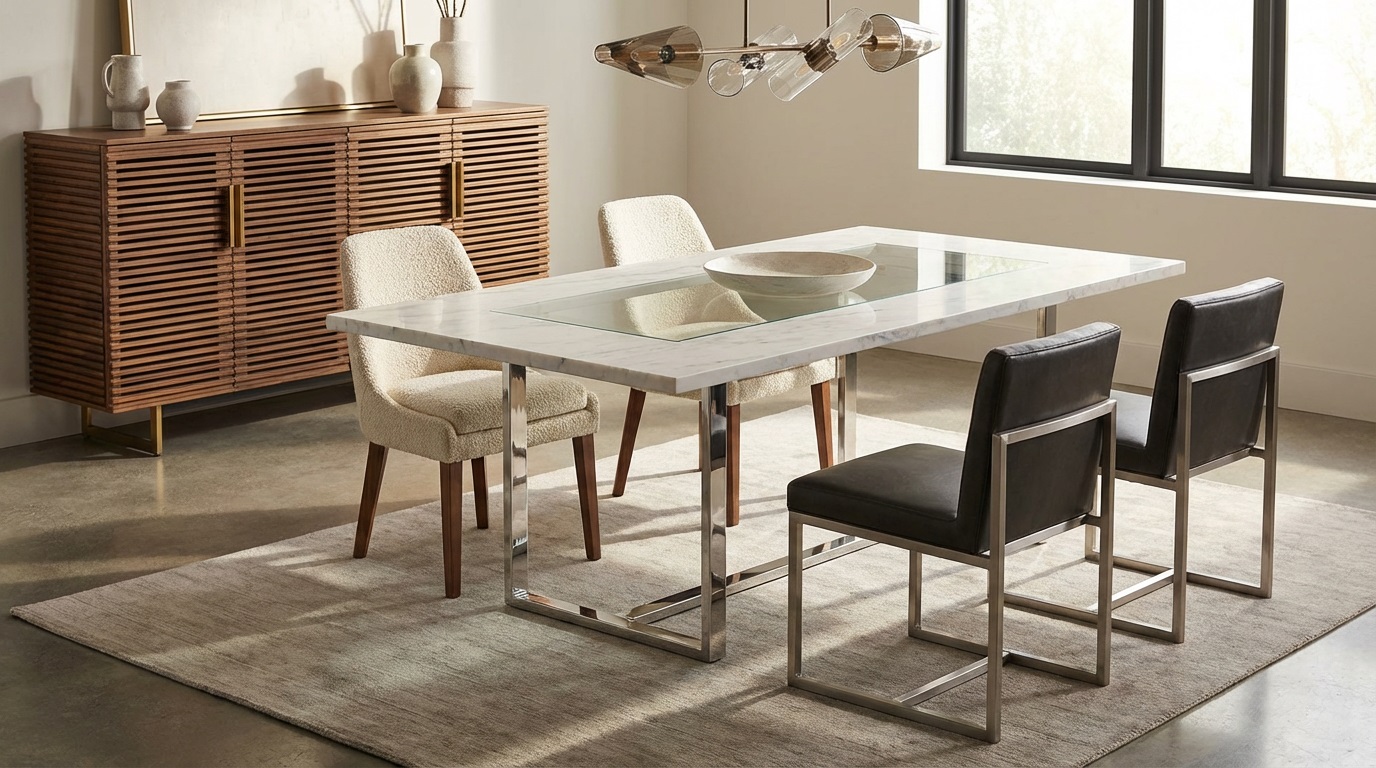
In 2026, wood should still be appealing for its authenticity, natural warmth and ease of maintenance, whether it is for tables, sideboards or chairs.
The variations in recycled wood demonstrate a growing commitment to eco-responsibility, a value now dear to informed users.
Here is a brief summary of the most popular materials:
Wood, timeless: ideal for those seeking high-end solidity and aesthetics.
Glass, the key material: it brings lightness and light, perfect for small spaces.
Metal, a symbol of robustness and industrial design, integrates easily into all styles.
Laminate flooring is a practical solution: it allows for a variety of effects and is economical.
Wood, a safe choice for the dining room
Solid wood furniture remains a favorite with families: oak or walnut for a table, recycled pine sideboard…
The solutions are varied. Wood blends well with both metal and glass, creating lasting and warm aesthetic combinations.
Glass and metal, for a contemporary look
Glass is preferred for its ability to visually enlarge the space, and tables with tempered glass tops or display cases enhance small dining rooms.
Metal complements these creations, bringing solidity and modernity, from chair legs to modular buffet structures.
Balancing aesthetics, maintenance and durability
Choosing your materials means thinking about both beauty and ease of maintenance.
Wood is treated with natural oils, glass requires only a dry cloth, and metal is shock-resistant…
A dining room should remain functional over time, while maintaining an attractive design and a pleasant texture to the touch.
Sensitivity to trends and the environment: the future of furniture
In 2026, the rise of eco-responsible materials will continue to make its mark in collections: FSC-certified wood, furniture made from recycled materials, or chairs made of solvent-free painted metal.
Major retailers, such as Maisons du Monde or Habitat, proudly display their commitments to more responsible consumption.
Thus, each choice is made in time, with the assurance of a welcoming, elegant and environmentally friendly dining room – the best way to make conviviality and resilience rhyme.
Material | Aesthetic | Sustainability | Interview |
|---|---|---|---|
Solid wood | Warm, authentic | Long lasting | Natural oil |
Tempered glass | Lightweight, bright | Medium to long | Soft cloth |
Metal | Modern, industrial | Very robust | Damp sponge |
Laminate | Versatile | Good | Easy, quick |
What size should I choose for a dining room table?
For a welcoming dining room, it is advisable to allow approximately 60 to 80 cm per guest around the table and a distance of at least 70 cm behind each chair to allow easy movement.
What materials will be the most fashionable for a dining room in 2025?
Wood, glass, metal, and recycled materials are leading the trends. Combining them allows for play on contrasts and personality while guaranteeing durability and easy maintenance.
How to optimize space in a small dining room?
Opt for compact furniture: a folding table, stackable chairs, a slim sideboard, and wall shelves. Choose light colors and be mindful of the flow of traffic around the furniture.
Why prioritize a buffet in the layout?
The sideboard provides storage without cluttering the room: it holds dishes, table linen and serves as a decorative support, allowing the dining table to always remain clear.
Is it possible to mix materials and styles in a dining room?
Yes, the combination of wood, metal, and glass creates a contemporary feel. Dare to mix and match mismatched chairs to personalize the room while remaining consistent with your chosen color palette.
