
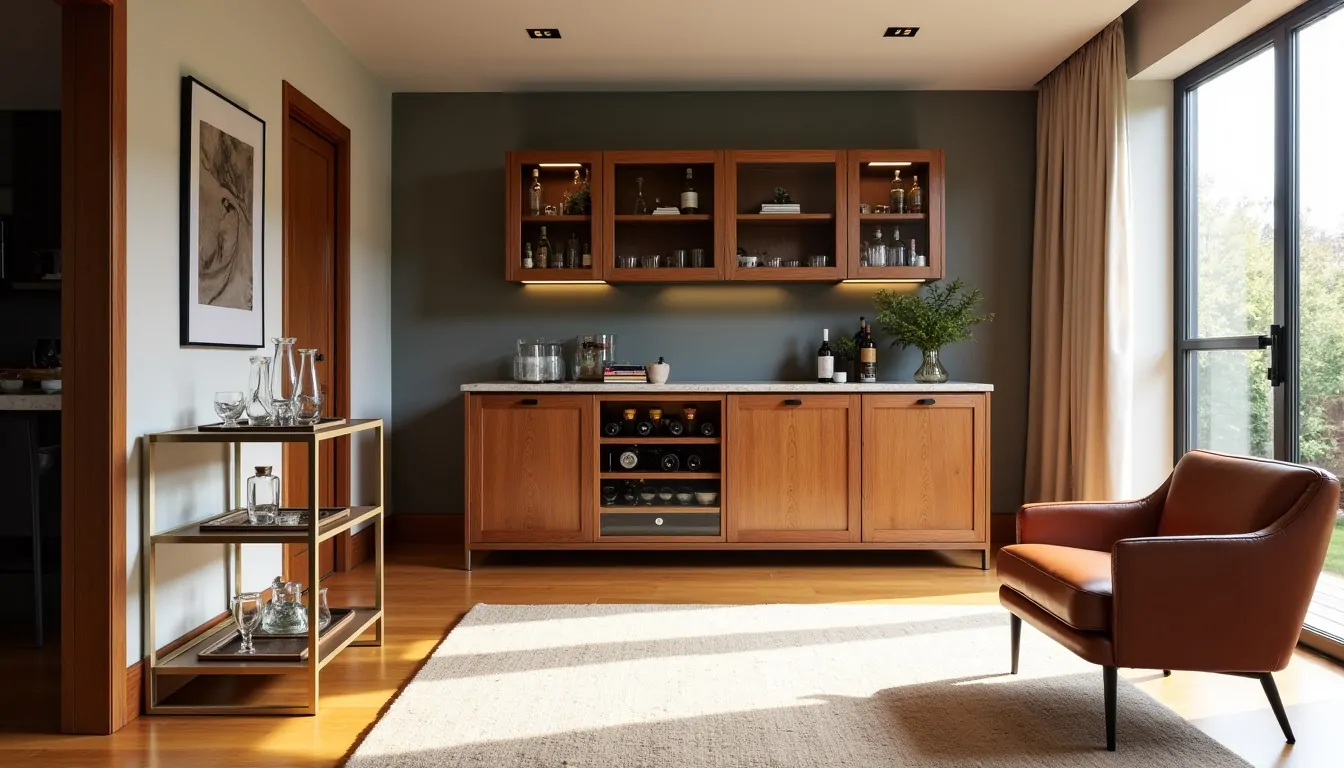
A well-designed bar area has the power to radically transform a room, infusing it with an atmosphere of conviviality and elegance. More than just a storage unit, it becomes a true focal point, an invitation to relax and share.
To successfully complete this arrangement, the question of which bar unit to choose is crucial, as the decision depends primarily on the available space in your interior.
Whether you have a large living room or a small kitchen, there are a multitude of solutions for integrating a bar that suits your needs and lifestyle.
The goal is to create a functional, aesthetically pleasing space that blends seamlessly with the overall ambiance of your home. This involves considering its intended use, dimensions, materials, and storage options.
Define the intended use of your bar cabinet to make an informed choice
Before you start looking for the ideal piece of furniture, take the time to define precisely how you intend to use it.
This step is crucial, as it will guide all your choices regarding size, configuration, and features.
A bar intended for mixology will not have the same requirements as a simple storage space or an occasional tasting area.
A space dedicated to cocktails and mixology
If your passion is creating sophisticated cocktails, your bar cabinet will need to offer a generous work surface and specific storage.
Consider compartments for shakers, measuring cups, various glasses (tumblers, coupes, shot glasses) and of course, enough space for your bottles of alcohol and syrups.
An integrated sink or a small refrigerator can also be very practical for having all the ingredients within easy reach.
A friendly and relaxed aperitif area
For those who prefer a more relaxed aperitif area, where you can meet up with friends for a glass of wine or a beer, a simpler bar unit may suffice.
Emphasis will be placed on user-friendliness and accessibility.
A surface for placing some tapas, comfortable stools and storage for a few essential bottles and glasses will be the priorities.
The overall atmosphere should encourage relaxation and conversation!
An aesthetically pleasing storage solution
Sometimes, the bar cabinet serves primarily to structure the space and add a decorative touch, while also offering discreet storage for your bottles and accessories.
In this case, the aesthetics of the furniture, its materials and its visual integration into the room become paramount.
It could be a low piece of furniture, a tall console table, or an elegant wall shelf that showcases your spirits without being the focal point of your evenings.
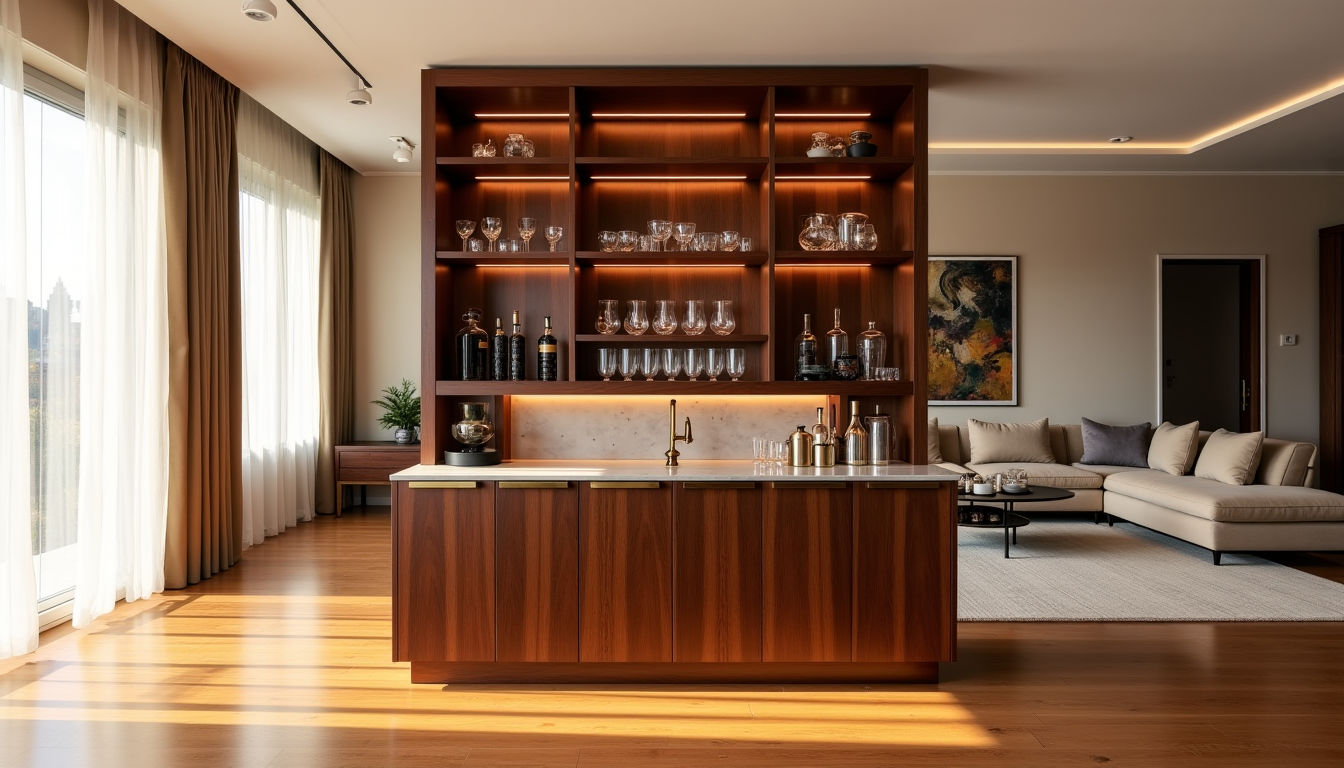
How to choose a bar cabinet according to your interior layout
The size and layout of your room are the most influential factors in the selection process.
Every space, whether large or small, presents unique opportunities to integrate a bar unit in a harmonious and functional way.
The challenge is to find the right balance between the amount of furniture and the ease of movement.
Small spaces: the art of optimization
In a city apartment or a room of modest dimensions, it is imperative to opt for space-saving solutions.
The ingenuity of the design makes it possible to create surprising bar areas without sacrificing living space.
- The wall-mounted bar or suspended shelf: Fixed to the wall, it frees up floor space. Some models include storage for glasses and bottles, transforming into a tasting surface when unfolded.
- The folding or retractable bar: Ideal for occasional use. It stores away discreetly when not in use, unfolding in seconds to accommodate your guests.
- The mini-bar or service trolley: Mobile and compact, it can be moved from room to room as needed. These trolleys are often equipped with casters, drawers, and shelves, offering considerable flexibility.
- The integrated bar unit: Some multifunctional furniture, such as bookcases or sideboards, can conceal a bar compartment, revealing their function only when you want them to.
The trick is to choose furniture with clean lines and light colors so as not to visually weigh down the room.
The integration of mirrors or strategic lighting can also make the space appear larger.
Medium-sized spaces: modularity and functionality
Medium-sized rooms offer more flexibility in layout. You can consider larger pieces of furniture that structure the space without cluttering it.
Modularity then becomes a major asset.
- The central island bar: Perfect for defining the space between an open-plan kitchen and living room, it offers a large work surface and plenty of storage. It can serve as a worktop, an informal dining table, and a bar.
- Bar cabinets with integrated storage: These models offer a combination of drawers, shelves, and compartments specifically designed for bottles and glasses. They may also include a small refrigerator or a wine cooler.
- The corner bar: It makes use of an often underutilized space, offering a compact but complete solution, ideal for creating a dedicated corner without encroaching on the center of the room.
The key is to choose furniture that integrates naturally into the flow of the room, without creating obstacles. Consider the harmony of materials and colors with the existing furniture.
The great outdoors: boldness and character
With a large room, you have the freedom to dare to use statement pieces that assert the character of your interior.
The bar cabinet can become a true work of art, a central element of your decor.
- The complete bar counter: This is a real bar, similar to those found in professional establishments, but adapted for home use. It can include a service area, space for stools, and sophisticated storage.
- A custom-made bar: The best option for seamless integration. A professional can design a piece of furniture that perfectly complements the unique features of your room, using personalized materials and finishes.
- The bar with integrated wine cellar: For lovers of fine wines, a bar unit with an integrated refrigerated wine cellar combines functionality and prestige.
Don't hesitate to play with proportions and materials to create a "wow" effect. Ambient lighting and well-chosen accessories will enhance this space dedicated to pleasure.
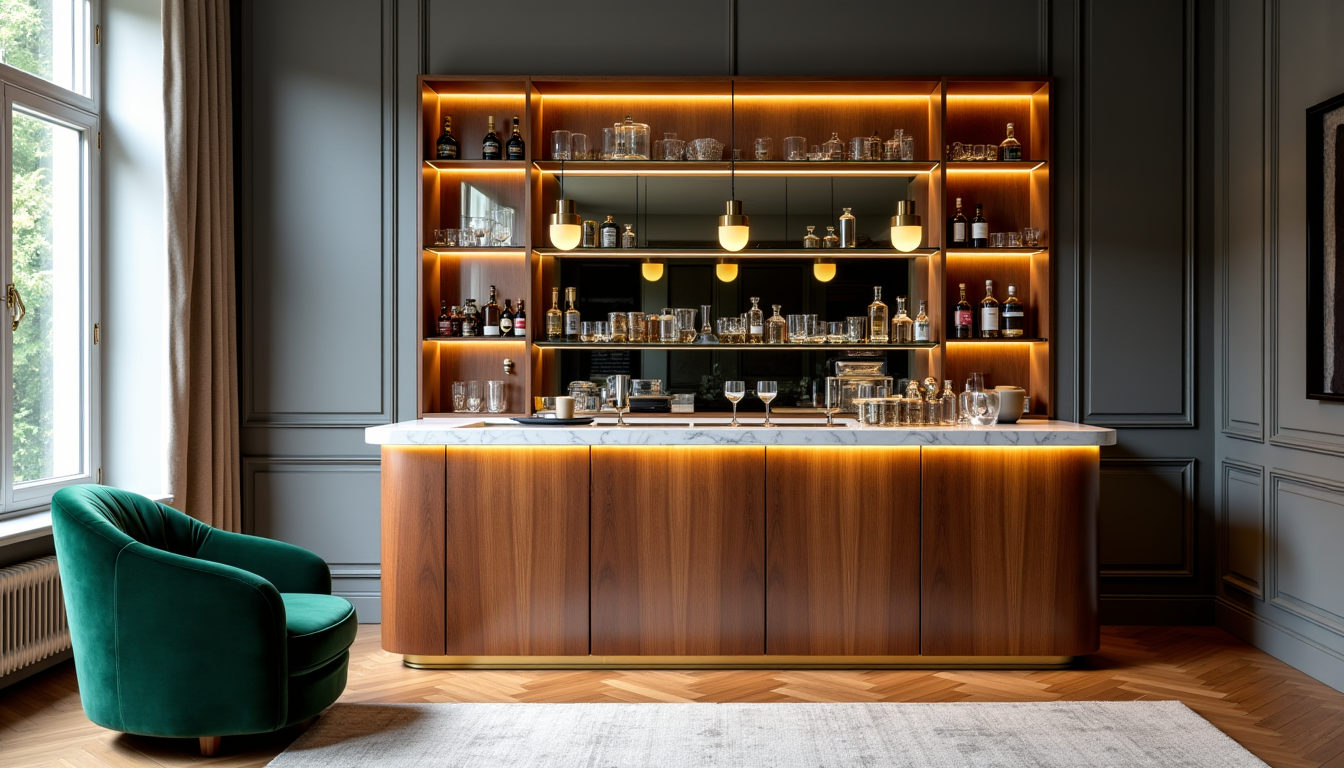
Standard dimensions and ergonomics to consider
The ergonomics of a bar cabinet are essential to guarantee optimal user comfort, whether for service or for guests.
Respecting certain dimensions helps ensure a pleasant and stress-free experience.
The height of the counter is one of the most important criteria. A classic bar counter is generally between 105 and 115 cm high.
This measurement is designed to harmonize with bar stools with a seat height between 75 and 85 cm, and approximately 25 to 30 cm of space should be allowed between the seat of the stool and the bar top for optimal leg comfort.
The tabletop should be deep enough to accommodate a glass and a plate, with enough elbow room. A depth of 40 to 60 cm is generally recommended. The width will depend on the number of people you wish to seat at once.
Allow approximately 60 cm of width per person so that everyone can sit comfortably.
The circulation space around the bar unit is also an important aspect to consider. At least 90 cm to 1 meter of clearance should be left behind the bar to allow people to sit, stand, and move around comfortably.
Too small a space would make using the bar uncomfortable and impractical.
| Element | Recommended size (average) | Details |
|---|---|---|
| Counter height | 105 – 115 cm | Allows for a comfortable standing position or the use of high stools. |
| Stool seat height | 75 – 85 cm | Adjust according to the height of the counter (difference of 25-30 cm). |
| Depth of the tray | 40–60 cm | Sufficient space to place glasses and plates and ensure comfort. |
| Width per person | 60 cm | Minimum space for each guest to avoid overcrowding. |
| Rear circulation space | 90-100 cm | Essential for movement and comfort around the bar. |
"A well-proportioned bar unit is not just aesthetically pleasing; it optimizes interaction, facilitates service, and naturally encourages extended moments of conviviality. Ergonomics is the key to a successful experience."
Materials and styles: express your personality
Choosing the materials and style of your bar furniture is an opportunity to express your personality and strengthen the identity of your interior.
Each material brings its own texture, color, and atmosphere, while the styles define the overall aesthetic.
For an industrial style, metal and raw wood are preferred choices. A zinc countertop, combined with a blackened steel structure and solid wood elements, creates a highly sought-after urban loft atmosphere.
This type of furniture pairs well with leather stools and metal pendant lights.
If you prefer a warmer, more natural atmosphere, wood remains a safe bet. Solid wood (oak, teak, mango) offers robustness and timeless appeal.
It can be left raw for a rustic feel, varnished for a classic look, or stained to suit Scandinavian or contemporary interiors.
Recycled wood also brings an ecological dimension and a unique character with its historical markings.
Glass and marble are synonymous with elegance and modernity. A tempered glass top brings lightness and brightness, while a marble countertop, with its unique veining, adds a touch of luxury and sophistication.
These materials are particularly suited to contemporary or art deco interiors.
For a more stylish and bold bar cabinet, composite resins or Corian offer great freedom in shapes and colors, allowing for custom creations with clean lines and impeccable finishes.
Don't forget the finishing touches: a glossy lacquer for a glamorous effect, a matte varnish for a more discreet look, or a patina for an aged appearance.
Harmony between the bar unit and the rest of your furniture is essential to creating a coherent and welcoming atmosphere.
Essential storage solutions for a functional bar unit
A bar cabinet wouldn't be complete without well-designed storage that optimizes its use and keeps things tidy. The functionality of the storage is just as important as the aesthetics of the cabinet itself.
For bottles, opt for sturdy and sufficiently deep shelves. Built-in bottle racks, where each bottle is stored horizontally or at a slight angle, are ideal for preserving wines and spirits.
Some furniture offers compartments of varying sizes to accommodate different bottle shapes.
Glasses require special attention. Stemware racks suspended under the counter are not only practical, but also aesthetically pleasing, freeing up shelf space.
For other types of glasses (tumblers, mugs, shot glasses), shelves or drawers with dividers can protect them from impacts and organize them efficiently.
Also consider drawers for storing small mixology accessories: shakers, measuring cups, bottle openers, citrus knives, straws and stirrers.
Compartmentalized drawers make access easier and prevent clutter, and a dedicated space for towels and coasters is also a plus.
For larger installations, the integration of a small refrigerator or wine cellar is a considerable advantage.
This keeps drinks cool and within easy reach, without having to go back and forth to the kitchen.
Some bar furniture models are designed with these features integrated, offering an all-in-one solution.
Finally, open shelves can be used to display beautiful bottles or decorative items, adding a personal touch to your bar area.
Practical tips for properly integrating your bar cabinet
Successfully integrating your bar unit into your space isn't just about choosing the unit itself. A few clever layout and decorating tips can enhance your dedicated social area.
Lighting plays a crucial role in creating ambiance. Pendant lights above the counter, recessed spotlights, or LED strips under the shelves can highlight your bottles and glasses, while creating a warm and intimate atmosphere.
Vary the light sources to modulate the atmosphere according to the time of day.
Seating is an essential part of any bar setup. Choose comfortable stools that are the right height for your countertop. Their style should complement the bar and the rest of the room.
Stools with backrests and footrests are preferable for extended sessions, or if space is limited, stools without backrests can be slid under the counter to free up space.
Don't forget the decorative accessories! A few green plants, a painting, some art objects or cocktail recipe books can personalize your bar area and make it even more inviting.
An elegant tray on the counter to group a few bottles or glasses can also add a refined touch.
Ensure that the bar unit does not obstruct the main flow of traffic in the room. It should fit naturally into the flow of movement, without creating any obstacles.
If your bar separates two spaces, ensure that the passage remains fluid and pleasant.
Also consider the proximity of an electrical outlet if you plan to use appliances (blender, coffee machine, small refrigerator) or install specific lighting.
Good planning in advance will avoid unsightly extensions.
Your ideal bar cabinet: a blend of style and functionality
Choosing a bar cabinet is a process that combines pragmatism and aesthetics.
The goal is to find the piece that not only fits perfectly into the constraints of your space, but also reflects your taste and lifestyle.
A successful bar cabinet is one that meets your functional needs while enriching the atmosphere of your home.
By considering how you will use it, by precisely measuring the available space and by letting yourself be guided by the materials and styles that appeal to you, you are able to select a piece of furniture that will transform your interior.
Whether you opt for a compact and discreet model or an imposing counter, the objective remains the same: to create a place for sharing and enjoyment, a true beating heart for your convivial moments.
Ultimately, the best bar furniture to choose is the one that invites you to savor every moment, alone or surrounded by loved ones, in a setting that reflects and inspires you.
Take the time to explore the different options, imagine the usage scenarios and visualize the integration into your interior to make a choice that will bring you complete satisfaction for many years.
