
Are you interested in wood heating and wondering which equipment would perfectly meet your needs for the winters of 2025 and 2026? You're not alone!
In the world of stoves, inserts, cookers, and boilers, finding the best option can seem complex. Furthermore, each appliance has its own unique characteristics and is suited to more or less specific situations, so it's best to study them carefully.
To learn more and help you compare better, let me guide you through this warm world where the ancestral flame is now combined with high technology.
Why is wood heating still so appealing?
Imagine coming home one winter evening, with snow gently falling outside, and a comforting, well-distributed warmth enveloping you as soon as you step through the door?
Well, that's precisely the feeling you get from an efficient wood heating system !
But beyond comfort, the figures speak for themselves! Indeed, this type of heating can sometimes reduce your energy bill by 40 to 70% compared to electricity or gas. A real boon in these inflationary times, especially in the energy sector.
According to ADEME (French Agency for Ecological Transition), wood remains the cheapest fuel on the French market, with an average cost of €0.045 per kWh compared to €0.18 for electricity.
Marie, a Flamme du Monde customer who bought her wood stove in Rennes, confirmed this to me during her interview:
Since installing our wood stove, we've saved nearly €1,200 a year. The house is warm, and the atmosphere is incomparable. The only slight drawback is that you need to plan for wood storage, but you get used to it quickly!
The appeal of heating appliances that run on logs or pellets remains strong. But what explains this?
It is actually a combination of several factors that are quite simple to understand:
- Users benefit from local renewable energy
- They achieve substantial energy savings.
- The type of even heat they achieve is unmatched by other heating methods.
- Financial assistance makes investment much more accessible.
Stoves: the star of home heating
The authentic charm of wood-burning stoves
The wood-burning stove remains a firm favorite for many. With an energy efficiency sometimes between 70 and 85%, it transforms your living room into a cozy haven. Think of it like a fine wine: it requires attention, but provides an incomparable experience 🙂
Thomas's story, which I found on Facebook, clearly illustrates its usefulness:
One weekend in February, a power outage left us without heating. Our wood stove kept going without a problem. We even roasted chestnuts on it! The children loved it.
The beauty of a wood-burning stovealso lies in its complete independence. No electricity, no complicated programming. You load your logs, adjust the air intake, and the magic happens!
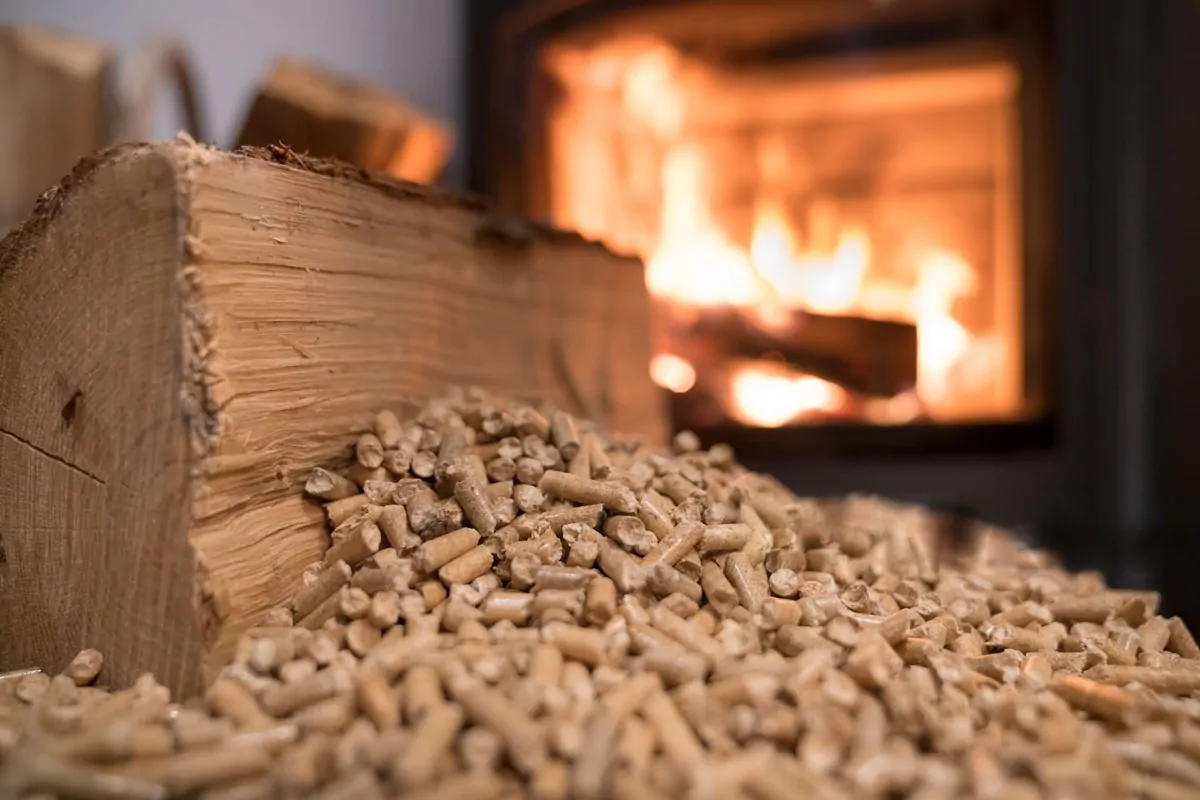
For a family wishing to control its heating budget, wood fuel remains unbeatable: approximately between €60 and €80 per tonne compared to €300 to €400 for pellets.
Comparative table of firewood logs versus wood pellets
| Criteria | Wood-burning stove | Pellet stove |
|---|---|---|
| Yield | 70-85% | 85-95% |
| Autonomy | 4-8 hours | 12-72 hours |
| Fuel price | €60-80/tonne | €300-400/tonne |
| Electrical dependency | No | Yes (€50/year) |
| Programming | Manual | Automatic |
| Daily maintenance | AVERAGE | Weak |
Pellet stove: economical technology at the service of comfort
The pellet stove works like a smart thermostat. You set the desired temperature, and the appliance takes care of the rest. It's perfect for busy people who want to come home to a warm house.
Sophie shared her experience on X with this type of equipment:
I program my stove from my phone. The house is at 21°C when I arrive. It's magical! However, when there was a power cut, I realized that we are still dependent on electricity.
Installing a pellet stove requires an electrical connection and a compliant flue. However, in return, you gain autonomy, as some hoppers can last for several days without refilling.
Automatic combustion also provides optimal performance , unlike log wood where performance fluctuates depending on the quality of the fire.
Fireplace inserts to transform an energy-inefficient fireplace
Do you have an old fireplace that burns logs but doesn't heat well? A wood-burning or pellet insert is the solution!
It's like going from a colander to a thermos bottle: you keep the charm of a wood fire, but with an efficiency that can climb up to 85%.
The advantages of inserts
A fireplace insert is installed directly into your existing fireplace. Compared to an open fireplace, which loses 85% of its heat up the chimney, the insert recovers and distributes this energy throughout your home. This transformation can reduce your wood consumption by two-thirds!
Installing a fireplace insert requires a certified professional (RGE) to guarantee airtightness and safety. The cost varies between €3,000 and €7,000 depending on the model chosen, but available financial aid can cover a significant portion of the investment.
A modern fireplace insert can even be equipped with a ducting system to heat several rooms at once…
Table of comparative energy performance
| Device type | Yield | Heat returned |
|---|---|---|
| Open fireplace | 10-15% | Very low |
| Wood insert | 70-85% | High |
| Pellet insert | 85-95% | Very high |
| Modern stove | 75-90% | High |
The pellet insert: the modern compromise
The pellet insert cleverly blends the aesthetics of a fireplace with the technology of a modern stove. It fits into your existing fireplace while offering programmable settings, good autonomy, and high efficiency.
Some ducted models distribute heat to several rooms via discreet ducts.
Its main advantage? You'll retain the visual appeal of your fireplace while enjoying efficient, automated heating. The glass will stay clean longer thanks to an air ventilation system that prevents soot buildup!
Wood-burning stoves for heating and cooking
The wood-burning stove combines heating and cooking, and it's really practical!
Imagine preparing a slow-cooked stew while this appliance heats your kitchen and the adjoining living room. Our ancestors loved installing this kind of device!
It's like the Swiss Army knife of heating and is particularly appreciated in country houses or rustic dwellings.
One Sunday morning, I found Julien's Instagram story which said:
We bake our own bread in the stove. The heat is gentle and consistent. It heats the 60 square meters of the ground floor without any problem!
Why choose a wood-burning stove?
Beyond the practical aspect of cooking while heating, a wood-burning stove offers complete energy independence. No electricity is needed to cook your food or heat your home. Recent models boast efficiencies between 70 and 80%, rivaling the best traditional wood stoves available.
You should expect to pay between €2,500 and €6,000 for a quality wood-burning stove depending on the options (oven, hot water boiler, power).
The investment is justified if you regularly use the cooking function, otherwise a simple stove will be more economical!
Comparison chart of wood-burning stoves
| Characteristic | Simple cooker | Boiler stove |
|---|---|---|
| Room heating | Yes | Yes |
| Oven cooking | Yes | Yes |
| Domestic hot water | No | Yes |
| Central heating | No | Yes (radiators) |
| Average price | 2 500-4 000€ | 4 000-7 000€ |
| Heated surface | 60-100 m² | 100-150 m² |
Eco-friendly boilers or central heating
The wood-fired boiler: perfect for large areas
The wood boiler can supply a central heating system with radiators or underfloor heating. It also heats domestic hot water. With efficiencies exceeding 85%, it is ideally suited to homes larger than 150 m².
The principle? A high-performance boiler that heats the water in a buffer tank and then redistributes the heat throughout the house via a network of radiators.
You thus benefit from a truly central heating system , comparable to a gas boiler but with renewable energy.
The main drawback remains the manual feeding of logs (generally once or twice a day depending on the season). Sufficient space for the boiler and buffer tank, as well as ample storage for the wood supply.
The pellet boiler: the ultimate in automation
A pellet boiler works like a gas boiler, but with a much more renewable energy source. Automatic feeding from a silo can provide several weeks of autonomy. It's the most practical choice for replacing an old oil or gas boiler.
With a pellet boiler, you can program your heating and hot water just like with any modern system. The difference? Energy savings of 30 to 50% compared to gas or oil, and a neutral carbon footprint since you're using a renewable wood fuel.
Table of boiler costs and autonomy
| Kind | Investment | Autonomy | Heated surface |
|---|---|---|---|
| Wood boiler | 8 000-15 000€ | 8-24h | 100-300 m² |
| Pellet boiler | 12 000-20 000€ | 1 week - 2 months | 100-400 m² |
How to choose the right solution?
Your decision will depend on several concrete factors. For an apartment or a small house, a pellet stove will guarantee the best compromise between comfort and efficiency.
If you already have a fireplace, the insert will transform your existing equipment into a modern heating appliance
For a large house with central heating, a boiler is the ideal all-in-one solution. It will provide heating and hot water for the whole family, with excellent efficiency and programming to suit your schedule.
The budget will also play a role, of course! A stove costs between €2,000 and €6,000 including installation, while a boiler requires a larger investment ranging from €12,000 to €20,000.
However, the MaPrimeRénov' grants can probably cover up to 40% of the necessary investment, depending on your income.
Things to consider before you get started
The required storage space
Whether you choose logs or pellets, you'll need a dry and accessible storage space. Expect to use 5 to 8 cubic meters of wood per season with a wood stove, and double that for a boiler. Pellets require less space but are still susceptible to moisture.
Regular maintenance is mandatory
All wood-burning heating appliances require regular maintenance. This includes sweeping the chimney twice a year, cleaning the firebox weekly, and emptying the ashes.
For pellet stoves and boilers , add an annual service by an RGE professional, budget approximately €150 to €250.
Installation constraints
Installing a stove or boiler requires a flue that meets current standards, an outside air intake, and adherence to safety distances. Only a RGE-certified installer can guarantee proper installation and access to subsidies.
Financial aid available
For example, all stores like "Flammes du Monde" have the RGE Qualibois qualification, which is an essential condition to benefit from aid.
MaPrimeRénov' often finances several thousand euros depending on your income: up to €2,500 for a pellet stove and €10,000 for an efficient and high-quality pellet boiler.
Energy saving certificates are also included, as is the reduced VAT rate of 5.5% on materials and labor.
Some regions also offer additional support through air-wood funds to replace old polluting appliances.
But be careful! To benefit from this financial aid, your installer must be RGE certified and the chosen appliance must meet the performance thresholds (Flamme Verte label 7 stars minimum).
Answers to your questions
What is the best wood-burning heating system for a house?
The best wood heating system depends on the size of your home and your needs. For a well-insulated house under 100 m², a pellet stove is perfectly suitable as the main heating source.
For areas larger than 150 m², a wood or pellet boiler is more suitable for supplying a radiator circuit and producing domestic hot water.
What is the difference between a wood stove and an insert?
A wood-burning stove is a freestanding appliance installed in a room with an exposed flue, while an insert is built into an existing fireplace. A stove offers greater installation flexibility and can heat multiple rooms with a ducted model.
The insert transforms an inefficient fireplace into a modern heating system without major work.
How much fuel does a pellet stove consume per day?
A pellet stove consumes on average 1 to 2 kg of pellets per hour in normal operation, or 10 to 20 kg per day in winter. This represents a daily cost of €4 to €8 depending on the price of the pellets.
Over a full heating season, expect to use 1.5 to 3 tonnes of pellets depending on your insulation and the area to be heated.
What is the efficiency of a wood-burning insert?
A modern wood-burning insert boasts an efficiency of 70 to 85%, compared to only 10 to 15% for an open fireplace. This means it converts up to 85% of the wood's energy into usable heat, allowing you to reduce your fuel consumption by two-thirds.
The best models even achieve 87% efficiency with a double combustion system!
Will wood heating be banned in 2027?
No, wood heating will not be banned in 2027! This persistent rumor stems from a proposed European Ecodesign regulation that has been postponed. In reality, only highly polluting or outdated appliances (open fireplaces, non-compliant stoves manufactured before 2002) will be gradually phased out of the market.
Modern appliances that are certified with the Flamme Verte 7-star label or comply with the EcoDesign 2022 standard remain perfectly legal for sale and use. Therefore, if you already own an appliance, you can continue to use it.
The new regulations, which are now expected to come into force around 2032-2033, will only concern future new appliances that are put on the market, with the aim of improving their energy performance and reducing polluting emissions.
Does a wood-burning stove require an electrical connection?
No, a wood-burning stove operates without electricity, which guarantees heating even in the event of a power outage.
In contrast, a pellet stove requires an electrical supply for its automatic feeding system and ventilation, with a modest annual consumption of around €50. This is something to consider, especially if you experience frequent power outages.
In summary
Wood and pellet heating offers a variety of solutions for all needs. From traditional wood stoves to high-tech pellet boilers, including inserts that modernize your fireplace or versatile cookers, each heating appliance has its advantages.
The investment pays for itself in a few years thanks to substantial energy savings and significant financial assistance.
An wood heating system can reduce your bill by 40 to 70% while increasing the value of your property.
Choosing an RGE-certified installer guarantees a compliant installation and access to subsidies. Your project deserves professional support to ensure decades of warmth and comfort.
Don't forget to request your free quote to benefit from personalized advice and find the heating solution perfectly suited to your home!