
In short
You lit your wood stove, and five minutes later smoke filled the living room. Frustrating — especially when you don't understand why.
Lighting a wood stove without smoke or hassle is a matter of method, not luck.
In this practical guide, we will begin by identifying the true causes of the problem, then we will give you the step-by-step ignition technique that works, with solutions for cases where it still doesn't work!
Why is your wood stove smoking?
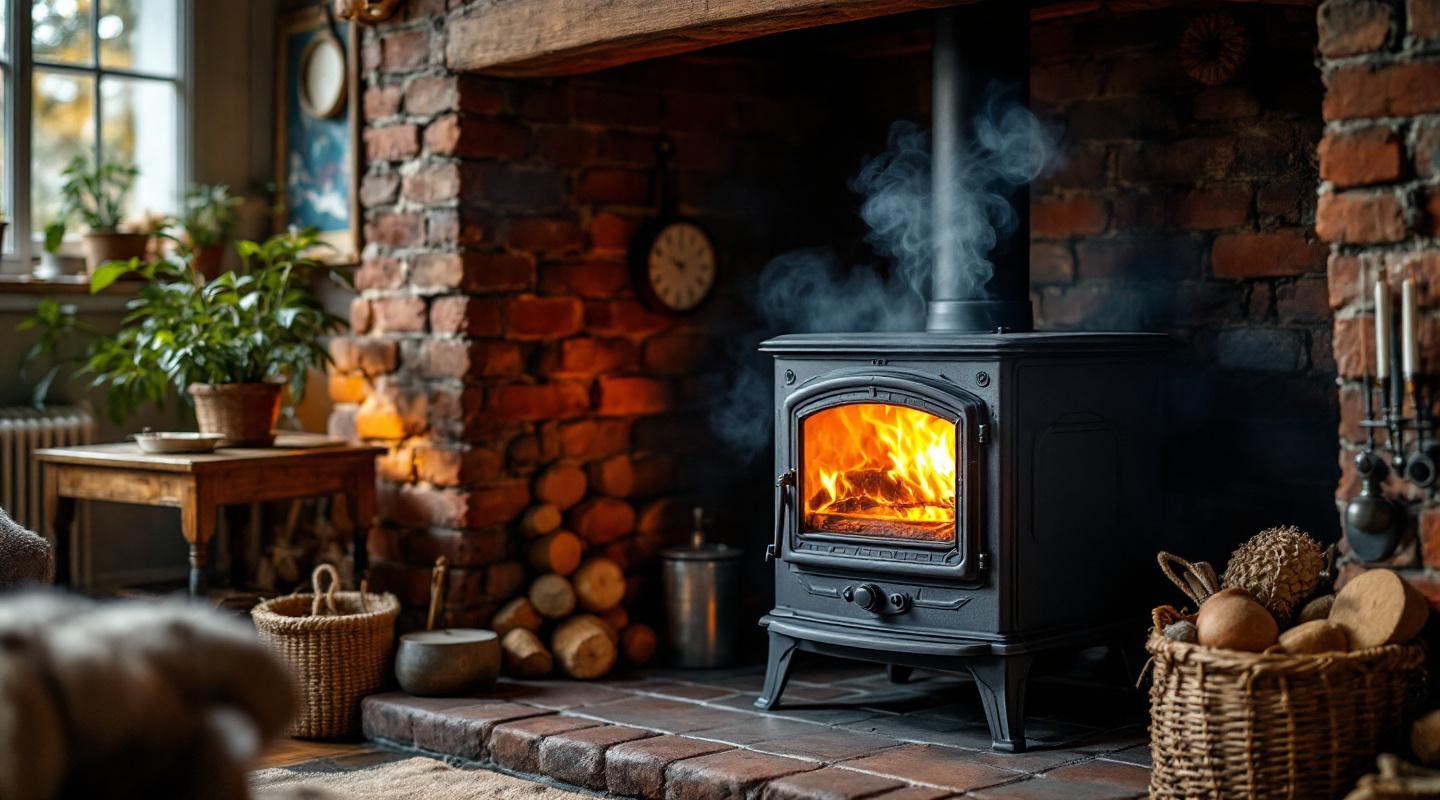
Before trying to figure out how to light it properly, you need to understand what's causing the problem. Smoke in the room isn't inevitable—it's a warning sign.
And in the vast majority of cases, the origin can be identified in less than two minutes!
Cold draft: the most frequent cause
When the flue is cold, the hot air produced by the fire does not rise — it flows back down and enters the room. This is commonly known as reverse draft .
This happens especially at the beginning of the season, after a long period of non-use, or simply in cold weather with a stove that has been off since the day before.
The flue must be warmer than the outside air for convection to work. If you light the fire without first priming the draft, you will almost certainly have smoke entering the chimney.
This is the first thing to check before turning it on.
Damp wood, enemy number one
wood in the stoveguarantees incomplete combustion. The water in the wood must evaporate before it can truly burn—a process that consumes energy, produces steam, and generates thick, white smoke.
Properly dried wood has a moisture content of less than 20%. Below this threshold, it burns cleanly, heats better, and produces much less soot.
Wood that has been cut and stored for six months can still be too damp. Don't rely on its appearance: a wood moisture meter costs less than 15 euros and can save you a lot of disappointment.
A closed register or a blocked duct
It seems obvious, and yet!
The stove's damper —the valve that regulates the draft—must be fully open before lighting the fire. If it's closed or partially blocked, the smoke has nowhere to go.
A pipe blocked by a bird's nest, a pile of soot, or a piece of masonry that has come loose produces exactly the same effect.
If the draft seems blocked despite an open damper, consider looking at the flue — a chimney sweep may be necessary.
A zinc chimney flashing can also allow water and debris to enter the flue.
The ideal wood for a successful fire
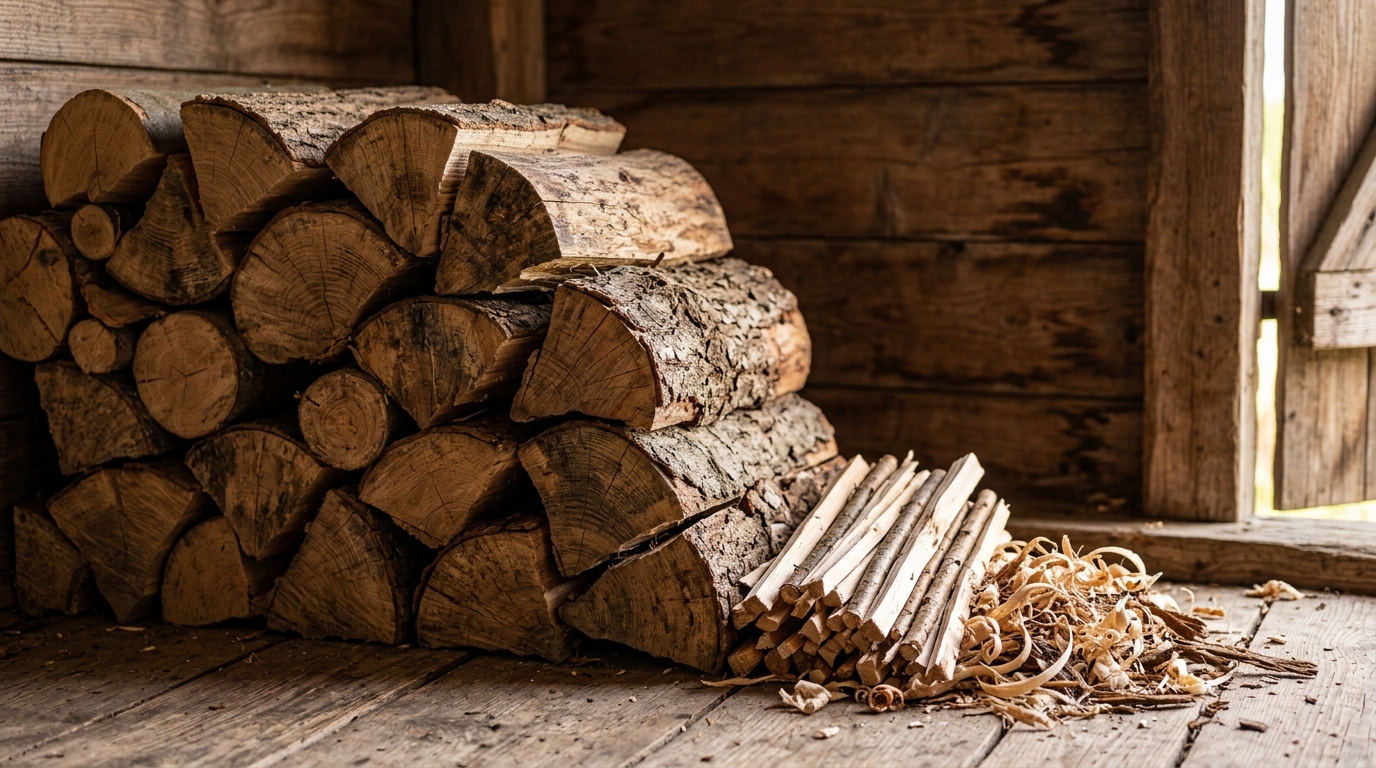
The wood you put in your stove makes all the difference.
No need to search for a rare essence or a miracle product: the right choices are simple, accessible, and they really change the result from the first ignition.
Dry wood or damp wood: what's the difference?
The difference between dry and damp wood is immediately noticeable when lighting a fire. Dry wood ignites easily, crackles, and produces a beautiful yellow-orange flame. Damp wood resists ignition, hisses, produces visible steam, and gives off a pungent odor.
| Criteria | Dry wood (< 20% moisture content) | Damp wood (> 25% moisture content) |
|---|---|---|
| Ignition | Easy and quick | Difficult, slow |
| Smoke produced | Few, transparent | Thick, white or grey |
| Deposit in the conduit | Weak | Important (creosote) |
| Heat released | Good | Low (energy lost as steam) |
For the best kindling for a wood stove, hardwoods like oak, beech, or hornbeam are preferred for long-lasting heat. For kindling, softwoods like spruce ignite more quickly—but they leave more residue in the chimney.
Kindling wood and wood chips
Kindling wood —also called twigs, wood chips, or small logs—is key to a quick start. It ignites at a low temperature and rapidly produces embers that will ignite larger logs.
Prepare pieces approximately 1 to 2 cm in diameter. Ideally: dry wood chips collected when splitting logs, or kindling purchased in bags.
Avoid painted, treated or particleboard wood — the fumes released are toxic and will damage the duct.
Never use alcohol, gasoline, or any flammable liquid to start a fire in a stove. The risk of a flashback is real and can cause serious burns or a fire.
Natural fire starters and their use
firelighters for stoves are a practical alternative to crumpled newspapers.
Beeswax cubes, compressed wood wafers or vegetable wax firelighters ignite easily with a single match and burn for several minutes — enough time to prime the rest of the setup.
A major advantage: they do not produce light ashes that fly around the fireplace like newspaper would, and they are much more effective in humid weather.
One or two cubes are sufficient for ignition. Always place them at the top of the setup if you are using the top-down method described below.
🔥 Wood Stove Ignition Diagnostic
Answer the questions below to identify why your stove is smoking or not catching, and to get the method suited to your situation.
The top-down method: lighting the stove from the top
The top-down lighting technique is now the standard recommended by most stove manufacturers. It produces less smoke, consumes less kindling, and establishes the draft more quickly than the traditional method.
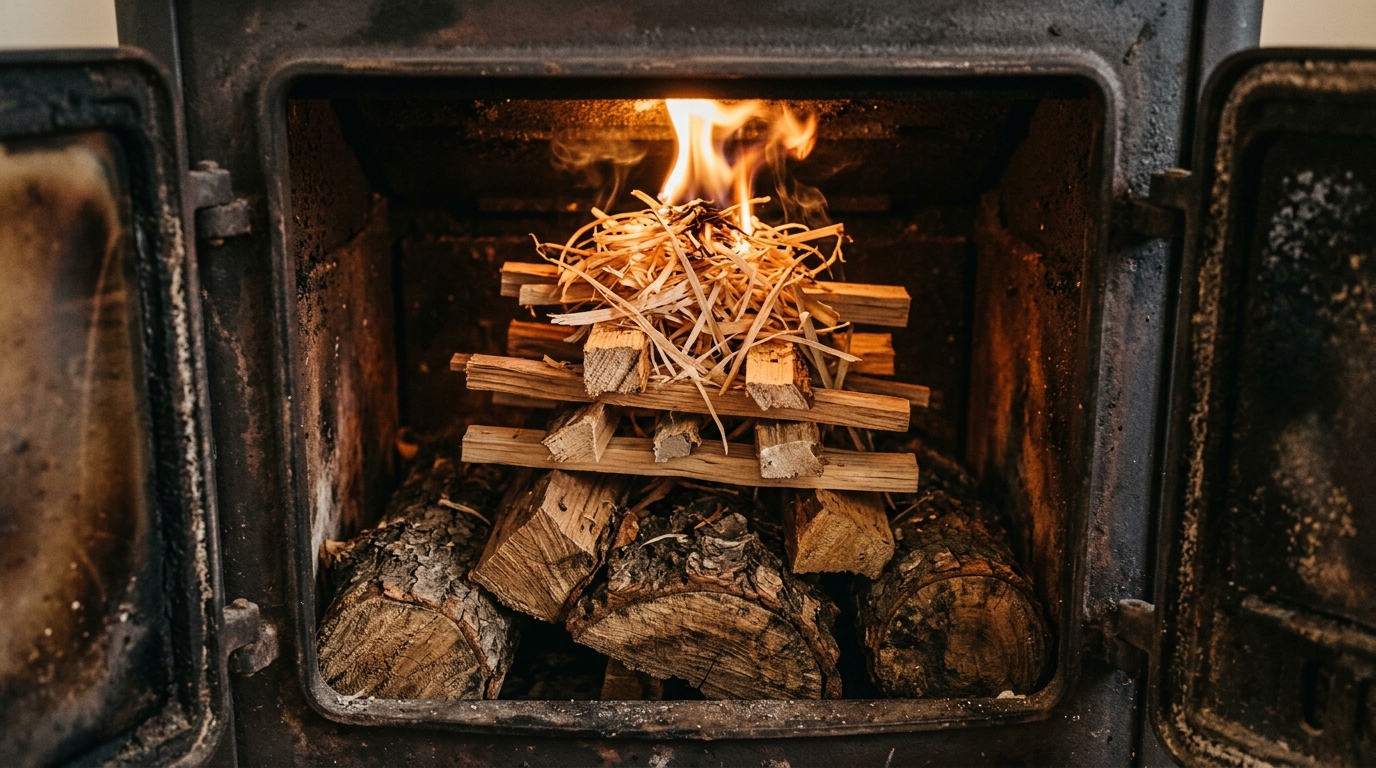
The principle is counterintuitive: you place the large logs at the bottom and light them at the top. Here's why it works better and how to do it correctly.
- Less smoke from the start
- The fire gradually descends, lasting longer
- Initiate the draw quickly from above
- Less handling once it's turned on
- Compatible with all types of wood-burning stoves
- The layout requires a little practice
- Less intuitive than a conventional ignition
- Requires well-dried wood for each layer
How to arrange the logs in layers?
The layering of wood is the basis of the top-down method.
Here's how to proceed:
- Bottom layer: 2 to 3 large logs laid flat, parallel to each other, perpendicular to the stove door. These are the main firewood logs.
- Middle layer: 4 to 6 medium-sized logs (3 to 5 cm in diameter), placed perpendicular to the first layer. They will serve as a relay once the fire descends.
- Top layer: about ten very thin shavings or twigs, crossed in a small loose pile to allow air to pass through.
Leave space between each piece of wood. A fire needs air to burn — a tightly packed assembly smothers the flame before it even catches.
Think of it the same logic as for a wood-fired pizza : mastering the fire starts with a good start.
Place the fire starter at the top of the assembly
Once the three layers are in place, place one or two natural firelighters directly on top of the top layer of wood chips. It has to be right at the top — not below, not in the middle.
The idea is simple: the flame starts at the top and gradually descends. The heat naturally rises up the flue, immediately creating a draft. The smoke produced during the first few seconds of combustion is drawn upwards before it can flow back into the room.
Unlike the traditional method where the fire is lit from the bottom (under the logs), here the combustion is clean from the start. The large logs at the bottom only begin to burn once the upper layers have already created a good bed of embers.
As a result, lighting the wood stove without smoke becomes the rule rather than the exception.
Manage the air intake from the start
When lighting the fire, the primary air intake must be fully open, because without air, there's no flame—it's as simple as that. Therefore, you must open the ventilation damper to its maximum before lighting the firelighter.
During the first five to ten minutes, the fire needs a maximum of oxygen to reach a high temperature.
Resist the urge to close it too soon: a flame that lacks air produces thick smoke and can extinguish itself.
Only once you see bright, steady flames—and the middle logs begin to catch fire—can you start adjusting the air intake. We'll go into more detail on this in the next section.
Steps to light without smoke
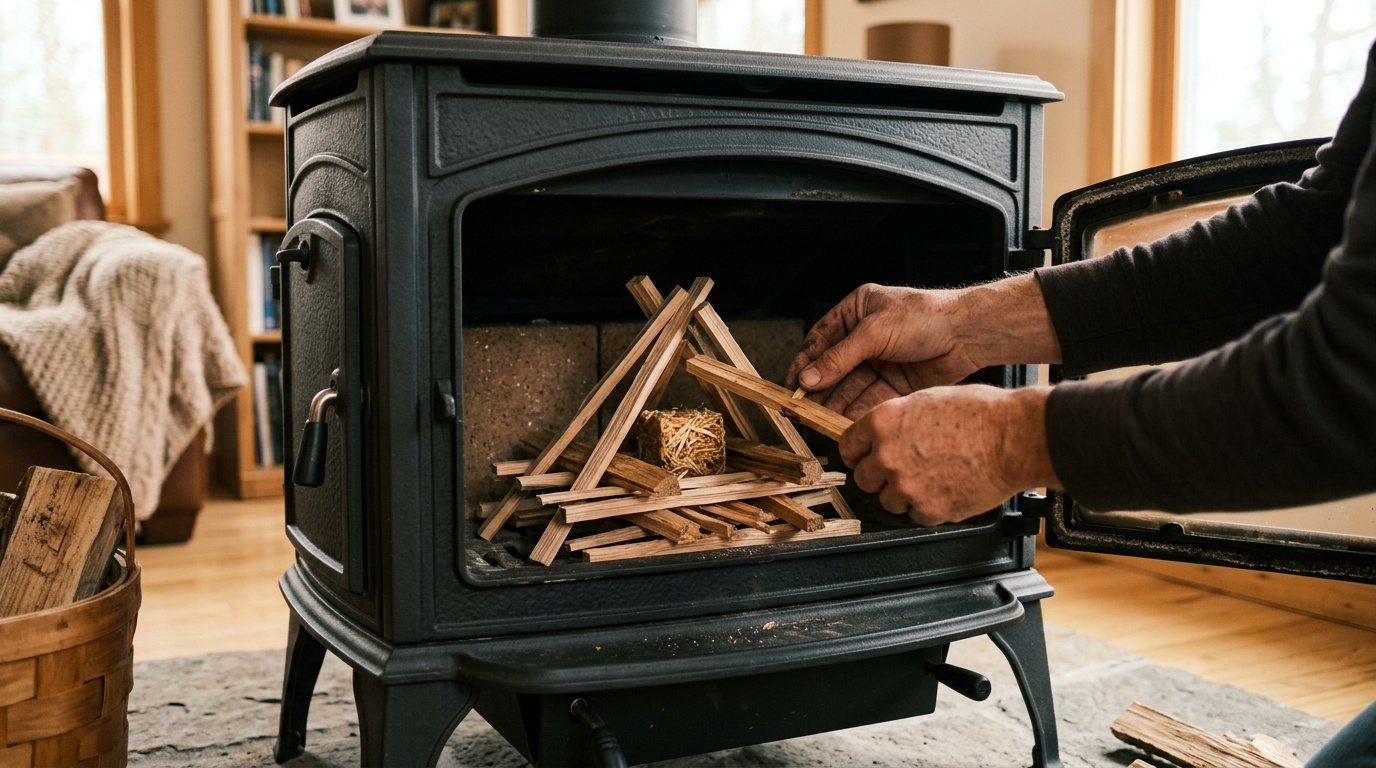
Here is the complete, step-by-step protocol. Follow it in order and you'll see the difference from the very first try. Every step is important—so don't skip the preliminary checks.
Prepare the firebox before lighting
Before touching the wood, perform three quick checks:
- Check that the damper is open. Pass your hand in front of the air intake — you should feel a slight draft of air inwards.
- Look inside the duct with a flashlight: no visible obstruction, no nest, no soot buildup that would block the passage.
- Empty any excess ashes if the ash pan is full. A thin layer of ash (2 to 3 cm) can remain—it insulates and helps retain heat. Any more than that, and it will smother the fire.
Also, make sure your carbon monoxide detector is working. This is crucial: CO is invisible and odorless and can be dangerous in this type of situation.
Turn on and monitor for the first few minutes
Light the fire starter placed at the top of the setup with a single match or a long lighter.
Close the stove door without locking it completely in the first few seconds — some stoves require leaving a slight gap at the start so as not to smother the nascent flame.
Watch for the first two minutes. The flame should rise and begin to lick the kindling on top.
If it shuts off immediately, it is often a reverse draw problem — see the troubleshooting section below.
Once the kindling is well lit and you see active flames, close the door normally. The air intake should remain fully open for another five to eight minutes.
When should you close the door and reduce the airflow?
The rule is simple: reduce the air supply when the fire no longer needs help.
In practical terms, wait until the middle logs are well alight and a bed of embers begins to form under the flames — usually between 10 and 15 minutes after lighting.
At this point, reduce the primary air intake by one-third to one-half, depending on the desired intensity. Reducing it too much too soon will result in smoke and the fire going out. Leaving it too open will lead to rapid fuel consumption and unnecessary overheating.
The door must be closed and locked as soon as the fire is established.
Never leave a stove running with the door open, as combustion gases can invade the room.
Lighting a wood stove without newspaper or newspaper
Newspaper has long been the classic choice. But it produces light ash that blows away in the fireplace, and its calorific value is low.
Lighting a wood stove without newspaper is entirely possible — and often more efficient.
Replace it with a natural wax firelighter, some very dry wood shavings or even a small piece of very thinly split resinous wood.
These alternatives burn longer, produce less residue, and do not leave fragments of charred paper floating in the flue.
Solving common ignition problems
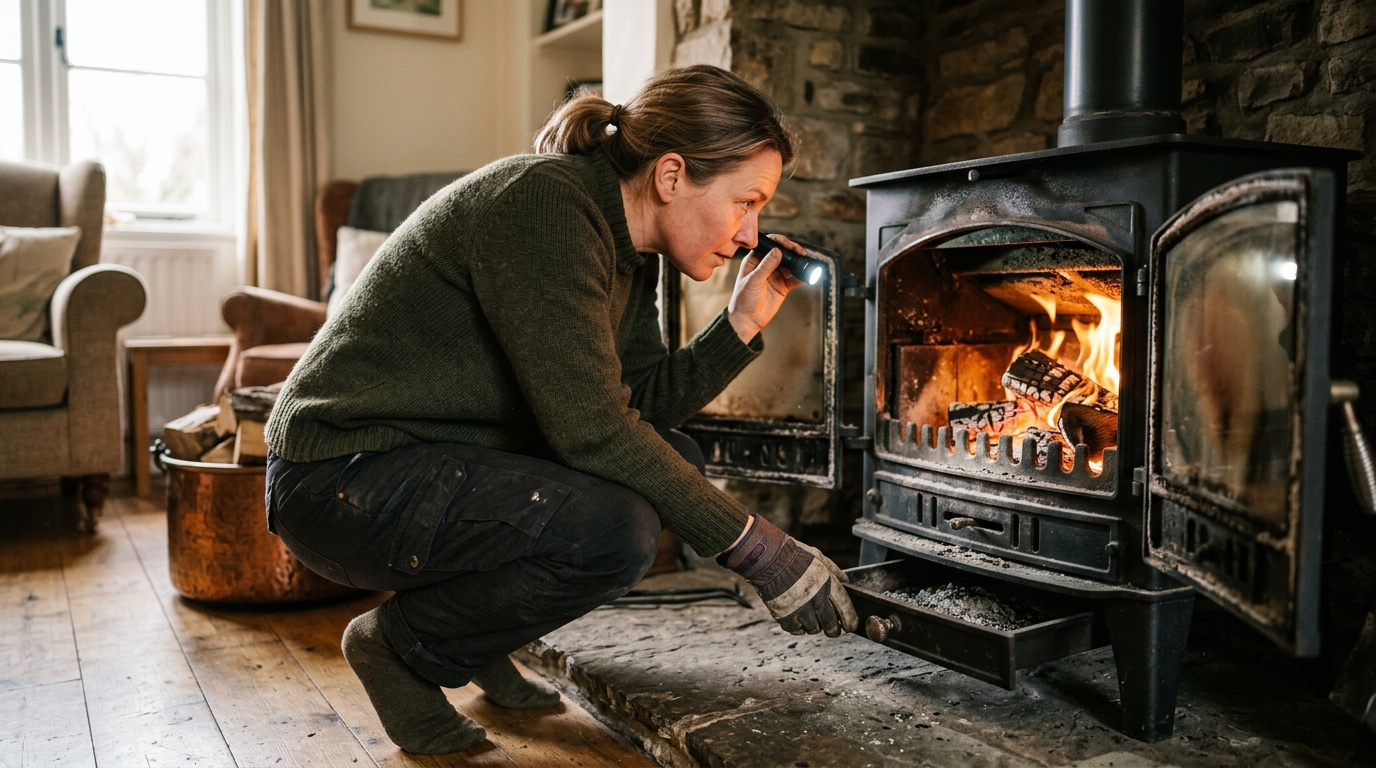
The fire won't go out, the smoke returns, and the flames die down after two minutes. These situations happen, even with the right method. Here are the direct solutions for each case.
Start the draw with hot paper
If the flue is cold and the draft is reversed, here's a quick way to get a wood stove's draft going : roll a few sheets of newspaper into a tight sausage shape, light them, and hold them burning inside the stove, right at the top, near the flue opening. Hold for thirty to sixty seconds.
The heat produced warms the air at the bottom of the duct and reverses the direction of airflow. You will feel—or hear—the air begin to be drawn upwards.
This is the signal that the ignition has started. You can then turn it on normally!
What should you do if the fire goes out quickly?
A fire that goes out after a few minutes almost always points to one of these three causes:
- The wood is too damp: it doesn't produce enough heat to maintain itself. Replace it with drier wood.
- The air intake is insufficient: check that the damper is fully open during ignition.
- The assembly is too tight: redo the assembly leaving more space between the pieces of wood to allow air to circulate.
If the problem persists after correction, test with only one firelighter and kindling only — without logs — to check if the draft is working.
Smoke is entering the room: what should I do?
This is the most stressful problem!
First action: open a window on the opposite side of the fireplace to create a slight negative pressure that draws the air outwards. This limits the room's inhalation while you fix the problem.
Next, identify the cause. Why is my wood stove smoking inside? In 80% of cases: cold draft (prime with hot paper), partially closed damper (check and fully open) or blocked flue (call a chimney sweep).
If the problem recurs every time the ignition is switched on despite everything, the flue deserves a complete diagnosis.
Install a CO (carbon monoxide) detector in the room where the stove is located, and test it at the beginning of each season. If smoke persists in the room, leave the premises and ventilate before restarting.
Maintenance for a good draw all season long
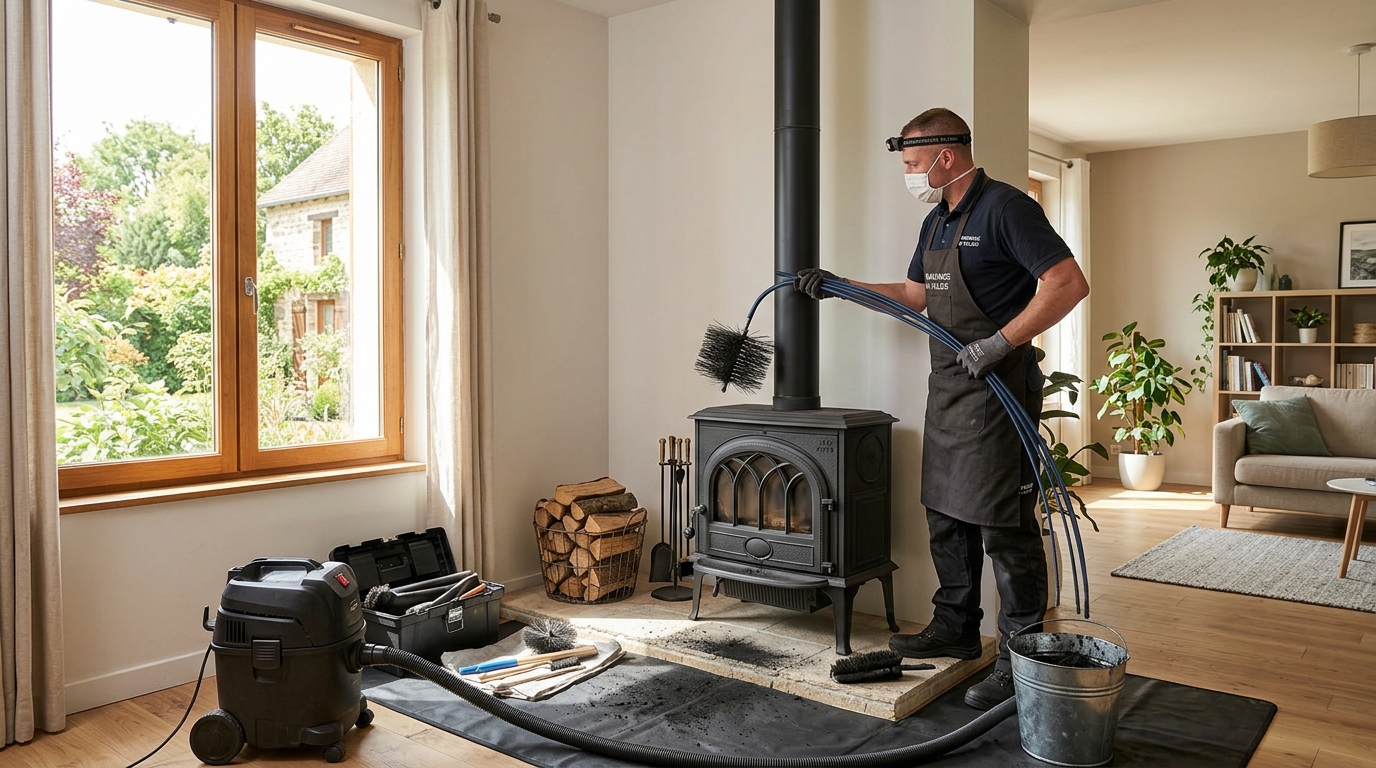
A well-maintained stove is a stove that lights well! Maintenance is not just about emptying the ash pan from time to time — a few simple actions, done at the right time, really change the quality of ignitions throughout the winter.
Recommended chimney sweeping frequency
Chimney sweeping is mandatory at least once a year, and twice a year if you regularly use the stove as your main heating source.
French regulations recommend chimney sweeping at the beginning of the season (before October) and in the middle of winter if consumption is high.
A flue clogged with soot reduces draft, increases the risk of chimney fires and promotes smoke in the room.
A professional chimney sweep can provide you with a certificate that will be useful for your home insurance.
If you prefer to choose wood heating as your main source, count on this mandatory annual appointment in your maintenance budget.
Empty the ashtray at the right time
Too much ash in the firebox, and the air no longer circulates properly under the embers — which slows combustion and complicates subsequent ignitions.
The right time to empty the ashtray is when the layer of ash exceeds 4 to 5 cm.
Always wait until the ashes are completely cold before handling them — an ember can remain active for more than 24 hours under a layer of ash.
Put them in a metal bucket with a lid, never in a plastic bag or ordinary garbage.
Keep the chimney warm between fires
During the heating season, allowing the flue to cool completely or regain moisture between uses makes each ignition more difficult.
To maintain an effective draft, make a small, short fire rather than a long extinction — this maintains a residual temperature in the flue.
A residually warm flue initiates draft two to three times faster than a completely cold flue.
At the start of the season, always plan a priming phase before the first serious ignition.
If your stove remains unlit for several days in a row, remember to close the damper once the fire is completely out. This limits the entry of cold air that cools the flue and prevents unpleasant drafts in the house.
And if you want to know more about the sealing of your chimney cap, checking the condition of your zinc (or other) chimney flashing can make a real difference over time
Always keep a supply of dry kindling within easy reach of the stove—in a basket or wooden crate in the living room. This makes lighting the fire immediate, without having to go outside to fetch logs in the cold.
Answers to your questions
How to light a wood stove quickly without smoke?
Use the top-down method: place the large logs at the bottom, a layer of medium-sized logs in the middle, thin kindling on top, and place a natural firelighter at the very top. Light it from the top, with the damper wide open. The flame descends gradually, and the heat rises directly into the chimney, initiating a smokeless draft within seconds.
Why is my wood stove smoking in the room?
The three most common causes are: a cold draft (the flue is too cold to draw smoke), a closed or partially blocked damper, or a flue blocked by soot or a nest. Start by checking the damper, then prime the draft with hot paper before lighting. If the problem recurs, have the flue cleaned.
What is the best wood for lighting a wood stove?
For kindling, very dry kindling (wood chips, twigs, thin logs) with a moisture content of less than 20% is best. For the subsequent burn, hardwoods like oak, beech, or hornbeam are the most efficient. The number one criterion remains the dryness of the wood—a fine wood that is damp will always burn less well than ordinary, well-dried wood.
Can you light a wood stove without firelighters or newspaper?
Yes. Very dry wood shavings, a very thin split piece of softwood, or even a few dry twigs are enough to get started. The important thing is to have a fine, perfectly dry material that ignites easily and burns long enough to light the kindling above.
How many times a year should a wood stove be cleaned?
French regulations mandate a minimum of one chimney sweep per year. If the stove is used as the primary heating source, two sweeps per season are recommended—one before the heating season and one in mid-winter. A clean flue ensures better draft, reduces the risk of chimney fires, and makes lighting stoves easier every time.
