
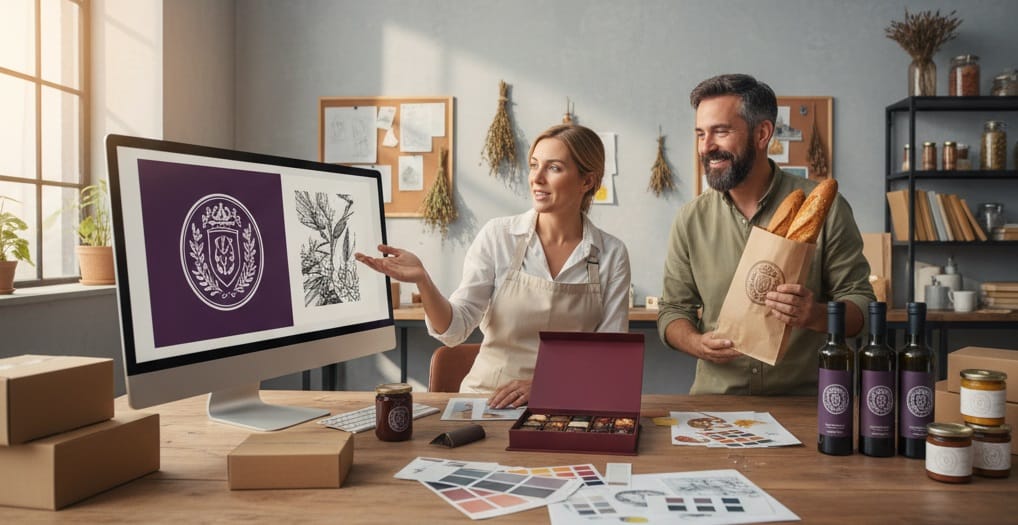
Have you ever stopped in front of a pastry shop or tea room window, drawn in by the beauty of elegant packaging or the charm of a delicately illustrated menu? Have you ever experienced that magical moment when your eyes devour the different dishes, even before tasting them?
Nothing could be more natural when we let ourselves be guided by our senses, which are designed to increase our desire and appetite! Hence the expression "We're salivating in anticipation.".
But behind every beautiful plate or gourmet packaging often hides the eye of a culinary graphic designer (like Studio Emmmh for example), who helps artisans of taste to translate their creations into visual emotions.
Imagine this profession as that of a chef who works with colors, shapes, and typography rather than ingredients. The result? A feast for the eyes that immediately makes your mouth water!
Passionate about cooking and appreciating the magic of a beautiful presentation on the tasting of a dish, I tried to learn a little more about this world and share its secrets with you.
When design meets gastronomy
Culinary graphic design is not just about designing a pretty logo for a restaurant. It's a comprehensive discipline that weaves invisible connections between what we see and what we feel.
To better understand what this is all about, think of a beautifully illustrated cookbook or website : the polished photos, the airy layout, the warm colors that almost seem to exude aromas. This visual alchemy often awakens our senses even before the first bite.
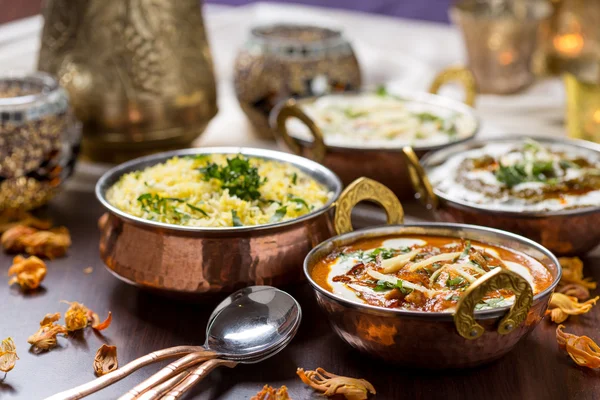
Culinary design , for its part, is part of a global approach where each element tells a story.
Like a well-balanced recipe, good restaurant graphics blend a visual identity , appetizing materials, and an experience that reflects the soul of the place.
The chosen color palette is never arbitrary. Earthy hues evoke naturalness, while pastel tones suggest softness.
The art of translating a gourmet philosophy
Marie, a pastry chef who has been based in Lyon for three years, tells me:
Before redesigning my visual identity, I felt like my cakes weren't reaching their target audience. Yet, my creations were delicious! When I collaborated with a graphic designer specializing in the culinary world, everything changed. She perfectly captured my philosophy: comforting and generous pastries. Today, my customers recognize me at first glance!
Marie, however, highlights one point of concern:
The process takes some time and requires a real financial investment. For artisans just starting out, this can sometimes be a deterrent… But, when I observe the behavior of passersby who stop in my shop much more often than before, as well as the impact on the increase in my sales, without any other advertising, I absolutely do not regret it!
This transformation is not accidental. A good food graphic designer acts as a visual translator who listens, observes and feels the atmosphere of a restaurant or food business before drawing a single line.
He understands that each typeface carries a message: a serif font evokes tradition, while a sans-serif font exudes modernity.
The ingredients of a successful visual identity
Creating a memorable culinary visual identity rests on several fundamental pillars:
| Element | Role | Impact on the customer |
|---|---|---|
| Logo | Represents the essence of the brand | Immediate recognition |
| Color palette | It evokes emotions and sensations | Influences appetite and mood |
| Typography | Communicates the character of the place | Makes reading easier and reinforces positioning |
| Food photography | Showcases the creations | It triggers desire and longing |
| Printed materials | Extend the experience | Creates a tangible link with the brand |
An often underestimated aspect: visual consistency. Imagine a gourmet restaurant whose website displays garish colors while the place exudes understated elegance. This dissonance creates confusion, like serving a chocolate dessert on a mint-flavored plate.
The power of details that make all the difference
Thomas runs an artisanal bakery in the Marais district of Paris. His experience illustrates the importance of small details:
We redesigned our kraft paper bags with a personalized stamp. Nothing revolutionary, but this simple addition has turned our customers into brand ambassadors. They post our bags on Instagram because they find them attractive. It's free marketing resulting from a thoughtful design choice.
Thomas, however, adds a caveat:
The only downside is that we now have to maintain this level of expectation everywhere. That requires constant vigilance!
This testimony, which I was able to gather, reveals a truth: the design planned for a restaurant never ends with the creation phase. It lives and evolves with the establishment, like a plant that requires regular care.
The different facets of the profession
The profession of culinary graphic designer encompasses a range of diverse skills:
| Benefit | Description | Average duration | Indicative budget |
|---|---|---|---|
| Complete visual identity | Logo, graphic charter, variations | 4 to 6 weeks | Starting from €1000 |
| Restaurant menu | Design and layout | 2 to 3 weeks | Starting from €280 |
| Product packaging | Gourmet packaging design | 3 to 4 weeks | Starting from €450 |
| Showcase website | Responsive website creation | 7 to 9 weeks | Starting from €1190 |
| Social media templates | Custom Instagram visuals | 2 to 3 weeks | Starting from €450 |
These prices may seem high for artisans just starting out. However, consider this expense as a return on investment: well-designed visual communication attracts clients who share your values.
Concrete examples of application
Let's take the example of a food truck specializing in fusion tacos. Without a striking visual identity, it blends into the mass of other fast food trucks.
But with food-related graphics – vibrant colors, dynamic typography, and a memorable logo – it becomes instantly recognizable. Customers are no longer looking for "a taco food truck," they're looking for "THE food truck with the yellow and pink logo."
Another scenario: a high-end chocolate maker launches an Easter collection. The food graphic designer creates packaging that tells a story, such as the story of spring's rebirth. Each box becomes a work of art, almost too beautiful to open!
Create a multi-sensory experience
Culinary design does not operate in isolation. It communicates with other senses to create a holistic experience, like a conductor harmonizing different instruments.
This approach explains why some restaurants invest so much in their visual identity, because they understand that the customer comes to experience a unique moment.
The beautifully designed menu contributes to this experience, as do the lighting, tableware, and staff uniforms.
The link between aesthetics and pleasure
Studies in gastronomic neuroscience demonstrate that our brain begins to "taste" a dish even before the food touches our taste buds. The visual presentation activates the areas associated with anticipatory pleasure.
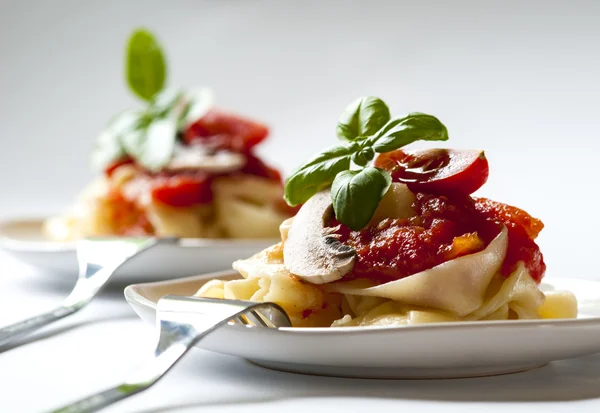
Think of those Michelin-starred restaurants where each plate resembles a work of art: you photograph the dish before tasting it, thus prolonging the moment of pleasure.
When a baker displays his pastries on a white marble counter, with elegant handwritten labels, he's not just selling bread. He's selling a promise of quality and comforting moments.
Current trends shaping the visual landscape
The world of graphic design for the restaurant industry is constantly evolving. Currently, three major trends are emerging:
Transparency and authenticity
Customers are looking for authenticity. They want to know the origin of the products, meet the artisans, and understand the processes.
Culinary design is responding to this demand by adopting more raw and honest visual codes. Perfectly retouched photographs are giving way to natural images. Handwritten typography is replacing overly polished fonts.
Sophie, who manages an organic delicatessen, told me:
We opted for a deliberately simple and transparent visual identity: kraft paper, handcrafted stamps, and labels featuring our producers' handwriting. Our customers love this incredibly honest and transparent approach.
Gourmet minimalism
In a world saturated with visual information, minimalism is gaining ground. Generous white spaces, clean compositions, one or two dominant colors: this simplicity highlights what is most essential.
| Approach | Features | Suitable for |
|---|---|---|
| Maximalist | Vibrant colors, rich patterns, visual abundance | Food trucks, international cuisine, festive atmosphere |
| Minimalist | White space, clean typography, simplicity | Gastronomy, plant-based cuisine, high-end concept |
| Authentic | Raw materials, handwritten, imperfections embraced | Artisan bakeries, farms, short supply chains |
| Modern | Geometric shapes, saturated colors, strong contrast | Fusion restaurants, innovative concepts, young clientele |
The influence of digital
Social media has transformed the way we consume food design. A dish must now be " Instagrammable," a term that reflects a commercial reality.
Restaurants design their spaces with the photos their customers will take in mind. This digital dimension directly influences culinary design choices: colors that stand out well on screen, photogenic compositions, etc
Choosing the right professional for your project
Finding the right food graphic designer for your needs is like choosing the right wine to accompany a meal. Three criteria deserve attention:
- First, examine their portfolio. A good graphic designer specializing in restaurants has specific experience in the culinary world. Their work demonstrates their ability to capture the essence of an establishment.
- Secondly, assess their understanding of your vision. A competent professional will ask many questions: What is your story? Who are your ideal clients? This listening phase reveals their investment in your success.
- Third, discuss the collaboration process. Creating a visual identity is a joint effort. You bring your sensibility, the graphic designer brings their technical expertise.
Pitfalls to avoid
Three pitfalls await restaurant owners during a graphic design project for a restaurant.
- The first pitfall: copying what works elsewhere. Drawing inspiration is legitimate, but duplication creates a bland identity. Your establishment has a unique soul that deserves to be expressed visually.
- The second pitfall: DIY. This approach might work temporarily, but it quickly limits development. Just as you wouldn't use low-quality ingredients in your recipes, don't settle for mediocre food graphics.
- The third pitfall: blindly following trends. A good graphic designer knows how to strike the right balance: they incorporate a contemporary touch while building timeless foundations.
Your questions about food graphics
Why is visual identity important for a restaurant?
A strong visual identity allows a restaurant to stand out in a highly competitive sector. It creates a decisive first impression, reassures potential customers, and instantly communicates your values.
In a world where 58% of consumers choose their restaurant online before visiting, your image becomes your best ambassador. A consistent identity increases brand recall and transforms your customers into true brand ambassadors.
What is the difference between a food graphic designer and a traditional graphic designer?
A food graphic designer possesses specific expertise in the restaurant and food sector.
He masters the visual codes that awaken the appetite, knows the regulatory constraints of food labeling and understands the importance of culinary photography and its effects.
Unlike a generalist graphic designer, he knows how to translate flavors into visual elements and create materials adapted to gourmet environments: stain-resistant menus, food packaging, signage for professional kitchens.
How do I choose the colors for my restaurant's visual identity?
The choice of colours directly influences appetite and the perceived atmosphere.
Warm colors (red, orange, yellow) stimulate the appetite and are suitable for convivial restaurants. Green tones evoke freshness and naturalness, perfect for organic concepts. Subtle colors (black, gold, burgundy) suggest refinement and are well-suited to fine dining.
The key is to choose a color palette that is consistent with your positioning and target clientele, and then apply it to all your media.
How long does it take to create a complete visual identity?
Creating a complete visual identity typically takes between 4 and 6 weeks.
This timeframe includes the discovery and analysis phase (understanding your project, your values, your target audience), the creation of graphic proposals, adjustments based on your feedback, and the finalization of the graphic charter.
For more complex projects including a website, allow an additional 2 to 3 months. This timeframe ensures thoughtful and lasting work.
Is a logo enough for my restaurant's visual identity?
No, a logo alone is only one part of your visual identity.
A complete brand identity also includes: the color palette, typography, recurring graphic elements, usage guidelines (brand guidelines), and adaptations across different media. It is the combination of all these elements that creates a recognizable consistency.
A single logo cannot convey the entire message of your establishment. A comprehensive visual identity builds a memorable experience for your customers.
In summary: culinary graphics are much more than just an image!
Culinary design transcends mere decoration to become a strategic tool. It embodies your philosophy, communicates your values, and creates an emotional connection with your customers.
Whether you run a gourmet restaurant, a neighborhood bakery or an artisanal food brand, investing in professional graphic design contributes from the outset to recognition and develops your future branding.
Never forget that behind every great name in gastronomy lies a strong and memorable visual identity. Culinary design builds gourmet stories that are first savored with the eyes, then with all the senses.
