
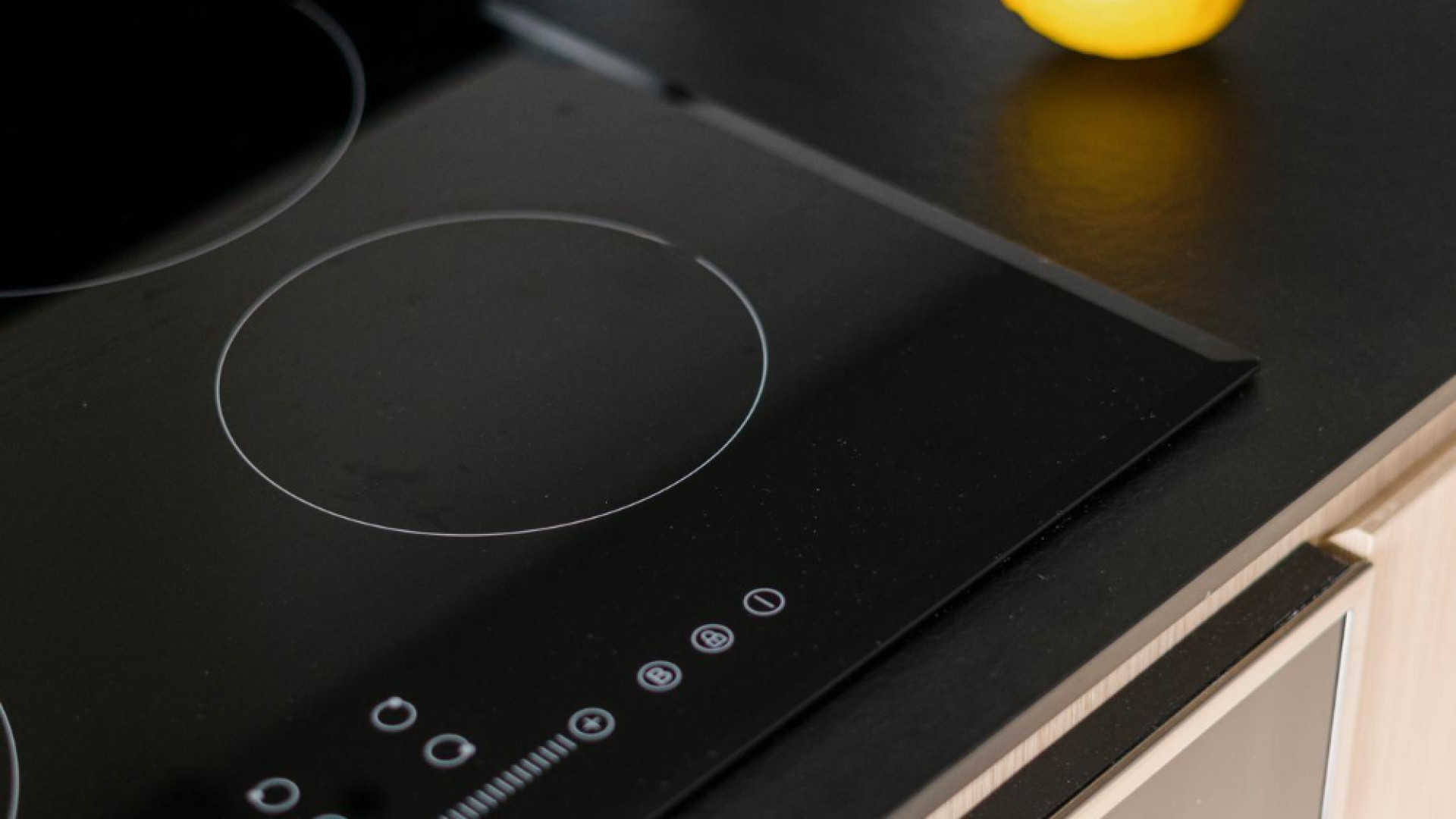
Induction hobs are becoming increasingly popular in kitchens thanks to their efficiency and numerous advantages.
Thanks to advanced technology, it appeals to both cooking enthusiasts and those who prioritize speed or safety at home.
Discovering the world of induction hobs sheds light on how they work, their qualities and the essential criteria for choosing the right appliance.
How does an induction hob work?
The operation of induction is based on an ingenious physical principle: the production of a rotating magnetic field
Beneath the glass-ceramic surface, copper coils generate this field when powered by electricity. This field only activates when a suitable container filled with ferromagnetic metal is placed on it.
The heat therefore does not come from the plate itself, but directly from the contact between the container and the magnetic waves.
This system allows for temperature control . Simply modulate the intensity of the electricity sent to the coils to adjust the power and heating speed of the contents.
Result: no energy loss on the surface and cooking controlled to the degree!
What are the main advantages of induction?
Fast heating and energy saving
One of the major advantages of induction cooking is its heating speed . In just a few seconds, the water boils and the pan is ready for searing food.
This speed significantly reduces cooking time while also limiting the energy consumption of an induction hob.
Energy saving is a major argument for households concerned about managing their budget.
On the other hand, since the heat goes directly to the pan, there is almost no loss during cooking.
This optimizes every watt spent compared to traditional solutions and ensures efficient use of energy .
Cooking safety and precision
With an induction hob, safety is greatly enhanced in the kitchen. The surface remains cool to the touch since only the area in contact with the cookware actually heats up. The risk of burns is therefore significantly reduced compared to other systems.
Furthermore, as soon as the pan is removed, heat production stops immediately!
Another often cited advantage is the cooking precision offered by induction.
Thanks to instant temperature control , it becomes possible to simmer delicate dishes without ever worrying about them sticking or boiling over.
This mastery appeals to both amateurs and experienced cooks.
How to choose the perfect model?
The choice of model generally depends on practical needs and lifestyle. Some people necessarily want high power, while others prefer a compact hob suitable for a small kitchen.
Analyzing a true comparison of models helps to visualize the available options: number of burners, dimensions, types of controls or additional features such as the timer.
Before making a decision, it's best to focus on a few key points:
- Ability to adjust the power
- Variety of temperature settings
- Easy maintenance and the presence of safety devices to avoid any unpleasant surprises on a daily basis.
Finally, focusing on energy conservation promises tangible long-term savings for controlled daily use.
