
In short
You have the foie gras, now you need to figure out what to put with foie gras as a starter so that the plate looks nice without being overwhelming.
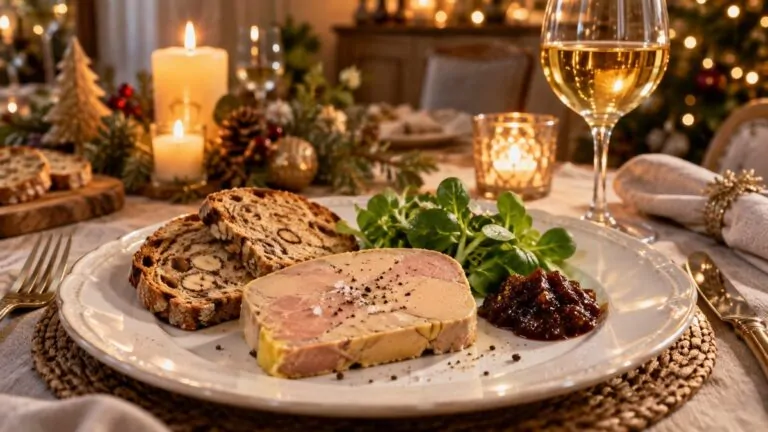
The short answer can be summed up in one sentence: toasted bread, a small spoonful of chutney or preserve, and a fresh touch like a few leaves of lamb's lettuce or slices of pear.
The rest is a matter of balance. Too much sugar, too many ingredients, or a wine that's too rich, and the foie gras disappears behind its garnish.
This guide details the role of each element, the dishes that work in cold or hot versions, the quantities to plan for, and the wines that do not tire the palate before the main course.
The rule of three elements for composing a plate
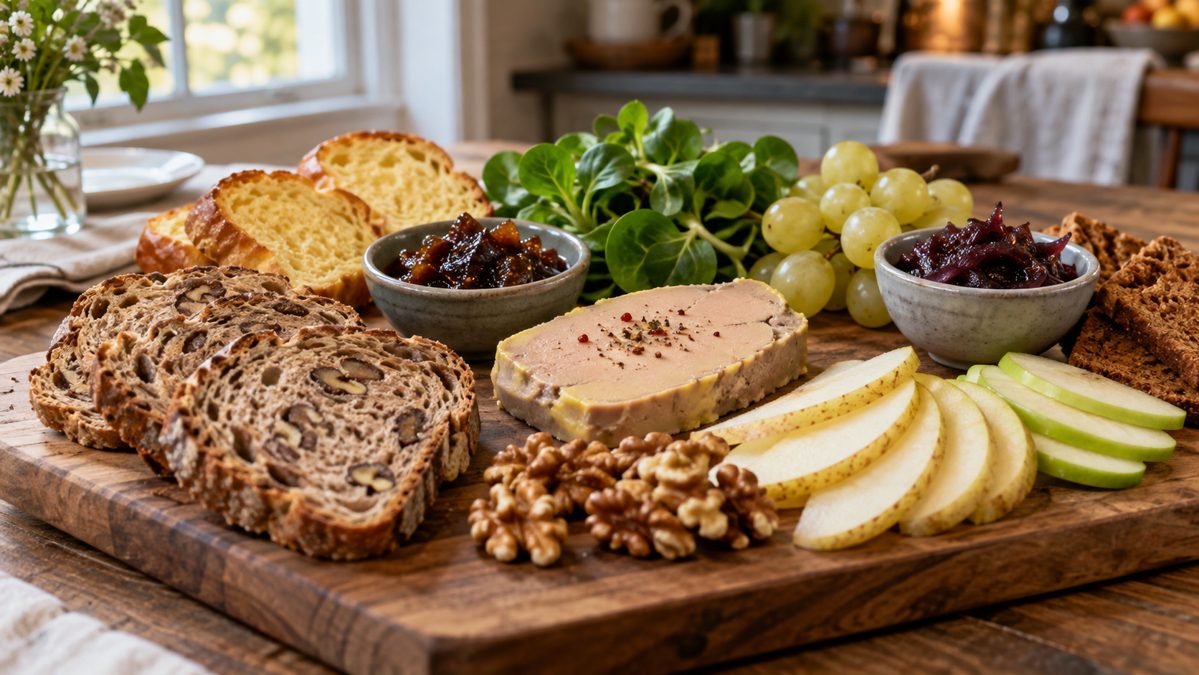
Foie gras is a rich and very full-bodied product. Each accompaniment therefore has a specific function: to complement the slice, to cut through the richness, or to enhance the texture.
By keeping one item per function, the plate remains legible. By piling up brioche, gingerbread, jam, chutney, fresh fruit and salad, it becomes a buffet where nothing stands out.
The support: which bread to choose?
Bread is initially used as a neutral or lightly flavored base. Three families share the festive tables:
- Country bread or walnut bread, toasted: the firm crumb and crust provide crunch without added sugar, it is the safest choice if the condiment is already sweet.
- The brioche, lightly golden: its buttery softness prolongs the melting of the foie gras, best reserved for a plate with a rather tangy condiment.
- Gingerbread: its mild spices enhance the richness of the foie gras, but it combines sugar and aroma, so a single sweet garnish is sufficient alongside it.
In any case, toast the bread at the last minute. Toast prepared an hour in advance softens and loses precisely the desired contrast.
The sweet and tangy touch: chutney, preserve or compote
Fig chutney and onion confit remain classics because they combine sugar and vinegar. It's this acidity, more than the sugar, that lightens the bite.
Bitter orange marmalade or apricot compote play the same role with a brighter note.
One teaspoon per plate is more than enough. Any more than that and the condiment becomes overpowering, turning the appetizer into something more like dessert.
Place the condiment next to the slice rather than on top. Each guest adds their own portion, and the foie gras retains its crisp appearance both in the photo and on the plate.
The fresh and crisp note
It's the most often overlooked element, yet it's what makes you want to take another bite. It provides water, acidity, and texture.
- A few leaves of lamb's lettuce or young shoots, seasoned with a drizzle of walnut oil and a drop of vinegar.
- Slices of tart apple or firm pear, cut at the last moment.
- White grapes, fresh fig wedges in late summer, or a few pomegranate seeds in winter.
- Crushed walnut kernels, for pure crunch.
Finish with a pinch of fleur de sel and a turn of freshly ground pepper on the edge, just before sending the plate out.
Brioche, fig chutney, and sweet wine combine three sources of sugar in a single bite. If a rich dish follows, this combination quickly overwhelms the palate: keep two of the three and replace the third with something acidic or dry.
Cold or hot starter: the dish changes with the foie gras
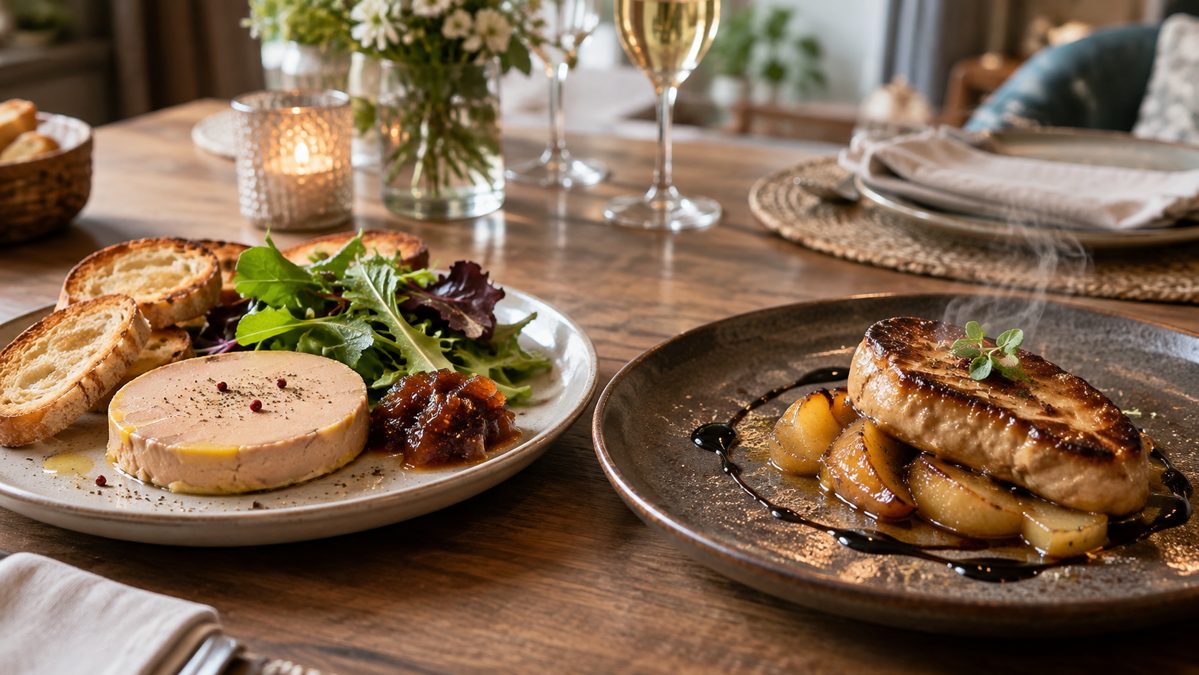
Most serving suggestions lump together sliced cold foie gras and pan-seared foie gras. However, these two appetizers call for completely different garnishes.
Partially cooked, whole or block served in slices
For a cold starter, the choice of product is just as important as the garnish. According to the practical guide from the Ministry of the Economy (December 2025), "whole foie gras" consists of a whole liver or one or more lobes.
The term “foie gras” refers to pieces of lobes that have been agglomerated, and “bloc de foie gras” refers to reconstituted foie gras.
According to the same information sheet, a block "with pieces" must contain at least 30% pieces of foie gras.
In practice, whole or semi-cooked foie gras yields the most beautiful slices for a plated presentation. A block, being more homogeneous, is better suited to toasts, verrines, or cutting with a cookie cutter.
As for garnish, the cold starter accepts everything described above: toasted bread, condiment, raw fruit and salad.
Pan-seared foie gras: a side dish that withstands the heat
Pan-seared raw foie gras is served hot, meltingly tender, with its cooking fat. A raw salad on the side cools quickly and wilts in contact with the foie gras.
It is more often associated with cooked fruits : pan-fried apple or pear wedges, roasted figs, lightly heated grapes.
A light sauce completes the dish, for example a deglazing with balsamic vinegar or port, reduced for a few seconds in the pan.
For cooking, the fact sheets from the Academy of Taste and the Delpeyrat company (consulted in September 2026) converge on a very hot pan, without fat, and 1 to 2 minutes per side depending on the thickness of the escalope.
Typical example: for four people, two tart apples cut into quarters are first pan-fried, then kept warm. The escalopes are then seared in the same pan, and the pan juices are deglazed to coat the plate.
Bread remains useful, but as a simple toasted slice served separately for dipping.
| Plate | Foie gras | Bread | A touch of sweet and tangy | Fresh note | Suggested wine |
|---|---|---|---|---|---|
| Party classic | Sliced semi-cooked | Country-style toasted walnuts | Fig chutney | Lamb's lettuce, walnut oil | Moelleux (Jurançon, Monbazillac) |
| Gourmande | Whole sliced | Golden Brioche | Bitter orange marmalade | Sliced green apple | Champagne or sparkling wine |
| Winter spice | Half-cooked or block | Gingerbread | None (bread is enough) | Firm pear, pomegranate | Aromatic dry white wine |
| Hot | Raw, pan-fried | Grilled slice on the side | Sautéed apples, balsamic glaze | A few young shoots apart | Liqueurs (Sauternes) |
| Aperitif | Block | Small toasts | Onion confit | White grape | Effervescent |
Quantities, cutting and plating
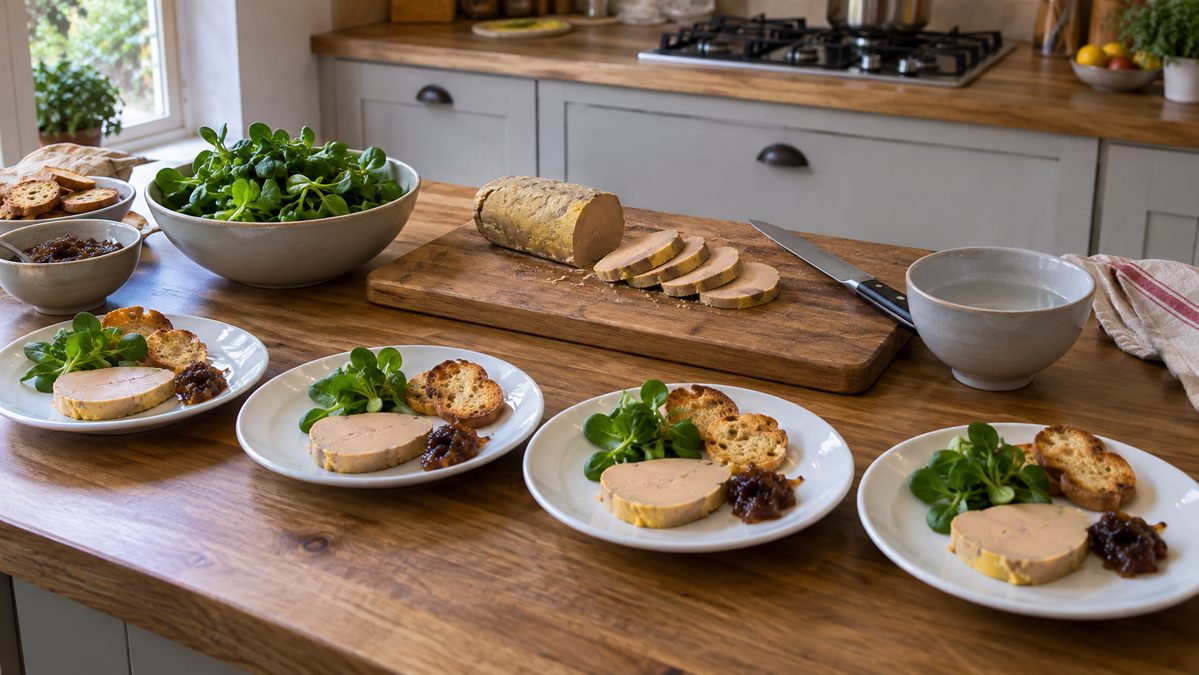
A beautiful garnish cannot make up for a poorly sized portion: too small, the starter seems stingy, too big, it kills the appetite for the rest.
How much foie gras per person?
The website of the foie gras interprofessional organization (CIFOG) recommends 60 to 80 g per person as a starter (accessed in September 2026).
Other houses go down to 50g when the starter is well garnished, which remains consistent with the logic of the three elements: the more the accompaniment is present, the less the slice needs to be thick.
The right portion size depends mainly on what follows. Before a dish with sauce and cheese, the lower end of the fork is sufficient, whereas a light meal allows for a more generous portion.
On Reddit (r/cuisine, November 30, 2024), a user who was answering a question about a meal for 30 guests summarizes the same logic: "we generally allow 50g-60g cooked per person as a starter", and "less if the meal is very heavy".
Along the same lines, another participant advises serving "by the weighed plate" rather than as a sharing platter, to be sure to please everyone.
Typical example: for a New Year's Eve dinner for 8 people followed by a stuffed capon, 8 x 60g yields 480g of foie gras. A 500g serving of foie gras therefore covers the starter without significant leftovers.
Calculate the quantities for your table
This calculator estimates the weight of foie gras to plan for, the number of slices of bread and glasses of wine, based on the number of guests, the type of starter and the richness of the menu that follows.
Number of guests
Entry type
Menu following the starter
Remove, slice, plate: the order that avoids damaged slices
The way the foie gras is cut is very important in the presentation of a chic starter, and it depends mainly on the temperature of the foie gras.
- Take the foie gras out of the refrigerator 20 to 30 minutes before serving, depending on the room temperature: too cold, it is hard and tasteless, too warm, it falls apart.
- Toast the bread and prepare the chilled note in the meantime.
- Dip the blade of a thin knife in hot water, wipe it dry, then cut a slice about 1 cm thick. Repeat this process between each slice.
- Place the slice in the center or slightly off-center, the bread against it, the condiment in a small quenelle next to it.
- Add the fleur de sel and pepper at the last moment, so that the crystals remain crunchy.
The day before, prepare the chutney or compote, wash and dry the salad, and keep them chilled. On the day itself, all that's left is to slice the salad, add the bread, and dress it.
What wine should I serve with foie gras as a starter?
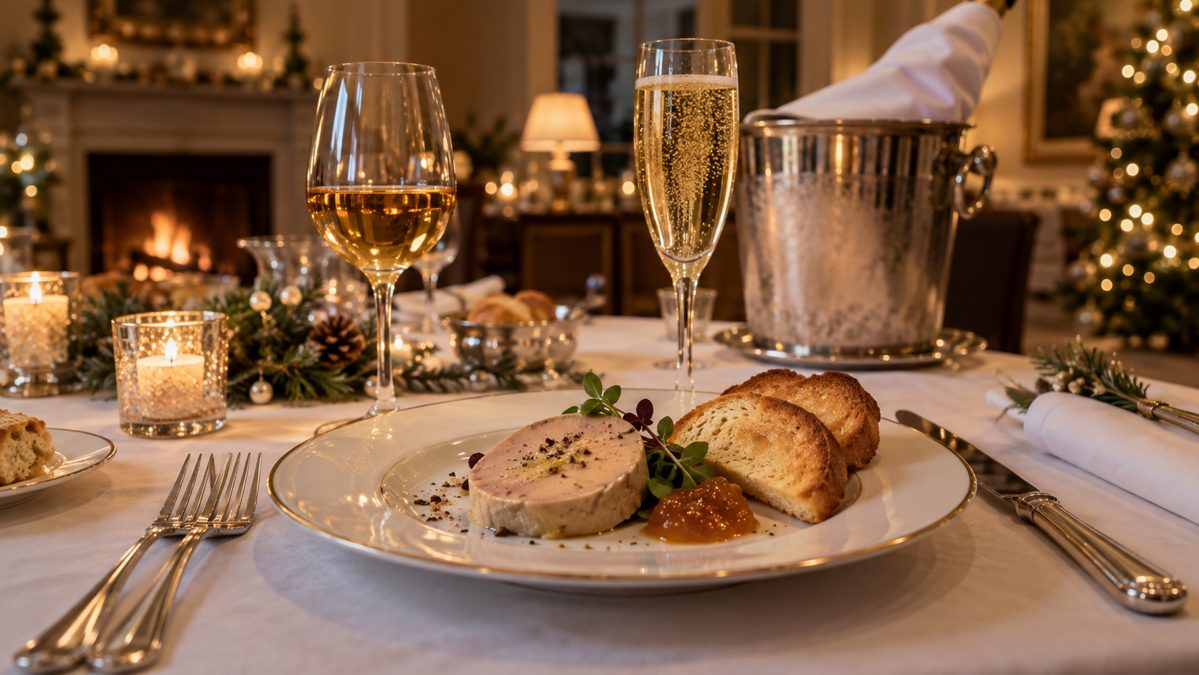
The most frequently cited pairing remains sweet white wine, which complements the richness of the liver with its roundness and acidity. But sweet doesn't mean just one type.
According to the Bordeaux wine magazine (December 2025), a sweet wine contains between 12 and 45 g of residual sugars per litre, a dessert wine more than 45 g.
The same source advises serving these wines at around 9 or 10 °C, a little cooler than a dry white wine.
For a starter, this difference matters. A Sauternes or another sweet wine pairs very well with pan-fried foie gras with fruit, but it has more weight at the beginning of a meal.
A sweet wine like Jurançon or Monbazillac retains more freshness. And if the rest of the meal is heavy, an aromatic dry white wine, a champagne, or a crémant will cleanse the palate instead of weighing it down.
- Sweet or luscious: a well-rounded pairing that prolongs the melt-in-your-mouth texture of the foie gras
- Dry or sparkling white wine: freshness, bubbles that cut through the fat
- Dry: pairs easily with the wine of the dish
- Liqueur-like: combines sugar with chutney and brioche
- Liqueur wine: makes the transition to red wine in the dish more abrupt
- Dry: less flattering with a very sweet condiment
A typical example: with the brioche and orange marmalade dessert, a brut champagne balances the sweetness of the condiment. With the pan-fried apple version, on the other hand, a sweet champagne is perfectly suited.
In summary
To know what to serve with foie gras as a starter, think in terms of functions rather than a list: a bread to support, a sweet and sour touch to lighten, a fresh note to revive.
Next, adapt the garnish to the temperature of the foie gras, cold in slices or hot pan-fried, and the portion to the richness of the menu, between 60 and 80 g according to the interprofessional organization.
Finally, choose the wine by looking at the rest of the meal as much as the starter itself.
Practical questions
Can foie gras be served without jam or chutney?
Yes. A good whole foie gras is perfectly sufficient with toasted country bread, fleur de sel, and pepper. The acidity can then be added with a green apple or a few grapes.
Which bread is best avoided with foie gras?
Strongly flavored breads, such as olive bread, heavily toasted grain bread, or bread made with very acidic sourdough, can overpower the delicate taste of foie gras. Commercially produced rusks also tend to break under the slice and crumble on the plate.
Can the foie gras plates be prepared in advance?
You can slice the foie gras and refrigerate it, covered with plastic wrap, for one to two hours beforehand. The bread, dressed salad, and fleur de sel, however, are added just before serving.
What to do with leftover opened foie gras?
Cover it with cling film and keep it refrigerated, generally for no more than 3 days after opening, unless otherwise indicated by the manufacturer. Any leftovers can then be added to pasta, risotto, or an omelet at the end of cooking.
What non-alcoholic drink should I serve with foie gras?
A slightly tart, artisanal apple juice or a sparkling white grape juice can restore the sweet and acidic balance of a soft cake. A warm white or oolong tea is also a drier option.
