
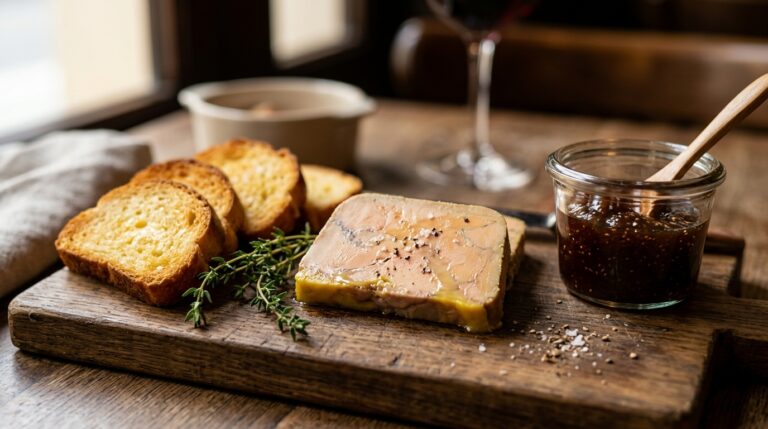
In short
Whole duck foie gras from Gers is one of those exceptional products that is often talked about, but rarely analyzed rigorously.
However, before making a purchase for the holidays or a gourmet gift, the question of value for money really arises.
This article offers an honest opinion on whole foie gras from Gers: origin, labels, sensory analysis, tasting tips and a comparison of available offers…
You will also learn all the tips and tricks you need to know to choose the best one.
Whole duck foie gras from Gers: what makes it stand out?
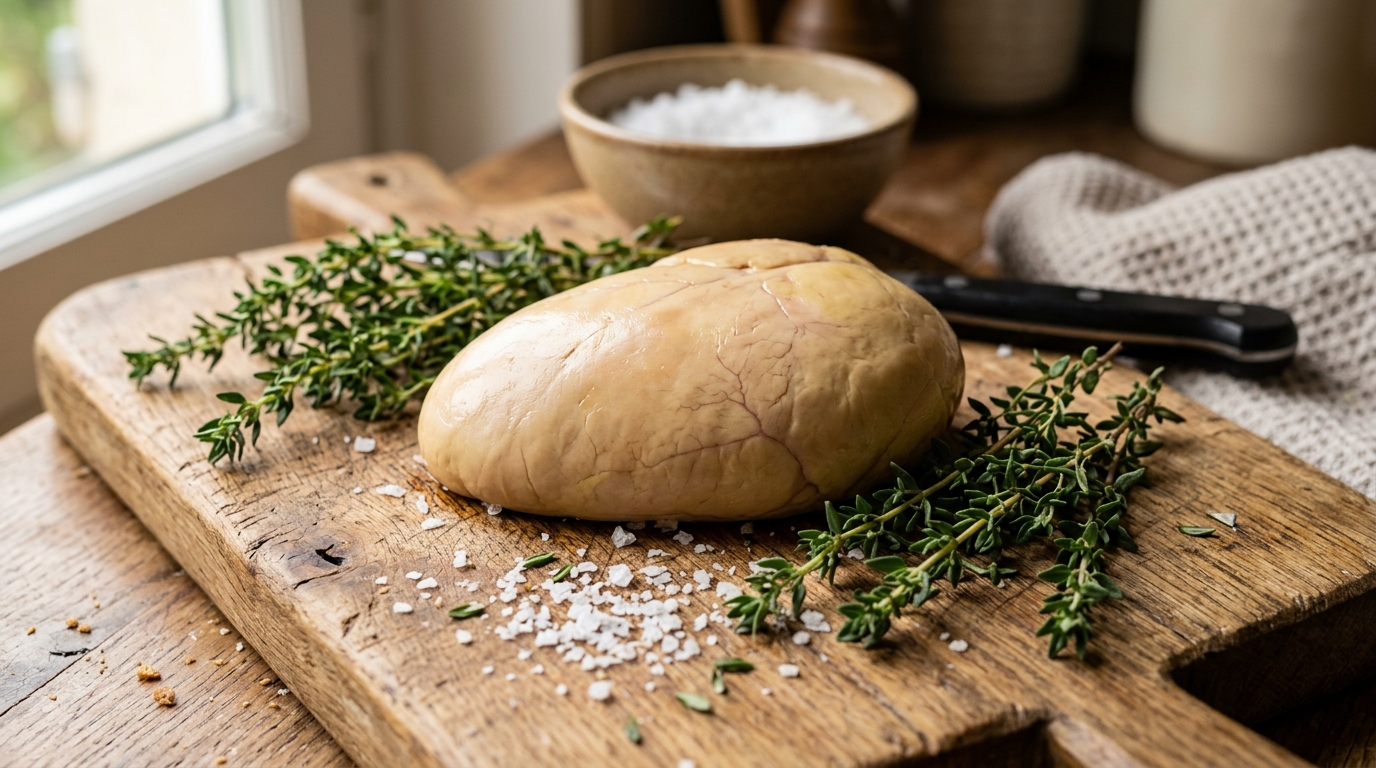
Gers is often presented as the most gourmet department in France, and this is not a marketing image.
It is an agricultural, historical and cultural reality deeply rooted in the Gers region, where the production of foie gras duck has been a major economic activity for generations.
Understanding what a whole duck foie gras from Gers really is means first understanding what distinguishes it from other products bearing the same name on the label.
The exact origin and producers of Gers
Gers is located in the heart of the Bay of Gascony, in the Southwest. The ducks raised here, mainly mulards or Muscovy ducks, benefit from breeding conditions linked to the Atlantic climate and local traditions of force-feeding with corn.
Small-scale foie gras producers in the Gers region often work on family farms. Companies like Esprit Foie Gras , for example, perfectly embody this artisanal approach, with control over the entire supply chain from producer to consumer.
Towns like Mirande, Auch or Fleurance or the famous Samatan foie gras market concentrate part of this production, and the duck foie gras of Gers, a gourmet country, is not a simple geographical label: it is a quality commitment made by producers who know their animals.
The difference between whole foie gras and other types
In France, the regulations are strict on this point! The term whole foie gras refers to a product composed of one or two whole lobes of foie gras, without the addition of pieces or paste.
This is the top of the regulatory hierarchy.
Below this, we find "foie gras" (an assembly of pieces), then "foie gras block" (reconstituted from an emulsion), and finally "block with pieces." These distinctions are defined by the decree of August 9, 1993, regulating foie gras preparations in France.
Choosing a whole foie gras means choosing the raw product, the least processed, so the texture, taste and appearance do not lie when sliced.
🦆 Foie gras calculator for your holiday meals
Estimate the quantity of whole duck foie gras from Gers you need according to your occasion and your guests.
Labels and certifications for foie gras from Gers
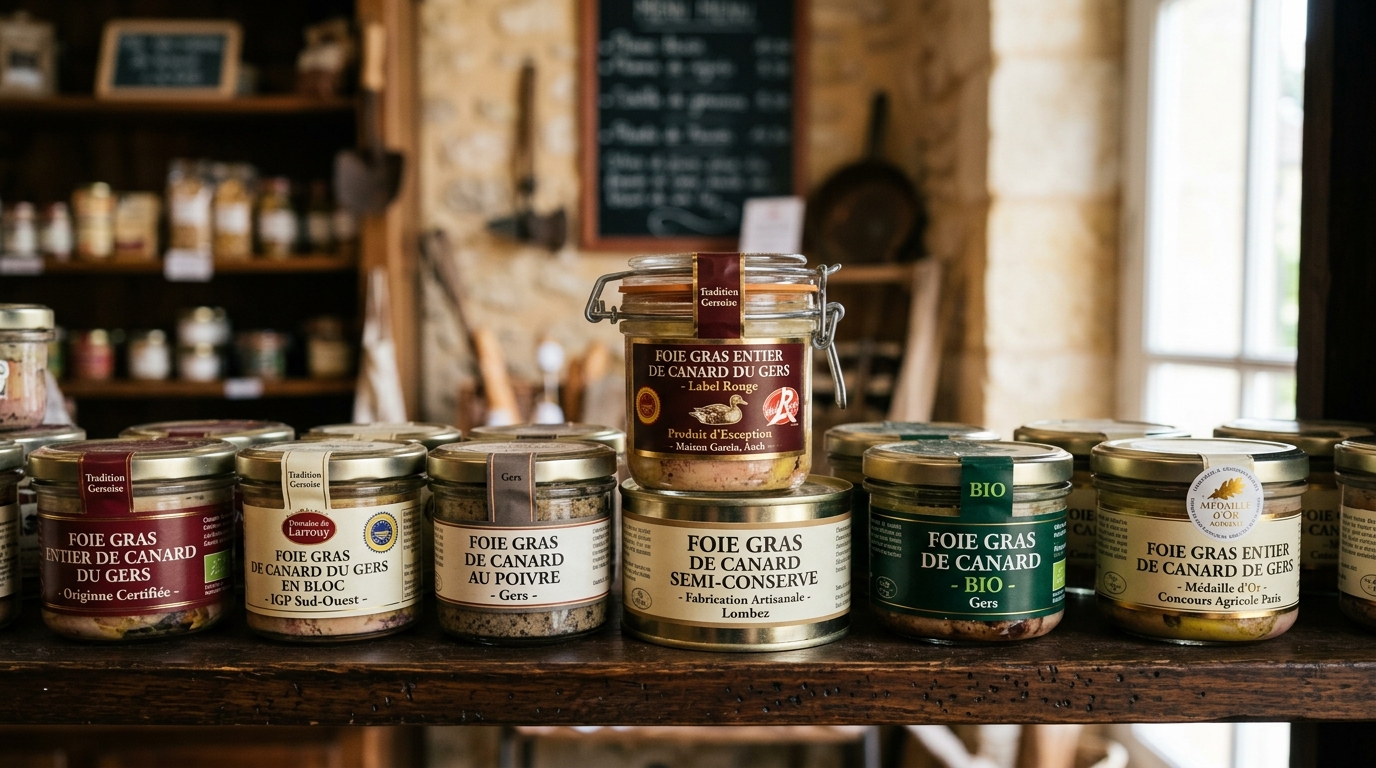
Faced with an overwhelming number of options, labels are the first objective benchmarks. They don't guarantee you'll fall in love with a product, but they do eliminate unpleasant surprises.
To be more precise, here's what you really need to understand behind the logos.
The PGI Duck with Foie Gras from the Southwest: what it guarantees
The PGI (Protected Geographical Indication) "Foie Gras Duck from the Southwest" covers a specific geographical area including the Gers. It regulates the breed of duck, the rearing conditions, the duration and technique of force-feeding, as well as the minimum weight of the liver.
A Gers PGI foie gras must come from a duck raised and force-fed in this area, according to specifications verified by an independent body. This prevents foreign products from falsely claiming a French origin.
The PGI does not certify the artisanal aspect, but it guarantees geographical traceability and compliance with defined practices, so it is a serious foundation, not a promise of absolute excellence.
The Label Rouge and artisanal quality marks
The Label Rouge goes further than the IGP on organoleptic criteria: it imposes tasting tests and quality thresholds higher than the market average.
A foie gras bearing these two combined marks truly represents the best whole artisanal foie gras accessible to the general public.
Other signs exist: "Organic Farming", mentions "free-range", or even short supply chain certifications, however, specialists in the field recommend cross-referencing several indicators rather than relying on a single logo.
Foie gras bearing both the IGP Sud-Ouest and Label Rouge designations has undergone two separate levels of testing. This is a rare combination, but it represents the best quality guarantee available on the market.
Our complete sensory analysis of the product
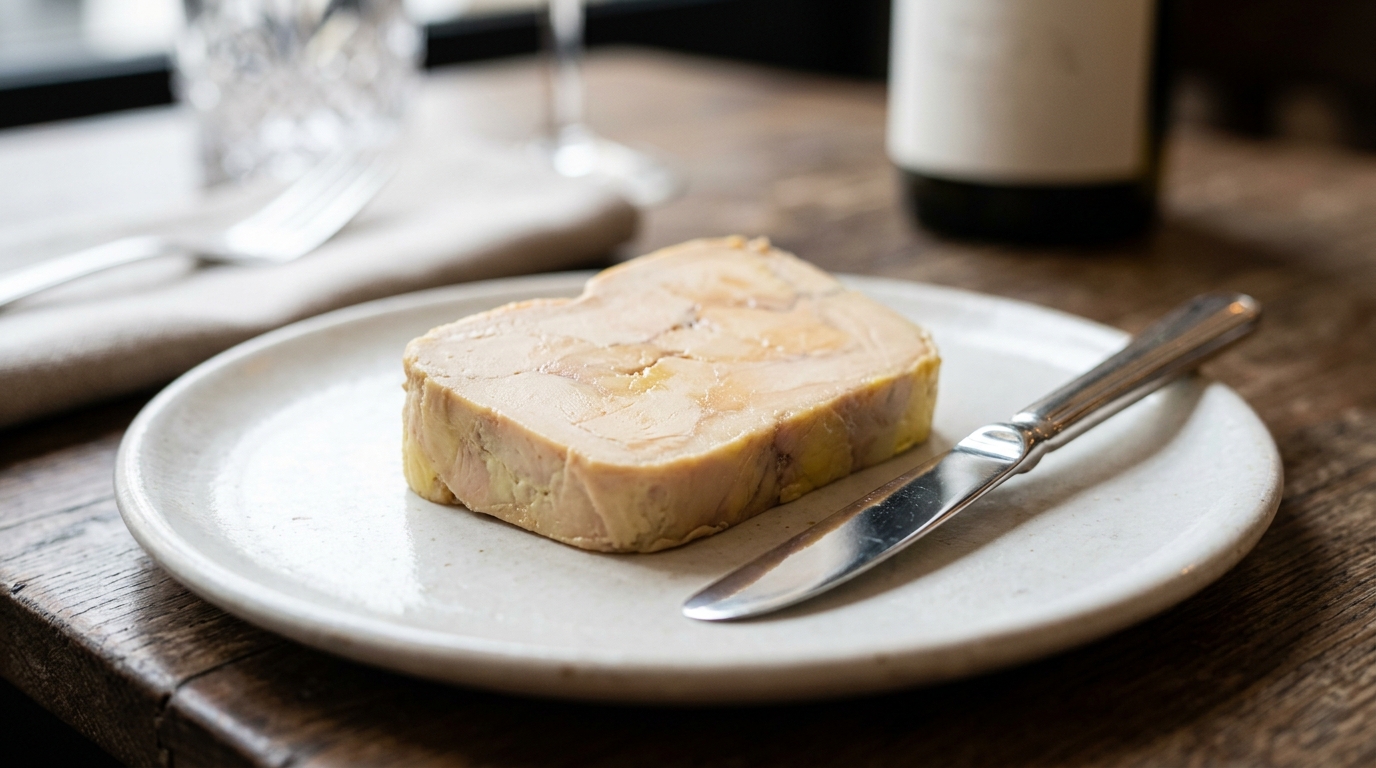
Labels are good. Tasting is better!
Here is a detailed sensory analysis of whole duck foie gras from Gers, based on characteristics observed during comparative tests conducted by gastronomy professionals.
Texture, color, and visual appearance when cut
When opening a terrine or jar of quality Gers duck foie gras, the first signal is primarily visual.
Indeed, the color should tend towards creamy ivory, slightly pinkish, without grey spots or pronounced whitish areas that would betray excessive melting during cooking.
When cut, the texture is homogeneous, dense without being dry, then the knife glides without excessive resistance, and a good whole foie gras does not crumble: it holds its shape, slices cleanly, and reveals a smooth and satiny surface.
Comparative tests indicate that foie gras that has rendered a lot of fat during cooking has a grainy texture and a less developed flavor. This defect is generally noticeable even before tasting it.
The taste, the seasoning, and the aromas in the mouth
On the palate, Gers foie gras, when tasted, first reveals a rich and velvety roundness, immediately followed by complex aromas. One can distinguish notes of toasted hazelnut, sometimes brown butter, and a slight vegetal hint reminiscent of the force-feeding corn.
The seasoning should be subtle; salt enhances, pepper adds a touch of spice, but none should overpower the other. Overly salty foie gras generally indicates poor-quality ingredients.
The finish is long, slightly sweet, with an aromatic persistence that is the hallmark of quality products. A foie gras from Gers leaves no bitter aftertaste or sticky sensation in the mouth.
Perceived quality: what distinguishes this foie gras
What separates a Gersois artisanal foie gras from a mass-market product is above all the consistency of the whole, since each parameter, from colour to aromas to texture, meets a high standard.
Experience feedback also highlights the importance of the raw liver weight: a liver of 450 to 550 grams, neither too lean nor too fatty, generally gives the best result after cooking.
Choose a whole foie gras whose label explicitly states "whole duck foie gras" and not simply "duck foie gras." This legal distinction is important and protects your purchase.
Tasting: tips and food and wine pairings
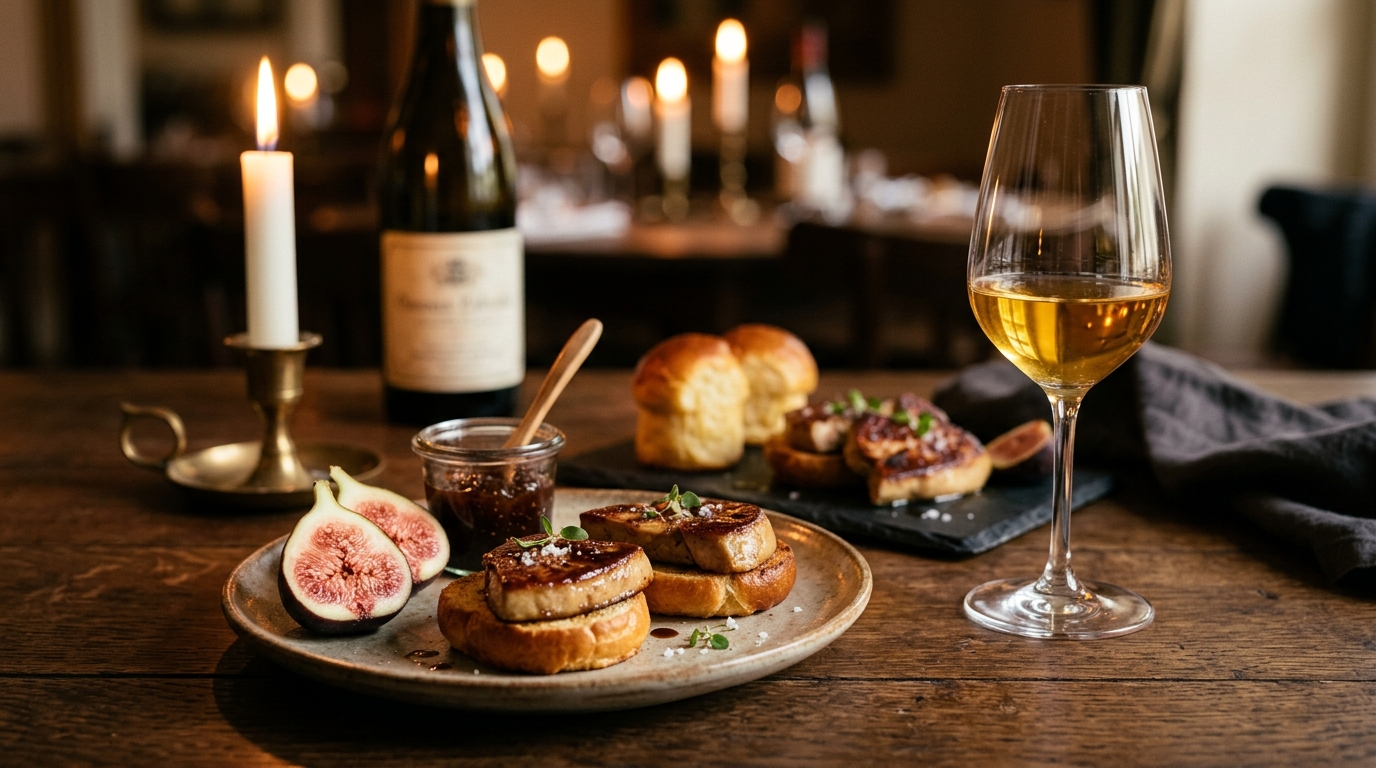
A good product deserves good presentation!
A few simple gestures make all the difference between a successful tasting and an experience that falls short of the product's potential.
How to serve and present whole foie gras?
Serving temperature is the number one rule, because foie gras served too cold loses a large part of its aromas.
Professionals recommend taking it out of the refrigerator 15 to 20 minutes before tasting, no more!
For slicing, a thin-bladed knife, rinsed under hot water and dried, gives clean slices without crushing the product, and the ideal slices are between 1 and 1.5 cm thick.
Serve on a slice of lightly toasted country bread or brioche bread, and avoid overly salty industrial toasts which interfere with the flavors.
A little fleur de sel and a dash of freshly ground pepper are enough, so there's no need to add overly strong condiments like mango chutney, unless you like strong contrasts.
This type of preparation will also go very well with other specialties of Gascon duck: for example, fresh duck breast can complete a tasting platter for a coherent and generous festive meal.
The best wine pairings for foie gras from Gers
The classic pairing remains a sweet white wine.
Sauternes is the absolute reference, with its sweet richness that responds to the fatty roundness of foie gras, but it is not the only relevant choice.
To test and refine your knowledge of wine and oenology, you can explore less obvious pairings that pleasantly surprise.
| Wine | Style | Why it works |
|---|---|---|
| Sauternes | Powerful liqueur | Sweetness that balances the fat |
| Jurançon moelleux | Lively and fruity soft | Refreshing acidity, regional accord |
| Monbazillac | Accessible liqueur | Excellent value for money |
| Gewurztraminer late harvest | Aromatic and sweet | Spicy notes that highlight the aromas of the liver |
| Blanc de Blancs Champagne (brut) | Dry and mineral | Bubbles that cleanse the palate between each bite |
Avoid tannic red wines with foie gras. Tannins react poorly with fat and create an unpleasant metallic sensation in the mouth. This is a common mistake to avoid as much as possible.
Its price, value for money, and where to buy it?
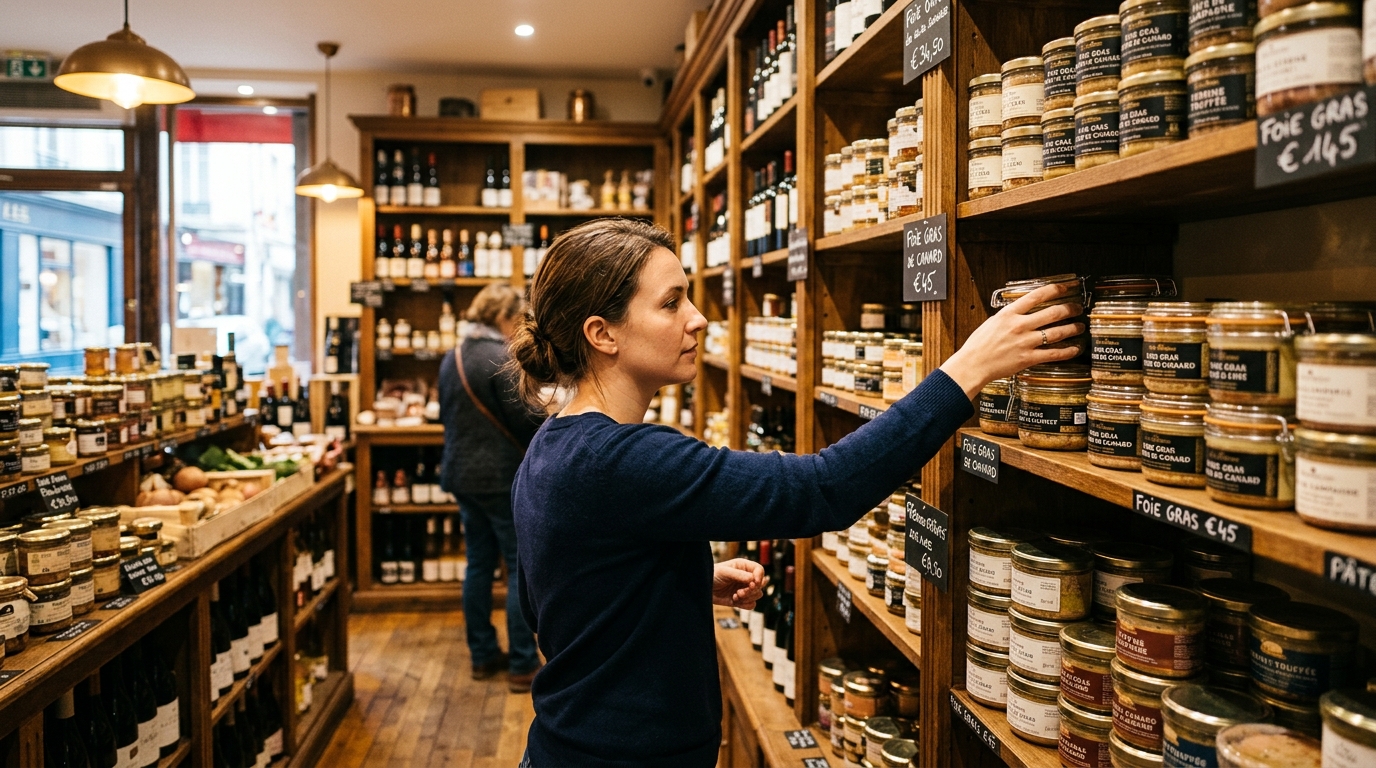
The price of whole foie gras from Gers varies considerably depending on the sales channel, the producer and the label, so here is an honest analysis to help you find your way around.
Analysis of the price of whole foie gras from Gers
The price of whole foie gras from Gers in artisanal circuits generally ranges between €55 and €90 per kilogram for a product under IGP and Label Rouge, however, entry-level products without a specific label start at around €40 to €50 per kilo.
Products sold in supermarkets under discount labels, such as Aldi's Gers foie gras, are well below these prices, but traceability and quality criteria are less strict.
Our comparison of offers available online and live
| Purchase channel | Indicative price / kg | Main advantage |
|---|---|---|
| Live Producer | 55 to 90 € | Maximum traceability, fresh or semi-preserved product |
| Specialized online sales | 50 to 85 € | Wide selection, delivery, verified customer reviews |
| Premium supermarket | €40 to €65 | Accessibility, seasonal promotions |
| Hard discount | €20 to €35 | Low price, but limited quality and traceability |
For a reliable online purchase, buying Gers foie gras online from listed producers allows you to benefit from a quality comparable to direct purchase, with appreciable convenience.
reviews of each Gers IGP foie gras available on these platforms constitute a serious indicator, provided their authenticity is verified.
Finally, if you are curious about foie gras recipes to enhance your purchase, several simple preparations lend themselves very well to this.
Our verdict: Is it really worth the price?
Yes! Without hesitation! But only if you choose the right level of the range.
A whole artisanal foie gras from Gers under IGP and Label Rouge justifies its price by the raw material, the know-how and the real sensory quality.
- Superior sensory quality compared to industrial products
- Geographical traceability guaranteed by the PGI
- Traditional skills preserved by small producers
- Perfect for a gift or a festive meal
- Wide selection of formats (jar, can, semi-preserved, fresh)
- High price for those on a tight budget
- Offers can sometimes be difficult to compare without clear benchmarks
- Quality varies between producers, even under the PGI (Protected Geographical Indication) scheme
- Limited shelf life for fresh or semi-cooked versions
Be wary of prices below €40 per kilo! The minimum price for a truly artisanal product does not fall below this threshold without compromising on the raw material or the production chain.
Before buying, check that the label clearly states "whole foie gras," the species (duck), the geographical area (Gers or Southwest France), and any certifications it has received. These four pieces of information are the minimum guarantees for an informed purchase.
Practical questions
What is the difference between a whole foie gras and a block of foie gras?
Whole foie gras consists of one or two complete lobes, without any further processing. Foie gras block, on the other hand, is reconstituted from a foie gras emulsion, sometimes with added pieces. French regulations clearly distinguish between these two categories, with strict composition criteria. Whole foie gras represents the highest quality level in the range.
How to recognize a quality foie gras from Gers when buying it?
Several indicators should be checked on the label: the phrase "whole duck foie gras," the presence of a Protected Geographical Indication (PGI) or a Label Rouge (Red Label), and the name of the producer or the specific region. When sliced, a quality duck foie gras from Gers has a uniform ivory-pink color, without any gray spots. The texture should be firm yet melting, never grainy.
Can you buy whole foie gras from Gers directly from the producers?
Yes, absolutely. Many small producers in the Gers region sell directly, either at their farms or through their websites. Buying whole foie gras from the Gers directly from the producer guarantees maximum traceability and often provides access to fresh or semi-cooked varieties not available in supermarkets. Local markets and Gascon fairs are also excellent places to buy.
How long does a whole semi-cooked foie gras from Gers keep after opening?
Once opened, semi-cooked foie gras should be consumed within 3 to 5 days, kept refrigerated between 0 and 4°C and covered with cling film. Sterilized canned foie gras, on the other hand, can be kept for several years before opening, but should also be consumed within a few days of opening. Adhering to these timeframes is a matter of food safety, not just taste.
Is the high price of Gers IGP foie gras still justified?
Not always. The PGI (Protected Geographical Indication) guarantees geographical origin and certain farming practices, but it doesn't, on its own, guarantee an absolute level of excellence. Combining the PGI and Label Rouge designations offers a stronger guarantee. Online reviews of Gers PGI foie gras show that quality can vary significantly from one producer to another, even with equivalent certifications. It's still helpful to compare customer feedback before buying.
I only took mine out 5 minutes before serving it last time, so it was still a bit cold and you could taste it.
Hello Yvonne, five minutes is indeed too short; the foie gras remains compact, the aromas haven't yet developed, and the texture remains almost waxy in the mouth. The 15-20 minute mark corresponds to the point at which it becomes crisp and crisp without being mushy, so a little patience really makes a difference to the tasting experience. Next time, take it out as soon as you set the table; that should be enough.