
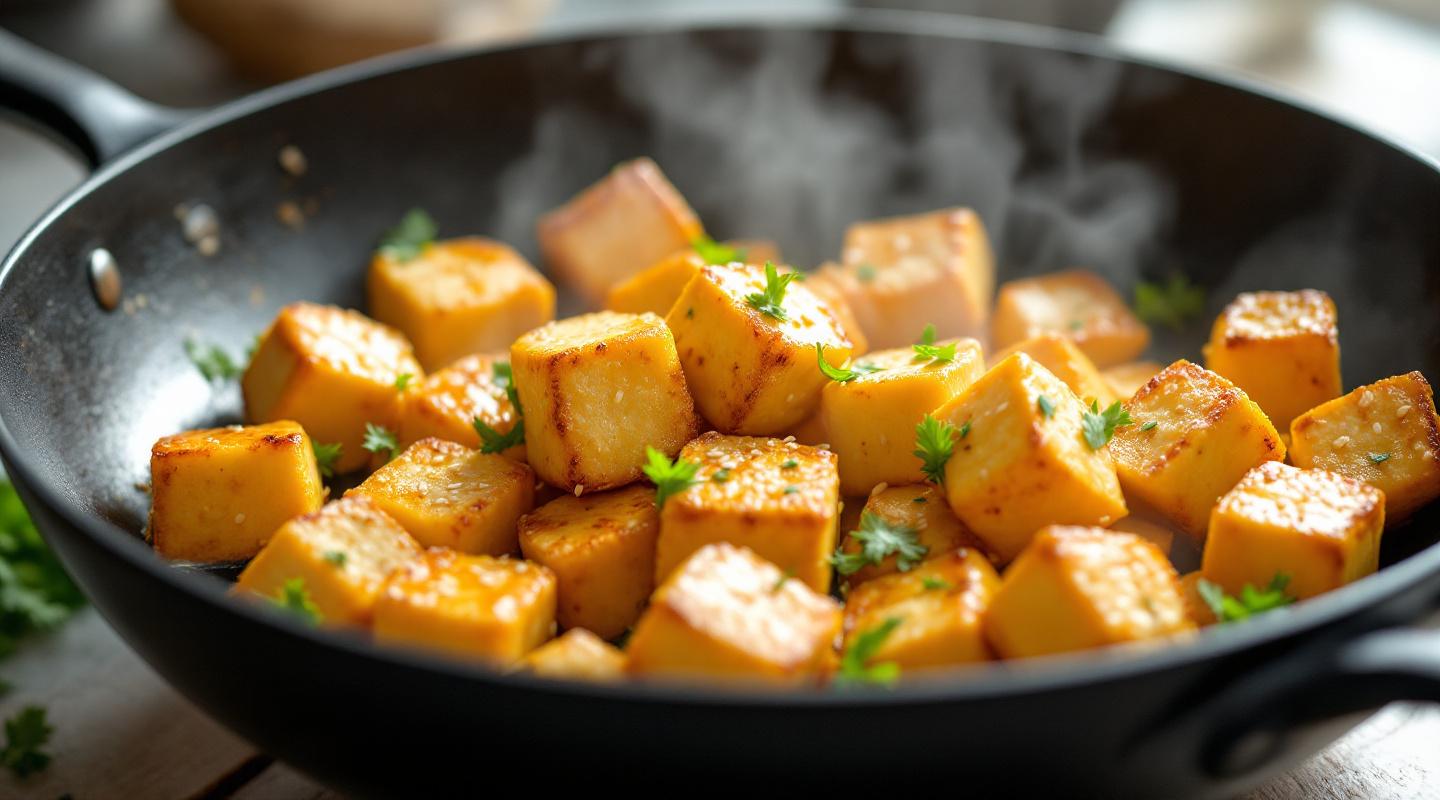
In short
Choosing the right tofu and pan before you begin
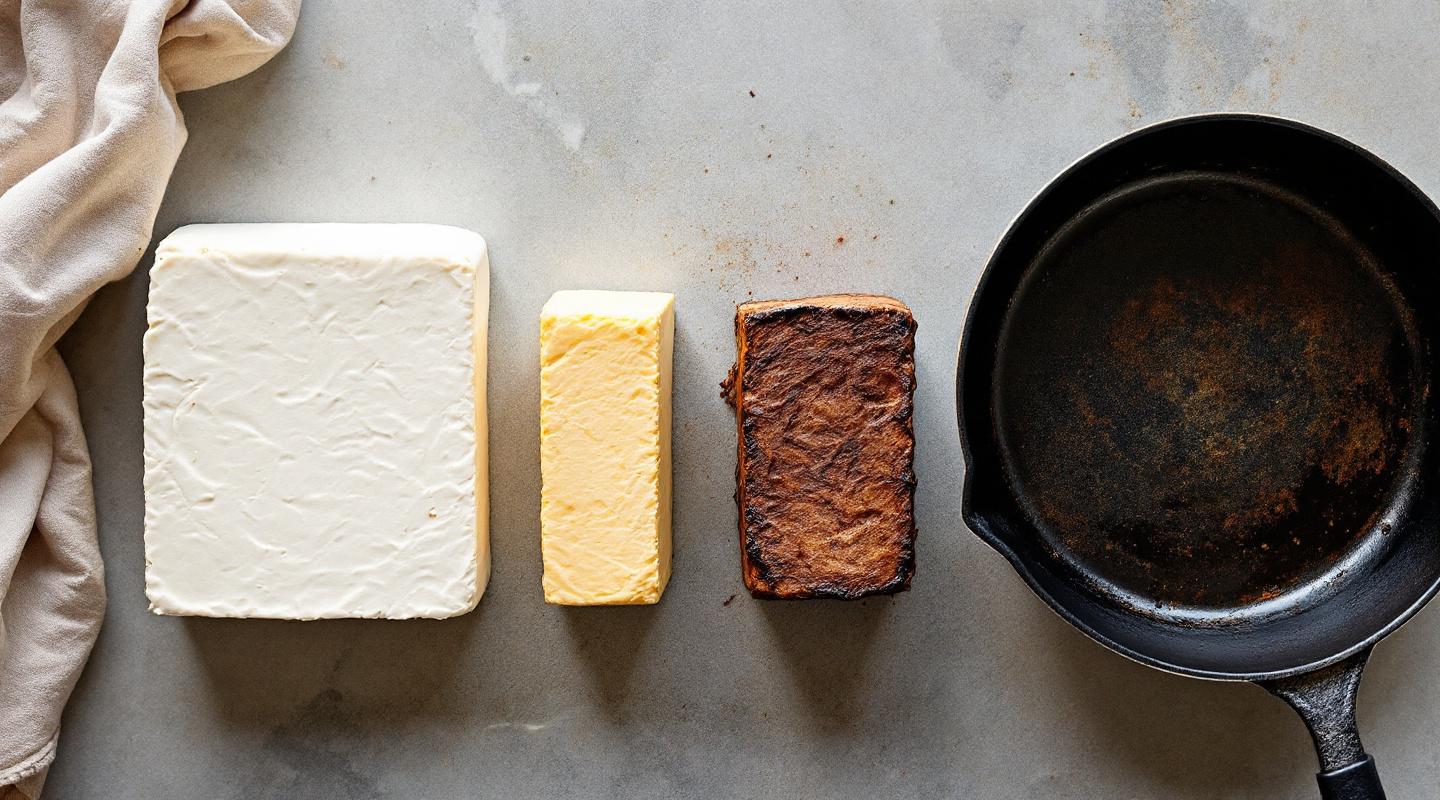
Even before lighting the fire, two decisions will determine everything else: the type of tofu you buy and the pan you take out of the cupboard.
Many people mess up their tofu at this stage. They grab the first package they see on the shelf, throw it in any old pan, and are then surprised to find something mushy and tasteless on their plate.
No need for professional equipment or rare products. You just need to know what you're looking for!
Firm or extra-firm tofu: which to choose?
For pan-frying tofu, forget silken tofu. It contains far too much water and falls apart at the slightest touch of a spatula. What you need is firm or extra-firm tofu.
Firm tofu is the most common type found in supermarkets. It holds up well during cooking, is easy to slice or cube, and develops a beautiful golden color when prepared correctly.
Extra-firm tofu contains even less water. It's denser, easier to handle in the pan, and gives an even crispier result. This is often the type found in Asian grocery stores or organic shops.
For a beginner, regular firm tofu is perfectly fine. If you want to take it a step further and get crispier, go for extra-firm. Both work with the pan-frying method described in this guide.
| Type of tofu | Texture | Pan-fried result | Difficulty |
|---|---|---|---|
| Silken tofu | Very soft | ❌ Collapses | Not recommended |
| Firm tofu | Dense | ✅ Good result | Easy |
| Extra-firm tofu | Very dense | ✅✅ Excellent result | Easy |
Which pan should I use to cook tofu?
The question of the right pan for tofu comes up often, and the answer lies in two main options.
A non-stick pan is the most affordable option. It allows you to cook tofu with little or no oil, which is convenient if you're watching your diet. The tofu doesn't stick easily, and cleanup is quick.
Its only drawback: it doesn't get as hot as a cast iron pan, which can limit the crispiness.
A cast iron or steel pan is the choice of cooks who want a beautiful golden-brown color. It retains heat evenly and allows you to sear tofu at very high temperatures. The result is often superior. On the other hand, it requires a little more maintenance and a longer heating time.
In both cases, the pan must be very hot before adding the tofu. This is a rule that admits no exceptions.
- Non-stick pan: easy to use, little oil required
- Cast iron pan: uniform and deep browning
- Both are suitable for a beginner
- Non-stick pan: maximum temperature limited
- Cast iron pan: heavier, requires specific maintenance
- A pan that is too thin heats unevenly
Prepare the tofu before pan-frying
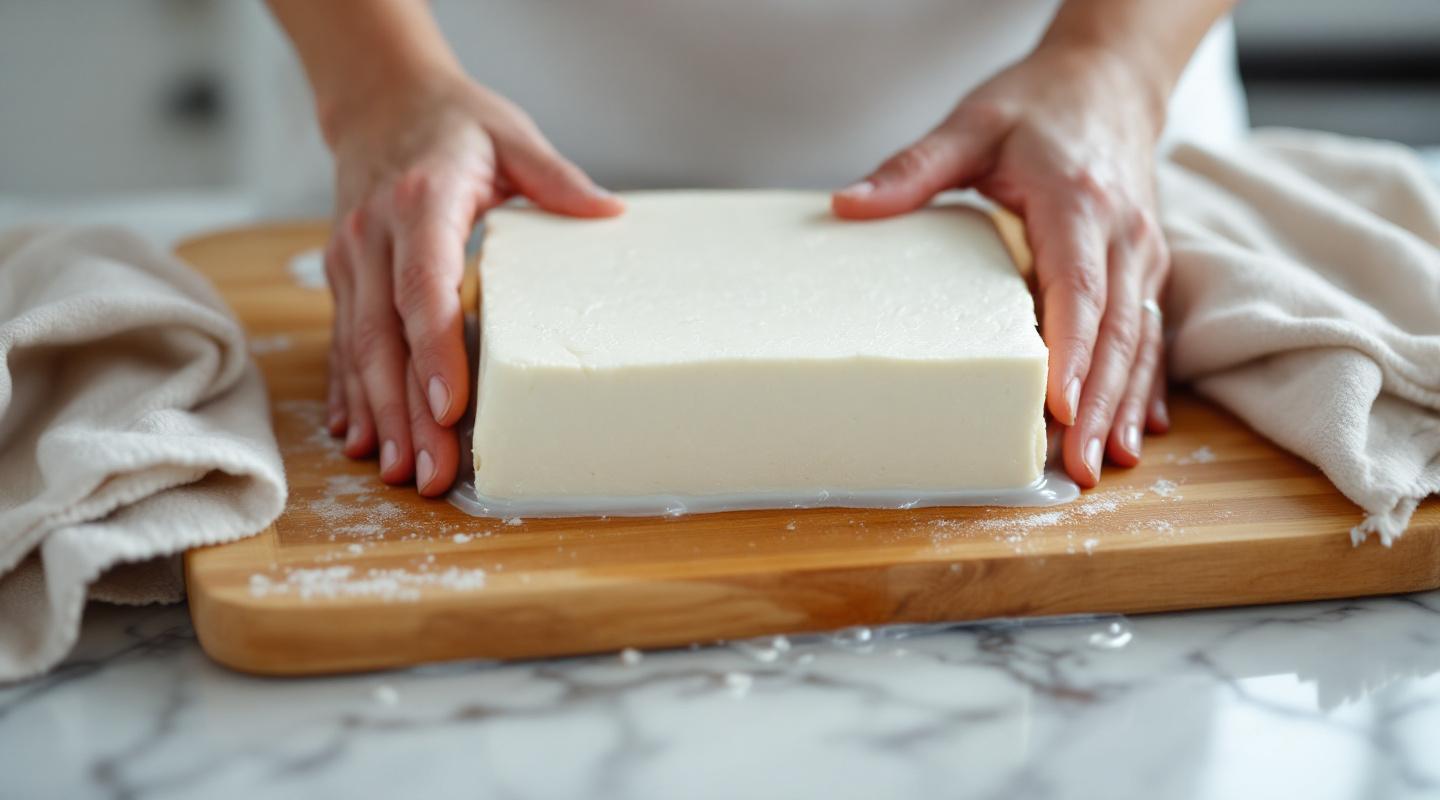
Preparation is the step most people skip. And it's often where everything hinges. Poorly prepared tofu will always yield disappointing results, regardless of the quality of the pan or the heat. Three simple steps make all the difference: pressing, cutting, and coating.
How do you press tofu to remove the water?
The tofu is kept in water. This water must be drained before cooking, otherwise it will evaporate in the pan and prevent the formation of a golden crust.
The simplest method: wrap the block of tofu in a clean cloth or absorbent paper, then place a heavy object on top — a saucepan, a thick book, a cutting board. Leave for at least 20 minutes.
For even better results, press for 30 to 45 minutes, or even an hour if you have the time. Some people use a special tofu press, but it's not necessary. The principle remains the same: apply even pressure to remove the moisture.
Do not press too hard all at once, or you risk crushing the block. Moderate and constant pressure is more than sufficient.
How do I cut tofu for pan-frying?
The way you cut the tofu directly influences the cooking time and final texture. There's no single right answer, but rather different shapes suited to different uses.
Cubes (approximately 2 cm on each side) are the most versatile. They cook quickly, offer multiple browning points, and blend easily into any dish. This is the ideal size for an easy pan-fried tofu recipe.
The slices (approximately 1 cm thick) provide a large surface area in contact with the pan. The result is very crispy on the flat sides, with a still-soft interior. Perfect for those who want something visually appealing.
The triangles are made by cutting the slices diagonally. They cook like the slices but have a different look, often appreciated in Asian dishes.
- Dice: versatile, quick cooking, ideal for beginners
- Slices: large golden surface, contrasting texture
- Triangles: neat presentation, cooked the same as slices
- Sticks: practical for wraps or salads
Whatever shape you choose, try to keep the pieces uniform in size. Uneven pieces cook at different rates: the smaller ones will burn before the larger ones are golden brown.
Cornstarch: the trick for crispy tofu
This is a secret many vegetarian cooks have known for a long time. Sprinkling the tofu with cornstarch before cooking creates a thin coating that will crisp up when it comes into contact with the hot oil. One to two tablespoons is enough for a whole block.
Place your tofu pieces in a bowl, pour over the cornstarch, and gently mix to coat each side. You can also use a freezer bag: seal it and shake gently.
Cornstarch adheres to the surface of the tofu and forms a light crust during cooking. This is one of the most effective tips for crispy tofu.
Add a pinch of salt and a pinch of pepper to the cornstarch before coating. The tofu will be lightly seasoned during cooking.
Steps to properly cook tofu in a pan
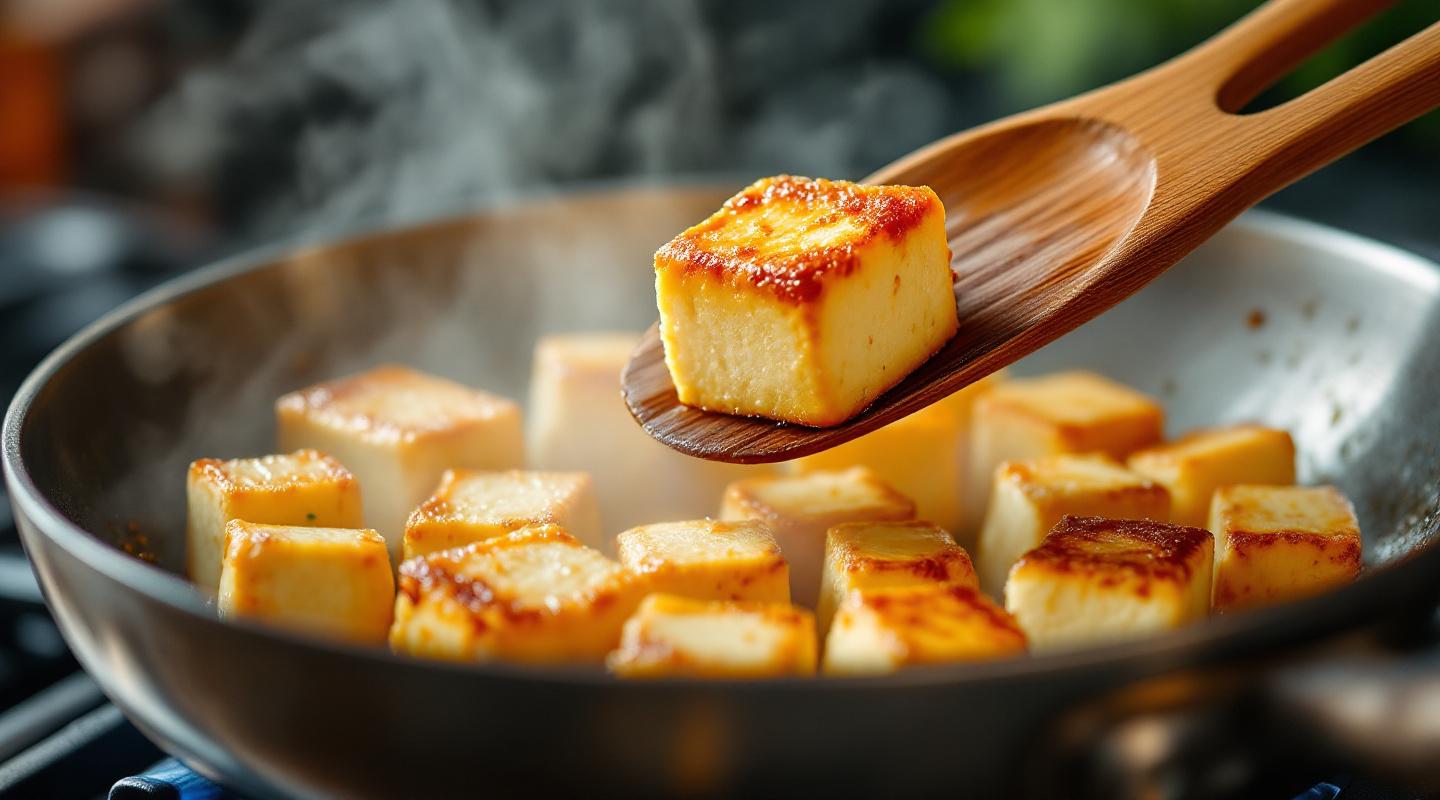
You've pressed the tofu, cut it, and coated it in cornstarch. Now comes the cooking time. This is where many people lose patience and ruin everything by stirring too soon.
The method of cooking tofu in a pan is based on few rules, but they really matter.
The correct temperature and amount of oil
The pan needs to be very hot before adding anything. Heat it over medium-high heat for one to two minutes. Then add one to two tablespoons of oil.
A high-smoke-point oil is preferable: sunflower oil, grapeseed oil, or coconut oil . Extra virgin olive oil is suitable for medium heat, but it doesn't withstand very high temperatures as well.
When the oil starts to shimmer slightly in the pan, it's the right time to add the tofu. Not too much oil : too much will make the tofu greasy rather than crispy. A thin, even layer on the bottom of the pan is plenty.
Adding tofu to a cold pan is a sure recipe for sticky, watery tofu. The pan should already be hot when you add the tofu.
How long should you cook tofu in a pan?
The cooking time for tofu in a pan depends on the shape you choose and the heat of your stove. Here are the guidelines to remember.
| Format | Time per side | Estimated total time |
|---|---|---|
| Dice (2 cm) | 2 to 3 minutes | 8 to 12 min |
| Slices (1 cm) | 3 to 4 min | 6 to 8 min |
| Triangles | 3 to 4 min | 6 to 8 min |
These times are estimates for a medium-high fire. If your fire is lower, allow a little more time. The important thing isn't the time but the color : you're looking for a deep golden hue, not a pale beige.
How do you brown tofu on both sides?
Here's the golden rule for browning tofu : once the pieces are in the pan, don't touch them. Not for at least two or three minutes. The tofu needs time to form a crust before being removed. If you try to move it too soon, it will stick and fall apart.
When a crust has formed, the piece will naturally release from the pan. This signals that it's ready to be flipped. Turn each piece over onto an uncooked side and repeat.
For the dice, you can roll them on all their faces.
For slices and triangles, two main faces are sufficient, but you can also hold the piece on its edge for a few seconds to brown the edges.
Never fill the pan to the brim. Leave space between each piece of tofu. If they touch, they steam instead of grilling, and you end up with mushy tofu.
Cook the tofu in a pan without oil
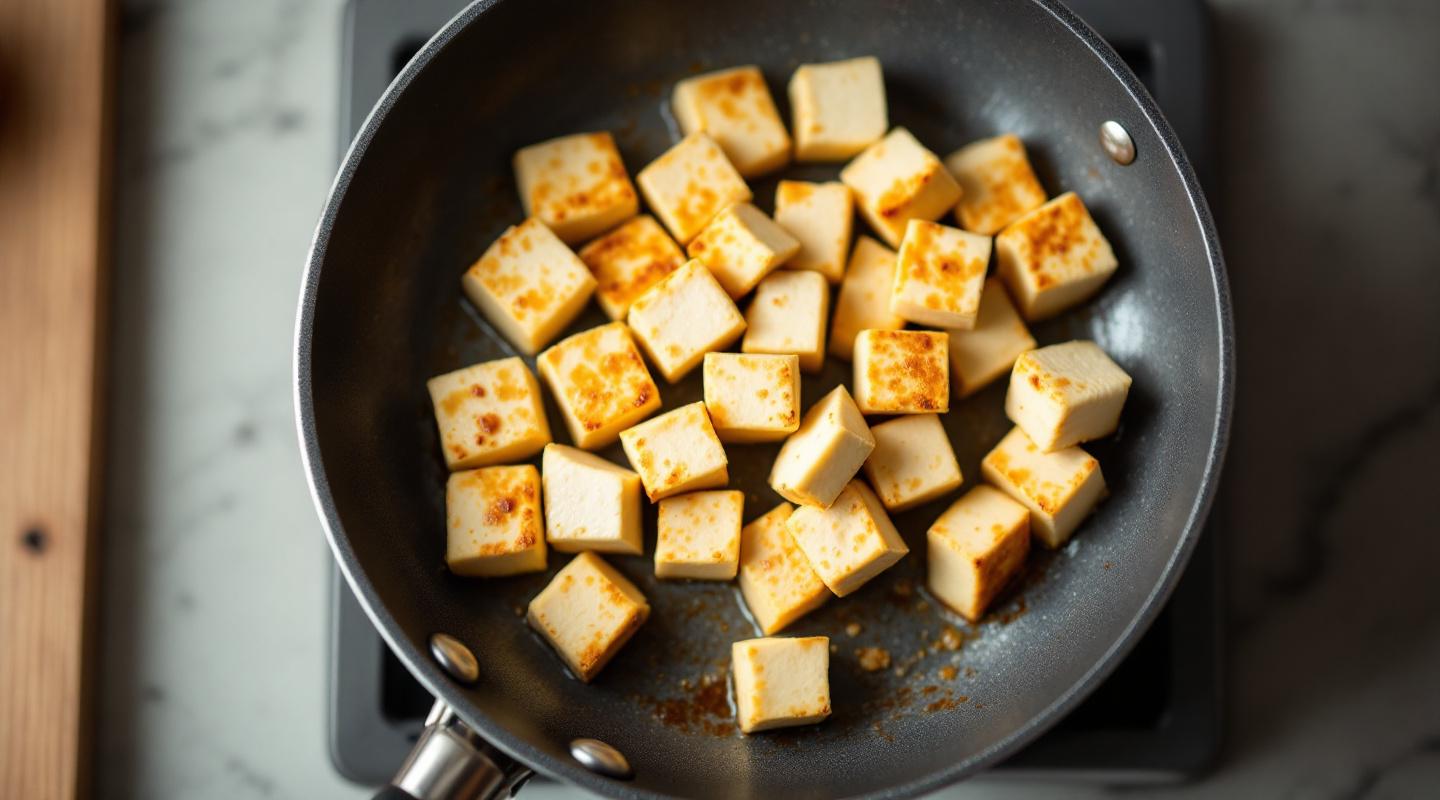
The question comes up regularly: can you really cook tofu in a pan without oil? The short answer is yes, but with a few adjustments. The result won't be identical to cooking with oil, but it can still be quite satisfactory.
Is it really possible to cook without oil?
Yes, it's possible. But let's be honest: without oil, the tofu won't crisp up the same way. Oil plays a role in crust formation and heat transfer. Without it, the tofu may stick slightly to the pan, and the browned surface won't be as pronounced.
That said, cooking plain tofu in a pan without oil is perfectly doable with the right pan. A good quality non-stick pan is essential. It's really the key.
Ceramic pans work just as well. Avoid cast iron or stainless steel without oil, as the tofu will inevitably stick.
Cornstarch remains useful even without oil. It creates a barrier between the tofu and the cooking surface and helps to achieve a light golden texture.
Tips for a satisfying result without oil
There are a few techniques that can compensate for the absence of oil and still produce well-cooked tofu.
- Use diluted soy sauce: a few tablespoons of soy sauce mixed with a little water will act as the cooking liquid. This adds flavor and helps to lightly color the tofu.
- Cover at the start of cooking: a lid for the first two minutes allows the tofu to heat through without burning on the outside.
- Lower the heat slightly: without oil, the heat is concentrated differently. Medium heat, rather than high, prevents the tofu from sticking or burning too quickly.
- Press for even longer: very dry tofu holds up better to cooking without fat.
Without oil, tofu will never be as crispy as it is with. But when properly prepared and cooked, it can still have a nice texture and a pleasant taste.
Season and marinate the tofu for more flavor
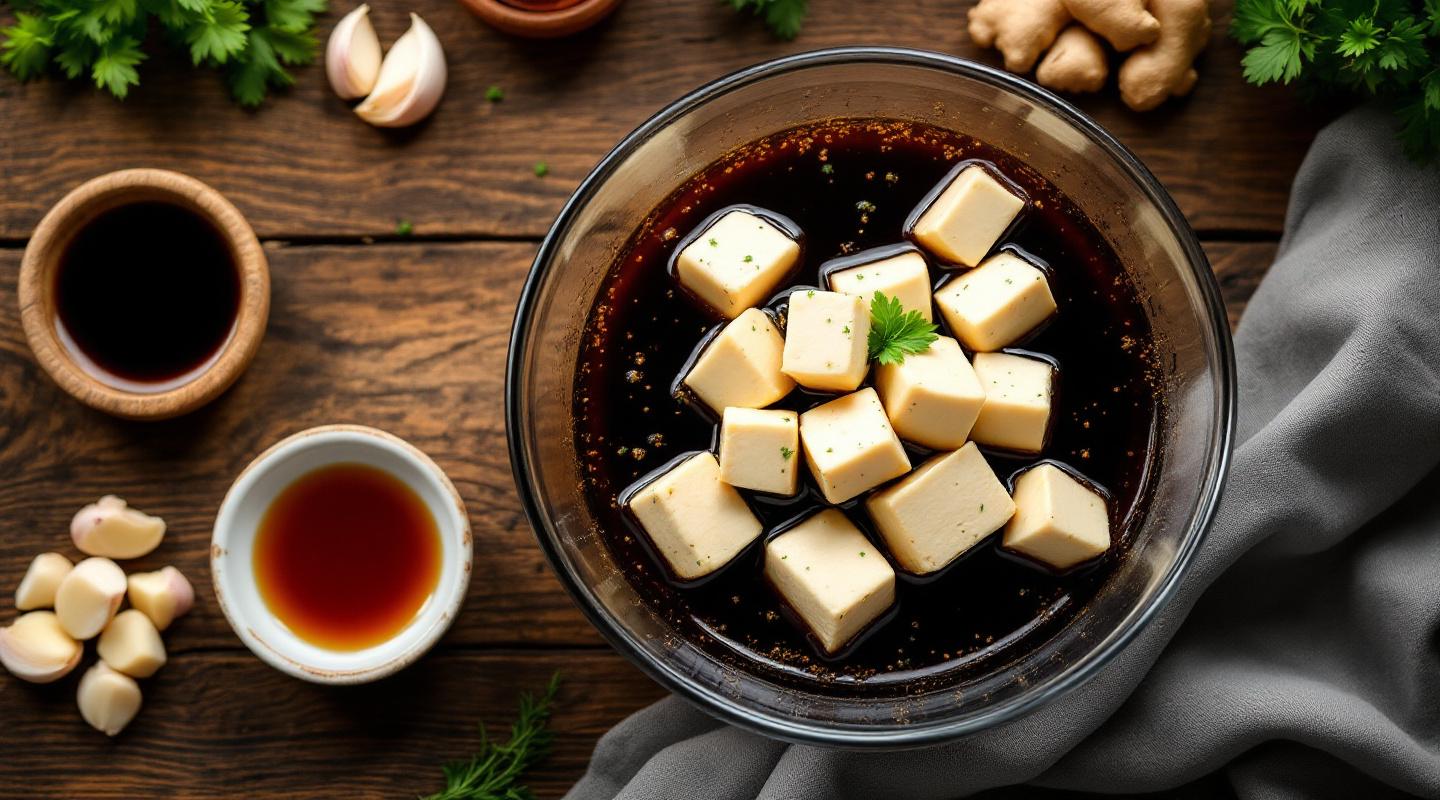
Plain pan-fried tofu is neutral. Very neutral. That's both its weakness and its strength: it absorbs the flavors you give it.
To get truly delicious tofu, you need to take the time to season or marinate it. Nothing complicated, but there are a few rules to know.
Simple marinades for pan-fried tofu
A good marinade for pan-fried tofu doesn't need to be long to prepare. The key is to have three elements: something salty, something acidic, and something fatty.
- Soy-ginger marinade: soy sauce + sesame oil + grated ginger + a squeeze of lime
- Miso-garlic marinade: miso paste diluted in a little water + crushed garlic + mirin or rice vinegar
- Harissa-lemon marinade: harissa + lemon juice + olive oil + cumin
- Wild garlic : find our quick recipe
Marinate the pressed and chopped tofu for at least 30 minutes, ideally an hour. Overnight in the refrigerator gives even deeper flavor.
When and how to season tofu?
The timing of your seasoning makes a big difference to the result. If you marinate the tofu before cooking, separate the pieces well before putting them in the pan and lightly pat off any excess marinade. Too much liquid on the tofu at the beginning of cooking will create steam and prevent it from browning.
To season pan-fried tofu while cooking, add the sauce or spices only when the tofu is already nicely browned.
At the end of cooking, pour one or two tablespoons of soy sauce or marinade directly into the pan. The liquid will quickly caramelize on contact with the heat and coat each piece with a shiny and flavorful glaze.
Easy spice blends to try
Don't feel like making a marinade? A dry spice mix does the trick. Here are a few combinations that work particularly well with tofu.
- Smoked paprika + garlic powder + onion powder: gives a smoky and slightly spicy note.
- Cumin + ground coriander + turmeric: warm and earthy profile, ideal with roasted vegetables
- Mild curry + powdered ginger: simple, quick, very fragrant
- Za'atar + salt + pepper: herbal and slightly lemony
Mix the spices with the cornstarch before coating the tofu. This ensures the seasoning adheres to each piece from the start.
Common mistakes that cause tofu to cook incorrectly
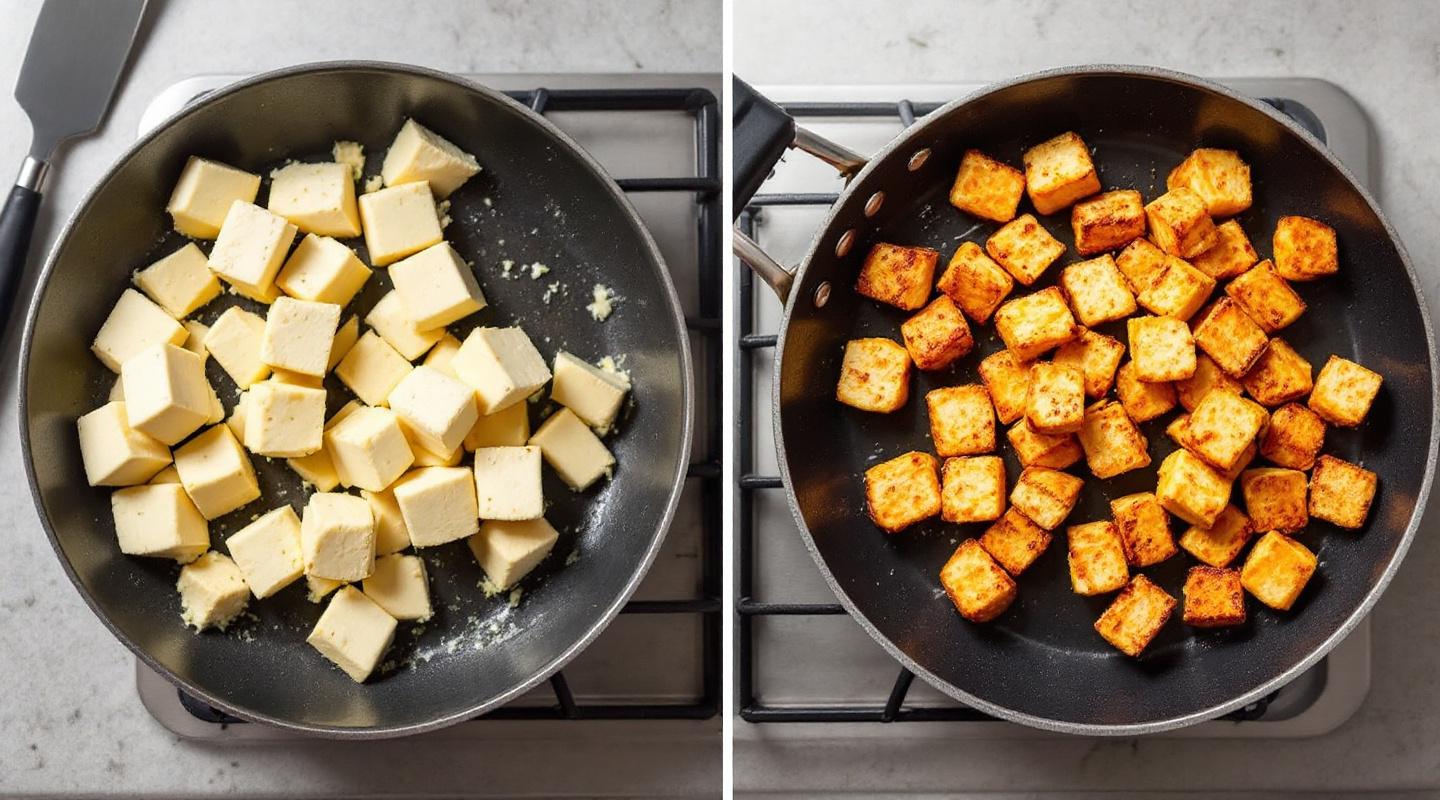
Even with the best intentions, certain habits can ruin the cooking process. Here are the most common mistakes and what to do instead.
Why does tofu stick or remain soft?
Tofu sticks for two main reasons: the pan wasn't hot enough to begin with, or the tofu still contained too much water. In both cases, the moisture prevents a crust from forming, and the tofu ends up sticking to the cooking surface.
Tofu remains soft when the pan is overcrowded. Too many pieces together release steam in a confined space, and this steam steams the tofu instead of grilling it.
The result: a spongy, pale texture that is anything but appetizing.
To cook tofu perfectly, work in small batches if necessary. It's better to do two batches than one failed attempt.
Another common cause is cooking at too low a temperature. Tofu needs direct heat to brown. Low heat results in tofu that is cooked but never crispy.
Bad habits to break now
- Constantly stirring the tofu is the number one mistake. Leave it alone. It will separate on its own when it's ready.
- Skipping the pressing step: even with extra-firm tofu, excess water is real. Always press.
- Add the sauce at the beginning of cooking: the sugar in sauces burns quickly at high temperatures. Add it at the end of cooking.
- Use a cold pan: already mentioned, but it's worth repeating. Always heat the pan first.
- Cut pieces that are too small: they will burn before they brown. Keep them above 1.5 cm.
Most tofu failures stem from impatience. Pressing too quickly, cooking too quickly, stirring too quickly. Tofu rewards those who take their time.
If you're using a sweet marinade (honey, maple syrup, teriyaki sauce), pay close attention towards the end of cooking. Sugar caramelizes very quickly and can burn in just a few seconds.
Some practical questions
Is it always necessary to press tofu before cooking it in a pan?
Yes, in the vast majority of cases. Even firm or extra-firm tofu contains water from its preservation. If this water isn't removed before cooking, it will evaporate in the pan and prevent a golden crust from forming. The result will be mushy, unappetizing tofu. A minimum of 20 minutes of pressing is sufficient for thin cubes; allow 30 to 45 minutes for thick slices.
Can cornflour be replaced with something else to make tofu crispier?
Yes. Potato starch works similarly and gives a slightly thicker crust. Rice flour is also a good option, especially used in Asian cuisine. Regular wheat flour can be used in a pinch, but the result is a little less light. In all cases, the principle remains the same: a thin layer of starch on the pressed and sliced tofu before cooking.
How long can you store pan-cooked tofu?
Pan-fried tofu will keep for up to 3 to 4 days in the refrigerator, in an airtight container. It will be less crispy after refrigeration, which is normal. To restore its texture, reheat it for a few minutes in a hot pan without adding oil, or for a few minutes in a hot oven. Avoid using a microwave, as this will make it even softer.
Which oil is best for pan-frying tofu?
Oils with a high smoke point are best suited: sunflower oil, grapeseed oil, deodorized coconut oil, or peanut oil. They withstand high temperatures well without breaking down or developing a bitter taste. Sesame oil, on the other hand, is too fragrant and burns quickly: use it towards the end of cooking to add flavor, not as the main cooking oil.
Does marinated tofu need to be dried before going in the pan?
This is highly recommended. Drain the pieces and pat them dry with paper towels before placing them in the pan. Too much liquid marinade will create steam when it comes into contact with the heat and slow down the browning process. If your marinade contains sugar or honey, this precaution is even more important: excess sugar burns very quickly in a very hot pan.
