
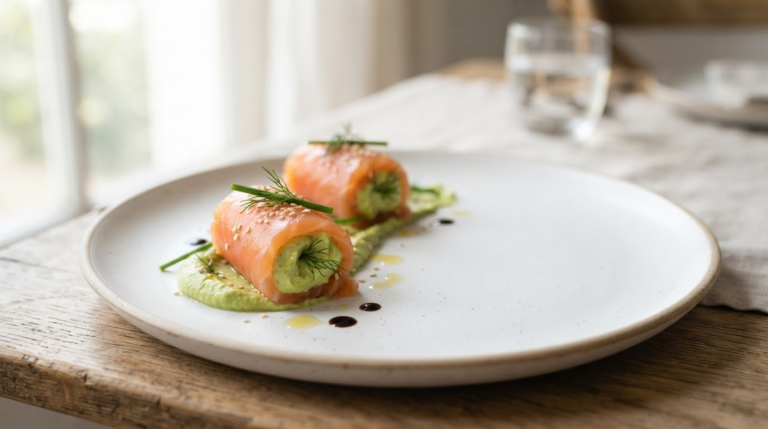
Entertaining without spending the afternoon on it, while giving the impression of having taken care of every detail: that's exactly what a well-thought-out, easy and chic entrance allows.
The classic trap is believing that you need rare products or a chef's technique to succeed. In reality, the difference lies elsewhere.
It is played out in the way the elements are arranged on the plate, playing with colours and the contrast between crunchy and melting.
The real secret to an easy and chic starter: presentation rather than budget
Most of the ideas circulating online are similar: avocado and shrimp verrines, zucchini carpaccio, salmon tartare. The recipes are decent, but they often stop at the list of ingredients and preparation time.
What really makes the difference between an appetizer that looks cobbled together and one that looks well-prepared is the presentation on the plate : height, contrast, empty space.
This is also the conclusion of chef Clément Reeves, who reminds us that plating is based on five factors: color, arrangement, balance, texture and height (table-privee.fr, August 28, 2025).
Playing on the contrast of textures and colors on the plate
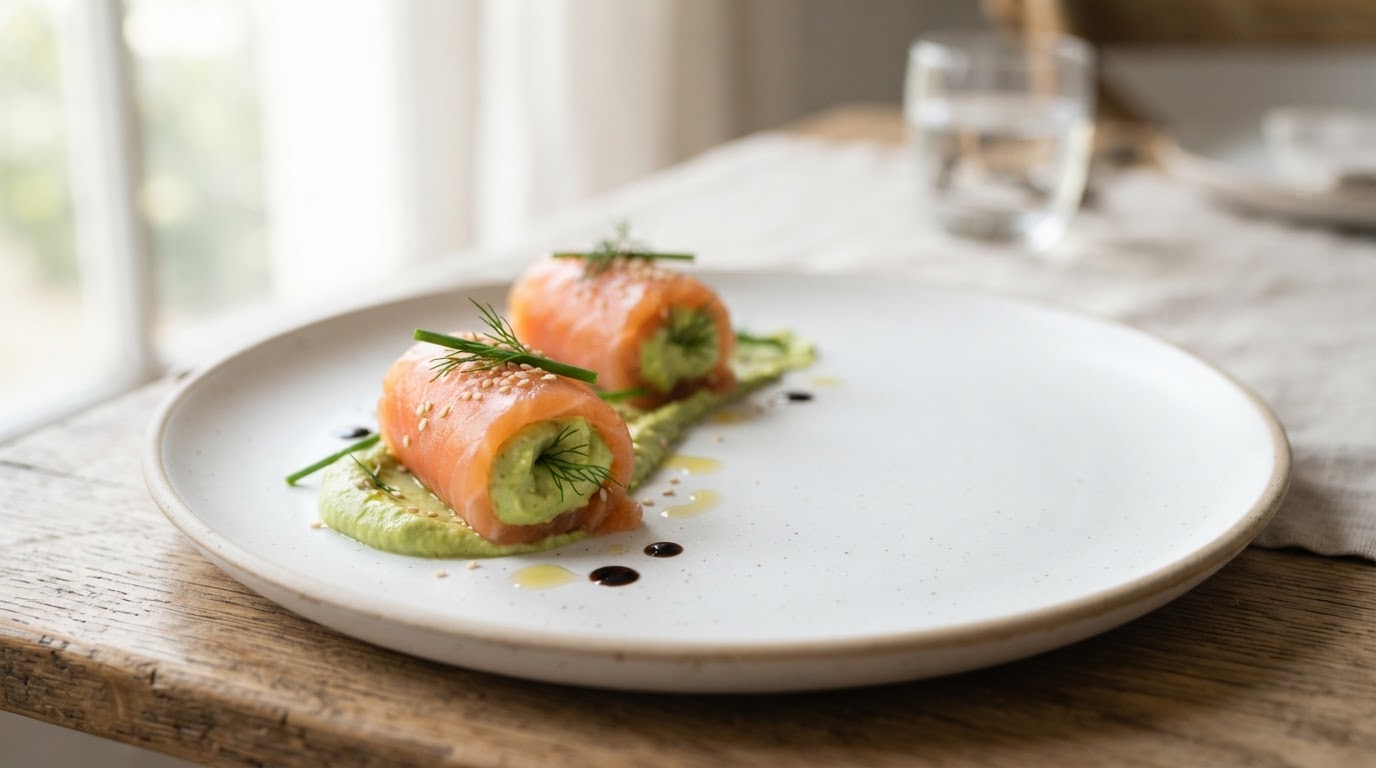
An appetizer that looks elaborate almost always mixes at least two contrasting textures : a crunchy element and a melting or creamy element.
A carpaccio of raw zucchini provides a crunchy texture. A fresh cheese mousse or a drizzle of cream adds a creamy texture. Together, they create an impression of sophistication that neither element alone would achieve.
When it comes to colours, opt for a sharp contrast rather than a uniform palette: a bright green next to pink or white is much more eye-catching than a completely beige plate.
Chef Michael Welch points out that a dish overloaded with oils, spices, or microgreens detracts from the presentation. In the same article, the professional platform Lightspeed more broadly recommends never exceeding six different elements on a single plate (Lightspeed, August 9, 2019).
Simple cold appetizers that have a real impact
Cold starters remain the most practical for entertaining : they can be prepared in advance and require no last-minute adjustments in front of guests.
Here are five accessible ideas, with their actual preparation time and the possibility of putting them together in advance.
| Entrance | Time | Can be prepared in advance |
|---|---|---|
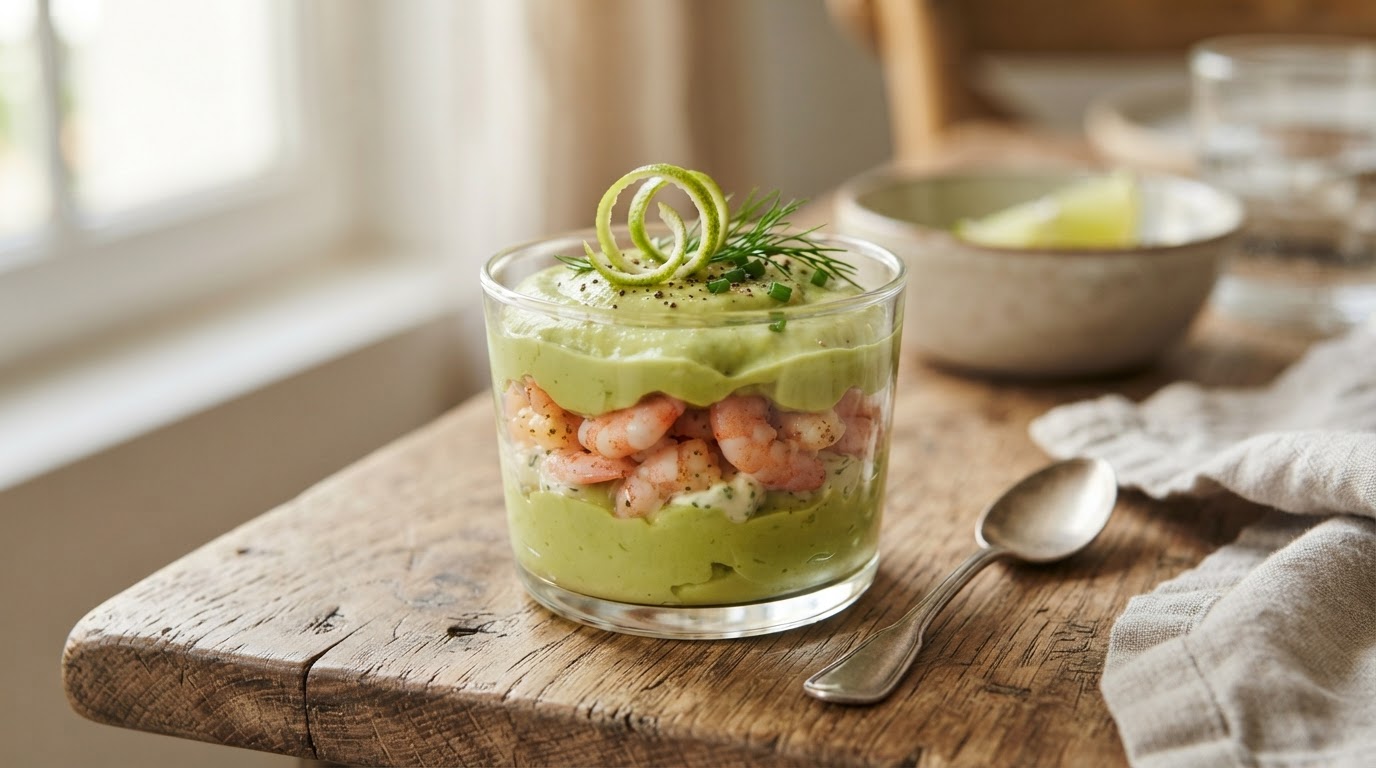
| Avocado, shrimp and lime verrine | 15 min | Yes, up to 2 hours before (lime at the last minute) |
| Zucchini carpaccio with parmesan | 15 min | Yes, pre-sliced courgettes |
| Salmon tartare with dill | 20 min | Partially, season just before |
| Heirloom tomatoes and burrata | 10 min | No, burrata releases water if it's cooked too early |
| Smoked salmon, cream cheese and chive roll | 20 min | Yes, until the day before |
Typical example: on a Tuesday evening, friends announce their arrival two hours before dinner. The avocado and shrimp verrine can be assembled in 15 minutes with whatever is already in the refrigerator, and the lime juice, squeezed just before serving, keeps the avocado nice and green.
Hot starters that remain affordable
A hot starter often seems more technical than a cold version, even though some recipes can be prepared just as quickly.
The baked eggs with smoked salmon are cooked in a bain-marie in about ten minutes and are presented directly in their small ramekin, which simplifies plating.
The mini crustless quiches, poured into muffin tins, cook in about twenty minutes and unmold easily for a neat individual presentation.
Typical example: for a Sunday lunch with the family, mini crustless quiches prepared the day before and simply reheated for 5 minutes in the oven avoid any stress when it's time to sit down to eat.
Three simple tools for plating without professional equipment
You don't need restaurant equipment to achieve a clean presentation. Three tools are all you need, all available in supermarkets.
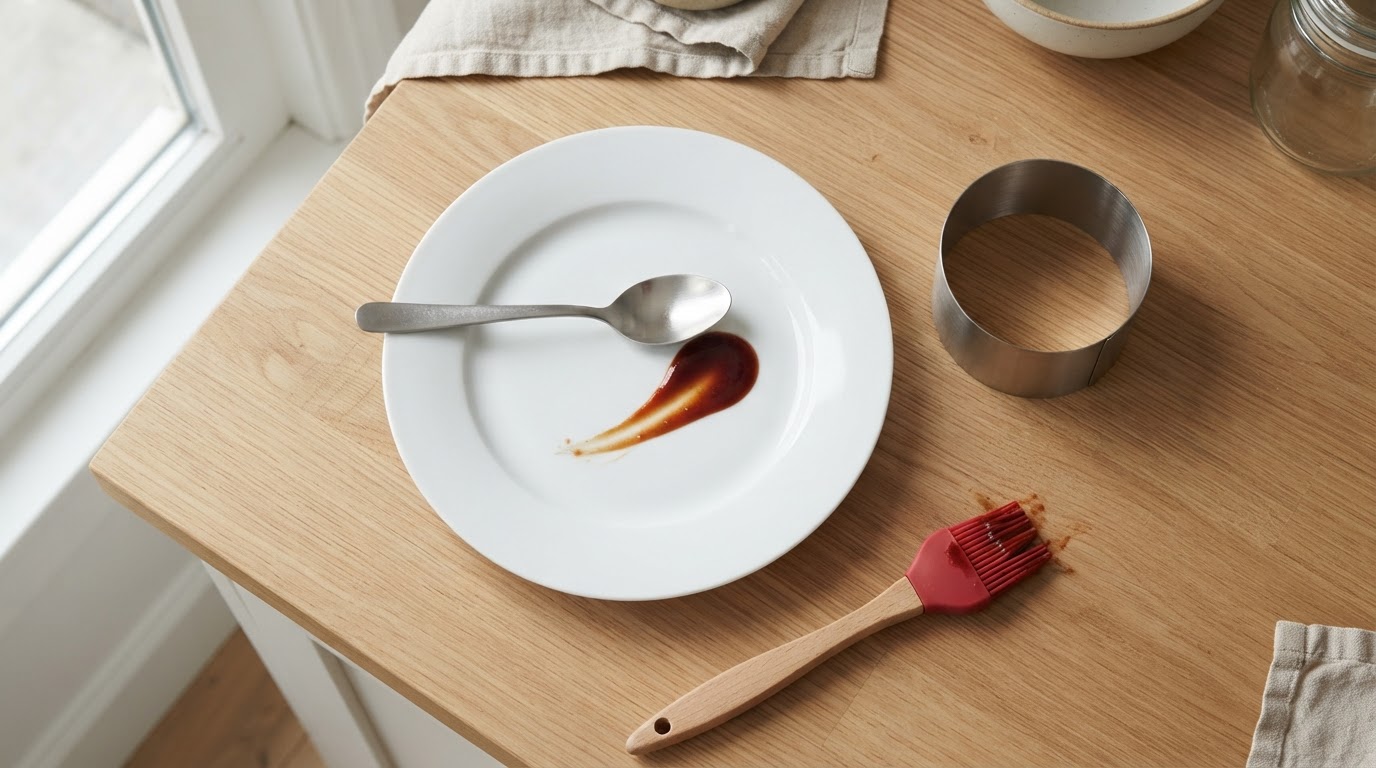
The stainless steel ring cutter allows you to mold a puree or tartare into a clean shape, without the overflows of a spoonful of plating.
A silicone brush spreads a sauce in a wide line at the base of the plate before placing the other elements on top, for a neat effect.
The back of a regular spoon can be used to spread a thick sauce into a comma shape along the edge of the plate, without a piping bag.
In practice: before plating, place the main element first, then the sauce or garnish around it, never the other way around. This prevents staining the edge of the plate along the way.
Sophie, a dietician quoted on the Cheef website, sums up the idea: taking two extra minutes to plate a meal changes the perception of the meal, without changing the recipe (Cheef, June 4, 2026).
Prepare your entrance in advance without sacrificing presentation
On the Meilleur du Chef forum, a user who prepared a spinach, smoked salmon and cream cheese roll for twenty guests testifies: "it is prepared the day before, it is very impressive with this green-pink-white, and what's more, it is very good" (Meilleur du Chef forum, message of October 27, 2007).
This testimony illustrates the principle well: a marked color contrast and a clean rolled texture hold up very well a day in advance of preparation, without losing their effect when serving.
Some ingredients don't keep well on the plate: avocados oxidize and brown in less than an hour when exposed to air, and fresh tomatoes release water that washes out the presentation. Reserve the final arrangement of these elements for the minutes before serving.
Conversely, wrapped preparations (rolls, closed verrines, tarts) withstand a night in the refrigerator very well, covered with film in contact.
In summary
An easy and chic starter does not depend on a high budget or a chef's technique, but on thoughtful presentation: contrast of textures, bold colors and free space left on the plate.
A cookie cutter ring, a silicone brush and the back of a spoon are all you need to reproduce these effects without professional equipment.
To save time on the day, favour recipes that can be prepared the day before (rolls, closed verrines) and reserve delicate ingredients (avocado, fresh tomatoes) for the final plating.
Practical questions
- What is an easy starter idea that requires no special equipment?
Zucchini carpaccio with parmesan can be made with a simple mandoline or peeler: thin slices arranged in a rosette, a drizzle of olive oil and parmesan shavings are all you need for a neat effect in 15 minutes. - How to plate a simple starter so that it looks chic?
Place the main element slightly off-center, add the sauce in a clean line with the back of a spoon, and leave a third of the plate empty rather than filling it completely. - Can you prepare an elegant starter the day before without sacrificing presentation?
Yes, for wrapped preparations like roulades or sealed verrines, covered with cling film. No, for ingredients that oxidize or release water (avocado, fresh tomatoes, burrata), which should be assembled just before serving. - What budget should you plan for a starter that looks elegant?
The ingredients mentioned in this article (zucchini, eggs, cream cheese, and a small amount of smoked salmon) generally cost less than 3 to 4 euros per person, based on supermarket prices at the time of writing. The elegant effect comes from the presentation, not the price of the ingredients.
