
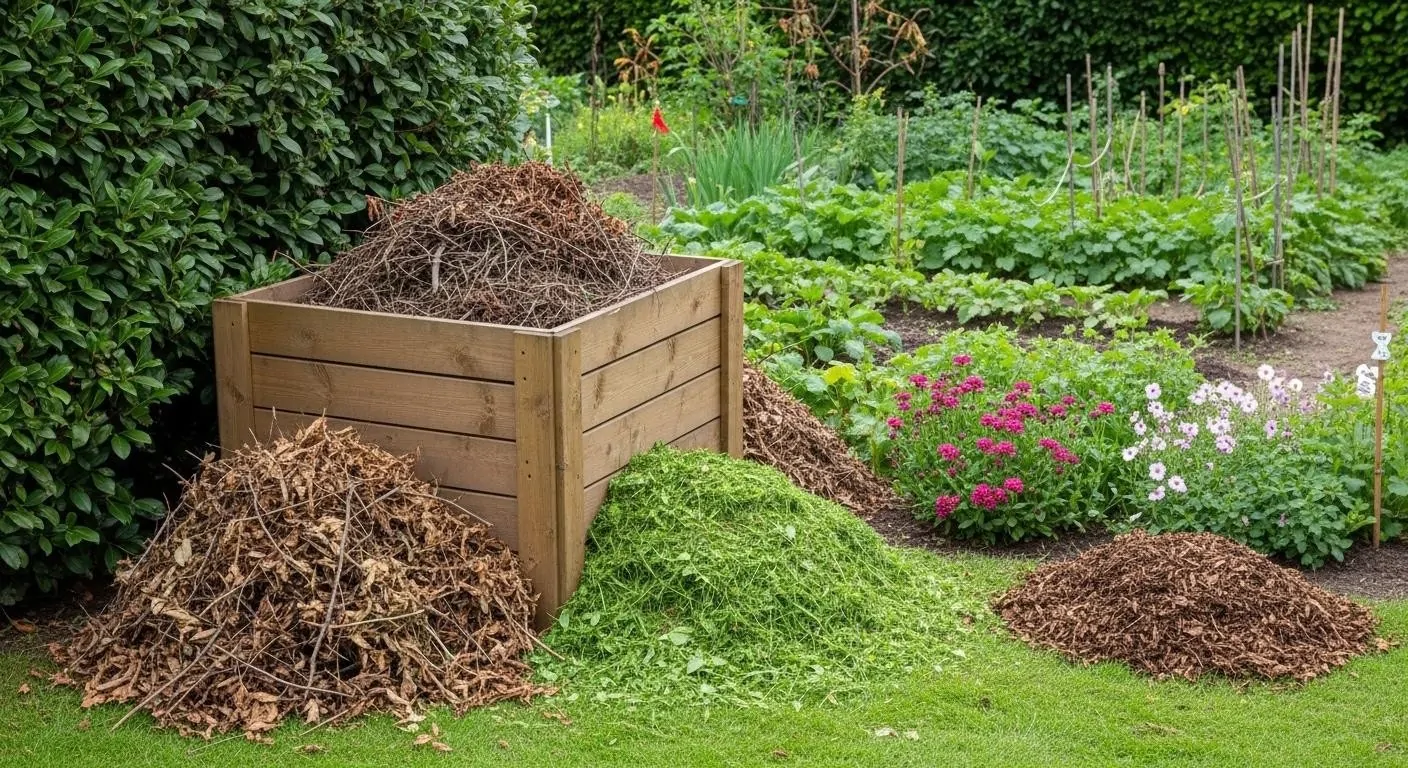
You walk through your garden and find yourself facing a pile of accumulated grass clippings, leaves, and prunings. Should you get rid of them or try to recycle them into a useful resource?
Making the most of your green waste improves your soil health, reduces trips to the recycling center, and lowers your expenses. Adopting these practices means choosing a more natural and self-sufficient garden, without resorting to chemicals.
How to use green waste for a natural garden?
Grass clippings, branches and leaves from garden maintenance can all be reused.
Each type of waste has its use: grass clippings serve as light mulch, dead leaves enrich the soil, and shredded branches produce Ramial Chipped Wood (RCW).
Instead of throwing these waste materials away, they can be integrated into a virtuous cycle that nourishes the soil. Remember to consult local regulations on green waste management; for example, the website maaf.fr provides a wealth of information.
| Type of waste | Ideal use | Benefit for the garden |
|---|---|---|
| Lawn mowing | Mulching at the base of the crops | Protection against evaporation, reduced watering |
| Fresh branches and pruning | Wood chipping | Stimulation of microbial life, increased fertility |
| Fallen leaves | Compost or leaf mold | Soil structure improvement |
| Pruning waste | Natural borders, insect shelters | Promotes local biodiversity |
Each season brings its own materials: grass clippings in spring, leaves in autumn, prunings in winter. This recycling reduces waste and promotes biodiversity in your garden.
Keeping these resources on site helps to enrich the soil and avoid unnecessary trips to the landfill.
What are the ecological and economic advantages?
Recycling your green waste helps reduce the volume of waste to be disposed of and lightens your garbage.
By using mulch, compost or wood chips, you improve the soil's ability to retain water, which reduces the frequency of watering and limits the purchase of chemical fertilizers.
According to various experiences, a regular supply of organic matter promotes humus formation and garden productivity.
Many gardeners also notice a decrease in their garden maintenance expenses as soon as they adopt these natural practices.
Gardening tips to transform your green waste
The transformation begins with the next mowing or leaf collection. Here are some tips to make the most of your green waste.
Use grass clippings as mulch
Grass clippings, dried for a few hours and then spread in a thin layer around vegetables or shrubs, protect the soil from evaporation and limit the growth of unwanted weeds. Be careful not to use too much to avoid a mushy effect.
Two spaced-out applications are often more effective, especially during wet periods. This mulch is well-suited to tomatoes, potatoes, or raspberries, while roses prefer drier soil.
Dead leaves: compost or homemade potting soil
In autumn, collect the fallen leaves of linden, oak or beech trees, which decompose easily. Pile them up in a corner, moisten them and shred the tougher ones to speed up the process.
Some leaves, such as those of the hazel or eucalyptus tree, should be used sparingly. After several months, you will obtain an aerated compost, ideal for enriching your flowerbeds in the spring.
Branches and pruning: making wood chips
Branches from tree pruning can be chipped to produce ramial chipped wood. Spread a layer a few centimeters thick under fruit trees or perennials to stimulate microbial life and improve soil fertility.
It is advisable to avoid coniferous trees such as thuja or cedar. This natural mulch helps retain moisture and promotes plant growth.
Pruning along edges and shelters for biodiversity
Flexible branches, such as those of willow or hazel, can be used to create borders or shelters for insects and small animals.
Stacked against a wall or woven together, they protect plants and attract useful helpers such as ladybugs or hedgehogs.
This type of development promotes biodiversity and limits the amount of waste to be disposed of.
- Mulching to save water
- Homemade compost to structure the soil
- Shredding branches to enrich the soil
- Natural borders for wildlife
Seasonal tips for adapting plant recycling
The recycling of green waste varies depending on the season and the weather.
Here's how to adapt your practices throughout the year:
Autumn: Gathering and Transforming
In autumn, regularly collect leaves and prunings to prevent them from fermenting. Sort them according to their use: compost, mulch, or storage for potting soil.
The branches can be tied into bundles to dry, then used in winter for kindling or protecting hedges. Pruning fruit trees at this time prepares the wood for chipping in the spring.
Spring: Growth and Anti-Waste
In spring, grass clippings are frequently collected and can be used as mulch or gradually added to compost.
Monitor temperatures to prevent the soil from drying out and adjust your fertilization according to the plants' needs. These seasonal adjustments contribute to the garden's self-sufficiency.
Summer and winter: adapting your practices
In summer, mulching protects the soil from the heat and helps conserve water. Take advantage of this time to collect dry wood for heating and to prepare shelters for the autumn.
In winter, continue to enrich the flowerbeds with mature leaves and wood chips. Storing prunings and planning planting supports will ensure optimal growth in spring.
Budget-friendly tips for a chemical-free garden
By adopting these gardening tips, you can reduce your use of chemical fertilizers and limit your waste. Mulching, composting, or nettle manure are natural and economical solutions.
Your soil becomes more resilient, your flowerbeds more robust, and your garden maintenance budget decreases. These simple steps are easy to share and adapt to your needs.
What are the health benefits for the garden and the gardener?
Fewer chemicals, more diversity: the garden becomes a healthy and vibrant space. Children can safely enjoy the vegetable patch, and beneficial wildlife finds refuge in natural shelters.
Observing, testing and passing on these tips helps to improve well-being in the garden while respecting the environment.
Recycling green waste in the garden
Which green waste should not be composted?
It is best to avoid composting conifer branches, very tough leaves, or diseased plants. These materials decompose poorly or can transmit diseases to the soil.
Can mulch replace fertilizer?
Mulching helps to retain moisture and gradually enrich the soil, but it does not always replace the need for fertilizer if the soil is very poor.
It is advisable to supplement with compost or natural amendments if necessary.
How to limit bad odors in compost?
To avoid odors, it is necessary to balance the inputs between dry materials (leaves, branches) and wet materials (grass clippings, peelings), and to aerate the compost pile regularly.
