
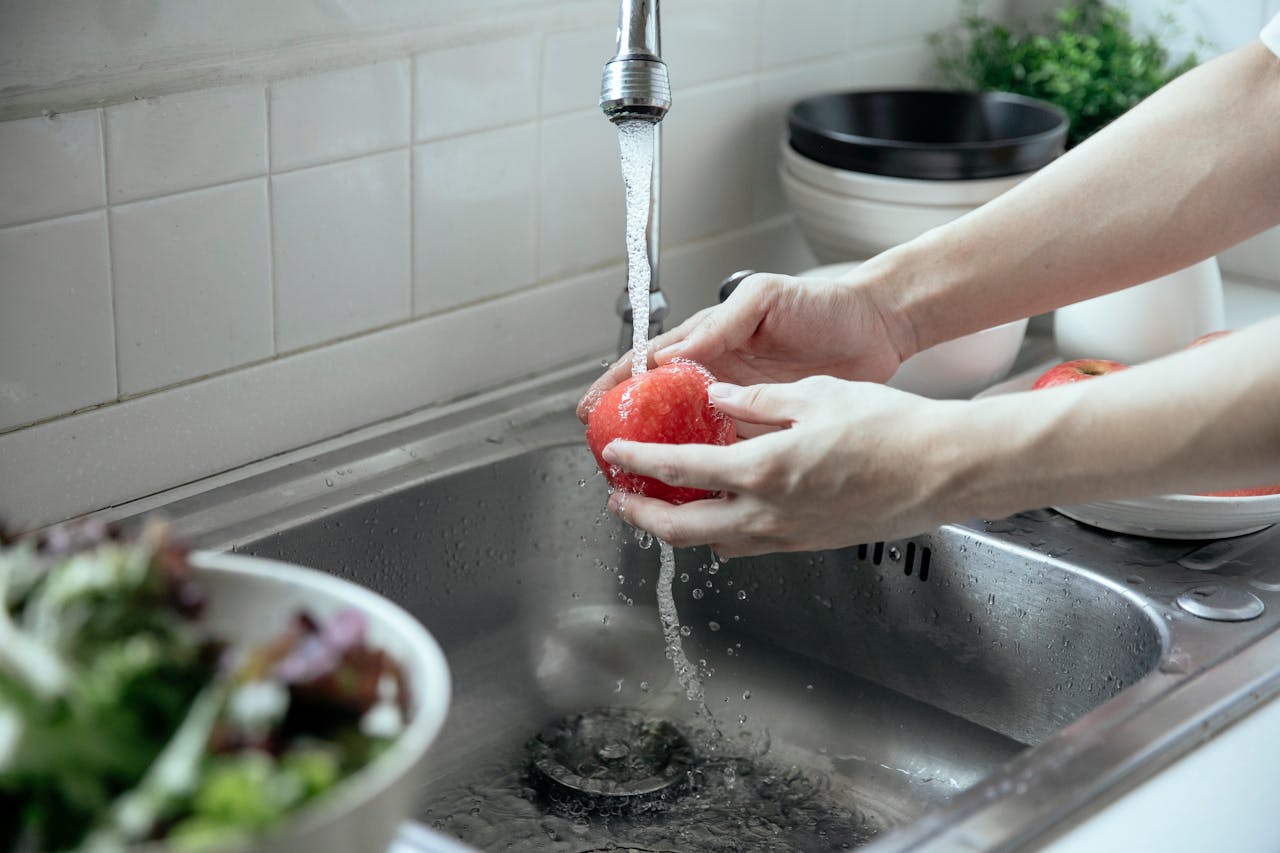
Water is essential in the kitchen. It is used for preparing meals, but also for carrying out basic tasks.
In this regard, it should be noted that in most homes, the tap is generally hard. This means that it contains a more or less significant amount of limescale.
While not dangerous to your health, it does have some drawbacks for cooking. Discover them in this guide.
The drawbacks regarding the dishes and the taps
The presence of limescale in the water can impact the appearance of your kitchen. Indeed, when this water is used to wash utensils, it leaves white marks on glasses, pots, bowls, etc.
These stains are often difficult to remove. The presence of whitish stains at the bottom of the sink and on the countertops should also be noted . All of this can detract from the kitchen's appearance
Taps are also affected by limescale. Limescale creates deposits that can reduce the water flow from taps.
Furthermore, it is possible to minimize its impact by using CO₂ and salt water softeners.
Unfortunately, they impose constraints that are not always pleasant. This is the case with salt consumption, pollutant emissions, high cost, etc.
Thankfully, it is now possible to opt for a salt-free water softener to soften the water.
The drawbacks regarding household appliances and hygiene
Another consequence of the presence of limescale in the water you use in the kitchen is the reduction of the lifespan of your appliances.
Indeed, it accumulates on the heating elements and pipes of these devices, which creates fouling.
Consequently, the devices become more fragile. This contributes to reducing their lifespan… These include, among other things:
- Kettles;
- Coffee makers;
- Dishwashers;
- Blenders, etc.
The presence of limescale promotes bacterial growth. These bacteria thrive in such environments, which can pose a significant hygiene problem in the kitchen.
The disadvantages for homeowners
Overconsumption is one of the consequences of limescale in the water. Indeed, limescale deposits on appliance heating elements force them to work harder.
For example, a coffee maker takes longer to heat coffee when its heating elements are scaled up. This leads to increased electricity consumption and additional costs.
But that's not all! There is also an overconsumption of water and detergents for cleaning kitchen utensils when limescale is present.
In summary, despite the benefits associated with consuming limescale, its presence in water is not without drawbacks for cooking.
First, it leaves marks on utensils and faucets. Second, it makes electrical appliances less efficient and reduces their lifespan.
Finally, it promotes the proliferation of bacteria and the overconsumption of electricity, water and detergents.