
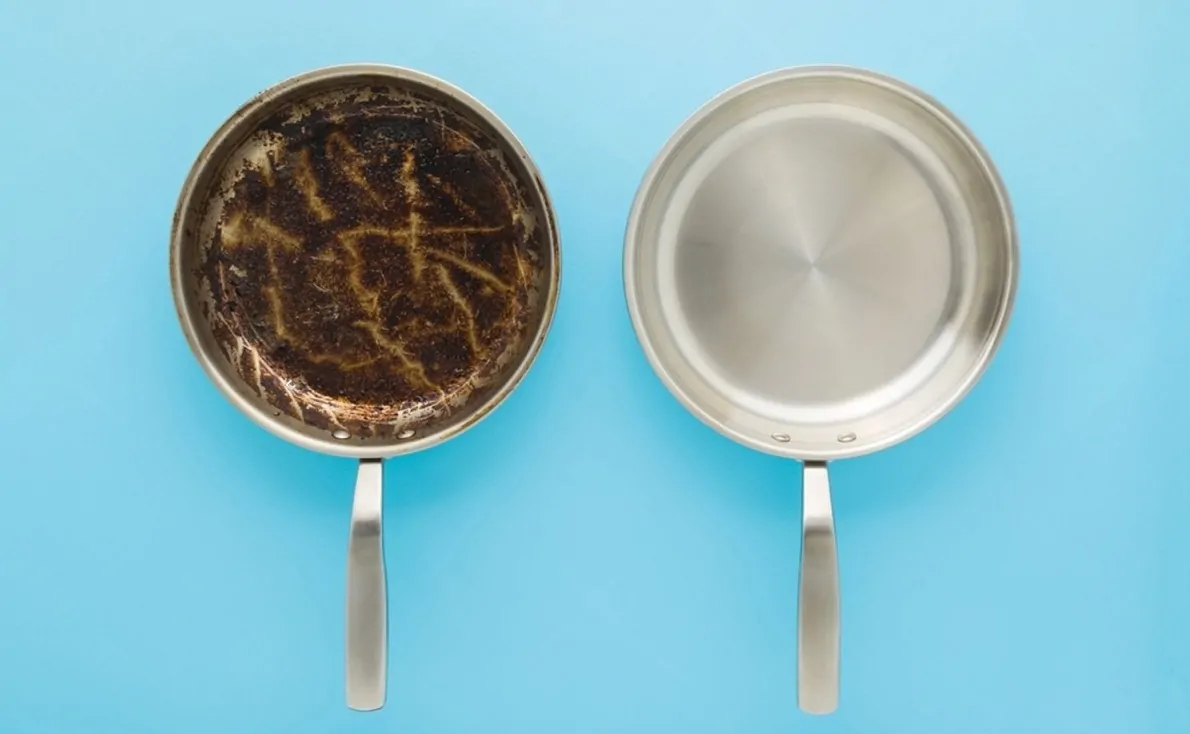
You've just discovered a beautiful stainless steel pan with a blackened base from the heat and you absolutely want to clean it? Don't panic!
Whether it's a burnt stainless steel saucepan or a frying pan that has suffered the ravages of overheating (we've all been there), stainless steel can take a lot of heat.
With the right methods explained in this guide and a little patience, you can restore most of your stainless steel utensils to their original shine!
Stainless steel remains the material of choice for professionals due to its durability and hygienic qualities. Unfortunately, it's also a material that easily marks when pots and pans are heated too high (especially on ceramic hobs). But don't worry, every problem has a solution!
Explore the different cleaning techniques
Why is your stainless steel turning black?
Before you embark on the major cleaning, let's understand what's going on in your pan (it's always better to know what you're up against):
Phenomena that cause darkening:
- The black marks = burnt grease that has charred
- At high temperatures, the oils transform into stubborn black residues
- The more you heat it, the harder these deposits become (it's simple logic!)
As long as there's still water in your mixture, no problem. But once the water evaporates, that's when things get tricky! The food dehydrates, smoke accumulates on the sides and forms those infamous carbon stains.
Heat yellowing is also common on stainless steel (especially if you like to sear at high temperatures). It's a normal reaction of the metal subjected to repeated high temperatures.
The golden rules before you begin
What you absolutely must avoid
Strict prohibitions to preserve your stainless steel:
- Bleach: it's poison for stainless steel! This product will literally destroy your cookware
- The abrasive metal sponges that will permanently scratch your surface
- Thermal shock: never pour cold water onto a hot pan (even if you're in a hurry)
- Industrial paint strippers unsuitable for food use
The testimony of Sophie, a food blogger, tells us more:
"I made the mistake of my life three years ago! My beautiful stainless steel saucepan was stained, and I had the brilliant idea of using bleach 'to make it more effective.' The result: corrosion holes everywhere, I had to throw it away. Since then, I swear by white vinegar and baking soda. That saucepan cost me €150, lesson learned!"
What should be prioritized
Good habits to adopt:
- Act quickly after the incident (the longer you wait, the harder it is)
- Use non-abrasive tools: wooden spoon, soft sponge, soft brush
- Allow to cool before cleaning to avoid burns and deformation
- Rinse thoroughly after each cleaning step
The immediate de-icing technique
Here's the first thing to do when you realize it's burning: take advantage of the residual heat! It's the perfect time to recover from the situation.
Remove the pan from the heat immediately and pour a small amount of room-temperature water into the still-warm pan. Be careful not to use cold water, as this will cause thermal shock! Gently scrape off any remaining residue with an wooden spoon . This technique often works wonders for minor burns.
"I saved my Cristel pan thanks to this tip! I had burned some veal cutlets, and the bottom was completely black. I poured lukewarm water directly into the hot pan and scraped it with my wooden spoon. In 5 minutes, it was all gone! Now I do it every time food starts to stick." Testimonial from Marie, a mother from Lyon:
Natural methods that actually work
The magic duo: baking soda and patience
Baking soda remains your best ally for cleaning a burnt stainless steel pan. This natural and biodegradable product works wonders:
Mix the baking soda with a little water to form a thick paste. Spread this paste on the blackened and let it sit. For stubborn cases, feel free to leave it on overnight!
The next day, boil the mixture for a few minutes directly in the pan, then let it cool. Scrub with a soft sponge or a non-abrasive brush. The burnt-on residue will come off like magic.
The explosive formula: white vinegar and baking soda
For burn marks , this combination is formidable (and rather spectacular):
Steps of the chemical method:
- Pour equal parts white vinegar and water into your utensil.
- Add a tablespoon of baking soda
- As soon as foam forms (and it will foam!), place your pan over medium heat
- Let it boil for a good 10 minutes
- Let it cool, then scrub with your brush
This chemical reaction effectively dissolves charred residue (it's applied science in your kitchen). It's particularly effective for cleaning burnt-on food from the bottom of a pan.
Lemon, the secret weapon against stains
Lemon juice deserves a place in your anti-burn arsenal. Pour 2 to 3 tablespoons of fresh lemon juice into your pan, then fill with boiling water. Let it sit for at least 30 minutes.
Lemon has the advantage of cleaning without leaving streaks while also disinfecting. It's also excellent for restoring shine to your stainless steel after a thorough cleaning.
The fine salt method
Less well-known but incredibly effective, this old-fashioned technique works on the principle of absorption. The salt literally absorbs the charred residue.
Sprinkle a generous amount of fine salt over the burnt bottom, then add just enough water to moisten it. Let it sit for at least two hours, then rinse with clean water. For stubborn cases, leave it overnight.
Wood ash, the old-fashioned trick
If you have a fireplace or barbecue, be sure to save your wood ashes! Pour the ashes into your stove, add a little water, and boil. This age-old method cleans and polishes at the same time.
Guide to solutions according to the type of stain on stainless steel
Each type of stain on your stainless steel pan requires a specific approach. Here is a summary table to quickly guide you to the right method:
| Type of stain | Visual appearance | Recommended method | Action time | Difficulty level |
|---|---|---|---|---|
| Black, greasy, burnt stains | Black charred marks | White vinegar + baking soda | 10 minutes boiling | ⭐⭐ |
| blackened stainless steel saucepan | Completely black background | Bicarbonate paste | One night | ⭐⭐⭐ |
| Stainless steel yellowed by heat | Golden/brown discoloration | Bicarbonate + wood ash | 2-3 hours | ⭐⭐⭐ |
| Burnt oil ingrained | Dark, sticky residue | Dishwashing liquid + degreaser | 30 min | ⭐⭐ |
| White limestone stains | Dull whitish traces | Pure white vinegar | 5 min | ⭐ |
| Food waste | Pieces hanging | Deglazing with warm water | Immediate | ⭐ |
| Fingerprints | Dull brands | Marseille soap + lemon | 2 min | ⭐ |
Details of treatments by type of stain
Black burnt grease stains respond perfectly to the vinegar-baking soda described above. You can also use a few drops of black soap diluted in hot water, then rub with a soft sponge.
White limescale stains often appear after cleaning with very hard water. Pour on some white vinegar , let it sit for a few moments, then rinse and dry immediately.
Heat-yellowed stainless steel is the result of repeated overheating. A baking soda paste left to work overnight gives good results. For extreme cases, alternate with gentle polishing using wood ash.
Stubborn burnt-on oil is particularly sticky and often requires several applications. Start with dish soap mixed with a mild degreaser, then follow up if necessary with the baking soda and vinegar method.
Advanced techniques for hopeless cases
Oven cleaner: the heavy weapon
For a burnt stainless steel pan , you can exceptionally use oven cleaner on the exterior only. Apply it, leave it to work according to the instructions, then rinse thoroughly with cold water before scrubbing.
Warning: this technique is reserved for extreme cases and should never be used inside the utensil!
Dishwasher powder
Sprinkle the inside of your pan with dishwasher powder, then add hot water. If residue persists, return to low heat for a few moments, then rinse once the mixture has cooled.
Restore the shine to your stainless steel pan or saucepan
Once the bulk of the work is done, your pan will be clean but may look dull (this is normal after such a thorough cleaning). Here's how to restore its shine:
Professional polishing techniques:
- Mix a little olive oil with rubbing alcohol on a soft cloth
- Rub over the entire surface after cleaning
- This trick works just as well on the inside as on the outside and even on the lid!
Alternative using products from the cupboard:
- Sprinkle flour on the dry surface and wipe with a paper towel
- It's a surefire way to make the bottom of your pan shine
For a professional result (worthy of a restaurant kitchen), use a nylon stocking rolled into a ball with a few drops of olive oil. This polishing method gives an exceptional finish.
Prevention is better than cure
Good daily habits
Stainless steel is like anything else: prevention is better (and it's less tiring)! A few simple habits will save you a lot of trouble:
Essential preventative habits:
- Cook over low to medium heat: stainless steel heats up very quickly
- Always add a little oil or butter before you start cooking
- Always deglaze with liquid at the end of cooking
- Clean immediately after use while still warm
Regular maintenance
Add a few drops of white vinegar or lemon juice to your usual dishwashing water (your grandmother used to do this). This prevents streaks and keeps your stainless steel shiny.
Never use your dishwasher for heavily soiled stainless steel pots and pans. Hand washing remains more effective and less harsh (even if it's less convenient).
When should we be worried?
Some types of damage require further assessment. If your stove shows signs of warping after overheating, deep scratches , or corrosion holes, it may be time to consider a replacement.
A stainless steel pan that is blackened to a great extent can sometimes be saved, but if the methods described here do not produce results after several attempts, the damage may be too deep.
The final word
Cleaning a heavily used stainless steel pan requires patience, but it's far from impossible. Stainless steel is a durable material that is also very versatile when you use the right techniques.
Always keep in mind that these kitchen utensils are long-term investments. With proper care, they can last a lifetime. A burnt stainless steel pan, if properly restored, can sometimes even look better than before!
Don't hesitate to try several methods depending on the severity of the damage. Always start with the gentlest solutions before moving on to more aggressive techniques. Your stainless steel will thank you!