
In short
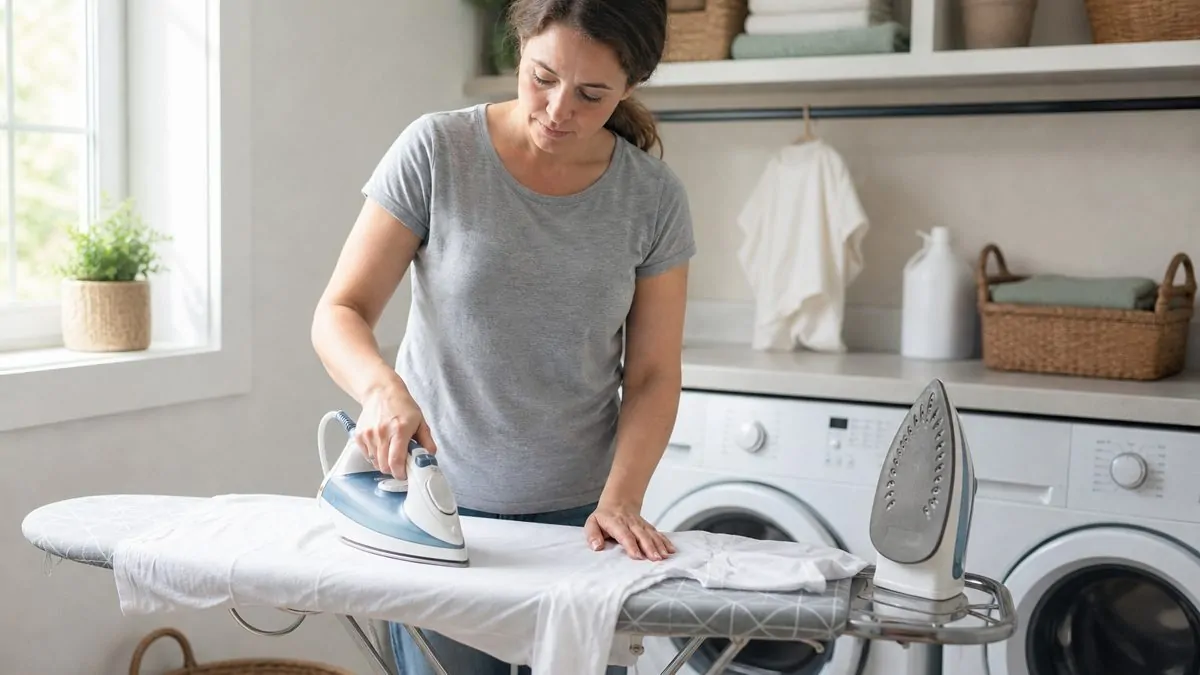
A dirty iron soleplate leaves brown marks on light-colored clothes, catches on the fabric instead of gliding over it, and ends up damaging the clothes it is supposed to smooth.
Most guides offer a long list of ten products without distinction, ranging from vinegar to toothpaste to candle wax. The problem is that burn marks, sticky soles, and limescale stains don't all respond to the same methods, and some even damage Teflon coatings.
To clean the soleplate of an iron effectively, it is therefore better to start from the observed symptom rather than from a list of interchangeable products.
What type of dirt is on the soleplate of your iron?
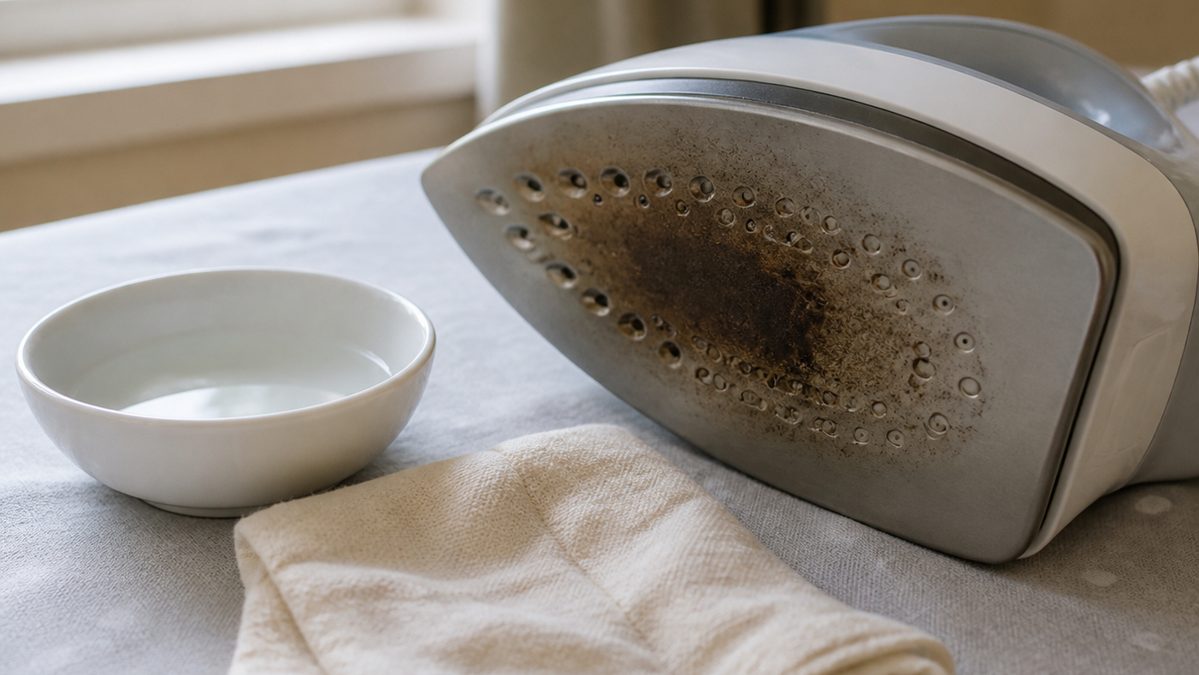
Before reaching for the vinegar or baking soda, take a close look at what's covering the sole. Three main types of dirt are common: burnt or melted synthetic residue, sticky residue, and limescale, which yellows or blackens the surface over time.
The material of the sole also makes a difference. A stainless steel or ceramic sole can withstand moderate friction with mild products such as vinegar or baking soda.
A Teflon sole, on the other hand, scratches at the slightest abrasive movement: avoid salt, emery cloth or anything that scratches, even slightly.
The coating is usually indicated in the instructions or engraved on the back of the iron. If in doubt, always test the chosen method on a small, inconspicuous area of the soleplate before treating the entire surface.
How do you remove a burn mark from the soleplate of your iron?
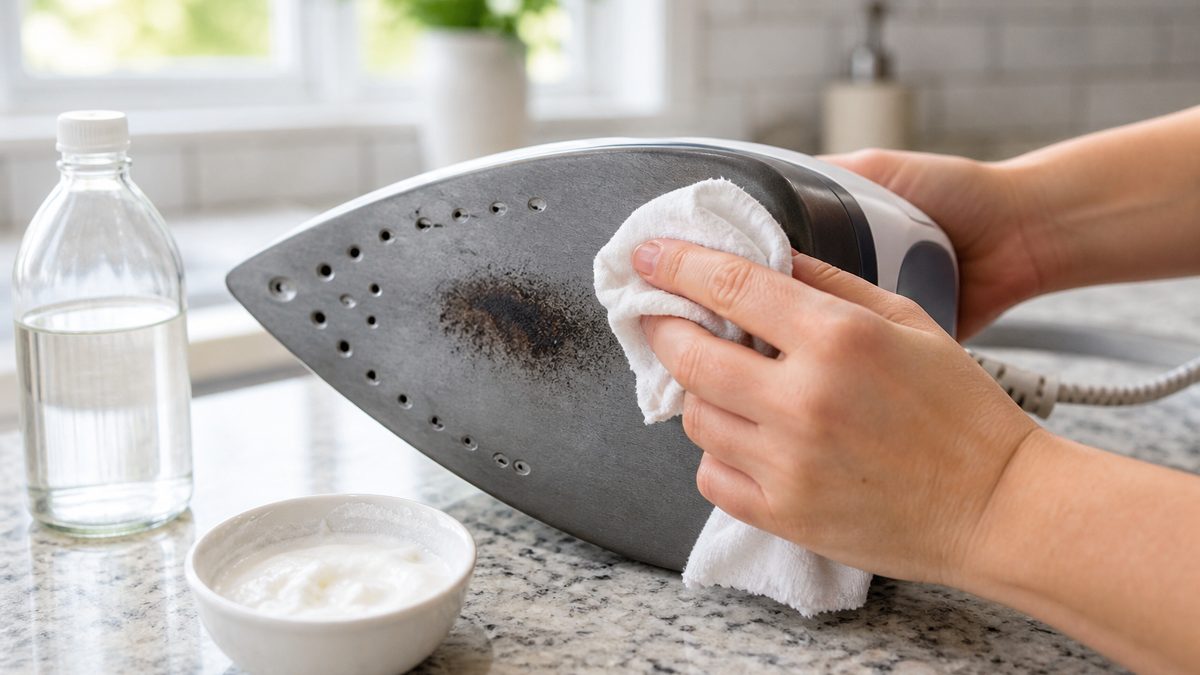
A burn mark appears when an iron that is too hot touches a synthetic material that melts on contact, such as polyester or nylon.
Unplug the iron and let it cool until it is lukewarm, never hot: on a hot soleplate, the product evaporates before it can act and you risk burning yourself unnecessarily.
Soak a cotton cloth in pure white vinegar and rub the stain, paying particular attention to any brown or blackened areas. The vinegar will dissolve the charred fiber residue without damaging the metal.
If the stain persists, prepare a thick paste with a tablespoon of baking soda and a little hot water, apply it to the affected area and leave it for a few minutes before rubbing with a soft cloth.
For really stubborn plastic residue, heat the iron to a low temperature, then gently rub a white candle on the area: the wax melts on contact and carries away the stuck residue as it cools.
White vinegar should always be applied to a warm sole, never a burning one, with a cloth folded in several layers to protect the fingers.
How do I clean an iron soleplate that is sticky or covered in melted plastic?
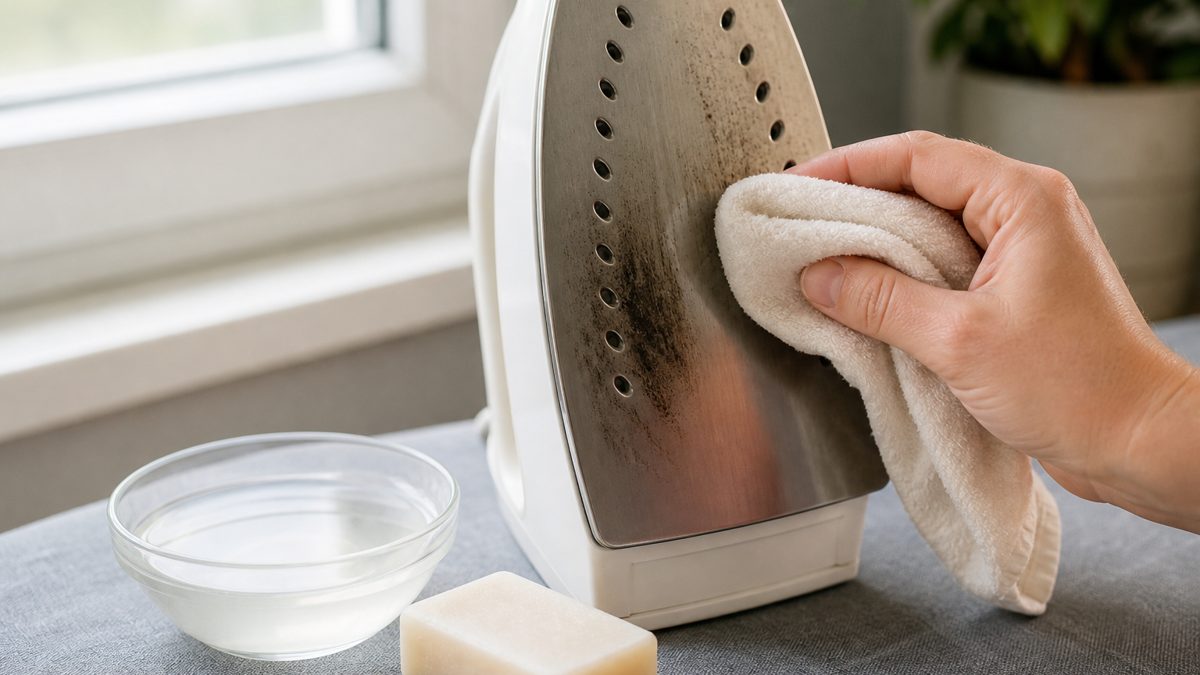
A sticky sole often indicates a deposit of textile sizing or spray starch that has caramelized under heat, without necessarily having burned.
Start by mixing equal parts white vinegar and hot water, applying it with a cloth and rubbing in a circular motion. This dilution prevents damage to the iron's seals if a little liquid seeps through the steam holes.
For a more stubborn layer, rub a moistened Marseille soap directly onto the warm sole: it dissolves greasy residue without scratching.
An acetone-free nail polish remover applied to a cotton ball can also remove a thin plastic film, but test it first on an inconspicuous area: on some treated coatings, it dulls the surface.
Always rinse the soleplate with clean water and a damp cloth after cleaning with vinegar or soap, then dry it before plugging the iron back in. Any remaining wet product residue can smoke or stain the next fabric you iron.
How to remove black stains and yellowing from the sole?
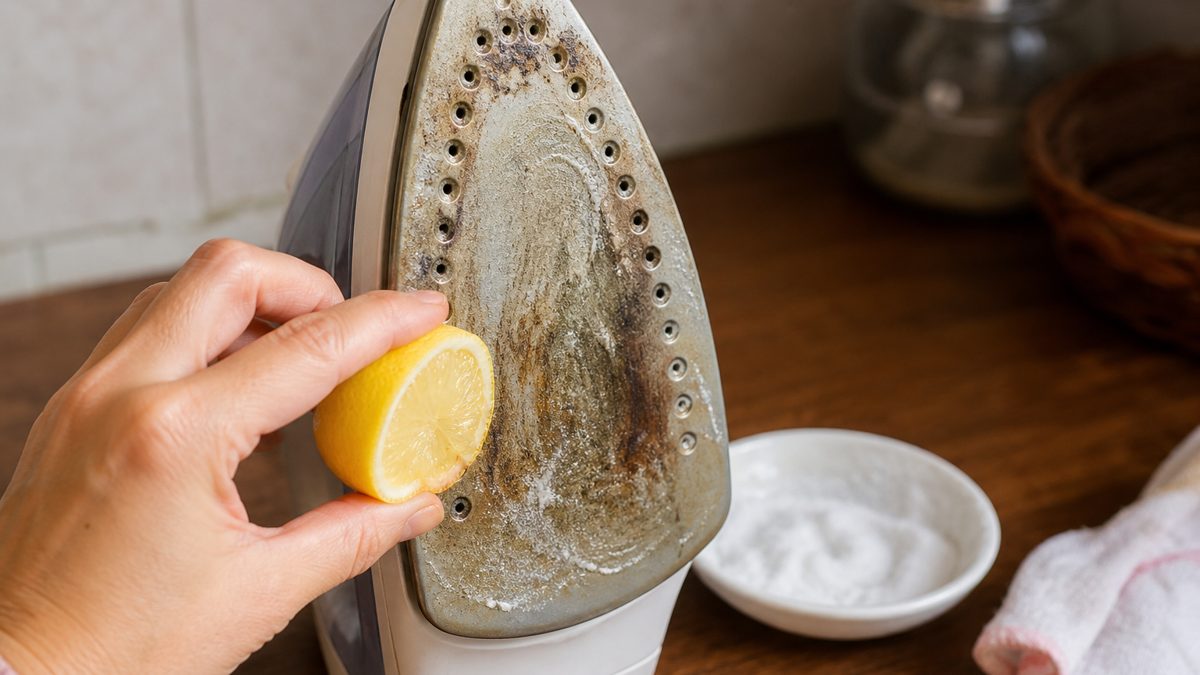
The diffuse yellowing and small black spots almost always come from limescale in tap water, which is deposited in a thin film on the metal with each steam pass.
Lemon juice is a classic and effective trick here: cut a lemon in half and rub it on the still-warm sole, leave it for a few minutes, then wipe it off with a clean cloth. The acidity dissolves the surface limescale.
For more stubborn stains, a paste made from baking soda and white vinegar, left on for 5 to 10 minutes, will loosen the deposit without the need for hard scrubbing.
The table below summarizes the four most frequent cases and the most suitable method for each.
| Problem observed | Recommended method | Precaution |
|---|---|---|
| Burn marks, melted plastic | Pure vinegar, then baking soda paste if needed | Warm sole, never hot |
| Sticky sole | Vinegar diluted 50%, Marseille soap | Rinse and dry before reuse |
| Black spots, yellowing limescale | Lemon, or a paste of baking soda and vinegar | Avoid using on Teflon if abrasion is necessary |
| Light soiling, dust | Soft cloth slightly damp | To do before each ironing session |
Should the inside of the iron also be descaled and the steam holes unclogged?
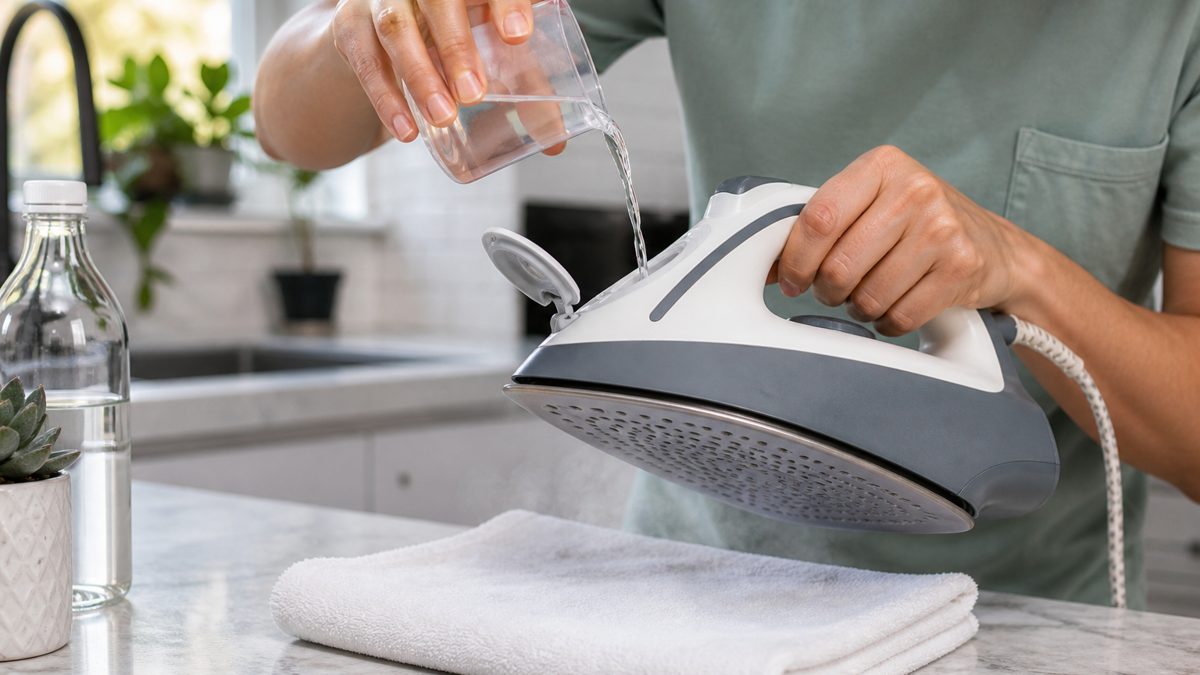
Cleaning the soleplate is not enough if limescale also accumulates inside the reservoir: it is this that clogs the steam holes and ends up staining the soleplate from the inside, even just after external cleaning.
According to maintenance recommendations cited by UFC-Que Choisir, regular descaling prevents limescale from clogging steam holes and damaging the appliance, while also limiting stains and bad odors during ironing.
Fill the reservoir with a 50% water and 50% white vinegar mixture, activate the steam function for a few moments to circulate the liquid, then leave it to work for at least 1 hour, ideally overnight if the limescale is well established.
Next, empty the tank by wiping it with old rags to remove the residue, then rinse several times with clean water before each new use.
For individually blocked steam holes, gently dislodge the limescale from each orifice with a cotton swab soaked in vinegar, then activate 2 to 3 jets of steam to remove the residue deep down.
Always empty the water tank after each ironing session rather than letting it sit. It's the simplest way to slow down limescale buildup without even thinking about it.
What type of cleaning is best for your soles?
What is the problem with your sole?
Natural remedies or specialized products: which to choose?
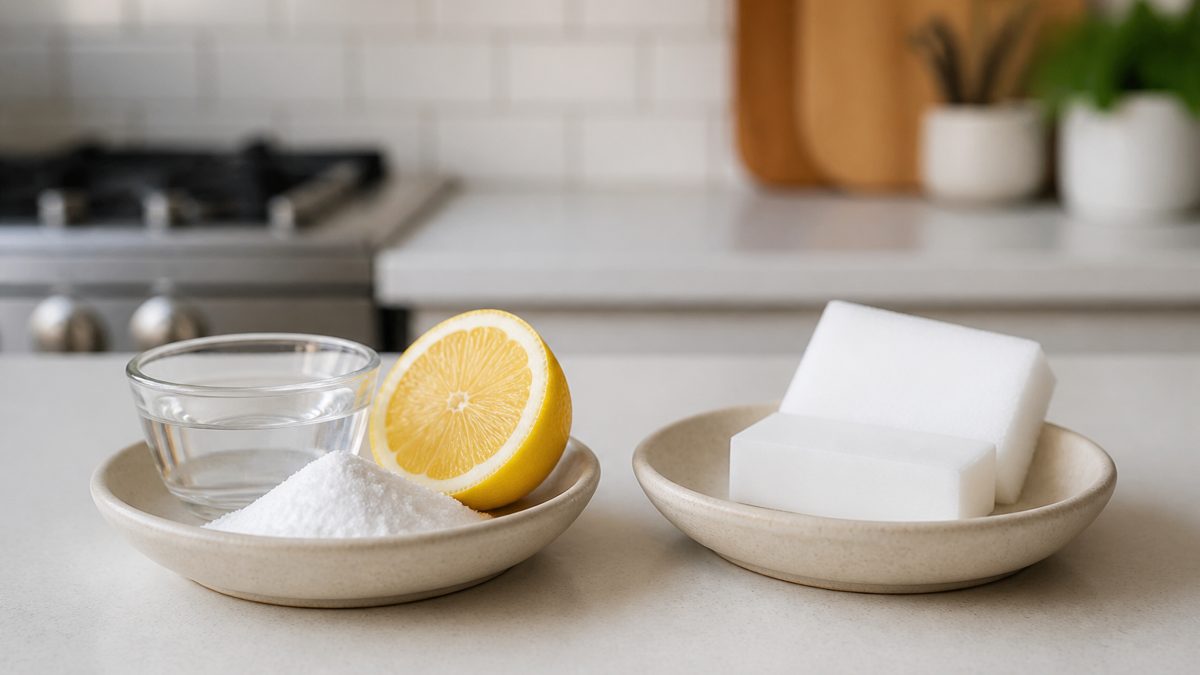
pencils or blocks sold in supermarkets offer faster action than a home remedy, at the cost of recurring expenses and one more chemical product in the cupboard.
Natural remedies require a little more preparation time but rely on ingredients already found in most kitchens.
- Cost virtually zero, ingredients already available at home
- No harsh chemicals come into contact with the laundry
- Suitable for most common types of soiling
- Less effective on very old or thick soiling
- They require a drying time and sometimes several passes
- Results vary depending on the sole coating
How to prevent soiling and maintain your soles for the long term?
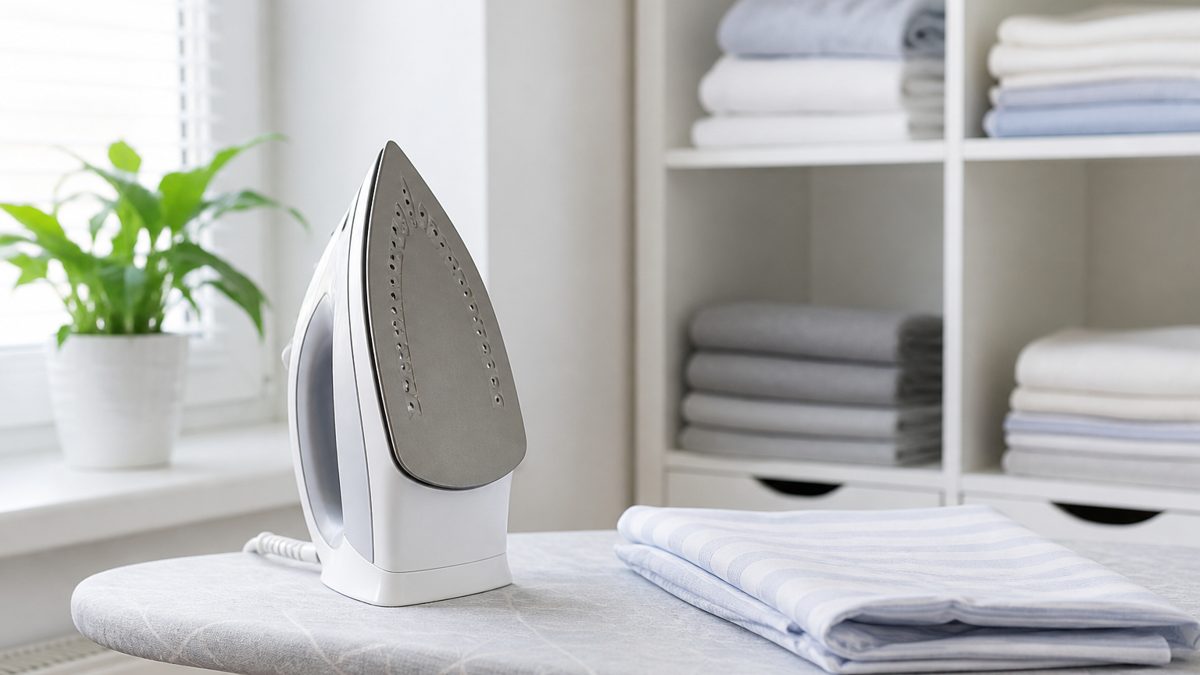
A quick wipe with a soft, slightly damp cloth before each ironing session removes dust before it bakes onto the hot soleplate.
According to several appliance maintenance guides, such as Boulanger, a deep cleaning every 2 to 6 months is suitable for most households, to be adjusted according to the frequency of use and the hardness of the tap water, a bit like the maintenance of a washing machine or a dishwasher.
Always iron at the appropriate temperature for the material of the garment: excessive heat on synthetic materials remains one of the main causes of burn marks and melted plastic on the sole.
If your tap water is very hard, use demineralized water for the tank rather than tap water directly, which significantly reduces the frequency of descaling required.
In summary
The right approach is to first identify the nature of the soiling before choosing a product: pure vinegar is suitable for burnt-on soiling, a 50% dilution for sticky soles, and lemon or bicarbonate paste for limescale that yellows the surface.
Don't forget to descale the internal tank and steam holes, a step separate from cleaning the soleplate but just as important to prevent stains from returning.
With these simple steps and regular maintenance every few months, your iron will regain a smooth soleplate that glides without snagging the fabric.
Practical questions
How do I remove the black stain from the soleplate of an iron?
Rub the warm sole with a cloth dampened with white vinegar or a baking soda paste, paying particular attention to the blackened areas. On a Teflon sole, avoid any abrasive action and opt for several gentle strokes rather than vigorous rubbing.
How do I clean a sticky iron soleplate?
A mixture of equal parts white vinegar and hot water, applied with a cloth using circular motions, dissolves most sticky textile sizing residue. Rinse and dry the soleplate before plugging the iron back in.
Can a Teflon sole be cleaned like a stainless steel sole?
No. Teflon scratches easily with the slightest abrasive action: avoid salt, emery cloth, and scouring pads. Opt instead for diluted vinegar or a gentle baking soda paste, tested first on an inconspicuous area.
How often should you descale an iron?
For regular use, descaling the machine internally every 2 to 6 months is sufficient; more frequent descaling is recommended if your tap water is very hard. Empty the reservoir after each ironing session to slow down descaling between cleanings.
