
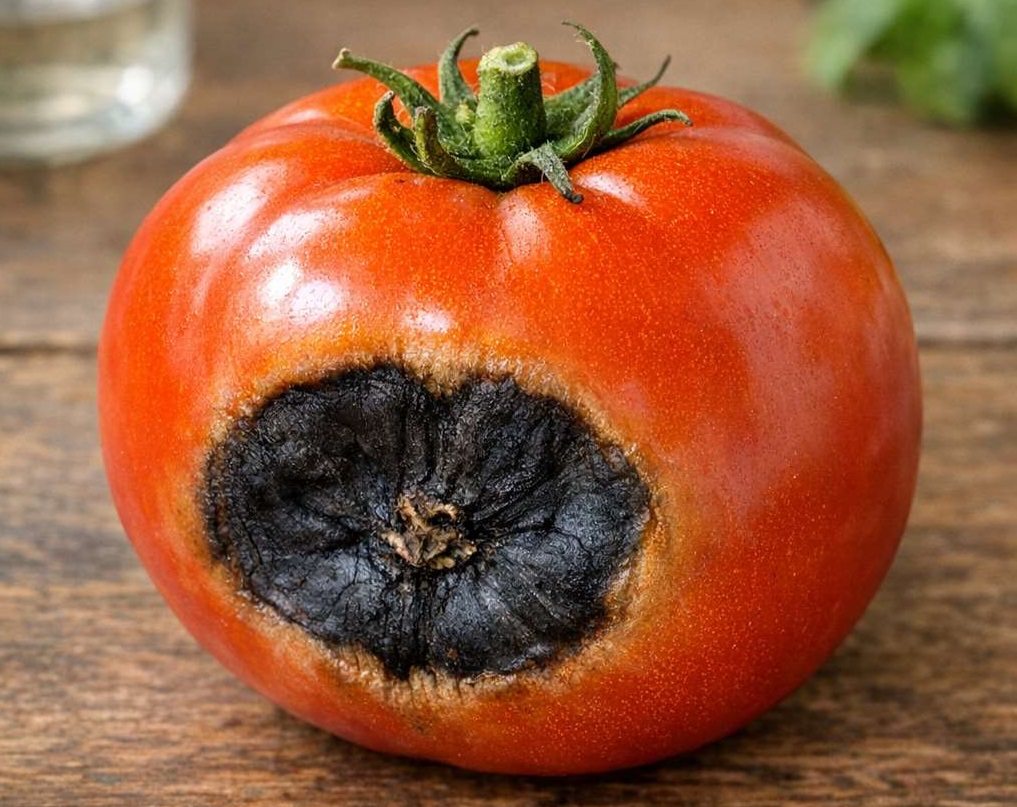
Welcome everyone, gardening enthusiasts, savvy consumers or simply curious about the plant world!
In this article, we will explore the strange phenomenon of tomatoes with "black bottom," as this anomaly is of interest to both professional horticulturists and novice gardeners seeking to understand and treat this problem.
The following information will help you better understand this specific tomato disease and how to remedy it.
Tomatoes
The origin of tomatoes
The tomato, which we commonly consume, has its roots in South America. Pre-Columbian civilizations cultivated it before the arrival of Europeans.
They first encountered the tomato in the 16th century during their explorations and subsequently began cultivating it on the old continent.
However, it was only in the 18th century that its consumption became widespread in Europe.
Tomato Cultivation
To grow tomatoes, you need to know certain characteristics and pay attention to various elements such as soil type, climatic conditions and the amount of sunlight needed for optimal growth, as these plants appreciate nutrient-rich, well-drained and slightly acidic soil.
They require ample light to develop their fruit properly, while water also plays a crucial role in cultivation: it must be sufficient but not excessive in order to avoid certain diseases such as mildew or blossom-end rot: often called 'black bottom'.
By respecting these essential parameters for their optimal development, we allow tomato plants to produce these delicious fruits that will enhance our daily meals!
Anthracnose defined
Anthracnose is a fungal disease that affects many plant species, including tomatoes.
It is caused by the fungus Colletotrichum coccodes and is characterized by black lesions on the fruit, often at its lower end, hence the popular name 'black bottom'.
The fungus usually enters the plant through wounds or cracks.
- The pathogen spreads mainly via fungal spores.
- Humid conditions favor its growth and expansion, like all fungi.
- The pathogen has the ability to survive in the soil for several years thanks to survival structures called microsclerotia.
- Controlling it requires good crop rotation to prevent the pathogen from persisting in the soil.
- Using resistant varieties can help prevent this disease.
It should be emphasized that Anthracnose is not simply an aesthetic problem, as affected fruits are more vulnerable to attacks from other harmful organisms and may end up rotting before they are fully ripe.
This leads to a significant decrease in the agricultural production concerned.
The black disease
Factors contributing to necrosis
Black disease, or basal necrosis, is a common phenomenon in tomatoes, and its origin is often associated with an imbalance of calcium in the soil.
Inconsistent watering can promote its occurrence by inducing variations in the supply of vital nutrients to the plant.
Temperature and humidity are other factors that can encourage this disease.
Identify the visual symptoms of the disease
Undoubtedly, the first observable sign of this condition is a brownish or blackish spot that appears on the fruit at the peduncle.
This mark gradually spreads towards the inside of the fruit until it touches its flesh, thus causing it to rot.
In addition, a change in color and drying of the leaves may be observed.
Why only tomatoes?
Have you ever wondered why this disease only affects tomatoes? The key to the puzzle lies in the biology of the plant itself.
Indeed, tomatoes have a smooth and thin skin, vulnerable to invasion by the fungus responsible for black rot.
Furthermore, their rapid maturation promotes an environment conducive to the proliferation of the fungus.
However, even though other plants can be infected by similar variants of Anthracnose, the specific manifestation of "blossom-end rot" remains mostly confined to tomatoes due to their distinctive attributes .
We are hopeful that we will continue to develop strategies to combat these infections and preserve our valuable crops.
Environmental factors
The appearance of blossom-end rot, commonly known as " black blossom " in tomatoes, is primarily due to environmental factors.
Firstly, unstable irrigation may be the cause of the problem.
Excessive watering followed by a period of drought creates an imbalance in the plant's nutrient absorption process.
This leads to a calcium deficiency which results in black spots on the fruit.
Climatic conditions also play a crucial role in this phenomenon, as high temperatures accelerate fruit development and decrease its ability to properly assimilate the nutrients needed to ripen without complications.
It is important to emphasize that some soil types are more likely to cause this disease than others, and that light, sandy soils tend to retain water and nutrients less effectively, which are essential for proper fruit development.
Finally, we must also mention the potential influence of multiple environmental stresses combined together as a plausible cause: abrupt temperature variations, strong winds or air pollution can all have a significant impact on the appearance of blossom end rot in tomatoes.
It is imperative to carefully monitor these factors in order to avoid this devastating disease for our tomato crops as much as possible.
Treatment and prevention
Natural means
To prevent blossom- end on tomatoes, various organic methods can be considered.
It is advisable to ensure adequate spacing between plants to optimize air circulation and limit excessive humidity.
Frequent watering at the base, without spraying the foliage, helps to avoid drastic changes in humidity that encourage disease.
Introducing calcium into the soil can be beneficial: crushed eggshells or a lime amendment can do the trick!
Chemical tricks
Even with these preventative measures, if apical necrosis develops, there are effective chemical treatments available.
Products containing calcium are available for sale and can be applied directly to the fruit or to the soil; however, their use should remain moderate so as not to disturb the natural balance of the garden.
We always recommend thoughtful and respectful use of these types of products to ensure your production remains healthy and balanced.
The impact on consumption
The impact of blossom-end rot, or the "black bottom" phenomenon of tomatoes, on consumption is significant and can be considered from different perspectives.
This condition primarily affects the appearance of the fruit. Affected tomatoes develop a black discoloration at their lower end, which may deter some consumers.
Although this disease does not directly affect the taste of tomatoes, it can deteriorate their texture by making some parts hard and fibrous.
This factor greatly influences the overall taste experience delivered by the fruit.
- Apical necrosis significantly reduces the visual and gustatory appeal of the product.
- It causes a decline in agricultural production in the areas where it is prevalent.
- This scourge results in a potential reduction of the supply available to consumers.
- This pathology often leads to increased use of agrochemical inputs in an attempt to remedy it, with all the associated environmental dangers.
It is therefore necessary for both producers and consumers to understand the causes and mechanisms related to this pathology in order to improve its prevention and treatment.
Alternative solutions
In the fight against blossom end rot in tomatoes, various alternative methods are possible.
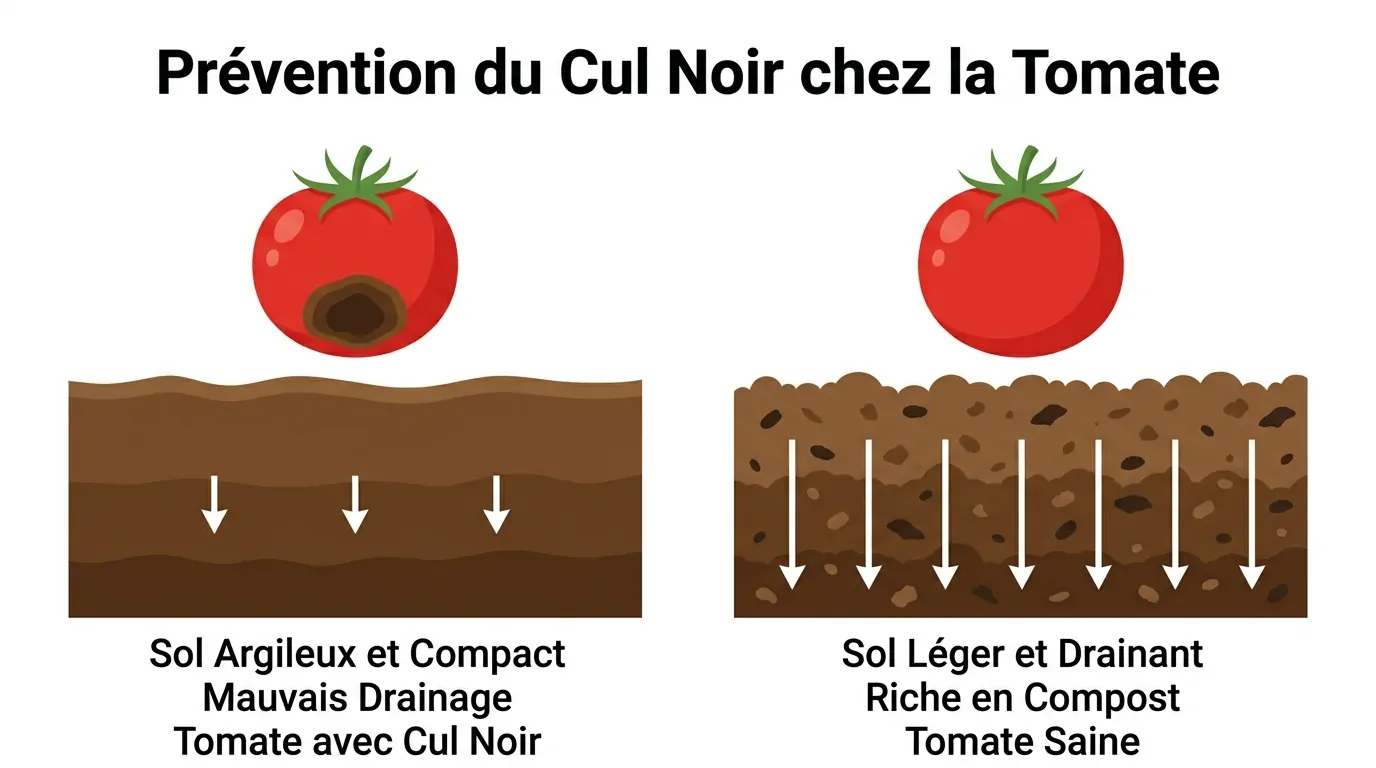
Well-drained soil is a key preventative measure. Indeed, clayey and compacted soil accelerates the spread of this disease.
Choosing a light soil enriched with compost or decomposed manure promotes an environment beneficial to healthy root growth.
Resistant varieties can be used as an effective strategy since some of them are less susceptible to this disease.
Organic treatments such as plant-based liquid manures (from nettles or comfrey, for example) can strengthen the immune defenses of plants.
We strongly encourage you to explore these suggestions to ensure healthy and abundant production without systematically resorting to chemical solutions that could prove toxic or destructive.
Gardening differently
Managing your vegetable garden optimally
Preventing blossom-end rot in tomatoes requires careful management of the vegetable garden.
Moderate and constant watering is imperative to avoid water shocks that promote this disease, and watering at the base of the plants is preferable to reduce moisture on the leaves.
Choose resistant varieties
Choosing the right tomatoes is necessary, and some are more resistant to blossom end rot than others, such as 'Coeur de Boeuf', 'Roma' or 'Saint Pierre', which are known for their robustness against this problem.
Adopting an ecological approach
We encourage the use of ECOLOGICAL METHODS in your gardening.
Natural mulching ensures the regulation of soil moisture while enriching its composition with organic matter.
Furthermore, crop rotation prevents crop depletion and significantly reduces the development of diseases.
To deepen your knowledge of green space maintenance and discover other practical tips, feel free to consult these tips.

I just read that calcium deficiency and irregular watering are the real causes of blossom end rot, so I wonder if the risk increases even more when growing tomatoes in pots on a balcony, where watering is precisely harder to keep regular.
Hi Marjolie, yes, the risk is definitely higher in pots: the soil dries out much faster than in the ground, so sudden changes in watering (and therefore a lack of absorbed calcium) are more frequent. In practice, this means checking the soil moisture almost every day in summer and choosing a fairly deep pot to limit abrupt fluctuations.