

A curtain that is not properly fitted to your window can turn a heated room into a thermal sieve.
However, the thermal curtain market offers solutions that combine reliable insulation with elegant aesthetics. Thick velvets, technical linings, contemporary colors: home textiles have evolved considerably.
Before making your choice, a few criteria deserve your attention to avoid common mistakes and achieve lasting interior comfort, without sacrificing the harmony of your decor.
The essential criteria for choosing the right thermal curtain
The material constitutes the first selection filter, because velvet, being dense and heavy, creates a natural barrier against the cold by trapping a layer of air between the fabric and the glass.
The thermal lining, often made of tightly woven polyester or fleece, reinforces this insulating capacity by adding a second technical layer to the back of the curtain.
These two options are not mutually exclusive: a velvet curtain with integrated thermal lining combines the advantages of both materials.
The level of blackout also deserves your attention, and as can be seen with this Redoute thermal curtain, an insulating curtain acts on heat exchange while a blackout curtain only blocks light.
Some models combine both functions: they are particularly suitable for north-facing rooms or rooms where the light needs to be kept under control.
Dimensions are an often underestimated criterion, since a curtain that is too short lets cold air in from below; a curtain that is too narrow creates thermal bridges on the sides.
The practical rule: allow a total fabric width equal to twice the width of the window, and a length that extends at least two centimeters above the floor to ensure airtightness.
Also check compatibility with your curtain rod: some heavy linings require reinforced rods capable of supporting the weight without bending.
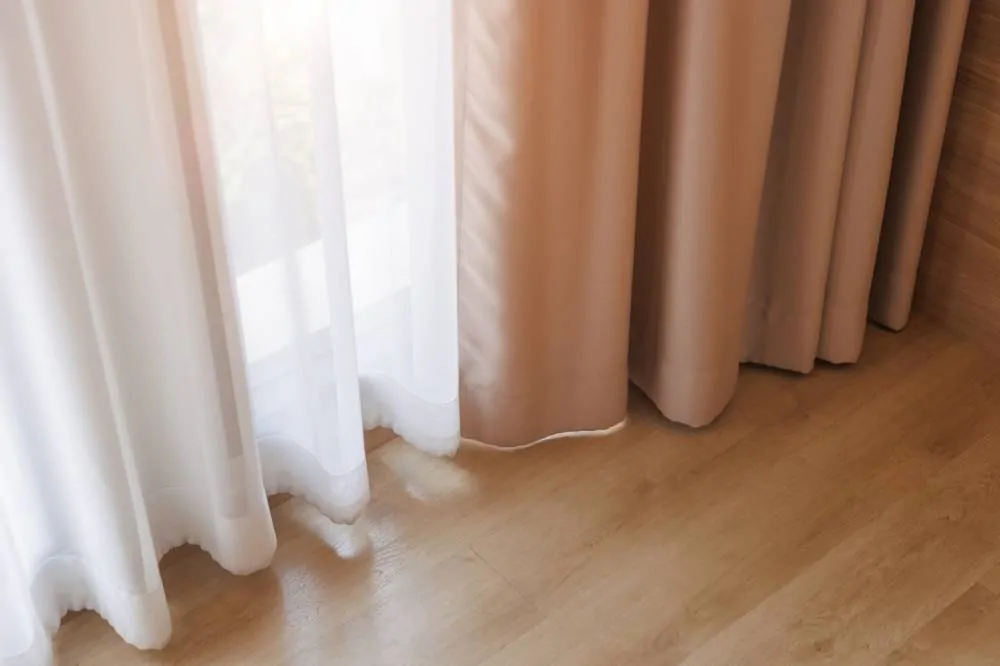
How to combine comfort and decorative harmony when dressing your windows?
Thermal insulation using textiles does not impose any visual compromises, as manufacturers have incorporated this requirement for several years, and current collections offer thermal curtains in a wide range of colors, varied textures and styles to suit all interiors.
For a contemporary interior, neutral tones (linen, greige, anthracite) naturally combine with minimalist structures.
Short-pile velvet in deep colours (midnight blue, bottle green, burgundy) is more suitable for classic or cozy settings.
Natural textures, such as thick linen or brushed cotton with thermal lining, fit into spaces with a predominantly natural or Scandinavian style.
User feedback on the heat felt after installation confirms a clear trend: models with thick lining, even in light colors, provide comparable insulating performance to dark versions.
Colour is therefore not a reliable indicator of thermal efficiency, so rely on the weight and composition of the lining rather than the shade.
One last practical point: the length of the curtain also influences the visual perception of the room.
Indeed, a curtain hung from the ceiling to the floor optically increases the ceiling height, which can transform the atmosphere of a room without any construction work.
In which rooms should insulating textiles be installed to maximize savings?
Windows account for 14% of heat loss in a house built before 1974.
This figure clearly illustrates why the choice of priority parts determines the actual effectiveness of your textile insulation approach.
The living room generally has the largest glazed area in the home, because it is the room where thermal curtains generate the most visible gains, especially in houses with bay windows or windows facing north.
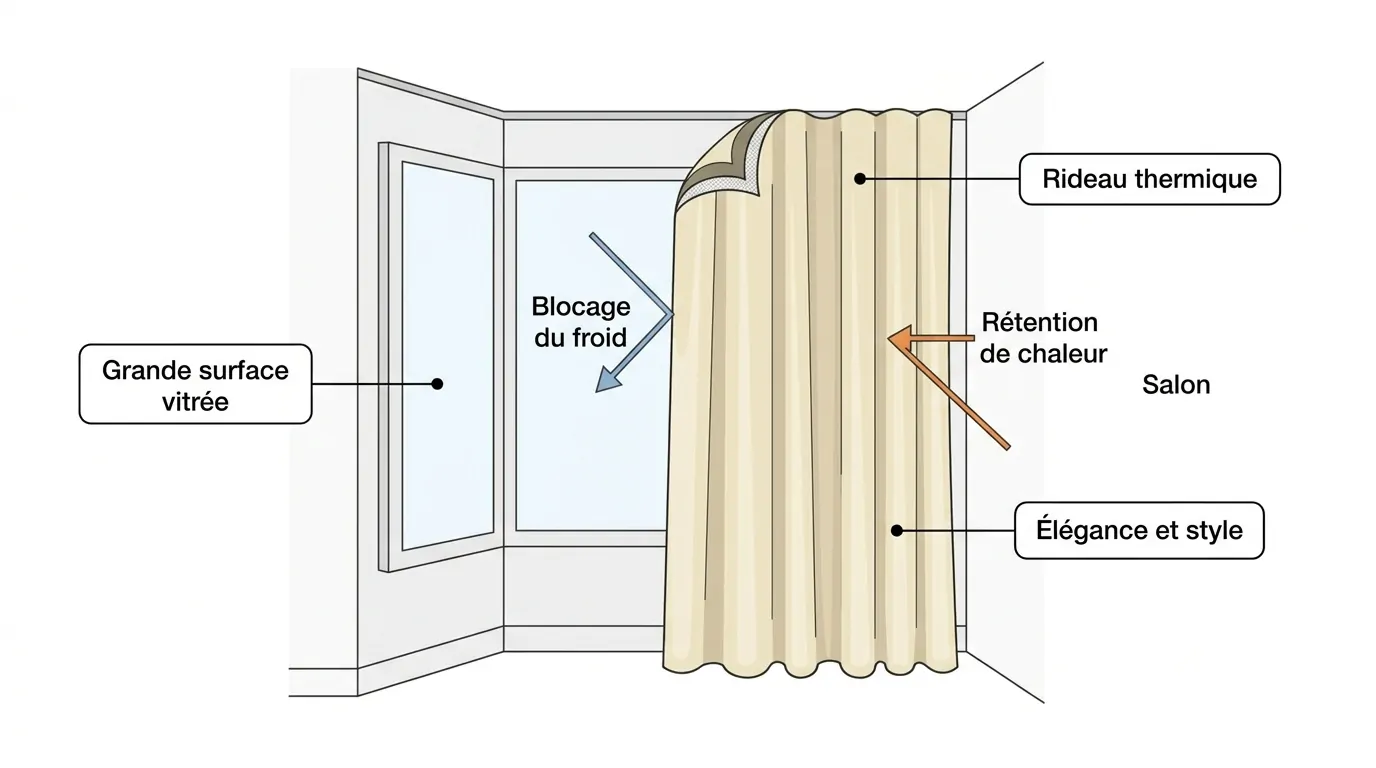
A blackout curtain with a thick lining, placed across the entire width of the bay window, significantly reduces nighttime heat loss.
The bedroom represents a special case: you spend several hours motionless there, which makes the sensation of cold more noticeable.
An insulating velvet curtain or one with a thermal lining maintains a stable temperature during the night, without requiring additional heating.
The entrance and hallway are often neglected, even though they constitute transition zones between the outside and the living areas.
A poorly insulated French window or window in these spaces creates a draft of cold air that spreads throughout the entire dwelling, so installing a thermal curtain in this area cuts off this flow without requiring any work.
For each room, assess the exposure (north, east, west, south), the glazed area and the foot traffic.
These three parameters determine the expected performance level and guide your choice towards the right weight, lining and fabric measurement.
A well-sized curtain in the right room is better than a high-end model poorly positioned.
Choosing a thermal curtain means making a choice between insulating performance, decorative integration and precise adaptation to each window, and the available materials make it possible to meet these three requirements simultaneously, provided that the dimensions and compatibility with the curtain rod are not neglected.
Take the time to measure, compare weights and assess the exposure of each room, since this preliminary work will directly determine the indoor comfort you will obtain, winter as well as summer, without modifying your heating system.
Sources:
- Everything you need to know about insulation – ADEME, 2025. https://agirpourlatransition.ademe.fr/particuliers/amenager-maison/renover/tout-savoir-isolation
