
In short
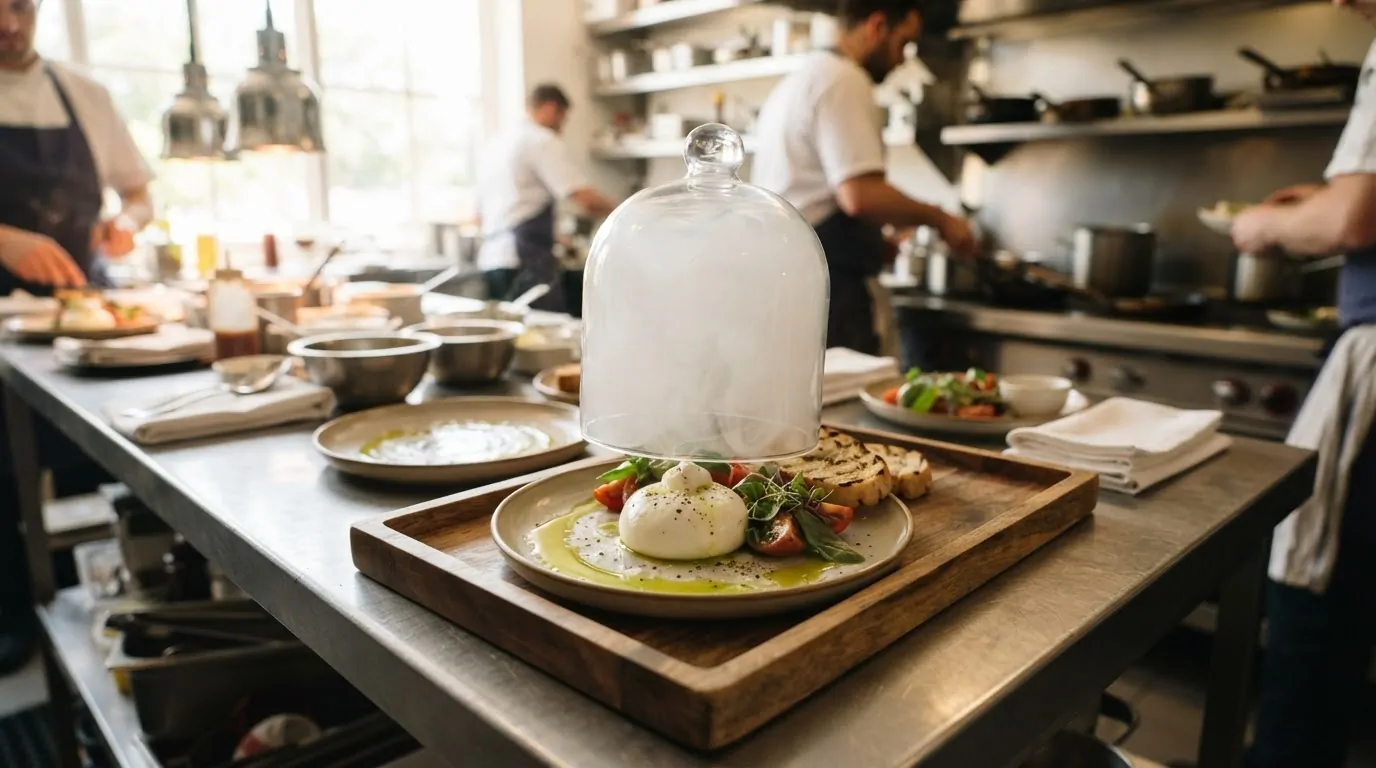
Smoked salmon for the holidays, duck breast for the aperitif, burrata that arrives at the table under a glass dome full of smoke: three dishes, three very different ways of smoking.
Hot and cold smoking are two distinct cooking techniques, each with its own temperature, duration, and risks. Flash smoking, however, is a finishing touch and has nothing to do with preservation.
Here's what distinguishes these three methods, the equipment each requires, what restaurants do with them, and how to recreate the effect at home without a professional smoking room.
Cold smoking: flavoring without cooking
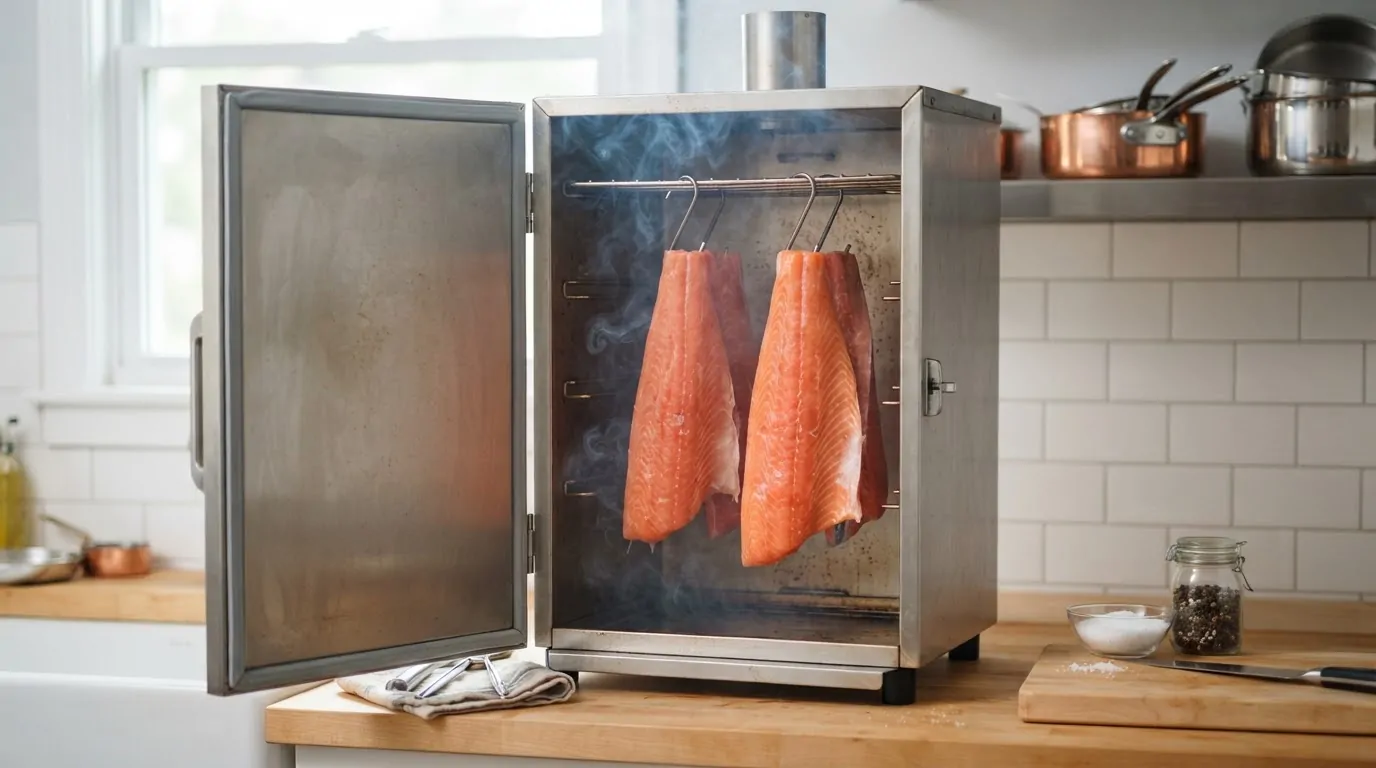
Cold smoking is based on a simple rule: the smoke circulates around the food without heating it. The product remains raw, with a firm texture and a very subtle smoky flavor.
The temperature must remain low. Horeca Magazine (November 16, 2023) limits it to a maximum of 25°C, specifying that proteins begin to solidify around 30°C.
The complete process involves several steps: brining, drying, and then smoking. According to the same article, the whole process can take up to about three days.
For a salmon fillet, the smoke alone lasts from 6 to 8 hours according to the Coffia manufacturer's guide (published in January 2025), at around 25°C.
Typical example: two very fresh salmon fillets, salted and then dried, spend the night in a cold smoker. They then rest for a day in the refrigerator before being served.
This method is suitable for salmon, duck breast and ham, but also for cheeses and certain vegetables that would be damaged by heat.
Raw does not mean risk-free. The WHO page on listeriosis (updated in September 2026) reminds us that Listeria is highly resistant to salt, smoke and acidity, and recommends that at-risk groups avoid cold-smoked seafood, such as smoked salmon.
Hot smoking: cooking and smoking at the same time
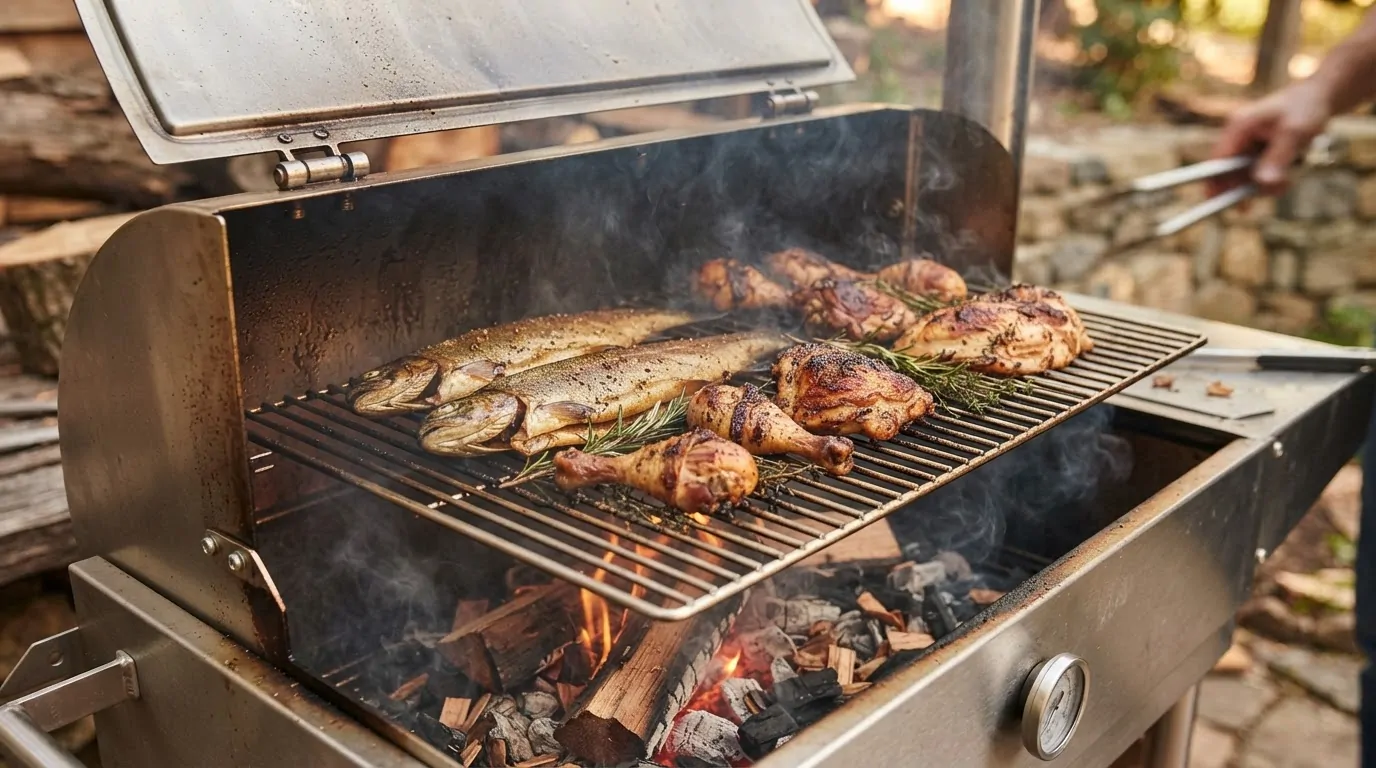
With hot smoking, the food cooks while it absorbs the smoky flavor. It comes out of the smoker ready to eat, with flesh that flakes or slices easily, just like after gentle cooking.
The guides do not all give the same temperature range. Coffia (January 2025) cites 50 to 85 °C, while Le Repaire du Chef (November 2022, updated in August 2024) announces 40 to 100 °C.
The method is suitable for fish, poultry, meat, and certain vegetables. Cooking time depends on the thickness of the piece rather than a universal timer, hence the importance of a temperature probe inserted into the center of the piece.
To start, a covered barbecue may be sufficient, provided that a safe barbecue area is set up , away from the house.
Another difference from cold smoking: hot smoking is not intended for long-term preservation. It is similar to cooking, with the same preservation precautions as a cooked dish.
Typical example: a whole trout, hot-smoked in the early evening, is served warm with steamed potatoes.
The quick smoking: a smoky touch served on the plate
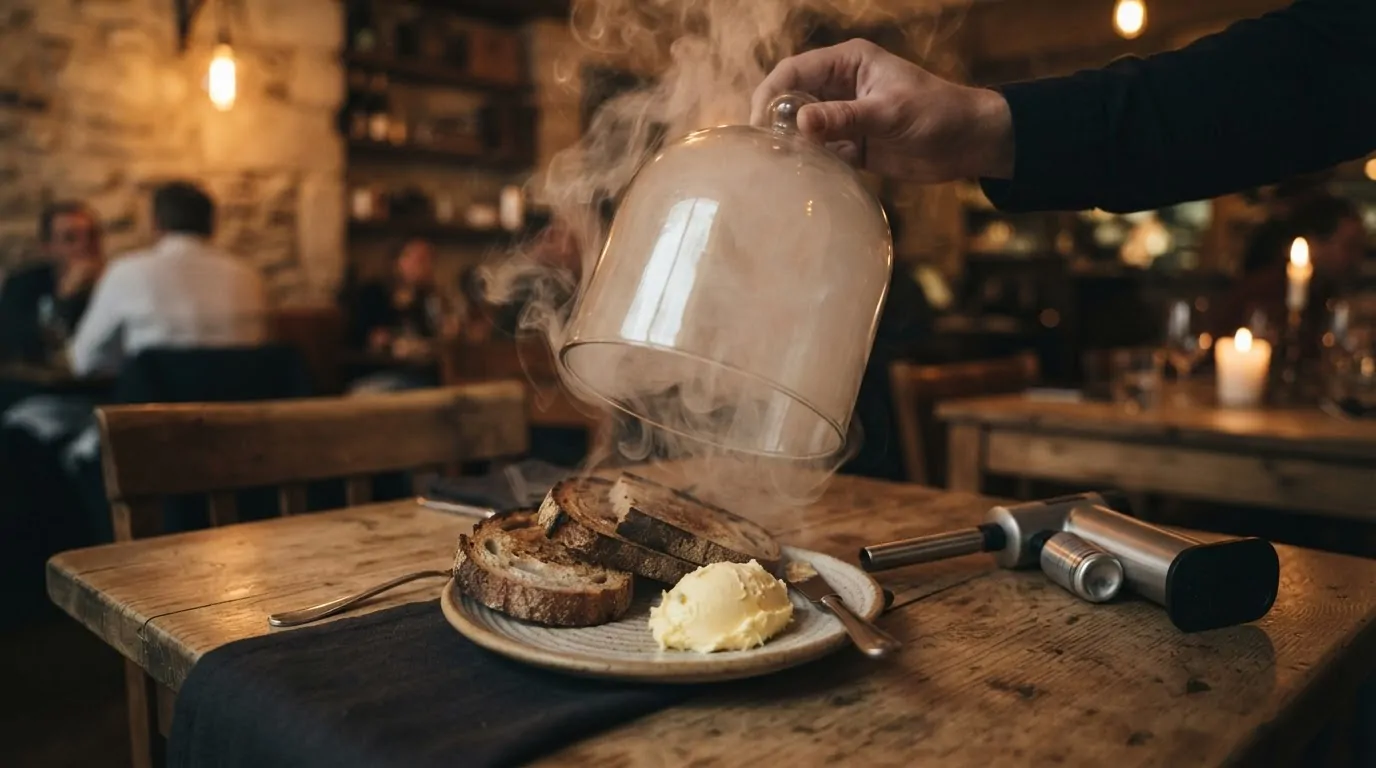
Quick smoking does n't serve the same purpose: it doesn't cook or preserve anything, it simply adds flavor. A smoke gun releases a stream of cool smoke under a cloche placed on the plate or glass.
The result takes only a few minutes: an aroma on the surface, perceptible as soon as the cloche is lifted. This is what appeals to restaurant kitchens.
The technique works equally well for a cocktail as for butter, cheese, or ice cream. The gesture is part of the service: the cloche is opened at the table, in front of the customer.
Typical example: a burrata served with olive oil and toasted bread receives beech smoke under a cloche, just before being served.
On Reddit (r/AskCulinary, July 25, 2024), a user who owns a smoke gun notes that the visible smoke dissipates within minutes, especially around a cold dish: after five minutes, he estimates it to be about 25% of its initial thickness. The visual effect, therefore, occurs when the dome is lifted.
In the same thread, another participant (July 25, 2024) points out that any real smoke adds flavor to the dish, which distinguishes it from a simple mist effect.
Quick smoking applies to a dish that is already ready to eat. It does not replace cooking or salting, and a raw product remains raw under the cover.
Compare the three methods at a glance
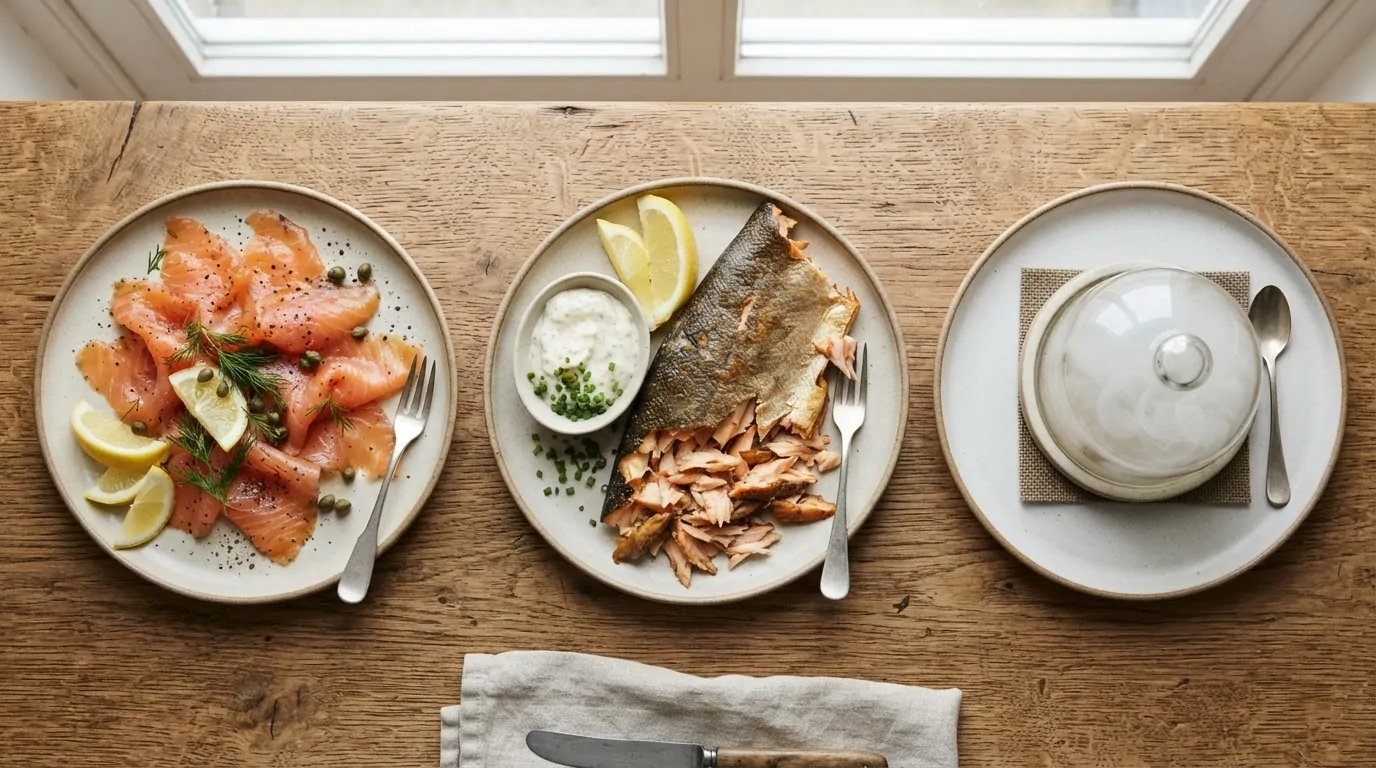
The table below summarizes the differences. Temperatures vary depending on the source: focus primarily on the order of magnitude and the effect on the food.
| Method | Temperature | Effect on food | Duration | Examples | Material |
|---|---|---|---|---|---|
| Cold | Approximately 25°C, maximum 30°C | Adds fragrance, does not cook | Several hours, up to 3 days with salting and drying | Salmon, duck breast, cheese | Cold smoker, smoke generator |
| Hot | 40 to 100 °C according to the guides | Cooked and flavored | Depending on the thickness of the part | Trout, poultry, meat | Hot smoker, smokehouse oven |
| Minute | Cold smoke | Perfumes the surface | A few minutes | Cocktail, butter, burrata | Smoke gun and bell |
Find your smoking method in three questions
This tool combines what you want to achieve, the time you have available, and the equipment you have, then suggests the most suitable method.
1. What do you want to achieve?
2. How much time do you have?
3. What equipment do you have?
From pistols to tabletop smokers: what equipment is needed for each method?
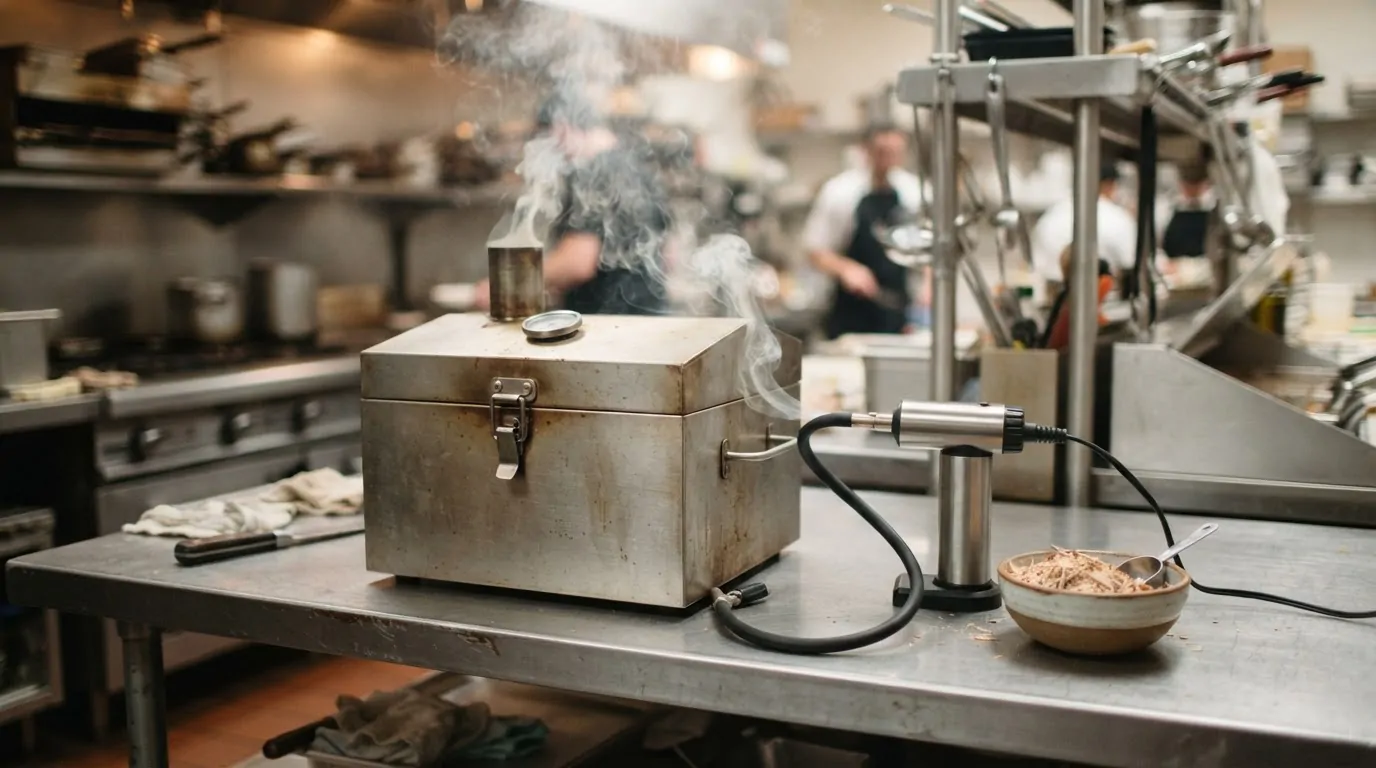
For quick smoking, two accessories are all you need: a smoke gun, or a smoking pipe, and a bell jar. Everything fits in a drawer and can be set up in seconds.
For cold or hot smoking, you need a smoker. In tabletop smokers, sawdust burns slowly in a dedicated compartment, and a tray collects the fat.
Depending on the model, hot smoking may require optional equipment. It's best to check this before buying.
In the restaurant industry, available space often dictates the choice. This is where compact smokers for restaurants become appealing: a stainless steel box or a small cabinet that sits on a worktop, eliminating the need to invest in a full-fledged smoking cabinet.
Politec, an Alsatian supplier of catering equipment located south of Strasbourg, has been supplying professionals in cafes, hotels and restaurants since 2003. Its range of table smokers ranges from smoke guns to smoking ovens that smoke, cook, grill and reheat.
Recreate a smoked dish at home, just like in a restaurant
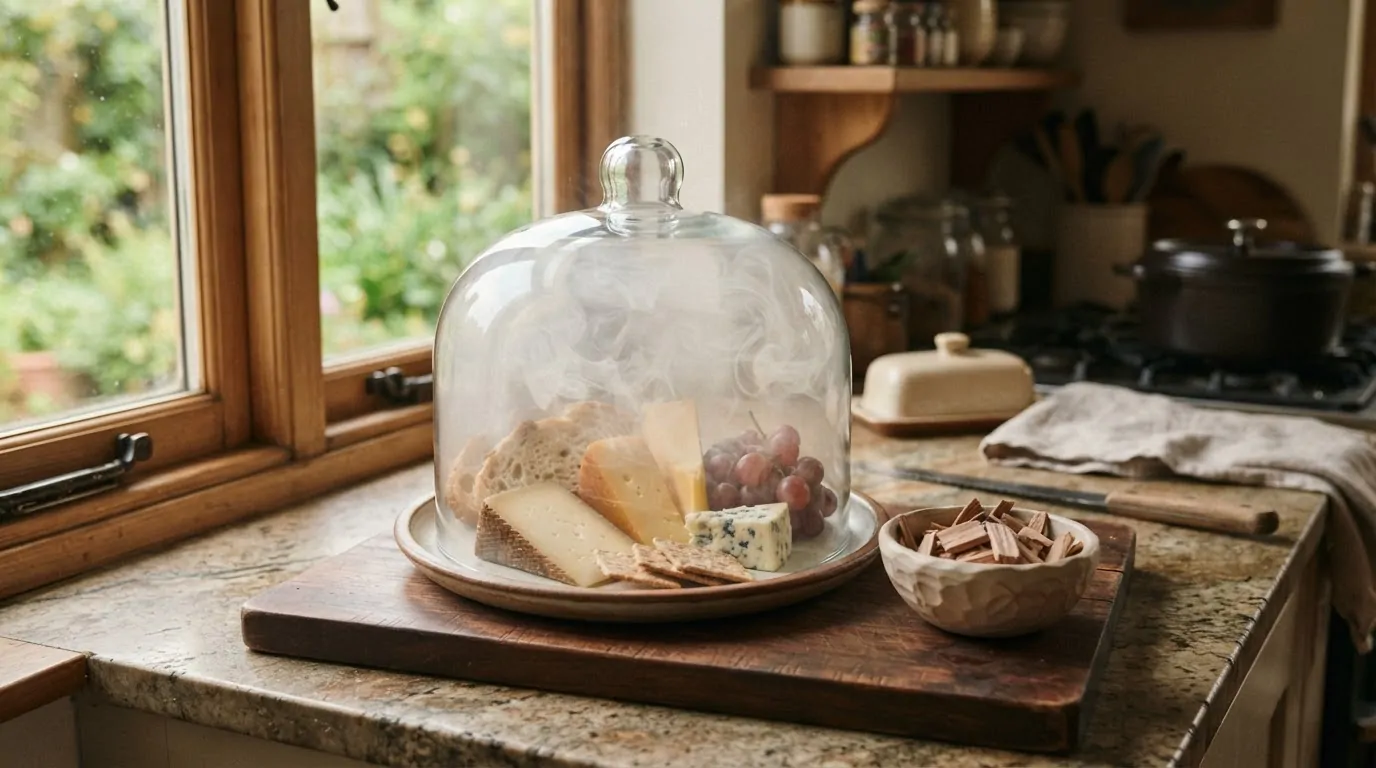
At home, the simplest method remains quick smoking. A ready-made dish, a cloche, cold smoke: the effect is similar to that of a restaurant without a smoker.
The choice of product matters more than the equipment. Butter, hard cheese, cream, soft-boiled egg or already cooked fish can handle a touch of smoke well, whereas a very aromatic dish masks it.
- Plate the dish completely, at serving temperature.
- Fill the gun with untreated wood chips, sold for food use.
- Send the smoke under the closed bell jar, without lifting it.
- Leave on for a few minutes depending on the desired intensity.
- Serve by lifting the cloche at the table.
The smoke comes from combustion. Ventilate the room, never use a smoker in an enclosed space, and keep the equipment out of reach of children.
Cold smoking requires more precautions at home, starting with the weather.
For cold smoking at home, wait for the cooler season. The Raviday guide (published in January 2022, updated in February 2026) recommends the period from October to February.
In summary
Cold smoking flavors a raw product over several hours, hot smoking cooks while flavoring, and quick smoking adds aroma to a dish that is already prepared.
To choose, first ask yourself if the food needs to be cooked, preserved or simply flavored, then consider the time and space you have available.
At home, a smoker bell and a smoke gun are enough to get started. A smoker becomes useful when you smoke often, and caution is always advised for anything that is cold-smoked.
Practical questions
What can you do with a smoker?
A smoker is used to smoke fish like salmon or trout, meats like duck breast or ham, as well as cheeses and vegetables. Depending on the model, it can cold smoke, hot smoke, or both. Butter, cream, and cocktails are generally smoked using a quick-smoking method.
Which smoker should a private individual choose?
Start by considering its intended use: cold smoking salmon or cheese, hot cooking fish or poultry, or both. Next, consider the capacity, the material (stainless steel makes cleaning easier), and the available space. Finally, verify that the model allows for hot smoking without additional equipment, and then compare several independent reviews rather than just a single product description.
What is the ideal temperature for hot smoking?
It depends on the food and the appliance. For fish or poultry, the internal temperature is more important than the smoker's internal temperature, hence the usefulness of a probe. Follow your smoker's instructions and the cooking guidelines for the specific item.
What type of wood should I choose for smoking?
Use untreated wood, sold for food use, in the form of sawdust or wood chips. Beech and oak provide a classic flavor, while fruitwoods like apple or cherry offer a milder aroma. Avoid resinous woods, whose resin imparts a harsh taste.
Is it possible to smoke without a smoking room?
Yes. A covered barbecue allows for hot smoking, and a smoker with a smoking gun is sufficient for quick smoking. Cold smoking, on the other hand, requires a smoke source that doesn't generate heat, hence the use of a smoker or smoke generator.
