
In short
Do you have a Seb Clipso on hand and want to cook your artichokes quickly, without making a mistake on the cooking time? It's a legitimate question, because an artichoke that's too hard remains inedible, and because if it's overcooked, it turns to mush!
This guide directly answers the question: how long to cook an artichoke in a pressure cooker, depending on its size, how to prepare it, how much water to use, and how to check if it's cooked properly? Nothing superfluous!
The different cooking times for artichokes using a Seb Clipso pressure cooker
That's the first thing everyone looks for!
Here is the direct answer: the cooking time of an artichoke with a Seb Clipso pressure cooker varies between 8 and 15 minutes, depending on the size of the vegetable.
These minutes are always counted after the pressure has been applied, never before.
The Seb Clipso works like all modern pressure cookers: it builds up pressure, then signals (via a visual or audible indicator depending on the model) that pressure cooking has started. It is at this precise moment that you start your timer.
Good news: steaming in a pressure cooker reduces cooking time by two or three times compared to a regular saucepan.
For the cooking time of vegetables in water, the differences are even more marked with dense vegetables.
The exact cooking time depends on the size of the artichoke
Size makes all the difference! A small purple artichoke cooks much faster than a large Breton artichoke.
Here is a reference table to estimate the cooking time of an artichoke in a Seb pressure cooker according to its size:
| Type / Size | Time under pressure | Remarks |
|---|---|---|
| Small purple artichoke | 8 to 10 minutes | Tends to cook quickly, keep an eye on it |
| Medium artichoke (Camus type) | 10 to 12 min | The most common, reliable result |
| Large artichoke (over 400g) | 13 to 15 min | Check that the base is cooked |
| Purple artichoke (medium size) | 8 to 10 minutes | Thinner flesh, quick cooking |
The cooking time for a large artichoke in a pressure cooker can be up to 15 minutes. Do not cook it for less than 13 minutes for a large artichoke, or you risk ending up with a still-firm heart.
For a medium-sized Camus-type artichoke, 11 minutes under pressure in a Seb Clipso gives a regularly successful result, with melting flesh, without falling apart.
At what point does the timer countdown start?
This is the most common mistake! Many people start the timer as soon as they close the lid. This is wrong, and it explains why the artichoke comes out too hard.
With Seb Clipso pressure cooker cooking, the countdown starts when the pressure indicator rises completely.
On recent Clipso models, a steam ring or a red light indicates that the pressure has been reached.
On older Seb pressure cookers with a valve, a whistling sound signals this moment. As soon as it whistles or the indicator is in the high position, the timer should start.
If you start timing from when you close the lid, you'll overestimate the actual cooking time by 3 to 5 minutes, depending on the heat of your stove. The result: undercooked artichoke.
The pressure build-up typically takes between 3 and 6 minutes. This time depends on the heat of the stove, the amount of water in the pot, and the size of the pressure cooker. This is not cooking time; it's preheating!
Prepare an artichoke properly before pressure cooking
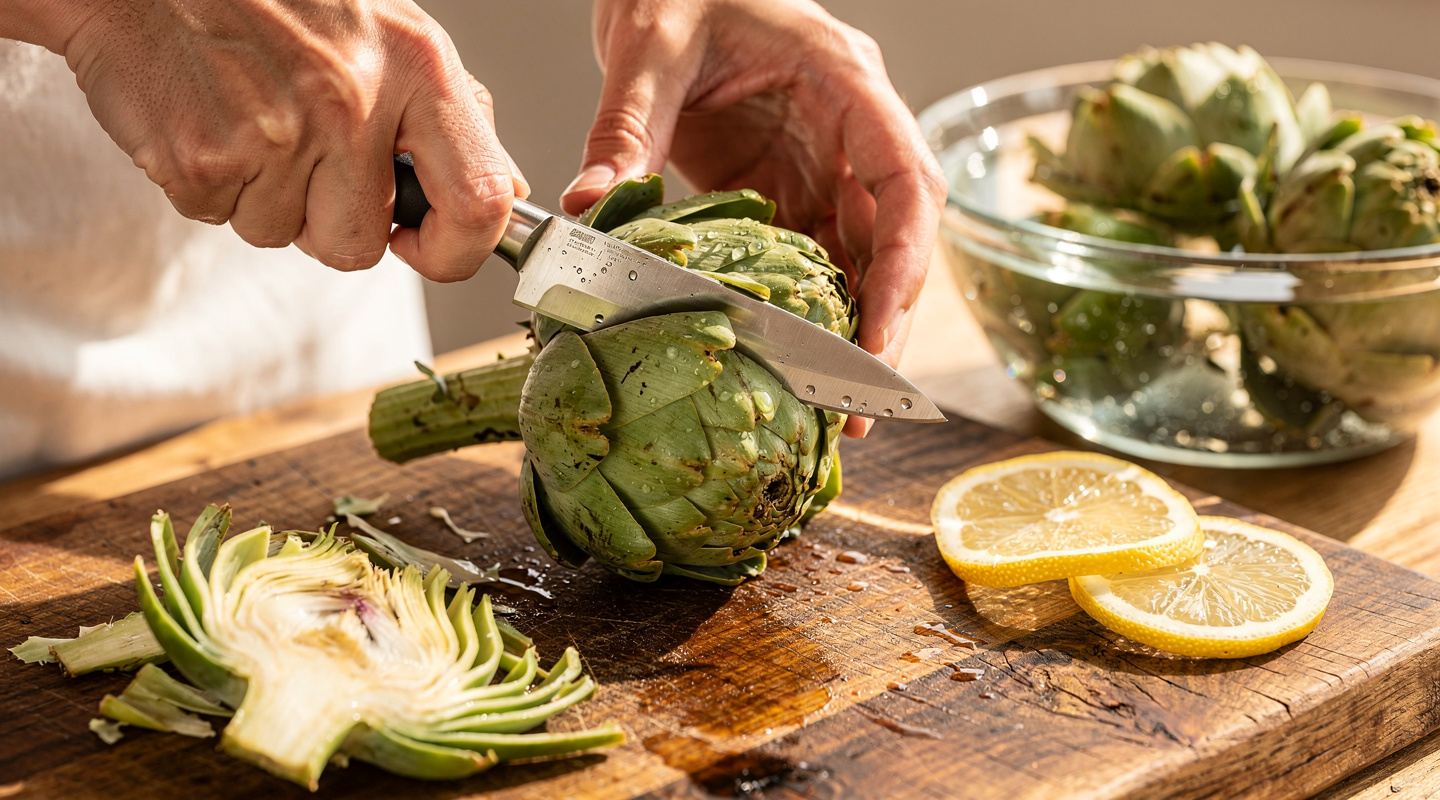
Preparing the artichokes before pressure cooking takes less than five minutes. It's not complicated, but it makes a big difference to the final result.
An improperly prepared artichoke cooks unevenly, and the outer leaves may remain tough.
Here's what you need to do before placing the artichoke in the Seb Clipso.
Cut the stem and remove the tough leaves
Start by cutting the stem at the base , not halfway up; cut it right down to the base. The stem is often fibrous and doesn't soften well, even under pressure.
Next, remove the two or three outermost rows of leaves, those that are very tough, spotted or dry. They are not pleasant to eat and useless to keep.
- Trim the tips of any remaining leaves if they are very sharp (optional, mainly for presentation)
- Rinse the artichoke under cold water, gently separating the leaves to remove the soil
- If you want to prevent oxidation, rub the cut base with half a lemon
Rubbing the cut end with lemon slows down the browning, but it's especially useful if you're preparing your artichokes in advance. It's not essential for immediate cooking.
According to ANSES recommendations on fruit and vegetable consumption, careful rinsing before cooking remains a good systematic practice, regardless of the vegetable's origin.
How do I position the artichoke in the steamer basket?
The Seb Clipso comes with a steamer basket. This is where the artichoke goes to steam it whole under pressure and speed up its cooking.
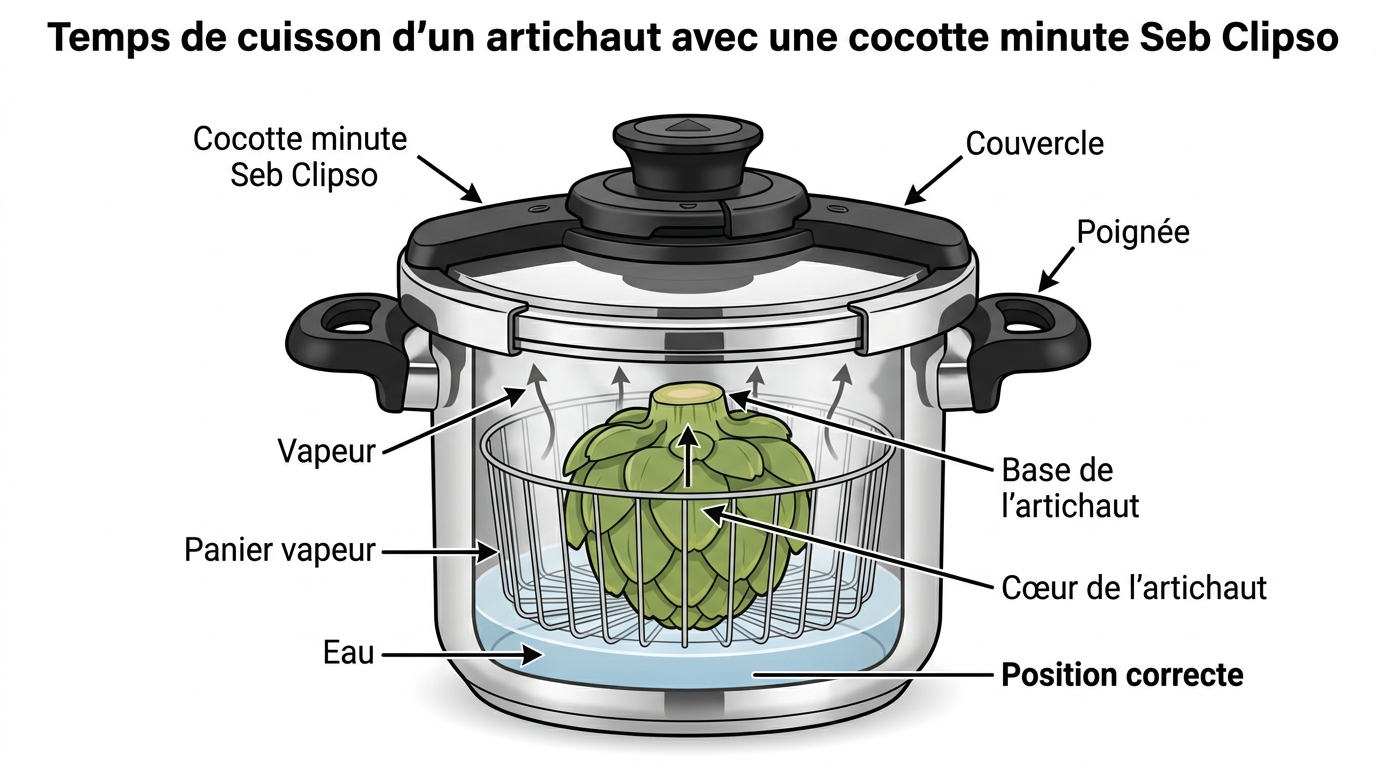
Position the artichoke head down, that is, with the base (where you cut the stem) facing upwards.
This position allows the steam to penetrate directly to the heart of the vegetable, where the flesh is thickest.
- If you are cooking several artichokes at the same time, do not pack them too tightly: the steam needs to circulate
- The 6-liter Seb Clipso is perfect for two medium-sized artichokes
- Do not place the artichoke directly in water: steaming, not boiling, gives a better result in terms of texture
Check that the steamer basket is positioned above the water level in the tank. It should not be submerged in the water; otherwise, it will no longer be steaming but boiling.
If you are still hesitating between different steam cooking equipment, taking the time to choose a steamer suited to your needs can make a real difference in the long run.
⏱️ Pressure cooker artichoke cooking calculator
Get the exact time and amount of water for your Seb Clipso or similar pressure cooker.
The recommended amount of water in the Seb Clipso
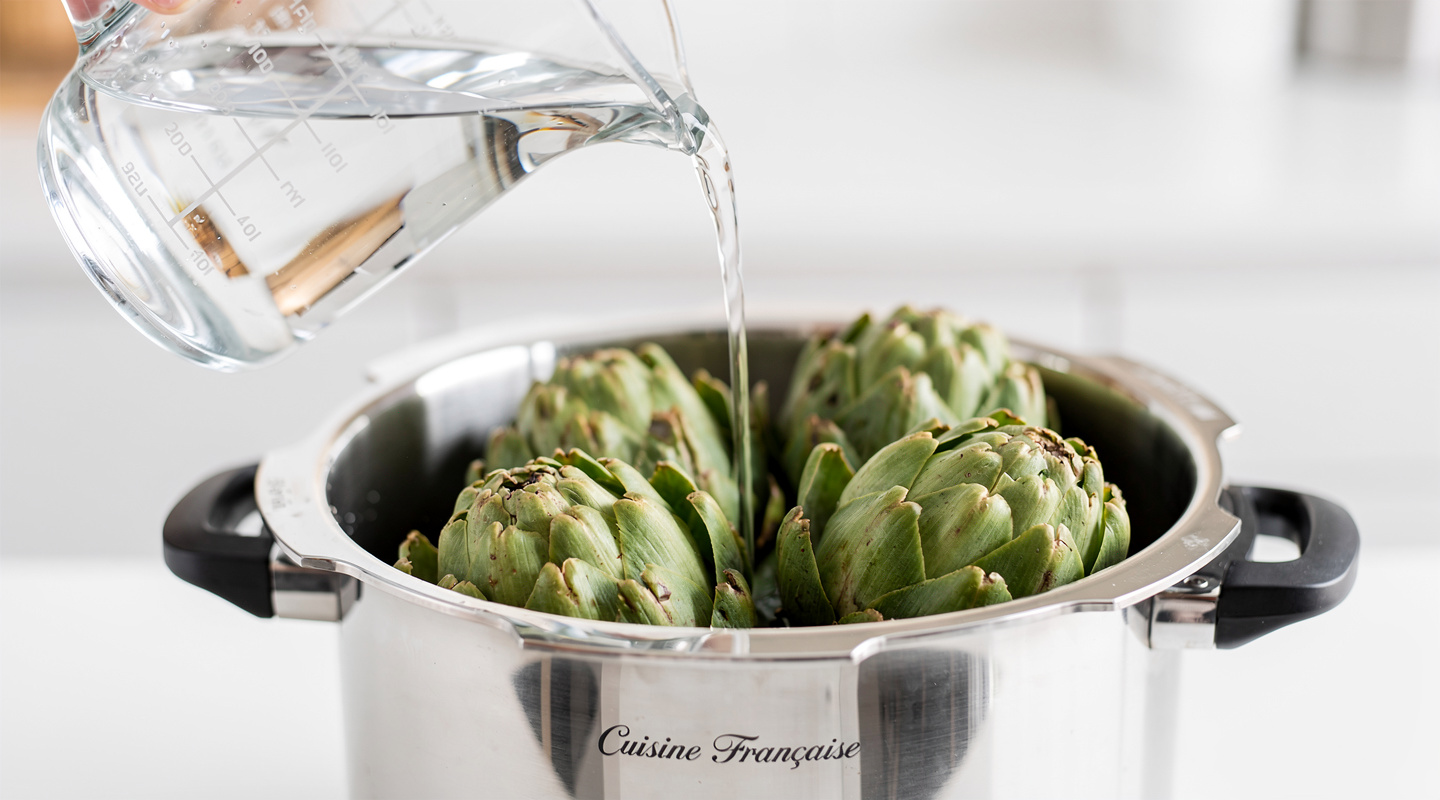
A pressure cooker won't work without water. Too little, and the bottom will burn before pressure is reached. Too much, and the steamer basket will sit in the water, completely changing the cooking process.
How much water is needed for successful steaming?
To steam artichokes in the Seb Clipso, pour between 25 and 35 cl of water into the bottom of the tank. This is the minimum volume to generate enough steam for the entire cooking time.
Pressure cooker specialists recommend never using less than 25 cl of water, even for short cooking times. The Seb Clipso often has a "MIN" marking engraved inside the pot: this is your direct reference.
For two or more artichokes, stick to 30 to 35 cl. There's no need to add more.
Should you add salt or lemon to the water?
It's not essential, but it's possible! Adding half a teaspoon of salt to the cooking water can lightly flavor the flesh. Lemon in the water helps preserve the green color of the leaves.
User feedback shows that the difference in taste remains very slight with pressure steaming, since the artichoke is above the water and not in it.
These are mostly visual tricks or gentle flavoring techniques.
Add a bay leaf or a squeeze of lemon to the water if you like a slightly fragrant artichoke. It doesn't change the cooking time.
Signs of successfully cooked artichokes
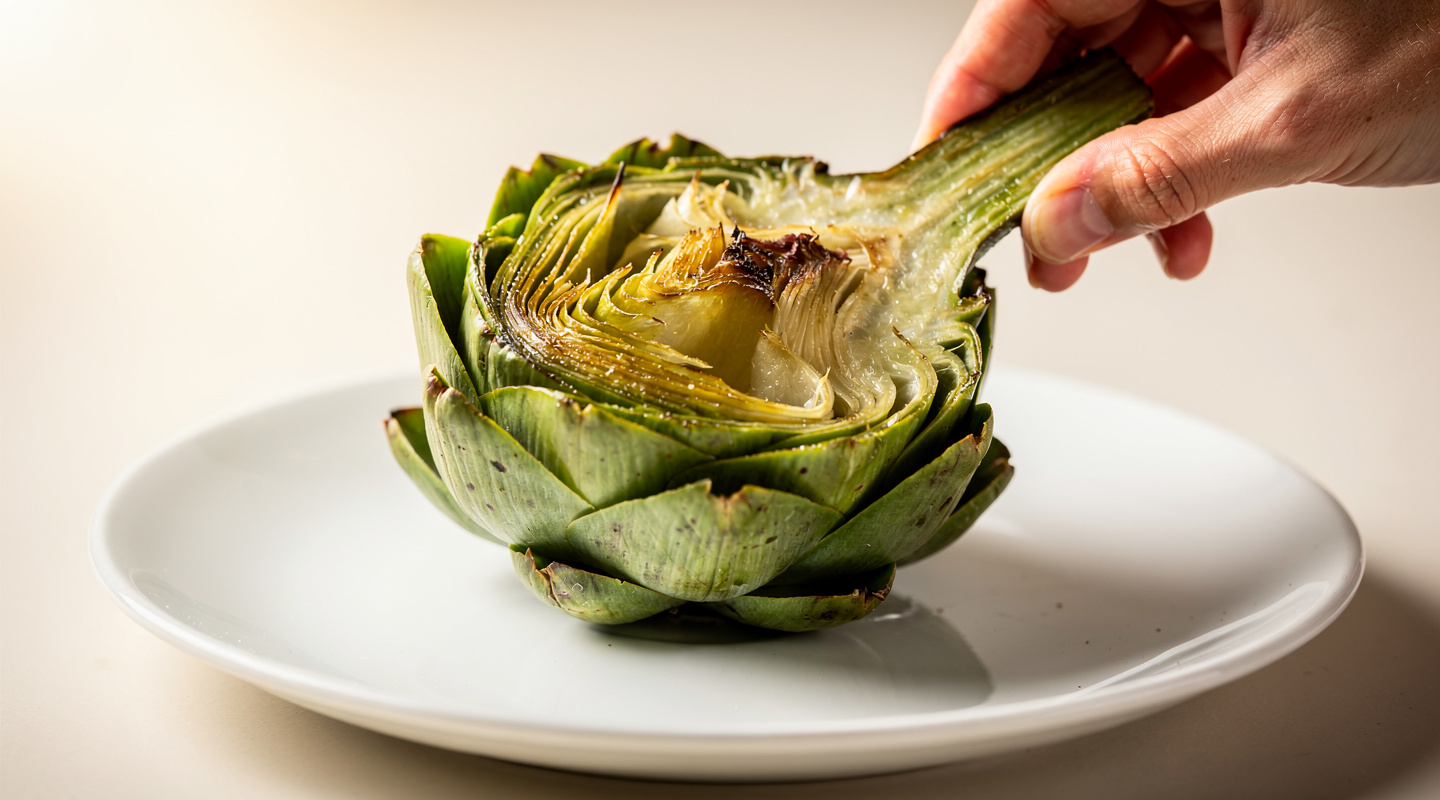
The timer has gone off. But is the artichoke really cooked? There are two simple ways to check, without cutting or damaging the vegetable.
The sheet that detaches easily
This is the quickest test. Grasp a leaf from the middle or the crown and pull gently. If it comes away without resistance, the artichoke has been successfully pressure-cooked.
If the leaf resists or pulls other leaves with it, replace the lid and restart for another 2 to 3 minutes under pressure.
It's quite rare with the times indicated in the summary above, but it can happen with a very large artichoke.
- A sheet that peels off effortlessly = well cooked
- Slight resistance = 2 more minutes under pressure
- Soft, misshapen leaves = overcooked artichoke
Test the heart and base of the artichoke
The base is the thickest part. It's the part that cooks the slowest. To test the heart of a steamed artichoke, pierce the base with the tip of a knife.
It should slide in easily, like butter. If you feel resistance at the entrance, the base is not yet cooked through.
A well-cooked artichoke heart should pierce easily with a fork. If you have to press harder, cook for another 2 minutes. And if the fork goes in on its own before you even have to push, it's overcooked.
These two tests combined provide a reliable reading. Professionals recommend always testing the base last, as it's the part that finishes cooking, not the outer layers.
The end of cooking and common mistakes to avoid
The final stage of cooking in a Seb Clipso is not a matter of chance. The way you release the pressure directly influences the final texture of the artichoke.
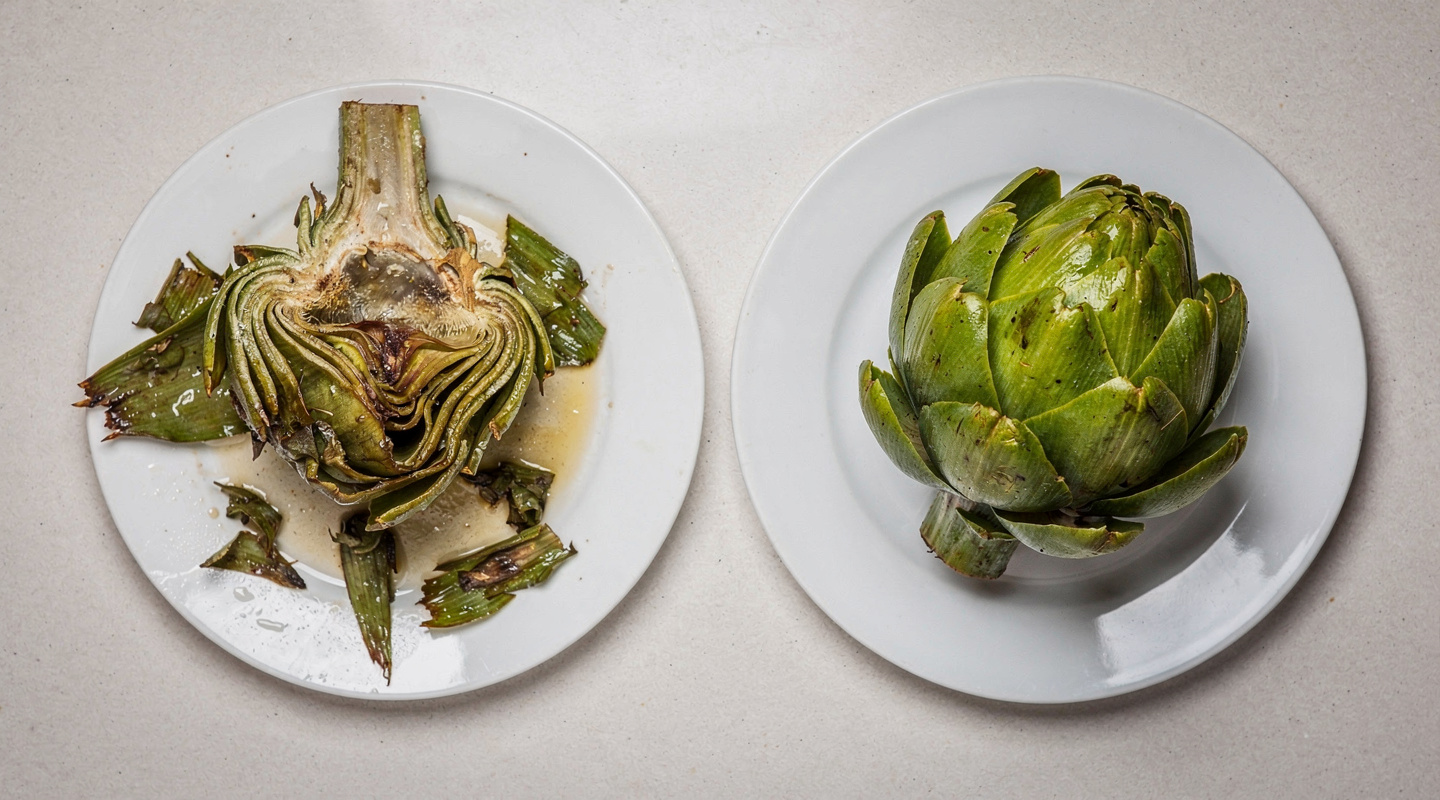
Rapid or natural decompression: which to choose?
With the Seb Clipso, you have two options to finish cooking:
- Rapid decompression : You manually turn the decompression valve or knob to release the steam immediately. It's quick (30 seconds to 1 minute).
- Natural decompression : you let the pressure cooker release its pressure on its own, without intervening. This takes 10 to 15 minutes.
For artichokes, rapid decompression is preferable as it stops the cooking process abruptly, preventing the artichoke from continuing to cook in residual steam.
Natural decompression is best suited to slow-cooked dishes or legumes, such as when trying to control the cooking of quinoa or other grains that benefit from a gradual temperature increase.
After a quick release of pressure, open the lid and immediately remove the artichoke from the steamer basket. Leaving it in the closed pot while still hot will continue to cook it in the residual steam.
Mistakes that result in an artichoke that is too hard or too soft
Here are the most frequent mistakes, and what they actually cause:
| Error | Consequence |
|---|---|
| Start the timer before pressurizing | Undercooked artichoke, hard heart |
| Not enough water in the tank | Pressure not reached, or burned |
| Artichoke placed in water (not steaming) | Waterlogged texture, bland |
| Natural decompression instead of rapid | Artichoke too soft, undone |
| Apply the same time regardless of size | Results varied depending on the vegetables |
One last thing that is often overlooked: purple artichokes cooked in a pressure cooker cook faster than Camus artichokes.
If you leave a small violet in the oven for 12 minutes, it may become too soft. Follow the 8 to 10 minutes indicated in the table.
- Cooking time is two to three times faster than in a saucepan
- Consistent results if the timing according to size is respected
- Aromas are preserved thanks to pressurized steam
- Little supervision during cooking
- Ideal for saving time in the kitchen on a daily basis
- Small margin of error: 2-3 minutes too long and it's a failure
- Quick decompression is essential to stop the cooking process
- Time varies depending on the size; it must be adjusted each time
- Not suitable if you want to improve cooking with a continuous visual monitoring technique.
Answers to your questions
How long should you cook an artichoke in a pressure cooker?
A medium-sized artichoke cooks in 10 to 12 minutes under pressure in a Seb Clipso pressure cooker. A small purple artichoke takes 8 to 10 minutes, and a large artichoke 13 to 15 minutes. The timer always starts after the pressure is reached, not after the lid is closed.
How can you tell if an artichoke cooked in a pressure cooker is ready?
Pull off a leaf from the middle: if it comes away easily, the artichoke is cooked. You can also pierce the base with the tip of a knife: it should go in easily. If you feel resistance, cook for another 2 minutes under pressure.
How much water should I put in a Seb Clipso to cook an artichoke?
Pour 250 to 350 ml of water into the bottom of the pot, without exceeding the level of the steamer basket. This is sufficient to generate the necessary steam for the entire cooking time. Never use less than 250 ml, or the pressure cooker may not build up pressure properly.
Should you choose rapid or natural decompression for an artichoke cooked in a pressure cooker?
Rapid decompression is recommended for artichokes. It stops the cooking process immediately and prevents the vegetable from continuing to soften in the residual steam. Natural decompression, which is longer, is better suited to stews or legumes.
Can you cook several artichokes at the same time in a Seb Clipso?
Yes, if the steamer basket and the size of the pot allow it. For two medium artichokes, a 6-liter Seb Clipso pot is suitable. Be careful not to pack them too tightly: the steam must circulate freely around each vegetable. The cooking time remains the same.
