
Are you looking for a way to remove limescale from a window without spending hours scrubbing those stubborn white stains that refuse to disappear despite your best efforts? It quickly becomes frustrating to risk permanently scratching the precious glass surface or making it opaque through irreversible and costly chemical corrosion.
This practical guide reveals effective natural solutions like warm white vinegar to dissolve these deposits, while also sharing professional secrets for protecting your glass long-term and finally restoring perfect, sparkling clarity without emptying your precious wallet 🙂
Why does limescale build up on your windows?
These white marks often spoil the view. Yet, the glass is not as smooth as it first appears.
The porosity of glass in the face of hard water
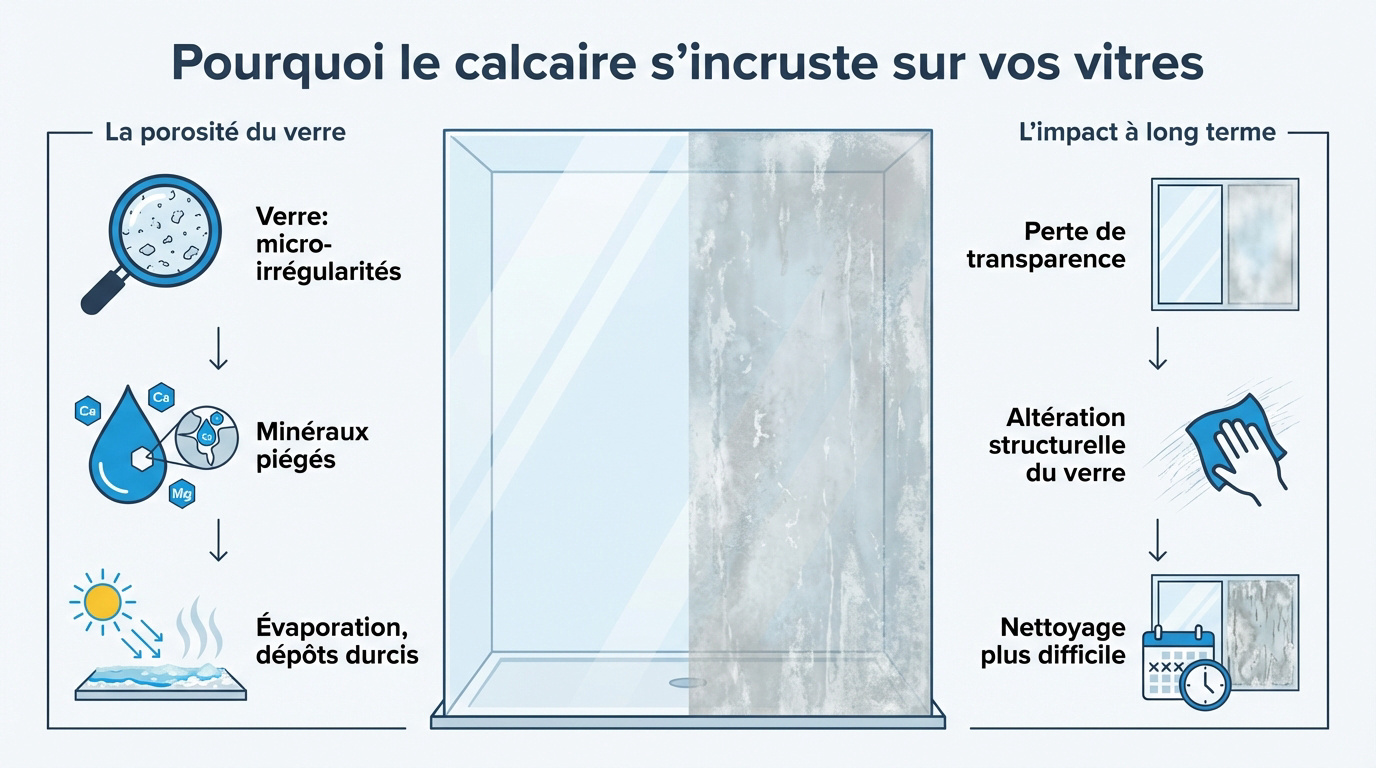
Glass has microscopic irregularities. These micro-cavities trap minerals from tap water or rainwater.
The water evaporates, leaving behind calcium and magnesium. These deposits harden on the wall. It's a never-ending cycle.
Be aware that these lime residues can erode the glass and subsequently attack the material deeply over the months.
Once "baked" by the sun, these stains become a chore. Cleaning them then becomes a real challenge.
The long-term aesthetic and material impact
Limescale forms a dull film that blocks light. Without maintenance, the appearance of your windows quickly becomes neglected.
Showers and exterior windows are subjected to daily mineral damage. These deposits leave lasting marks on the glass.
Limescale is not just an aesthetic concern; it eventually alters the very structure of the glass by creating micro-scratches when rubbed too vigorously.
Act as soon as the first stains appear. The longer you wait, the more extensive the treatment will be to preserve the brightness of your windows.
3 natural tips to remove limescale from windows
Since the problem has been identified, let's move on to tried-and-tested home remedies that won't empty your wallet.
Hot white vinegar as a radical solution
White vinegar is the ultimate weapon for removing limescale from windows, but also in the kitchen or sometimes on metal… Its natural acidity gently dissolves alkaline deposits. This eco-friendly choice effortlessly removes limescale from glass.
To succeed, master the use of acidic products because this is very often the basis for achieving perfect transparency in your home.
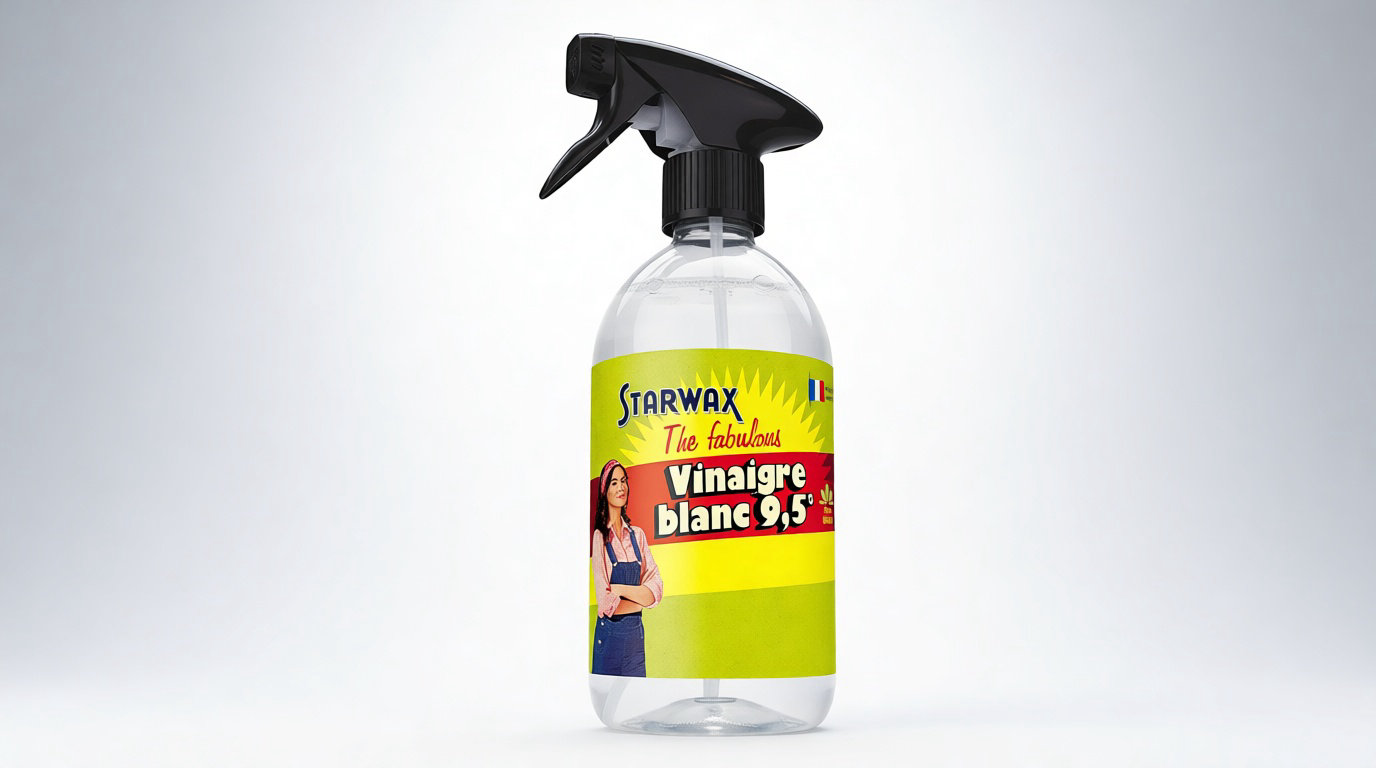
Heating the liquid boosts the reaction. Spray the warm vinegar, leave it for an hour, then rinse. The result is amazing on even the oldest and most stubborn stains.
- Pure white vinegar for stubborn stains
- Mix 50/50 with water for routine maintenance
- Minimum break time of 15 minutes
Lemon and citrus essential oils
Use fresh lemon for light limescale. Citric acid is a powerful natural solvent. It leaves an incomparable clean scent throughout your home.
Rub the half-lemon directly onto the glass. Pay particular attention to the corners where water often collects. This is a perfect method for small mirrors.
- Cut a lemon in half.
- Rub the pulp on the limestone.
- Leave it to act for several hours.
- Rinse the glass thoroughly.
Citrus oils deeply degrease. They enhance the shine of cleaning. A few drops are enough for a water-repellent effect.
Add a few drops of citrus essential oil to your water to degrease and limit the return of limescale.
Rinse thoroughly after application. The lemon sugar attracts dust if any sticky residue remains. A quick wipe with a dry microfiber cloth will finish the job cleanly.
How to treat a heavily limescaled window without scratching it?
Sometimes vinegar is not enough to remove a thick layer of tartar; in such cases, gentle mechanical action is necessary.
Baking soda in a soft abrasive paste
Baking soda becomes your best ally when the situation gets out of hand. Its very fine grains act like a magic eraser on limescale. Used carefully, it completely preserves the transparency of the glass.
Preparing your mixture is simple. Mix three parts powder with one part water. You should obtain a smooth cream that is very easy to spread on the affected area.
| Method | Action | Risk of scratching | Efficiency |
|---|---|---|---|
| Vinegar | Dissolution | Null | 3/5 |
| Bicarbonate | Gentle abrasion | Weak | 4/5 |
| Metal sponge | Strong abrasion | Pupil | 5/5 |
Apply the paste in circular motions. Don't press too hard; let the grains do the work. Rinse thoroughly to remove any remaining white residue.
The right tools for a mess-free cleanup
Choosing the right tools is crucial for the survival of your windows. Avoid scrapers and the green side of sponges. They cause irreversible damage to the glass.
Opt for high-quality microfiber cloths. They trap particles without scratching the surface. This is the standard tool for professionals.
Let's talk about the WD-40 trick for truly desperate cases. This product can help remove very old and stubborn deposits.
However, be sure to degrease the glass thoroughly after using it.
Use only as a last resort. Protective gloves must be worn as ammonia is a hazardous substance.
For a flawless result, always keep these items on hand:
- Clean microfiber cloth
- Flexible rubber squeegee
- Demineralized water for the final rinse
Prevent the return of white marks permanently
Cleaning is good, but making sure that limescale doesn't come back the very next day is even better for your peace of mind.
Clean your windows once or twice a week to prevent limescale from becoming permanently embedded on your surfaces.
Squeegee and dry after each use
A squeegee should become your best friend in the bathroom. A quick pass after showering removes 90% of the water. It's the most worthwhile habit.
Don't neglect your window frames. Moisture gets trapped there and eventually drips onto the glass. A quick wipe with a dry cloth is all it takes.
Consistency makes all the difference. Here's a simple truth:
The secret to a spotless window lies less in the miracle product than in the regularity of immediate drying after each exposure to water.
This simple step takes ten seconds but saves hours of scrubbing. It's a simple way to maintain perfect transparency every day. Your windows will thank you for this minimal effort.
Filters and hydrophobic products to protect glass
Hydrophobic treatments create a water-repellent effect. Water slides off the surface without sticking. This drastically limits the formation of new mineral deposits on your glass.
Consider a water softener for a radical solution. Treating water at the source protects not only your windows but also your entire plumbing system. It's a worthwhile long-term investment for your home.
Use demineralized water to rinse exterior windows. Without minerals, air drying leaves no white streaks. It's a trick used by professional window cleaners.
Here are some effective options for protecting your surfaces in the long term:
- Rain-X or equivalent application
- Installation of a limescale filter
- Rinse with softened water
Use warm vinegar or baking soda to remove limescale from your windows and restore their original shine. Use a squeegee after each wash to stop the buildup. Act now to protect your glass: restored clarity will transform your daily life.
Practical questions
Why does limescale stick so much to my windows?
Even though glass looks very smooth, it actually has tiny holes invisible to the naked eye. When water evaporates, it leaves behind minerals like calcium and magnesium that become trapped in these small cavities. Over time and with the sun's heat, these deposits harden and eventually form very stubborn white spots.
Is white vinegar really effective at removing limescale?
Yes, it's one of the best natural and economical solutions! Its acidity allows it to dissolve minerals without damaging the glass surface. For greater effectiveness on old stains, feel free to heat the white vinegar before spraying it. Let it sit for about an hour before rinsing for a spotless result.
How to clean a heavily limescaled window without risking scratching it?
For stubborn limescale deposits, you can make a homemade paste by mixing baking soda with a little water. This paste acts as a very gentle scrub that loosens limescale without scratching the glass. Apply it in circular motions, then rinse thoroughly. Above all, avoid using the abrasive side of sponges or metal scrapers, as these can cause irreversible damage.
Can limescale permanently damage glass?
Unfortunately, yes. If left untreated, limescale can cause glass corrosion. This manifests as a dull film or milky streaks that cannot be removed because the glass's structure is damaged. That's why it's advisable to clean your windows regularly, ideally once or twice a week.
What are some tips to prevent white marks from returning?
The simplest and most effective method is to use a rubber squeegee after each exposure to water, such as in the shower. By removing the water before it evaporates, you eliminate 90% of the limescale. You can also apply a hydrophobic treatment that makes water bead up and roll off the surface, preventing minerals from adhering permanently.
Is lemon a good alternative for cleaning windows?
Lemon is excellent for removing light limescale thanks to its citric acid content. Simply rub half a lemon directly onto the glass and let the juice work for a few hours. In addition to its descaling and degreasing properties, it leaves a very pleasant, fresh scent. Just remember to rinse thoroughly to avoid leaving any sugary residue that could attract dust.
