
In short
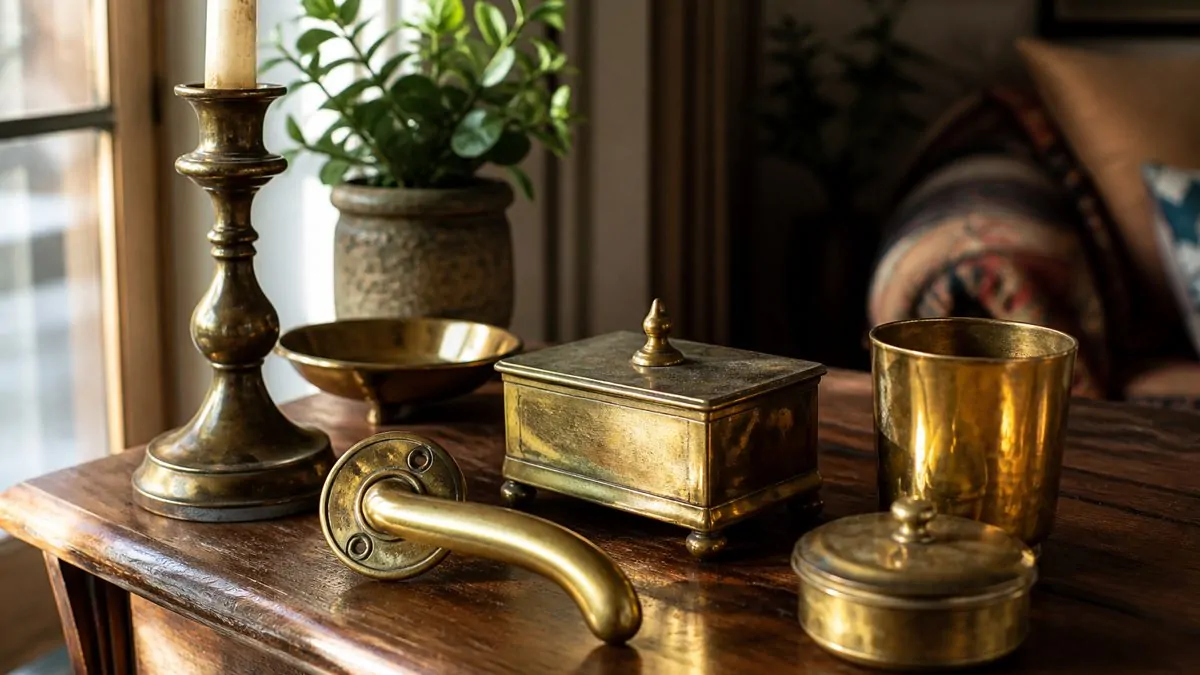
A door handle that has lost its shine, a family candlestick covered in black stains, a tap that is turning greenish: brass tarnishes quickly, especially in contact with moisture and hands.
The good news is that it can almost always be fixed with products already found in a kitchen cupboard. The bad news is that an overly aggressive method applied to the wrong spot can damage a varnish or erase a patina that was precisely what gave the object its charm.
This guide details how to recognize the type of brass you are dealing with, which method to choose depending on its condition, and in which cases it is best to refrain from cleaning.
Identify your brass before cleaning it: solid, plated or varnished?
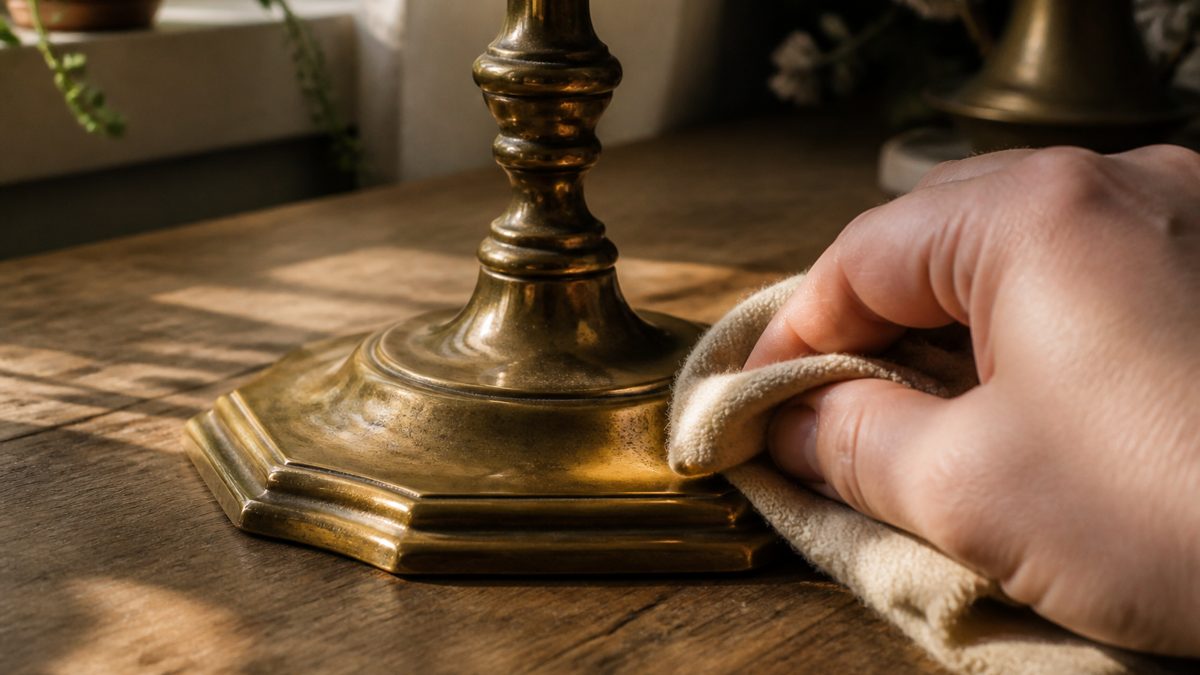
Brass is an alloy of copper and zinc, generally composed of about 60 to 70% copper and 30 to 40% zinc depending on the grade.
It is this high copper content that explains why it so quickly becomes covered with dull reflections or green spots when in contact with air and humidity, just like the pure metal from which it is derived.
Before choosing a product, you need to know what type of brass you are dealing with, because the three are treated differently.
- Solid brass : the object is made entirely of brass. It can withstand most of the methods described on this page, including the most active ones.
- Brass plating : a thin layer of brass covers a less noble metal (often zinc or iron). Excessive rubbing or the use of an overly acidic product wears away this layer, revealing the base metal underneath.
- Varnished brass : a transparent layer protects the surface to slow down tarnishing. An acidic or abrasive product attacks the varnish first, before even touching the metal.
The magnet test (a magnet that doesn't stick indicates brass) isn't enough on its own: some brass-plated objects are made from a non-magnetic alloy, as metal recycling professionals. Instead, rely on a discreet area: very lightly sand a hidden corner with a soft cloth. If a different color appears underneath, the object is plated, not solid.
A varnish is generally recognizable by its slightly plasticized appearance and resistance to tarnishing, regardless of the object's age. When in doubt, always test a method on a hidden area (the underside of a leg, the back of a handle) before treating the entire surface.
Which product should you use depending on the condition of your brass?
Once the type of brass has been identified, the choice of product depends primarily on the condition of the piece: slightly tarnished, oxidized, or covered in verdigris. Here's a summary to help you quickly find your way around.
| State of the brass | Recommended method | Precaution |
|---|---|---|
| Dusty, fingerprints | Soapy water (Marseille soap or dishwashing liquid) | None, suitable for all types of brass |
| Slightly tarnished, matte | Non-gel toothpaste on a soft cloth | Rinse immediately after polishing |
| Oxidized, black spots | Diluted white vinegar (50 cl per 1 liter of hot water) | Never on varnished brass, short application time |
| Localized verdigris | Lemon and salt paste, or baking soda paste | Test on a hidden area before application |
| Old, with heritage value | Dusting with dry or soapy water only | Don't try to make it shine, see below |
Which product should I choose for my brass?
Answer two questions to obtain the method adapted to your object.
Cleaning slightly tarnished brass: soapy water and toothpaste
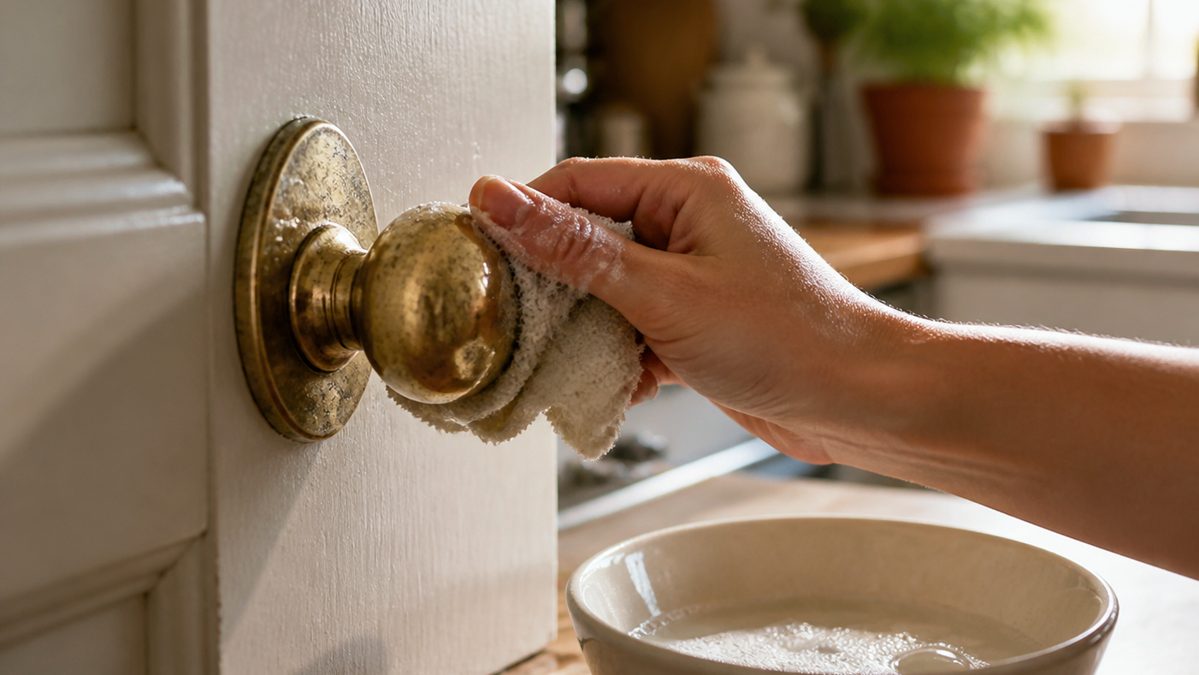
For brass that's simply dusty or marked by fingerprints, there's no need to bring out the big guns. This is also the only step you should never skip, regardless of the type of brass.
Mix warm water with a little grated Marseille soap or dishwashing liquid.
Dampen a soft cloth, wring it out well, and clean the surface in circular motions.
Rinse with clean water and dry immediately with a clean cloth. This rapid drying, often overlooked, prevents residual moisture from causing further tarnishing in the following hours.
If a slight dullness remains after this first pass, a dab of non-gel toothpaste applied to a soft cloth and gently rubbed will usually do the trick. Toothpaste contains fine abrasive particles, enough to restore the shine without scratching the metal.
Always rinse off the toothpaste with clean water after polishing. If left on, it can leave a film that dulls the surface again when it dries.
How to clean oxidized brass or brass covered in verdigris?
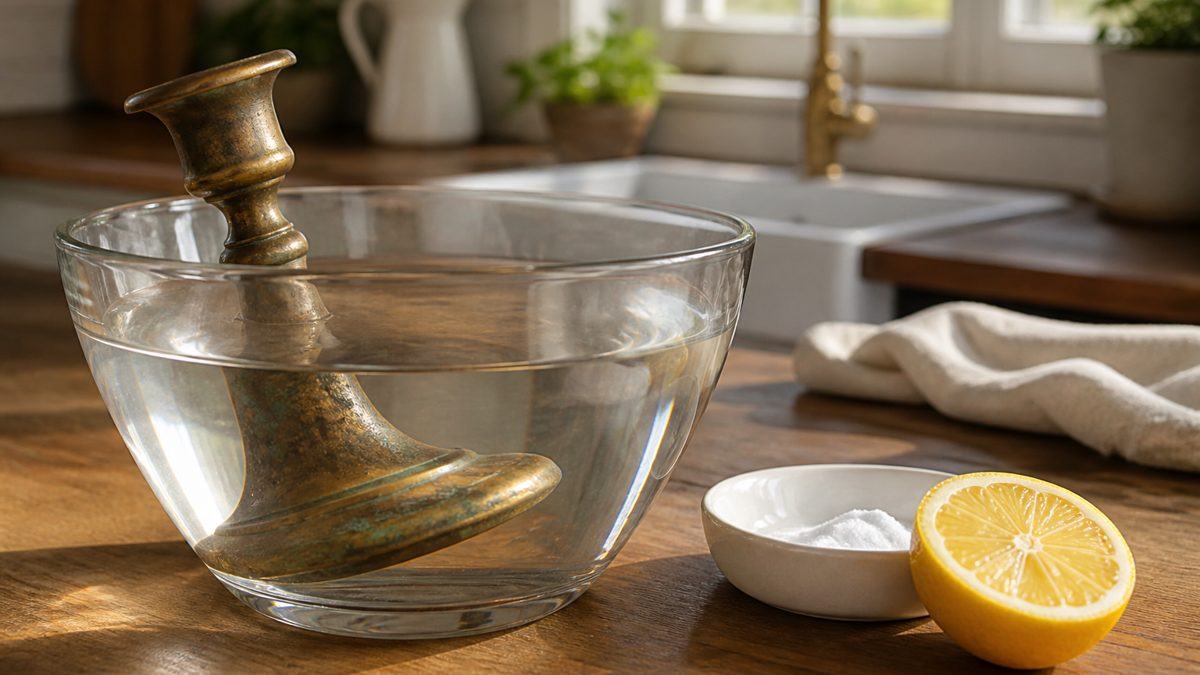
When soapy water is no longer enough, acidic or slightly abrasive products are used. Three solutions are most common, each suited to a specific situation.
White vinegar remains the go-to solution for removing black oxidation stains. Dilute it at a ratio of 50 cl to 1 liter of hot water in a basin, and let the object soak for just a few minutes.
Excessive exposure time does not accelerate the result: it mainly increases the risk of further damaging a plated or fragile piece.
Contrary to popular belief, combining vinegar and bicarbonate is not particularly effective: the two largely neutralize each other on contact, and the observed effect is mainly due to the mechanical friction that accompanies the application, not to a magical chemical reaction.
To remove localized verdigris, a paste of baking soda and water, or lemon and coarse salt, is more effective. Apply it directly to the green areas with a cloth or an old soft toothbrush, leave it on for 10 to 15 minutes, then rinse thoroughly with clean water.
Ketchup also works thanks to its acidity (vinegar and tomato): applied in a thin layer and left for 10 minutes before rinsing, it restores shine without significant scrubbing effort.
Never use steel wool, scouring sponge or hard brush on brass, even solid brass: the metal is soft and scratches visibly, even under moderate pressure.
When is it best not to clean your brass?
Not all brass pieces are meant to be restored to their original shine. On an antique brass object, a uniform and stable patina is often part of its value, both aesthetic and heritage-related.
Aggressively stripping it can irreparably damage a family heirloom or antique.
This is particularly the case for inherited chandeliers, church copper and brass items, or certain antique light fixtures whose golden-brown tint results from decades of controlled oxidation.
In these situations, it is best to limit oneself to regular dusting and cleaning with soapy water, without ever trying to restore the original shine.
If you have any doubt about the value or rarity of an antique brass object, have it appraised before any cleaning. A piece may be worth more with a patina than with a bright shine.
To make brass shine and protect it after cleaning
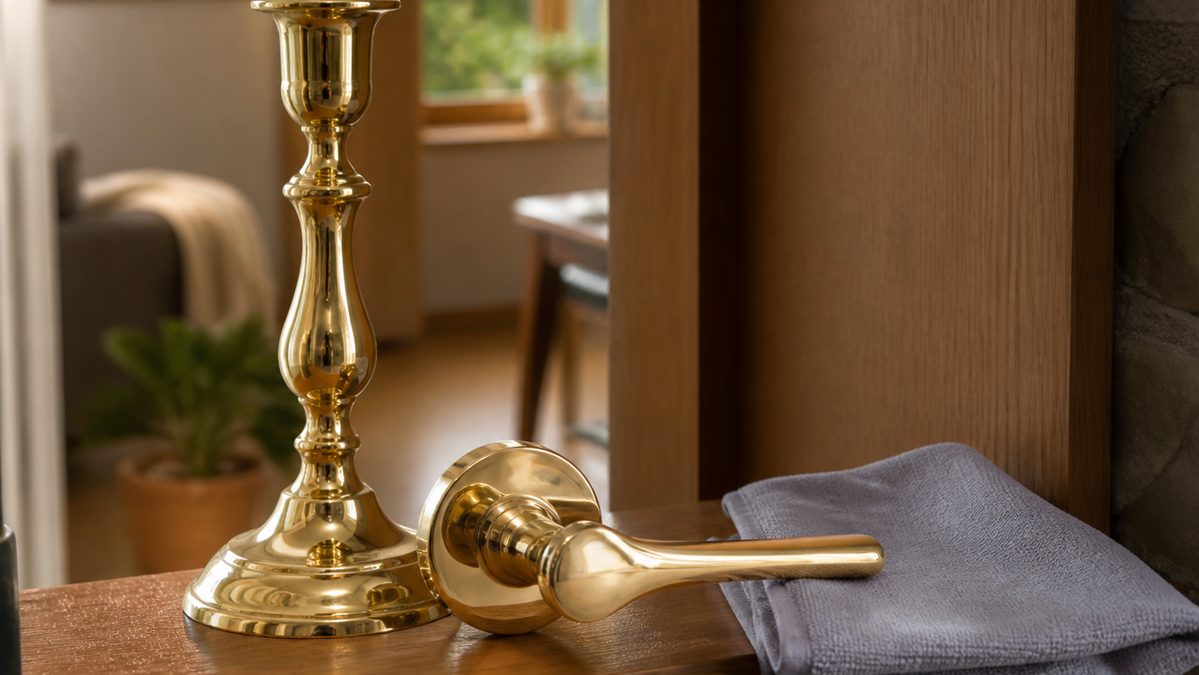
Once the room is cleaned, a final wipe with a dry microfiber cloth brings out the shine.
For a more refined finish, a cloth lightly soaked in olive oil, combined with a little elbow grease, will enhance the shine.
Its copper content, which varies depending on the exact alloy, makes brass more or less susceptible to further oxidation as soon as it comes into prolonged contact with humid air, as detailed in the alloy's composition. To slow this process, the Canadian Conservation Institute recommends a thin layer of microcrystalline wax rather than varnish for valuable pieces.
Unlike varnish, it remains reversible and allows the metal to breathe while effectively slowing down the return of oxidation.
In the absence of specialized wax, a simple gesture already greatly limits the reappearance of stains: avoid handling the object with bare hands.
The natural acidity of the skin accelerates tarnishing, a phenomenon particularly visible on solid brass door handles and taps.
Keep small brass items away from direct light and moisture (away from a bathroom or an exposed window): these are the two main accelerators of tarnishing between cleanings.
In summary
The best approach to tarnished brass is always to start gently: soapy water first, then a more active product only if necessary.
And never without first identifying whether it is solid brass, plated or varnished.
Vinegar, bicarbonate and lemon remain effective allies against oxidation and verdigris, provided that short application times are respected and rinsed immediately.
On an antique object of heritage value, the patina often deserves to be preserved rather than stripped.
Once the room has been cleaned, regular maintenance and light protection (wax or simply avoiding contact with bare hands) are enough to delay the return of stains for a long time.
How to clean very dirty or heavily tarnished brass?
For heavy soiling, it's best to proceed in several stages rather than one intensive cleaning. Start with a bath in warm soapy water to remove surface grime, then treat the remaining oxidation with diluted white vinegar, letting it sit for just a few minutes. A heavily soiled item often requires two or three clean-rinse-dry cycles rather than a harsh cleaning product all at once.
Is white vinegar really effective on brass?
Yes, its acidity effectively dissolves surface oxidation layers and black stains. However, it should be avoided for prolonged application on varnished or plated brass, where it can damage the finish before even addressing the tarnish.
What is the best product for cleaning brass, natural or commercial?
For routine maintenance, natural solutions (soap, vinegar, baking soda, lemon) are perfectly adequate and cost next to nothing. A commercial polish may work faster on heavily oxidized brass, but it is generally more abrasive: reserve it for solid brass, never for plated or varnished brass.
How can you tell if an object is solid brass or just plated?
The most reliable test is to very lightly sand a hidden area with a soft cloth: if a different color appears beneath the surface, the object is plated. The magnet test provides an initial indication but is insufficient on its own, as some base alloys are not themselves magnetic.
How to restore badly damaged or heavily oxidized brass?
On heavily oxidized solid brass, prolonged soaking in diluted vinegar followed by very fine sanding (2000 grit or higher) and then polishing can restore a near-new shine. However, this drastic treatment is not recommended for antique or valuable objects: it is better to consult a professional restorer than to risk irreversible loss of patina.
