

In short
A fridge that smells musty or leaves sticky marks on the shelves isn't just unsightly. It's also a sign that bacteria and mold are quietly taking hold, posing a real risk to food preservation.
Cleaning a fridge isn't just about wiping it down once a year when the smell becomes unbearable. A proper routine, with the right products and the right frequency, prevents it from getting to that point.
This guide details the complete method: how often to clean, which products to use or absolutely avoid, how to treat a stubborn odor, and the areas of the fridge that most often escape a wipe.
Why clean your fridge regularly, and how often?
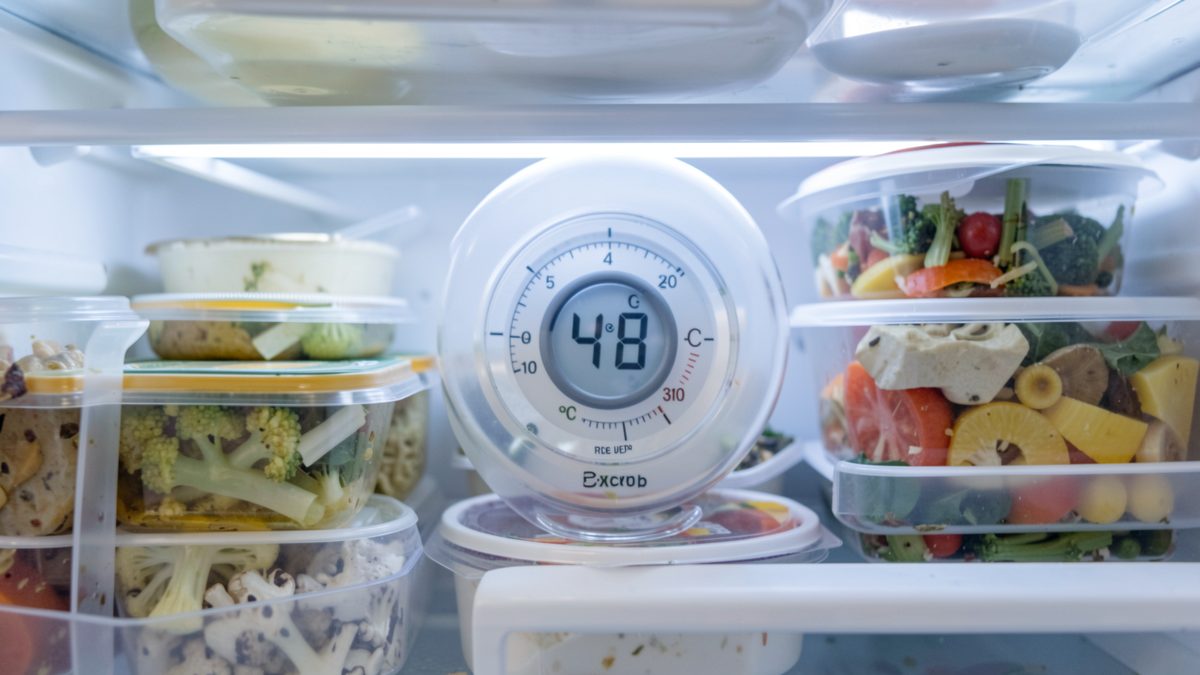
The recommended temperature for a refrigerator is between 0 and 4°C at the coldest point. Below this threshold, the growth of bacteria such as Listeria monocytogenes or Salmonella enterica slows considerably, according to ANSES guidelineson refrigerator hygiene.
This temperature, however, does not protect against food residue accumulated on the shelves or against micro-leaks of liquids (meat, fish, dairy products). These are what feed odors and mold, regardless of whether the thermostat is correctly set.
A refrigerator with automatic defrost (no-frost) tolerates longer intervals between thorough cleanings better because less moisture accumulates inside. A refrigerator with manual defrost, on the other hand, accumulates condensation and frost more quickly around food, which accelerates the development of odors.
Adjust the frequency according to your usage
- Quick cleaning (wiping surfaces, checking dates) : every week
- Complete cleaning (removal of shelves and bins, thorough washing) : every 3 to 4 weeks for a typical fireplace
- Frequent cleaning (every 2 weeks) : if you often consume unpackaged fresh fish or meat, or if the household has 4 or more people
- Clean up immediately : as soon as food has spilled or an expired product has been left out for several days
How often should you clean your fridge?
Provide details about your situation to obtain a comprehensive cleaning schedule tailored to your home.
Simulator: How often should I clean my fridge?
A complete fridge cleaning, step by step
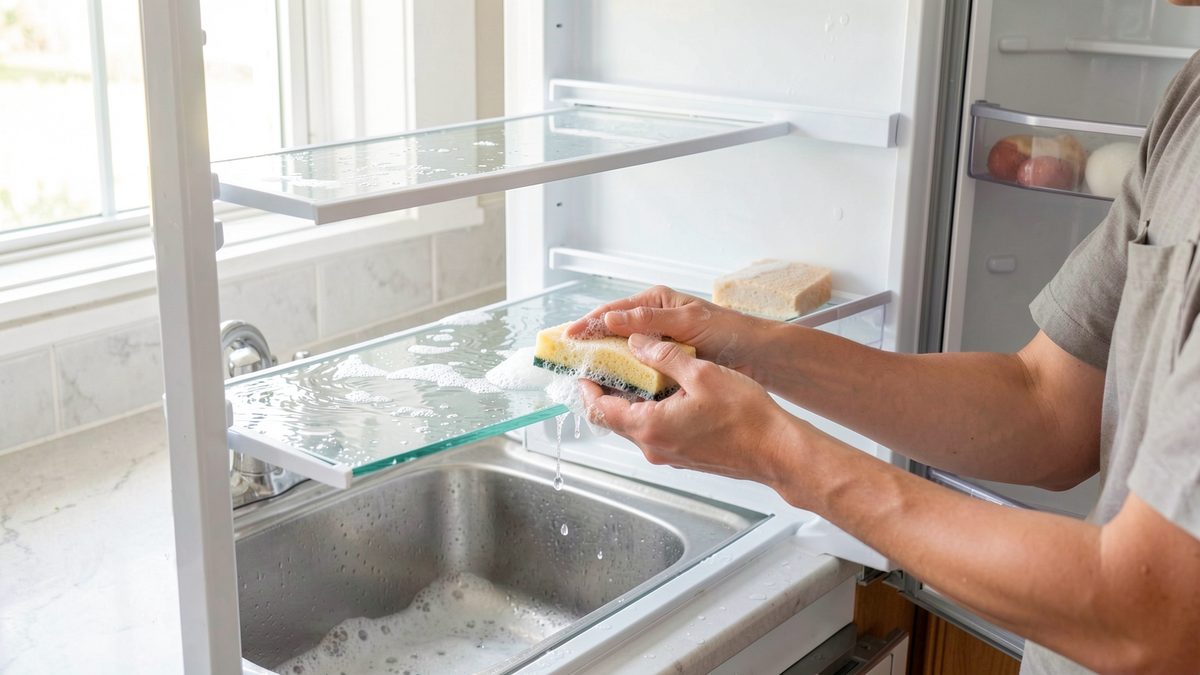
A thorough cleaning shouldn't be rushed. Allow approximately 30 to 45 minutes for a standard refrigerator, following this order to ensure nothing is missed.
- Empty the fridge completely and place the food in a cooler or insulated bag if it is going to stay out of the cold for a long time.
- Sort by checking the dates : throw away any product that is expired, has been open for too long, or has a suspicious smell.
- Remove the removable shelves, drawers and balconies and wash them in warm soapy water in the sink, never in boiling water, the thermal shock of which can cause the still-cold glass to shatter.
- Clean the inside of the cabinet with a solution of diluted white vinegar or bicarbonate, paying particular attention to the corners and the bottom of the fridge where liquid residue accumulates.
- Dry thoroughly before putting everything back in place, to avoid reintroducing moisture which actually promotes the development of mold.
- Store food according to the cold zones (meat and fish in the coldest zone, dairy products and cooked leftovers just above).
Take advantage of the empty fridge to check the door seal: if it is detached or cracked in places, hot air enters continuously and the compressor runs more to compensate, which also promotes condensation inside.
Which products should be used, and which should be absolutely avoided?
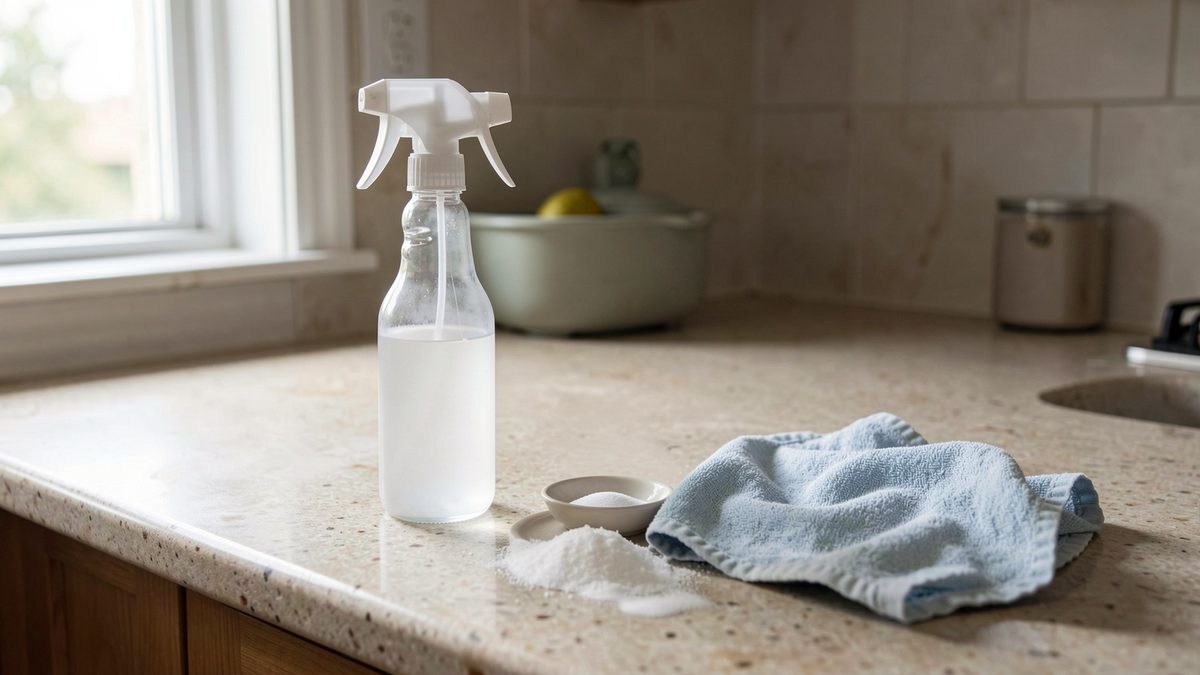
Not all household cleaning products are created equal in areas that come into direct contact with food. Some, very effective on a stovetop or in a bathroom, become risky when applied to the walls of a refrigerator.
Recommended products
- Diluted white vinegar (half water, half vinegar): degreases and sanitizes surfaces without leaving toxic residue, the smell evaporates in a few hours.
- Baking soda dissolved in a little warm water: gently cleans without scratching the plastic of the shelves.
- Black soap or mild dishwashing liquid : sufficient for routine maintenance of lightly soiled surfaces.
Bleach, even diluted, should never remain in contact with food surfaces without thorough rinsing: it can react with other residues and release irritating chlorinated gases, and insufficient rinsing exposes food to a real risk of chemical poisoning during the next meal.
Abrasive products or scouring sponges should also be avoided: they scratch the plastic of the shelves, and these micro-scratches then become perfect havens for bacteria, which are more difficult to dislodge with each subsequent cleaning.
How to remove a stubborn odor from the fridge?
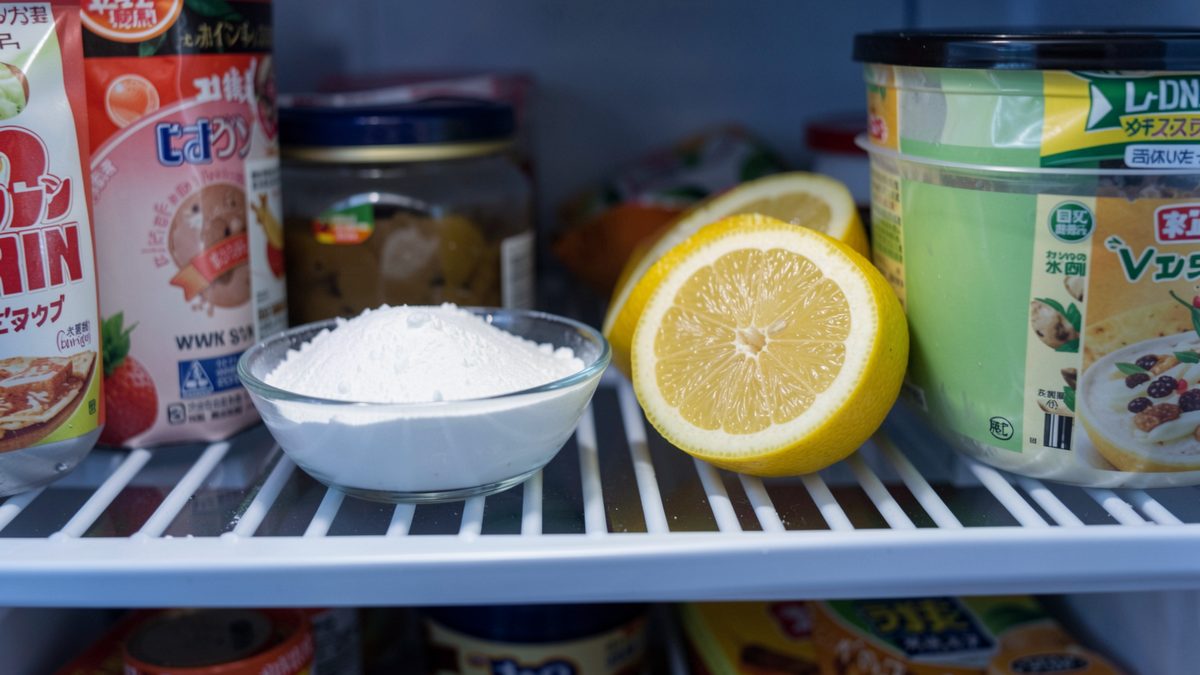
A lingering odor, despite cleaning, almost always stems from food left in a corner or a liquid that spilled unnoticed under a container. Before resorting to multiple odor absorbers, it's best to first find the source.
"I cleaned the fridge, which had developed a bad smell, with pure white vinegar after spilling sardine oil in the bottom of a container." This testimony, shared by a reader on a household tips website, clearly illustrates the preferred method: treat the source before masking the smell.
| Method | Use | Renewal frequency |
|---|---|---|
| Baking soda in a small dish | Absorbs odors continuously | Every 2 to 4 weeks |
| White vinegar in a bowl | Neutralizes strong odors (fish, cheese) | Every 2 weeks |
| Lemon cut in half | It perfumes and lightly absorbs odors | Every 3 to 4 days |
| Cork stoppers | Absorbs moisture and odors | Every 2 weeks |
| Dried coffee grounds | Economical natural absorber | Every 2 weeks |
For a particularly stubborn fishy smell, cleaning with white vinegar followed by 24 hours with a bowl of baking soda left with the door closed usually solves the problem, without resorting to a commercial chemical deodorizer.
Always keep an opened box of bicarbonate dedicated to the fridge, separate from the one used in cooking or baking: it absorbs odors continuously and is easily replaced without waste.
Seals, drawers and drain tray: often overlooked areas
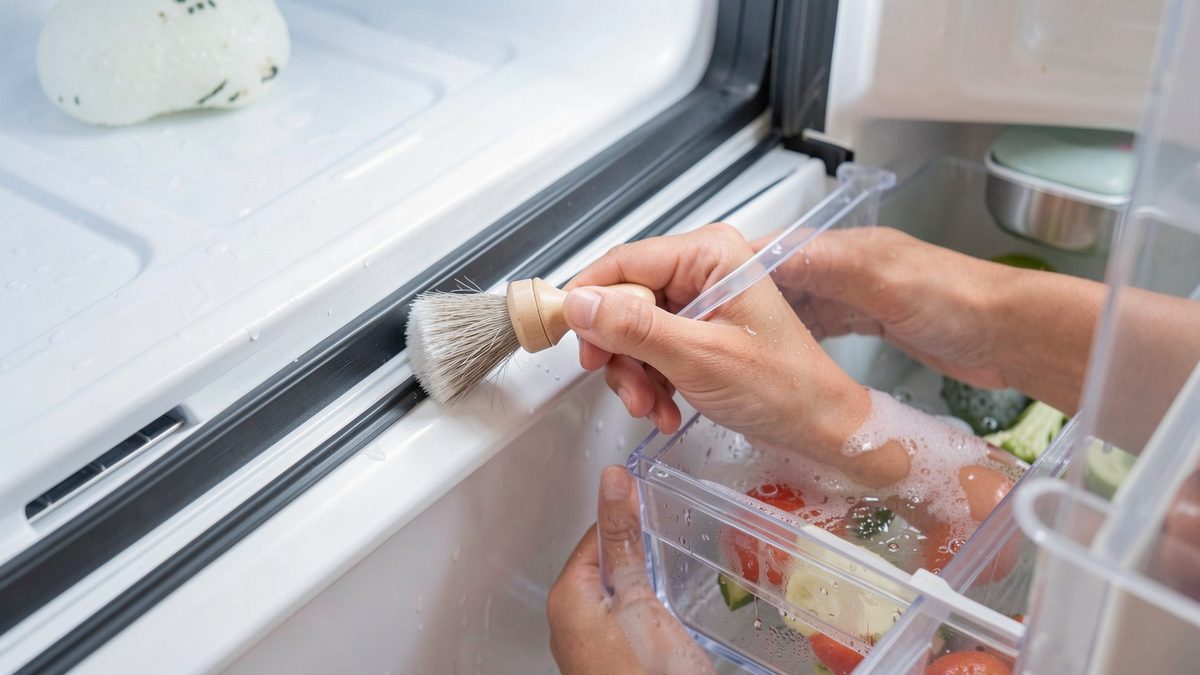
Most cleaning routines stop at the shelves and visible walls. Three areas, however, regularly escape a wipe, even though they concentrate a good portion of the mold detected in a poorly maintained refrigerator.
The door seal
The folds of the rubber seal easily trap crumbs and moisture. Cleaning with a soft toothbrush and a water-baking soda mixture, gently separating the folds, allows you to reach the areas where mold first takes hold.
Vegetable drawers
These are often the dirtiest compartments in the fridge: they collect soil from unwashed vegetables and moisture from condensation. Washing them separately in hot, soapy water, and drying them thoroughly before putting them back in place, prevents them from becoming a breeding ground for odors.
The defrost water collection tray
Located at the back or underneath the refrigerator, depending on the model, this small tray collects defrost water and can develop a musty odor if it is never emptied. Cleaning it three times a year, by carefully removing it and washing it with soapy water, is usually enough to prevent the problem.
Keeping a fridge clean every day

A thorough cleaning is faster and less tedious when it relies on a few habits picked up between sessions.
- Wipe up any food spills or leaks immediately
- Store meat and fish in airtight containers, never directly on the shelf
- Check the dates each week before shopping
- Leaving food open without film or lid
- To pile up to the point of blocking the circulation of cold air
- Clean only when the odor becomes bothersome
In summary
Cleaning a refrigerator doesn't require any special equipment, but a little method and regularity. A thorough cleaning every 3 to 4 weeks, adjusted according to your consumption of fresh produce and the type of refrigerator, prevents most stubborn odors.
The choice of products is just as important as the frequency: white vinegar and bicarbonate remain the safest allies, while unrinsed bleach should never be used in direct contact with food.
Finally, think about the forgotten areas, joints, drawers and drain tray, which are often responsible for odors that return despite an apparently clean interior.
Practical questions
What are the three rules to follow when cleaning a fridge?
Always remove food before starting to avoid cross-contamination, never use undiluted or unrinsed bleach on food surfaces, and dry the inside completely before storing everything away to avoid reintroducing moisture that promotes mold growth.
How do you clean a really dirty fridge, for example after moving house?
Start by applying pure white vinegar to dissolve any stubborn residue. Let it sit for 10 minutes, then follow with a baking soda solution for any remaining stains. If the refrigerator has been left closed and dirty for several weeks, two complete applications are recommended rather than one. Leave the door open for several hours before plugging it back in to allow any lingering odors to dissipate.
Do you need to unplug the fridge to clean it?
This isn't necessary for routine cleaning: you can work compartment by compartment while keeping the refrigerator plugged in, provided you close the door between each step. Unplugging it is only necessary for a deep clean with complete defrosting, or to access the drain pan located near the motor.
Can white vinegar damage the fridge seals over time?
Used diluted and rinsed with clean water after application, white vinegar does not damage the rubber seals. It is primarily undiluted and repeated use, without rinsing, that can eventually weaken and harden the material, ultimately creating the same air leaks as a poorly maintained seal.
Can a commercial disinfectant product be used instead of vinegar or baking soda?
Only if the label explicitly states that it can be used on surfaces that come into contact with food, and provided that it is thoroughly rinsed afterward. If this information is not provided, it is best to stick to white vinegar or baking soda, which are well-established as safe for use with food.
