
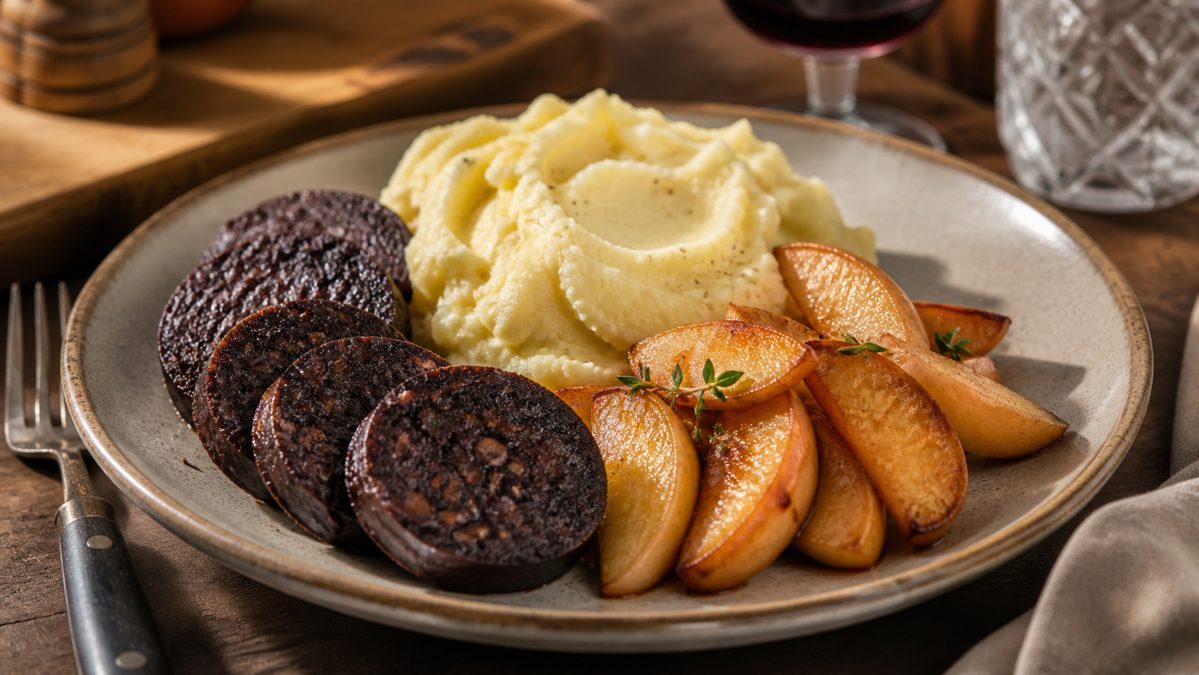
In short
Although black pudding is a classic of French charcuterie, it always raises the same question when composing the plate.
Between classic mashed potatoes, pan-fried apples and more original options like red cabbage or roasted root vegetables, the choice of the right accompaniment for black pudding depends mainly on the time available and the occasion.
This article details the side dishes that really work, the correct cooking technique to prevent it from bursting, and the combinations to favor depending on the context of the meal.
Classic accompaniments for black pudding: mashed potatoes, apples and onions
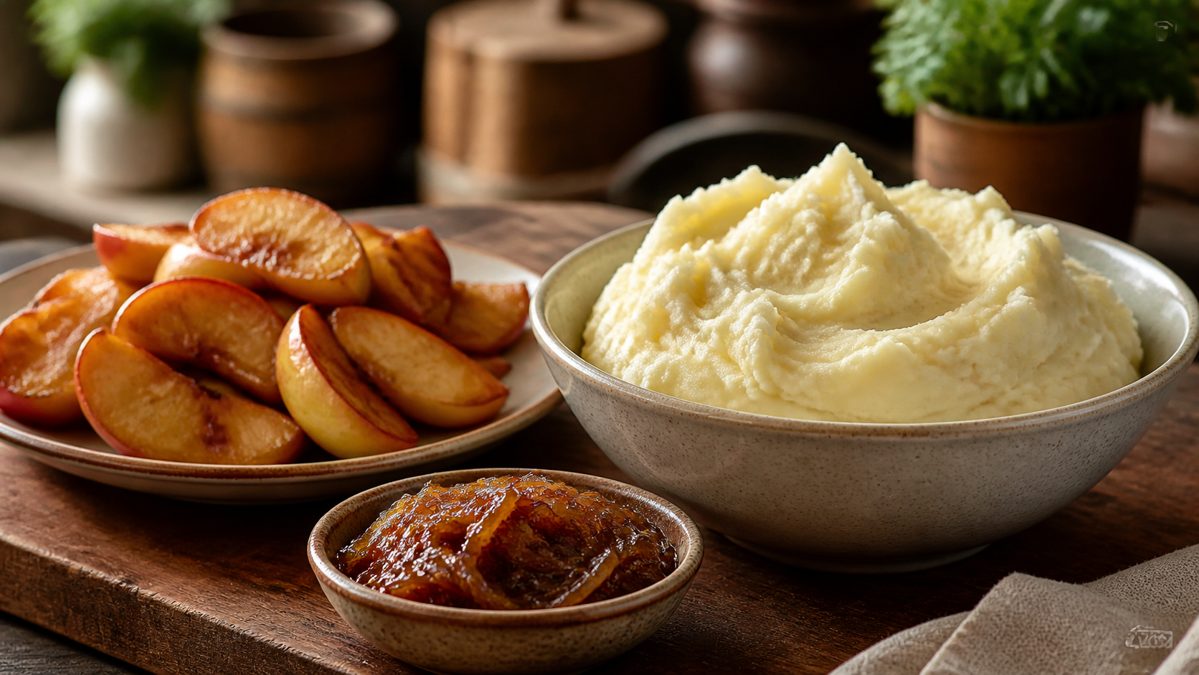
Three associations consistently come up when talking about black pudding, and that's no coincidence.
mashed potatoes remain the most frequently mentioned option: their creamy texture softens the rich and spicy side of the black pudding without competing with it.
Allow approximately 20 minutes of preparation for a smooth puree, working the still-warm potatoes with butter and a little warm milk.
The pan-fried apples form the second pillar, with that sweet and savory combination that has made the dish famous.
Cut into quarters, they are cooked for 10 to 12 minutes in butter and caramelize slightly, counterbalancing the salty side of the blood sausage.
A touch of cider at the end of cooking enhances this fruity acidity without masking the taste of the black pudding.
For a quick onion compote, gently cook sliced onions with a knob of butter and a pinch of sugar for about twenty minutes: the meltingly soft result goes perfectly with black pudding, especially for a festive meal.
What vegetables should you choose to serve with black pudding to add variety to your meals?
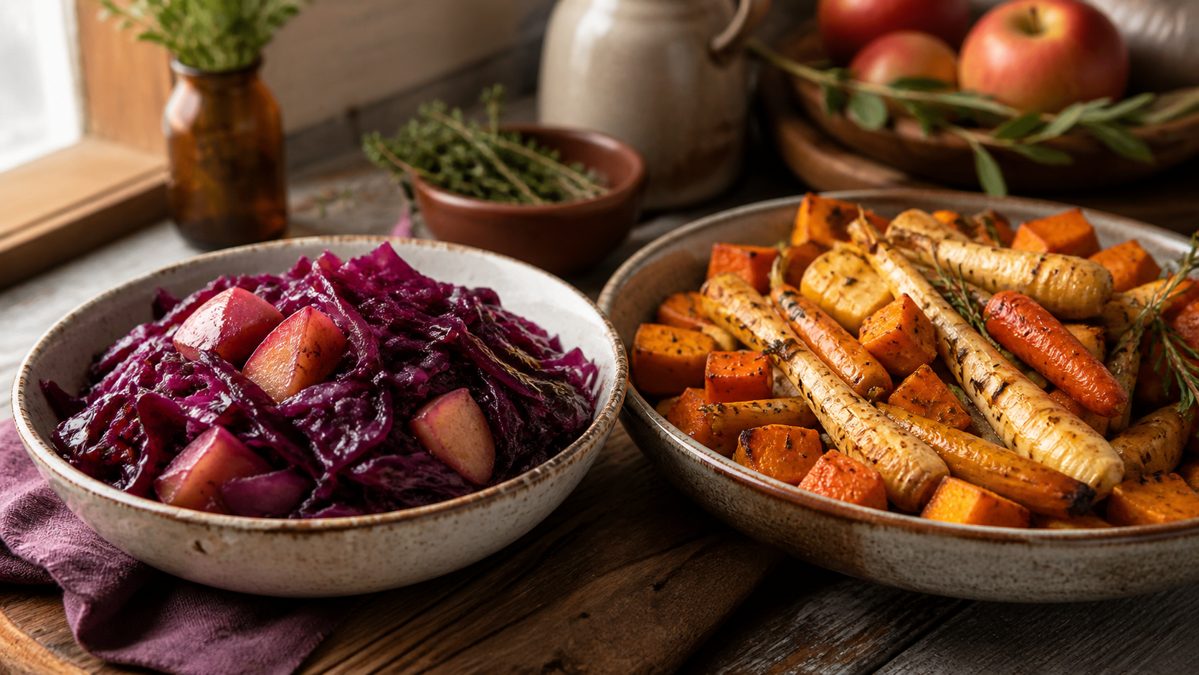
Beyond the classic trio, several vegetables bring a real change of pace.
Braised red cabbage , cooked for 25 to 35 minutes with an apple and a splash of vinegar, develops a tangy taste that contrasts nicely with the richness of the black pudding.
It is the quintessential autumn and winter accompaniment, often served on Alsatian tables.
Roasted root vegetables (carrots, parsnips, sweet potatoes or squash) offer a more colourful and quicker alternative to prepare.
Cut into regular pieces, drizzled with olive oil and baked at 210°C for 25 to 30 minutes, they caramelize slightly on the edges without requiring constant monitoring.
Raw or quick sauerkraut (just warmed for a few minutes, without prolonged cooking) often surprises the first time you try it, but its acidity can overpower a blood sausage that's already quite spicy. It's best reserved for plain blood sausage rather than versions with herbs or chestnuts.
| Accompaniement | Preparation time | Character | Ideal opportunity |
|---|---|---|---|
| Mashed potatoes | 20 min | Classic and comforting | Weekday meals |
| Sautéed apples | 10-12 min | Traditional sweet and savory | All year round |
| Onion compote | 20-25 min | Melting and fragrant | Festive meal |
| Braised red cabbage | 25-35 min | Tangy and original | Autumn-winter |
| Roasted root vegetables | 25-30 min | Colorful and fragrant | Friendly meal |
| Sautéed mushrooms with garlic | 8-10 min | Quick and rustic | A busy week |
| Quick sauerkraut | 5-10 min | Crispy and surprising | To change |
How to cook black pudding properly so that it remains meltingly tender?
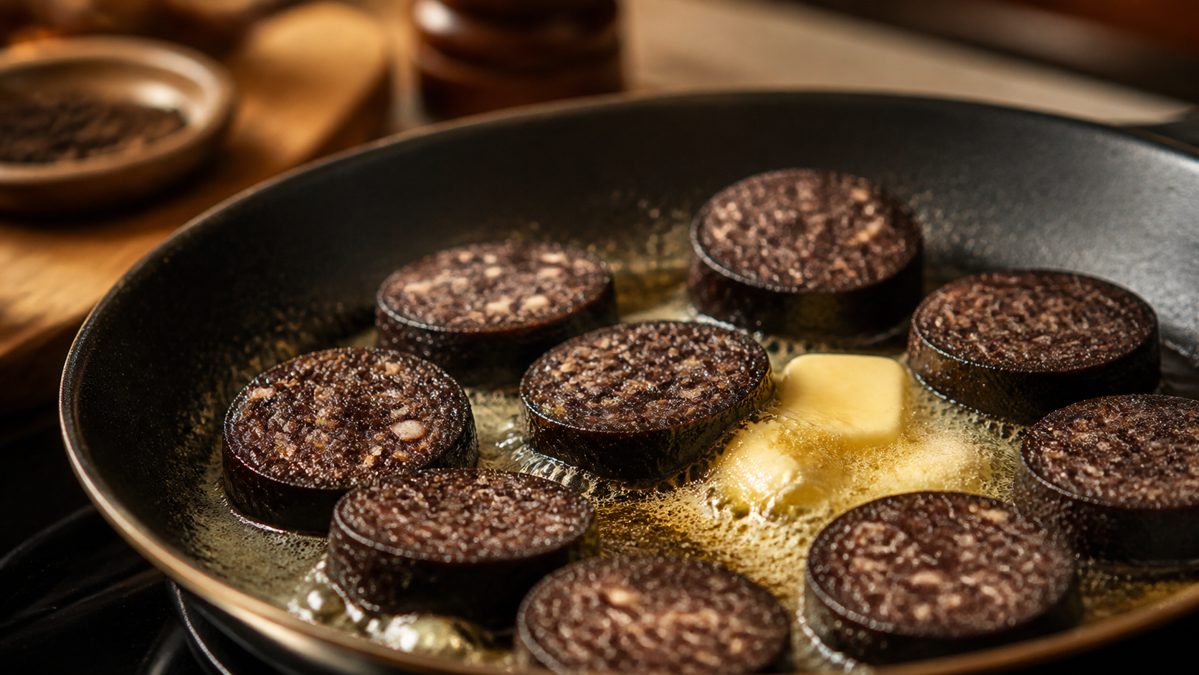
A good side dish cannot save a failed blood sausage, and cooking remains the most dreaded step.
Take it out of the refrigerator at least an hour before cooking: a sausage that is too cold bursts much more easily when exposed to heat.
In a frying pan, allow 10 to 15 minutes over medium heat for a whole sausage, turning it regularly without ever piercing it with a fork.
The core temperature should be around 70°C: above this temperature, the skin becomes dry and loses its melt-in-your-mouth texture.
Take the case of a weekday meal served in 20 minutes flat: black pudding cooked in a pan while mushrooms sautéed with garlic and parsley cook in a second pan, for a complete dish without waiting.
"I rarely used to make black pudding, I always let it explode in the pan... still good, but not very presentable," says an amateur cook on her blog, who has since discovered baking it in the oven at 180°C for 15 to 20 minutes to avoid any accidents.
Never press the sausage with the spatula during cooking: this is what most often causes it to burst, long before an accidental fork puncture.
What type of support should I choose depending on the occasion?
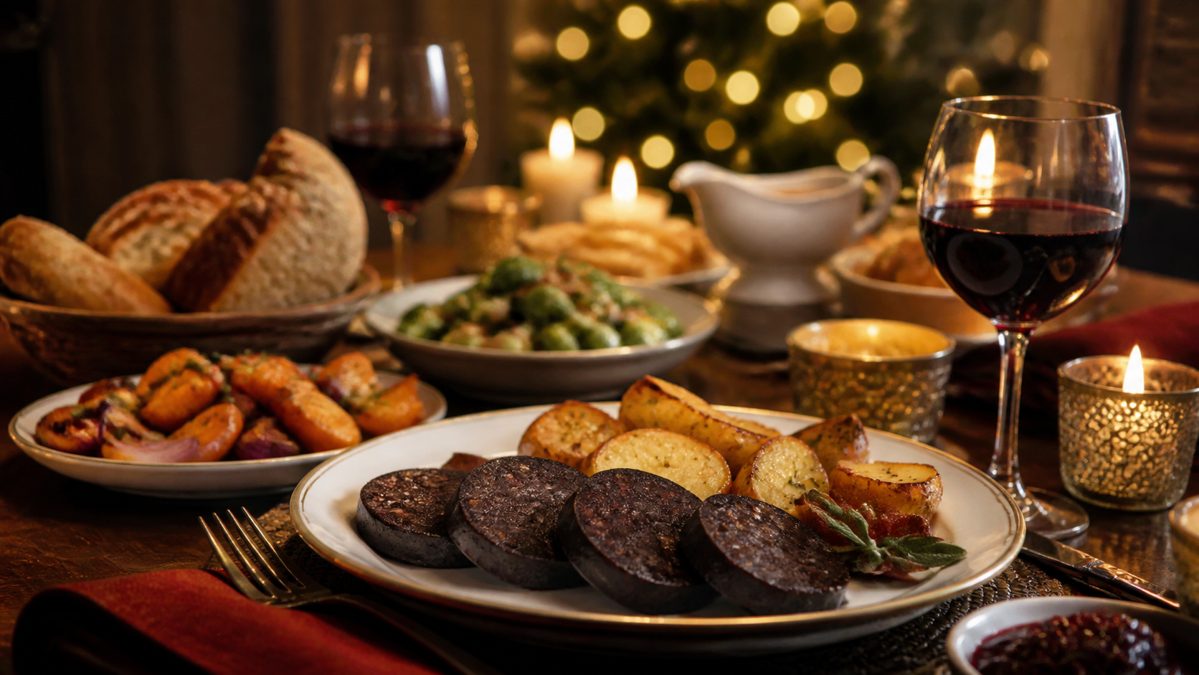
The context of the meal often influences the choice more than simple taste preference.
For a weekday meal, it's best to opt for quick options: pan-fried apples or sautéed mushrooms can be prepared in less than 15 minutes while the blood sausage cooks.
To host six guests at a New Year's dinner, onion compote and homemade mashed potatoes keep warmer and can be prepared in advance, unlike roasted vegetables which lose their crispness while waiting.
- Sautéed apples or sautéed mushrooms
- Ready in less than 15 minutes
- Cooked simultaneously with the blood sausage
- Homemade onion compote or mashed potatoes
- Requires more preparation beforehand
- Keeps food warmer for several guests
What wine should I serve with black pudding?
A light and fruity red wine, such as a Beaujolais or a low-tannin Pinot Noir, goes well with black pudding without overpowering its taste.
For an apple version, a dry cider works just as well and extends the sweet and savory combination already present on the plate.
An ally rich in iron, to be consumed in moderation
Black pudding is among the foods most concentrated in heme iron, the form best assimilated by the body.
According to nutritional data from the French charcuterie sector, a 100g portion provides approximately 22mg of iron, which covers, or even exceeds, the daily requirements of an adult.
This same portion also provides nearly 22g of fat, mostly saturated: a side of vegetables or fruit is preferable to a second portion of starchy foods to balance the plate.
Which type of support is right for me?
How much time do you have?
What do you feel like today?
In summary
Mashed potatoes, pan-fried apples and onion compote remain reliable choices, but red cabbage, roasted root vegetables or sautéed mushrooms allow you to get off the beaten track without complicating the preparation.
The cooking of the blood sausage is just as important as the chosen accompaniment : room temperature before cooking, medium heat and no piercing remain the three rules to never forget.
The right choice depends mainly on the time available and the occasion, between a weeknight dinner prepared in 20 minutes and a festive table where everything is prepared in advance.
What vegetable should I choose to accompany black pudding?
Braised red cabbage and roasted root vegetables (carrots, parsnips, sweet potatoes) are the most reliable choices: their sweetness or acidity balances the richness of the blood sausage without masking it.
Can black pudding be cooked in the oven rather than in a pan?
Yes, allow approximately 15 to 20 minutes at 180°C: it is even a good alternative to limit the risk of bursting, as the heat is more evenly distributed than in a pan.
What wine should I serve with black pudding?
A light red wine such as Beaujolais or a low-tannin Pinot Noir is suitable, as is a dry cider for an apple version.
What are the best recipe ideas using black pudding?
Beyond the classic dish, black pudding also finds its way into a savory apple tatin, a crumble with potatoes, or pan-fried slices on a warm lentil salad.
How can you tell if black pudding is cooked through?
The skin should be taut and slightly crispy, without oozing when gently pressed: the core temperature should then be around 70°C.
