

In short
Agave syrup has long been considered the "healthy" sugar, the kind you can add to your yogurt or tea without guilt. In recent years, this reputation has been faltering.
Dietitians, naturopaths and health programs are pointing the finger at its composition, which is very rich in fructose, and are asking the question differently: is agave syrup dangerous, or simply misunderstood?
This article summarizes what science really says, the consumption thresholds to know, and how to continue using it in cooking without taking unnecessary risks.
What is agave syrup and why is it considered a healthy alternative?
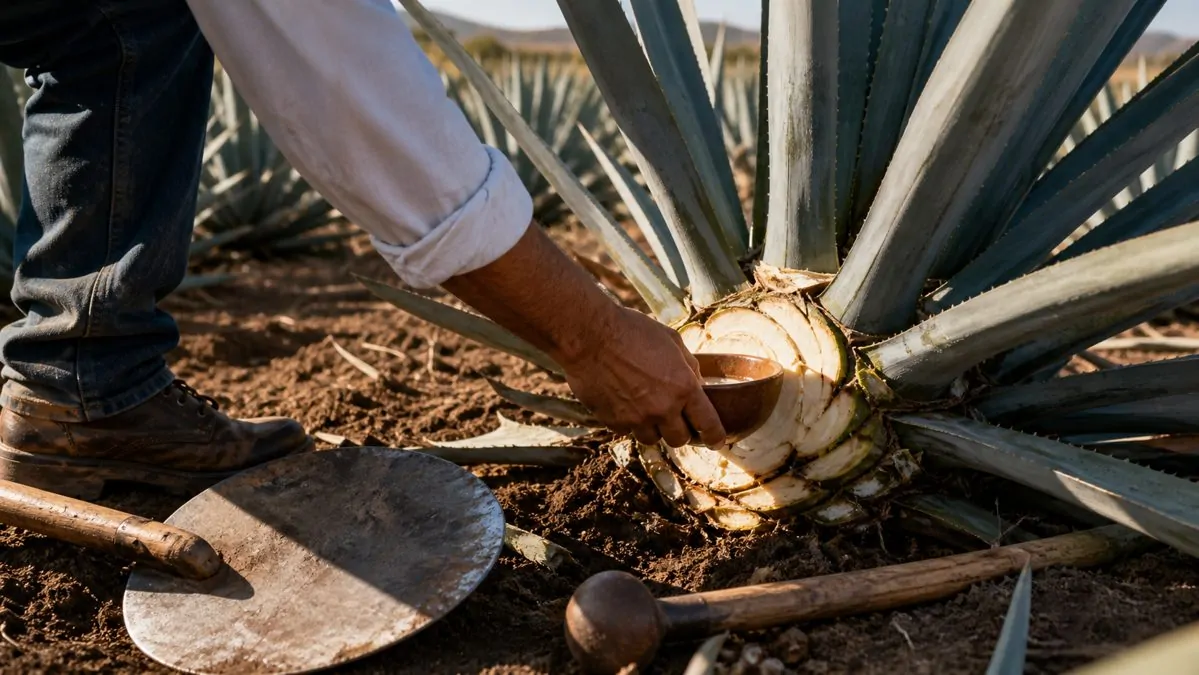
Agave syrup is extracted from the sap of several species of agave, succulent plants native to Mexico, including the blue agave, the very one used to produce tequila.
The sap is heated and then hydrolyzed to transform its complex fibers into simple sugars. The result is a syrupy liquid with a neutral taste, sweeter than white sugar in equal quantities.
Its success can be attributed to three recurring marketing arguments: a claimed low glycemic index, a "natural" origin, and a convenient texture for sweetening drinks and pastries without lumps. These three points are true. However, they only tell part of the story.
Fructose, liver and glycemic index: what are the real risks of agave syrup?
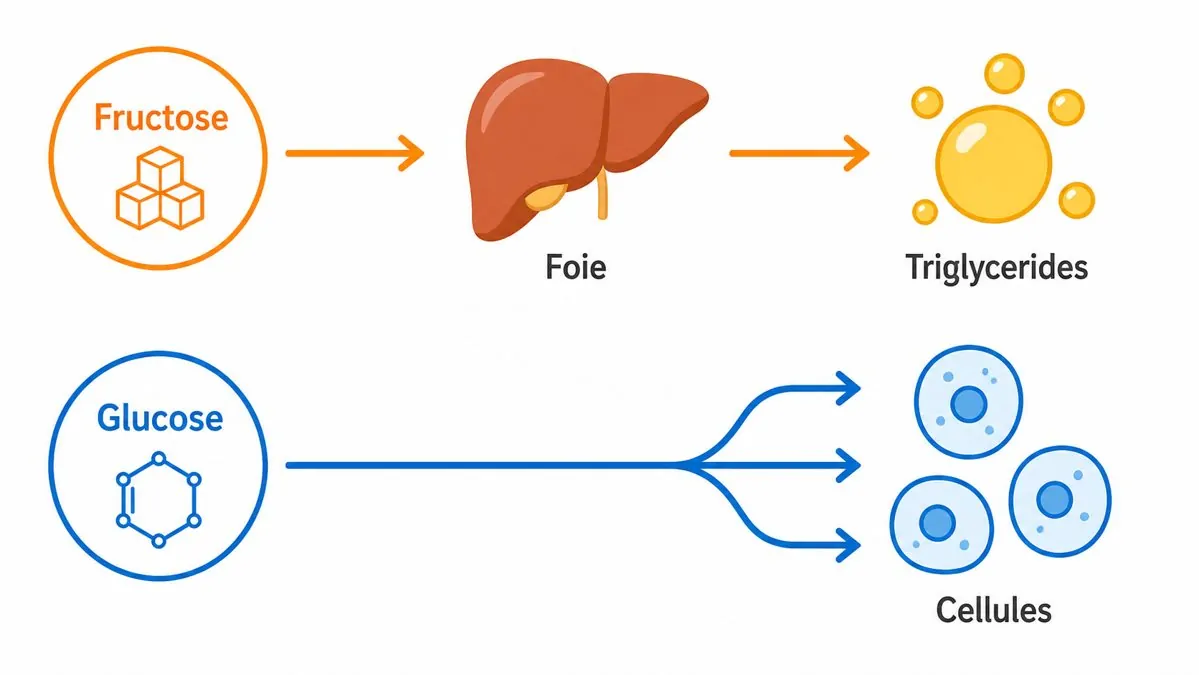
A fructose content that saturates the liver
Agave syrup is composed of 75-90% fructose, compared to about 50% for regular white sugar. This difference makes all the difference in how the body processes it.
Unlike glucose, which can be used by almost all cells in the body, fructose can only be metabolized by the liver.
When consumed in excess, it is transformed into triglycerides. These fats accumulate and can eventually lead to hepatic steatosis, the accumulation of fat in the liver, also known as "fatty liver".
High fructose intake is also associated with an increase in blood triglycerides and an increased risk of insulin resistance, the first step towards type 2 diabetes.
This mechanism relates to regular and excessive consumption, not an occasional spoonful in tea. It's the repeated dose day after day that's the problem, not the product itself.
The paradox of the low glycemic index
This is the most common argument used to promote agave syrup: its glycemic index is between 15 and 20, compared to nearly 70 for white sugar. Therefore, it supposedly causes less of a blood sugar spike after a meal.
That's true, but it's also misleading. A low glycemic index only means that the glucose in the product is slowly absorbed into the bloodstream. It says absolutely nothing about the fructose content, which follows a completely different metabolic pathway, independent of blood sugar levels.
According to Catherine Petitdidier, a naturopath and doctor of food science, agave syrup is sometimes recommended for diabetics because of its less pronounced effect on blood sugar than sucrose. However, she emphasizes that its high fructose content remains the real concern, regardless of its glycemic index.
A product with a low glycemic index is therefore not automatically a product without metabolic consequences. It is precisely this discrepancy that explains why agave syrup escaped criticism for so long.
How much agave syrup per day is safe to consume?

The thresholds set by ANSES
The French Agency for Food, Environmental and Occupational Health & Safety (ANSES) recommends not exceeding 100g of total sugars per day for adults and adolescents aged 13 to 17, excluding lactose and galactose.
This threshold is based on a more precise benchmark: the first measurable physiological effects of fructose (increase in blood triglycerides) appear from 50 g of fructose per day in adults.
A tablespoon of agave syrup contains approximately 10g of fructose. Consuming more than 5 tablespoons per day, on its own, would therefore be enough to reach this alert threshold, without even considering the fructose provided by fruits, juices, or other sugary products consumed throughout the day.
| Audience | ANSES threshold (total sugars/day) |
|---|---|
| Adults and teenagers (13-17 years old) | 100 g |
| Children 8-12 years old | 75 g |
| Children 4-7 years old | 60 g |
Simulator: How much fructose does your daily consumption of agave syrup provide?
The special case of diabetes
Some diabetics turn to agave syrup precisely because its low glycemic index limits blood sugar spikes after meals. This reasoning is sound based on this criterion alone, but it is incomplete.
Fructose does not act directly on blood glucose, but its excess promotes insulin resistance in the long term, a central mechanism in the development of type 2 diabetes. A product can therefore be "gentle" for immediate blood glucose while remaining unfavorable over time.
No studies have shown any long-term benefit of agave syrup compared to other sugars for people with diabetes. Medical or dietary advice is recommended before regular use.
Agave syrup, white sugar, honey: comparison, quality and culinary uses

Agave syrup vs. white sugar vs. honey
Compared to each other, the three sweeteners each have their strengths and limitations. None of the three is a "health" food to be consumed without restraint.
- Low glycemic index (15-20)
- High sweetening power: less is used
- Neutral taste, dissolves easily in cold liquids
- Very high in fructose (75-90%)
- Quality varies depending on the brand
- It provides calories just like any sugar
Honey sugar, on the other hand, breaks down into 50% glucose and 50% fructose during digestion: it remains the benchmark against which the other two are compared.
How to recognize a quality agave syrup?
Fructose isn't the only concern. The quality of the product itself varies considerably from one brand to another. A study conducted by the Belgian consumer association Test-Achats on organic agave syrups on the market revealed that 13 out of 16 products tested actually contained other, cheaper sugars, such as corn or cane syrup, mixed with the agave without this being clearly stated on the label.
Opt for an organic agave syrup, 100% pure (listed as "pure organic agave syrup" with no added sugar in the ingredients), preferably from a fair trade supply chain or an identifiable Mexican cooperative.
How to replace sugar with agave syrup in a recipe?
Agave syrup is sweeter than white sugar by weight. In practice, you can replace 100g of sugar with approximately 70g of agave syrup while maintaining the same level of sweetness.
Since it is a liquid, you also need to compensate: reduce the other liquids in the recipe by about 15 to 20% to avoid a dough that is too wet, and lower the oven temperature slightly (about 10 degrees), because fructose caramelizes faster than sucrose.
Reserve agave syrup for cold preparations (yogurts, drinks, salad dressings) where its sweetening power and liquid texture are a real asset, rather than for pastries cooked for a long time where its richness in fructose accelerates browning.
In summary
Agave syrup is not poison, and there's no reason to panic if you have a jar in your cupboard. Its danger depends almost entirely on the dose and frequency of consumption, just like any other sugar.
The key takeaway is that its low glycemic index does not compensate for its high fructose content: the two criteria measure different things, and only the second determines the long-term impact on the liver and metabolism.
By reserving it for occasional use, checking the purity of the product purchased, and keeping in mind the ANSES thresholds, agave syrup retains its place in a diet , without the false promises that have made its reputation.
Practical questions
Is agave syrup suitable for diabetics?
Its low glycemic index limits immediate blood sugar spikes, but there is no evidence of long-term benefits: its high fructose content promotes insulin resistance. Medical advice is still recommended before regular use.
Which is better, honey or agave syrup?
Both are rich in fructose (75-90% for agave, around 40% for honey), but honey also provides antibacterial compounds and traces of enzymes that refined agave syrup lacks. Neither is a product to consume in excess.
Does agave syrup cause weight gain?
Like any sugar, too much agave syrup provides unnecessary calories. Excess fructose can also reduce feelings of fullness, indirectly leading to overeating. In reasonable quantities, it has no different effect on weight than any other sugar.
Can agave syrup be given to children?
Yes, in limited quantities and taking into account the ANSES guidelines specific to their age (60g of total sugars per day for 4-7 year olds, 75g for 8-12 year olds). As with adults, it is best reserved for occasional use rather than daily consumption.
Does agave syrup cause cavities like sugar?
Yes. Like all fermentable sugars, it feeds the bacteria responsible for cavities as soon as it comes into contact with teeth. It offers no particular advantage in this regard compared to white sugar or honey: brushing remains essential after consuming sugary foods.
