
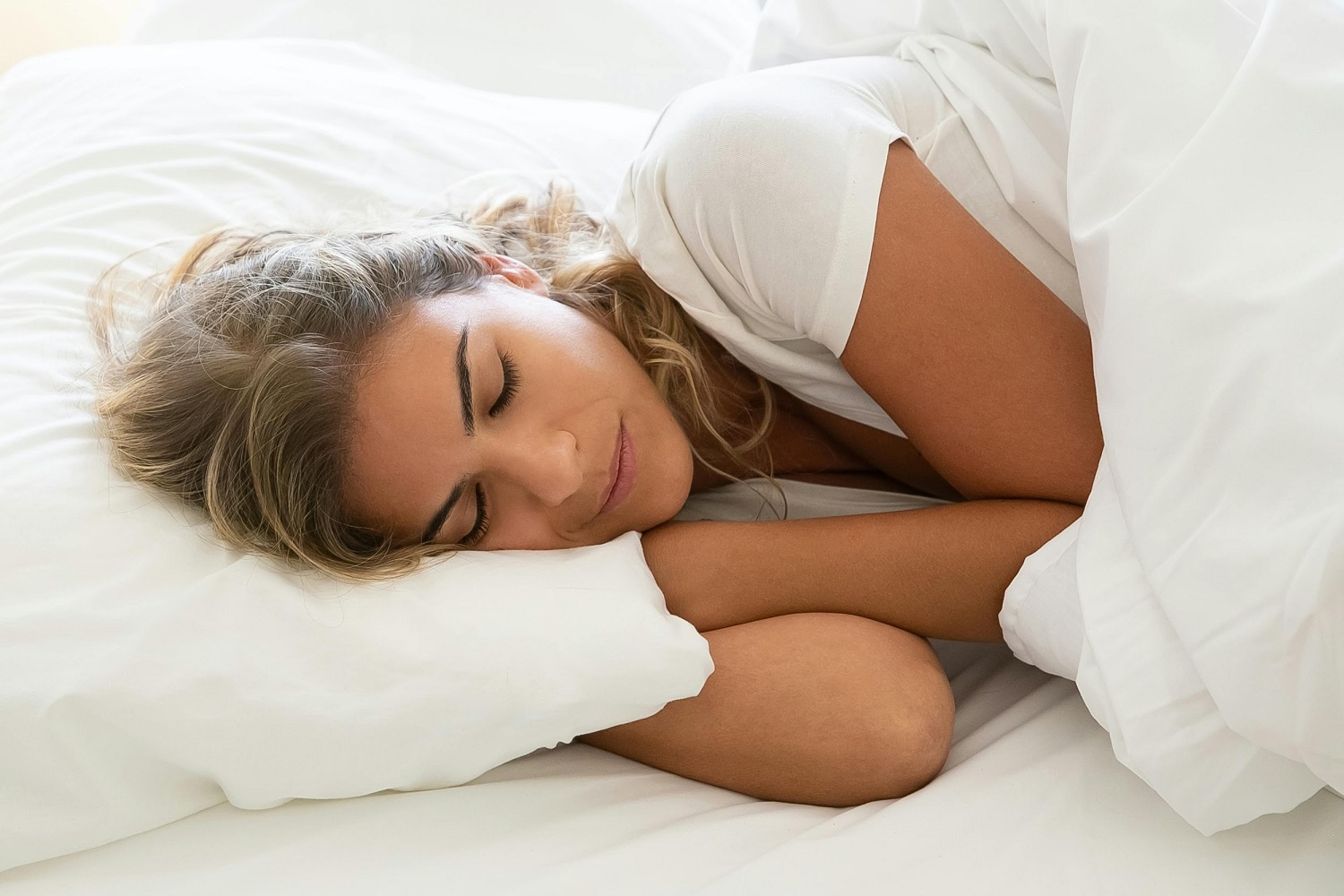
Finding the best mattress isn't just about price or technology. One of the most important criteria is your sleeping position, as it directly influences spinal alignment.
An unsuitable mattress can lead to back, shoulder, or neck pain. Here's how to choose the best mattress for your sleeping position.
Why does sleeping position influence the choice of mattress?
Each sleeping position puts different strain on the body. Sleeping on your back requires even support, while sleeping on your side increases pressure on certain areas such as the shoulders and hips.
A good mattress should allow the spine to remain properly aligned without creating excessive pressure points. This is why the best mattress for some people may be completely unsuitable for others.
The best mattress for sleeping on your back: balanced support
Back sleepers need balanced support to prevent the pelvis from sinking too deeply. The mattress should naturally support the lumbar curve while providing comfortable support.
The most suitable technologies include, for example, memory foam , for precise support without an excessive enveloping effect.
Pocket spring mattresses , which ensure good weight distribution, are also a very good choice.
A mattress that is too firm can create tension, while a mattress that is too soft can cause the lower back to slump.
The best mattress for side sleeping: a soft feel
Sleeping on your side is the most common position, but also one of the most demanding for the mattress.
The shoulders and hips bear a large part of the body's weight, which requires a more flexible support to limit pressure points.
The most suitable mattresses are:
- memory foam mattresses that conform to the curves of the body
- Hybrid mattresses , especially those with memory foam, are a good choice.
- Latex mattresses , prized for their flexibility and breathability
The best mattress for side sleeping should offer a good compromise between a soft feel and firm support.
The best mattress for sleeping on your stomach: firm support
Sleeping on your stomach is the least recommended position, as it can increase tension in the lower back and neck.
If you primarily sleep on your stomach, it is essential to choose a firmer mattress to avoid pelvic tilt.
The recommended technologies are pocket spring mattresses, which offer firm support. Some hybrid mattresses may also be suitable, depending on their materials. Latex mattresses can also be a good choice, provided they also offer firm support.
These are also appreciated for their breathability because they allow air to pass through easily.
It is best to avoid excessively thick memory foam, which can accentuate poor posture.
To find the most comfortable mattress for you, other criteria must also be taken into account, such as your body shape and personal preferences.
We will discuss these in more detail in a future article! If you have any questions, or would like more information on the different types of mattresses suited to your sleeping style, please feel free to ask them in the comments.
Additional information
What mattress firmness should I choose based on my body type?
The choice of firmness depends on your weight. For people under 55 kg, a soft or medium-firm mattress is suitable, while a firm mattress is preferable for people over 80 kg. Weight directly influences how the body sinks into the mattress.
How can I tell if my current mattress is still good?
A mattress should be replaced when you notice sagging, wake up with pain, or when it is more than 10 years old. If your body's imprint remains in the mattress upon waking, it is a sign of advanced wear.
Is it possible to sleep on your stomach without getting back pain?
Sleeping on your stomach remains the least recommended position because it puts significant strain on the lower back and neck. If you do sleep in this position, choose a firm mattress and use a very thin pillow to reduce neck tension.
What mattress density corresponds to my weight?
The recommended density varies depending on weight. For a latex mattress, aim for 70-75 kg/m³ for lighter individuals and 80-85 kg/m³ for heavier sleepers. An appropriate density extends the mattress's lifespan while maintaining good support.
Should the bed base be changed at the same time as the mattress?
Replacing the bed base at the same time as the mattress is highly recommended. The bed base accounts for 30% of overall comfort and has the same lifespan as a mattress (approximately 10 years). A worn bed base can accelerate the deterioration of a new mattress.
What is the difference between the initial feel and the support of a mattress?
The initial feel of the mattress (soft or firm) refers to its first sensation upon contact, while support describes its ability to properly support the spine. A good mattress can have a soft initial feel and firm support, depending on its filling layers.
Which mattress should you choose when two people with different body types sleep together?
Pocket spring mattresses are particularly well-suited for couples. Each spring works independently, allowing for good weight distribution and excellent motion isolation. Some brands also offer mattresses with two different comfort levels, one on each side.
Is a memory foam mattress suitable for all sleeping positions?
Memory foam is best suited for side and back sleepers. For stomach sleepers, it can cause excessive sinking. In this case, opt for a thinner layer of memory foam or a firmer mattress.
