
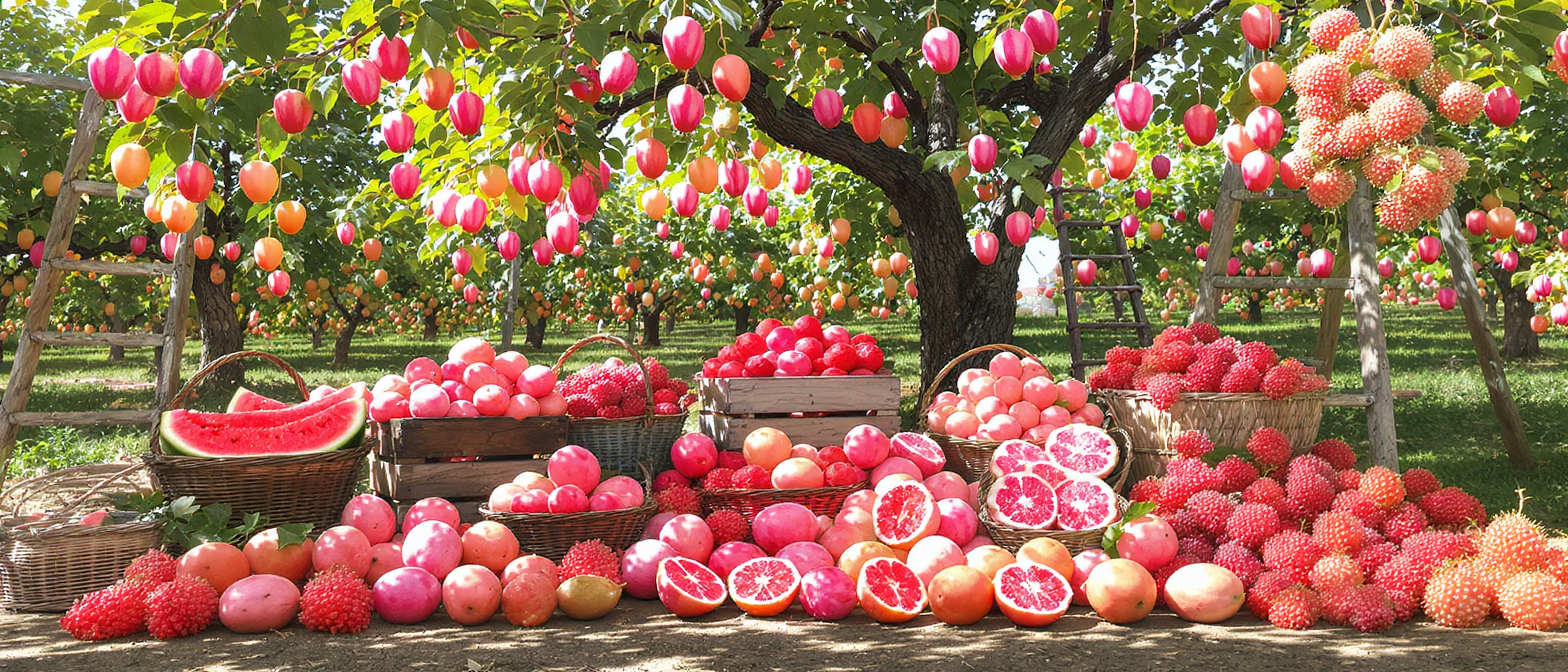
Pink isn't just a flattering color in a photo. On the plate, it becomes a simple guide for exploring pink fruits that transform everyday life, both in terms of their appearance and their nutritional value. Many people stick to a few classic choices.
Yet, there is an astonishing array of varieties, from fuchsia dragon fruit to the translucent arils of certain pomegranates, not to mention little-known berries from Australia or Hawaii. This diversity isn't just for show. It helps to vary tastes, textures, and nutrients, thus creating a healthy diet free from monotony.
In a balanced diet, rotating fruits, changing their type and season, is just as important as the quantity. Pinkish hues often indicate the presence of antioxidant pigments, useful in a nutritional that focuses more on prevention.
The guiding principle here is simple: to give you concrete ideas for innovative eating, featuring unusual fruits that are sometimes easy to incorporate, sometimes rarer but very inspiring. What if your next smoothie, salad, or dessert gained freshness… simply by going pink?
25 unusual pink fruits: the complete list for a colorful kitchen
To help you explore without getting lost, here are 25 options, deliberately focusing on pink (and not red). Each fruit can enrich your colorful cooking and healthy recipes, even with simple steps.
1) Dragon fruit (pitaya), bright pink
Visually striking, it boasts a bright pink skin and white, purple, sometimes slightly blue or fuchsia flesh, depending on the variety. Native to Central America, it has spread to Southeast Asia. Its flavor is mild, with small, crunchy seeds. In terms of vitamins and fruit, it primarily provides water and fiber. Try it diced in a tropical salad or in a refreshing drink.
2) Pink guava, candy flesh
A green-skinned variety hides a pink, fragrant, and slightly tart pulp. It's found in many tropical cuisines. Its texture is dense, with edible seeds. It's popular as a juice, but it's also delicious raw. It can even be added to breakfast bowls.
3) Rambutan, a prickly but sweet red rose
Native to Southeast Asia, it is easily recognizable by its pinkish-red, spiky shell. The "spiks" remain soft. The white, jelly-like flesh is sweet and refreshing. Ideal for a light snack or to top yogurt.
4) Lychee, floral and juicy
Similar to the rambutan, it has a pink, pebbly skin. The flesh is translucent, very juicy, with a floral note. It can be eaten raw, in fruit salads, or in a light dessert. Its aromatic character transforms the dish without being overpowering.
5) Pink apple, rose scent
Found in India, Asia, and South America, it has a shape somewhere between a bell and a pear. Its skin is thick, ranging from pale to deep pink. Its flavor is reminiscent of rose, which can be surprising at first. It is eaten fresh, in thin slices.
6) Lilly pilly (Australian berry), sweet and “earthy”
A small pink berry from Australia, with a distinctive aromatic profile, sometimes described as musky. Edible raw, it is primarily used in jams, jellies, and desserts. In cooking, it makes an original jam for fresh cheese.
7) Yangmei (yumberry), an antioxidant-rich Chinese berry
Less common outside of Asia, it's tangy, bright pink, and often sold dried. In the world of superfoods, it's touted for its antioxidants. Try it as a topping on porridge or as a cold infusion with pieces of fruit.
8) Sampnit (Philippines), sweet mini-raspberry
It resembles a small, pink raspberry, but sweeter. Often used in jams, jellies, desserts, or sometimes boiled locally. If you like raspberries but are looking for a more rounded flavor, this is worth considering.
9) Raspberry, the tangy one that wakes you up
It's a well-known ingredient and remains a staple for varying textures and acidity. Raw, as a coulis, or in granola, it adds vibrancy to a dish. It also pairs beautifully with citrus fruits.
10) Pink grapefruit, fragrance and slight bitterness
A hybrid between an orange and a grapefruit, it offers juicy pink flesh and a more bitter aftertaste. It's useful for cutting through the sweetness of a dessert. In winter, it helps to diversify citrus fruits, in keeping with the spirit of winter recipe selections rich in vitaminC.
11) Pomegranate, pink to fuchsia arils
The skin can be pinkish, and the seeds (arils) range from translucent pink to fuchsia. It's eaten mainly for these sweet and tangy, very juicy arils. They transform a green salad or tabbouleh. Be warned, it's a messy fruit, so have a cutting board and a bowl ready.
12) Pink banana, bright peel and hard seeds
Shorter than the yellow banana, it has a bright pink peel and creamy, slightly fuzzy flesh. It often contains hard seeds, so it's best enjoyed slowly. In cooking, it can flavor a compote, straining it if necessary.
13) Prickly pear, pink cactus to prepare
Visually very similar to pitaya, but derived from a cactus. The skin requires some preparation (avoid the spines). The taste is mild, sometimes compared to a light melon. It's delicious in a fresh salad with lime.
14) Pink grapes, various families
Muscat Rose, Flame Seedless, Cardinal… the shades range from pale pink to purplish. The aromatic profiles vary considerably depending on the variety. As an aperitif, they offer a very simple and clean alternative, especially with skewers prepared in advance, as in these ideas for appetizer skewers to make the day before.
15) “Pink Pearl” apple, bright pink flesh
The skin is rather greenish-yellow, but a surprise awaits when you cut into it: an intensely pink, very crisp, slightly tangy flesh. Visually, it's an immediate asset to a fruit platter. Thinly sliced, it creates a naturally impressive "wow" effect.
16) Peach, pinkish-orange and very juicy
The "peach" skin is a variation of pink. The flesh is fragrant, tangy, and very juicy. It can be eaten raw, or quickly roasted for a meltingly tender texture. With plain yogurt, it makes a quick and easy dessert.
17) Watermelon, green on the outside, pink on the inside
Highly hydrating (approximately 90% water), sweet, and refreshing. It's perfect for summer salads with mint and feta. It clearly demonstrates that a pink fruit can also be a hydrating element in a healthy diet.
18) Coralberry, bright pink… but inedible
Native to North America, it has an almost unreal pink hue. But it contains saponin and remains very bitter. Consider it a cultural or decorative element, not an ingredient. It's better to be aware of this limitation than to make a mistake.
19) Blueberry “pink lemonade”, sweet and lemony
This isn't an unripe blueberry: this variety stays pink when ripe. It's sweeter, with a hint of lemon. It's perfect in a smoothie, a bowl of cereal, or a no-cook fruit salad.
20) Fig, dark skin and pink heart
Blue to purple exterior , pinkish-red interior. Very sweet, dense, and filling. It can be eaten raw, roasted, or in sweet and savory combinations. On a slice of fresh cheese, it creates an elegant contrast.
21) Pink pineapple, rare pink flesh
A pink-fleshed variety developed in Costa Rica, with a long growing cycle. Its appeal is primarily visual and gustatory, being sweeter than some classic pineapples. Served as a fruit carpaccio, it becomes the centerpiece of a dessert.
22) Ôhelo ʻai, tangy Hawaiian berry
Small pink berries, often compared to cranberries for their tartness. They are used in tarts, jams, and chutneys. If you like tangy flavors, they're a great option to liven up an overly sweet dessert.
23) Loganberry, historical hybrid (1881)
Born from a raspberry-blackberry cross, attributed to James Harvey Logan in 1881, it resembles an elongated raspberry. Its flavor is more robust and very juicy. As a coulis, it adds an interesting intensity without being heavy.
24) Pomelo, a large citrus fruit with pink flesh
Larger than a grapefruit, with a thick peel and pinkish-red flesh. Initially sweet, then slightly bitter. In salads, it pairs well with fresh herbs. For a convivial meal, consider wine pairings, for example, by looking at wine pairings with grilled meats if you're serving it with a savory dish.
25) Pink strawberries, a mutation of white strawberries
These varieties are technically "white" strawberries with a pink blush. They are very juicy and sweet. They allow you to enjoy a familiar fruit while changing the visual experience. On a plate, the effect is immediate.
At this stage, you have a complete overview. The next step is to choose your combinations and uses, so that these fruits become a habit, not a novelty.
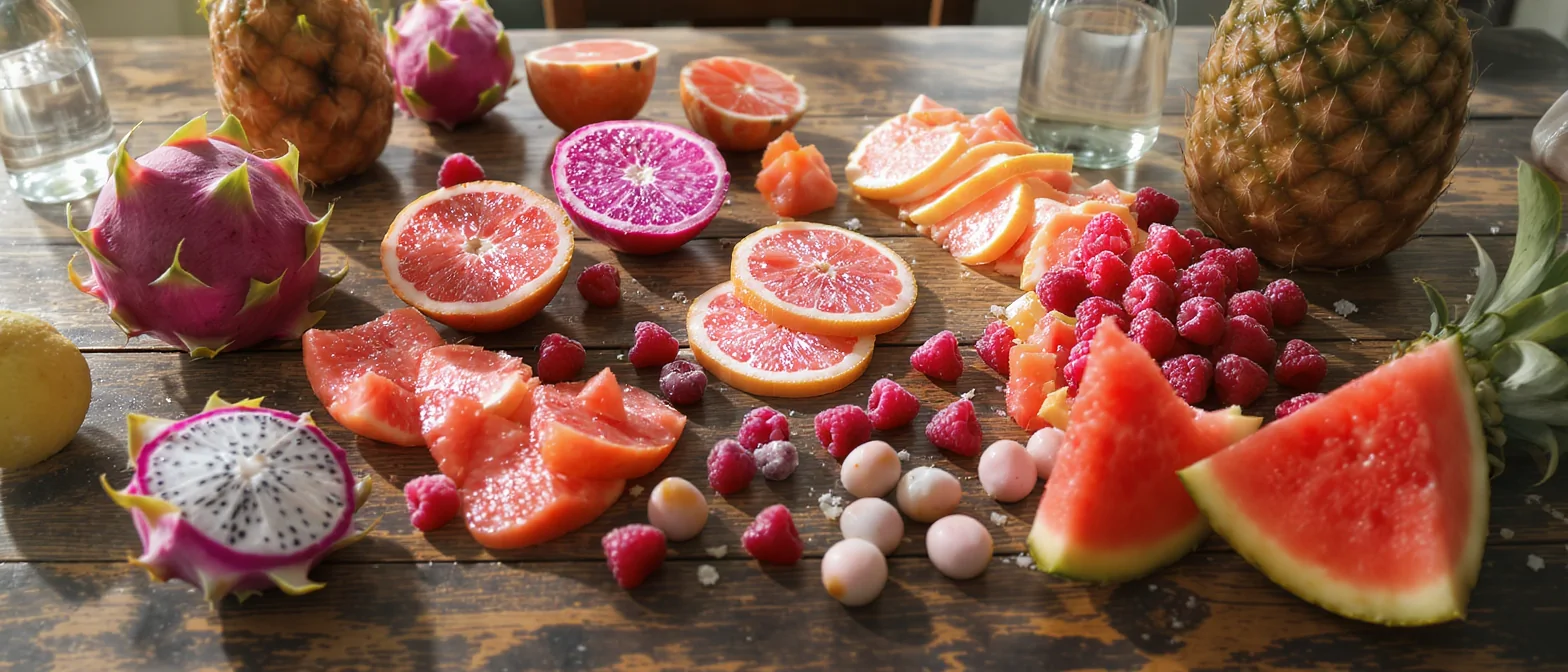
Benefits of pink fruits: nutrition, vitamins and superfoods for everyday use
From a nutritional, color can serve as a quick guide. Pink, depending on the fruit, often corresponds to pigments and protective compounds. This doesn't replace a medical check-up, but it's a practical tool for diversifying your intake.
In other words: eating a wider variety of fruits reduces the risk of always "going around" the same micronutrients.
To illustrate, let's take a typical day imagined around a central character, Nora, a company cafeteria manager. She wants to make the dishes more appealing without complicating production. She chooses watermelon for lunch for hydration, a handful of raspberries for a tangy snack, and then pomegranate arils on a salad in the evening.
Result: more contrast, and a sense of variety that helps teams maintain a balanced diet.
Practical guide: origin, flavor, nutritional value
| Pink fruit | Origin (reference point) | Flavor / texture | Nutritional advantage (simple) |
|---|---|---|---|
| Dragon Fruit | Central America, spread to Asia | Sweet, crunchy seeds | Fiber and hydration |
| Pink guava | Tropical regions | Fragrant, dense | Vitamin C and fiber |
| Pink grapefruit | Hybrid citrus | Juicy, slightly bitter | Contributes to the intake of fruit vitamins |
| Grenade | Mediterranean to Asia | sour arils | Antioxidant compounds, the appeal of “superfoods” |
| Blueberry pink lemonade | Horticultural selection | Sweet, lemony note | Polyphenols, a useful variety |
| Fig | Mediterranean | Very sweet, melts in your mouth | Quick energy, fiber (to be dosed) |
One single rule that changes everything: vary the uses
The same fruit can serve multiple purposes. If you always eat it the same way, you'll quickly get bored. Conversely, changing the way you eat it (raw, in a salad, in a sauce, in a drink) helps maintain consistency. This is a key aspect of an innovative diet : pleasure supports consistency.
- For energy : fig, pink banana (taking into account the seeds), peach.
- For freshness : watermelon, pink grapefruit, pomelo.
- For crunch : pink pearl apple, some pink grapes.
- For the tangy flavor : raspberry, loganberry, ôhelo ʻai.
- For visual effect : pink pineapple, dragon fruit, fuchsia pomegranate.
If you're looking for a simple way to get people to eat more fruit, start with a three-colored morning bowl, including a pink one. This is often the easiest habit to stick to long-term.
After the benefits, a crucial question remains: how to incorporate them without weighing down your meals, and how to build combinations that really work.
A citrus salad video can help you visualize simple cuts, and understand how to balance bitterness, sweetness, and fresh herbs.
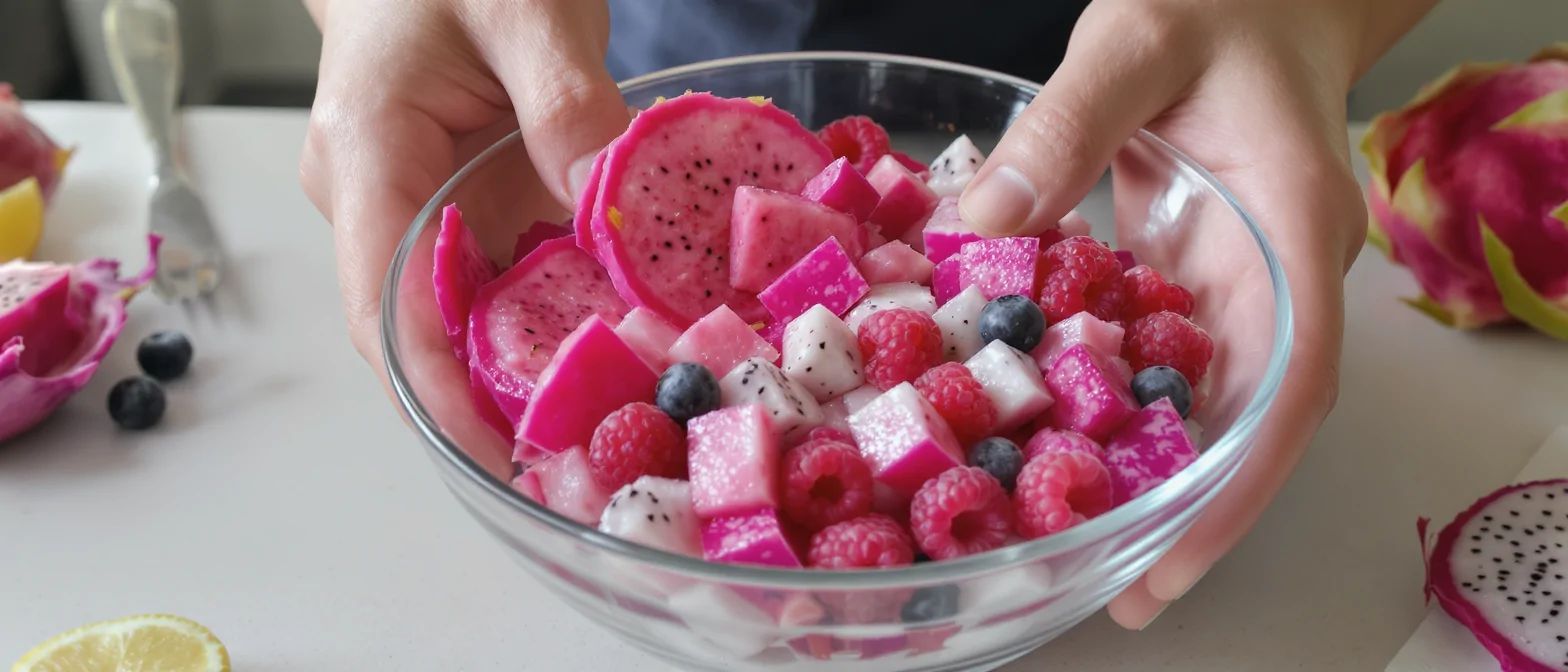
Healthy recipes and innovative eating: incorporating pink fruits without the routine
Incorporating pink fruits doesn't mean adding sugar everywhere. The idea is rather to reposition the fruit: sometimes as a dessert, sometimes as a contrasting element in savory dishes, sometimes as the base of an unsweetened drink.
In Nora's cafeteria, the goal is clear: to improve diner engagement. She notices that color sparks more curiosity than theoretical arguments. This is a useful lesson for you too.
Three concrete scenarios, easy to reproduce
Scenario 1: "Pink Bowl" breakfast. Mix plain yogurt, raspberries, blueberries, pink lemonade, and peach slices. Add a few diced dragon fruit if you have some. You get a more interesting texture and a dessert-like feel, while still being compatible with a healthy diet.
Scenario 2: Fruity savory salad. Use pink pomelo or grapefruit, pomegranate arils, and a few pink grapes. Add a green base, a protein (eggs, chickpeas, fish), and then a simple vinaigrette. The fruit acts as a "fresh condiment." This approach works well for avoiding heavy sauces while enhancing the colorful aspect of the dish.
Scenario 3: Quick dessert. Roast a peach or fig for a few minutes, then serve with a dollop of fromage blanc. Finish with pieces of pink strawberries. You have a structured dessert, without the need for pastry or complicated cooking.
Where to find inspiration, without overcomplicating things
You can maintain a seasonal approach. In colder weather, pink citrus fruits are very practical and go well with seasonal menu ideas.
For guidance, some cooking pages focused on freshness and vitamins provide a good foundation, such as winter recipes centered around vitaminC.
For inspiration for a "gourmet stroll" and the desire to compose a more vibrant plate, a reading like this gourmet journey to Angers can also stimulate your creativity!
If you're hosting, pink fruits can even be a great organizational solution. A bunch of pink grapes, cubes of watermelon, and wedges of dragon fruit are easily threaded onto skewers and can be prepared in advance, like these appetizer skewers you can make the day before. You save time and enhance the visual appeal without any fuss.
A useful anecdote: pink as an “anti-snacking tool”
In Nora's team, a simple test was conducted: replacing a morning pastry with a small portion of visually appealing fruit (raspberries + pink pearl apple). No explanation, just self-service.
Feedback showed increased fruit consumption over the week because the desire to eat fruit was initially triggered by visual appeal. While not a clinical study, it's a known phenomenon: visual pleasure promotes engagement. And that's precisely the benefit of these unique fruits.
To go further, you can also explore drink formats. A pitaya-guava smoothie, diluted with water and without added sugar, or a grapefruit-mint infused water, are simple options that support a more stable routine.
A video recipe for pitaya smoothie allows you to see the proportions and the expected texture, especially if you are looking for a creamier result without added sugar.
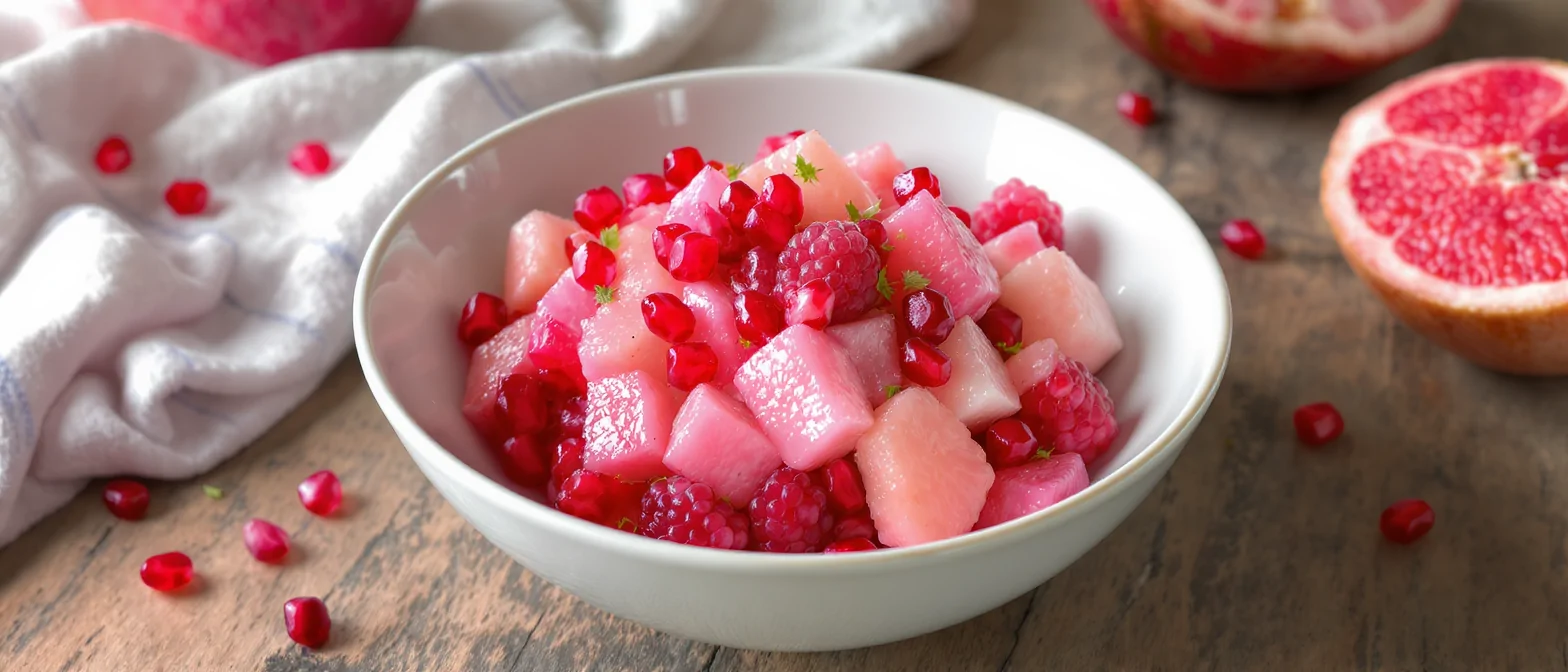
How do you choose a ripe pink fruit when you don't know what it is?
First, trust your sense of smell and firmness. A lychee should be fragrant and slightly firm without being mushy. A pink guava becomes more aromatic as it ripens. For citrus fruits (pink grapefruit, pomelo), weight is a good indicator: the heavier it is, the juicier it is.
Are pink fruits necessarily superfoods?
No. The term superfoods is mostly marketing. Some pink fruits (pomegranate, yangmei-type berries) are interesting for their antioxidants, but the key remains overall variety, appropriate portions, and regularity in a healthy diet.
Which pink fruits can be used to reduce bitterness in a salad?
Pair a pink citrus fruit (grapefruit) with something sweeter like peach, watermelon, or pink grapes. Add a touch of fat (olive oil, avocado, nuts) and a fresh herb. The balance is achieved very quickly.
How to incorporate the grenade without spending too much time on it?
Cut the plant open and collect the arils in a large bowl of water: the membranes float more easily, and the seeds fall to the surface. Drain, then store in a cool place. You can then sprinkle them on salads, yogurt, or cereal dishes.
