
In short
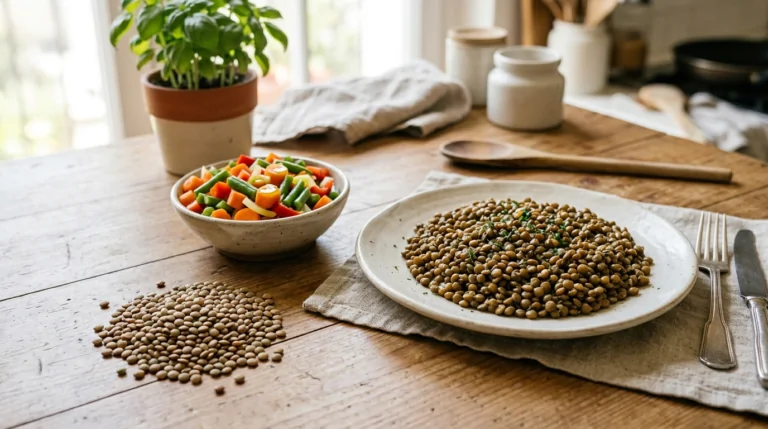
Opening a packet of lentils and wondering where to arrange them on the plate is not a minor detail. It changes the way you put together a balanced meal.
The short answer: lentils are both a starchy food and a legume, depending on how you look at them. Botany, nutrition, official recommendations—each perspective offers a different answer.
This article disentangles these three classifications, with the figures that justify them and a recent shift in French recommendations that few articles yet mention.
Lentils: legume, starchy food or vegetable, what does each classification system say?
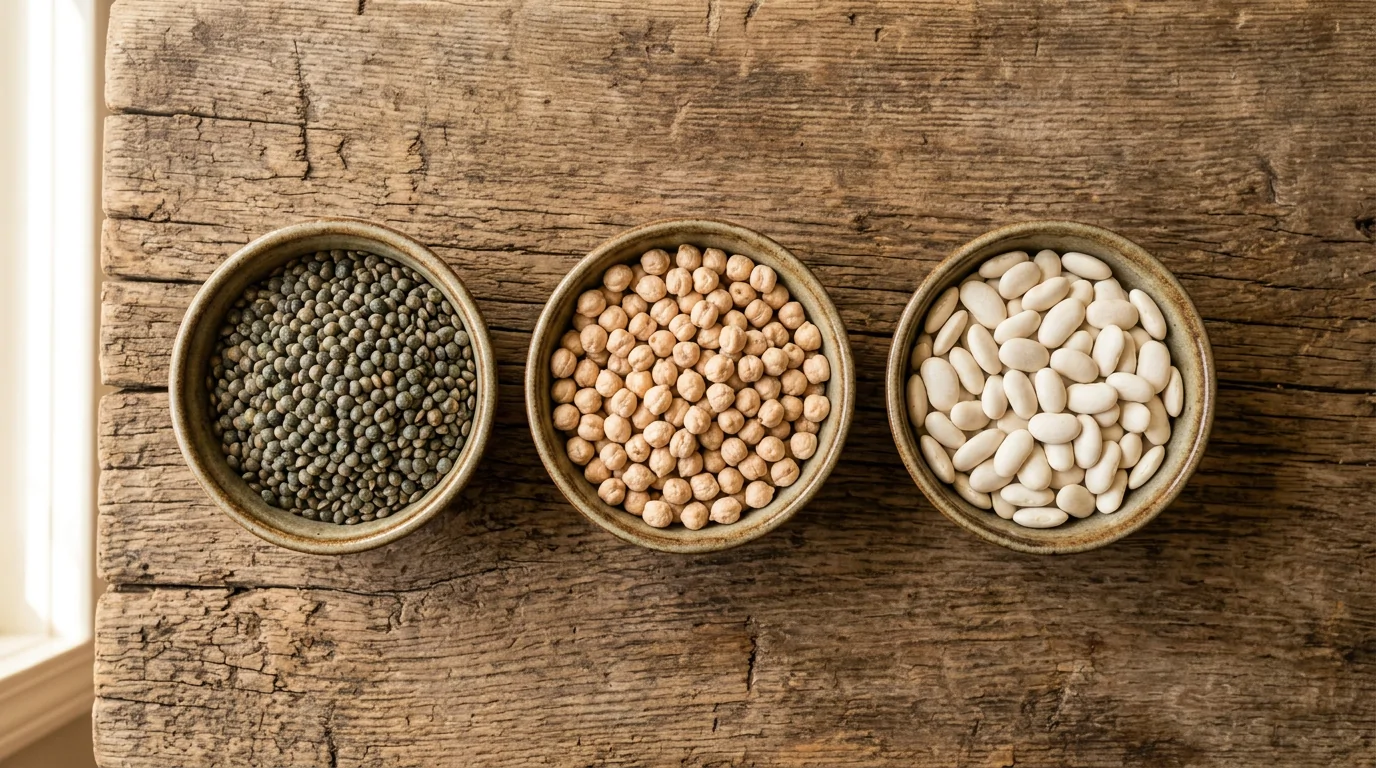
Botanically, a lentil is a seed from a plant in the Fabaceae family, like chickpeas, dried beans, or broad beans. They are classified as legumes or pulses.
This family is clearly distinct from fresh vegetables (carrot, courgette, spinach) which are stems, roots or fruits full of water, low in starch.
From a nutritional standpoint, cooked lentils contain approximately 20g of carbohydrates per 100g, primarily in the form of starch. It is this carbohydrate content that places them, in food composition tables, in the starchy food category rather than the vegetable category.
A cooked lentil provides roughly the same amount of carbohydrates as a serving of rice or pasta, but with significantly more fiber and a much lower glycemic index.
To avoid any confusion at the table, think of lentils as a starchy food that tastes like a legume: they replace rice or pasta on the plate, not the vegetable stir-fry.
The turning point of PNNS 4: lentils also classified among proteins
For a long time, French nutritional recommendations grouped pulses with cereals in the broad category of starchy foods. This is still repeated in most articles on the subject.
But the National Nutrition and Health Program 4, published in 2019, corrected this classification. Pulses now have their own category within the protein foods section, alongside meat, fish, and eggs.
In concrete terms, the PNNS 4 recommends consuming dried vegetables at least twice a week, integrating them into the rotation of protein sources rather than simply as a starchy accompaniment.
This official category change dates back to 2019. Many online nutrition guides still cite the old "pure starch" classification, which distorts portion calculations in a typical week.
This dual nature—starchy by composition and protein by function in the diet—explains why lentils hold a special place among nutritionists. They can replace a portion of grains one day, a portion of meat another.
Lentils, fresh vegetables and classic starchy foods: what the nutrition table shows
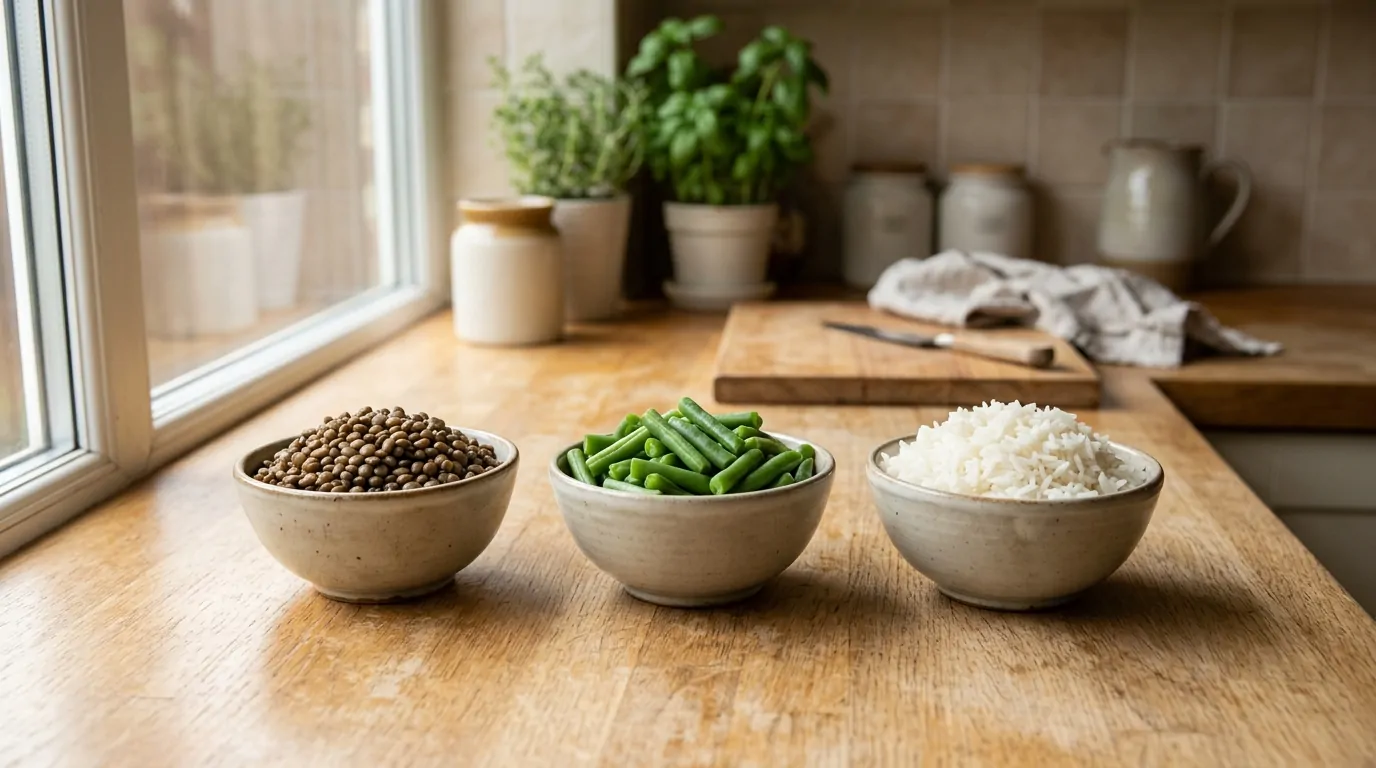
To visualize where lentils really stand, nothing beats a direct comparison with a typical fresh vegetable and a pure starchy food.
| Food (100g cooked) | Carbohydrates | Proteins | Fibers | Glycemic index |
|---|---|---|---|---|
| Lenses | approximately 20 g | approximately 9 g | approximately 8 g | 25 to 30 |
| Green beans | approximately 4 g | approximately 2 g | approximately 3 g | low, not precisely established |
| White rice | approximately 28 g | approximately 2.4 g | less than 1 g | approximately 70 |
This table clearly shows why lentils cannot be treated as a fresh vegetable: their carbohydrate content is five times higher than that of green beans.
But it also shows why they are not a starchy food like the others: with a quantity of carbohydrates almost equivalent to rice, they provide significantly more fiber and a glycemic index two and a half times lower.
- Low glycemic index, more stable blood sugar after meals
- Appreciable source of plant-based protein for a starchy food
- Fibers that promote satiety and digestion
- They do not replace the vitamins and minerals found in fresh vegetables
- May cause bloating if consumed too quickly
- Incomplete proteins in terms of amino acids, without cereal combination
Creating a balanced meal with lentils: two ways to do it
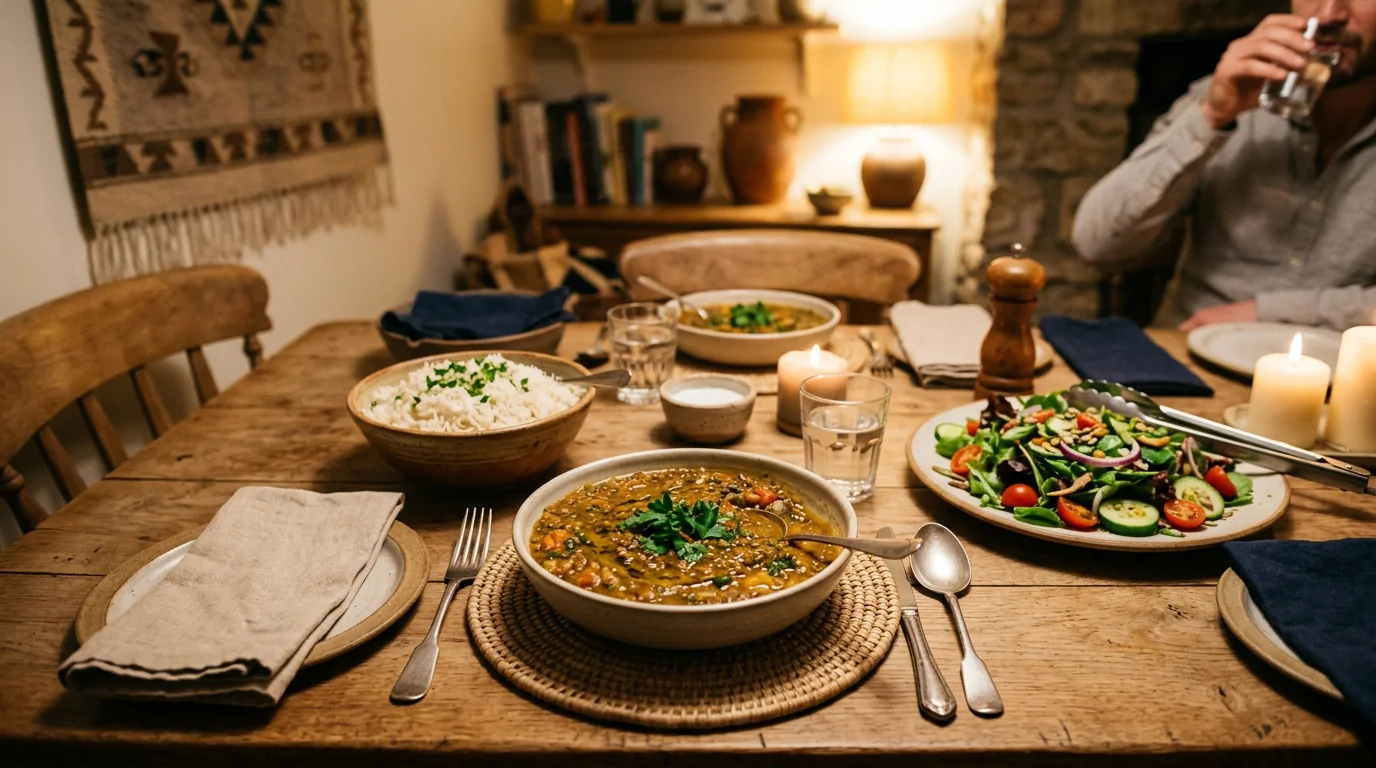
Léa, 34, a vegetarian for three years, replaces a portion of meat with lentils twice a week. To meet her protein needs, she simply doubles her usual portion of starchy food: 150g of cooked lentils instead of 80g of rice, which provides her with about 13g of protein compared to 26g for an equivalent portion of chicken. She supplements this with an egg or a handful of almonds to make up the difference.
Marc, an amateur athlete, systematically combines lentils and brown rice in the same bowl. This complementary grain-legume combination results in an amino acid profile similar to that of meat, with each group compensating for the amino acids lacking in the other.
Always combine a grain (rice, semolina, wholemeal bread) with a portion of lentils in the same meal. This is the simplest way to transform a starchy food into a complete protein source, without complicated calculations.
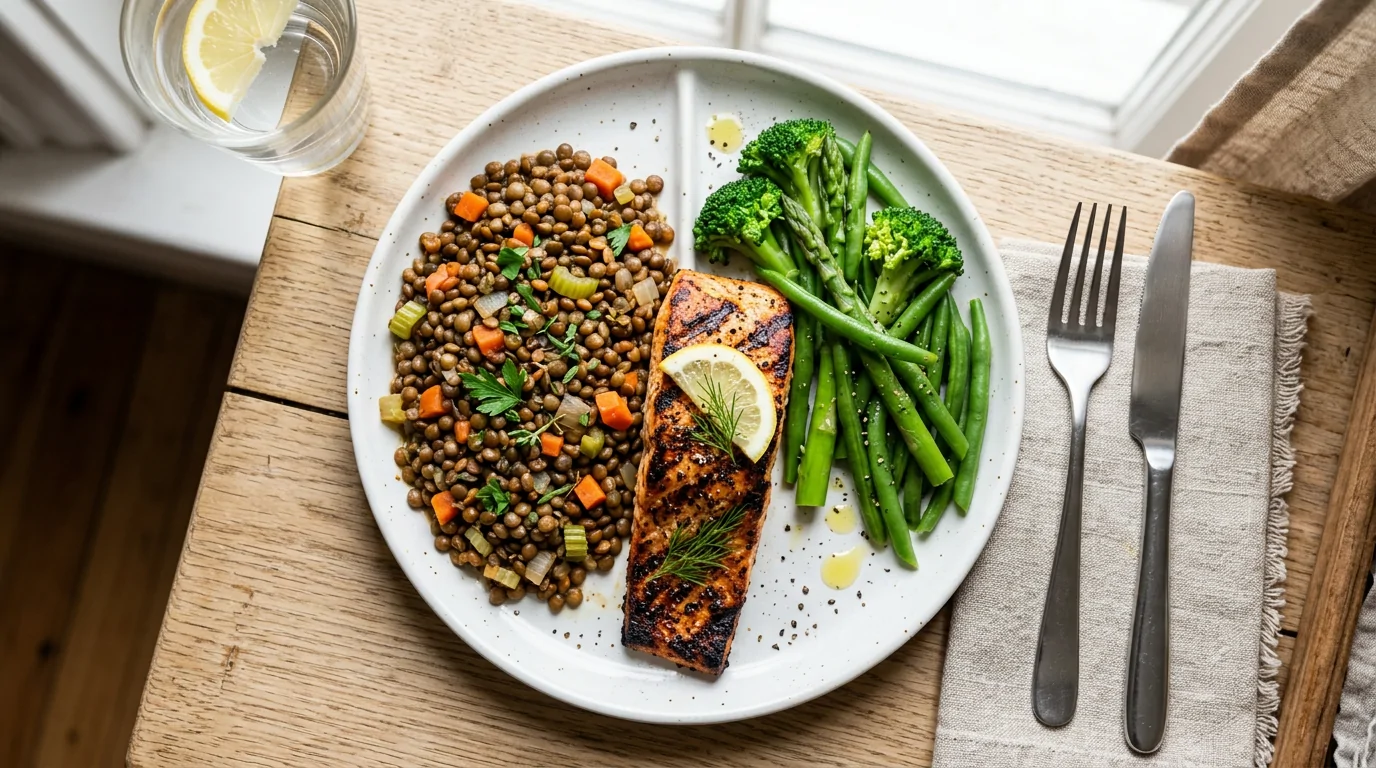
In both cases, the plate retains its base of fresh vegetables alongside: a green salad, a stir-fry of seasonal vegetables, or raw vegetables. The lentils take the place of the starchy protein, not that of the vegetable.
Treating lentils as a "vegetable" sometimes leads people to serve too large a portion, thinking they're limiting calories. However, 150g of cooked lentils provides almost as many carbohydrates as a serving of pasta.
How many lentils should I allow per person?
Lentil portion simulator
Practical questions
Can you eat lentils every day?
There's no nutritional prohibition against it, but in practice, varying your sources of starches and proteins remains preferable for a diverse intake of vitamins and minerals. The PNNS (French National Nutrition and Health Program) recommends two portions of legumes per week as a guideline, not a strict limit.
Do lentils make you gain weight?
Like all starchy foods, an excessive portion provides a calorie surplus. However, their low glycemic index and high fiber content promote lasting satiety, which helps to limit snacking after meals.
Should lentils be soaked before cooking?
Unlike chickpeas or dried beans, lentils do not need to be soaked beforehand. A simple rinse is sufficient before adding them to the cooking water.
Are contact lenses suitable for people with diabetes?
Their low glycemic index (25 to 30) makes them a starchy food often recommended in this context, instead of white rice or regular pasta. However, individualized medical advice is still necessary to adjust portion sizes.
What is the difference between green lentils and coral lentils?
Green lentils retain their shape when cooked and have a slightly lower glycemic index (25). Red lentils, once hulled, cook faster and break down into a puree, with a slightly higher glycemic index (30).
In summary
Lentils don't fit neatly into any single category. Botanically, they are legumes. Nutritionally, their starch content classifies them as starchy foods. And since the PNNS 4 (French National Nutrition and Health Program, 4th edition), they have also joined the family of protein foods.
This triple identity is not a problem: it simply explains why lentils can, depending on the meal, replace a portion of cereals or a portion of meat.
On the plate, the rule remains simple: lentils take the place of the starchy food, fresh vegetables keep their place alongside, and that's all there is to it.
