
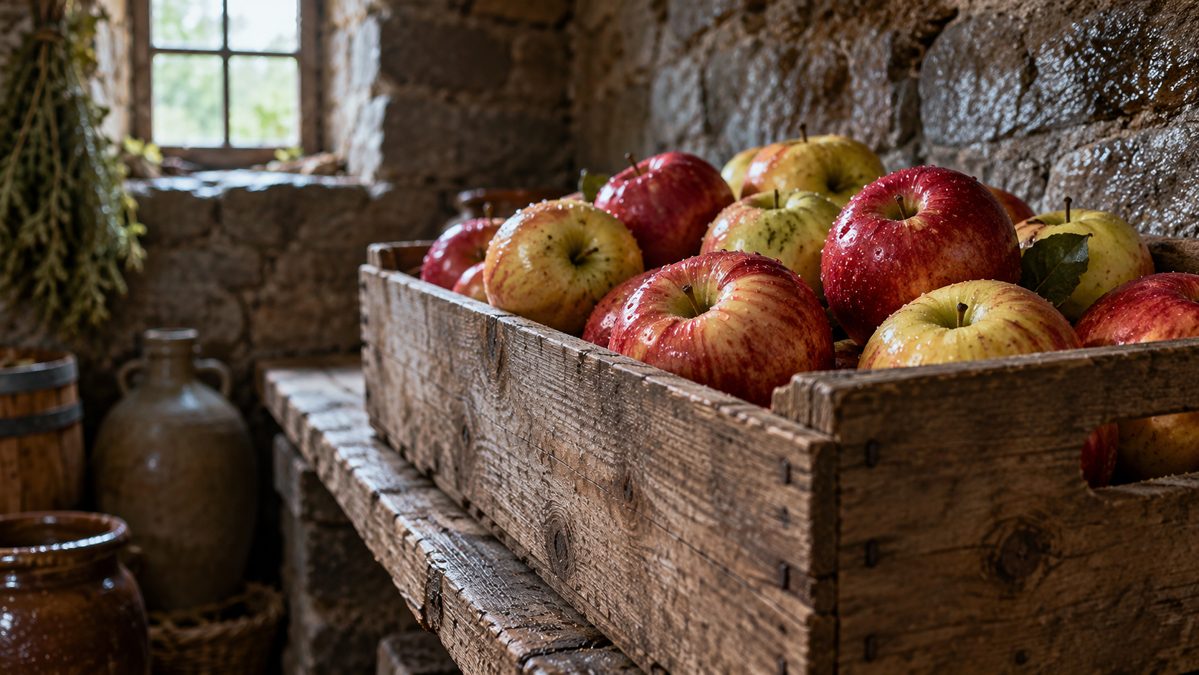
A bag of apples bought on sale, a crate picked from the orchard: in both cases, a single damaged apple is enough to bring down its neighbors.
To know how to store apples, you must first decide on the desired duration: a few days in the basket, a few weeks in the fridge, or all winter in the cellar for good varieties.
In summary: according to Liebherr, an apple can be kept for about 40 days in a conventional fridge, and for several months in a cellar for storage varieties.
This guide compares the times given by several sources, details the storage step by step and settles a point on which they contradict each other: should whole apples be frozen?
How long do apples keep depending on the location?
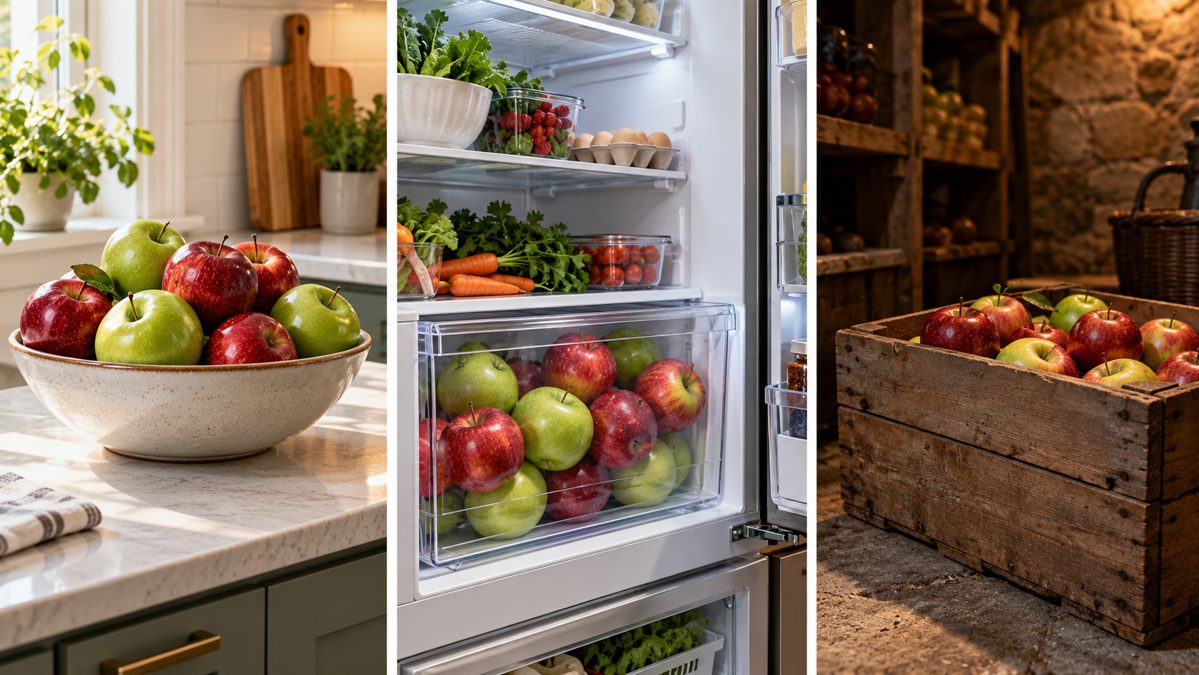
The durations vary from source to source, as they depend on the variety and the initial condition of the fruit.
Liebherr, in a guide without a publication date (accessed in October 2026), states 17 days at room temperature and 40 days in a conventional refrigerator compartment.
For a cellar or a fruit room, Jardiner Malin (updated October 1, 2026) mentions several months, provided that suitable varieties are chosen.
| Place | Announced duration | Condition |
|---|---|---|
| Basket, room temperature | 17 days | Healthy fruit, away from the heat |
| Vegetable drawer in the fridge | 40 days | Apples not stacked, moisture retained |
| Cellar or fruit cellar | Several months | 5 to 8 °C, humidity 65 to 80%, well-ventilated area |
| Freezer, sliced | Approximately 8 months | Frozen slices on a tray, then in a box |
Professionals extend storage times using climate-controlled rooms, where oxygen levels can drop below 1.5% according to CTIFL (November 2023). A cellar or refrigerator does not replicate this, which explains the shorter storage times at home.
These durations are guidelines, not guarantees. The CTIFL also advises professionals to shorten the storage period after a very hot and rainy month before harvesting.
Which apples should I choose so that they last until winter?
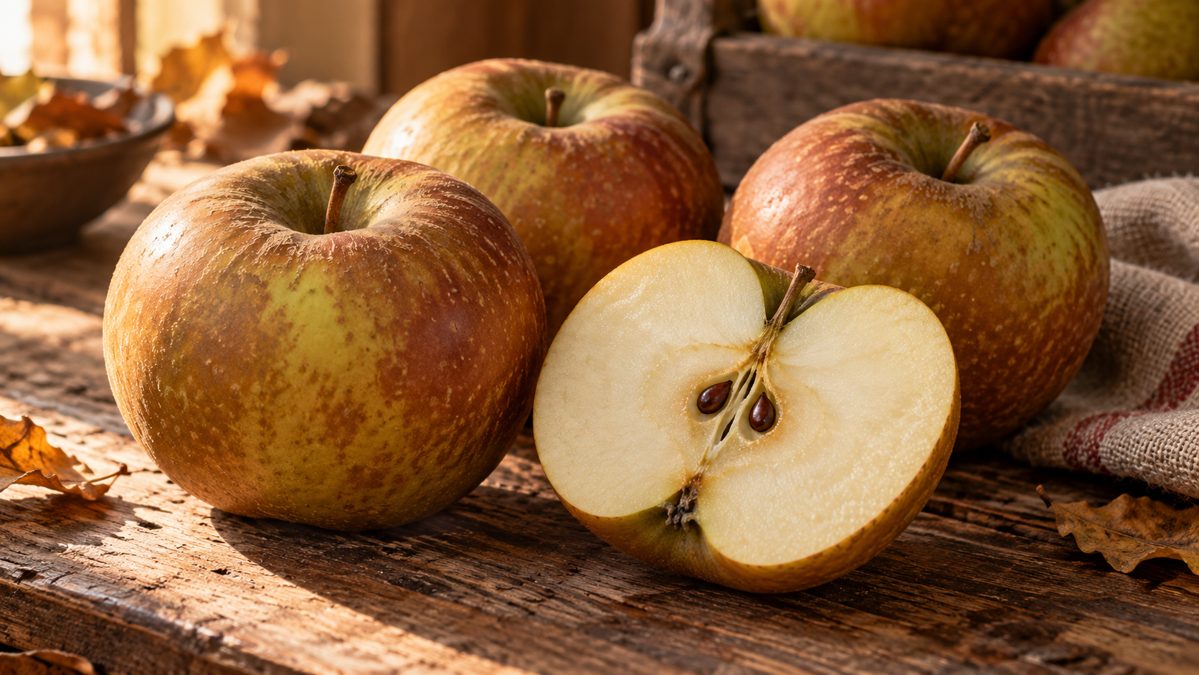
Not all apples keep for the same amount of time. Apples for storage are late-ripening, firm varieties, picked at their peak of maturity, without waiting until they are overripe.
Jardiner Malin classifies their outfit into four levels:
- excellent: the Reinette de Brive;
- very good: Api, Belle de Boskoop, Belle-Fille de Salins, Calville blanc d'hiver, Idared, Ontario, Reinette Clochard, Reinette de Caux and Reinette grise du Canada;
- good to very good: the Belchard;
- good: the Chantecler.
When shopping at the grocery store, you don't always get to choose the variety. So, choose firm fruit, without bruises or blemishes, and aim for a few weeks rather than the whole winter.
Typical example: a two-kilo net bought at the market is eaten in a few weeks and stored in the fridge, whereas thirty kilos of Reinette grise du Canada picked in the orchard deserve the cellar.
Do not collect fallen fruit for storage: bruised, it spoils quickly and does not keep. According to Ouest-France Bricoleur Pro, a short-keeping variety that releases ethylene accelerates the ripening of other fruits, and the entire harvest risks rotting in a few weeks.
How to store apples in the cellar for the whole winter?
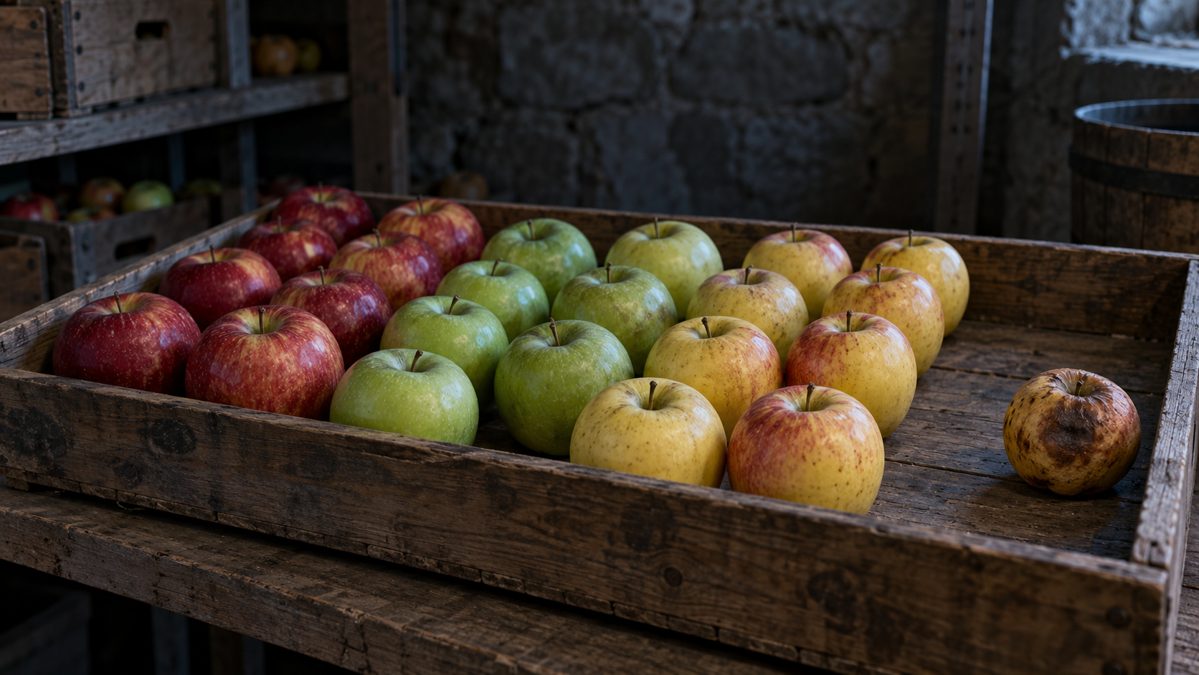
Local sourcing is just as important as variety.
Ouest-France Bricoleur Pro (file updated in April 2024) cites low light, a temperature of 5 to 8 °C, a humidity of 65 to 80% and good ventilation.
The same document advises cleaning and disinfecting the premises about two weeks before storage.
He also recommends setting some traps against rodents.
For the storage itself, Jardiner Malin details the steps to follow:
- pick in dry weather, keeping the stem;
- sort and keep only the healthy fruits, without bruises;
- Do not wash the apples before storing them, only before eating them;
- arrange them in a single layer on shallow shelves or crates, without piling them up;
- label each batch with the variety and harvest date;
- Check approximately once a week and immediately remove any soft, moldy or blemished fruit.
A clean cloth or absorbent paper between two rows limits the appearance of mold, adds CuisineAZ (October 2025).
To do: set aside the bruised apples and turn them into compote within the week, before they contaminate the rest.
Apples release ethylene, a gas that accelerates the ripening of nearby fruits. Therefore, store them away from other sensitive fruits and vegetables, and ventilate the storage area regularly.
What to do without a cellar: the fridge, sliced apples and freezing?
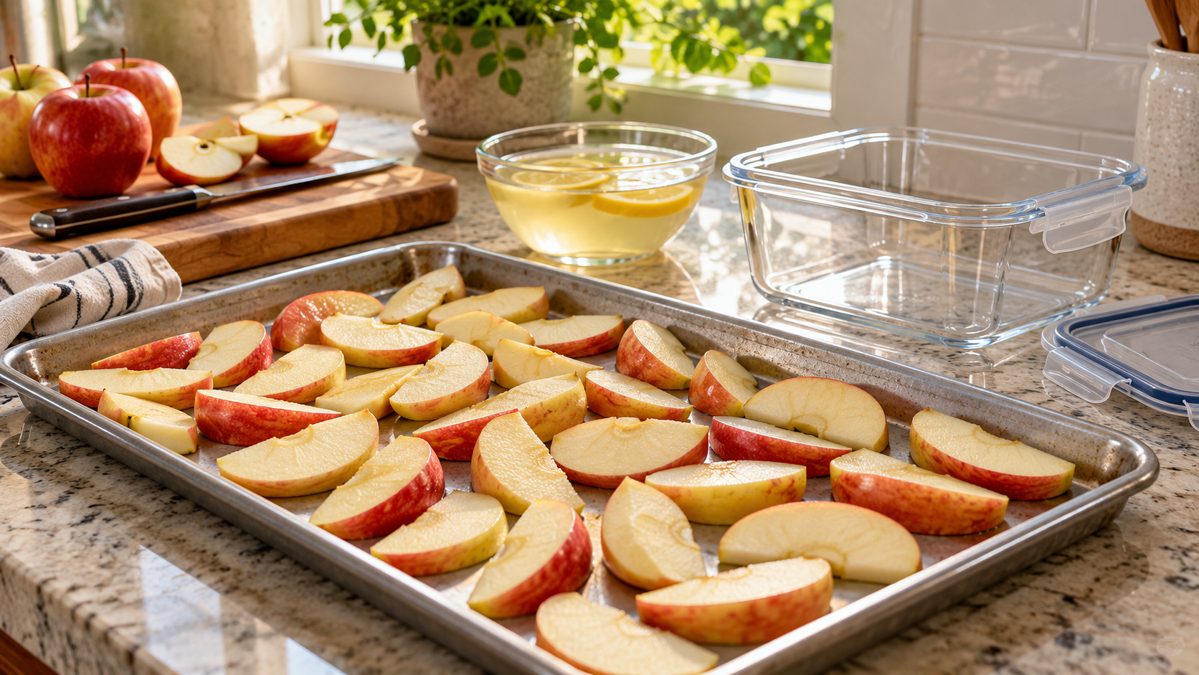
Without a cellar, the vegetable drawer in the fridge is suitable for a few kilos.
Liebherr advises, without an adjustable humidity drawer, to cover the apples with perforated cling film to retain moisture and prevent them from drying out.
A cut apple browns when exposed to air, due to oxidation. Practical guides suggest briefly soaking it in lemon water or cold salted water, then rinsing it.
For freezing, Liebherr recommends slicing the apples, freezing them on a tray, then storing them in an airtight containerfor approximately 8 months.
Sources differ on whether whole apples are used.
CuisineAZ explains how to freeze whole apples for up to 6 months, whereas Liebherr advises against it because they freeze too slowly and lose quality.
Slices take up less space and are easier to measure: it's the simplest method to remember, especially since Liebherr advises against whole apples.
A frozen apple will not become crisp again. Reserve it for compotes, pies, and cakes.
Frozen compote expands when cold: CuisineAZ recommends leaving at least two centimeters free under the lid.
Typical example: apples that have become soft after three weeks in the fridge are not lost, they make a good compote.
In summary
For a few weeks, a fruit basket and then the vegetable drawer in the fridge will suffice. For the entire winter, you need storage varieties, a cool, humid and well-ventilated space, healthy fruit arranged in a single layer, and a weekly check.
Cut or surplus apples can be frozen in slices, with compote as a last resort for those that spoil.
