
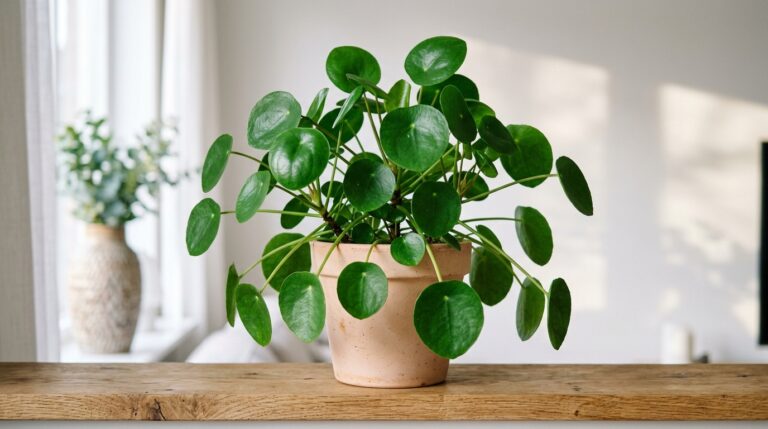
We often see it on social media, proudly displayed on a windowsill: the pilea is making a splash in our homes.
This small, round plant, with its unique foliage and undeniable decorative virtues, is a welcome addition to the homes of those seeking an undemanding touch of greenery.
But where does the craze for this famous money plant come from? What routine should be adopted to ensure its long-term success? And how can its famous offspring be multiplied?
Get ready to discover the secrets of the pilea, its simplified care, its specific needs and some surprising anecdotes to cultivate it without stress.
What are the origins and characteristics of the pilea?
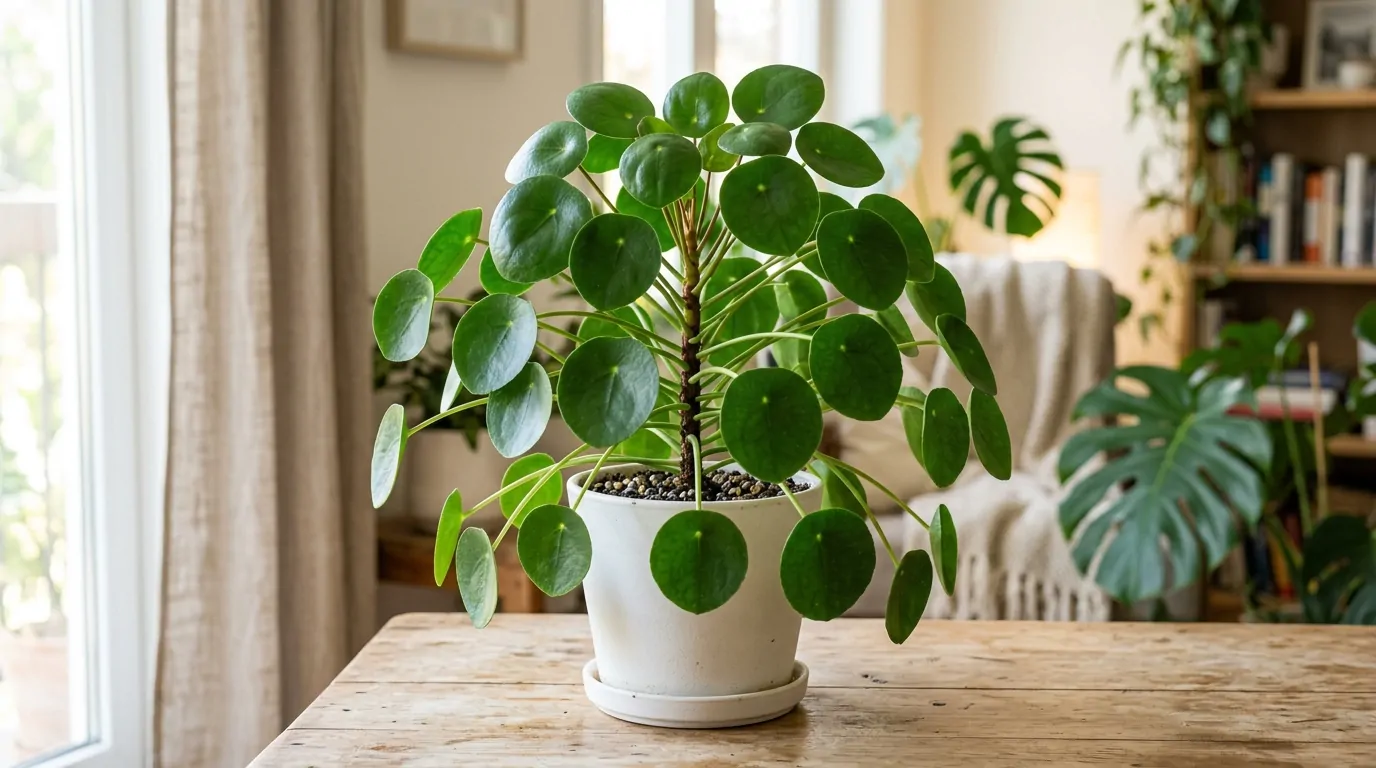
Also called pilea peperomioides, this plant with round leaves has crossed continents and generations to reach our living rooms.
Few people know its true history or its legends, yet it carries a powerful symbol in Asia.
Beneath its unassuming appearance, the pilea hides many advantages. Its ease of care and aesthetic appeal make it a must-have among modern houseplants
But its geographical origin deserves a closer look, as does the meaning given to the notion of prosperity surrounding this highly prized species.
Where does Pilea peperomioides come from?
The pilea does not owe its success solely to its graphic appearance. It originates in the mountainous forests of southwestern China ,near the border with Vietnam.
Cultivated for a long time by local populations, it crossed Asian borders in the mid-20th century thanks to its remarkable adaptability.
This journey across continents has given it a special reputation: some associate the money plant with luck, or even fortune, because it is supposed to attract good financial energies into a home.
Its nickname "money plant" therefore comes as much from its shape as from this cultural significance.
Why is the pilea called the money plant?
The leaves of the pilea, almost perfectly circular, visually resemble small stacked coins.
This aspect, combined with a widespread Asian symbolism surrounding prosperity, has helped to anchor it in this popular imagination.
Giving a pilea peperomioidesas a gift is a regular way of sharing a wish for wealth and success with someone close to you.
That is why the plant is frequently passed around among friends or family, particularly during births or new moves.
What are the essential needs of the pilea in terms of exposure and temperature?
Properly setting up a pilea indoors starts with understanding its light and heat, and even though this plant can be tolerant, a few simple steps can ensure its longevity while preserving the beauty of its leaves.
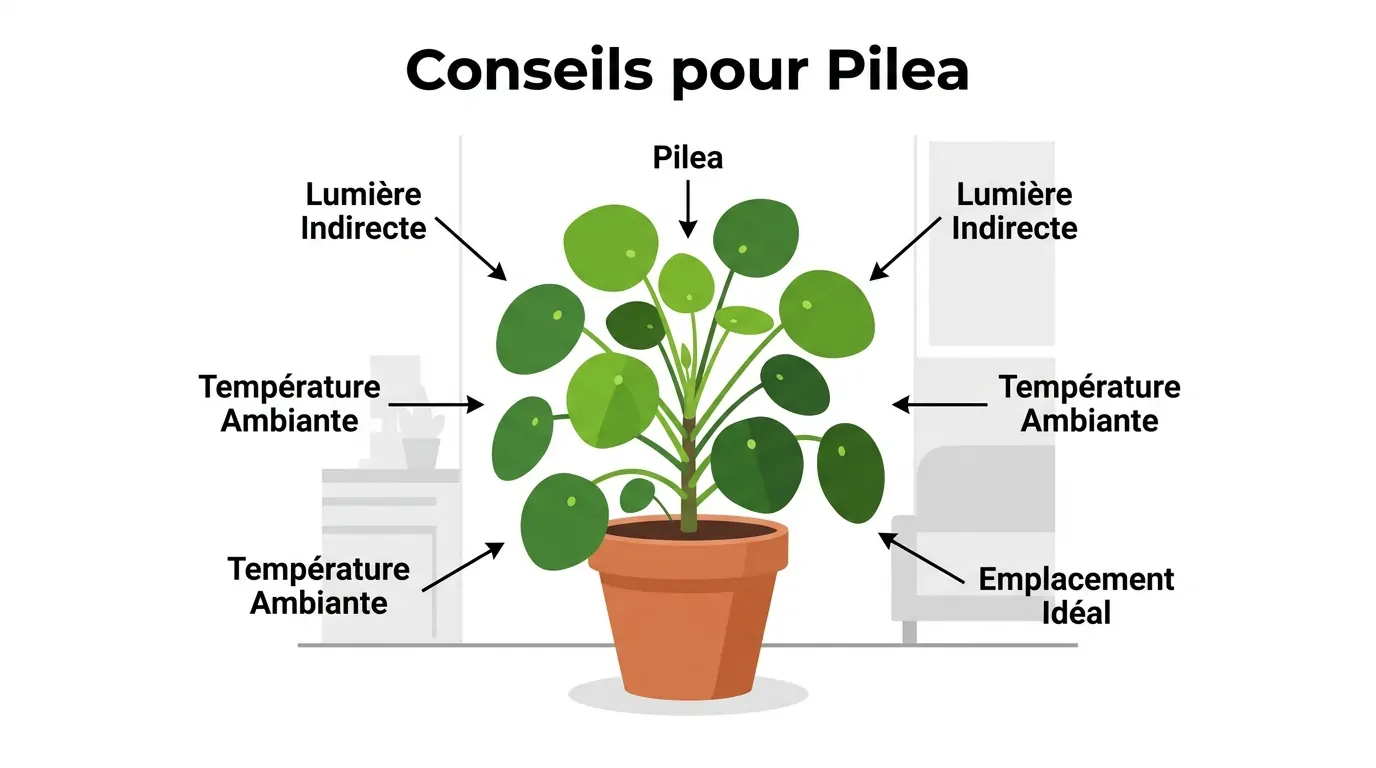
Managing exposure and temperature plays a central role in the health of the pilea, especially since its natural environment differs greatly from our temperate apartments.
What type of exposure should you choose for your pilea?
The pilea prefers light , so an east- or west-facing windowsill is ideal, provided that direct sunlight is avoided during the hottest hours.
Overly strong rays could burn the delicate leaves and cause spots or yellowing.
Sometimes, the pilea shows its displeasure with a lack of light: its stems lengthen and the plant becomes etiolated in search of light.
Regularly rotating the pot promotes harmonious growth and preserves the rounded shape of the foliage.
What temperature corresponds to the well-being of the pilea?
Native to subtropical regions, the pilea appreciates temperatures between 16 and 24°C throughout the year.
Some occasional variations are acceptable, but a sudden cold snap can slow its growth or damage some leaves.
In winter, beware of cold drafts and proximity to a radiator: it is better to keep the plant away and maintain a moderate humidity level.
In summer, you can put the pilea outside, on a shaded balcony, as long as the night temperature remains mild.
How to successfully water and care for a pilea?
One of the main reasons for the pilea's popularity is its ease of care. Its resilience even encourages novice gardeners to give it a try.
However, a suitable routine can preserve the vigor of this small plant year after year.
Between watering , leaf cleaning and occasional care, every action counts to avoid diseases and imbalances, especially in the sometimes dry environment of modern homes.
How often should I water my pilea?
Overwatering is the main pitfall when caring for a Pilea peperomioides. This plant hates having its roots constantly wet.
The ideal frequency depends on the season: in summer, watering every seven to ten days is generally sufficient, while in winter it is better to space it out more.
It is recommended to check the condition of the potting soil: wait until it has dried on the surface before adding more water. Emptying the saucer under the pot prevents the dreaded root rot.
What are the best ways to care for your pilea?
A simple monthly cleaning of the foliage, using a damp cloth, will remove the dust that hinders photosynthesis.
Removing damaged leaves stimulates the growth of new shoots and maintains a dense and elegant silhouette.
Adding a low-dose liquid fertilizer once a month from March to September also helps to strengthen the vitality of the pilea, without generating excessive stem development at the expense of the leaves.
How to propagate or multiply pilea?
propagation , great generosity, childhood memories… the pilea inspires as much passion as it does sharing!
Thanks to its exceptionally accessible method of propagation by cuttings , this houseplant is often passed from one home to another, thus spreading its reputation as a gift plant.
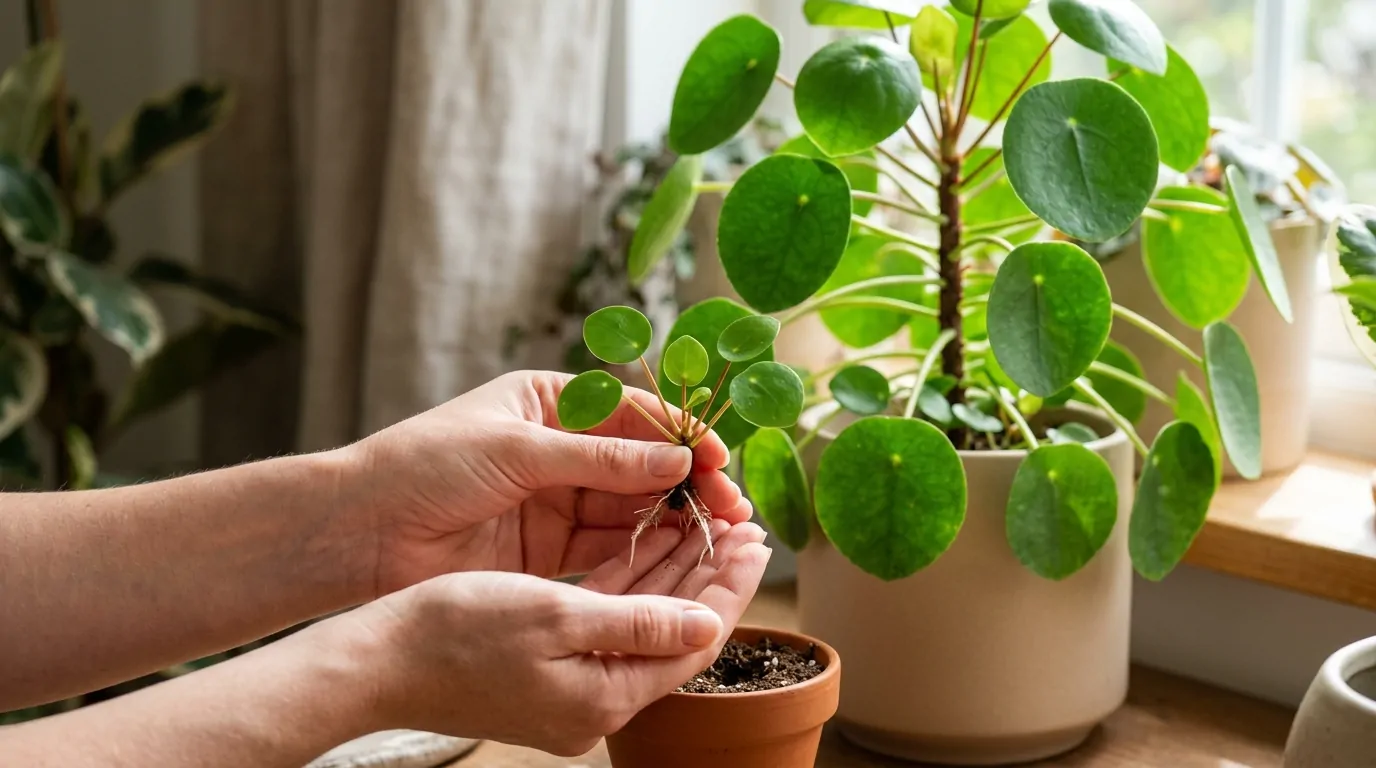
Growing several specimens not only allows you to fill your space, but also to please those around you by offering the famous babies of the pilea peperomioides.
A few steps are all it takes to guarantee their rapid recovery and ensure the continuity of the tradition.
- Identify the offshoots (small shoots appearing at the base of the mother plant)
- Carefully detach the offshoot using a clean, sharp knife
- Plant the baby directly in a small pot filled with light, fresh potting soil
- Maintain stable humidity for the first few weeks, in bright light but out of direct sunlight
- Transplant into a final pot once the roots are well-formed
Pilea can also be propagated from stems immersed in water.
After a few days, tiny roots appear: just wait until they are long enough to proceed to potting.
This simple process guarantees a new generation ready to brighten up the home or travel to new horizons, and children love to participate in these operations, which become a fun and educational ritual.
Offering a specimen of a money plant requires nothing more than patience and observation.
Why is the pilea popular as a stylish houseplant?
Popularized by its unique look, easy to match in any decor, the pilea peperomioides ticks all the boxes of current trends.
More than just a green plant, it has become a distinctive feature in many comfortable homes.
Its compact size makes it easy to place on a shelf, while its graphic sheets match both Scandinavian and vintage styles.
Designers regularly rely on this iconic species to break the monotony of a room while creating a soothing and friendly atmosphere.
- Indoor plant suitable for small spaces and offices
- Non-toxic to pets
- Regular shape, easy to mold as desired
- Displayed in colorful pots or hanging
Inserting a pilea into an arrangement of houseplants creates vibrant contrasts while reminding us of the beneficial effects of nature, even in an urban apartment.
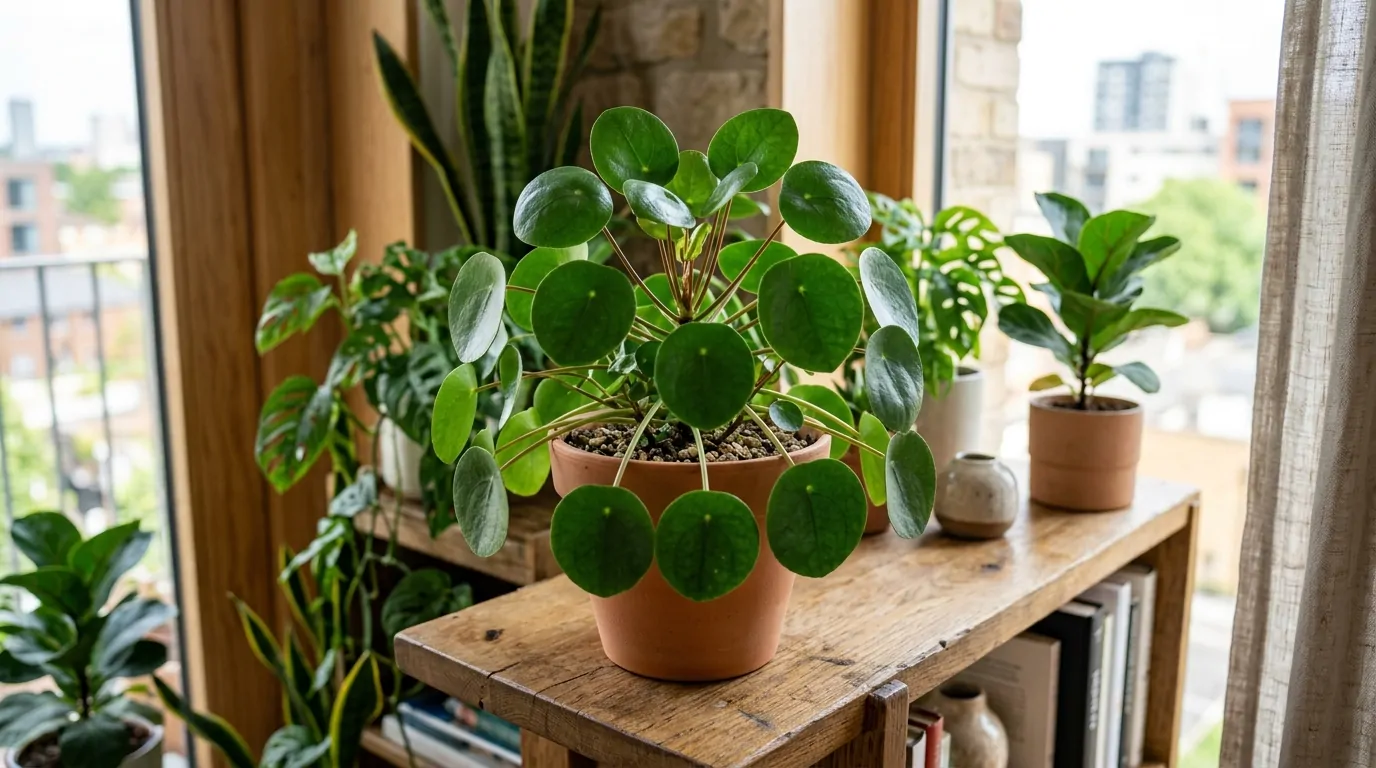
Each person, at their own pace, tames this decorative plant whose presence warms the general atmosphere, while inviting daily contemplation of living things.
Benefits, beliefs and perspectives surrounding pilea
Beyond its purely aesthetic aspect, the pilea carries an important symbolic dimension.
Adding subtlety to the decoration does not summarize all the appeal of the money plant : growing a pilea at home is, in a way, inviting serenity and an idea of prosperity to take root.
While some see the pilea as a lucky charm, others appreciate its ease of care or the experience of easy propagation it provides.
Its modest requirements make it the perfect ally for both novices and experienced botany enthusiasts. Moreover, its ability to quickly generate new plants encourages the perpetuation of sharing, a universal tradition that often extends beyond mere decoration.
Observing growth, varying propagation, adjusting some parameters according to the season: the pilea has not finished seducing.
Why not let this touch of greenery carry a message of good fortune to those who cross its path?
