
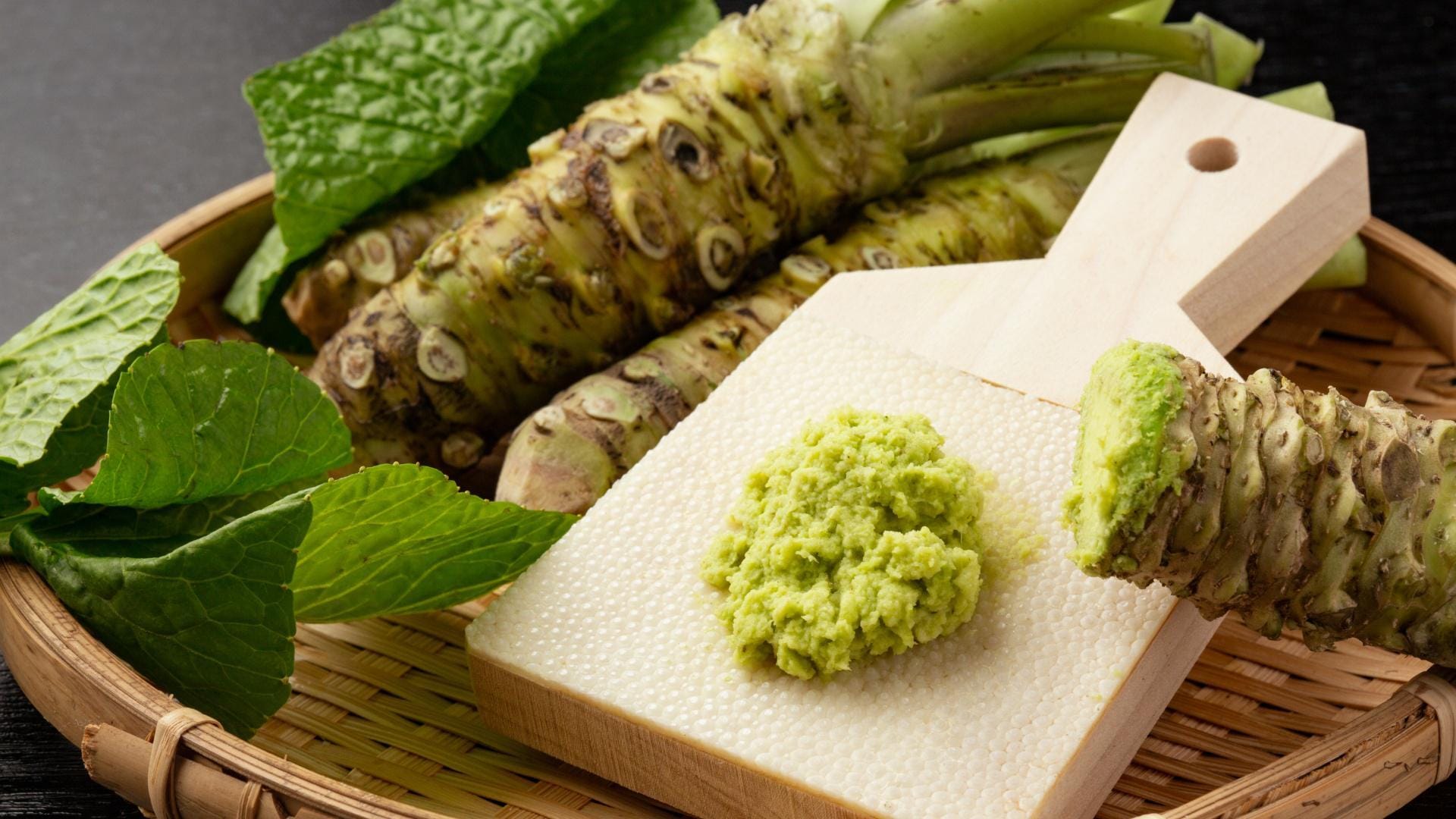
Wasabi is fascinating both for its unique flavor and its surprising history. This pungent Japanese condiment, renowned for its numerous health benefits, truly deserves a closer look!
Whether you're a sushi lover or simply curious to discover new ingredients, this guide will tell you everything you need to know about wasabi — from its origins and culinary uses to its health benefits and the best places to buy it…
The origins and characteristics of wasabi
Wasabi comes from a perennial plant scientifically known as Eutrema japonicum . Native to Japan, this plant, belonging to the Brassicaceae family , grows naturally in cool, humid environments.
Its root, with its very particular taste, has a delicate texture that makes it an exceptional condiment.
Wasabi cultivation is concentrated primarily in Shizuoka Prefecture in Japan, although it is now found in other countries such as Russia, China, and some American states such as Oregon and Tennessee.
This demanding cultivation explains why true wasabi remains rare and prized by connoisseurs.
Wasabi's unique characteristics stem from its exceptional richness in isothiocyanates, bioactive compounds belonging to the glucosinolate family. These complex molecules are formed when the root is grated: the myrosinase enzyme then transforms the precursors into active compounds.
This biochemical process explains why freshly grated wasabi develops its characteristic spiciness and why its properties fade rapidly in open air.
This richness in bioactive compounds gives it not only its distinctive tangy flavor, but also its remarkable antibacterial properties, validated by numerous scientific studies.
How to use wasabi in cooking?
Long reserved for sushi and sashimi in traditional Japanese cuisine, wasabi is now finding its way into many culinary preparations.

Its unique texture and distinctive aroma allow classic dishes to be reinvented with originality.
Savory dishes with wasabi
Sauces and marinades
Mix wasabi with mayonnaise, Greek yogurt or sour cream to create original sauces that will enhance your meats, fish and vegetables.
This combination will add a touch of originality to your everyday meals.
Tangy vinaigrettes
A pinch of wasabi in your salad dressings will instantly transform your salads. This small addition creates a striking contrast that awakens the taste buds and adds depth to the crunchy textures of your vegetables.
Tartares revisited
Whether you are preparing a fish, beef or even vegetable tartare, wasabi enhances the natural flavors while bringing incomparable freshness to your dishes.
Where can I buy real wasabi and at what price?
Finding authentic wasabi in France can be a real challenge, but it's far from impossible!
The best places to buy fresh wasabi
Specialty Japanese grocery stores
High-end Asian grocery stores, particularly in Paris in the Opéra district or near rue Sainte-Anne, sometimes offer imported fresh wasabi.
Expect to pay between €15 and €25 for a fresh root of approximately 30 grams.
Online ordering
Several specialized French websites deliver authentic wasabi :
- Direct order from Japan (delivery time 3-5 days)
- Online grocery stores specializing in Japanese products
- Average price: €20-30 for a fresh root
Traditional Japanese restaurants
Some upscale restaurants are happy to sell their fresh wasabi to their regular customers. Don't hesitate to ask!
“I discovered real wasabi at Nodaiwa, a Japanese restaurant in Paris. The chef explained that he gets it directly from Shizuoka and agreed to sell me a root. The difference from what you usually find is striking: the flavor is much more subtle and disappears quickly, leaving behind an incredible freshness.”– Marie, food blogger
How to recognize the quality of wasabi
Fresh, high-quality wasabi should have a firm surface, without black spots, and give off a subtle aroma when lightly scratched.
Beware of prices that are too low: real wasabi cannot cost less than €15 per root.
recipes with wasabi to get started
Wasabi mayonnaise (basic recipe)

Ingredients for 4 people:
- 100g of quality mayonnaise
- 1 teaspoon of freshly grated wasabi (or ½ teaspoon of paste)
- 1 pinch of sea salt
The preparation:
Gently mix the wasabi into the mayonnaise. Let it rest in the refrigerator for 10 minutes to allow the flavors to develop. This sauce is a perfect accompaniment to grilled fish or steamed vegetables.
Wasabi-sesame salad dressing
The ingredients:
- 3 tablespoons of sesame oil
- 1 tablespoon of rice vinegar
- ½ teaspoon of wasabi
- 1 teaspoon of honey
Emulsify all the ingredients and pour over a salad of arugula and avocado. Delicious!
How to keep wasabi fresh ?
Storing wasabi requires some precautions to preserve its properties:
Refrigerated storage
Wrap the fresh root in a damp paper towel, then in plastic wrap. It will keep for 2 to 3 weeks in the refrigerator this way.
Grate only the necessary amount, because once grated, wasabi quickly loses its aromas.
Preserving wasabi paste
Once opened, wasabi paste can be kept for 6 months in the refrigerator.
Make sure to close the tube tightly after use.
Can wasabi be frozen?
Freezing alters the texture of fresh wasabi. We only recommend it for commercially produced wasabi paste, and only if you are using it in cooked dishes.
Surprising uses of wasabi in baking
The most creative pastry chefs are no longer hesitant to incorporate wasabi into certain desserts. From flavored ice creams to creations in the traditional Japanese style, these bold combinations create a surprising balance between sweetness and spiciness.
Examples of wasabi desserts:
- Vanilla-wasabi ice cream: the perfect combination of creamy sweetness and a subtle spiciness
- White chocolate with wasabi notes for the more adventurous
- Wasabi-yuzu macarons in the Franco-Japanese tradition
The best alternatives to wasabi: if you can't find any
If you can't get hold of authentic wasabi, here are the best alternatives:
Fresh horseradish
This is the best alternative! Grate fresh horseradish and add a few drops of green food coloring. The taste will be similar, though less subtle than the original.
Strong mustard
Mix strong Dijon mustard with a pinch of wasabi powder (if you have some) to get closer to the authentic taste.
High-quality wasabi powder
Some wasabi powders contain a percentage of real wasabi mixed with horseradish. Read the labels carefully!
The health benefits of wasabi
Beyond its taste qualities, wasabi offers numerous health benefits.
Recent scientific research highlights its remarkable therapeutic properties.
Antibacterial and anti-inflammatory properties
The isothiocyanates in wasabi have been extensively studied in the laboratory. These active molecules demonstrate remarkable effectiveness: tests have shown that they inhibit the growth of certain pathogenic bacteria, including E. coli and Staphylococcus aureus, according to a study published in the Journal of Food Science.
This property explains why wasabi traditionally accompanies raw fish in Japanese cuisine.
Its anti-inflammatory propertieshelp to reduce chronic inflammation in the body.
This action may help reduce the risk of cardiovascular disease, according to several recent studies.
Other benefits for the body
Wasabi offers other interesting nutritional benefits:
Antioxidant properties : Its richness in vitamin C strengthens our immune defenses and effectively fights against oxidative stress.
Cognitive stimulation : A recent study conducted on elderly people revealed surprising results: the active ingredient 6-MSITC (6-methylsulfinylhexyl isothiocyanate) significantly improves short-term memory in seniors.
This discovery, published in Nutrients, opens up promising perspectives for research on cognitive aging.
Improved circulation : A particularly detailed case study, conducted in 2022 in California, followed participants regularly consuming wasabi over several months.
The results revealed a measurable improvement in blood circulation and effective support for digestion. These benefits confirm that this condiment goes far beyond simple gustatory pleasure.
Differences between real wasabi and substitutes
There is a key distinction between authentic wasabi and the many substitutes available on the market.
This difference impacts both taste and nutritional benefits.
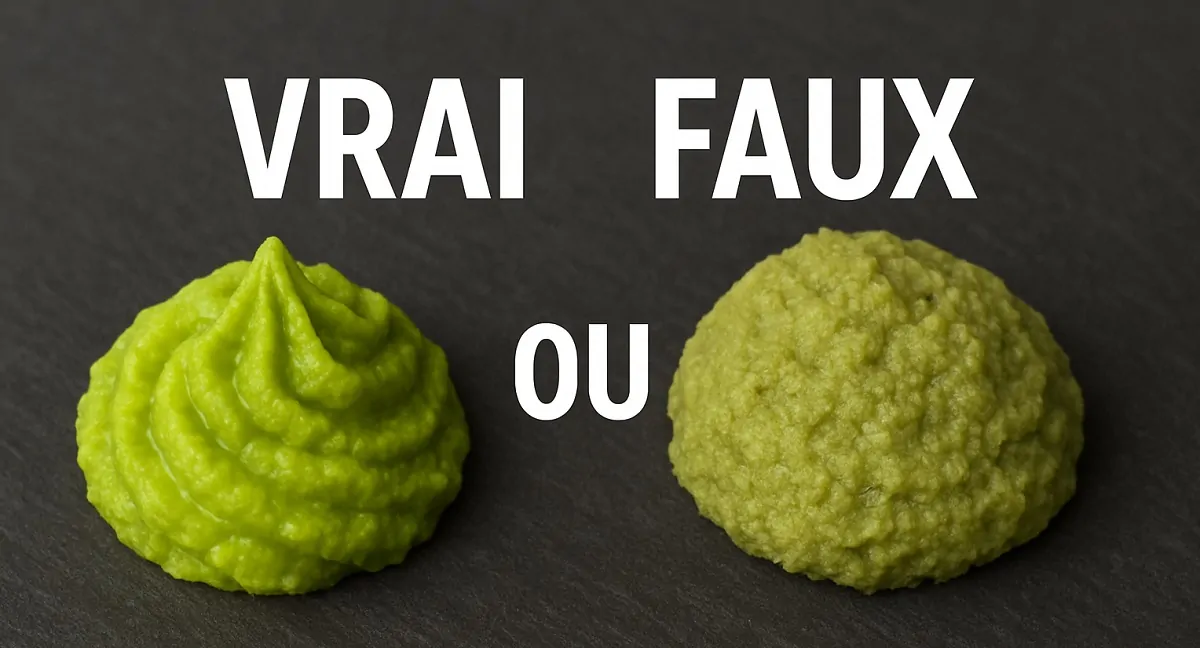
Authentic wasabi
True wasabi is cultivated under very specific conditions and harvested entirely by hand.
This rarity explains its high cost and its value among purists of Japanese gastronomy.
Commercial substitutes
Most products sold as "wasabi" in restaurants and supermarkets are actually made from horseradish or mustard, with added green coloring.
Just like some Japanese mayonnaises , these industrial versions have nothing to do with the original recipe!
These substitutes attempt to replicate the pungent flavor without offering the aromatic complexity or the benefits of real wasabi.
To recognize real wasabi, here is a comparative table of the main differences:
| Criteria | Real wasabi | Substitutes |
|---|---|---|
| Origin | Traditional Japan | Horseradish, mustard |
| Flavor | Complex and volatile | Mimed, less intense |
| Texture | Freshly grated for maximum intensity | Pre-conceived, often less subtle |
| Cost | Raised due to its rarity | Accessible |
| Health benefits | Full properties | Boundaries |
advice and precautions
Like any food with active properties, wasabi should be consumed in moderation.
Using it responsibly allows you to fully enjoy its benefits without risking any undesirable effects.
The recommended dosage and the scientific basis
Nutritional and toxicological studies agree on an optimal dosage: a moderate dose allows you to benefit from the advantages of wasabi without causing gastrointestinal irritation.
Research, particularly that conducted by the University of Tokyo, suggests that active compounds reach their maximum effectiveness with small, repeated amounts rather than with massive, one-time consumption.
“As a nutritionist, I often recommend wasabi to my clients for its digestive properties. The key is regularity: a small daily portion is far more beneficial than a large occasional amount. I have observed significant improvements in several patients suffering from mild digestive disorders.”– Dr. Yamamoto, French-Japanese nutritionist
Nutrition experts recommend two to three small touches per dish, or about 1 to 2 grams of fresh wasabi.
This quantity is sufficient to enjoy its taste qualities while also benefiting from its documented health properties.
Precautions to take
For safe consumption, follow these essential recommendations according to this summary table:
| Key points | Recommendation |
|---|---|
| The quantity | Use sparingly, ideally 2 to 3 drops per dish |
| Medical conditions | Medical advice is recommended for people with asthma |
| Sensitivities | Avoid if you are allergic to strong spices |
| Side effects | Stop consumption if gastrointestinal irritation occurs |
Measured quantity : Avoid overconsumption which could cause irritation of the mucous membranes.
Attention to allergies : People sensitive to strong spices or suffering from respiratory problems, including asthma, should exercise extra caution.
Medical advice : In case of specific medical conditions, prioritize the advice of a healthcare professional before regularly incorporating wasabi into your diet.
An exceptional condiment to discover!
Wasabi is proving to be much more than just a condiment on our plates. Its rich history, its selective cultivation with scientifically documented requirements, and its diverse uses make it a precious ingredient that deserves to be discovered and appreciated for its true worth.
Each tasting reveals a world of sensations where Japanese culinary tradition meets modern innovation and contemporary scientific research.
Recent studies confirm that incorporating wasabi into a balanced diet can improve our well-being thanks to its antibacterial and anti-inflammatory properties measured in the laboratory.
Its use in cooking encourages experimentation, whether in traditional recipes or bold modern creations. Remember that its flavor evolves quickly: always prepare it just before serving to fully appreciate its unique aromas.
This culinary discovery, the result of in-depth research combining tradition and modern science, reminds us that every authentic ingredient, when consumed in moderation and with expertise, can truly enrich our daily lives.
Understanding the biochemical mechanisms of wasabi and distinguishing between authentic products and substitutes allows us to make informed choices for our health.
Frequently asked questions about wasabi
What exactly is wasabi?
Wasabi is a Japanese condiment obtained from the fresh root of a perennial plant (Eutrema japonicum). Grown mainly in cool, humid environments in Japan, it is known for its distinctive pungent flavor and natural antibacterial properties.
How is wasabi cultivated?
Cultivating wasabi requires very specific conditions: humid areas with continuous water circulation, a constant cool temperature, and meticulous hand-harvesting. These strict requirements explain its rarity and high cost on the international market.
What is the difference between real wasabi and substitutes?
True wasabi comes from the fresh root ofEutrema japonicum and offers a complex and volatile flavor. Substitutes, often made with horseradish or mustard and green coloring, lack the aromatic depth and nutritional benefits of authentic wasabi.
What are the health benefits of wasabi?
Wasabi possesses antibacterial, anti-inflammatory, and antioxidant properties thanks to its high isothiocyanate content. Moderate consumption can stimulate digestion, improve blood circulation, and contribute to the prevention of certain cardiovascular diseases. Recent studies even suggest a positive effect on memory.
How to properly use wasabi in cooking?
Wasabi is very versatile: traditionally used with sushi, but also in sauces, marinades, vinaigrettes, tartares, and even some desserts. The key is to use it sparingly (2 to 3 dabs per dish) and to prepare it fresh to preserve its unique aroma.
How much does real wasabi cost?
Authentic fresh wasabi costs between €15 and €30 for a root weighing approximately 30 grams in France. This high price is due to the very demanding growing conditions and the fact that it is imported from Japan. Horseradish-based substitutes cost between €3 and €5.
Where can I buy fresh wasabi in France?
You can find authentic wasabi in specialty Japanese grocery stores (especially in Paris), by ordering online from specialist distributors, or sometimes directly from high-end Japanese restaurants.
Is it possible to grow wasabi at home?
Growing wasabi is extremely difficult because it requires very specific conditions: pure running water, a constant temperature between 8-16°C, high humidity, and partial shade. Even Japanese professionals consider it a challenge. For individuals, it's best to simply buy it.
How to keep wasabi fresh?
Fresh wasabi will keep for 2 to 3 weeks in the refrigerator, wrapped in a damp paper towel and then in plastic wrap. Grate only the amount you need, as it quickly loses its aroma once grated. Commercial wasabi paste will keep for 6 months in the refrigerator once opened.
