
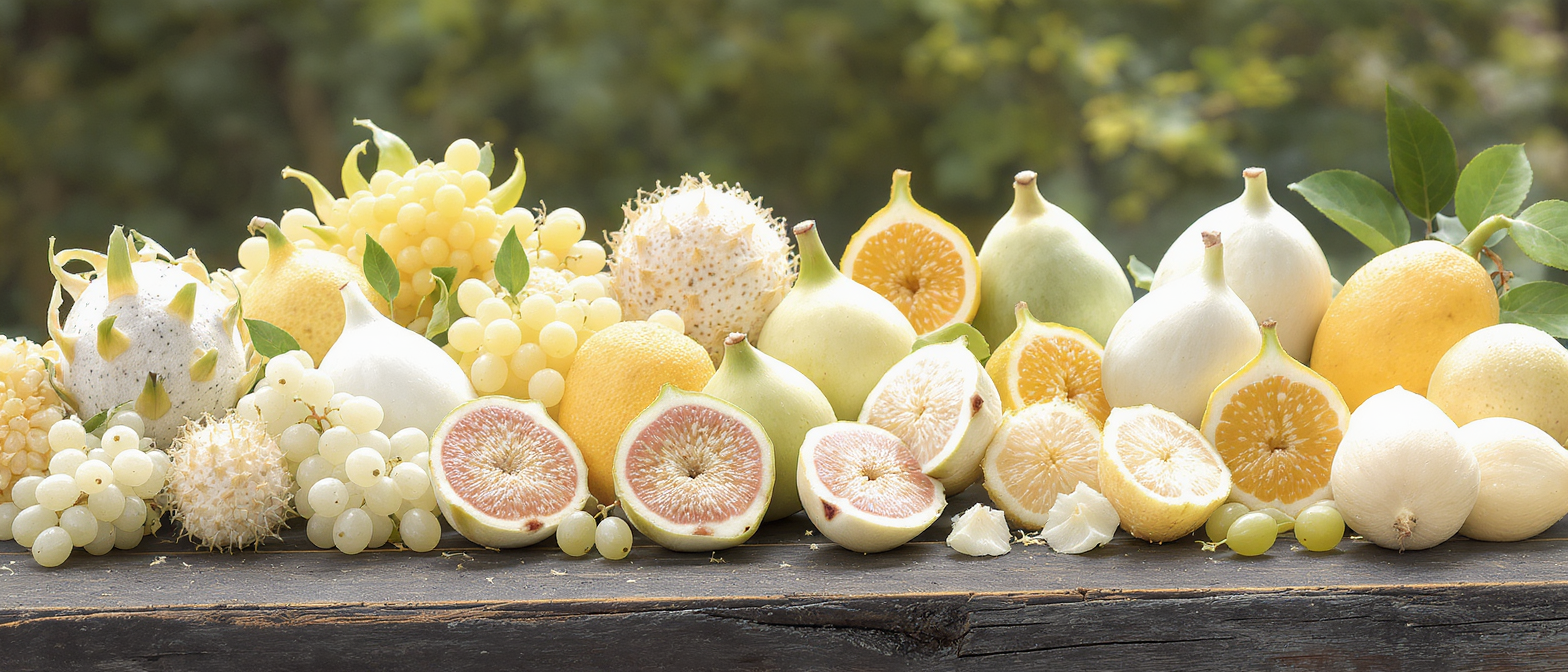


In the aisles, the same faces often reappear: apple, banana, orange, grape… Reliable choices, easy to recognize, simple to cook, and available almost all year round.
Yet, behind the scenes, another fruity world exists, more discreet, sometimes confusing, but fascinating: that of white-fleshed or light-pulped fruits, often overlooked because they do not travel well, are consumed quickly, or remain very closely tied to a region.
Their appeal is not limited to exoticism: these fruits bring new textures (watery crunch, silky cream, translucent gel), surprising aromas (floral, milky, resinous, tangy) and culinary uses that renew habits.
To keep things in perspective, let's follow Nora, a curious cook, who has set herself a challenge: each week, to incorporate a rare white fruit into an everyday recipe, without complicating her life.

Along the way, she learns to identify the seasons, to understand why some fruits are eaten cooked rather than raw, and how to combine them with familiar ingredients.
This gourmet journey takes us through Asia, Africa, the Americas and our specialist markets in Europe, with a simple idea: to enrich our diet with diversity, without losing the pleasure.
A panorama of lesser-known white fruits: origins, textures, and stories to savor
Let's start with fruits whose signature is white flesh , even if the skin can be green, red, purple or yellow
The Kiwi
The kiwifruit, a miniature cousin of the kiwi, comes from East Asia and cold areas as far as Siberia: small, smooth, often green, it gives a light, sometimes pinkish, very sweet pulp.
Nora loves it as a snack, skin and all, and notes that it easily "replaces" kiwi in a winter bowl, especially if you're looking for ideas around vitamin C, such as in winter recipes rich in vitamin C.
A little anecdote: in some gardens, it is trained like a vine, because it climbs so much!
The Malacca apple
The Malacca apple (or water apple), originally from Malaysia and acclimatized to the West Indies in the 19th century, resembles a small red pear. Its white, crisp, and very watery flesh is more thirst-quenching than sweet: perfect in thin slices with a squeeze of lime.
Fun fact: the pom-pom flowers of the jambosier tree are also edible, and Nora tasted them in a salad during a Creole workshop.
The Jaboticaba
The jaboticaba, from South America, is intriguing: a thick purple skin and, inside, a translucent white pulp sometimes resembling grapes. In Brazil, it is used to make jellies and liqueurs, and tradition attributes to it soothing uses for the throat.
Nora especially notes its very short season on specialist stalls: "when it's there, you have to take advantage of it".
Star currant
The star gooseberry (also known as the saffron or star gooseberry) originates from Madagascar and has spread throughout Southeast Asia. Its white pulp is so acidic that it is best cooked, glazed with sugar, or in syrup.
It then becomes surprisingly fragrant, a bit like tropical rhubarb. This acidity also explains why it shines as a condiment, in a sauce that brings out the best in fish.
Barbarine squash
Finally, the Barbarine squash (gigerine, Spanish melon) looks like an oval watermelon marbled green and white, weighing 3 to 5 kg.
Its white flesh is not very sweet and is mainly used to make jam or pie: a classic from the South that almost disappeared due to lack of transmission.
Insight: behind the “white color”, there is often a story of preservation recipes and local know-how.
25 unusual white fruits to try: tastes, culinary uses, and where to find them
To help Nora choose without getting lost, here is a selection of 25 fruits with white or very light pulp, with an idea of use and what makes them unique.
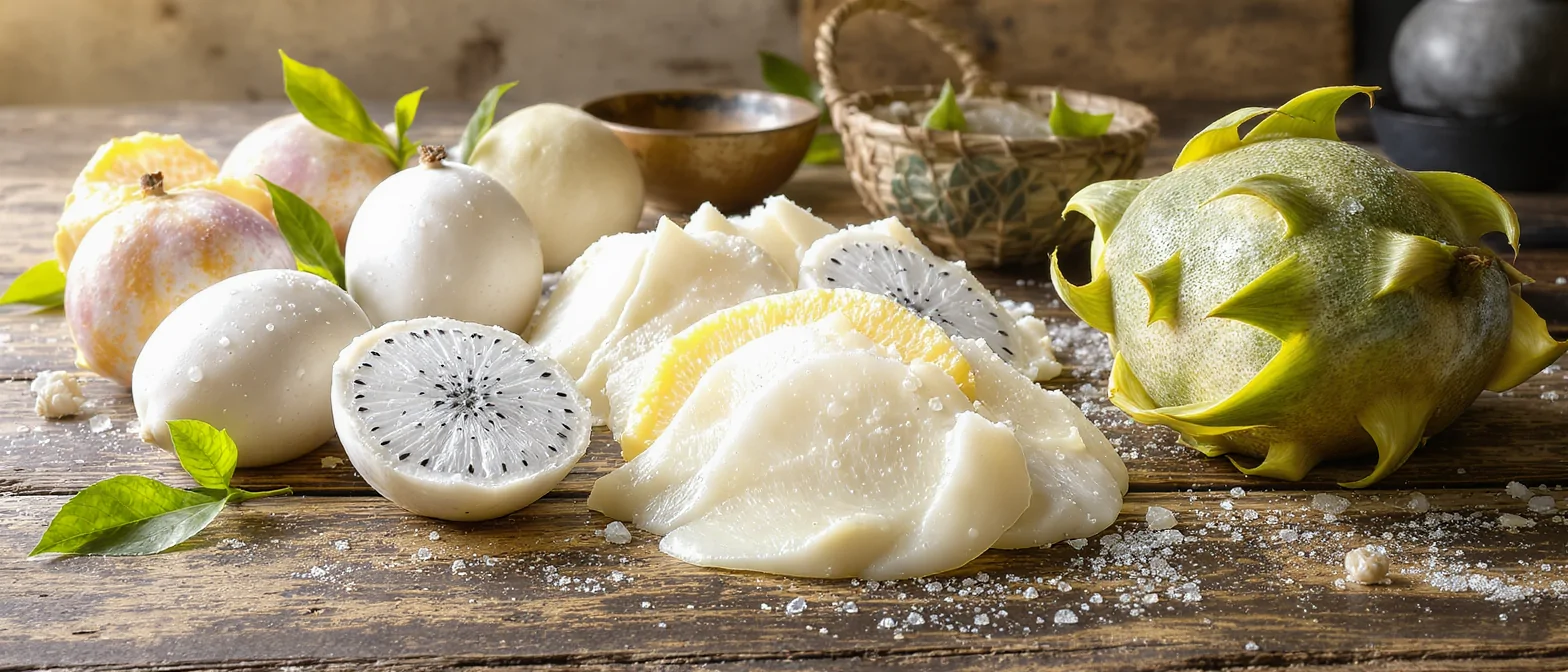
The Japanese pear (nashi), cultivated for centuries in China, Korea and Japan, is round like an apple, golden beige, and its white flesh is crisp while releasing a delicate juice: ideal in salads.
The white pear from our orchards (some old varieties) brings a floral sweetness, often best at the end of summer.
In the tropics, coconut (firm white pulp and water) remains the star: grated, as milk, or in flakes.
Lychee and longan (Southeast Asia) hide a translucent white flesh, sweet, perfect in its natural state .
The rambutan is their “hairy” cousin, which is rarer in France outside of Asian grocery stores.
The mangosteen, white in segments under a purple shell, offers a honey-acidity balance that justifies its reputation as a “royal” fruit.
The duku/langsat (Indonesia, Malaysia) looks like small beige balls, with a soft, slightly resinous white pulp: it is sometimes found frozen.
In the Americas, the North American pawpaw has green skin, pale yellow to cream flesh, and a banana-mango flan texture: superb as a dessert, but fragile, so more in local circuits .
The narangille (lulo) is mainly used as juice, and its preparations give a highly sought-after “tangy” freshness.
In Europe and the Mediterranean basin, the persimmon deserves its place: depending on the varieties, the pulp becomes meltingly soft, and certain preparations (drying in Japan) transform its sweetness into a real delicacy.
Africa and arid regions also hold surprises
Tamarind , native to Africa and widely cultivated in India, provides a brown pulp but preparations where the base is filtered into sauces and drinks; its interest lies in its unique acidity-sugar balance .
The fruit of the baobab tree (“monkey bread”) is mainly consumed in powder form in France: its tangy flavor livens up yogurt. An interesting tidbit: in some Sahelian countries, drinking baobab juice is a common practice during periods of intense heat.
Let's add some more similar fruits: the white fig (light skin, pale pink flesh) is delicate, and its tree requires a little attention in the garden, as this section on fig tree care and roots
The white mulberry, from the white mulberry tree that came from China, is often found dried: sweet, it replaces a candy in granola.
The “Ice Cream” banana (Blue Java), with creamy white flesh, evokes vanilla when fully ripe.
To cook without stress, Nora keeps two practical reference points: conversions (when a foreign recipe speaks in cups) thanks to a guide to metric conversions in cooking, and the choice of creamy bases according to the use, by comparing the ingredients to accompany a very soft pulp.
Insight: originality becomes simple as soon as you have two or three everyday kitchen “tools”.
Quick reference points: association, season and purchase (list + table)
When exploring these fruits, a few simple steps can prevent disappointment: check the smell, the softness, and accept that some are better cooked. Nora often follows this little reminder.
- Fruits to eat very quickly : jaboticaba, mangosteen, rambutan (fragile, fleeting aromas).
- Perfect fruits for drinks : naranjilla, tamarind, baobab powder (tart, refreshing).
- Fruits best enjoyed cooked : soursop, gigerine (acidity or neutral flesh which is revealed when cooked).
- Fruits that are easy to work with : nashi, lychee, coconut (obvious textures, varied uses).
| White fruit | Flavor profile | Simple to use | Where to find it |
|---|---|---|---|
| Nashi | Sweet, very juicy | Crunchy salad with lemon | Asian grocery stores, markets |
| Jaboticaba | Grape, floral | Express Jelly | Specialty shops |
| Surelle | Very acidic | Syrup, compote | Exotic products, frozen |
| Gigerine | Neutral, plant-based | Flavored jam | Local producers (South), fairs |
| White Mulberry | Sweet, honeyed | Snack, yogurt topping | Organic stores (often dried) |
To extend the experience at the table, Nora also likes to think about “pairings”: a nashi salad with grilled meats, for example, takes on another dimension if you choose the right glass, and these wine and grilled meat references help her to keep it simple.
The next logical step is to transform these discoveries into everyday recipes.
Cooking with white berries every day: recipes, pairings, and little tricks that make all the difference
White fruits have a precious quality: they blend easily into familiar dishes without overpowering the rest. Nora started with simple gestures.
With kiwifruit, she prepares a quick compote to top with cottage cheese; its natural sugar avoids adding too much honey.
With the Malacca apple, she prefers to eat it raw: thin slices, light salt, lemon, and a few herbs, like a very fresh vegetable carpaccio.
For very acidic fruits like soursop, cooking is a key learning tool: the heat rounds out the attack and allows for the addition of moderate sugar.
Nora makes a syrup base, then adds sparkling water.
Tamarind spoonful of paste in a sauce gives an immediate depth, useful for waking up a dish of roasted vegetables.
Some white fruits also serve as textural allies.
The pawpaw, with its creamy flesh, replaces part of a dairy base in a dessert; it can be incorporated into a cream or a dessert.
When Nora hesitates between a light or richer creaminess, she refers to the distinctions explained in this mascarpone/crème fraîche comparison, because the fruit can already bring "fatty mouthfeel".
Jaboticaba is her “preservation” favorite: as it is sometimes sold in trays and ripens quickly, she transforms it into jelly .
A tip: note down the quantities precisely, especially when adapting a foreign recipe; this is where metric conversions save time.
And for a festive meal, she even tried a seasonal dessert, drawing inspiration from creative ideas similar to original holiday recipes, replacing a classic fruit with mangosteen and lychee.
To ground these discoveries in real life, Nora likes to talk about where her findings come from!
One weekend, she combined tasting and a gourmet walk, and this way of travelling through flavours reminds us of a gourmet itinerary in Angers that I presented to you recently!
The idea isn't to collect rarities, but to open the door to more varied habits. Insight: the more micro-experiences you have (one piece of fruit, one recipe), the more naturally diverse your diet becomes.
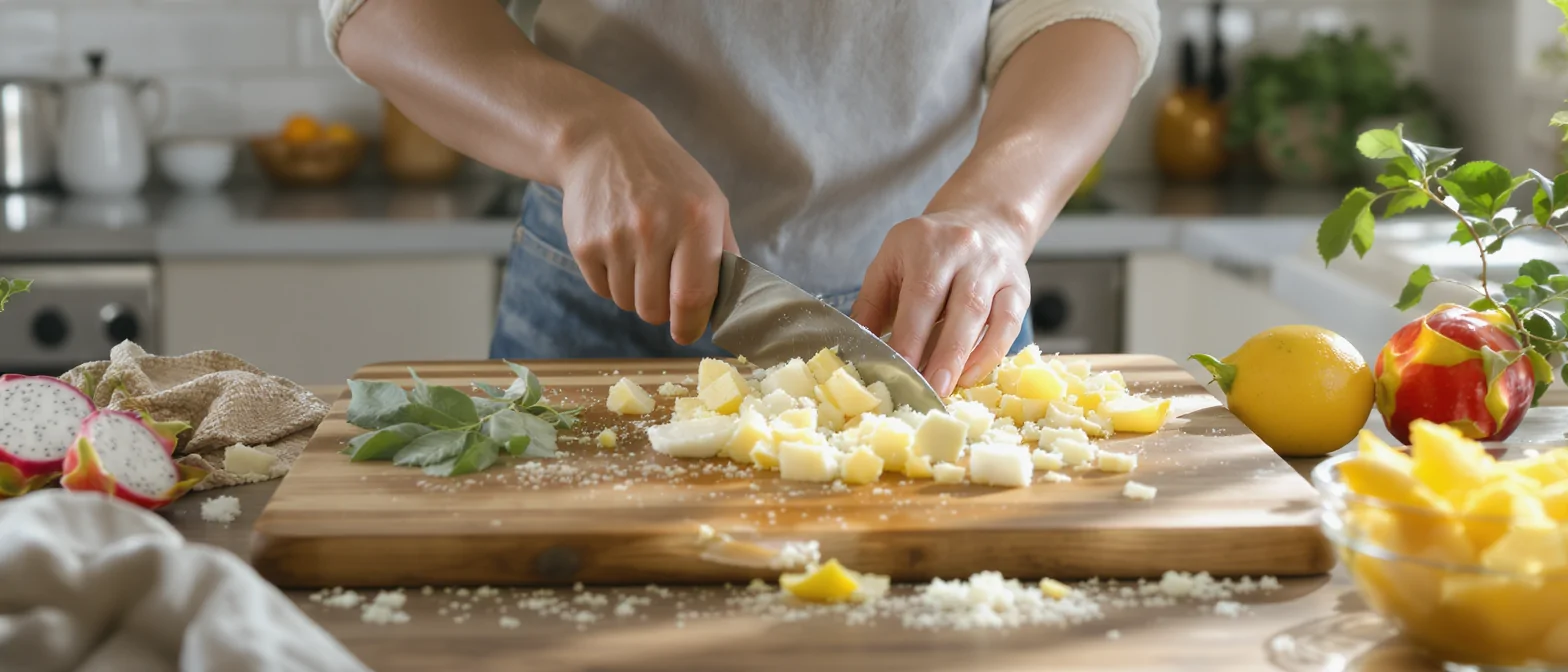
Ultimately, the most convincing test is often the one that is shared: a comparative tasting among friends, a salad brought to the office, or a homemade juice served very fresh.
What if your next discovery became your seasonal “signature fruit”?
Do you know of any other fruits you'd like to share with us? Feel free to mention them in the comments!
Additional information
Where can I buy rare white fruits in France without breaking the bank?
Start with Asian and Afro-Caribbean grocery stores (lychee, longan, rambutan, nashi), then organic stores (dried white mulberry, baobab powder). For very delicate fruits like jaboticaba, keep an eye on deliveries at specialty shops and opt for quick processing (jelly, compote).
Which white fruits are better cooked than eaten raw?
Star gooseberry (Sorelle) is too acidic raw and reveals its aromas best in syrup, sorbet, or compote. Barbary squash (Gigerina barbarina) is primarily eaten cooked in jams or tarts, as its white flesh is not very sweet and is best complemented by spices and a touch of sugar.
How can you tell if a mangosteen or rambutan is ripe?
The mangosteen should be soft to the touch (but not mushy), with an intact shell; if it's too hard, it will be difficult to open and may be dry. The rambutan should have soft "hairs," a skin without widespread brown spots, and a light, sweet fragrance.
Which white fruits are easiest to incorporate into breakfast?
Diced nashi pears add a crunchy texture to a bowl of yogurt, dried white mulberries can replace raisins, and kiwifruit can be eaten like a berry. Coconut (shavings or milk) also works very well to vary the textures without changing the entire recipe.
