
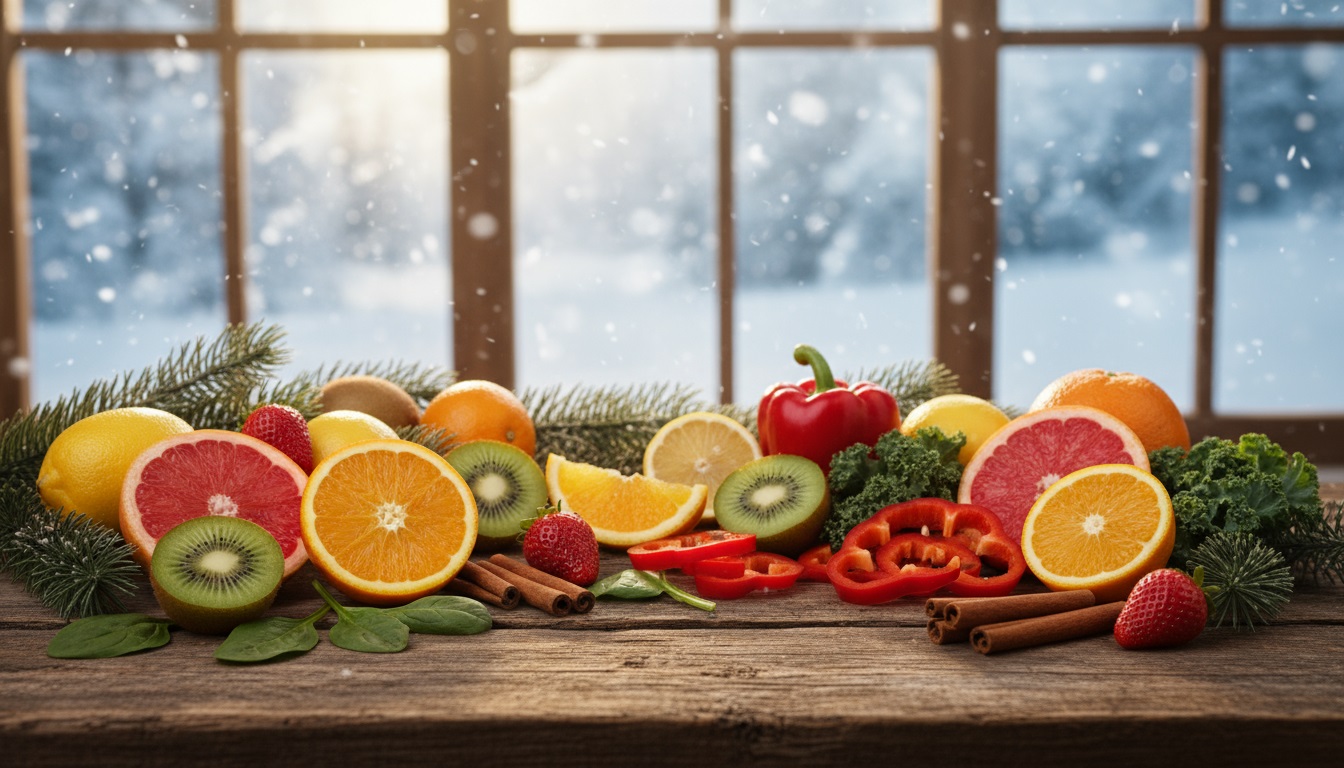
Winter is here, and with it comes fatigue, a dull complexion, and a general feeling of being run down. However, nature has its ways: many seasonal fruits and vegetables are bursting with vitamin C, which is fortunate, as this essential nutrient helps reduce fatigue and naturally strengthens our bodies against all types of infections.
Contrary to popular belief, oranges aren't the champion of vitamin C! Kiwis, bell peppers, kale, and broccoli contain far more. And the good news? These foods are perfect for comforting recipes, ideal for facing winter.
In this article, discover 15 simple and delicious recipes that will allow you to stock up on vitamin C and understand its benefits throughout the cold season.
From vitamin-packed breakfasts to indulgent desserts, and including comforting dishes, you'll be spoiled for choice!
5 VITAMIN-PACKED BREAKFASTS
1. Kiwi-orange-spinach smoothie (120 mg of vitamin C)
Preparation time: 5 minutes
Serves: 1 person
Ingredients :
- 2 organic kiwis (with the skin on if possible)
- 1 squeezed orange
- 1 handful of fresh spinach
- 1 banana
- 200 ml of plant-based milk (almond or oat)
Recipe :
- Peel the kiwis (or wash them well if you are keeping the skin on)
- Peel the orange and remove the seeds
- Blend all the ingredients until smooth
- Enjoy immediately to benefit from all the vitamin C
Tip: Add a teaspoon of freshly grated ginger for an extra boost!
My experience: For a long time, I meticulously peeled my kiwis. Then I discovered that you can eat the skin of organic kiwis (after a good wash). The result? I save 2 minutes every morning AND I retain even more fiber and vitamins.
Nutritional value: This recipe provides approximately 120 mg of vitamin C, which is more than 100% of the recommended daily intake.
2. Acai, red berry and pomegranate bowl (95 mg)
Preparation time: 10 minutes
Serves: 1 person
Ingredients :
- 100g of frozen acai pulp
- 100g of frozen strawberries
- 1/2 pomegranate, seeds removed
- 1/2 sliced kiwi
- 1 tablespoon of chia seeds
- Homemade granola
Recipe :
- Blend the acai and strawberries with a little plant-based milk until you get a crushed ice texture
- Pour into a bowl
- Arrange the fresh fruit, pomegranate, and granola attractively
- Sprinkle with chia seeds
Nutritional value: 95 mg of vitamin C + powerful antioxidants to start the day in top form.
3. Avocado-grapefruit-parsley toast (75 mg)
Preparation time: 5 minutes
Serves: 2
Ingredients :
- 2 slices of toasted wholemeal bread
- 1 ripe avocado
- 1/2 pink grapefruit
- 1 small bunch of fresh parsley
- Lemon juice, salt, pepper
Recipe :
- Mash the avocado with a fork and a squeeze of lemon juice
- Spread the avocado on the toast
- Remove the grapefruit segments (segments without the membrane) and arrange them on the avocado
- Sprinkle generously with chopped fresh parsley
- Season with salt and pepper
Did you know? Parsley is a superfood: 100g contains 133mg of vitamin C! Even a small amount will make a big difference.
4. Lemon-blueberry-almond porridge (55 mg)
Preparation time: 10 minutes
Serves: 2
Ingredients :
- 80g of oat flakes
- 400 ml of milk (plant-based or animal-based)
- Zest of 1 organic lemon
- Juice of 1/2 lemon
- 100g of blueberries (fresh or frozen)
- 30g of flaked almonds
- 1 tablespoon of honey
Recipe :
- Heat the milk with the oat flakes over medium heat
- Add the lemon zest while cooking
- Cook for 5-7 minutes, stirring regularly
- Once cooked, stir in the lemon juice off the heat (to preserve the vitamin C)
- Serve with blueberries and toasted almonds
- Add a drizzle of honey if desired
Nutritional value: 55 mg of vitamin C + fiber and omega-3 for a complete and satisfying breakfast.
5. Chia pudding with mango and passion fruit (80 mg)
Preparation time: 5 min (+ 2 hours minimum resting time)
Serves: 2
Ingredients :
- 4 tablespoons of chia seeds
- 300 ml of coconut milk
- 1 ripe mango, diced
- 2 passion fruits
- 1 tsp of honey or agave syrup
Recipe :
- Mix the chia seeds with the coconut milk and honey in a bowl
- Stir well to avoid lumps
- Leave to rest in a cool place for at least 2 hours (or overnight)
- When ready to serve, add the diced fresh mango
- Cut the passion fruits in half and scoop out the pulp with a spoon
- Spoon generously over the pudding
Practical tip: Prepare it the night before for a quick breakfast in the morning! Keeps for 3 days in the refrigerator.
5 COMFORTING DISHES RICH IN VITAMIN C
6. Sautéed kale, broccoli and red bell pepper (185 mg)
Preparation time: 15 minutes
Serves: 4
Ingredients :
- 250g of kale (without the stems)
- 1 beautiful broccoli floret
- 1 red bell pepper, sliced
- 3 cloves of minced garlic
- 1 tsp cumin seeds
- Juice of 1 lemon
- 3 tablespoons of olive oil
- Salt, pepper
Recipe :
- Bring a large pot of salted water to a boil
- Blanch the broccoli for 1 minute 30 seconds, then remove it with a slotted spoon
- Submerge the kale in the same water for 30 seconds
- Cool them immediately in cold water and dry them thoroughly with absorbent paper
- Heat the olive oil over high heat in a large sauté pan
- Sauté the garlic and cumin seeds for 2 minutes, stirring constantly
- Remove the garlic with a slotted spatula and set aside
- Add the bell pepper and sauté for 2 minutes
- Carefully pour in the kale (be careful of splatters!) and fry it for 3-4 minutes until crispy
- Add the broccoli and stir for 1 minute over the heat
- Drizzle with lemon juice just before serving
- Sprinkle with the reserved garlic
Nutritional value: This stir-fry contains approximately 185 mg of vitamin C per serving — a true concentrate of vitality!
Serving suggestion: Perfect with brown rice, quinoa or as a side dish with grilled fish.
What changed my view of kale: I admit, I was skeptical. Kale always tasted too bitter to me. Then I realized my mistake: I was cooking it for too long! Now that I just crisp it up for a few minutes over high heat with garlic, it's become a staple of my winter dinners. The kids love the crispiness.
7. Quick cream of cauliflower and broccoli soup with lemon (110 mg)
Preparation time: 20 minutes
Serves: 4
Ingredients :
- 1 medium cauliflower
- 1 broccoli
- 2 medium potatoes
- 1 onion
- 1 liter of vegetable broth
- Juice of 1 lemon
- 4 tablespoons of plant-based cream (optional)
- Salt, pepper, nutmeg
Recipe :
- Finely chop the onion and sauté it in a little olive oil until it becomes translucent
- Add the chopped vegetables (cauliflower, broccoli, peeled potatoes)
- Cover with vegetable broth
- Bring to a boil, then simmer over medium heat for 15 minutes
- Blend until smooth and velvety
- Add the lemon juice off the heat (very important to preserve the vitamin C)
- Stir in the plant-based cream if desired
- Adjust the seasoning with salt, pepper and a pinch of nutmeg
Creamy version: Add 2 tbsp of cashew cream or almond puree for an even smoother texture.
Storage tip: This creamy soup can be kept for 3 days in the refrigerator and freezes very well.
8. Warm quinoa salad with grilled pepper and parsley (95 mg)
Preparation time: 25 minutes
Serves: 4
Ingredients :
- 200g of quinoa
- 2 red peppers
- 1 yellow bell pepper
- 1 nice bunch of flat-leaf parsley
- 50g of pine nuts
- Juice of 1 lemon
- 4 tablespoons of olive oil
- Salt, pepper
Recipe :
- Rinse the quinoa and cook it according to the package instructions (usually 15 minutes in 2 parts water)
- Meanwhile, preheat the oven to 200°C
- Place the whole peppers on a baking sheet and grill them for 20 minutes, turning them halfway through cooking
- Once grilled, enclose them in a plastic bag or under a damp cloth for 10 minutes (this makes peeling).
- Peel them gently and cut them into strips
- Dry-roast the pine nuts in a pan until golden brown
- In a large bowl, mix the still-warm quinoa with the peppers
- Add the generously chopped parsley and the toasted pine nuts
- Season with lemon, olive oil, salt and pepper
Nutritional value: 95 mg of vitamin C + complete proteins thanks to quinoa.
Variation: Add diced feta or smoked tofu for even more protein.
9. Chicken stir-fry with broccoli, ginger and lemon (88 mg)
Preparation time: 20 minutes
Serves: 4
Ingredients :
- 500g of chicken breast strips
- 2 beautiful florets of broccoli
- 1 red bell pepper
- 3 cm of grated fresh ginger
- 2 cloves of minced garlic
- Juice of 1 lemon
- 2 tablespoons of soy sauce
- 1 tablespoon of sesame oil
- 2 tablespoons of neutral oil (sunflower or peanut)
- Sesame seeds for decoration
Recipe :
- Heat 1 tablespoon of oil in a wok over high heat
- Sauté the chicken until it is nicely browned (about 5 minutes)
- Set the chicken aside on a plate
- In the same wok, add the other spoonful of oil
- Sauté the garlic and ginger for 30 seconds
- Add the broccoli and the bell pepper cut into strips
- Sauté for 5-7 minutes (the broccoli should remain crisp)
- Put the chicken back in the wok
- Add the soy sauce and mix well
- Drizzle with lemon juice and sesame oil at the last minute
- Sprinkle with sesame seeds
Vegetarian version: Replace the chicken with 400g of firm tofu, diced and well drained.
Serving suggestion: Serve with basmati rice or rice noodles for a complete meal.
10. Romanesco cauliflower and broccoli gratin with cheese (75 mg)
Preparation time: 35 minutes
Serves: 6
Ingredients :
- 1 Romanesco cauliflower
- 1 broccoli
- 400 ml of liquid (or vegetable) cream
- 150g of grated Gruyère cheese
- 2 cloves of garlic
- Nutmeg, salt, pepper
- 3 tablespoons of breadcrumbs
- 1 tablespoon of butter (or olive oil)
Recipe :
- Preheat the oven to 180°C
- Bring a large pot of salted water to a boil
- Blanch the Romanesco cauliflower and broccoli (cut into florets) for 5 minutes
- Drain them well and arrange them in a buttered gratin dish
- In a bowl, mix the cream with the crushed garlic, a pinch of nutmeg, salt and pepper
- Pour this mixture over the vegetables
- Sprinkle with grated Gruyère cheese
- Sprinkle with breadcrumbs and add a few knobs of butter
- Bake for 20 minutes until the top is golden brown and bubbly
Nutritional value: 75 mg of vitamin C + calcium from cheese for strong bones.
Tip: You can prepare this gratin in advance and reheat it at mealtime.
5 Delicious Desserts and Snacks
11. Winter fruit salad with citrus fruits and pomegranate (105 mg)
Preparation time: 15 minutes
Serves: 4
Ingredients :
- 2 oranges
- 2 pink grapefruits
- 4 clementines
- 1 grenade
- 2 kiwis
- A few fresh mint leaves
- 1 tablespoon of honey (optional)
Recipe :
- Peel all citrus fruits completely, removing all the bitter white pith
- Slice them into rounds or remove the segments from between the membranes
- Peel the kiwis and slice them into rounds
- Cut the pomegranate in half and remove the seeds over a bowl of cold water (the seeds sink to the bottom, the membranes float)
- In a large bowl, gently mix all the fruit
- Sprinkle with freshly chopped mint
- If the fruit isn't sweet enough, drizzle with a little honey
Gourmet variation: Add a touch of orange blossom for a refined oriental touch.
A winter memory: This salad reminds me of Sundays at my grandmother's. She would patiently peel her oranges over a salad bowl so as not to waste a single drop of juice. I've kept up the tradition, simply adding pomegranate, which wasn't available in her village grocery store back then. Sometimes, the best recipes are the ones we lovingly adapt.
Serving tip: Serve in transparent bowls to showcase the beautiful colors of this salad.
12. Light lemon and chia seed mousse (45 mg)
Preparation time: 10 min (+ 3 hours chilling time)
Serves: 4
Ingredients :
- Juice of 3 organic lemons
- Zest of 2 lemons
- 200ml of coconut cream (the thick part of chilled coconut milk)
- 3 tablespoons of agave syrup (or honey)
- 2 tablespoons of chia seeds
- A few lemon zest strips for decoration
Recipe :
- Place a can of coconut milk in the refrigerator the day before (the creamy part will solidify on the surface)
- Carefully scoop out the solidified coconut cream (keep the coconut water for a smoothie)
- Whip the coconut cream with an electric mixer until it becomes light and airy (about 3 minutes)
- In a bowl, mix the fresh lemon juice with the agave syrup
- Gently fold this mixture into the whipped cream using a spatula (lifting the mixture from the bottom up)
- Add the lemon zest and chia seeds
- Divide into individual serving glasses
- Refrigerate for a minimum of 3 hours (ideally overnight)
- Garnish with a few lemon zest strips just before serving
Nutritional value: 45 mg of vitamin C + light and refreshing texture, perfect after a heavy meal.
13. Apple-kiwi-cinnamon compote (65 mg)
Preparation time: 20 minutes
Serves: 4
Ingredients :
- 6 Golden or Gala apples
- 4 ripe kiwis
- 1 cinnamon stick
- 2 tablespoons of honey
- Juice of 1/2 lemon
- 1 pinch of vanilla powder (optional)
Recipe :
- Peel the apples and cut them into medium-sized pieces
- Place them in a saucepan with the cinnamon stick and 2 tablespoons of water
- Cover and cook over low heat for 15 minutes, stirring occasionally
- Meanwhile, peel the kiwis and cut them into small cubes
- Once the apples are very soft, remove the cinnamon stick
- Add the diced kiwis at the end of cooking (do not cook them, to preserve the vitamin C)
- Roughly mash with a fork or potato masher, depending on the desired texture
- Remove from heat and add the honey, lemon juice, and vanilla if desired
- Let it cool before enjoying
Storage: Can be kept for 4-5 days in the refrigerator in an airtight jar.
Serving suggestions: Delicious at breakfast on plain yogurt, as a dessert with a little cream, or as an accompaniment to pancakes.
14. Orange-almond-cocoa energy balls (35 mg per 3 balls)
Preparation time: 15 minutes
Makes: Approximately 15 balls
Ingredients :
- 150g of pitted Medjool dates
- 100g of whole almonds
- Zest of 2 organic oranges
- 2 tablespoons of raw cacao powder
- 2 tablespoons of fresh orange juice
- Grated coconut for coating (approximately 50g)
- 1 pinch of salt
Recipe :
- Place the almonds in a blender and grind them into a coarse powder
- Add the chopped dates and blend again
- Stir in the orange zest, cocoa, and a pinch of salt
- Blend until you obtain a smooth paste
- Add the orange juice little by little while mixing until you obtain a sticky paste (not too runny)
- Take portions the size of a walnut and form balls between your slightly damp hands
- Roll each ball in the grated coconut
- Arrange them on a plate and refrigerate for at least 30 minutes before serving
Nutritional value: 35 mg of vitamin C per serving of 3 balls + sustained energy thanks to almonds and dates.
Storage: Can be kept for 2 weeks in the refrigerator in an airtight container, or 2 months in the freezer.
Perfect for: Afternoon snacks, before/after sports, or as a small energy snack.
15. Panna cotta with red fruit coulis and kiwi (55 mg)
Preparation time: 20 min (+ 4 hours chilling time)
Serves: 6
Ingredients for the panna cotta:
- 500 ml of full liquid cream
- 50g of sugar
- 2 sheets of gelatin (or 1 tsp of agar-agar)
- 1 vanilla bean (or 1 tsp vanilla extract)
Ingredients for the coulis:
- 200g of mixed red berries (raspberries, strawberries, blueberries)
- 3 ripe kiwis
- 1-2 tablespoons of sugar (depending on the acidity of the fruit)
Recipe :
- Soften the gelatin sheets in a bowl of cold water for 10 minutes
- In a saucepan, heat the cream with the sugar and the split and scraped vanilla pod
- Bring to a simmer without boiling
- Remove from heat, squeeze out the excess water from the gelatin, and stir it in well until completely dissolved
- Remove the vanilla pod
- Divide into 6 small glasses and let set in the refrigerator for at least 4 hours
- Prepare the coulis: blend the red berries with 1 tablespoon of sugar, then pass through a sieve to remove the seeds
- Cut the kiwis into small cubes
- When ready to serve, drizzle each panna cotta with a little coulis
- Add the diced fresh kiwi on top
Lighter version: Replace half the cream with plain Greek yogurt for a less rich version.
Vegan version: Use coconut cream and agar-agar instead of animal gelatin.
TABLE: VITAMIN C CONTENT OF WINTER FOODS
| Food | Vitamin C per 100g | Typical portion | Vitamin C per serving |
|---|---|---|---|
| Kiwi | 93 mg | 1 kiwi (100g) | 90 mg |
| Raw red bell pepper | 155 mg | 1/2 bell pepper (75g) | 95 mg |
| Raw broccoli | 106 mg | 1 serving (80g) | 60 mg |
| Kale | 120 mg | 1 serving (70g) | 80 mg |
| Orange | 53 mg | 1 orange (120g) | 60 mg |
| Lemon (juice) | 45 mg | Juice of 1 lemon (50ml) | 30 mg |
| Fresh parsley | 133 mg | 1 tbsp (5g) | 8 mg |
| Pink grapefruit | 45 mg | 1/2 fruit (120g) | 40 mg |
| Romanesco cabbage | 64 mg | 1 portion (100g) | 45 mg |
| Strawberries (frozen) | 60 mg | 1 portion (100g) | 60 mg |
| Cauliflower | 48 mg | 1 portion (100g) | 48 mg |
| Clementines | 41 mg | 2 clementines (100g) | 41 mg |
Good to know: The daily requirement is 110 mg for a healthy adult. This requirement is higher for:
- Smokers: +35 mg/day
- Pregnant women: 120 mg/day
- Breastfeeding women: 170 mg/day
- Elderly people: 120 mg/day
- Regular athletes: up to 200 mg/day
3 TIPS TO PRESERVE VITAMIN C
1. Opt for raw or briefly steamed food
Vitamin C is extremely sensitive to heat. It is the most fragile of all vitamins! Boiling it can destroy up to 80% of its original content.
The best cooking methods:
- Raw: The ideal method to preserve 100% of vitamin C
- Gentle steaming: 5-7 minutes maximum, retains approximately 70% of the vitamin C
- Quick wok stir-fries: High-heat, fast cooking retains approximately 60% of vitamin C
- Microwave cooking: Using very little water, it preserves vitamins better than boiling.
To avoid:
- Long cooking times in boiling water
- Prolonged cooking at high temperatures
- The discarded cooking water (which contains all the water-soluble vitamins)
Chef's tip: If you cook vegetables in water, keep the cooking water to make soup or broth — it contains some of the vitamins that escaped from the vegetables.
2. Consume immediately after cutting
Vitamin C oxidizes very quickly when exposed to air and light. This oxidation begins as soon as you cut a fruit or vegetable.
Good habits:
- Squeeze your juices at the last minute and drink them immediately (orange juice loses 50% of its vitamin C in 30 minutes at room temperature)
- Prepare your salads just before the meal rather than several hours in advance.
- Do not leave cut fruit exposed to the air — cover it with cling film.
- Cut your vegetables into large pieces rather than small cubes (less surface area exposed to air).
What I learned the hard way: For years, I made my orange juice the night before to save time in the morning. Until the day I read that it loses half its vitamins overnight in the fridge. Now, I get up 3 minutes earlier, but at least I really enjoy all the benefits of my fresh juice.
Anti-oxidation tip: Sprinkle your cut fruit with lemon juice to slow down oxidation. The acidity of the lemon helps preserve the vitamin C in other fruits.
Exception: Whole fruits with their peel keep very well. Keep your oranges, kiwis, and clementines whole until you are ready to eat them.
3. Store your fruits and vegetables in a cool, dark place
At room temperature, vitamin C degrades very quickly. Studies show that 50% of vitamin C can disappear in just 24 hours at room temperature!
The golden rules for its preservation:
- Store in the refrigerator in the vegetable drawer (ideal temperature: 4-8°C)
- Keep citrus fruits in a cool, dark place if you don't refrigerate them
- Consume quickly after purchase — ideally within 3-5 days
- Opt for frequent purchases of small quantities rather than large weekly shopping trips
- Avoid exposure to direct sunlight — the vegetable drawer in the fridge is perfect
Did you know? Vegetables frozen immediately after harvesting retain their vitamin C better than fresh vegetables kept in the refrigerator for several days! Freezing stops the degradation of vitamins.
My discovery of the local market: Since I started shopping at the Saturday morning market instead of the supermarket midweek, I've noticed that my vegetables keep better and retain more flavor. Producers often harvest the day before, whereas vegetables in supermarkets have sometimes already been in transit for several days. This small change in habit has truly made a difference.
In summary
As you've probably guessed, getting your fill of vitamin C in winter is simple, delicious, and comforting! These 15 recipes allow you to vary your meals while taking care of your body naturally.
From a vitamin-packed morning smoothie to a comforting afternoon compote, and including colorful and flavorful dishes, vitamin C can be found in all your meals. And the best part? These recipes are easy to make, budget-friendly, and perfect for the whole family.
Remember that vitamin C is not stored in the body—it is eliminated in urine. Therefore, it is important to consume it regularly, ideally with each meal, to maintain optimal levels in your body.
By incorporating these vitamin C-rich foods into your daily diet, you naturally contribute to:
- Reduce fatigue and boost your energy
- Strengthen your immune system
- Protect your skin from aging
- Improve iron absorption (especially important if you are vegetarian)
- Supporting collagen formation for healthy skin, bones and joints
So, get cooking! Winter had better watch out.
To learn more: Discover in detail how vitamin C affects your skin, your immunity, your energy and consult this excellent article from ANSES which addresses the subject.
If you don't really like vegetables, you can also order them as a supplement, for example from the website https://greenwhey.com/ and many others!
UP TO YOU !
Which recipe will you try first? Share your creations and tips in the comments! And if you enjoyed this article, feel free to share it with your loved ones who need a little boost this winter.
Pin this article on Pinterest so you can easily find it when you're lacking inspiration in the kitchen!
This article allowed us to address the following themes
Vitamin C recipes for winter, foods rich in vitamin C, vitamin-packed winter dishes, immunity-boosting recipes, winter vegetables and vitamin C, fruits for a vitamin-rich winter, anti-fatigue cooking, healthy winter recipes, how to preserve vitamin C, the benefits of vitamin C…
Feel free to let us know if you would like more information on this topic and to suggest other ideas related to these subjects!
