
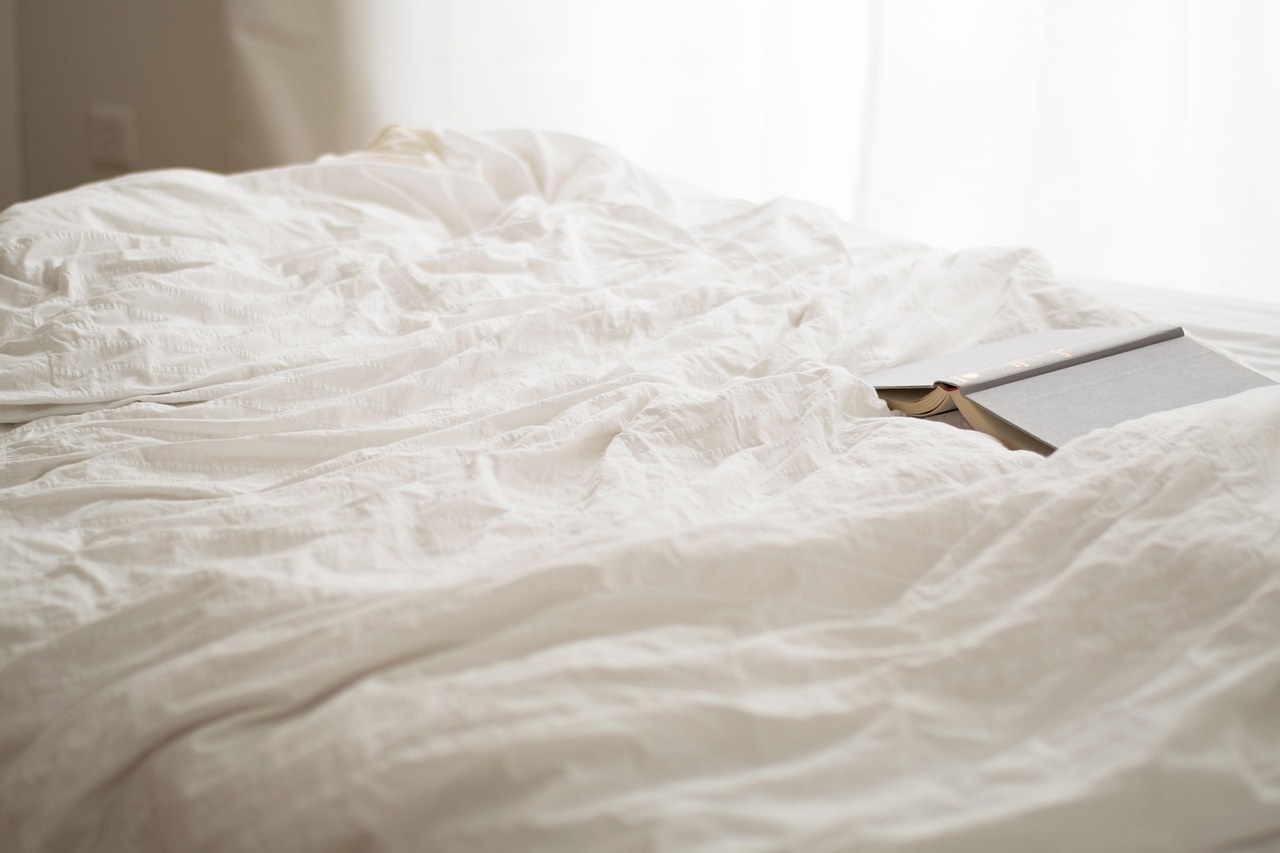
An age-old material, understated yet refined, linen has established itself as a cornerstone of natural décor. Its technical qualities, authentic appearance, and low environmental impact make it a preferred choice for those who appreciate calming and resilient interiors.
While its return can be explained by this trend towards simplicity and raw materials, it is based above all on unique physical and aesthetic properties.
Understanding why linen transcends trends means discovering a material that is simultaneously high-performing, sensual, and deeply connected to our relationship with nature. This article analyzes its concrete advantages for the home—from thermal comfort and visual appeal to its durability and maintenance requirements.
A fabric of plant origin that is naturally high-performing
An ancient fiber with exceptional technical qualities
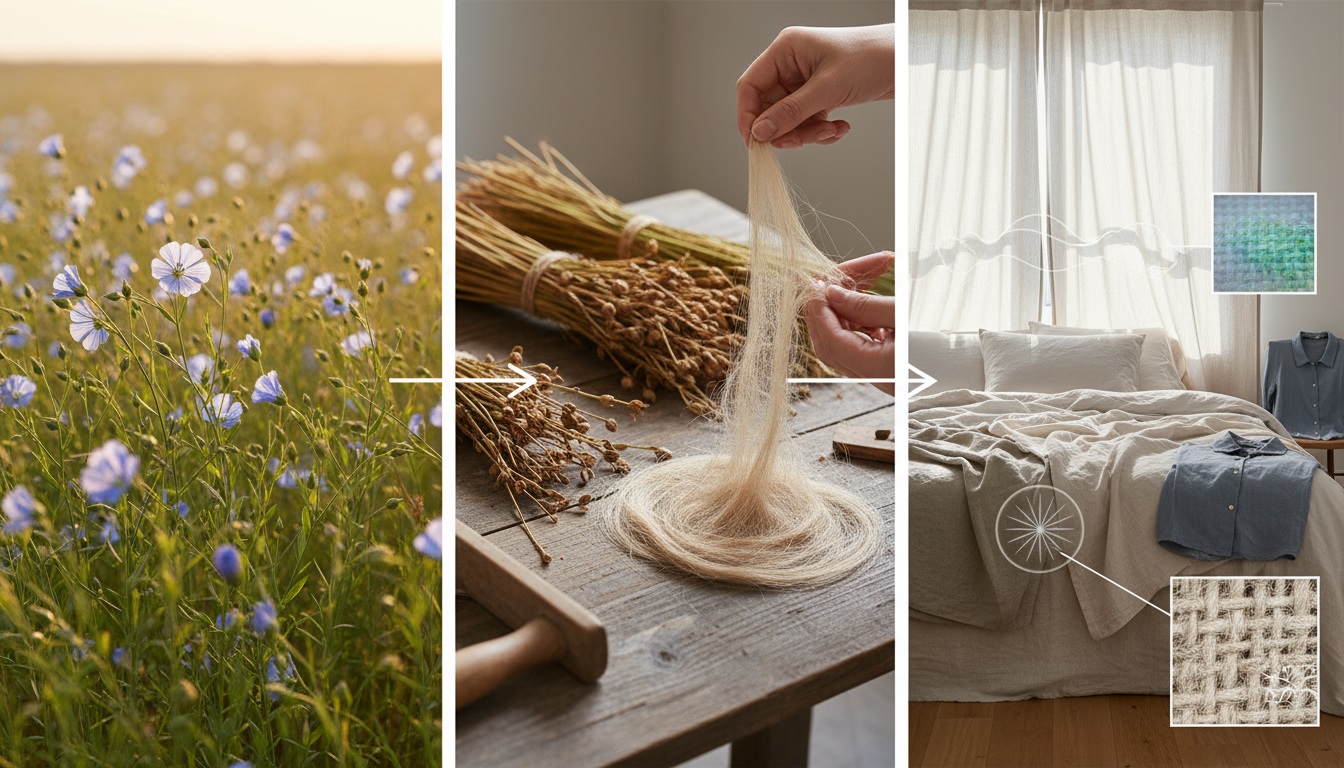
Flax comes from the stems of the flax plant, cultivated mainly in Northern Europe (France, Belgium, Netherlands). Its production relies on agricultural expertise that favors temperate and humid climatic conditions.
This European origin guarantees a short supply chain and a limited carbon impact, unlike other more energy-intensive textile fibers.
Technically, linen is distinguished by its hollow fibrous structure, which gives it remarkable properties: it is thermoregulating, absorbent, and breathable. In summer, it keeps you cool; in winter, it retains heat!
Its tensile strength is also superior to that of cotton, making it a durable fabric, ideal for curtains, tablecloths or cushion covers subjected to frequent use.
In short, linen combines aesthetics and performance, and that's a rare balance in the textile world!
| Criteria | Linen | Cotton | Polyester |
|---|---|---|---|
| Thermoregulation | Excellent (warm in winter, cool in summer) | Average | Weak |
| Resistance | Very high | Average | High |
| Moisture absorption | Up to 20% moisture reduction without feeling damp | Good | Very low |
| Environmental impact | Very low (without irrigation or pesticides) | High (high water consumption) | Very high (petroleum derivative) |
| Sustainability | Improves over time | Good but wears out | Stable but ages poorly |
| Interview | Easy (30-40°C) | Easy | Very easy |
| Price | Pupil | Moderate | Down |
A naturally ecological material
Flax cultivation is one of the most environmentally friendly. It requires no artificial irrigation, no GMOs, and very few pesticides.
Furthermore, every part of the plant is used — from the fiber to the wood, including the seeds — which considerably reduces waste!
This low ecological impact, combined with the biodegradability of the material, explains why linen fits perfectly into an eco-responsible decoration approach.
Its environmental footprint is about five times smaller than that of cotton, according to data from the European Confederation of Flax and Hemp (CELC).
Choosing linen means participating in sustainable consumption without sacrificing fashion trends or comfort. Quite the opposite!
A unique texture that structures light and space
A play of textures between shadow and transparency
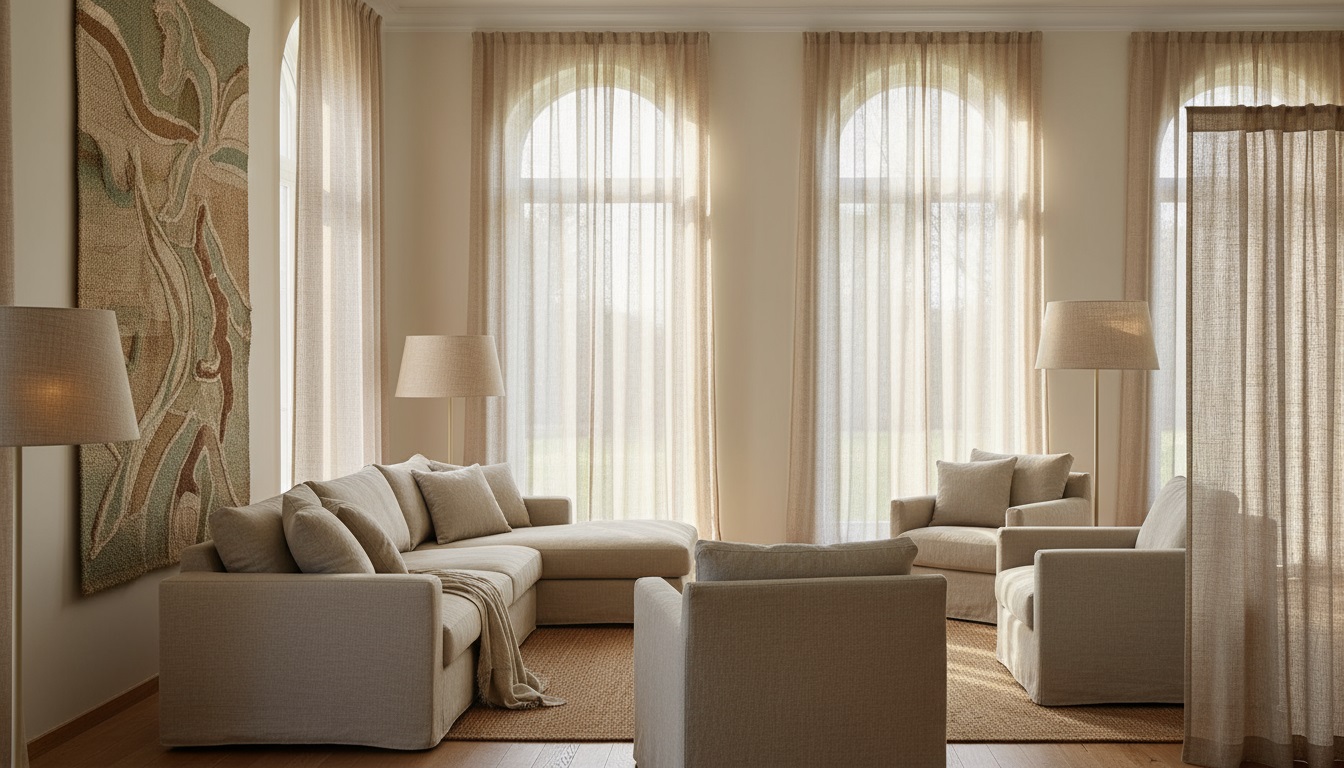
In interior design, linen acts as a natural filter. Its irregular weave captures light without blocking it completely, creating soft and subdued atmospheres.
This is one of the reasons why it is widely used for sheer curtains and drapes in a discreet interior. The light passing through its fibers diffuses a slightly golden hue, reminiscent of the warmth of a summer afternoon.
This subtle texture also adds depth to flat surfaces. Whether used as tablecloths, cushions, or covers, linen provides a vibrant feel, far removed from the uniform perfection of synthetic textiles.
Its crumpled appearance, often sought after, evokes an imperfect and natural beauty — a concept very present in current “slow design” trends.
Linen decoration relies on the subtle balance between visual comfort and tactile authenticity: it does not seek to appear perfect, but to be just right!
Understated and timeless colors
Linen comes in a range of natural colours — beige, sand, light grey, off-white — that go with all interior styles.
These neutral shades serve as a base to create a soothing atmosphere, while leaving the freedom to add more colorful elements: a ceramic vase, a raw wood armchair, a touch of greenery.
The pigments penetrate deep into the fiber, giving linen fabrics a unique chromatic depth.
Over time and with washing, linen develops a patina without deteriorating, becoming softer and more supple. This harmonious aging effect further enhances its appeal for natural and sustainable interiors.
Multiple uses in the home
A versatile and sturdy fabric
From the living room to the bedroom, linen adapts to all environments.
- In bedding, it regulates humidity and provides a feeling of freshness that is much appreciated in summer.
- As curtains, it softens the light while dressing the window with a discreet presence.
- As tablecloths, it gives a simple design to dining tables, while resisting repeated washings well.
This versatility is explained by the robustness of the fiber and its ability to retain its aesthetic qualities over time.
Even slightly wrinkled, linen retains its charm — it is precisely this natural imperfection that marks its authenticity.
For those who wish to experiment or make their own decorative elements, it is possible to obtain linen by the meter, in different thicknesses and finishes, for custom creations adapted to each space in the house.
A simple and natural maintenance
Contrary to some misconceptions, linen is quite easy to care for and can be machine washed at 30 or 40°C with a mild detergent, without fabric softener.
It dries quickly and doesn't necessarily need ironing: its slightly crinkled appearance is part of its charm. Simply air drying is enough to preserve its texture and fibers.
Over time, linen becomes more supple and softer without deteriorating. It's a living fabric that improves with use, unlike many industrial materials that wear out or lose their shape!
Linen: Between Tradition and Modernity
While linen has long been associated with country houses, it is now increasingly being integrated into contemporary interiors.
- In urban lofts, it softens the concrete and metal.
- In old houses, it extends the connection with the surrounding nature.
It also transcends eras and styles, from clean Scandinavian decor to Mediterranean minimalism, etc…
This timelessness stems from its dual identity: linen is both technical and sensual, rational and emotional.
It does not seek to shine, but to last — and that is probably why it remains, decade after decade, a safe bet for those who see the home as a place of calm and balance.
An obvious choice for discerning interiors
Choosing linen means opting for a genuine material that combines performance, refined beauty, and respect for the environment. Its natural look complements all decorating styles, while undeniably providing comfort in our daily lives.
At a time when we are trying to consume less but better, it represents a clear alternative to synthetic or imported fabrics!
Your questions about linen in decoration
Is linen really ecological?
Yes, it's one of the most environmentally friendly fibers. The plant grows without artificial irrigation and requires no pesticides. Every part is used; nothing is wasted. Its carbon footprint is five times lower than that of cotton.
Why does linen wrinkle so much?
It's in its nature! Linen fibers are stiff and hold creases easily. But this crinkled look is part of its charm. It's what gives it that authentic and relaxed feel we're looking for.
Is it absolutely necessary to iron linen?
No, not at all. The slightly wrinkled look is even appreciated in decoration. If you prefer to iron it, do so while it's still damp using steam. But many choose to leave it natural.
Is linen suitable for sensitive skin?
Perfect. It's hypoallergenic and antibacterial. It doesn't retain moisture on the surface, which prevents the proliferation of dust mites and bacteria. Dermatologists often recommend it.
How to easily care for linen?
Machine wash at 30-40°C with a mild detergent, without fabric softener. Air dry. It becomes softer with each wash. Avoid wringing it out of the washing machine.
Why does linen cost more than cotton?
Its production requires more manual labor. The fibers break easily during weaving, so the machines must run more slowly. Cultivation is also more geographically limited. But its durability more than compensates for this cost.
Does linen keep you warm or cool?
Both. It's a natural thermoregulator thanks to its hollow fibers. In summer, it wicks away heat and keeps you cool. In winter, it retains body heat. It adapts to your temperature.
Can linen be used in all rooms?
Absolutely. In the bedroom for bedding, in the living room for cushions and curtains, in the dining room for tablecloths. It withstands frequent use and repeated washing very well.
Does linen shrink when washed?
Very little shrinkage if you follow the instructions. Wash it at a moderate temperature and avoid tumble drying. Slight shrinkage may occur during the first wash, but it will stabilize afterward.
What is the difference between raw linen and washed linen?
Raw linen is stiffer and rougher. Washed linen has undergone intensive treatment after weaving, which reduces its stiffness. It is much softer and more supple from the start. It is the most sought-after for interior design.
