
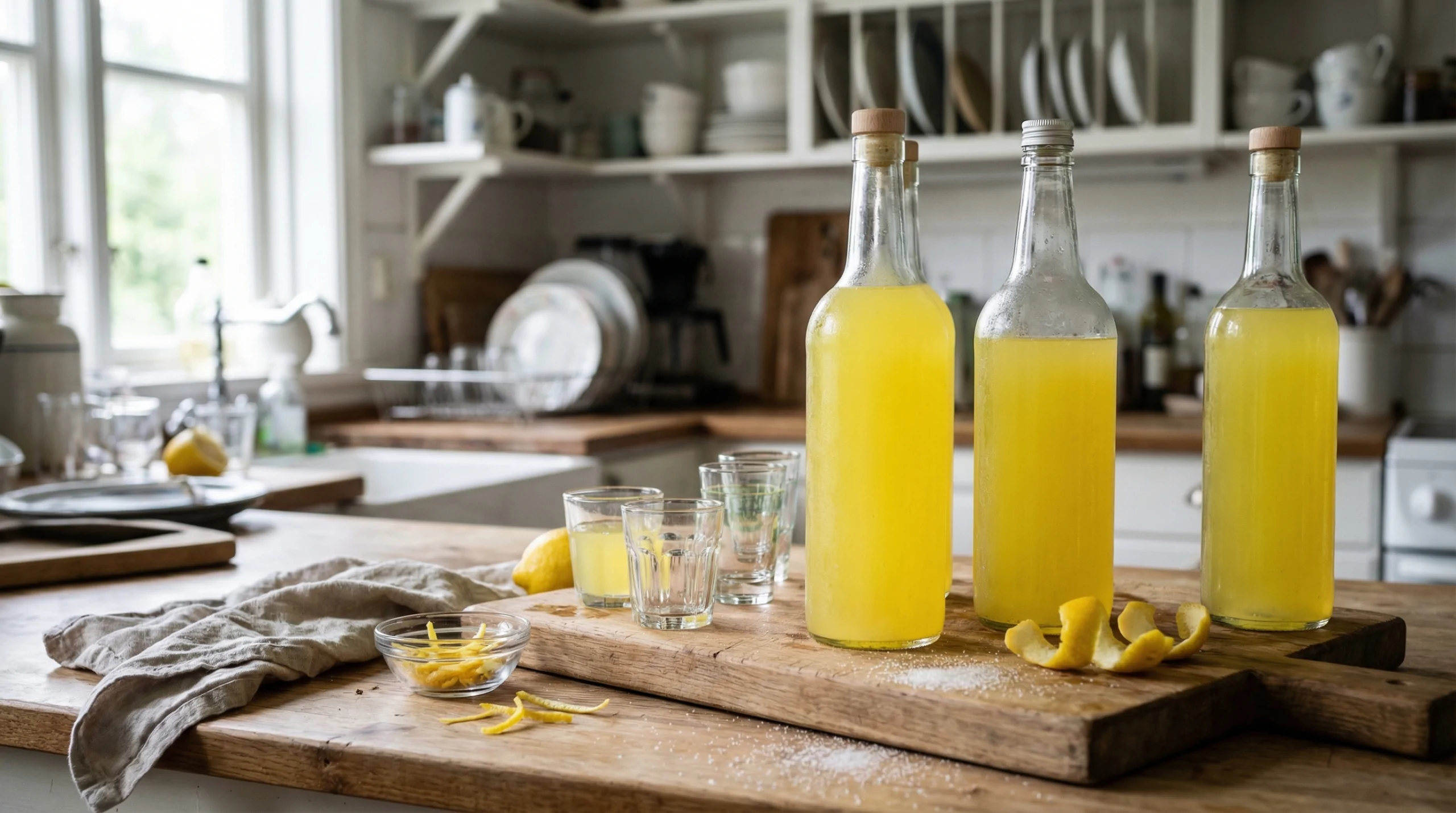
Limoncello is one of those little rituals that I love: a few fragrant lemons, a little patience, and you get a sunny liqueur that smells of Italy and the Mediterranean.
The first time I did it was after a meal with friends: we had some magnificent untreated lemons, and I thought it was the perfect time to try the classic version, without any gadgets.
The result: a bottle that disappeared far too quickly…
The key is the zest. Not the juice (which brings acidity but also less distinct notes), really the zest, with as little white wine as possible.
That's where the essential oils come in: they provide a strong aroma, that elegant bitterness, and that characteristic lingering finish. Then, we make a simple syrup, combine the ingredients, and taste to adjust the flavors.
Since it's a liqueur, it's not a "light" recipe, but it has a real advantage: you control everything. The sugar, the lemon intensity, and even the subtle hint of herbs. I often add a tiny seasonal note (without betraying the essence): a little rosemary and a touch of vanilla, just to round it out.
Serve this lemon liqueur very cold, ideally after being in the freezer (the bottle won't freeze if the alcohol content is right). And if you like desserts, a splash on a strawberry or citrus salad is magical!
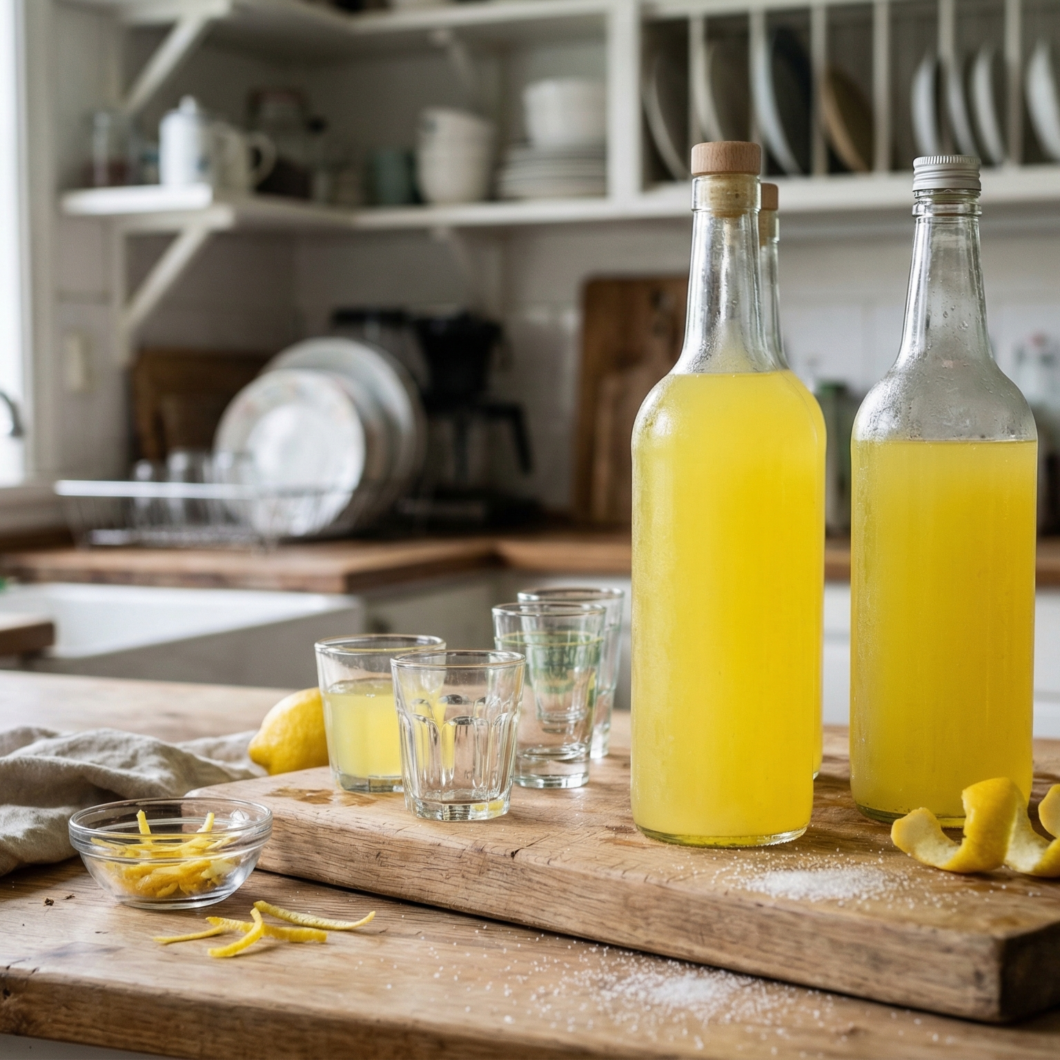

Limoncello
4
people22
minutes14
minutes228
kcal36
minutesA recipe for homemade limoncello that's wonderfully lemony, sweet yet vibrant, with a brilliant yellow hue. Here, I stick to the traditional Italian method: macerating the zest, adding syrup, then blending at the right ratio.
Keep your device's screen on
Ingredients
4 untreated lemons (approx. 320g)
500 ml of 95% neutral alcohol (fruit alcohol type)
200 g of sugar
300 ml of water (up to 750 ml to adjust the alcohol level to your taste)
1 small sprig of rosemary (optional but recommended)
1/4 vanilla bean (optional)
1 pinch of fine salt
Preparation steps
- Wash the lemons thoroughly in hot water and dry them. Remove the zest with a peeler, avoiding the white pith as much as possible (the white pith is bitter and sticks).
- Place the zest in a large, clean jar. Add the alcohol. If using rosemary and vanilla, add them now. Seal and shake for 10 seconds.
- Leave to macerate at room temperature, away from light. Ideally for 7 to 14 days (this resting time does not count towards the total time). Shake the jar once a day.
- Prepare the syrup: pour the water and sugar into a saucepan. Heat over medium heat, stirring until completely dissolved, then simmer for 2 minutes. Remove from heat and let cool completely.
- Filter the infused alcohol: first through a chinois sieve, then a second time through a coffee filter or cheesecloth for a perfectly clear liqueur. Remove the rosemary and vanilla.
- Mix the strained alcohol with the cooled syrup. Add a pinch of salt (it really brings out the lemon). Taste it: if you want it sweeter, add a little more syrup (water + sugar) in small amounts.
- Bottle the wine. Let it rest for 24 to 48 hours in a cool place to allow the flavors to develop (resting time is not included in the count). Serve very cold, ideally with the bottle in the freezer.
📊 Nutritional Information
1 serving (approx. 60ml)
| Nutrient | Value |
|---|---|
| Calories | 228 kcal |
| Proteins | 0g |
| Carbohydrates | 19g |
| including sugars | 19g |
| Lipids | 0g |
| including saturated fatty acids | 0g |
| Fibers | 0.2g |
| Sodium | 25mg |
| Vitamins | |
| Vitamin C | 22% AJR |
| Vitamin B6 | 4% AJR |
| Vitamin B9 | 2% AJR |
| Minerals | |
| Potassium | 2% AJR |
| Magnesium | 1% AJR |
| Calcium | 1% AJR |
* RDA = Recommended Daily Allowance
📝 Notes
Here's the approximate alcohol content after mixing: with 500ml at 95° ABV + 300ml of water (and the volume of the syrup), it's around 55–60° ABV. That's the strong version!
If you prefer a lower alcohol content, such as that sold commercially and which is generally around 30°, increase the water in the syrup to 750ml.
To learn more, consult our guide detailing the alcohol content of Limoncello bottles.
Excessive alcohol consumption is dangerous for your health; consume in moderation.
💡 Chef's Tips
For a clean and fragrant limoncello, absolutely avoid the white pith. And filter it twice: it makes all the difference to the texture in the mouth (silkier, less cloudy).
🔄 Variations
- For a more intense recipe: increase the amount of zest (up to 6 lemons) without changing the sugar.
- Sweeter recipe: add 50 to 80ml of water + 30 to 50g of sugar syrup, little by little, after tasting.
