
In short
You look at a bottle of Limoncello and the question arises: how many percent alcohol are hidden behind this bright yellow liquid? The short answer: between 25% and 35%, depending on the brand or recipe. But behind this range, there are real differences to understand.
Whether you buy a bottle at the supermarket, bring one back from Italy, or plan to make your own Limoncello, the alcohol content changes everything—taste, shelf life, and serving method. This article breaks it down, with supporting data!
The alcohol content of Limoncello at a glance
Before going into detail, let's lay the groundwork. Limoncello is an Italian liqueur made from lemon peel macerated in pure alcohol, with sugar and water added. This mixture directly determines the alcohol content of the final Limoncello.
The standard range is between 25 and 35 degrees
The vast majority of bottles you'll find in stores display a Limoncello alcohol content between 25 and 35 percent. This range is not accidental.
Below 25% ABV, the liqueur loses its aromatic intensity. Lemon zest needs a minimum amount of alcohol to properly release its essential oils. Above 35% ABV, Limoncello becomes too hot and loses its sweet character. But some prefer it very strong.
Most artisanal and industrial producers therefore remain within this range. It's a compromise between strength, sweetness, and lemon expression.
A Limoncello at 25° will be softer, almost syrupy. At 35°, it will be more assertive, less sweet, with a lovely length on the palate.
Between 25° and 35°: this is the range that defines the alcohol content of a standard bottle of Limoncello, whether it comes from Naples, Sorrento or your kitchen.
Why do most bottles display 30°
30° has become a sort of unofficial standard. Why? Because it satisfies the greatest number of people.
At 30% ABV, Limoncello is strong without being harsh. It retains a pleasant roundness on the palate thanks to the sugar, while maintaining a noticeable alcoholic presence. This strength also holds up well when served ice-cold—at this concentration, it remains liquid even straight from the freezer.
Major Italian brands adopted this benchmark very early on to align themselves with European consumption habits.
A 30% ABV Limoncello can be enjoyed as a digestif without causing any discomfort, and remains strong enough to keep for months after opening. It is this perfect balance that has made it the benchmark in the market.
Why does the alcohol content vary between brands?
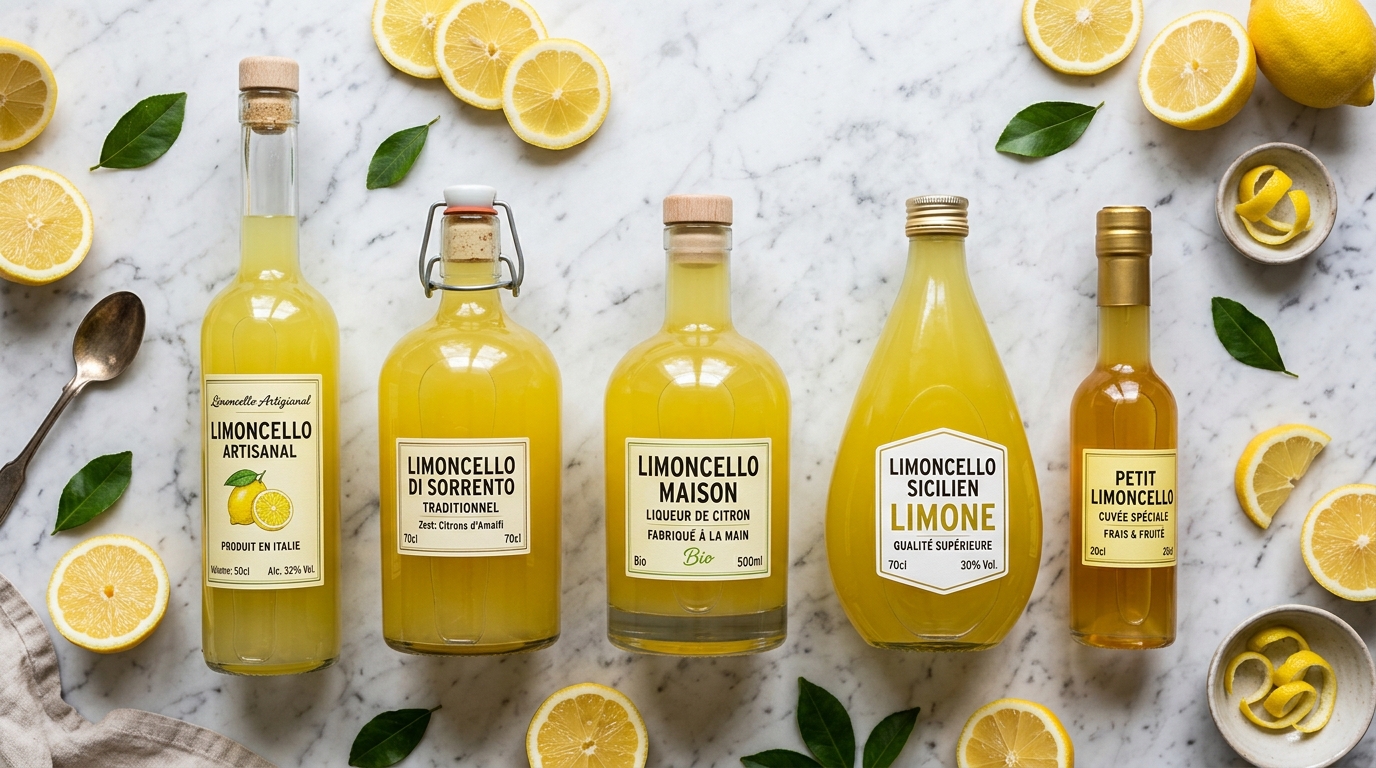
Two bottles side by side, same color, same type of product — and yet one displays 25% ABV, the other 32%. This isn't a marketing gimmick. The alcohol percentage of Limoncello depends on several very real factors.
The differences between major Italian brands
Each Italian producer has its own formula. Limoncello di Capri is 30°, Pallini is around 26°, and some artisanal Sorrento vintages reach 32° or 33°.
These differences reflect recipe choices, but also different target markets. A brand aiming for export to countries less accustomed to strong spirits will tend to go down to 25-26% ABV. A brand focusing on authenticity and discerning connoisseurs will remain above 30% ABV.
The impact of the quality of the base alcohol used
Limoncello starts with a neutral alcohol, often 96% ethanol or grappa. The quality of this base alcohol influences the final result — not only in terms of taste, but also alcohol content.
High-quality alcohol, properly rectified, dilutes more evenly. Lower-quality alcohol can introduce variations in the finished product.
This is why the difference in alcohol content between an artisanal Limoncello and an industrial version sometimes comes down to the raw material, not just the recipe.
The role of sugar and water in the final dilution
This is the often-forgotten key. To go from 96% ABV alcohol to 30% ABV Limoncello, you add sugar dissolved in water—the base syrup. The more syrup you add, the more you dilute the alcohol, and the lower the final ABV.
Understanding the role of alcohol diluents in this process helps to grasp why two Limoncello with the same starting alcohol can end up with very different proofs.
A producer who wants a sweeter product will add more syrup.
Result: sweeter, less strong!
🍋 Homemade Limoncello Alcohol Content Calculator
Estimate the final alcohol content of your Limoncello based on your recipe.
The alcohol content of homemade Limoncello
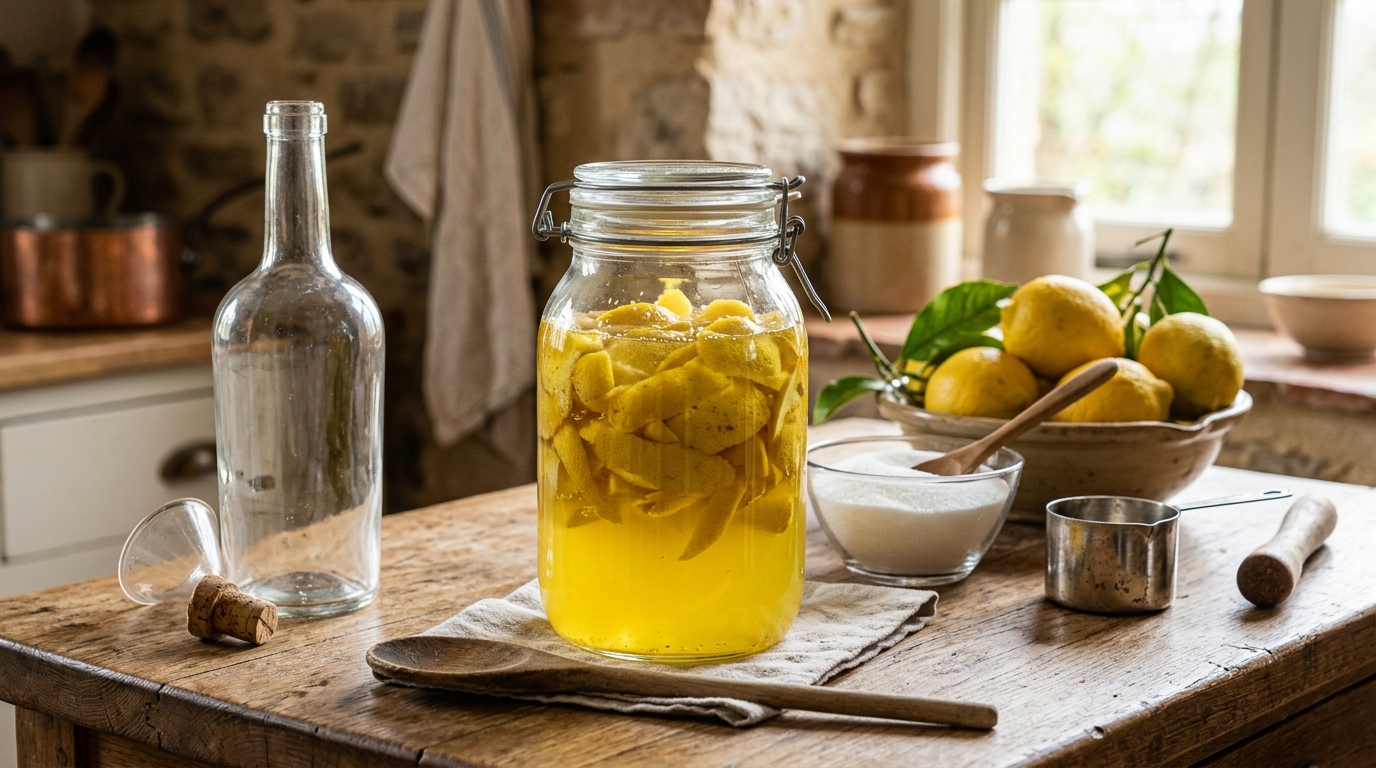
Making your own Limoncello means having total control over the taste — and the alcohol content. But you still need to know what you get depending on the proportions you choose.
What percentage is obtained with 96% alcohol?
The classic recipe starts with 96% ABV food-grade alcohol. After macerating the zest, it is filtered and mixed with a syrup (water + sugar). This alcohol-to-syrup ratio determines the alcohol percentage of homemade Limoncello.
With a balanced recipe—for example, 500 ml of 96% ABV alcohol to 750 ml of syrup—you get approximately 30° to 32° ABV. If you use our traditional homemade Limoncello recipe (diluted) with these proportions, you'll be within the standard range for Italian producers.
Using 40° vodka instead of 96° alcohol results in a significantly lower result: it's more like 15° to 20°, which completely changes the profile of the liqueur.
Simple rule: the more syrup you add relative to the base alcohol, the lower the final alcohol content. It's dilution, nothing more.
How to adjust the degree according to your preferences?
Want a lighter Limoncello at 25% ABV? Increase the amount of syrup. Aiming for a stronger product at 35% ABV? Reduce the water and sugar, or use a more concentrated base alcohol.
To calculate it precisely, there is a simple formula. If you mix V1 ml of alcohol at D1° with V2 ml of syrup at 0°, the final alcohol content is:
(V1 × D1) ÷ (V1 + V2)
Example: 500 ml at 96° + 1100 ml of syrup → (500 × 96) ÷ 1600 = 30°. Net.
Note your proportions for each batch. This allows you to reproduce the same degree of browning from one time to the next, or to adjust gradually according to your taste.
Comparison with other common alcoholic beverages
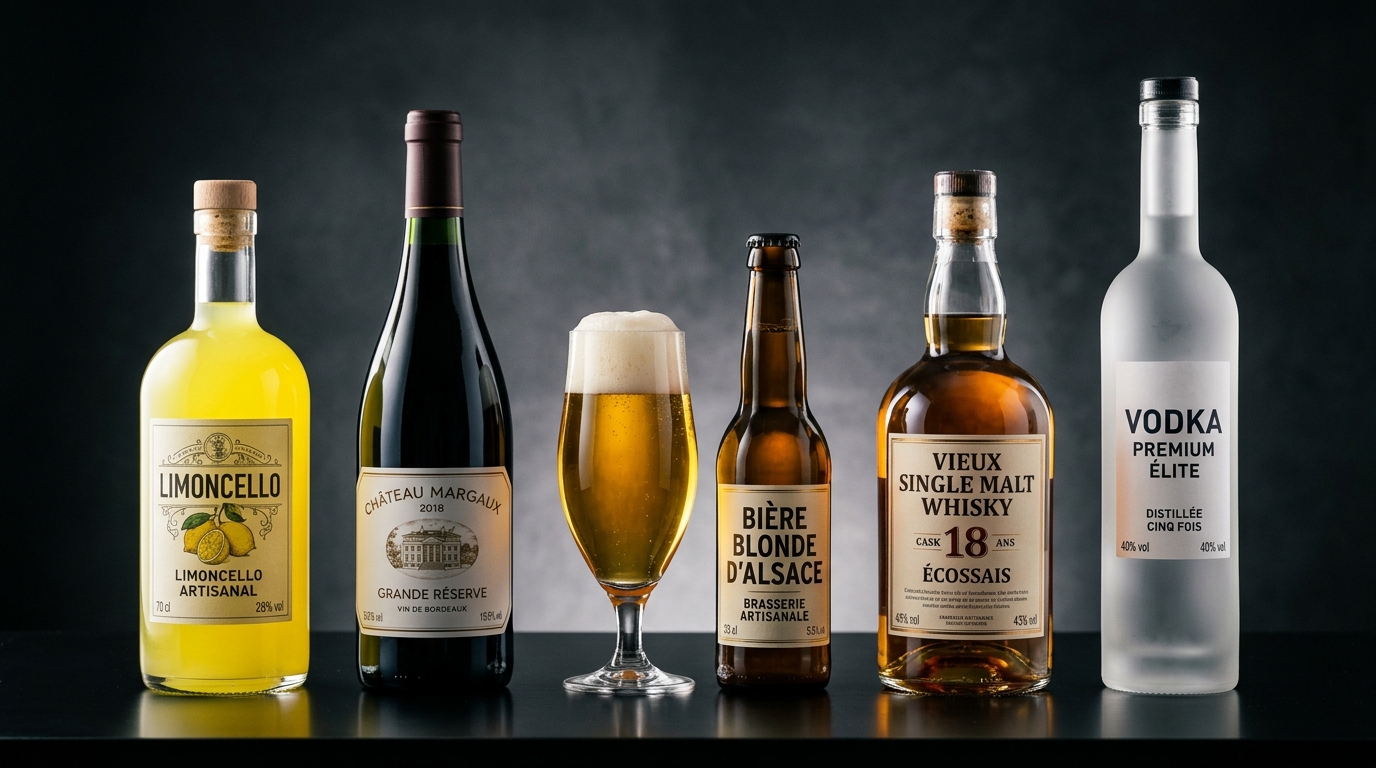
To situate Limoncello — strong or light? — in relation to the other bottles in your bar, here is a useful perspective.
Limoncello vs vodka: which is stronger?
Standard vodka has an alcohol content between 37.5° and 40°. Limoncello, on the other hand, is between 25° and 35°. In the vast majority of cases, comparing the alcohol content of Limoncello and vodka favors vodka: it is stronger.
But beware of a common mistake: Limoncello is often drunk neat and ice-cold, in small quantities (5 to 7 cl), while vodka is used in diluted cocktails. The amount of alcohol consumed can ultimately be comparable. To better visualize the actual amounts, this table of alcohol content and units allows for easy comparison.
Comparison with rum, gin and liqueurs
Here is a clear comparison table:
| Alcohol | Average degree | Category |
|---|---|---|
| Limoncello | 25° – 35° | Liqueur |
| Vodka | 37,5° – 40° | Spirits |
| White rum | 37,5° – 40° | Spirits |
| Gin | 37,5° – 47° | Spirits |
| Strong artisanal limoncello | 32° – 45° | Liqueur |
| Amaretto | 21° – 28° | Liqueur |
| Peach liqueur | 15° – 20° | Sweet liqueur |
Limoncello is therefore at the top of the liqueur category, but below classic spirits. It is significantly stronger than an Amaretto or a homemade almond liqueur recipe, which generally ranges between 20° and 25° ABV.
Italian standards surrounding Limoncello
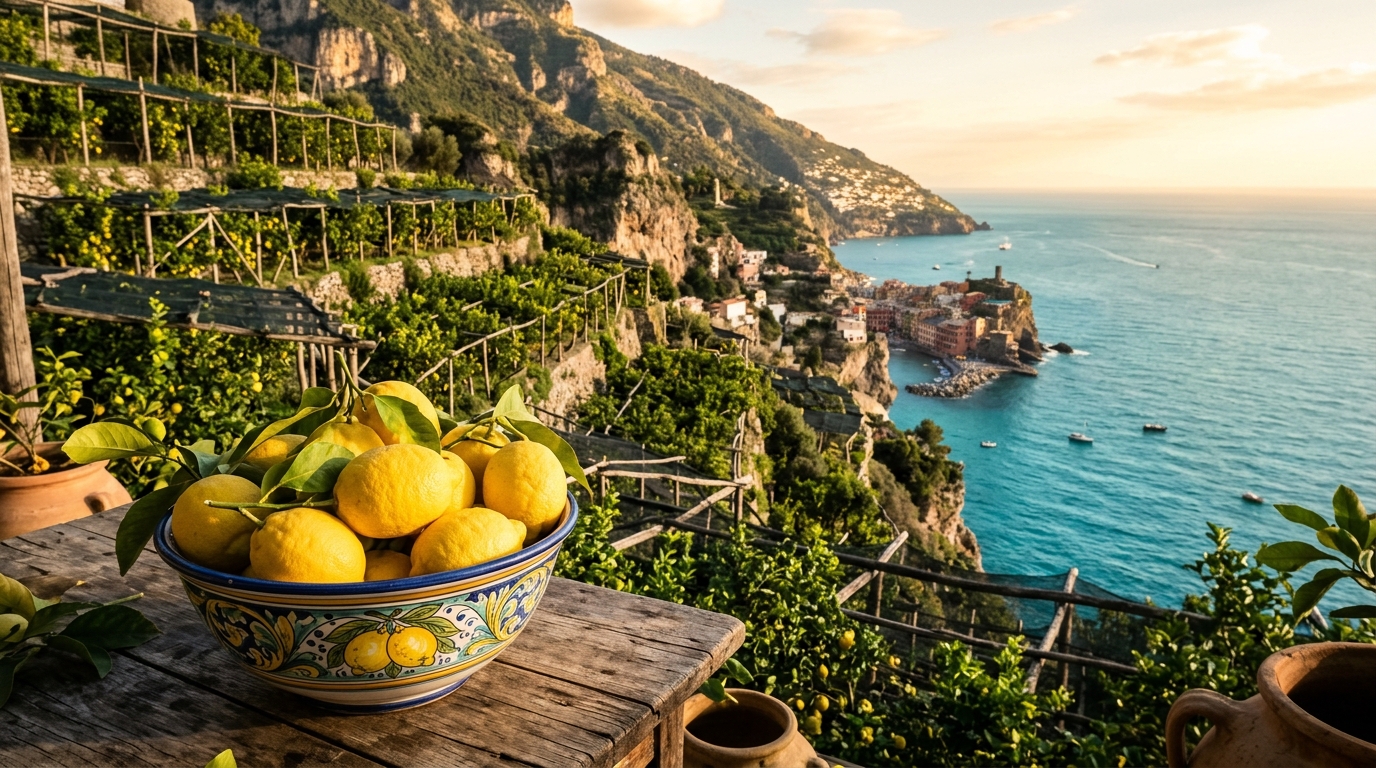
Limoncello is not just a family tradition. There are rules, in Italy as in Europe, that govern what can be labeled as such. It's a protected designation of origin product.
What European regulations say about liqueurs
In Europe, Regulation (EC) No 110/2008 on spirit drinks defines liqueurs as drinks with a minimum of 15° alcohol, a certain amount of sugar, and a natural or artificial flavouring.
Limoncello falls into this category of liqueurs. It must therefore have an alcohol content of at least 15% to legally qualify for this designation. However, in practice, no serious Limoncello goes that low. This legal threshold is a very permissive minimum, not a standard.
European regulations do not impose a maximum alcohol content. They leave producers free to specify it, as long as the labeling is correct and the actual alcohol content is clearly stated on the bottle.
The minimum legal alcohol content to be called Limoncello
In Italy, and more specifically in the regions of origin such as Campania and the Amalfi Coast, producers have organized themselves to defend their product. The Italian Limoncello Association and several regional consortia recommend a minimum alcohol content of 25% for authentic Italian Limoncello.
The term "Limoncello" is not a protected designation of origin (PDO) in the European sense. Theoretically, any producer can sell a lemon-flavored liquid with an alcohol content of 15% and call it Limoncello. Check the alcohol content on the label before buying.
Some geographical indications such as "Limoncello di Capri" or "Limone Costa d'Amalfi" benefit from specific protections, with strict specifications on the varieties of lemons used — but not necessarily on the precise alcohol content.
- Long shelf life after opening
- Lemon aromas better preserved
- Remains liquid in the freezer
- Holds up well in cocktails
- More burning in the mouth
- Less accessible for those unfamiliar with the subject
- The alcoholic taste is sometimes too strong
- Less suitable as a light aperitif
The effect of alcohol content on tasting and preservation
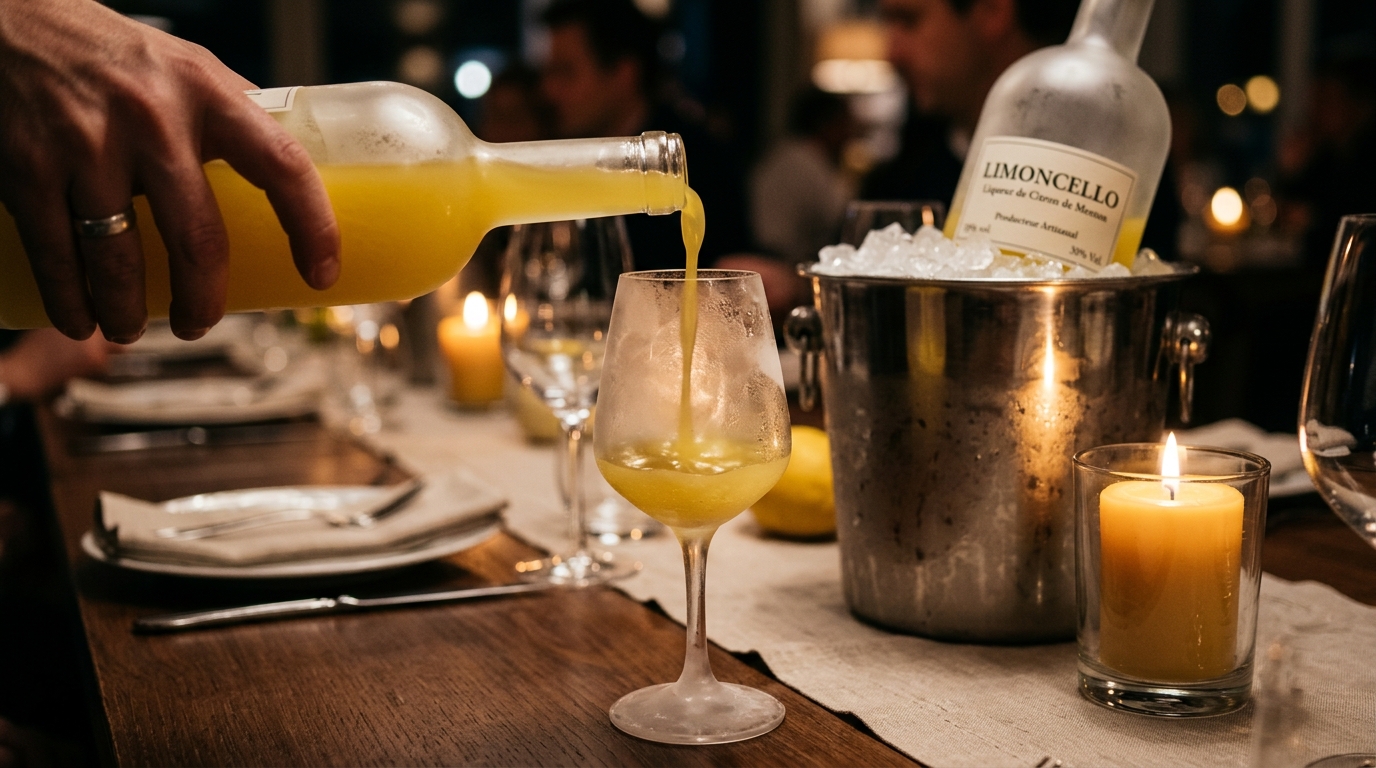
The alcohol content is more than just a number on the label. It tangibly changes the experience in the glass — and over time.
Does a strong Limoncello really change the taste?
Yes, and noticeably so. A 35% ABV Limoncello has more intense lemon aromas, with a drier, longer finish. The alcohol acts as a carrier: it transports and amplifies the essential oils from the zest.
At 25% ABV, Limoncello will be perceived as sweeter, more liqueur-like, with the sugar overpowering the lemon. Some prefer this. Others find it too syrupy. It's a matter of taste as much as alcohol content.
At what temperature should it be served depending on the alcohol content?
The rule is simple: the stronger the Limoncello, the better it can withstand the cold.
- 25° to 28° : serve between -5° and 0°C. Below this temperature, the texture may become too thick.
- 30° to 32° : ideal between -10° and -5°C, taken directly from the freezer.
- 33° to 35° : can remain in the freezer permanently without freezing.
Store your bottle of Limoncello in the freezer if it's 28°C or warmer. The cold intensifies the lemon aromas and softens the alcoholic sensation on the palate.
How does the alcohol content affect preservation?
Alcohol is a natural preservative. The higher the alcohol content, the longer the Limoncello will keep after opening without losing its qualities.
A Limoncello at 30° or more, kept away from light (in the freezer or in a cool cellar), easily lasts 12 to 18 months after opening.
Below 25°C, the recommended storage time drops to 6 to 9 months. The aromas diminish more quickly, and the risk of microbial growth, however small, increases slightly.
An unopened bottle of Limoncello, if properly stored, can be kept for several years without any problem, regardless of its alcohol content!
Answers to your questions
What is the alcohol content of a classic Limoncello?
A commercially available Limoncello typically contains between 25% and 35% alcohol, with 30% being the most common. This is the range you'll find on almost all Italian bottles, whether artisanal or industrial.
Is Limoncello stronger than vodka?
No, in most cases. Standard vodka has an alcohol content of 37.5° to 40°, while Limoncello ranges between 25° and 35°. Limoncello is therefore generally less strong than vodka, although the more robust artisanal versions can approach the strength of classic spirits.
What percentage of alcohol is found in homemade Limoncello?
Using 96% ABV food-grade alcohol and syrup in classic proportions (approximately 500 ml of alcohol to 750-1100 ml of syrup), homemade Limoncello has an ABV between 28° and 32°. With 40% ABV vodka as a base, the ABV drops to between 15° and 20°.
What is the Italian standard for the alcohol content of Limoncello?
There is no strict legal standard in the sense of a European Protected Designation of Origin (PDO) for Limoncello. European regulations impose a minimum alcohol content of 15% for liqueurs. In practice, reputable Italian producers maintain a minimum of 25%, considered the threshold for authentic Limoncello.
Does a strong Limoncello keep better after opening?
Yes. Alcohol acts as a preservative. A Limoncello with an alcohol content of 30% or higher will keep for 12 to 18 months after opening if stored in a cool, dark place. Below 25% ABV, expect it to last 6 to 9 months before the aromas begin to diminish.