
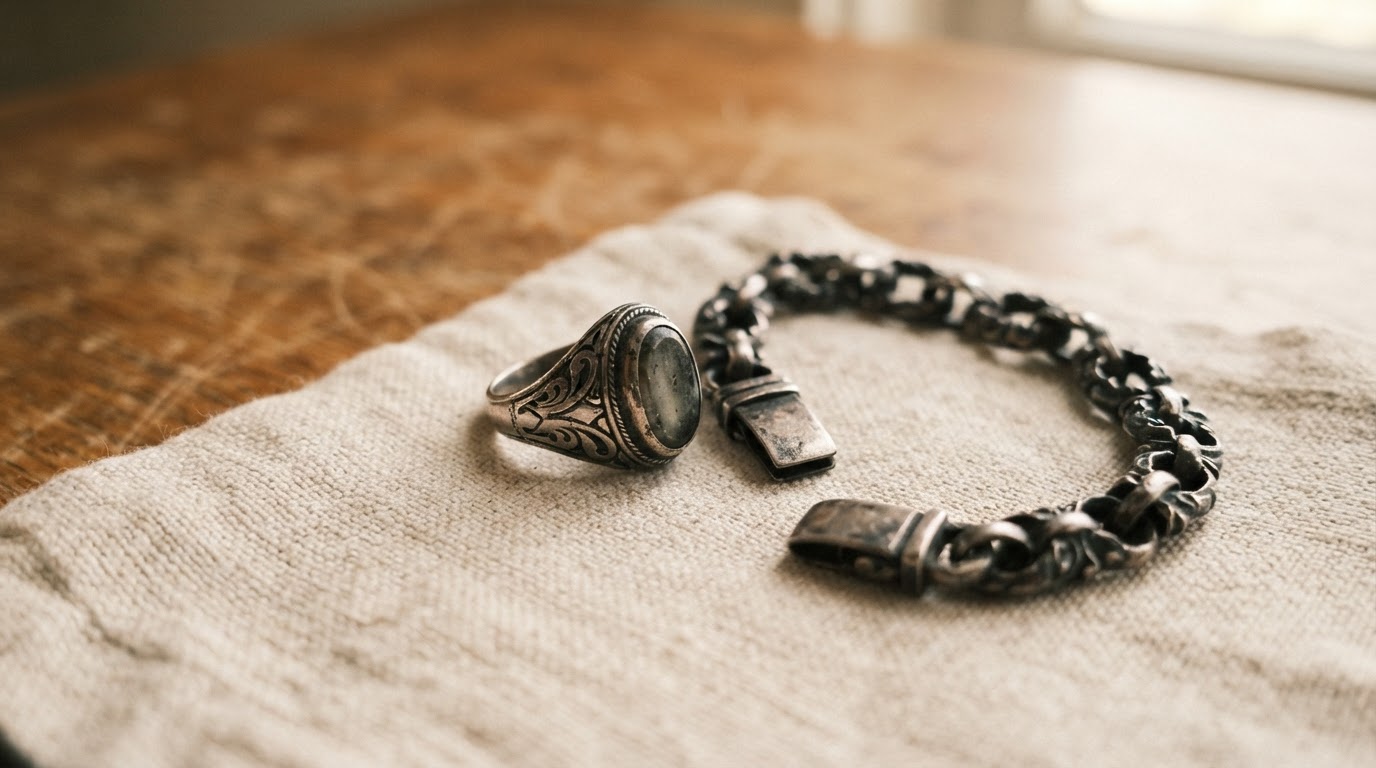
Baking soda combined with aluminum foil and hot water remains the fastest method for cleaning tarnished silver jewelry, provided that the technique is adapted depending on whether the jewelry contains stones, pearls or plating.
A silver jewel that tarnishes is not dirty in the usual sense of the word. The surface reacts to the air and skin, and this reaction changes color without damaging the metal.
Home remedies (baking soda, vinegar, Coca-Cola) do work on sterling silver, much like cleaning brass without damaging it. However, they aren't suitable for all jewelry, and this detail is often missing from online guides.
Why does money turn black?
The silver used in jewelry is almost never pure. Most pieces bear a 925 hallmark, meaning 92.5% silver and 7.5% copper, the latter being added to strengthen the metal and make it easier to work.
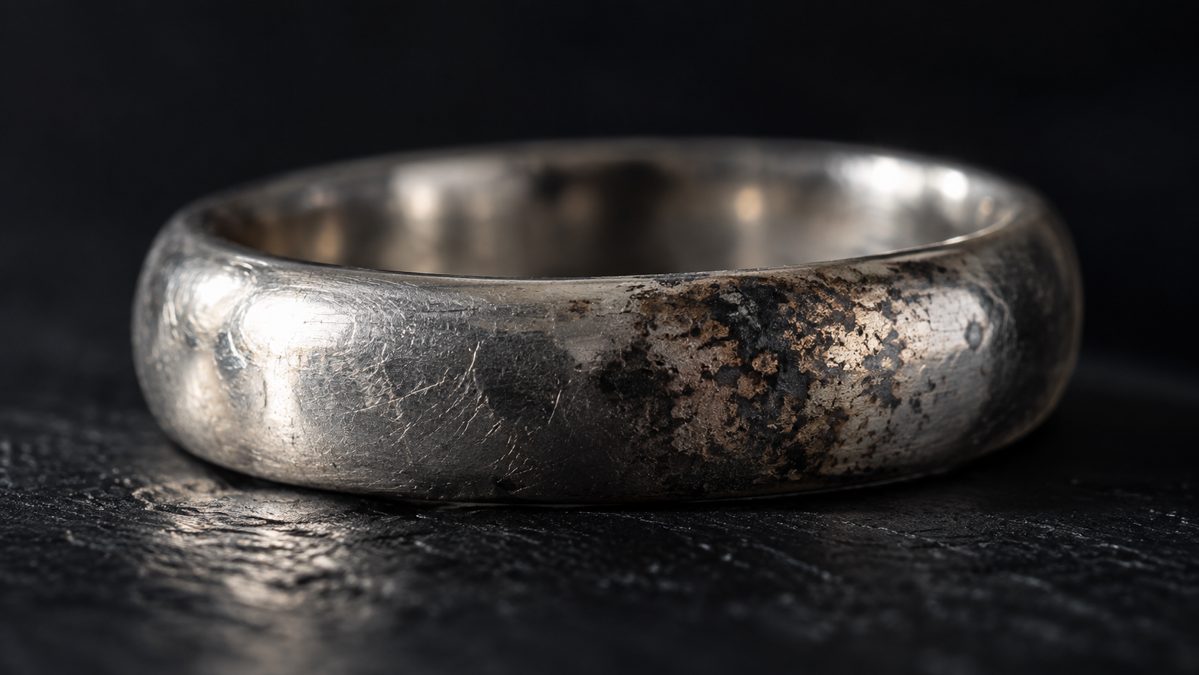
It is this copper, combined with sulfur compounds present in the air, perspiration, or certain cosmetics, that produces the thin dark layer on the surface of the jewelry. The more frequent the exposure to these elements, the faster the tarnishing, as detailed by Atelier d'Amaya in its guide to 925 silver.
ℹ Good to know: a bracelet worn every day in the shower or in summer can turn black in two to three weeks, while an inherited piece of jewelry stored for ten years in a non-hermetic cardboard box often comes out uniformly grey, with no area more affected than another.
Natural methods that actually work
Baking soda, aluminum foil, and hot water
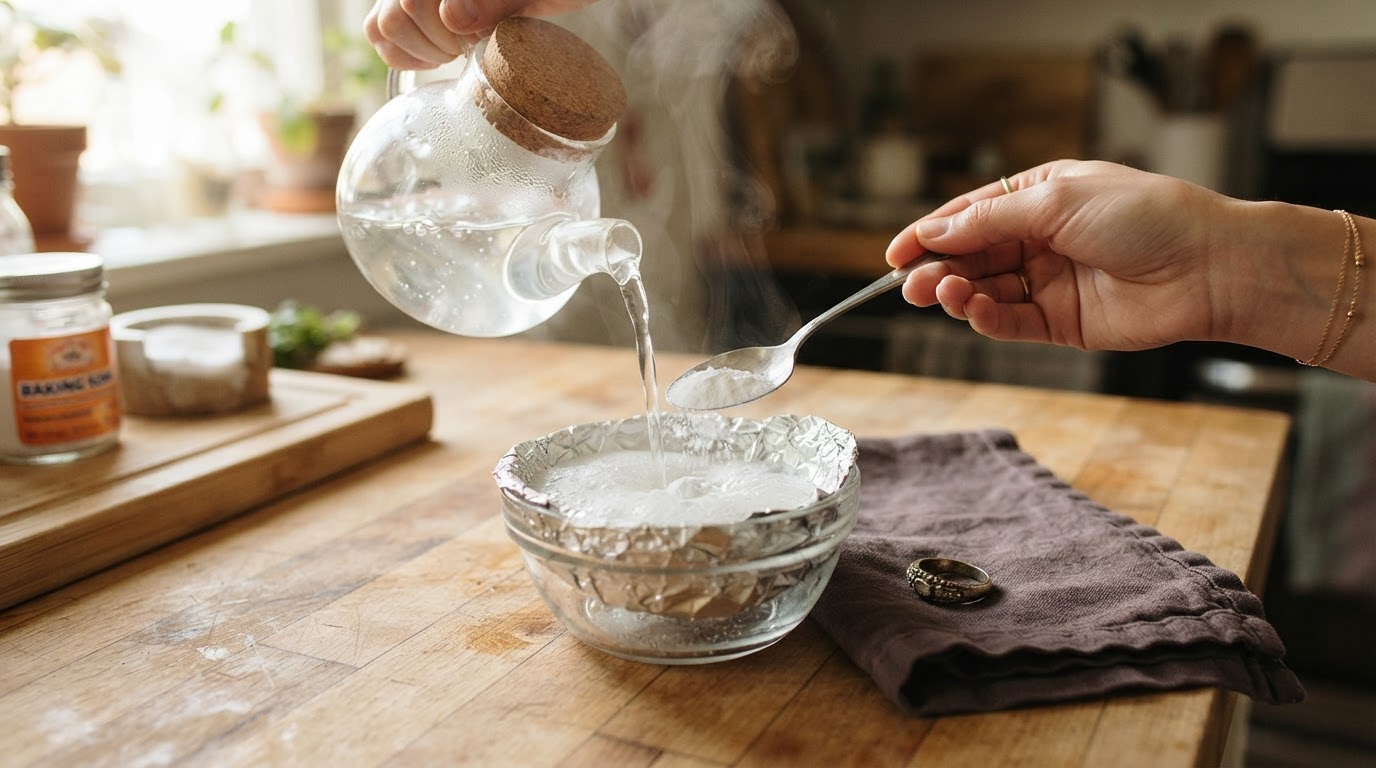
Line a bowl with aluminum foil, shiny side down. Sprinkle in a tablespoon of baking soda, pour in hot, almost boiling water, then place the jewelry in the bowl, ensuring that one edge of the foil is not directly covered.
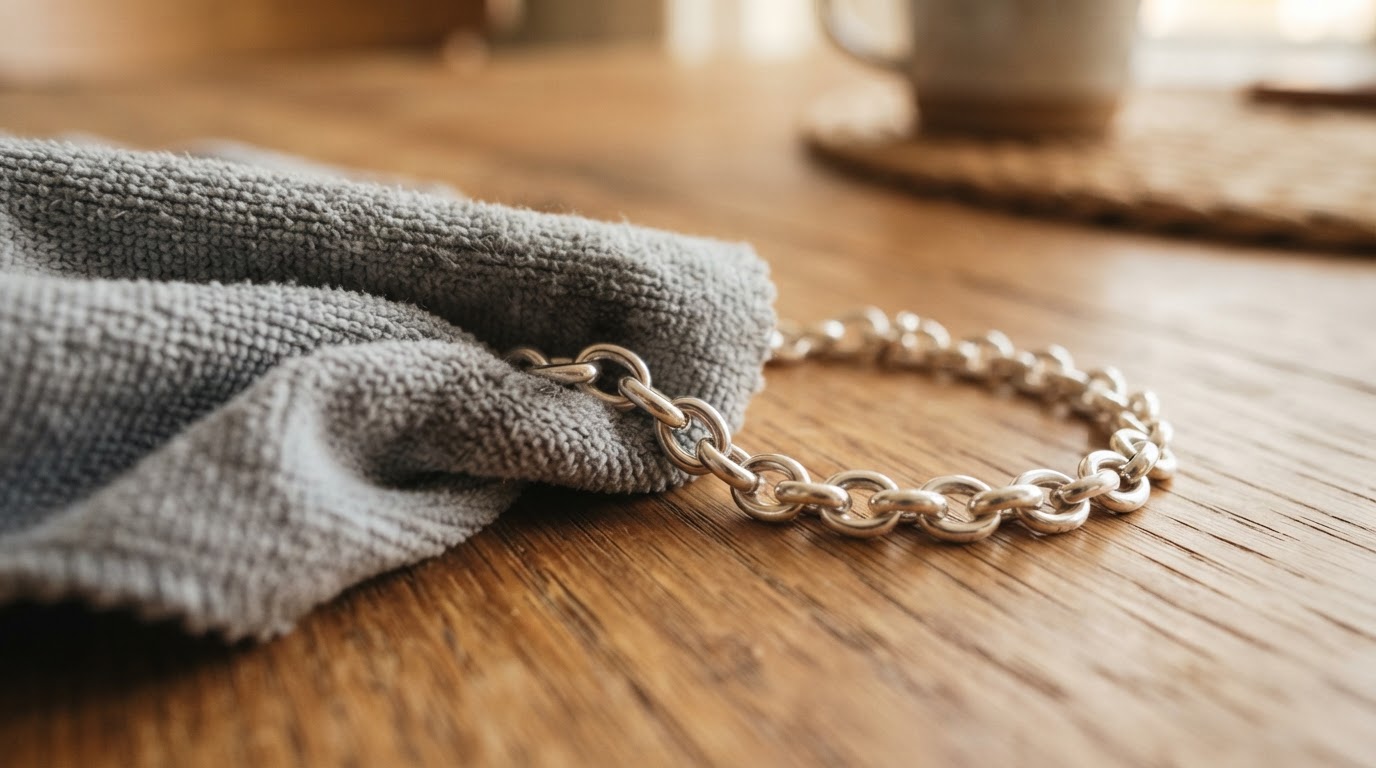
An electrochemical reaction gradually transfers the blackening agent to the aluminum foil, taking only a few minutes for light blackening; this timeframe can be significantly longer for heavily tarnished jewelry, so it's best to monitor the progress rather than aiming for a fixed time. Rinse with clean water and dry with a soft cloth.
White vinegar
Soak the jewelry in a glass of white vinegar for two to three hours for a light blackening.
For heavily tarnished jewelry, it's best to regularly check the condition of the metal rather than leaving it soaking unattended: left too long, vinegar can eventually weaken certain finishes. Rinse thoroughly afterwards: if not rinsed properly, it will leave a lingering odor.
Coca-Cola
The phosphoric acid in Coca-Cola dissolves the black film in 10 to 15 minutes of immersion. The method works, but leaves the jewelry slightly sticky: careful rinsing and complete drying are necessary immediately afterward.
✓ To do: always test the chosen method on a small, inconspicuous area of the jewelry before immersing it entirely, especially if it is an antique or valuable piece.
Which method is best for the type of jewelry?
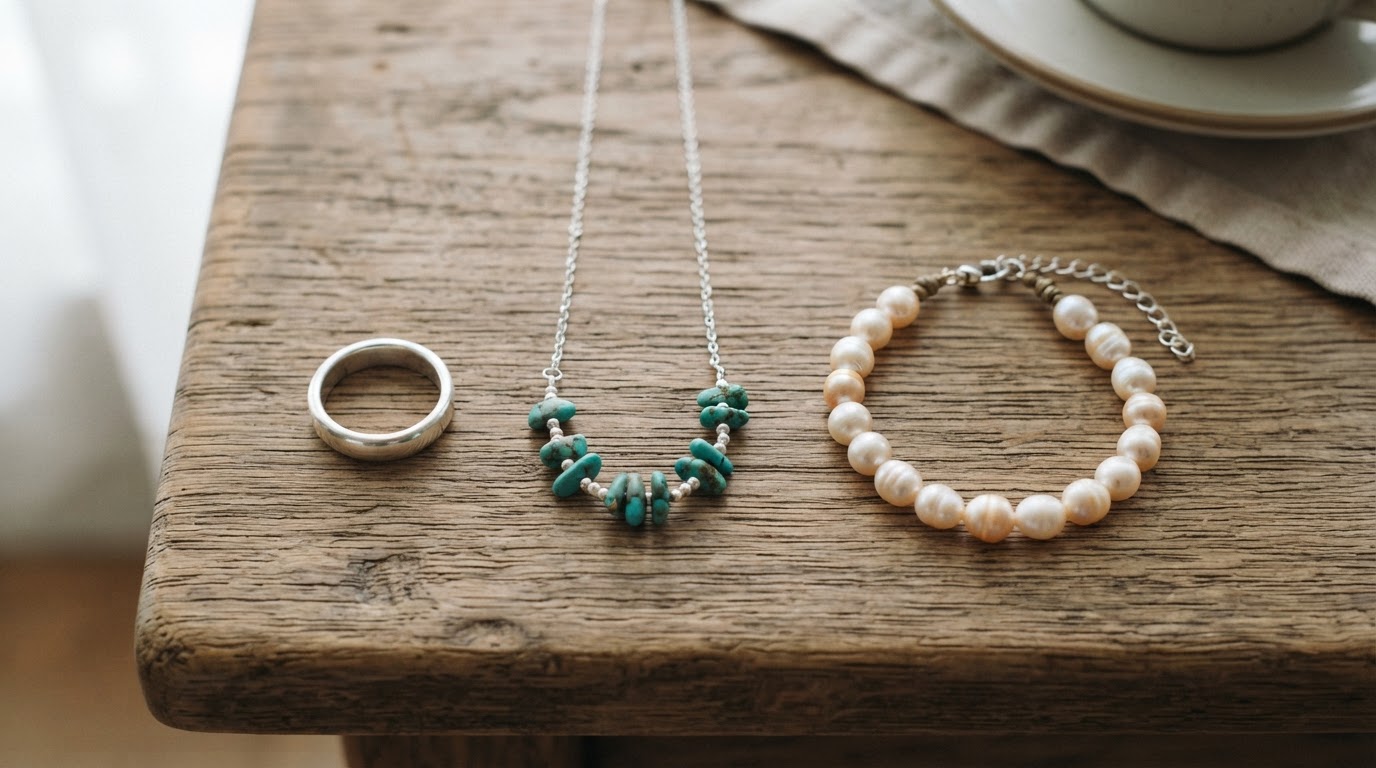
This is the point most guides gloss over: all the methods above assume a solid silver piece of jewelry, without any fragile elements. Jewelry with stones, pearls, or plating requires different treatment, just as cleaning suede without damaging it requires adapting the method to the material rather than applying the same recipe everywhere.
| Type of jewelry | Recommended method | Avoid |
|---|---|---|
| Smooth solid silver, without a stone | Bicarbonate + aluminum, vinegar or Coca-Cola | Nothing in particular to avoid |
| Pearls, coral, turquoise, opal | Soft, slightly damp cloth, never immerse | Baking soda, vinegar, Coca-Cola: these porous stones absorb liquids and lose their shine |
| Silver-plated jewelry (thin layer) | Soft cloth, baking soda paste, very briefly | Prolonged soaking, which wears away the plating layer and reveals the underlying metal |
| Enamelled or glued elements | Dry cleaning, localized cleaning, or a visit to a jeweler | Any liquid bath that can dissolve the glue or dull the enamel |
Which cleaner should I choose for my jewelry?
Answer these two questions to determine which method to use.
Gestures you should never do
⚠ Caution: A hard-bristled brush or abrasive sponge will permanently scratch silver, even solid silver. Always use a very soft toothbrush dedicated exclusively to this purpose.
These precautions are in line with the recommendations of the Histoire d'Or brand on the routine care of silver.
⚠ Important note: never mix advice intended for silverware (cutlery, dishes) with that for finished jewelry or cheap silver-plated jewelry: the thickness of the metal and the resistance are not the same, and a safe method on cutlery can damage plated jewelry.
Also avoid household products not intended for precious metals (drain cleaner, descaler), which attack the surface much faster than a sulfur deposit.
Preventing blackening on a daily basis
Always remove your silver jewelry before showering, swimming, playing sports or applying perfume and cream: chlorine and perspiration significantly accelerate tarnishing, as this silver jewelry care guide.
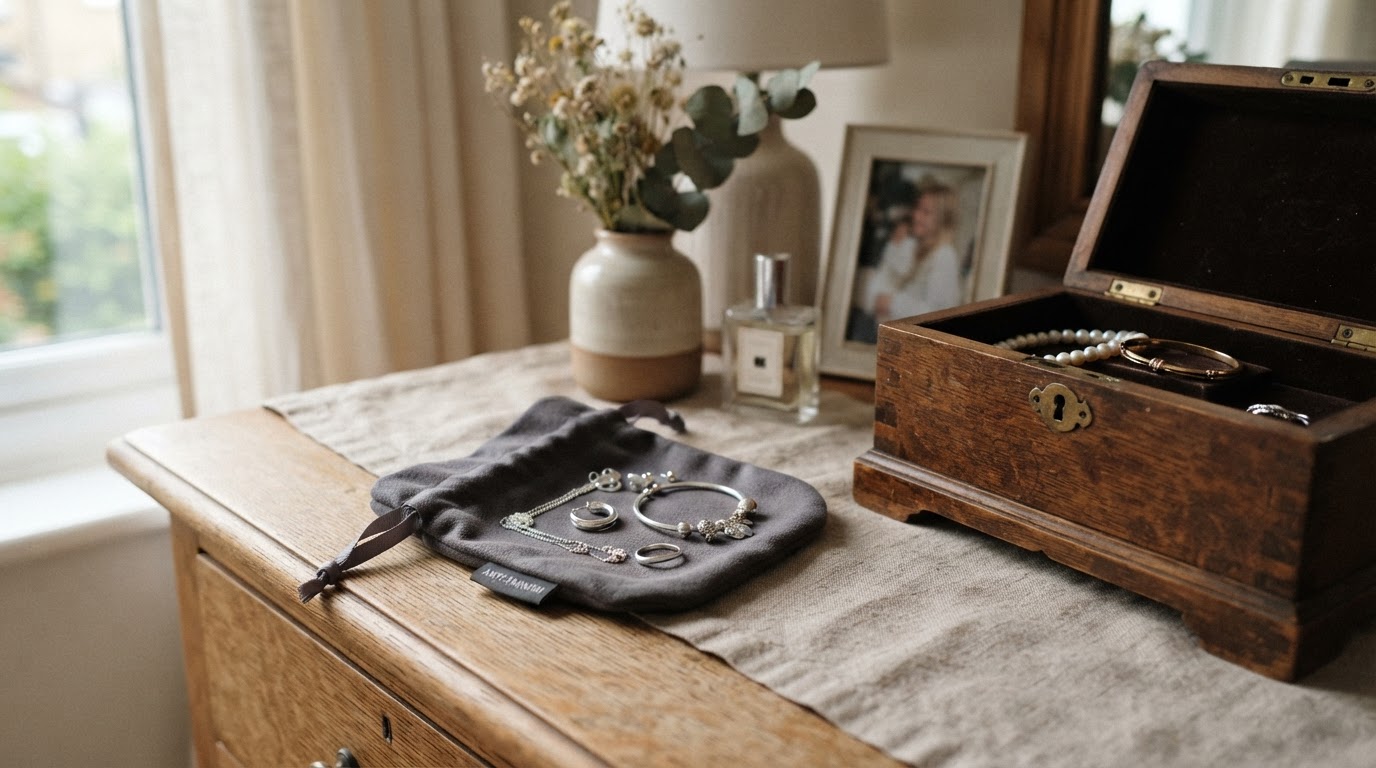
Store them in an anti-oxidant cloth or an airtight pouch rather than in the open air, and separate them from other jewelry to avoid scratching between pieces.
Jewelry worn regularly is almost self-maintaining thanks to the friction against the skin and clothing. It's often the piece forgotten at the bottom of a drawer that tarnishes the fastest, lacking this natural friction.
Practical questions
Why does silver turn black when it comes into contact with skin?
Skin pH, perspiration, and certain cosmetics accelerate the reaction between the copper in the alloy and sulfur present in the environment. As a result, some people, whose skin is more acidic than others, will see the same piece of jewelry tarnish more quickly.
Does bicarbonate damage silver?
No, when used as a diluted paste or in a solution with hot water, baking soda will not scratch sterling silver. The risk of scratching comes primarily from rubbing with a stiff brush, not from the baking soda itself.
Can you clean a silver piece of jewelry set with stones?
It depends on the stone. Hard stones like zircon or quartz can withstand a damp cloth, but porous stones (turquoise, opal, coral, pearls) should be kept away from all liquids, including baking soda when soaking.
When should you consult a jeweler rather than clean it yourself?
Whenever a piece of jewelry combines several fragile materials (enamel, glue, porous stone), or has significant sentimental or financial value, professional cleaning avoids the risk of damaging an element that a home remedy cannot fix.
In summary
Baking soda with aluminum foil remains the fastest method for cleaning solid silver jewelry without stones, with visible results in minutes.
As soon as a piece of jewelry contains a porous stone, a pearl or a thin plating, it is best to abandon immersion and limit yourself to a soft cloth, or even entrust the piece to a jeweler.
