

In the vast majority of cases, a white wall can be cleaned without repainting: lukewarm water, a mild product (Marseille soap, bicarbonate or white vinegar) and the right technique are sufficient, provided that the type of paint and the exact nature of the stain are first identified.
Handprints near light switches, shoe marks at the base of walls, grease splatters near the kitchen: these everyday stains quickly give the impression that it's time to get out the paintbrushes. This is almost never the case.
This guide details, stain by stain, how to clean a white wall without repainting. It also shows how far this approach can go before repainting becomes truly simpler.
Before scrubbing: two checks to avoid damaging the wall
Not all paints react the same way to water. Before using any product, there are two points to check.
ℹ Good to know: Wipe an inconspicuous area of the wall with a damp cloth (behind a piece of furniture, in a corner). If a little color or material comes off the cloth, the paint is probably not washable: it's best to stick to dry methods (eraser, slightly damp microfiber cloth) rather than trying to clean it with soapy water, which risks creating a ring that's more visible than the original stain.
A second, often forgotten, step: dust the entire wall with a feather duster or vacuum cleaner (soft brush attachment) before dampening anything. A layer of dust mixed with water turns into a grey mark that spreads instead of disappearing.
Which product should I choose depending on the type of stain?
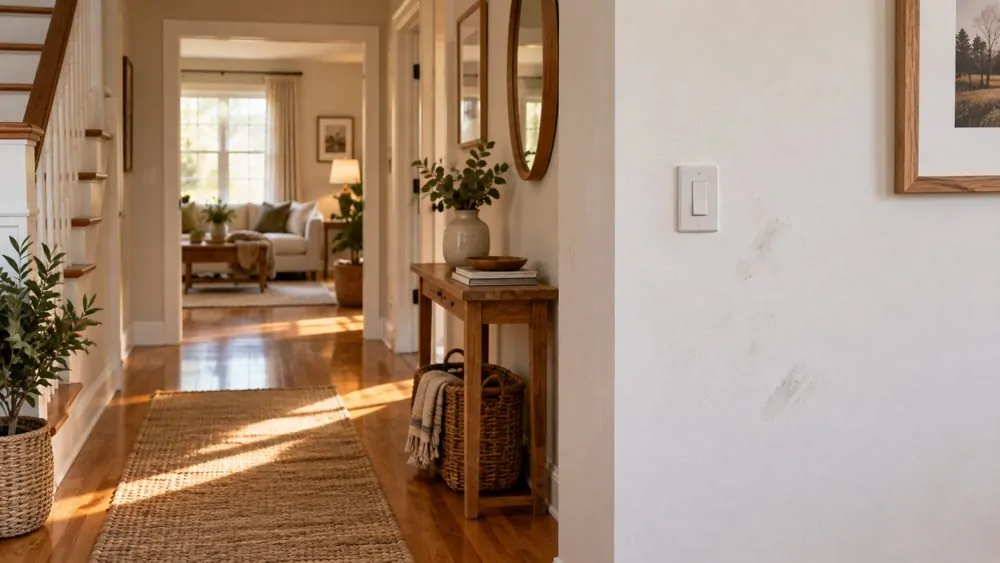
The right product depends primarily on what stained the wall, not on a universal recipe.
| Type of stain | Recommended product | Method |
|---|---|---|
| Fingerprints, footprints, chair back | Magic eraser (melamine) or white stone | Rub in a light circular motion, on washable paint only |
| Cooking grease, splashes near the stovetop | Diluted dishwashing liquid or baking soda paste | Apply, leave on for 2-3 minutes, wipe off with a damp cloth |
| Felt-tip pen, ballpoint pen, colored pencil | A white school eraser or a little rubbing alcohol | First, use a dry eraser; alcohol should be a last resort on small areas |
| Light mold (bathroom, cold corner) | diluted white vinegar | Dab gently without rubbing, then ventilate well afterwards to prevent recurrence |
| Yellowing, tobacco deposit | Diluted soda crystals | Wash from bottom to top with a well-wrung sponge, rinse with clean water |
Natural products that clean without damaging the paint
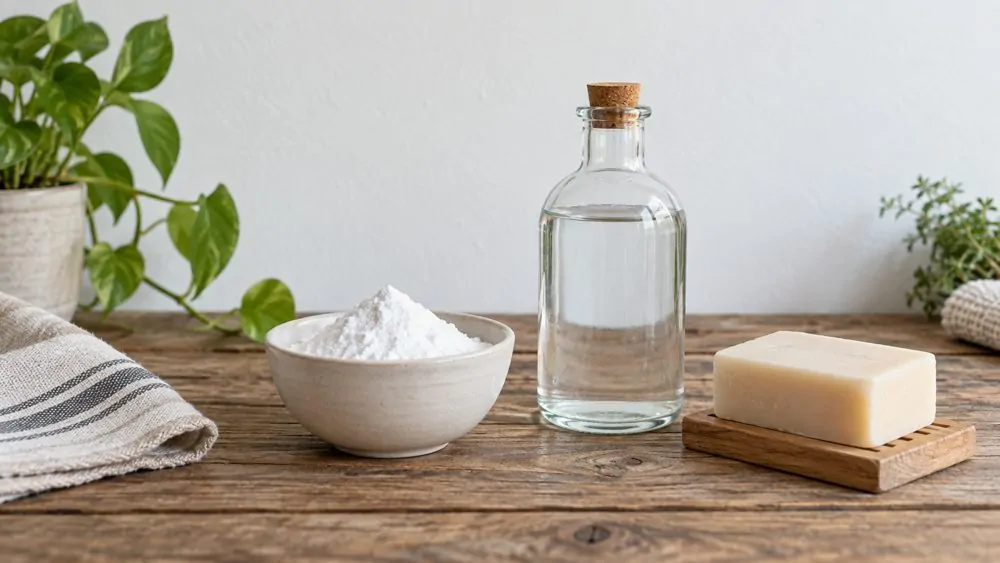
Four products come up in almost all situations, each with its limitations.
Strengths
- Bicarbonate: gentle, removes grease without scratching
- White vinegar: effective when used dry on fragile paint
- Marseille soap: safe on washable paint
- Washing soda crystals: very effective on old yellowing
Boundaries
- Bicarbonate: not very effective on very old stains
- Vinegar: odor that lingers for a few hours
- Marseille soap: useless on non-washable paint
- Soda crystals: irritants, gloves recommended
⚠ Limitation: None of these products can remove a stain that has had time to dry deeply in porous plaster or very matte paint. Beyond this point, the result is often a halo lighter than the rest of the wall, visible under certain lighting conditions.
How far should you clean a white wall without repainting before it becomes pointless?
This is the question that few guides really ask: at what point is it better to stop insisting and start again with a coat of paint?
On Reddit (r/CleaningTips), a user describes a wall covered in footprints accumulated over two months, asking if there's a way to clean it without repainting rather than starting with a whole new coat. This is exactly the kind of situation where it's worth doing the math before exhausting yourself scrubbing.
Repainting a wall costs on average around €30 per square meter in France in 2026 for a complete professional service, including materials and labor, with a range of €20 to €50 depending on the condition of the surface and the finish (source: Yoojo, 2026). When doing it yourself, you mainly need to factor in the time: preparation, one or two coats, drying time.
The cleaning itself costs a few euros in household products and generally takes 15 to 30 minutes per stained area.
The calculation therefore almost always favors cleaning as long as the stain is isolated. It tips towards repainting in two specific cases.
First, when several cleaning attempts leave a visible halo. Second, when the stains cover a large and diffuse area of the wall (multiple marks, general yellowing) rather than a localized spot.
Cleaning or repainting: the simple calculation to make
Simple steps to postpone the deadline
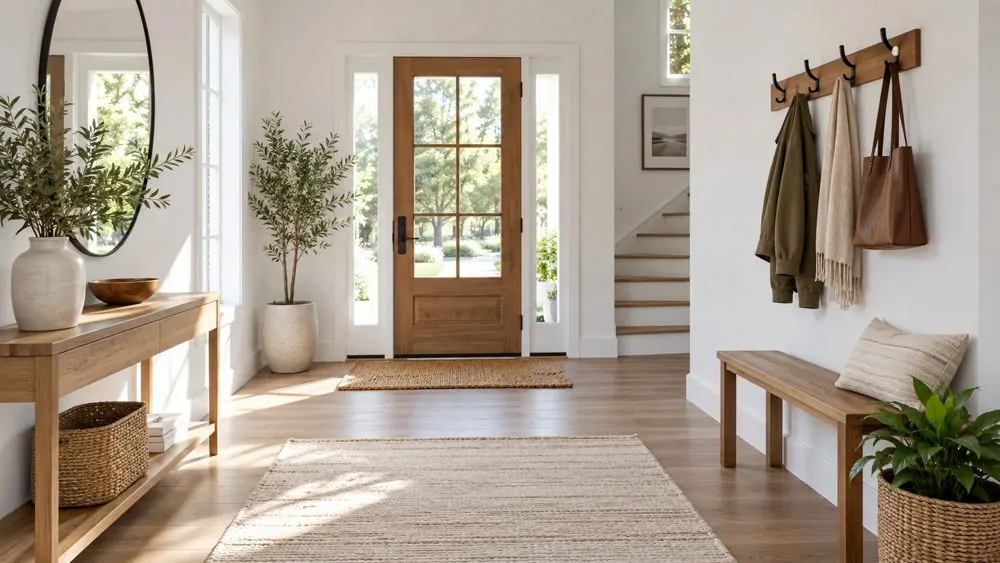
A few habits can limit the appearance of new stains, without turning housework into a chore.
✓ In practical terms: wipe away a splash or fingerprint as soon as it appears, before it dries and becomes embedded in the paint.
Installing a hook or coat rack near the entrance prevents repeated rubbing in the same place.
In a kitchen, a protective plate behind the cooktop limits grease splatter on the wall.
Ventilating regularly, even for just a few minutes, also reduces the humidity that promotes mold growth in cold corners.
Practical questions
Can a wall painted with a matte finish be washed with water?
Yes, but with caution: matte paints generally don't withstand water as well as satin or washable paints. Use a barely damp cloth and avoid rubbing, or switch to dry cleaning (magic eraser, microfiber cloth) as soon as the inconspicuous spot test shows that the color is coming off when it comes into contact with water.
How long should you wait before touching up a freshly cleaned wall?
Allow the treated area to dry completely, generally one to two hours depending on the room's humidity, before touching it or hanging a picture on it. A wall that is still damp marks more easily and retains more dust.
In summary
A stained white wall can usually be cleaned without repainting, provided you first check the type of paint and adapt the product to the nature of the stain: bicarbonate and Marseille soap for everyday use, white vinegar on fragile paint, soda crystals on old yellowing.
Repainting only becomes the best option when the stains are diffuse over a large part of the wall or when they resist several attempts, knowing that a professional service costs around €30/m² in 2026.
