
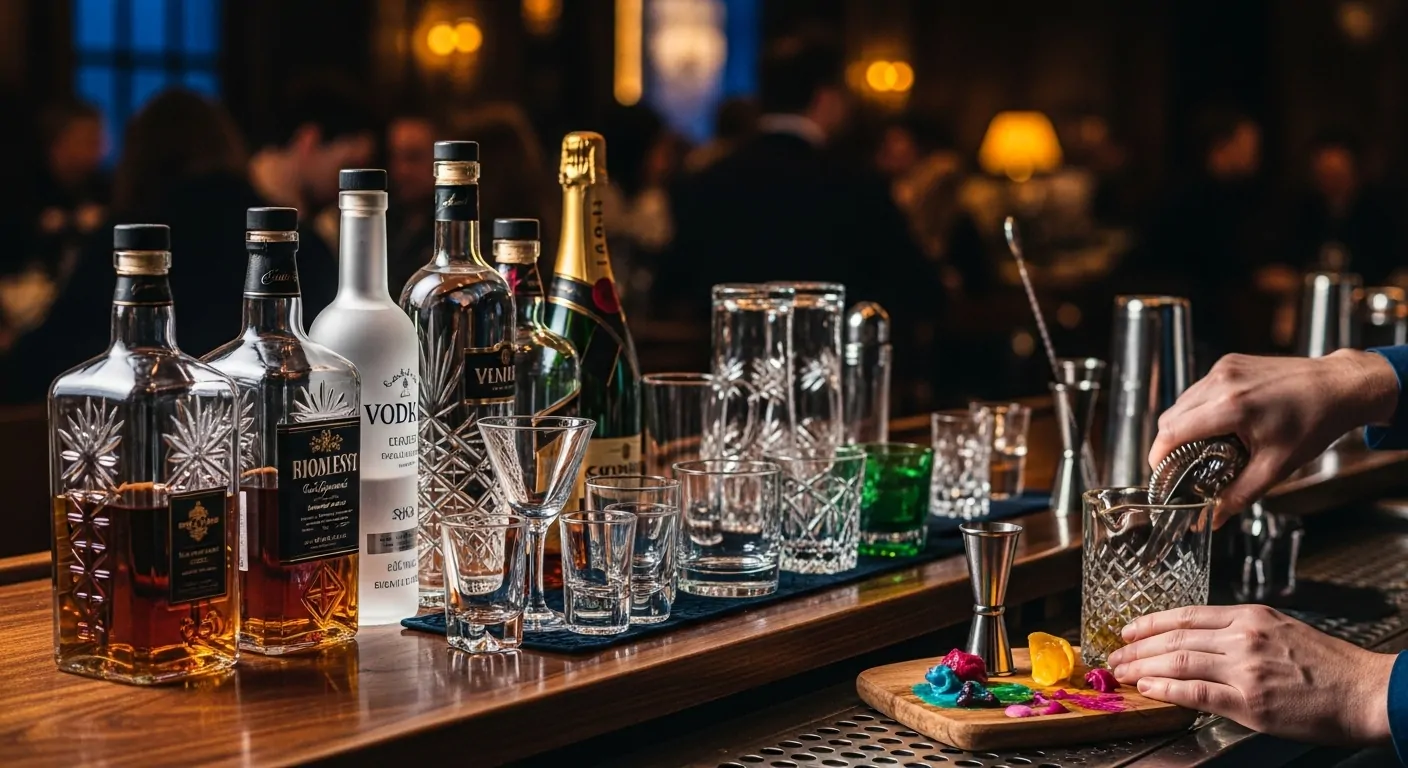
The bar dosage chart and its relationship to the alcohol content of each drink is a necessary reference point for any catering professional in order to be more responsible and more profitable during their service.
But, did you know that many of them don't really know these correspondences precisely or don't always think about:
- The value of one unit of alcohol : which can represent approximately 10g of pure alcohol, regardless of the type of drink served.
- Glasses of different sizes : able to hold the same amount of pure alcohol: 4 cl of whisky ≈ 25 cl of beer ≈ 10 cl of wine.
- Standardized bar doses : which vary according to the categories: 2 cl for Ricard and pastis, 4 cl for spirits, 10 cl for wine, 25 cl for beer (half-pint).
- Professional tools : such as pouring caps and automatic dispensers guaranteeing dose accuracy and optimizing profitability.
The case of Marie
A summer evening in 2023 in a Lyon bar. Marie, the young manager of her own establishment for the past three months, is anxiously watching her finances. Her bottles of spirits are disappearing twice as fast as expected, while her revenue has stagnated…
The consultant she hired delivered a damning diagnosis: her bartenders were serving drinks "by feel," without adhering to the standard pouring guidelines . The result? Marie was losing an average of 40% of her profit margin on hard liquor… Enough to bankrupt the business very quickly!
This business owner's situation is far from unique! Every year in France, thousands of establishments lose tens of thousands of euros due to wasted doses of alcohol because they are not properly prepared.
But beyond the financial aspect and the prices of alcohol , it's also a matter of public health. A customer who thinks they've had two drinks has actually consumed three!
After fifteen years spent behind the counters of Parisian, Toulouse and Marseilles bars, and then as a trainer for hotel schools, I have been able to see that mastering the proportions is the true foundation of professional service.
It's not just a matter of centiliters and regulations: it's a balance between profitability, responsibility and a certain quality of service!
Understanding alcohol units: the foundation of everything!
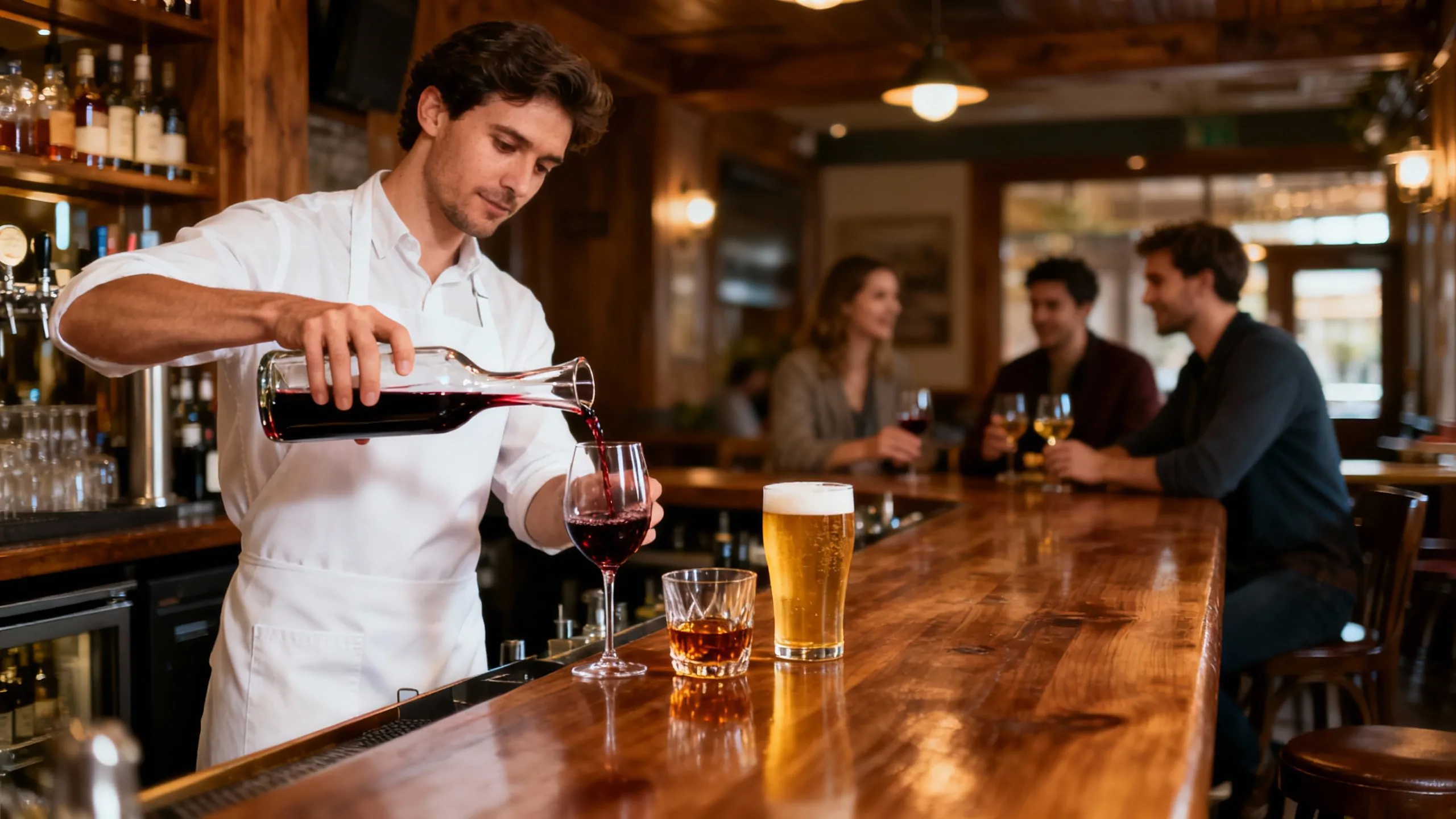
Imagine this classic scene: three friends at the bar. One orders a pint of beer, the second a glass of wine, and the third a whiskey. Who drank the most alcohol? The answer is almost always surprising! If the quantities were respected, all three friends will have consumed roughly the same amount of pure alcohol.
What is a unit of alcohol?
One unit of alcohol represents 10 grams of pure alcohol.
This standardized measurement allows for an objective comparison of all alcoholic beverages, regardless of their presentation.
The calculation formula: Alcohol units = (Volume in cl × Alcohol content × 0.8) ÷ 100
A practical example: For a 4 cl glass of whisky at 40° → (4 × 40 × 0.8) ÷ 100 = 1.28 units of alcohol
Surprising equivalences
These drinks contain approximately the same amount of pure alcohol:
- 25 cl of 5% beer (half a pint) = 1 UA
- 10 cl of wine at 12° (a standard glass) = 1 UA
- 4 cl of 40% ABV whisky (standard dose) = 1.3 AU
- 2 cl of Ricard at 45° = 0.7 AU
Practical tip : A small glass of whisky = a large pint of beer in terms of pure alcohol! Your body eliminates approximately 1 unit of alcohol per hour, regardless of the type of drink.
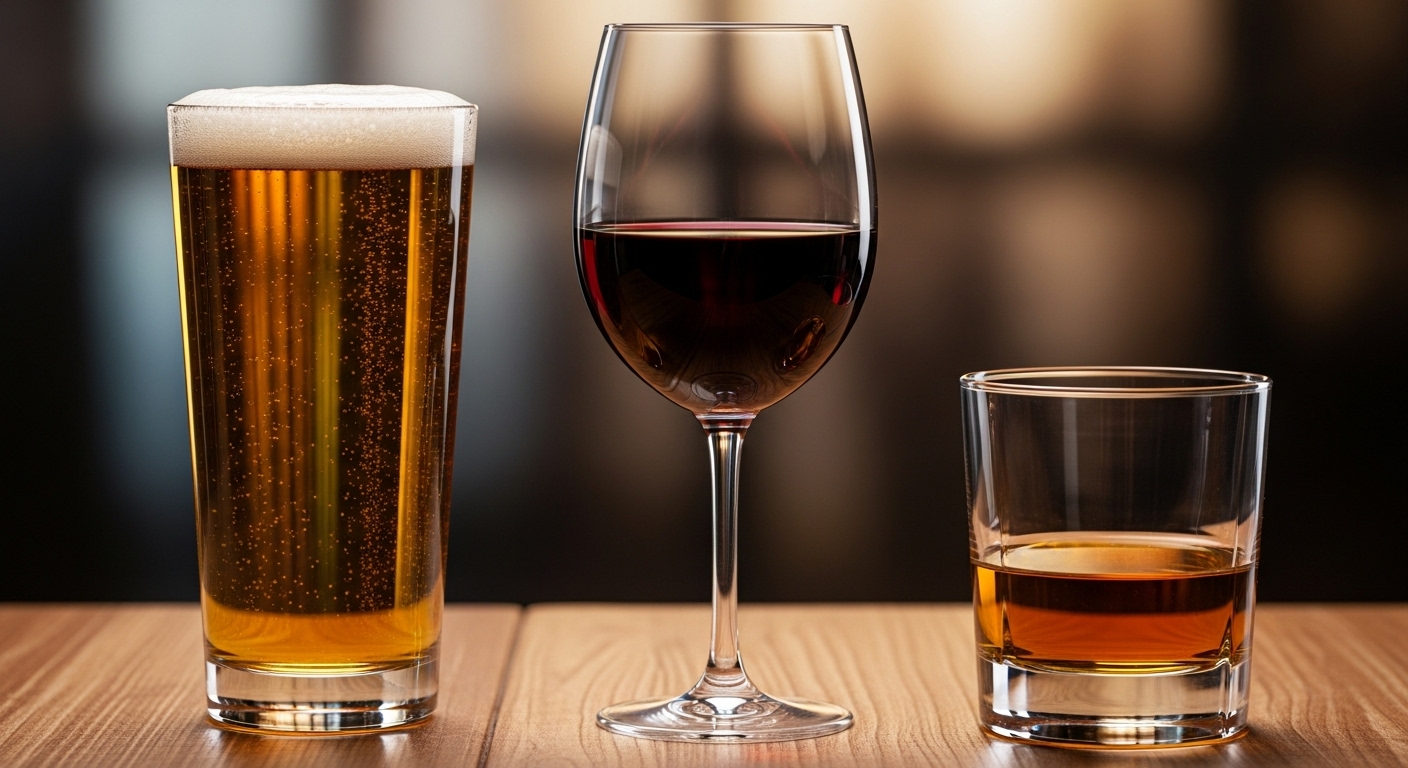
Table of standard doses by type of alcohol
Standard doses have been established by industry professionals and health authorities. They respond to a dual logic: respecting reasonable consumption while allowing for coherent economic management of establishments.
📊 Bar Alcohol Dosage Chart
Standard Doses in France • Professional Guide
⭐ The most requested doses
💡 Tip : 4 cl = 40 ml • 2 cl = 20 ml • 10 cl = 100 ml
⚠️ Excessive alcohol consumption is dangerous for your health. Drink in moderation.
Focus on Ricard and Pastis: serving the exact dose
The standard dose of Ricard in a bar is 2 cl, or 20 ml. This precise measurement is explained by Ricard's high alcohol content (45°).
Practical equivalencies:
- 2 cl = 20 ml = approximately 2 bottle caps
- With 5 parts water, you get a 12 cl glass
- 1 bottle of Ricard (70 cl) = 35 doses of 2 cl
- A 2 cl dose of Ricard contains 0.72 units of alcohol
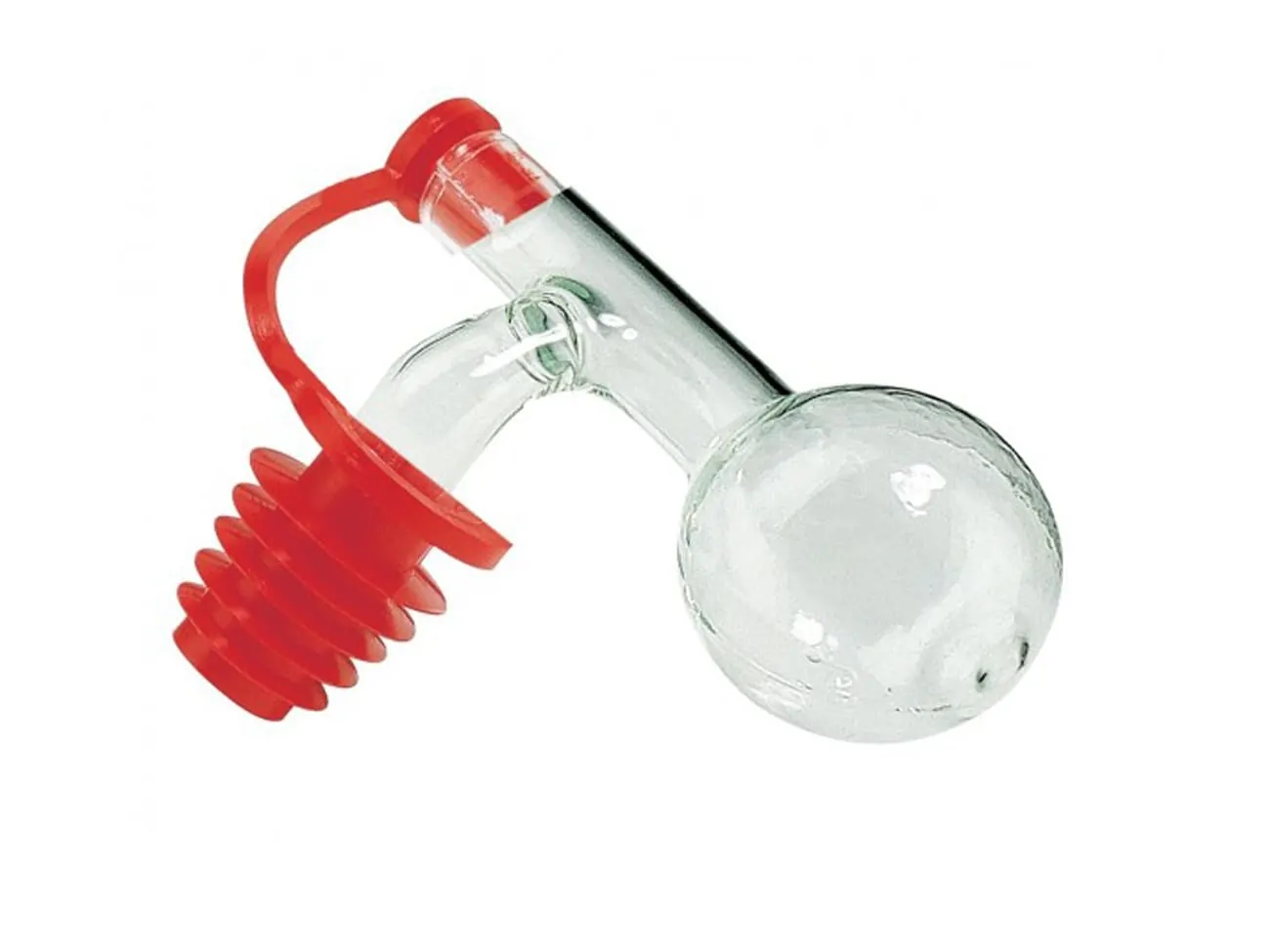
Top 3 most ordered alcohol dispensers


The guide to converting cl to ml for a bar
📏 Cl/ml Conversions Guide
To serve accurately at the bar
How many doses for each type of bottle?
💡 Quick Conversion Tips
- 1 cl = 10 ml • Easy to remember!
- 4 cl = 2 standard bottle
- 70 cl ÷ dose = number of glasses per bottle
📐 Universal formula:
cl × 10 = ml
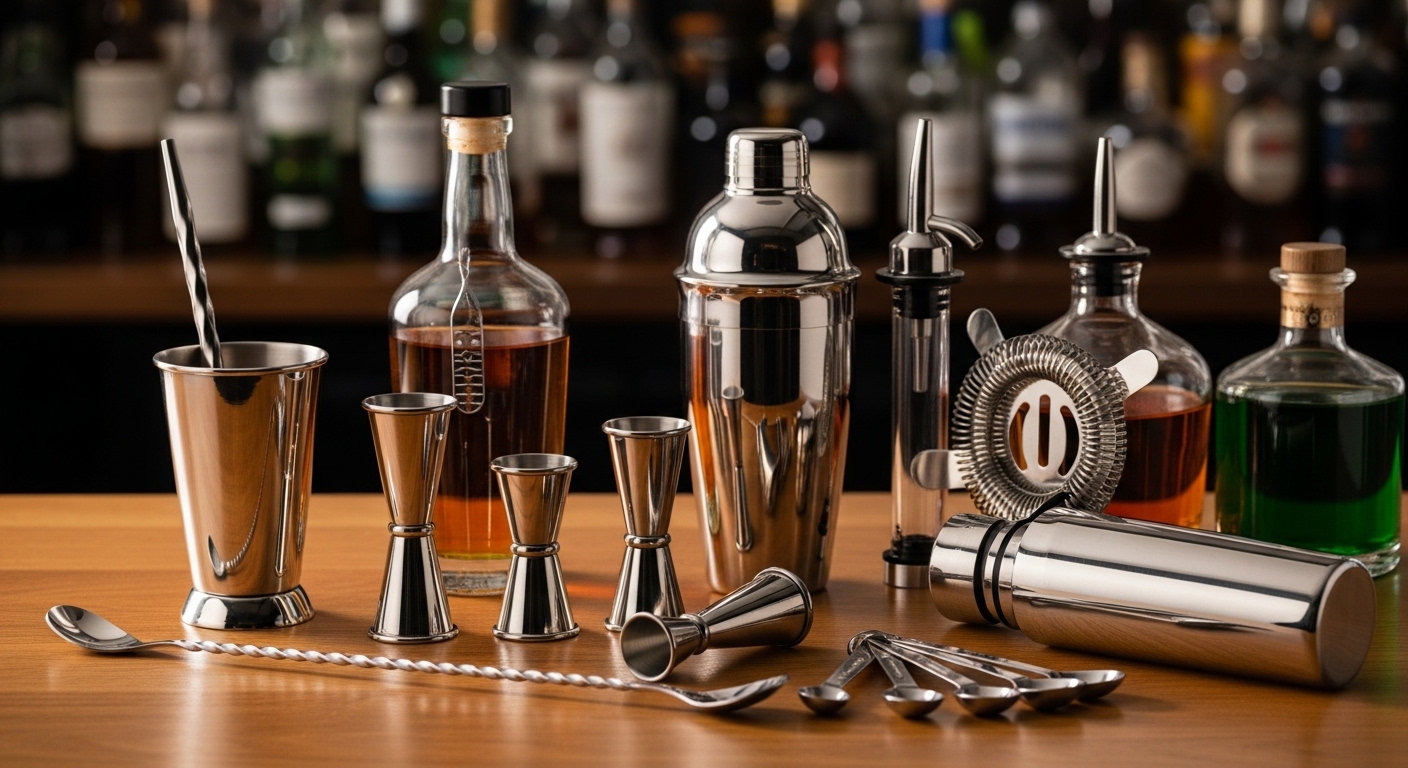
Professional tools for precise dosing
Marie's story, mentioned in the introduction, had a happy ending. After equipping her bottles with professional dispensers for an investment of 300 euros, she saw savings of 800 euros in the first month. In six months, her profitability on spirits had increased from 65% to 280%.
The 4 essential types of dispensers
1. Ball-type pourer (2-5€)
Basic equipment. A metal ball controls the flow of liquid. Simple and effective for start-ups, but requires mental calculation.
2. Automatic dispenser (€5-20)
A chamber system automatically measures 2, 3, or 4 cl. Absolute precision to the milliliter. The preferred tool of professional mixologists and essential for cocktails.
3. Dispensing spout with counter (€15-35)
Each press delivers the exact programmed dose, and the counter displays the number of doses dispensed. Ideal for stock management and theft prevention.
4. Connected dosing system (€50-200)
The high-end option. Each dose is automatically recorded, counted, and billed. Some systems send alerts when a bottle is running low.
5. The old-fashioned method! (cheaper)
Return on investment
A simple calculation: a bar that serves 50 glasses of spirits per day with an approximate dosage serves on average 5 cl instead of 4 cl. This represents 1 cl too much per glass, or 50 cl per day, 15 liters per month.
For high-margin spirits, monthly losses can reach 400 to 800 euros . This is where the advantage of investing in precise dispensers becomes clear, as they pay for themselves in less than a month.
Regulations: Information you need to know
In 2024, a bar in the center of Bordeaux was fined 3,000 euros for serving alcohol to a minor.
Alcohol regulations are not to be taken lightly: it is a strict framework and failure to comply exposes one to severe penalties.
The 3 absolute prohibitions
- It is forbidden to serve a person who is visibly drunk : slurred speech, unsteady gait, aggression. You may be held liable in the event of an accident.
- Selling to minors under 18 is prohibited : No exceptions. Penalties include fines of up to €7,500 and administrative closure.
- No selling on credit : All alcohol consumed must be paid for immediately.
Alcohol and driving: the thresholds
| Situation | Maximum rate |
|---|---|
| Experienced driver | 0.5 g/L (≈ 2 glasses) |
| Novice driver | 0.2 g/L (< 1 glass) |
Important : The body eliminates approximately 0.15 g/L per hour. Neither coffee nor cold showers will change this. Only the passage of time matters!
Display requirements
- Prices visible from both the outside AND the inside
- Health message on alcohol and pregnancy
- Sale prohibited to minors
- Repression of public drunkenness (Article L3341-1)
Best practices for professionals and consumers
Thomas, an experienced bartender in a Toulouse bistro, wrote on Facebook:
One evening, I refused to serve a tenth whisky to a regular customer. He got offended and stormed out, slamming the door. The next day, he came back to thank me: he had realized at home that he should never have driven in that condition.
Today, he's become a friend!
For professionals
Training your team : All employees must know the signs of intoxication and the procedure for refusing to sell. Specific training courses are available through chambers of commerce.
Diplomatic refusal technique : Rather than "You're drunk," opt for "I'd like a glass of water, shall we take a break?" or "I'd rather call you a taxi."
Offer alternatives : Quality mocktails allow customers to remain alcohol-free. A well-made virgin mojito sells for 6-8 euros with a similar profit margin to an alcoholic cocktail.
For consumers
- The rule of one glass per hour : The body eliminates approximately one standard glass per hour. Drinking faster = accumulation in the blood.
- Eating before and during : Food, especially fatty foods, slows down the absorption of alcohol by 2 to 3 times.
- Alternating with water : Reduces side effects (headaches, fatigue) and naturally slows down consumption.
- Plan your return BEFOREHAND : Designate a designated driver, arrange a taxi, check public transport options. Deciding after drinking is too late.
The 2 most costly mistakes
Mistake #1: The "extra little glass"
Sophie, a restaurant owner in Normandy, always served a little more than the standard portions "to make her customers happy." As a result, her bottles of cognac lasted 18 servings instead of 25!
On a bottle costing 35 euros, served at 8 euros a glass, she lost 56 euros in revenue per bottle.
With 5 bottles per week, this represented an annual loss of 14,560 euros.
She invested 200 euros in dispensers. The following year, her profit margin on spirits had increased by 12,000 euros!
Mistake #2: Ignoring homemade cocktails
Signature cocktails are trendy, but dangerous without precise measurements. A mojito where the bartender pours "by feel" can contain 6 to 8 cl of rum instead of the standard 5 cl.
The customer thinks he's had one drink, but in reality, he's had two. The bar thinks he's served a €9 drink, but he's used €12 worth of ingredients!
Understanding the balance between pleasure and responsibility
Marie's story, Sophie's story, Thomas's testimony: these accounts have one thing in common. Controlling alcohol intake is never a constraint when you understand the issues at stake.
It's a balance between three imperatives:
Profitability : Serving the right doses means protecting your margins and ensuring the sustainability of your business.
Responsibility : Respecting standard dosages means giving the customer honest information about what they are consuming.
Quality : Precise doses guarantee a more enjoyable and reasoned tasting experience.
France has a culture of gastronomy and the good life. Alcohol is part of that, when consumed with discernment and knowledge.
Wine is enjoyed with meals or as an aperitif and is part of the religious and historical heritage of our beautiful country. Furthermore, I invite you to take our quiz on wine and oenology to test your knowledge on the subject!
A good professional is not the one who serves the most, but the one who serves best. An informed consumer is not the one who drinks the least, but the one who knows what they are drinking.
Standard doses, even when using alcohol diluents to dilute, are not arbitrary limitations! They are the result of decades of work by healthcare professionals, industry stakeholders, and public authorities.
Respecting them, making them respected, teaching them: this contributes to healthier, safer and more sustainable consumption.
Behind every centiliter, there is a responsibility. Behind every glass poured, there is a choice. The right dosage is not just a matter of measurement: it's a matter of conscience!
Some practical resources
Useful numbers
- Alcohol Info Service: 0 980 980 930 (free, 7 days a week, 8am-2am)
- Alcohol Helpline: 0 811 91 30 30 (for family and friends)
Reference sites
- alcohol-info-service.fr : Consumption calculator, tests, directory of testing centers
- securite-routiere.gouv.fr: Blood alcohol simulators, statistics
- service-public.fr: Complete regulations, procedures
Excessive alcohol consumption is dangerous for your health. Drink in moderation.
