
In short
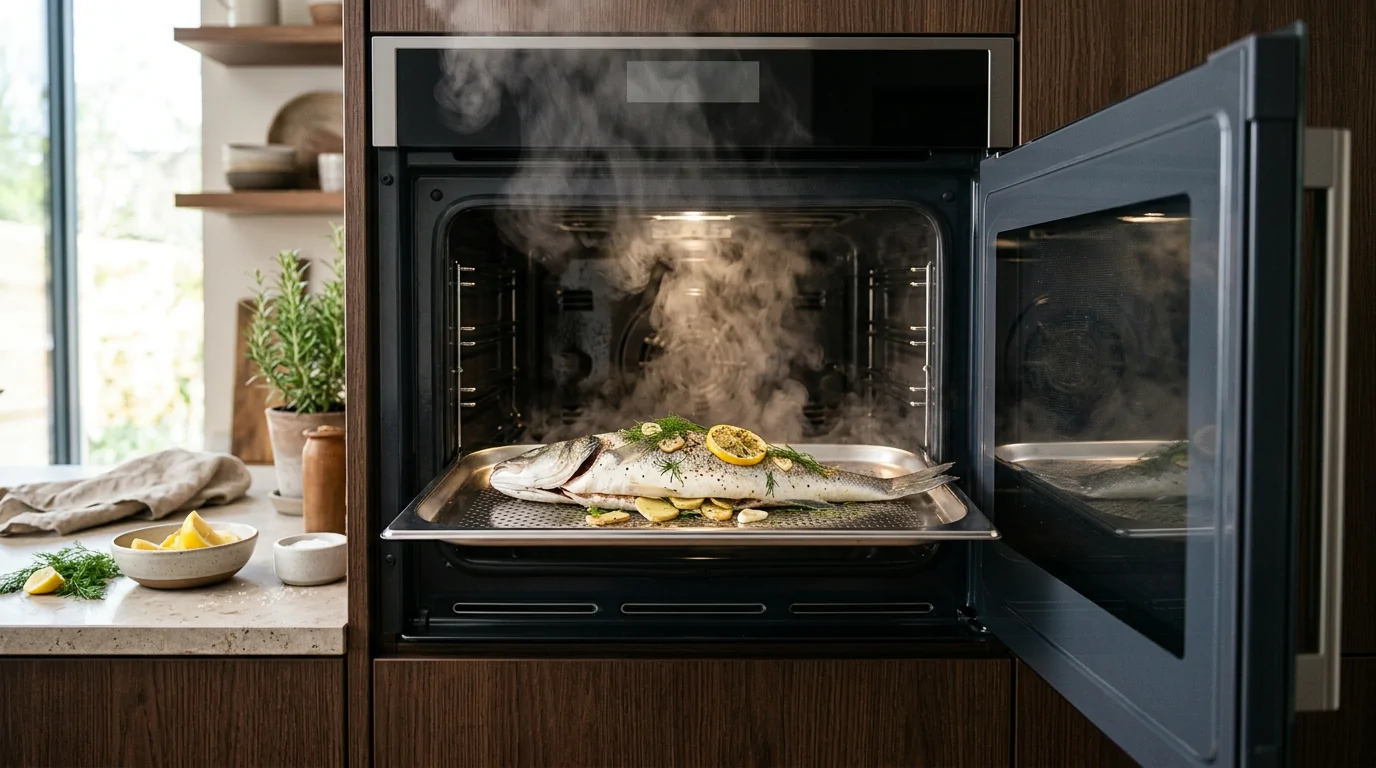
Steaming a whole fish successfully isn't just a skill reserved for fine dining restaurants. With the right settings, the flesh remains pearly white and the skin doesn't tear when cut.
The main obstacle is often the settings: what temperature to choose, how long to leave the fish in the steamer, should it be seasoned before or after? These are questions that most cooks encounter when discovering steam cooking.
This article details the settings according to weight and species, the preparation of the fish before cooking, tips for tender flesh, and mistakes that ruin the result.
What temperature and cooking time should I use for a whole fish in a steam oven?
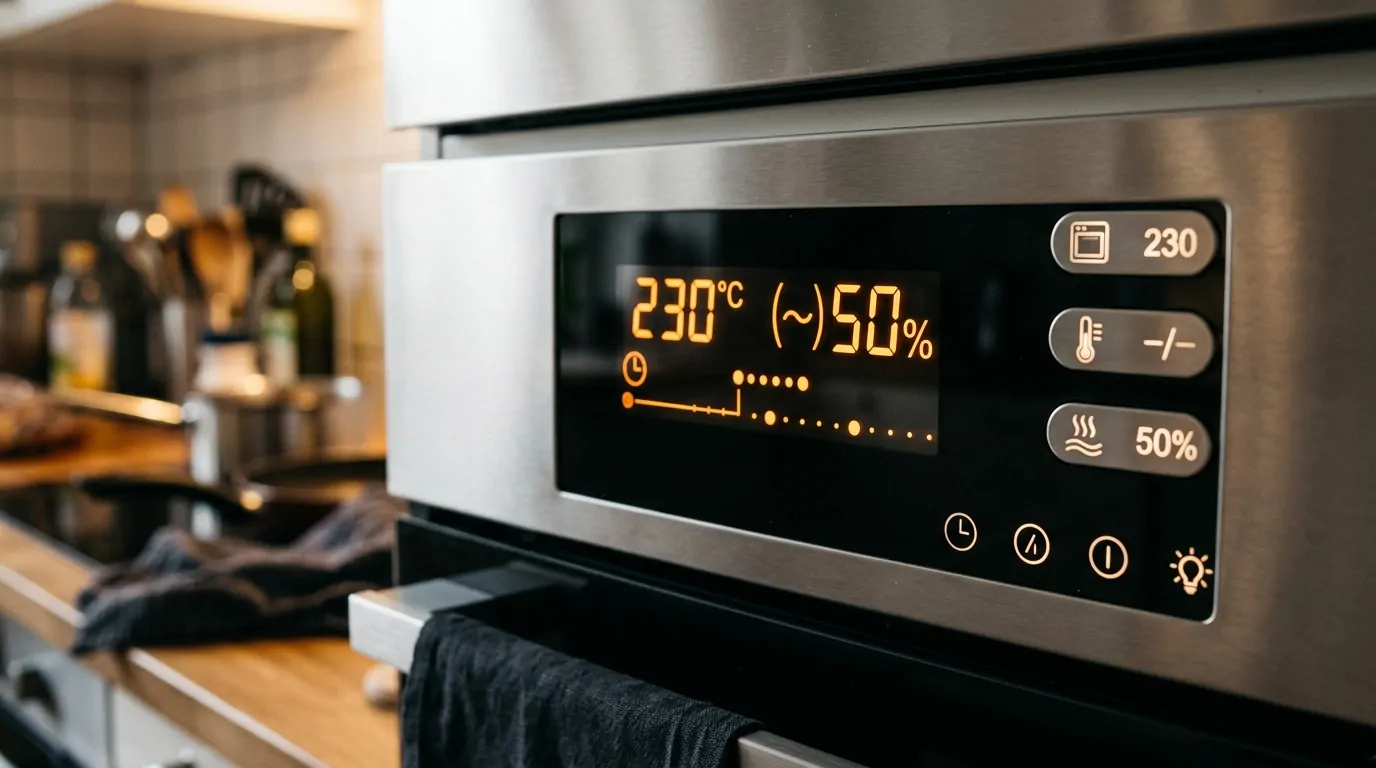
The setting depends mainly on the weight of the fish and the steam production method of the appliance.
On a model equipped with an external boiler, cooking is generally more even than on a conventional built-in steam oven.
If you are still cooking on a traditional oven and are hesitant to invest in a dedicated appliance, a detailed comparison can help you make the right choice with a combination steam oven that meets your needs.
For a whole fish, the recommended temperature range is between 75 and 80°C on most models, in order to prevent the outside of the flesh from being cooked before the center is.
Some manufacturers recommend heating to 85-100°C depending on the thickness of the meat and the desired result.
Other settings also work very well: a combined cooking at 130°C with high humidity for about 20 minutes, or a preheating in pure steam mode at 100°C for 5 minutes followed by cooking for 10 to 15 minutes depending on the size of the fish.
A fish that is too large (more than 900 g) rarely cooks evenly in one go: the part near the central bone often remains less cooked than the sides, it is better to then split it slightly in thickness or extend the cooking time in 5 minute increments, checking each time.
The following table gives guidelines for the most common whole fish, to be adjusted according to the actual power of your device.
| Whole fish | Approximate weight | Temperature | Approximate time |
|---|---|---|---|
| Sea bream | 400 to 500 g | 80°C | 15 minutes |
| Sea bass (wolf) | 500 to 700 g | 85°C | 18 to 20 minutes |
| Whole cod | 600 to 800 g | 90°C | 20 to 22 minutes |
| Whole salmon (portion) | 700 to 900 g | 90 to 100°C | 25 minutes |
How do I prepare the whole fish before steaming it?
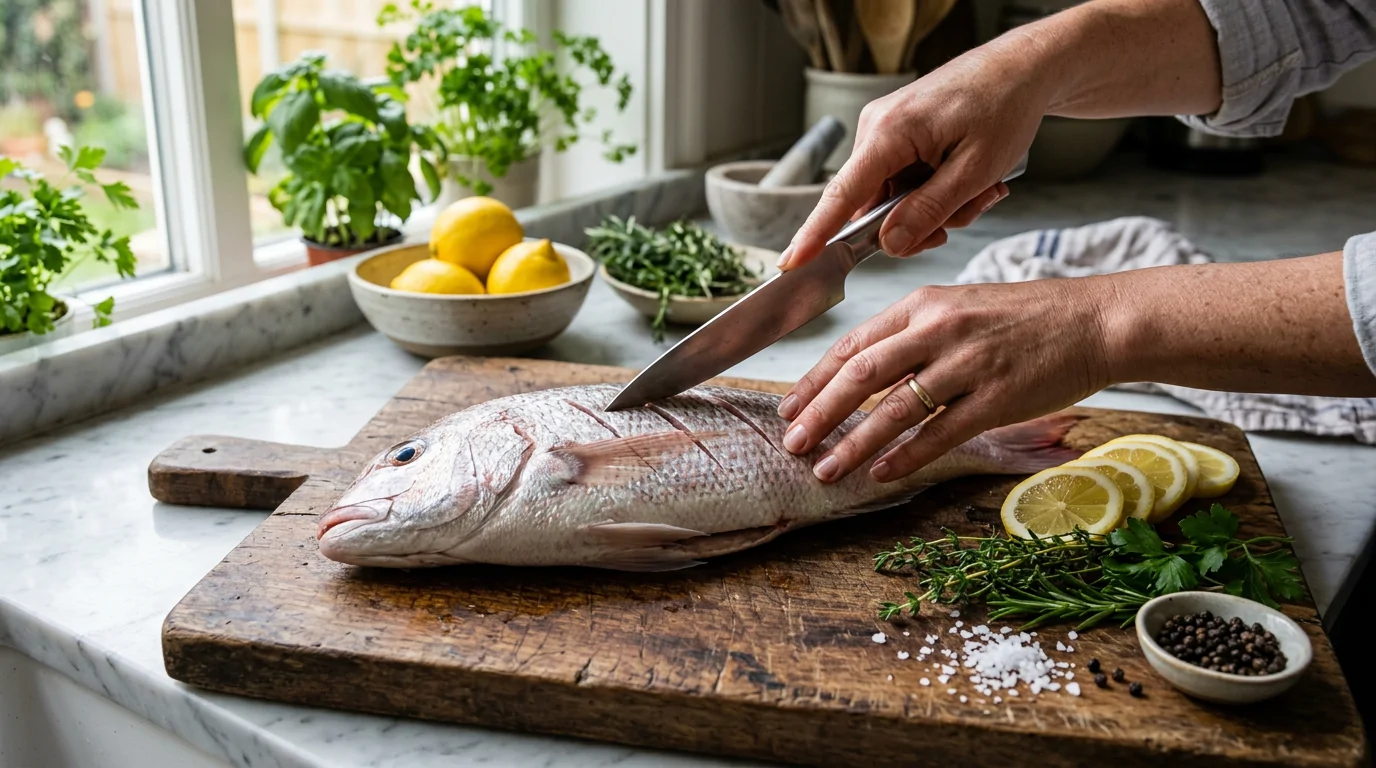
Preparation is just as important as oven settings. A poorly scaled or gutted fish will give a disappointing result, regardless of how precisely it's cooked.
Start by scaling the fish against the grain, under cold water, then gut it by carefully removing the viscera and the black sac along the central bone, which gives a bitter taste if it remains in place.
Rinse the inside and outside, then dry the skin with paper towels. Damp skin doesn't adhere as well to steaming and tends to tear when cutting.
Make 2 to 3 diagonal cuts on each side of the fish, down to the bone. This simple step allows steam to penetrate more quickly to the center and slightly shortens the cooking time.
Slip lemon slices, a few sprigs of dill or coriander and some minced ginger inside the fish: the steam diffuses these aromas into the flesh without the need to add any fat.
Salt and pepper the inside of the fish before cooking, not just the outside: this is often the step that beginners forget, and it greatly changes the result in the mouth.
How to guarantee tender flesh and successful skin?
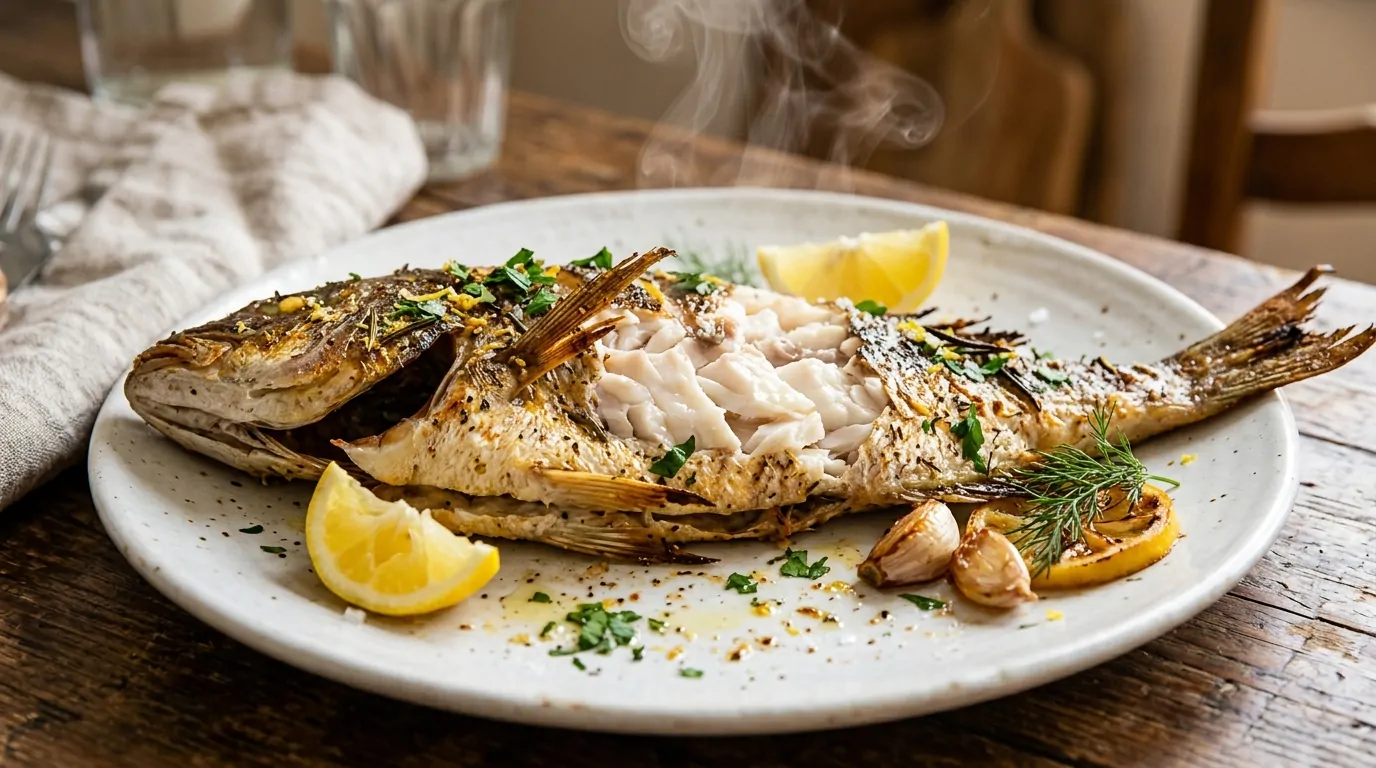
Steam cooking is more forgiving than a dry oven, but it does not prevent drying out if the humidity setting is not chosen correctly.
Always use a high or medium humidity setting for whole fish. Too low a humidity level is like cooking the fish dry, which defeats the purpose of a steam oven.
Remove the fish from the refrigerator 10 to 15 minutes before cooking. Fish that is too cold will experience thermal shock when placed in the oven, which will prolong the cooking time and dry out the surface further.
Fish flesh is rich in water and poor in collagen: this is what makes it so sensitive to heat, and explains why a few minutes too long is enough to make it tough.
To check if it's cooked without tearing the skin, gently pierce the thickest part with a fork: the flesh should be white, opaque, and easily detach from the bone.
If you have a cooking probe, aim for an internal temperature of around 60 to 63°C for most white fish.
Calculate the cooking time for your steamed fish
Choose the weight of your whole fish to determine the recommended steam setting.
What mistakes should be avoided when steaming a whole fish?
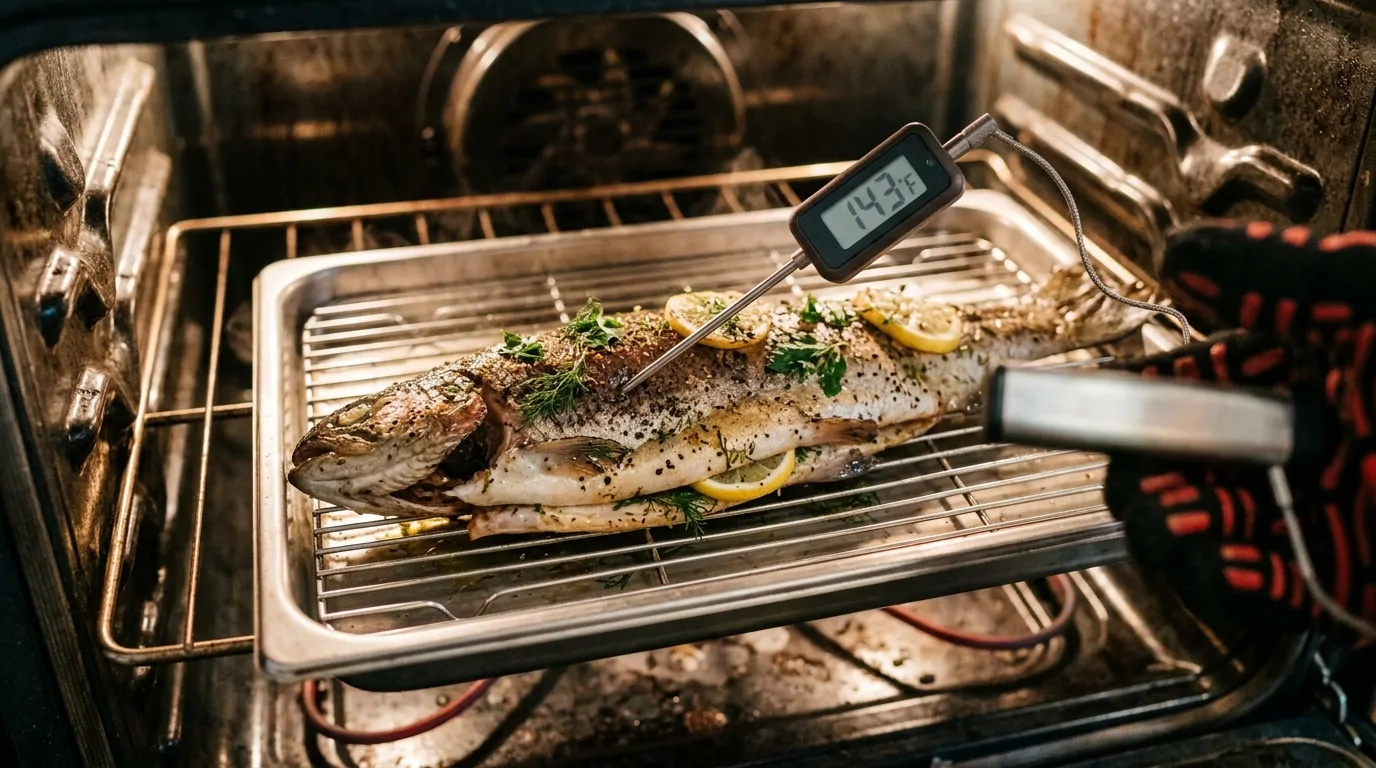
The first mistake is overcooking. Unlike meat, a whole fish does not forgive a few minutes too long: the flesh goes from tender to dry in a very short time, without any perceptible intermediate stage.
The second mistake is neglecting the internal seasoning, thinking that the marinade or salt placed on the skin will be enough to flavor the entire piece. This is not the case: steam does not carry aromas as far as one might imagine.
Opening the oven door during cooking to check on the fish causes the internal humidity to drop in seconds, thus significantly increasing the cooking time. It's better to rely on a timer or probe rather than repeated checks.
Finally, many cooks choose a fish that is too big for the size of their steamer tray, which forces it to touch the sides and prevents the steam from circulating all around.
A space of a few centimeters on each side of the fish significantly changes the final result.
What are some side dish ideas for a whole steamed fish?
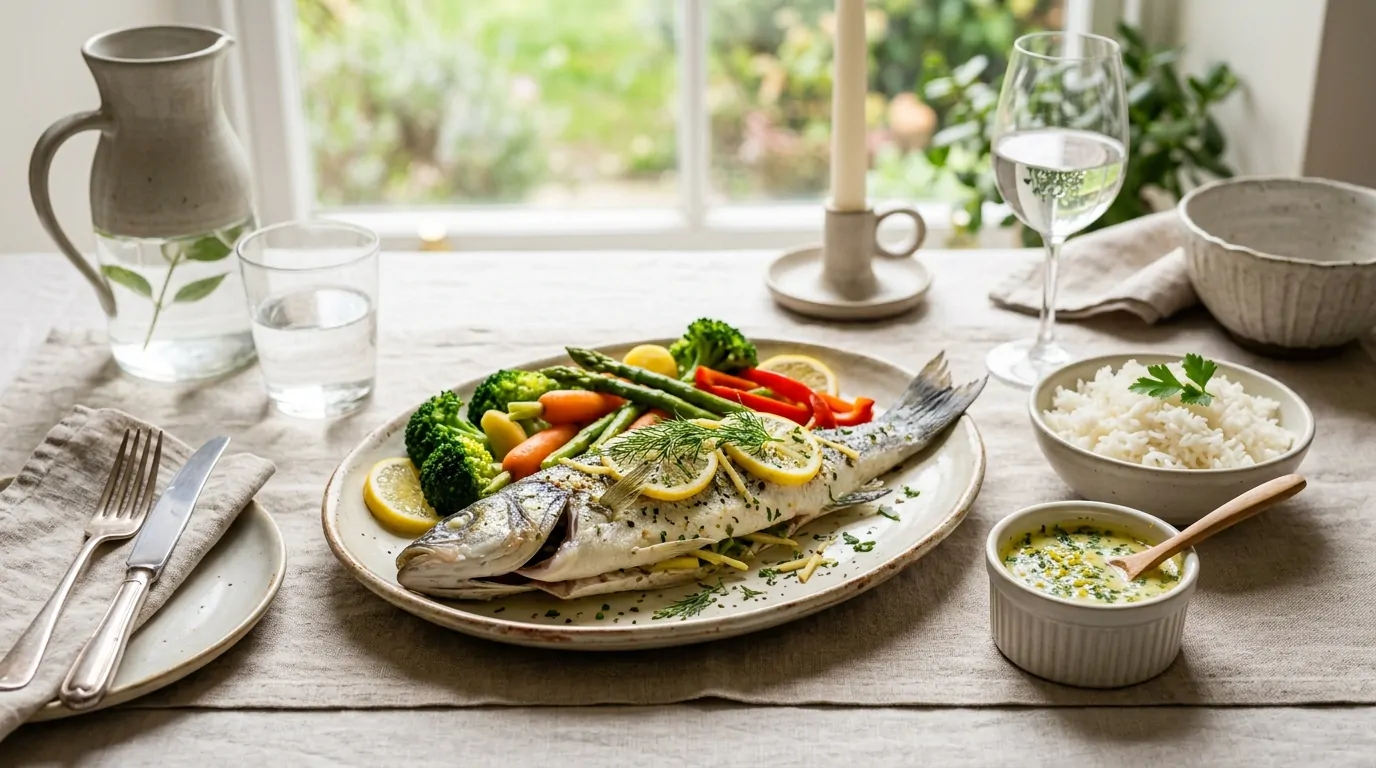
Steaming is well suited to cooking vegetables simultaneously on a second level: sliced carrots, broccoli, or halved baby potatoes cook at the same time as the fish, without any exchange of smells if the trays are separate.
Basmati rice or Thai rice naturally accompany this type of dish, as does a simple sauce made with olive oil, lemon and fresh herbs, poured over when serving rather than during cooking.
Practical questions
What temperature should I use to cook a whole fish in a steam oven?
Most models recommend a temperature range of 75 to 100°C depending on the selected mode. Keep it between 75 and 80°C for thin fish, and increase to 90 to 100°C for thicker cuts like a whole salmon.
How long should you steam a whole fish?
Allow between 15 and 30 minutes depending on the weight, with an average of 20 minutes for a fish weighing 500 to 700 g.
How can you tell if the fish is steamed?
Pierce the thickest part with a fork: the flesh should be white and opaque, and easily detach from the central bone.
Which whole fish should I choose for steaming?
Sea bass, sea bream, cod and whole salmon are particularly well suited to this cooking method, especially in the 400 to 900 g range.
Should the inside of the fish be seasoned before steaming?
Yes, absolutely. Steaming doesn't diffuse the aromas deposited only on the skin, so you need to salt, pepper and season the inside of the fish for a consistent result.
In summary
Cooking a whole fish with a combination steam oven mainly requires respecting the correct temperature and humidity settings according to the weight of the piece, rather than following a fixed recipe.
Preparation is just as important as the setting itself: a fish that is well gutted, seasoned inside and taken out of the refrigerator in time will give a much better result than a perfect temperature applied carelessly beforehand.
With these temperature and time guidelines and mistakes to avoid, all that remains is to adjust according to your device and the fish of the day.
